Megatrend · Carbon Removal
Let the trees pull the carbon for us — we just decide how to "keep" it
Today the most "actually delivered" carbon credits in the world — the kind that truly pull carbon out of the air and bury it permanently — don't come from expensive high-tech air-sucking machines. They come from plain stuff like wood scraps and rice straw — burned without oxygen until it becomes "char" that stays buried in the soil for centuries. This is the story of two ways of using plants as carbon-pulling machines: biochar, which dominates today's real-delivery market, and BECCS, which the giants are pre-booking by the millions of tons.
01What it is (two ways of using plants to pull carbon)
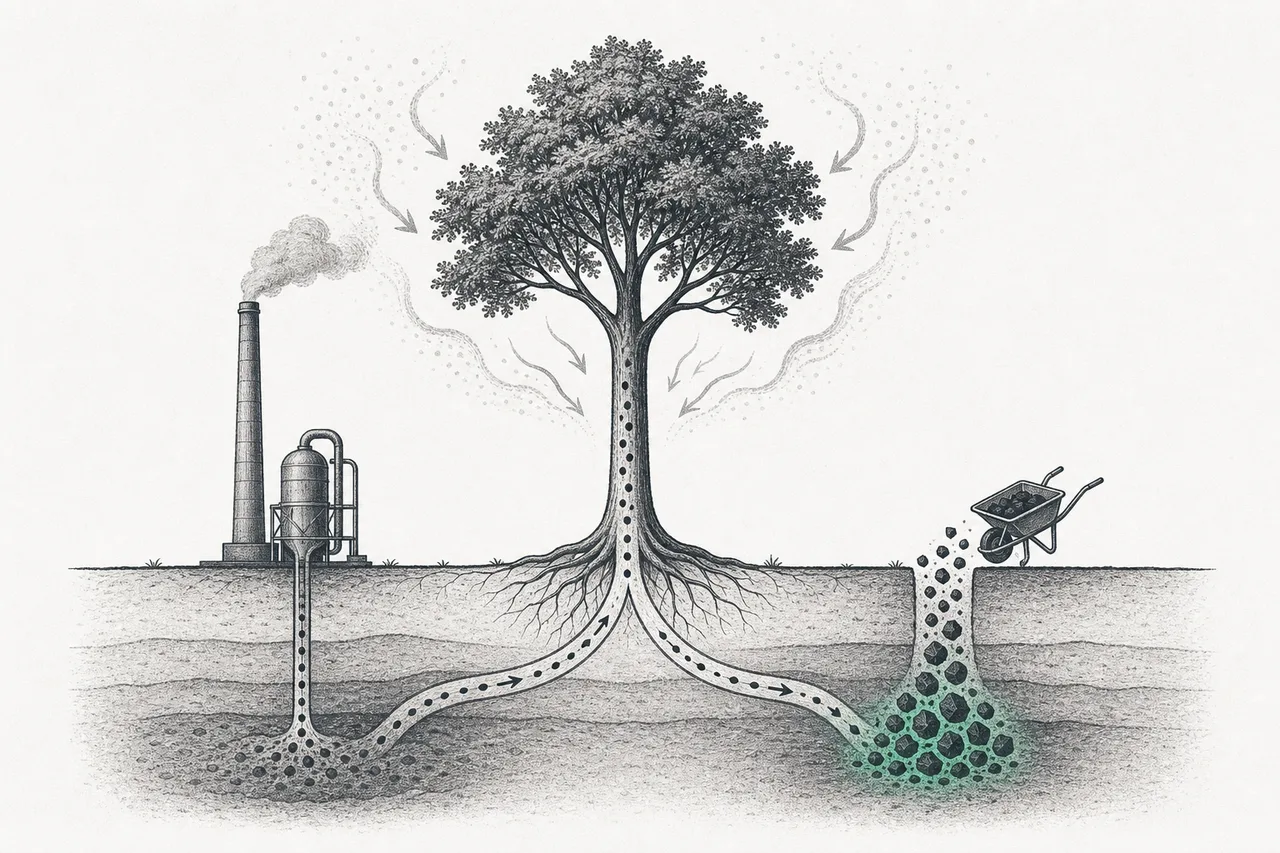
Start with one very powerful fact: every tree and plant is already the best carbon-pulling machine in the world — and it works for free. Through photosynthesis, plants draw CO₂ from the air to build their trunks, leaves, and roots. There's just one problem: when a plant dies, rots, or is burned, the carbon it stored floats back up into the sky within a few years — like borrowing money you then have to pay back.
Bio-based Removal is the group of technologies that fixes exactly this — let the plants pull the carbon for free, then make sure that carbon "doesn't float back". There are two main approaches, and they're clearly different:
- Biochar: take biomass (wood scraps, straw, nut shells, animal manure) and burn it without oxygen at high temperature — you get "char" in which the carbon is locked in a form microbes can barely break down. Bury it in the soil and it stays for hundreds of years. This is the way that delivers real carbon credits more than any other in the world right now
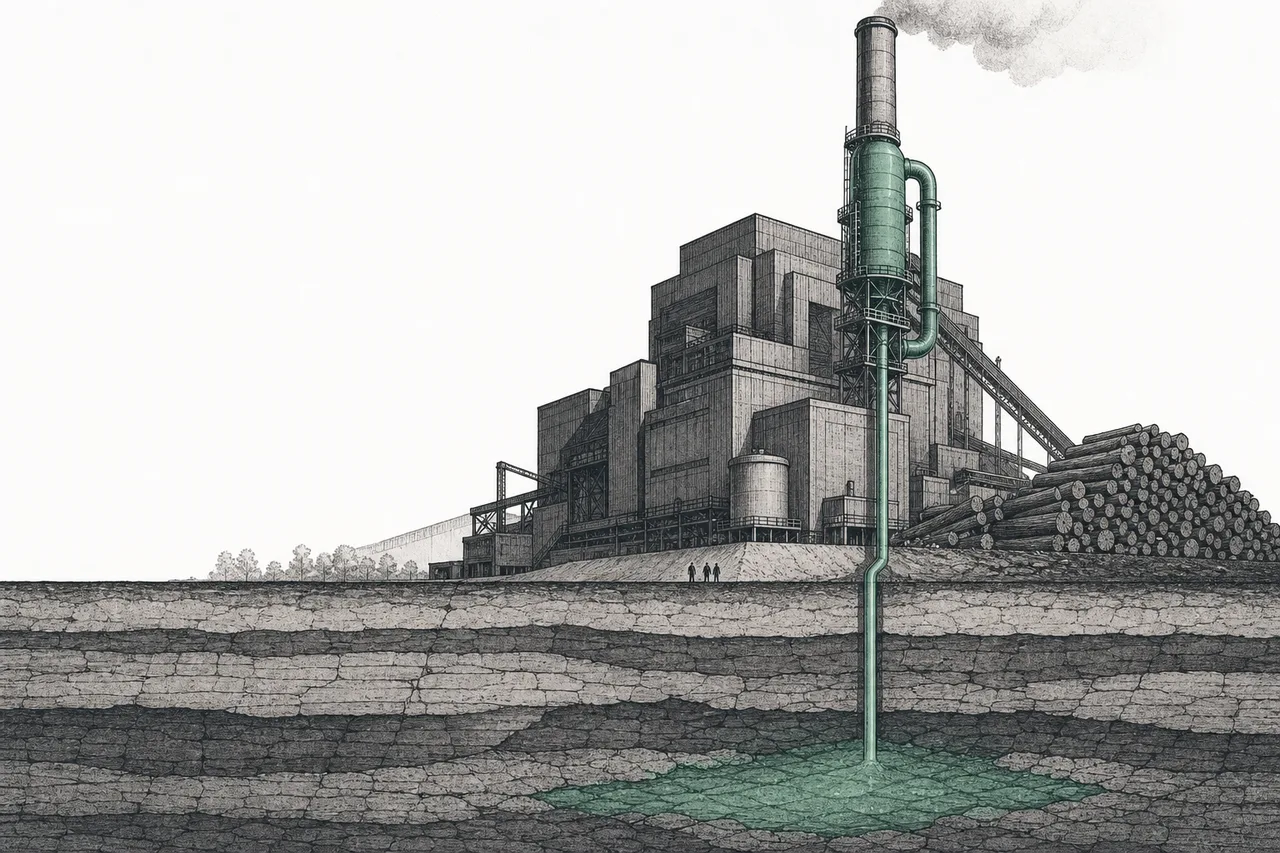
- BECCS: short for Bioenergy with Carbon Capture and Storage — burn biomass to generate electricity, just like an ordinary power plant, but instead of releasing the smoke into the sky, capture the CO₂ from the stack and compress it deep underground for thousands of years — getting both electricity and carbon removal in one shot
CDR (Carbon Dioxide Removal) = "pulling" CO₂ that's already been emitted out of the air, different from "cutting emissions" (like switching to clean energy) · Durable = stored long enough to count as permanent — international standards usually measure this at at least 100 years. This is exactly what sets biochar/BECCS apart from ordinary tree-planting (where a single fire returns all the carbon).
On the megatrend map, Bio-based Removal is a sub-branch under Carbon Removal, which includes siblings like Direct Air Capture (machines that suck air directly), Enhanced Weathering (speeding up the weathering of rock), and ocean carbon removal. Among all these siblings, Bio-based Removal is the one "delivering the real goods" more than any other as of today.
02Why it dominates today's carbon market
Here's the number that made the whole industry turn its head: in 2025, the market for "permanent removal" carbon credits (durable CDR) set a record by passing 1 million tons of cumulative real delivery for the first time in history — and almost all of that delivered volume came from biomass, biochar especially.
Look just at Q3 2025 and the picture gets very clear: biochar made up ~79% of all the carbon actually delivered, and if you add up all the biomass methods (biochar + BECCS + biomass burial) it takes up ~97% of deliveries. Fancy technology like DAC, the kind that's so often in the news, plus all the other methods, is left with just ~3%.
The reason biochar leads is that it's "ready and cheap." In a world where DAC air-sucking machines still cost hundreds to thousands of dollars per ton, biochar sells at around $150 per ton of CO₂ in 2025 (up from ~$131 in 2023). It uses technology humans have known for a thousand years, and it can be done anywhere there's leftover biomass to spare — from a farm in Bolivia to a sawmill in Thailand.
So why does the world bother paying real money for "carbon removal"? Because the giant companies that have declared net-zero targets — Microsoft, Google, JPMorgan — know full well that cutting emissions alone isn't enough. They also have to "pull back the carbon they've already emitted", and it has to be removal that's provably permanent — not just tree-planting that might burn down later. This is the demand that built this entire market.
03How it works
Both ways start from the same point — plants pull CO₂ through photosynthesis — then split apart at the step of "how to keep the carbon from floating back." Take a look at this:
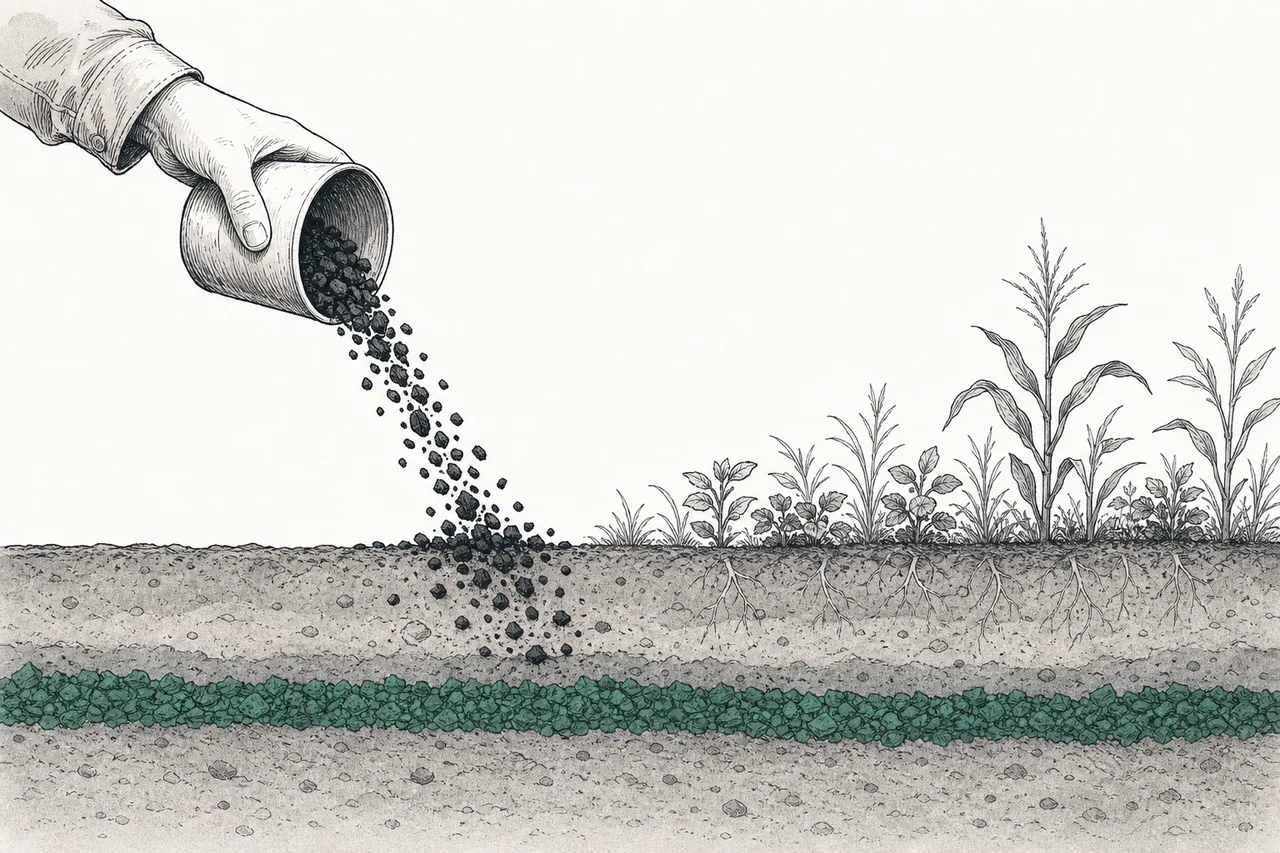
The heart of biochar is the word "pyrolysis" — burning biomass at high temperature (~400–700°C) without oxygen. Because there's no oxygen, the biomass doesn't burst into flame and turn to ash; instead it gets "baked" until all the water and volatile compounds are driven off, leaving behind only an extremely stable carbon skeleton — so stable the microbes in the soil can barely break it down. While ordinary wood scraps rot away in 5–10 years, biochar lies quietly in the soil for hundreds of years.
Ordinary burning = oxygen present, flames rise, carbon becomes CO₂ and floats into the sky · Pyrolysis = no oxygen, no flame, a "thermal decomposition by baking." It yields three products: solid char (biochar), liquid bio-oil, and synthesis gas — that small difference between "with/without oxygen" is exactly what decides whether the carbon floats back or gets locked away.
The BECCS side is far more complex and expensive, because it means bolting a "carbon-capture plant" onto a giant biomass power station. A real example under construction is the project by Stockholm Exergi in Sweden, which will capture CO₂ from burning wood scraps to heat the city, then ship it by sea to be compressed and buried under the seabed in Norway — at full operation in 2028 it will pull up to 800,000 tons of CO₂ a year. The difficulty of BECCS is that it needs a power plant, capture equipment, transport pipes, and an underground storage site — the whole chain has to be in place before it counts as having really pulled the carbon.
04How it connects in the ecosystem
Bio-based Removal doesn't exist in a vacuum — it's tangled up with several big trends in interesting ways:
- A sibling of the other Carbon Removal methods: it's the "one that can deliver the real goods" in the same family as Direct Air Capture (air-sucking machines — precise but very expensive), Enhanced Weathering, and ocean carbon removal. Each method differs on price, permanence, and readiness — biochar wins on price and readiness, while DAC wins on permanence and precise measurement
- Competes for resources with clean energy: BECCS burns biomass to make energy — and that same biomass is something others want for biofuels or heat. Pulling biomass into BECCS therefore competes with other energy uses, and it also depends on the power grid to run
- Depends on infrastructure for storing CO₂ underground: both BECCS and bio-oil need a "storage site" — rock formations underground where gas can be permanently injected — the same infrastructure the carbon-capture industry (CCS) uses. That ties it to the build-out of transport pipes and underground reservoirs worldwide
- Stands on the carbon-credit market: none of this could happen without "buyers" willing to pay for carbon removal — demand from the net-zero targets of giant companies is the fuel that drives the whole field
05Where it stands now
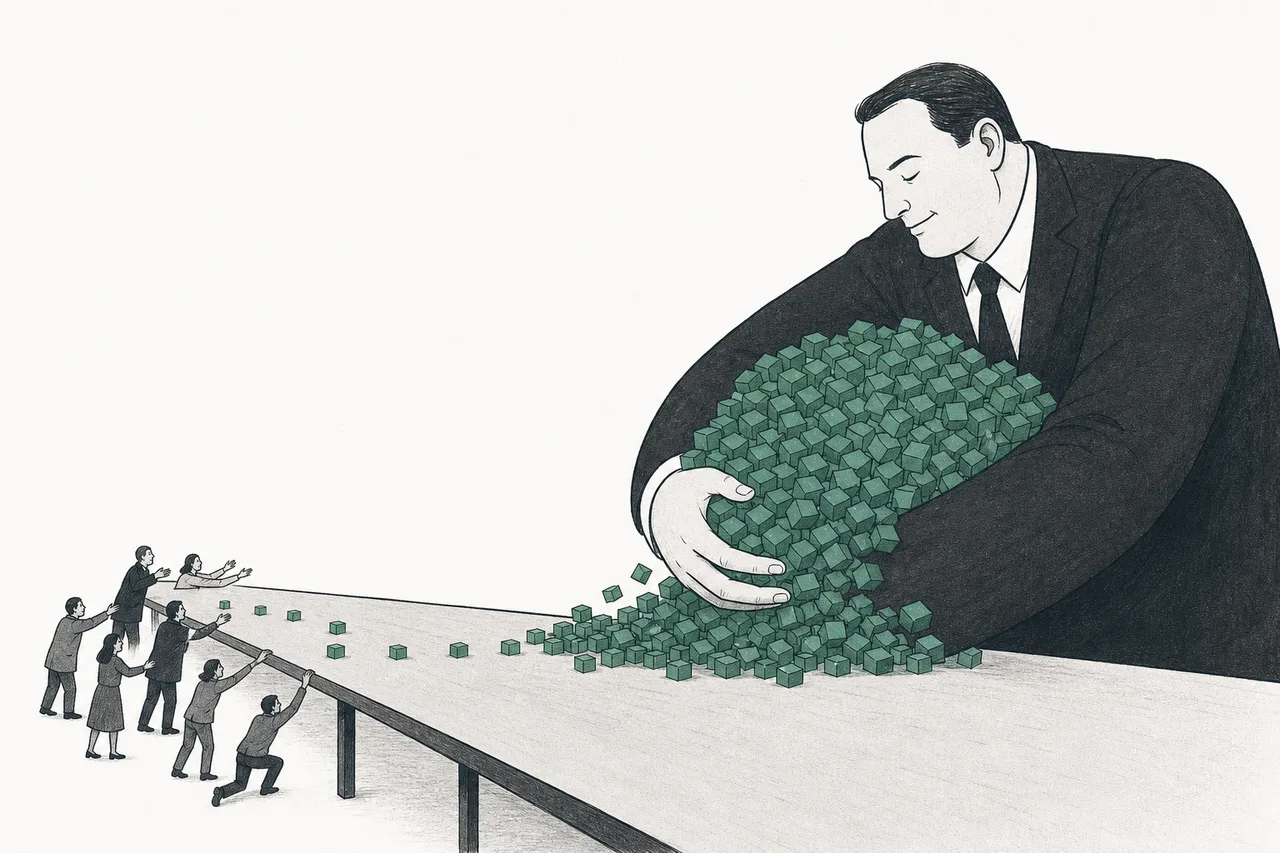
There's one phenomenon that best explains the state of this field — it's called the "gap between contract and delivery." In 2025, if you count the volume companies signed contracts for in advance, BECCS dominates with ~75% of the market, because its deals are huge (millions of tons). But if you count what was actually delivered that year, biochar holds almost all of it — because most BECCS is still "not finished being built," contracts that will deliver from 2028 onward.
The biochar side has grown until it's running short — by late 2025 there were reports that over 90% of industrial-scale biochar production capacity was already booked by big buyers. The deal that shook the industry most was Microsoft teaming up with Exomad Green (a Bolivian producer) to sign a carbon-removal contract for 1.24 million tons over 10 years — the biggest biochar deal ever, making Exomad Green the world's number-one durable-CDR deliverer (about 27% of all deliveries).
For the BECCS side, 2025 was a year with very "high stakes." In the UK, the government approved Drax's BECCS project in January 2025 — Europe's largest biomass power plant, aiming to pull up to 8 million tons a year once it converts two of its furnaces. But the deal became a fierce controversy, because a think tank like Ember estimated this single project could swallow up to £30 billion in subsidies — more than the entire country's carbon-capture budget. As a result, Drax itself began to "slow down" its investment and cut staff in its BECCS division that same year.
The price figures tell the trade-off clearly too: biochar sells at around $150/ton, while BECCS is more than double that (~$200–390/ton), reflecting that the larger volume BECCS can handle comes with a much higher cost:
06The road ahead
The first direction is clear: biochar will remain the main "delivery engine" for years to come, while the global market for biochar products is expected to grow from the billion-dollar range to ~$3–7 billion by 2035 (roughly 11–13% growth a year). What decides the future isn't just volume, but "quality" — projects that measure and prove permanence well (strong MRV) will sell at a premium of $180–200+, while projects with weak paperwork will be repriced down or pulled from the market.
The second direction is that BECCS will start "delivering the real goods" from around 2028. As projects like Stockholm Exergi come online, the volume of carbon pulled per year will leap enormously (a single project at the hundreds-of-thousands to millions-of-tons scale), shifting the market picture from "biochar dominates everything" toward a new balance where BECCS starts to carry weight — if it gets built and keeps costs under control.
The third direction is spreading out to countries with lots of leftover biomass. Southeast Asia, Latin America, and Africa have enormous agricultural residue (rice straw, nut shells, rubberwood scraps) that's normally burned in the open — turning it into biochar is both carbon removal and a fix for burning pollution in one place. This is where the wave of new developers will grow.
07Challenges & risks
The appeal of Bio-based Removal comes with hard questions no one has answered conclusively yet.
The first risk is "how permanent is it really?" The market accepts that biochar can hold carbon for "hundreds of years," but research on whether it lasts 1,000 years isn't settled. So international standards pick a conservative point (counting at the hundreds-of-years level, not thousands) — if future science finds that some types of char break down faster than thought, the credibility of credits already sold gets shaken too. This is why the quality of measurement (MRV) becomes the line between life and death for each project.
The second risk is the sustainability of biomass — BECCS especially. The heart of the Drax controversy is this: if you have to "cut trees and burn them" to pull carbon, is that really sustainable? Critics like Biofuelwatch argue that large-scale BECCS is still "unproven" and may be more about chasing subsidies than actually removing carbon. The question of "where does the biomass come from, and can the replanting keep up" is what decides whether BECCS is a climate hero or a villain.
The third risk is buyer concentration. This market is propped up by just a few hands — in 2024, Microsoft alone bought about 63% of the world's CDR. When nearly all the demand comes from a handful of tech companies, the entire market is fragile to those buyers changing their minds. If one day the net-zero budgets get cut, or the rules change, demand could vanish in an instant — and producers who've already invested in building plants would get hurt badly.
The fourth risk is dependence on subsidies and policy. BECCS especially is almost impossible without the government helping to pay. The Drax case, where the subsidy figures ballooned until they were questioned politically, is a signal that this trend is tied to a "government's willingness to pay" — which can change with politics.
In short: Bio-based Removal is the story of taking "nature's leftover waste" and making sure the carbon plants have already pulled doesn't float back up — on one side simple and ready enough to dominate the delivery market, on the other full of questions about permanence, sustainability, and dependence on a few buyers/governments. Understanding both sides is understanding why "ordinary char" became a product Microsoft will pre-book by the millions of tons.