Megatrend · Biotech & Genomic Medicine
When the world's priciest biologic drugs start getting "copies"
Many of the most expensive drugs on Earth are proteins grown from living cells — you can't just copy them like an ordinary pill. Biosimilars is the business of building a "near-identical version" to compete — and it's about to unlock more than $232 billion this decade.
01What is a biosimilar?
Think of Humira, the arthritis and immune-disease drug that once earned AbbVie over $21 billion a year — more than the annual budgets of several countries combined, from a single drug. The question is: why doesn't anyone make a cheap "copycat" of something like this, the way they do for paracetamol or blood-pressure pills?
The answer: Humira isn't an ordinary chemical drug. It's a biologic — a massive protein "grown" from living cells, not mixed from chemicals in a vat. Copying it is many times harder than copying a regular pill. That's where the word biosimilar comes from: a drug that is "highly similar" to an off-patent original biologic — close enough to deliver the same treatment effect, but never identical down to the atom.
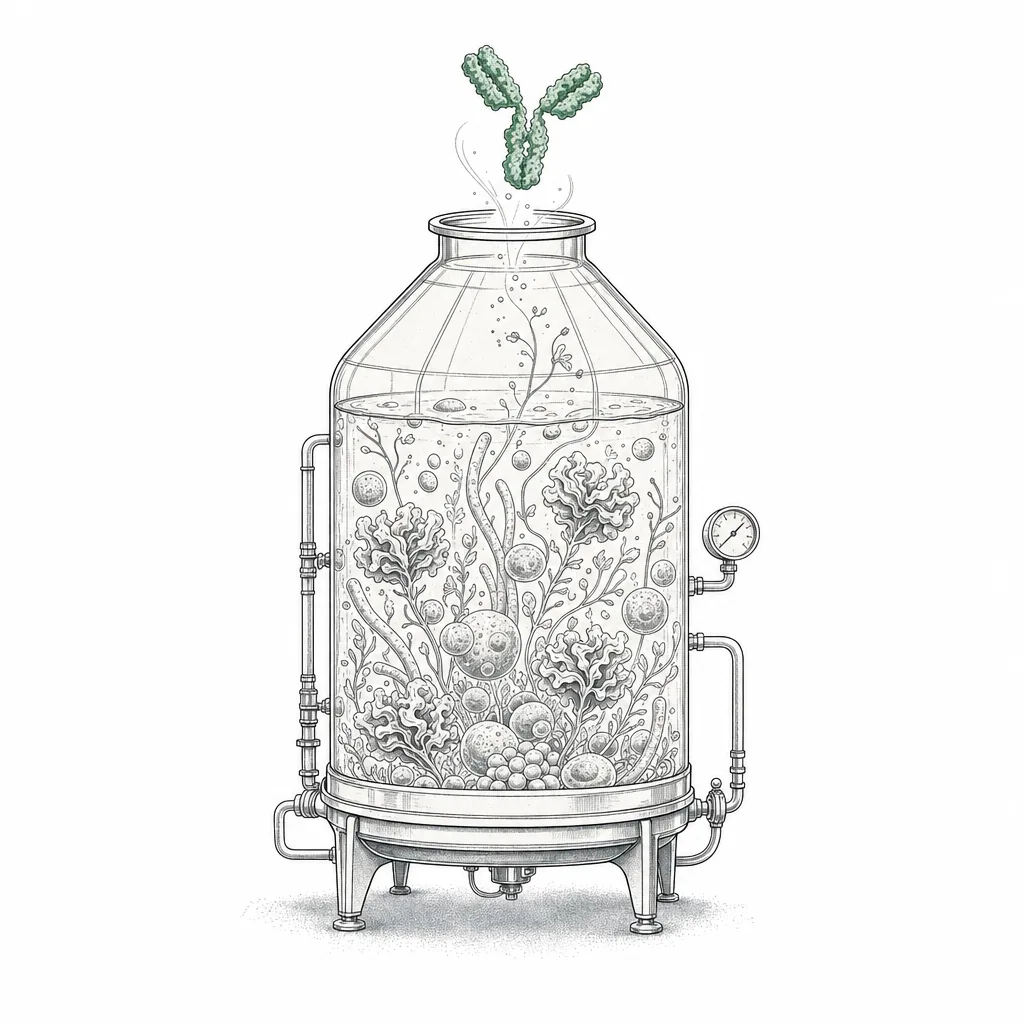
A drug whose active ingredient is a large molecule — usually a protein, like an antibody — made using living cells (bacteria, yeast, or animal cells grown in a fermentation tank). That's different from a "chemical drug (small molecule)" like paracetamol, which is synthesized through pure chemical reactions. Biologics are the most expensive and complex class of drugs in medicine, and when their patents expire, their copies aren't called generics — they're called biosimilars.
On our megatrend map, Biosimilars is a sub-theme under Biotech & Genomic Medicine. It doesn't invent new drugs — it's a "downstream" business that harvests value from biologics other companies invented, once their patents run out.
02Why the world needs it
The first reason is money — enormous amounts of it. Over this decade through 2033, original drugs worth more than $400 billion in combined sales will lose patent protection one after another. Analysts call this the "patent cliff" — the cliff that big pharma is about to fall off. And every dollar that falls off the cliff is open ground for biosimilar players to fight over.
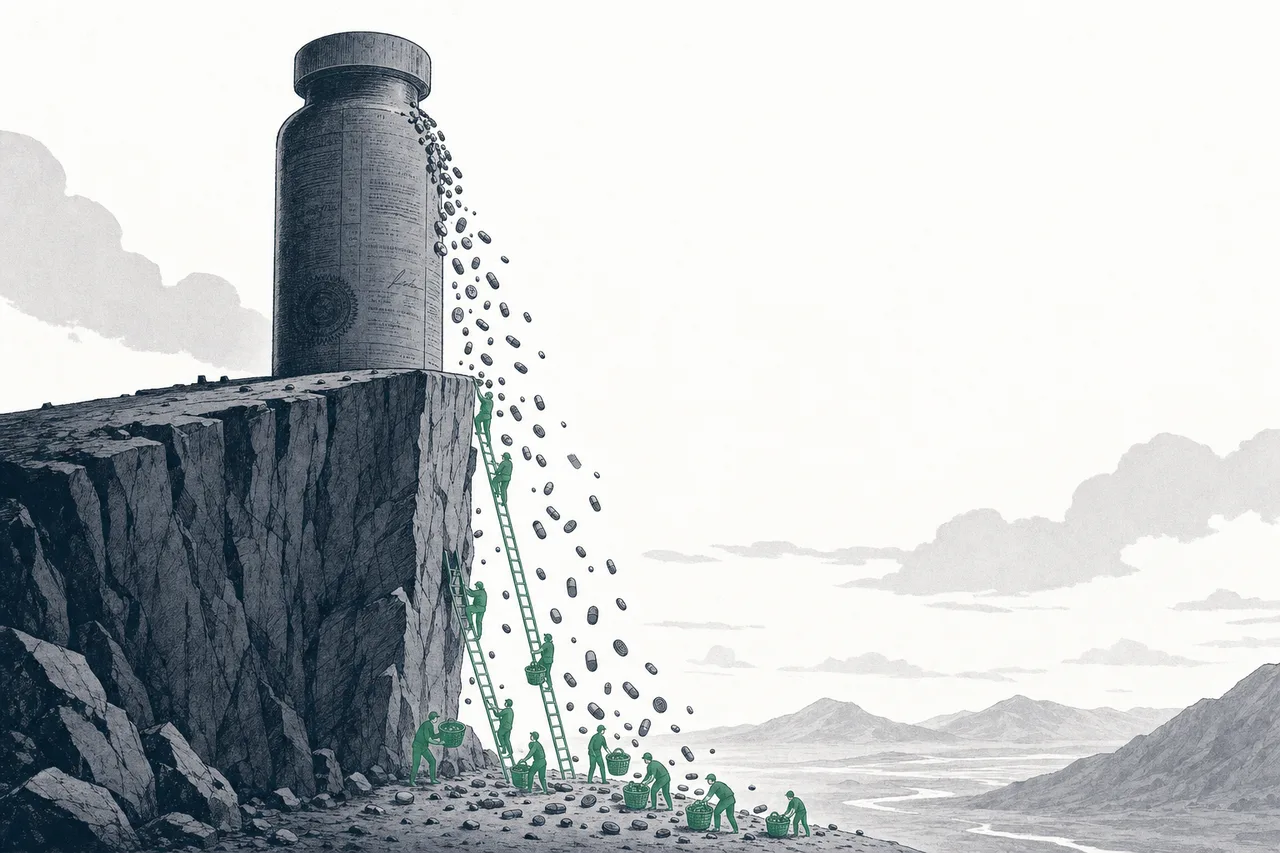
And these aren't small drugs. The flagship biologics coming up for grabs are all "the company's single biggest earner" — especially the cancer drug Keytruda, which earns nearly $30 billion a year. Look at the size of the treasure chest now opening:
The second reason is that healthcare systems worldwide are about to buckle under drug costs. Biologics are only a small slice of prescriptions by count, yet they devour a huge share of drug budgets. Biosimilars come in and cut prices, giving more patients access and saving governments real money — in the US alone, biosimilars are estimated to have cut biologic spending by about $54 billion over 2017–2026, and some estimates see that figure surging to around $181 billion over the next five years.
Put simply, biosimilars are the mechanism that slowly turns "expensive drug innovation" into "something ordinary people can afford" — just like generics once did for chemical drugs decades ago. But this time the stakes are far bigger, because the drugs themselves are many times more expensive and complex.
03Why it's hard to copy (and not a "generic")
Here's where most people get it wrong. Many think a biosimilar is just the "generic" of a biologic — but they're actually worlds apart, and that difference is the very heart of why this whole industry exists.
A generic is a small chemical molecule with a few dozen atoms in a fixed arrangement. Anyone with the recipe can make an "exactly identical" copy, prove it with simple chemistry tools, and develop it for just a few million dollars — like photocopying a recipe and following it.
A biologic is completely different. It's a giant protein with tens of thousands of atoms, folded into a complex three-dimensional shape — and crucially, it isn't synthesized; it's grown inside living cells. Like growing a plant, not stamping out parts.
Because it comes from living things, even the original company can't make two batches of the same drug perfectly identical — each batch has tiny natural variations depending on temperature, cell line, cell-culture feed, and purification steps.
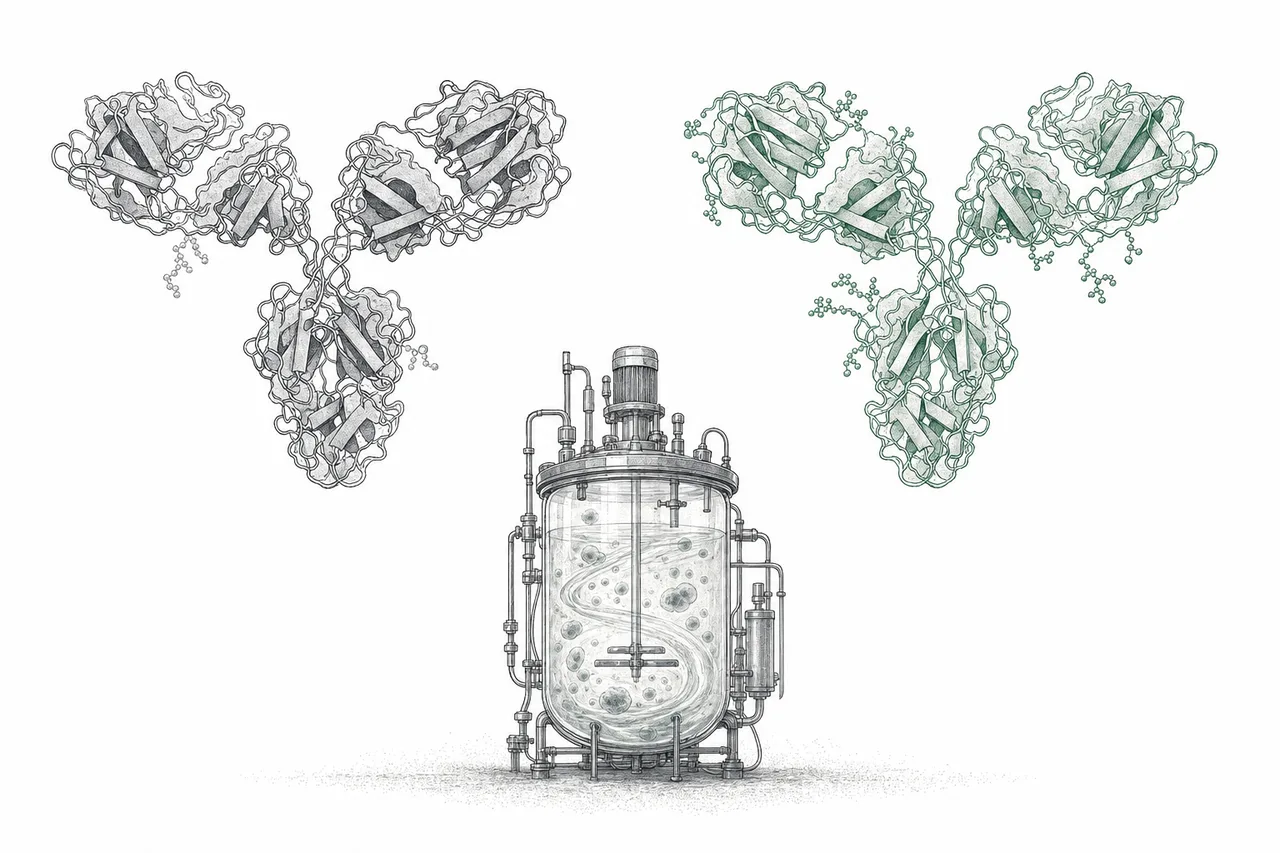
Many drug proteins have "sugar chains" attached to their surface, which affect how they work and how stable they are. Living cells don't add these sugars exactly the same way every time, so each batch of a biologic naturally differs a little — this is the main reason biologics can't be "copied exactly."
The result: developing a single biosimilar costs $100–300 million, takes years, requires detailed analytical testing, and usually ends in a patent lawsuit with the original drug's owner — a hundred times more than making a generic (roughly $1–5 million). So this isn't a field for just anyone; it's a field for companies with the capital, the manufacturing technology, and a world-class legal team all at once.
04How it connects in the ecosystem
Biosimilars don't stand alone. They're a "shadow" that always follows original drugs in other corners of Biotech. The biggest-earning biosimilars are all copies of drugs in immune disease and cancer — because that's where the expensive biologics cluster. You could say biosimilars are the natural "endpoint" of every biologic success: an expensive innovative drug today becomes a biosimilar target in 10–15 years.
In the broader megatrend view, it also weaves into other trends in interesting ways:
- Connects to the aging society: the older people get, the more they use biologics to treat chronic conditions (arthritis, cancer, diabetes). As demand for original drugs grows, so does the treasure chest waiting for biosimilars to harvest
- Depends on AI: proving something is "similar enough" requires analyzing enormous amounts of molecular structure. AI and computer simulation are stepping in to shorten the time and cut the cost here — which matters a lot now that regulators are starting to accept "analytical evidence" instead of large human trials
- A sibling to other fields in Biotech: like Vaccines, Plasma-Derived Products, and Autoimmune Therapeutics — all of which share the same biologic-manufacturing foundation. Companies good at growing cells in fermentation tanks can often play in several fields at once
05Where it stands now
2025–2026 is a major turning point. The big wave of the patent cliff is genuinely hitting shore now, not just sitting on analyst slides anymore. The global biosimilar market is around $37 billion in 2024 and growing at roughly 16–17% a year — which, if it holds, would push it past $190 billion by 2035.
But the total figure hides the most interesting story: biosimilar adoption is wildly "uneven" from drug to drug. Some cancer drugs are almost entirely replaced by biosimilars within a few years, while some immune drugs are replaced very slowly — reflecting insurance policy, resistance from the original owner, and how familiar doctors are with it.
The hottest signal of 2025 was the "denosumab battle" (Amgen's osteoporosis drug Prolia, worth about $5.5 billion), where big players suddenly jumped in to compete all at once — Sandoz, Celltrion, and Samsung Bioepis each launched their own biosimilar in the same year. It's a clear picture of how, when an original drug nears patent expiry, a swarm of biosimilars is already waiting. The regulatory side was just as busy — the FDA approved 19 biosimilars in 2024 (versus just 5 in 2023).
Another big milestone is on the rules side. In late October 2025, the FDA announced a major process overhaul — easing the requirement for "switching studies" and large head-to-head efficacy trials, instead accepting proof via advanced analytical technology. It may sound technical, but the impact is huge: it cuts both the cost and the time to bring a biosimilar to market.
A special US status that lets a pharmacist "switch" and dispense a biosimilar in place of the original drug right at the counter, without calling the doctor back — much like getting a generic instead of a brand. This status is the key that lets biosimilars grab market share fast, and the FDA's new rules are making it much easier to obtain.
Geographically, Europe is several lengths ahead of the US. Europe opened the door to biosimilars back in 2006 and has centralized drug-procurement systems that push adoption quickly. Today Europe holds about 37% of the global biosimilar market. The US, while slower to adopt (overall uptake rose from under 1% in 2013 to ~34% in 2022), is the highest-dollar battleground thanks to its sheer market size.
06The road ahead
The next big battlefield is cancer. Immuno-oncology drugs like Keytruda and Opdivo that were once "untouchable" are coming up for patent expiry late in the decade — and this is the biggest treasure chest biosimilars have ever faced. Keytruda alone earns nearly $30 billion a year; grabbing even a sliver of share can change a company's fortunes. And going by the lesson of the previous generation of cancer drugs (where biosimilars hit ~80% within a few years), the transition should come fast.
The second trend is competing on "convenience," not just price. For example, turning an intravenous drug (hours hooked up to a drip at the hospital) into a subcutaneous shot you can give yourself at home in seconds — this is the battlefield where players like Alteogen are planting their flag, a sign that the new generation of biosimilars won't just be "a cheaper copy" but "better in real-world use."
And the third trend is loosening rules. As the FDA and agencies worldwide accept more analytical proof, development cost and time will fall, opening the door for smaller players — and making original drugs that were once "too small to be worth a biosimilar" into targets worth pursuing.
07Challenges & risks
This pretty picture has a dark side worth saying plainly — and it's bigger than many people think.
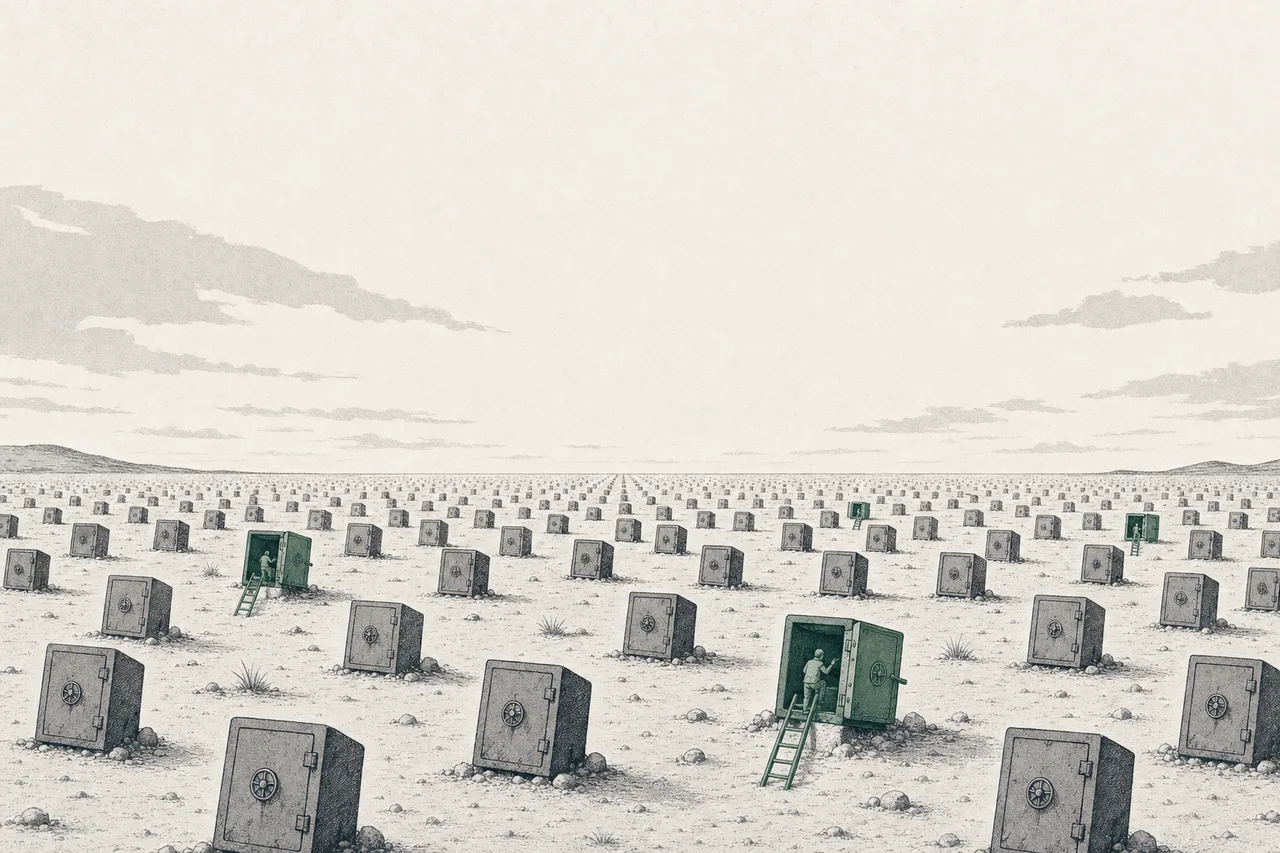
The first problem is what the industry calls "the Biosimilar Void". IQVIA's 2025 analysis found that 90% of the biologics losing patent protection in the next decade have no biosimilar in development at all.
Sounds like it contradicts the "treasure chest" story, right? The reason is that most of those drugs don't sell enough to justify the $100–300 million development cost plus litigation. The result: many patients may have no path to a cheaper drug at all.
The second problem is margins so razor-thin they're scary. Price-cutting against each other keeps shrinking profits. Estimates suggest that in the US, the brand owner still takes about 50% of the sale price, while the biosimilar maker takes home less than 10%. When prices get too low, makers gradually pull out — and that only widens the void above, turning into a structural risk for the whole industry.
The last risk is the patent game. Original drug owners don't fall off the cliff easily. They use a "patent thicket" strategy — dozens of minor patents fencing in a single drug to delay biosimilar entry, like AbbVie holding off Humira for a full 7 years after its main patent expired. That means the "patent expiry date" on paper and the "date biosimilars can actually enter the market" are usually years apart, and full of legal fees.
In short: biosimilars are a vital mechanism that slowly makes expensive, life-saving drugs reachable. It's one of the most "good for the world" stories in pharma. But as a business it's a brutal, razor-thin field — understanding the difference between "good for patients" and "good for shareholders" is the key to seeing this trend clearly.