Megatrend · Whole-trend overview
The one trend whose future we already know for sure
Everyone who will turn 65 in 2050 has already been born today — so an aging world isn't a guess, it's a demographic certainty that decides where money flows for the next 25 years. The global 65+ population is set to grow from ~830 million to 1.5 billion by 2050, and an aging body and life "need" things in a clear order — housing, drugs, devices, pensions, all the way to funerals. This lesson is the map that strings the 10 categories of the aging economy onto the single life path everyone walks (each category has its own deep-dive chapter).
01The big picture: a future that's already written
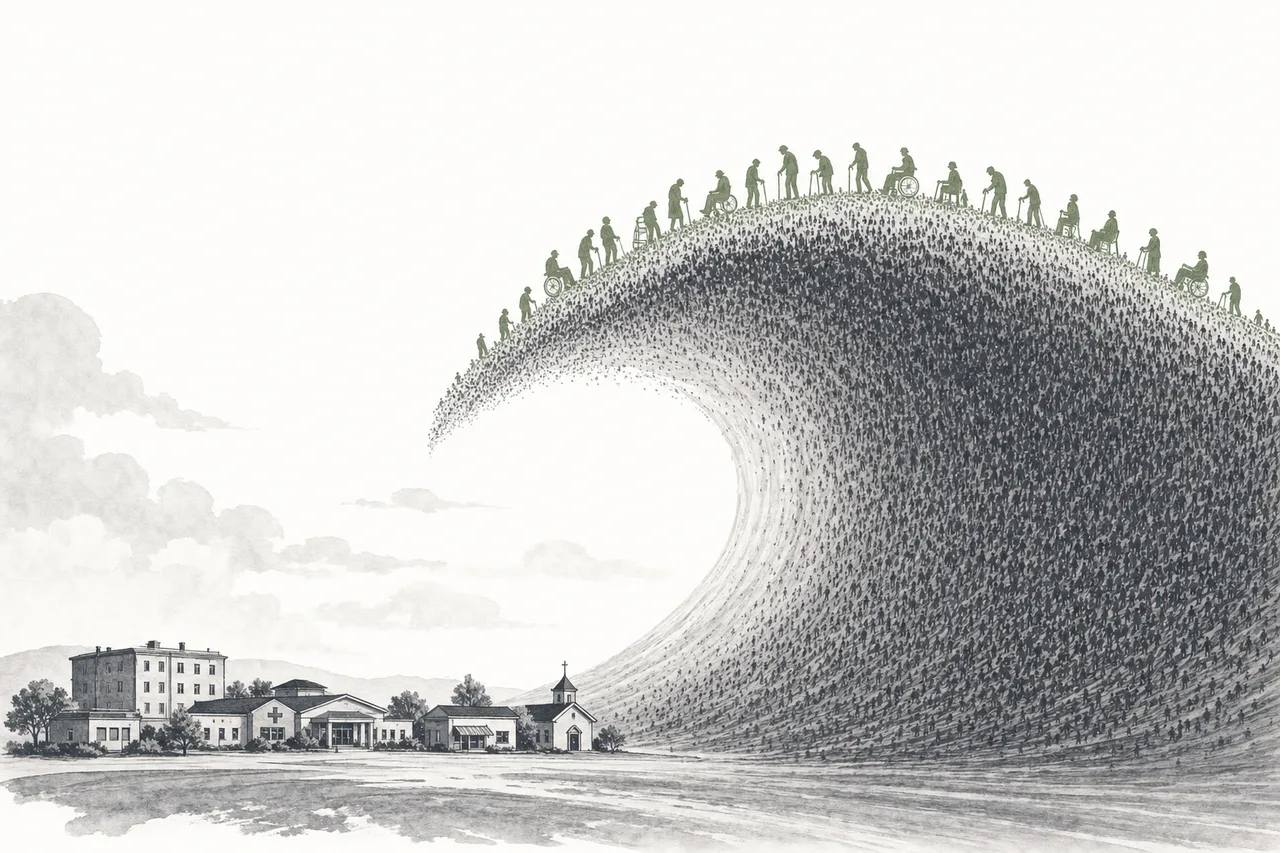
Most megatrends are full of "maybe" — AI maybe changes the world, clean energy maybe replaces oil. This one is different, because it's already happened. Everyone who will turn 65 in 2050 has already been born today. So we're not guessing the future — we're just counting heads.
And the numbers are clear. In 1974, people aged 65+ were just 5.5% of the world's population. By 2024 that had nearly doubled to 10.3%, and it will hit 20.7% around 2070 — meaning one in five people on Earth will be a senior. In raw numbers, the 65+ population jumps from about 830 million today to 1.5 billion by 2050, and to 2.2 billion by the late 2070s — outnumbering all the world's children for the first time in history.
As this group grows, it becomes one of the world's biggest wallets — what's called the "silver economy". Global spending by consumers aged 60+ is expected to top $15 trillion a year by 2030 (up from ~$8.7 trillion in 2020). But the key isn't just the size — it's the nature of the demand. An aging body and life don't "want" things, they "can't do without" them — and that's exactly what this map will show you.
All the economic activity that springs from the needs of older people — from housing and health to finance and leisure. Not a single industry, but a "lens" that cuts across many industries at once to see who benefits as the world grows old.
02The map: 10 categories arranged by life's needs
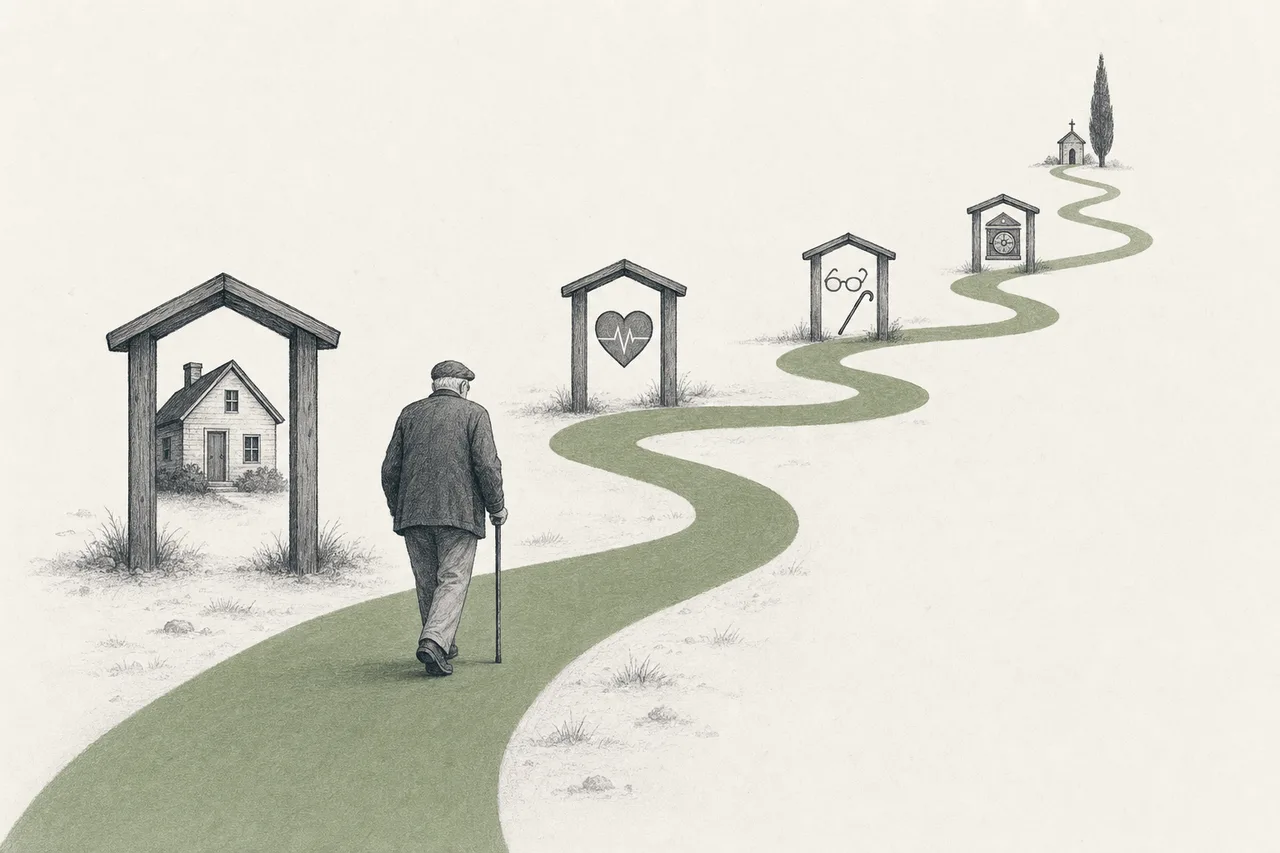
The best way to understand this trend is to stop seeing it as an "industry" and instead see it as "the needs of an aging body and life," lined up along the path everyone walks. As we get older, we need five things in order — a place to live, treatment, help, money to spend, and finally the end. The 10 sub-categories fit neatly onto these five needs (each has its own deep-dive lesson — tap in to read):
① Live — housing and everyday care
- Senior Housing & Healthcare REITs: Real estate for seniors — nursing homes and care facilities, held through REITs that collect rent off ever-rising demand
- Senior Care: Care for seniors in facilities — assisted living, memory care, and nursing homes with on-site staff
- Home Healthcare & Hospice: Bringing care into the home — from visiting nurses to end-of-life palliative care
② Treat — the chronic diseases that come with age
- Chronic-Disease Pharma Franchises: The chronic-disease drugs seniors take for life — diabetes, heart, blood pressure, plus the GLP-1 wave
- Medical Devices for the Aging Body: Devices implanted in or used on a wearing body — pacemakers, artificial heart valves, joint replacements
- Dialysis & Renal Care: Kidney dialysis — a service patients must come in for 3 times a week, for life (recurring revenue that almost never stops)
③ Assist — declining senses and mobility
- Hearing / Vision / Dental: Hearing aids, glasses, dental implants — restoring senses that fade with age
- Mobility Aids & Assistive Technology: Wheelchairs, walkers, and tech that helps with daily living — from fall-detection sensors to care robots
④ Fund — having enough money to the very last day
- Retirement Income & Annuities: Financial products that turn a lump sum into a "paycheck for life" — pensions and annuities, selling at record levels
⑤ The End — the death no one escapes
- Death Care & Funeral Services: The funeral, cremation, and cemetery business — the most certain demand of them all
03How it all connects (the life path)
The heart of this map isn't a "supply chain" like a normal industry — it's a life path. One aging person walks through these needs one step at a time, and at each step a category of business waits to "take the baton." One single force drives all of it — the aging population wave, which feeds demand into every category at once.
What makes this trend special is that each need "hands off" to the next — the person in a nursing home (the Live category) is the same person who takes chronic-disease drugs, wears a hearing aid, and eventually needs funeral services. A single customer flows through several categories across the last 20–30 years of life, which makes the whole system's demand continuous and predictable — the opposite of luxury goods that rise and fall with the economy.
04Where the value and power sit
All 10 categories benefit from the same population wave, but they don't all earn the same. The key rule: value and power pool in the categories that have three things — (1) essential, recurring & non-discretionary revenue, (2) assets or licenses others can't easily compete with, and (3) pricing power.
Three groups have the "best stuff" by this measure. The first is care you bill for over and over, like dialysis — patients come in 3 times a week, every week, for life, giving companies like DaVita and Fresenius revenue that almost never stops. Same with chronic-disease drugs that patients take every single day.
The second is assets that are hard to build anew — a senior-housing real estate trust (Healthcare REIT) owns a limited stock of nursing-home buildings, and high construction costs make it slow for rivals to build more while demand surges — a supply/demand equation that favors the existing owner. The third is patented drug franchises, which give high pricing power for as long as the patent holds.
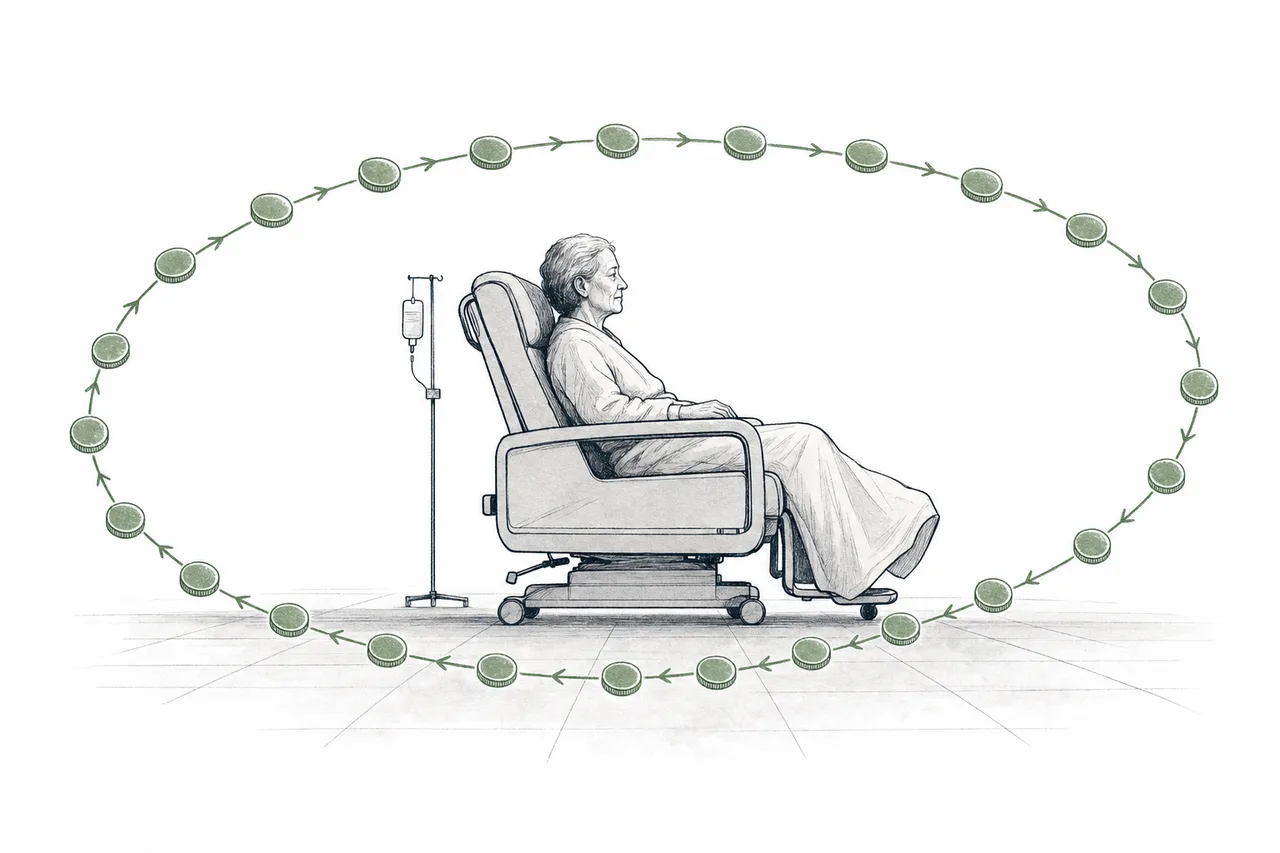
The lesson for reading this trend: don't just ask "does this company benefit from more old people?" — ask "how recurring is its revenue, and how hard is it for others to copy?" More old people lift every category, sure, but the real profit pools where things are "essential" and "hard to replace."
05The forces that move the whole trend
Even though the categories differ, four big forces move the entire aging economy at once:
1. Demographic certainty — this is the most fundamental force. The demand here barely depends on the economic cycle. People don't stop aging because of a recession; a heart valve that needs replacing still needs replacing, a kidney that needs dialysis still needs it. The tightest part of the market is the 80+ group — the age that needs the most intensive care — and it will grow about 28% over the next 5 years. That's why senior-focused REITs like Welltower and Ventas have announced they're going all-in on senior housing.
2. Healthcare-cost and reimbursement pressure — almost every category in the "Treat" group leans on government money (like Medicare in the US) or insurance, which makes reimbursement policy a bigger driver of profit than demand itself. Governments with ballooning budgets push to hold down drug prices, dialysis fees, and service charges — which is both a risk and a wall against competitors at the same time.
3. The GLP-1 wave and longevity — GLP-1 drugs (like Mounjaro and Zepbound) are changing the very definition of "aging." The GLP-1 market is expected to grow from $53 billion (2024) to ~$157 billion (2030), spreading from diabetes/weight loss into heart, liver, and dementia — which connects this trend deeply to Biotech and Longevity. If people stay healthy longer, some categories (like nursing homes) may get pushed back, while others (like drugs) benefit in full.
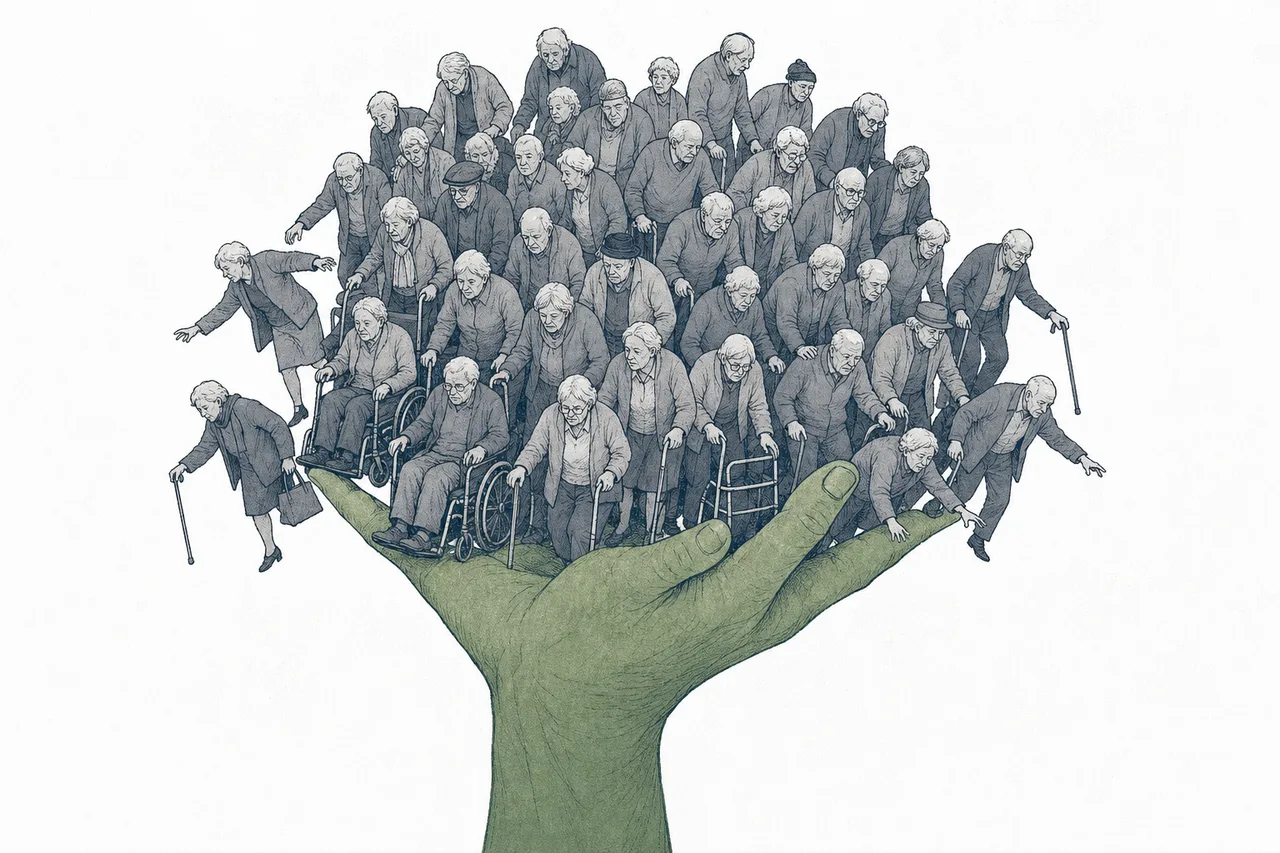
4. The care-worker shortage — this is the biggest bottleneck on the service side. The WHO expects the world to be short about 10 million health and care workers by 2030, and to keep the ratio of caregivers to seniors steady, the world needs to add roughly 13.5 million more caregivers by 2040. Japan — the oldest country on Earth — faces this before anyone else (short ~570,000 by 2040), so it's turning to robots and care-assist technology — which makes this trend drive demand for Robotics directly.
06Where things stand now + each category's champion
2025–2026 is the era when every category "fires up" at once — senior housing refills faster than new buildings can go up, GLP-1 drugs boom enough to make their makers among the world's biggest pharma companies, and annuity sales set records for the 4th straight year. Below are each category's "champions," reflecting how the power is spread across many countries (US/Europe/Japan/Australia):
Notice that on the Fund (④) side, the players tend to be large, diversified insurance/finance companies — the mapped players include Ping An (China), Tokio Marine and ORIX (Japan), all selling pension/annuity products for Asia's aging societies. In the US, annuity sales hit a record $460 billion in 2025 — the 4th straight year — a sign that baby boomers are racing to convert lump sums into a "paycheck for life" before they retire.
07The future and the risks
Looking ahead, this trend has near-guaranteed tailwinds, but also its own risks you need to watch alongside them.
On the opportunity side: structural demand keeps flowing into every category for decades to come. The 80+ group that needs the most intensive care is growing fastest, the silver economy is heading for $15 trillion, and Asia — especially China, whose elder spending will grow from ~$750 billion to ~$2.1 trillion — is becoming a new arena bigger than Japan. Whoever controls the "recurring revenue" and "hard-to-build assets" categories has a long-term tailwind.
On the risk side, there are three layers to watch:
- Reimbursement & policy (reimbursement risk): most health categories lean on government/insurance money. A government with a ballooning budget may push down drug prices, dialysis fees, and service charges — a whole category's profit can shift with a single policy decision
- Game-changing technology (longevity/GLP-1): if drugs keep people healthy much longer, categories that care for the "seriously ill" (nursing homes, dialysis) may be pushed back or see demand drop, while the drug category benefits — so this trend doesn't always rise in lockstep
- Labor and wage costs: on the service side (care/nursing), the worker shortage pushes wages up and squeezes profit — demand overflowing but no one to hire is the care provider's nightmare
And that's why this chapter is a "map," not a "deep-dive guide" — because the real value of seeing the whole trend is seeing that the needs of an aging life are woven into a single path. Once you get that, you can step in and explore each category in detail — just tap into the deep-dive chapter of whichever category interests you.