Megatrend · The whole-trend overview
The trillion-dollar investment map of the AI era
AI isn't just ChatGPT on your phone — it's the biggest construction boom in economic history. Big Tech is now pouring in around $700,000 million a year, stacking up enormous layers of infrastructure. This lesson is the map that ties AI's 9 categories together — how they stack into "layers," where the money piles up, and why so many people are starting to ask whether this is a bubble (each category has its own deep-dive lesson to read).
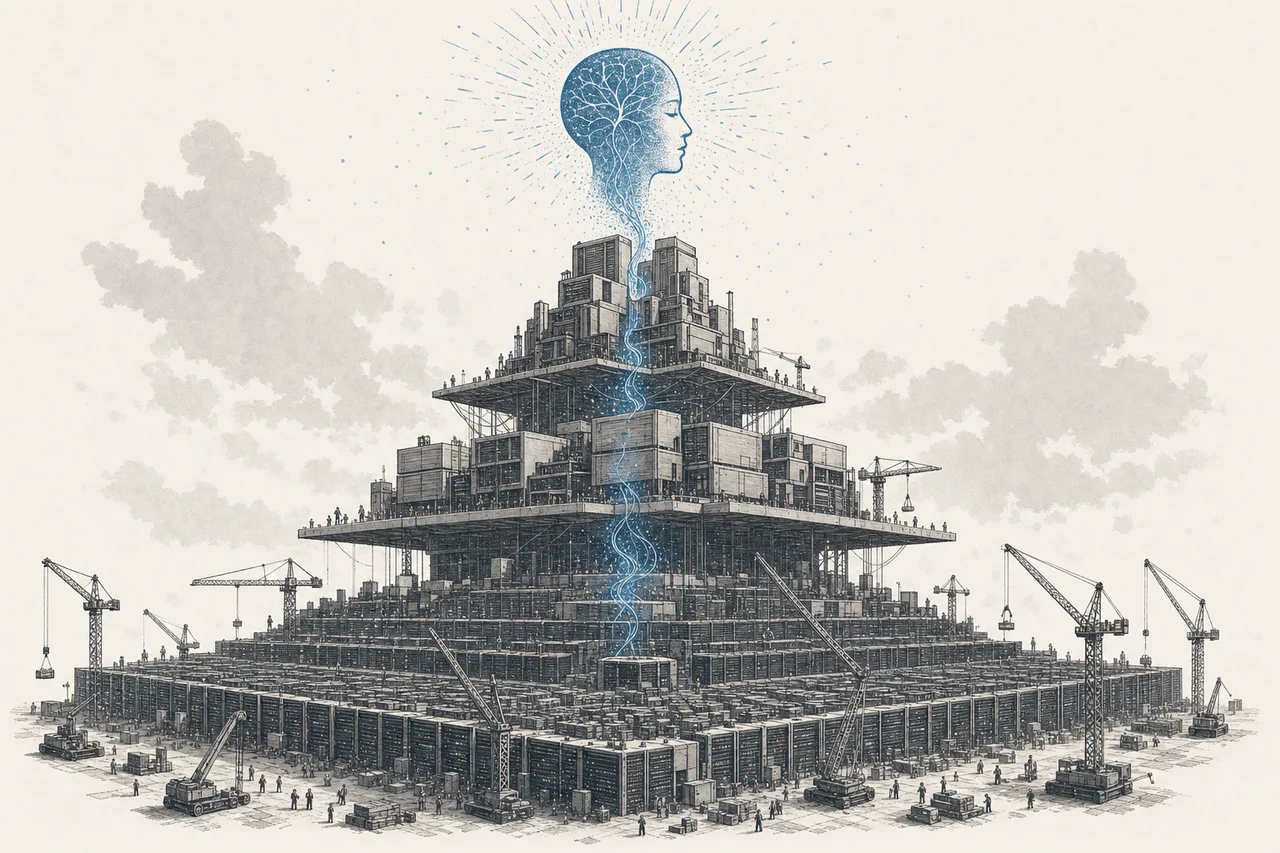
01The big picture: the biggest construction boom in history
When we ask AI a question and get an answer in seconds, behind it sit expensive servers, city-sized data centers, and a huge amount of electricity. Today's AI isn't just "smart software" — it's a heavy industry that demands enormous physical investment, and that's what makes it one of the biggest construction booms in economic history.
The numbers are staggering. Just a handful of giant cloud companies (hyperscalers) are on track to spend a combined $700,000 million in capex this year, versus around $290,000 million in 2024 — more than doubling in just a few years.
That's big enough to shake the whole global economy — it pushes up chip prices, drives electricity demand, and has become a growth engine for the stock market. But to really understand AI, you first have to see that it isn't one single thing — it's a set of stacked "layers."
02The map: 9 categories across 3 layers
The best way to understand AI is to picture it as a "three-layer cake" — each of the 9 sub-categories sits in one of the layers. Each category has its own deep-dive lesson (tap to read):
Top layer — applications (what we actually use)
- AI Applications & Copilots: software that bakes AI into real work, like writing assistants and customer-service chatbots
- Agentic AI & Autonomous Workflows: AI that "does the work itself" across multiple steps, autonomously — the hottest topic of 2026
Middle layer — platforms (the brains and the tools)
- Foundation Models & Research Labs: the companies building the "brain models" like GPT, Gemini, and Claude (mostly private, accessed through strategic investors)
- AI Compute Cloud & Neoclouds: providers that rent out AI compute power (GPU-as-a-service) — both the cloud giants and new players
- AI Tooling, Data & MLOps: tools to handle data and run models — the "picks and shovels" of the software side
Bottom layer — infrastructure (the physical foundation)
- AI Compute & Accelerator Silicon: the AI compute chips (GPUs) — the scarcest layer, and the starting point for everything
- AI Networking & Interconnect: the high-speed systems that link thousands of chips together inside a cluster
- AI Data Center & Build-out: the buildings, the land, and the construction of data centers
- AI Power & Cooling: the power and cooling systems — now a new bottleneck because AI eats so much electricity
03How it all connects (the AI stack)
The heart of this map is the word "stack" (the layers that pile on top of each other) — each layer sits on the one below it and makes the one above it possible. The app layer we use wouldn't work at all without the models in the middle layer, and those models can't be trained without the chips and data centers in the bottom layer.
This relationship is both a strength and a fragility — it means every dollar put into the app layer ultimately has to flow down to feed the bottom layer (chips, power, data centers). And the reverse: if the top layer (apps) can't actually earn what was invested, the enormous bottom layer that got built turns into a burden — which is the core of the "bubble question" we'll get to at the end of this lesson.
04Where the money piles up
The question investors argue about most fiercely is — across these three layers, "who actually gets the money"? And right now the answer is fairly clear: the bottom layer (infrastructure) is where the money piles up.
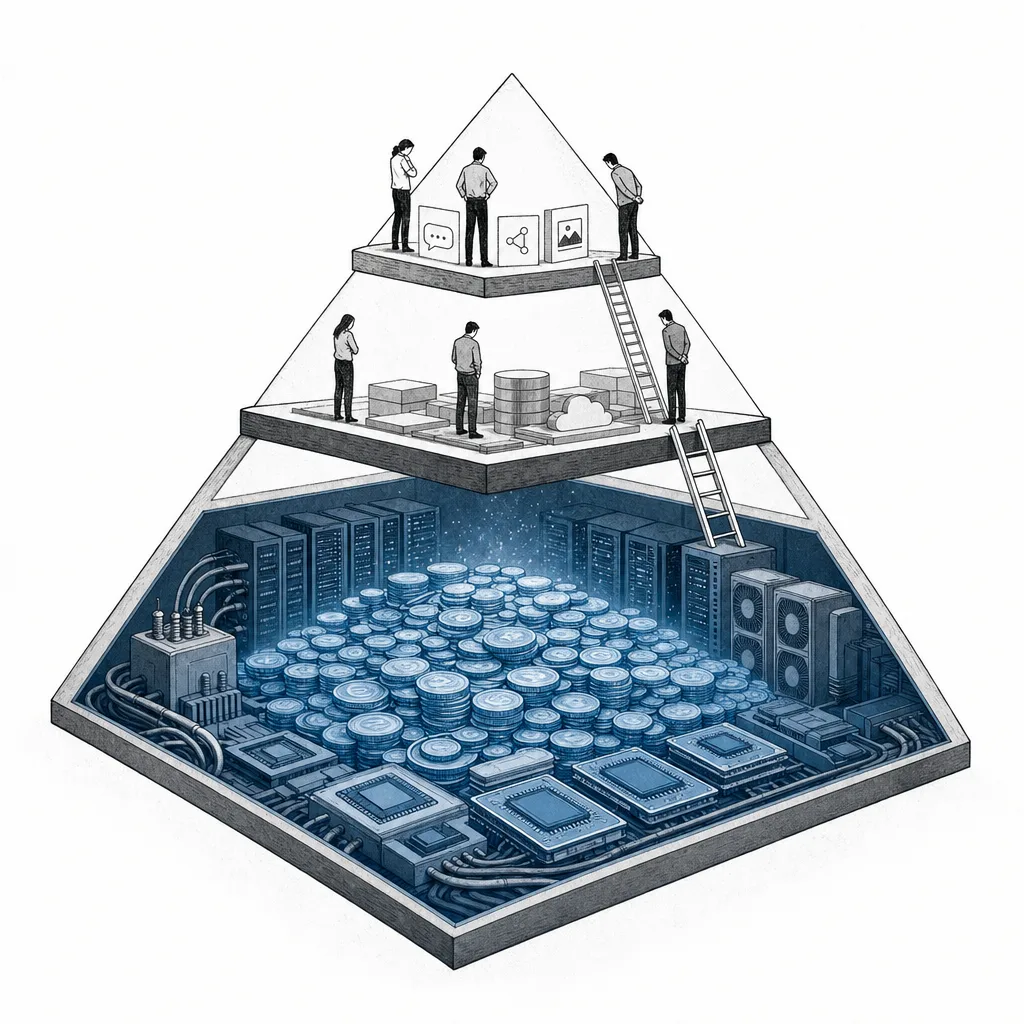
The reason is that the bottom layer is the "picks and shovels" — no matter who wins the AI war, everyone has to buy chips, rent cloud, and use power. So the companies selling those things (led by NVIDIA) collect money for sure. The top layer (apps), meanwhile, is where users actually pay — but the competition is brutal, and a lot of it is just a "thin shell" wrapped around someone else's model, which is hard to make money on.
But here's the worrying part — historically, value tends to gradually flow upward to the app layer in the end (the way internet-era money ended up at Google/Amazon, not at the router sellers). The question is whether AI's app layer can earn enough money fast enough to justify the enormous investment in the bottom layer.
The lesson for looking at this trend: don't just ask "does this company do AI?" — ask "which layer is it in, and is that layer actually making money yet?"
05The forces moving the whole trend
There are 3 big forces moving all of AI at once:
1. The investment supercycle — trillion-dollar capex is flowing into the bottom layer. Data centers worldwide are expected to push investment to $1.7 trillion by 2030. This is the force lifting the whole chain — from chips to electricity to construction.
2. The power bottleneck — AI eats so much electricity that energy has become the real constraint. Scaling AI is no longer limited by money or chips alone, but by "where do you get the power from" — which ties AI deeply to energy.
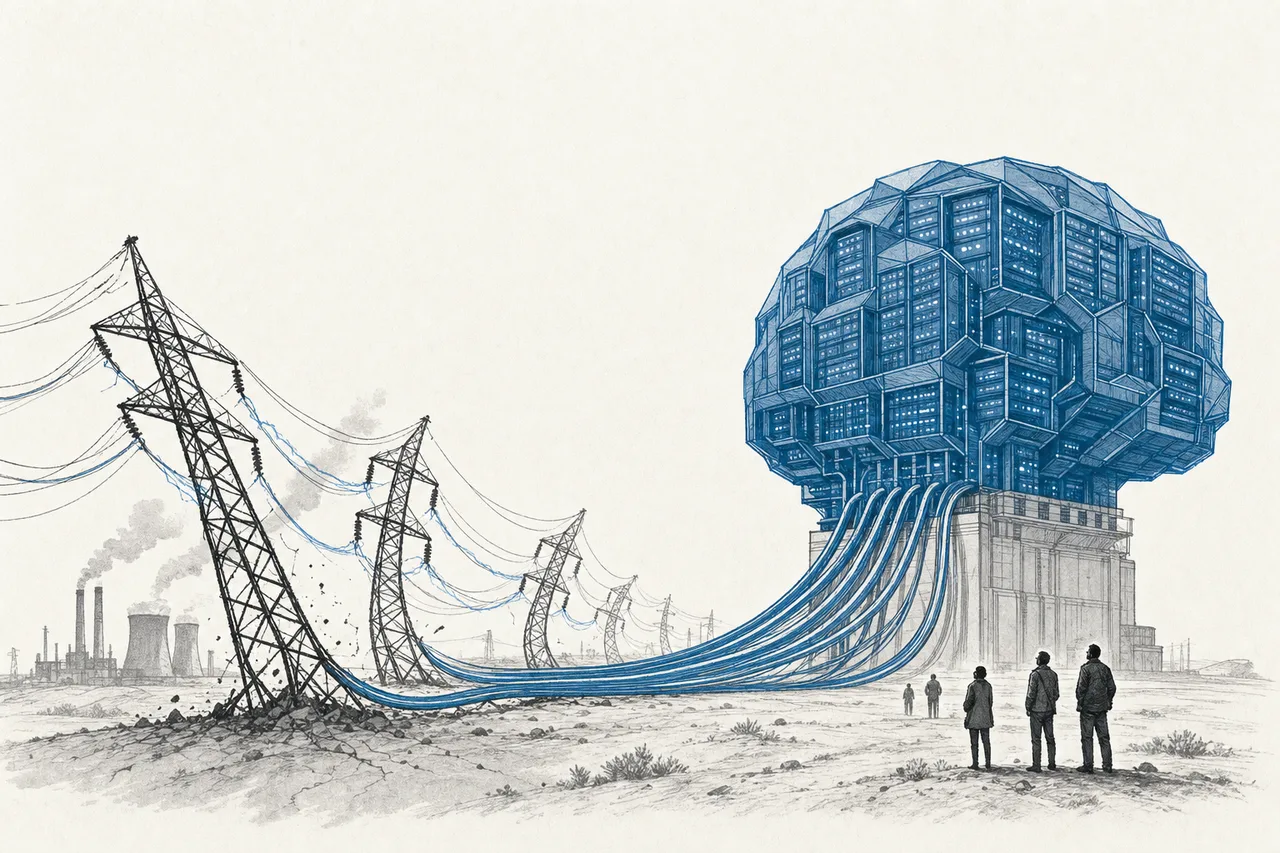
3. A total dependence on semiconductors — the entire bottom layer of AI sits on chips, especially GPUs and HBM memory. The whole AI boom is the chip industry's boom, and chip bottlenecks (like TSMC, or SK Hynix's HBM) become AI's bottlenecks too.
06Where we are now + each layer's champions
2025–2026 is the era when money poured into the bottom layer and power spread across several types of players. Below are the "champions" of each layer:
07The road ahead, and the bubble question
No honest lesson about AI can skip this — is this a bubble?
The worried side points to several signs. The first is "circular financing": for example, NVIDIA announces an investment of about $100,000 million in OpenAI, and OpenAI then uses that money to buy NVIDIA chips — some analysts warn that this kind of structure "stages" demand to look bigger than it really is, echoing the dot-com bubble.

The second is the numbers that don't add up. OpenAI is committed to spending around $1.4 trillion over 8 years to build data centers, while its current revenue is only about $13,000 million and it's still losing money — a gap that can only be bridged with huge borrowing and a lot of faith.
And the third is "the returns that haven't arrived". A report from MIT found that even though companies have already invested $30,000–40,000 million in generative AI, about 95% report they don't yet see a measurable return — reflecting the gap between "the money put in" and "the value that came back."
But the believers have solid reasons too: the foundational technology that's already been built (chips, data centers, power) is real and will last. Even if a short-term bubble pops, the infrastructure still has value — just as the fiber laid during the dot-com era became the foundation of the internet age that followed.
In short: AI is the biggest bet of the era — it can be both a genuine revolution and have a bubble mixed in at the same time (the two can happen together, like in the internet age). Understanding how it's built up into "layers" is the best tool for telling which parts are real and which are expectations running ahead of reality — go ahead and tap into the deep-dive for whichever layer interests you.