Megatrend · Cybersecurity & Digital Trust
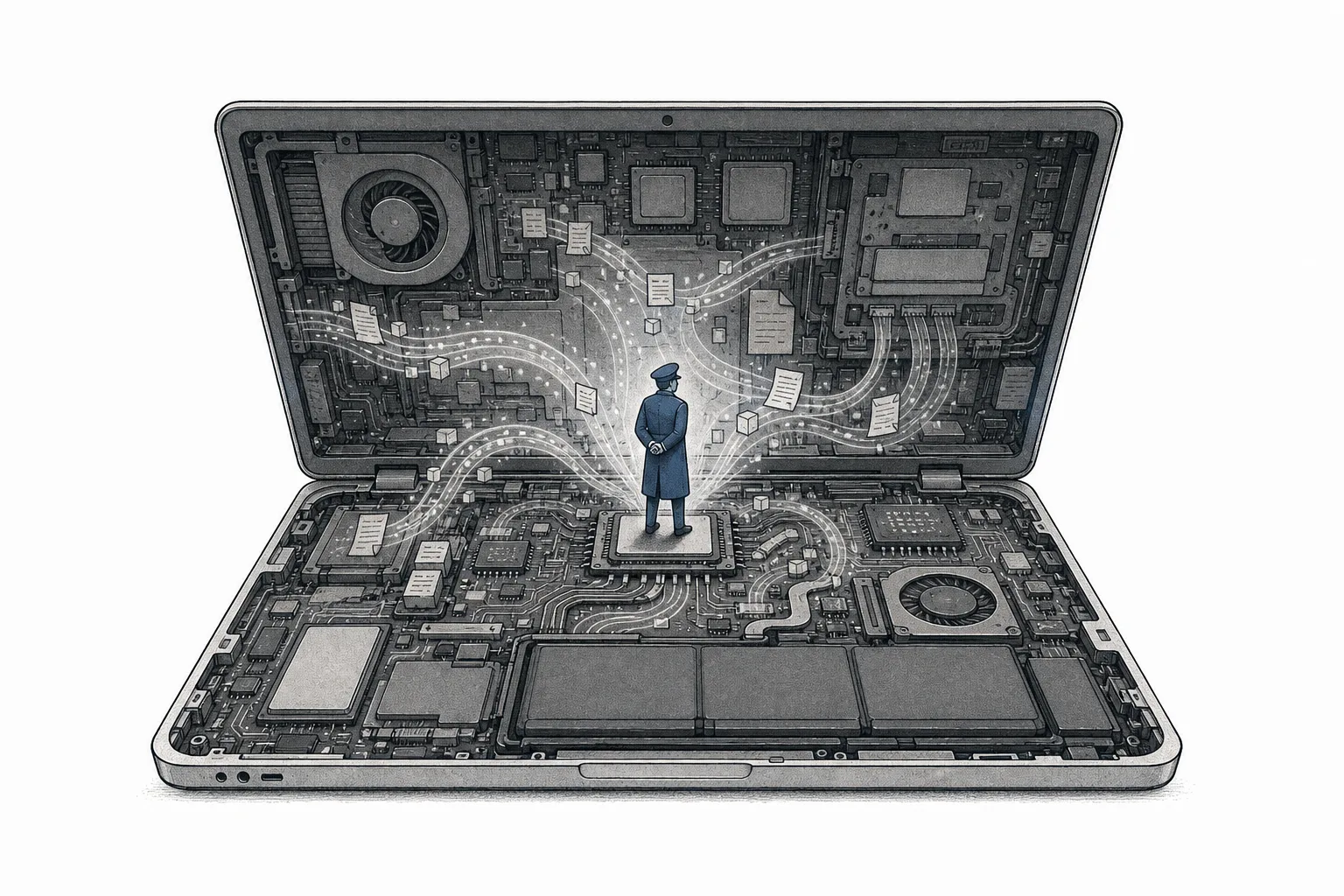
The guard standing watch "inside" your laptop — not at the front door
Old-school antivirus works like a security guard at the door holding a book of mugshots — it only stops you if your face matches one in the book. But today's hackers don't walk in the front door. They blend into the machine's memory, use tools Windows already has, and leave no file to scan. EDR is about ditching the mugshot book and instead installing "a guard with security cameras" inside every machine — watching the "behavior" for anything abnormal, catching an attack the moment it starts to form, and cutting the infected machine off the network in seconds. And XDR extends that line of sight across email, cloud, and network, into one connected picture.
01What it is
Picture an office with a security guard at the door, holding a thick book of mugshots, checking each person who walks in against it and stopping anyone who matches. This is exactly old-school antivirus — it knows the "face" (called a signature) of viruses it has seen before, and keeps scanning files on the machine to see if any match a face in the book. This worked very well in an era when viruses arrived as files, had a clear face, and someone had encountered them before.
The problem is that today's criminals no longer walk in the door. They don't carry a virus file with a "face" to memorize — they hide in the machine's memory (in-memory) and pick up tools Windows already has, like PowerShell, to do their dirty work, without leaving a single file to scan. So the guard with the mugshot book stands baffled at the door, seeing nothing at all, while the house is being robbed inside.
EDR (Endpoint Detection & Response) was born to fix exactly this. It stops asking "do you look like a criminal in the book?" and switches to asking "are you doing something abnormal right now?" — by installing a small watcher (called an agent) on every machine, recording every behavior that happens, then sending it up to the cloud to analyze. If it spots a suspicious move, it catches the attack just as it starts, and can "isolate" that machine from the network in seconds, before the fire spreads to the whole company.
On the megatrend map, this node is a branch under Endpoint & Network Security within the big trend Cybersecurity & Digital Trust, with a sibling right beside it: Network Security & SASE — an easy way to remember it: that node looks after "the routes and access," while this node looks after "the machines themselves" — every laptop, server, and phone.
Endpoint = every end device people actually use (laptops, servers, phones) — each one a door a hacker might come through · EDR = an agent that watches behavior inside the machine, detecting and responding · XDR (Extended Detection & Response) = extends EDR to combine data from email, cloud, and network into one picture · MDR (Managed Detection & Response) = hiring an outside team of experts to watch your EDR around the clock, for organizations without their own security team.
02Why it matters — antivirus is dead
This node matters not because it's new and cool, but because the old way "really died." The alarming number: in 2023, about 79% of targeted attacks used "living off the land" — using tools the machine already has (PowerShell, WMI, registry) to do their dirty work, without bringing in any virus with a face. With no file, there's no "face" for the antivirus book to match. So modern attacks are effectively invisible to old tools by default.

This gap is bigger than you'd think. Detection research shows about 54% of attacker activity is recorded in the logs, but only 14% turns into an actual alert — meaning the evidence is already in the machine, but no one is "reading the behavior." This is the gap EDR was born to close, and the reason money keeps pouring into this market.
Economically, this matters because the endpoint is the most frequently attacked door — someone clicking the wrong link on their own laptop is the start of most ransomware incidents, and the cost per incident is sky-high. So every organization has to invest here first. That makes EDR a security spend you "can't cut," and a market growing 24% a year, several times faster than the IT market overall.
03How it works (agent → cloud → cut the machine)
The heart of EDR is a four-step loop that spins all the time, every second, on every machine. Let's follow it one step at a time to see how it works.
Step one, a small agent is embedded in the machine, recording everything — which process runs, which file gets changed, network connections, logins — while using very few of the machine's resources (typically under 2%), so users barely notice. Step two, it sends this behavioral data (called telemetry) up to the cloud in real time.
Step three is the real heart: the cloud compares the behavior with what's "normal" for that machine, then uses AI to look for unnatural moves — like Word suddenly telling PowerShell to encrypt a whole folder of files. Old antivirus can't see it, because each step looks "normal" — but the whole sequence of moves is the clear signature of ransomware. Step four, if confirmed as a real threat, the system (or an analyst) orders that machine cut off the network immediately. The machine is still on and the team can still investigate, but the fire can't spread anymore.
This is where EDR pulls decisively ahead of the old way — it doesn't just "tell you you've been hit," it can act to stop it itself. And because the brain sits in a cloud that sees data from millions of machines worldwide, the moment it finds a new attack move on one machine, every machine gets smarter at once.
04Where it sits in the security world
EDR doesn't work alone. It's the "eye" closest to the battlefield — seeing everything that happens on the machine — and feeds that line of sight into a larger security ecosystem.
- Pairs with Network Security & SASE (the routes): this node guards "the machines" while SASE guards "the routes of access" — only together do the two close the loop. A machine isolated by EDR can't race through the network to other machines either (preventing lateral movement). That's why many big players try to sell both in one platform
- Feeds the monitoring center (SecOps/SIEM): telemetry from the endpoint is the best raw material for a security operations center (SOC) — this is why EDR expands into XDR, combining data from email, cloud, and network into one picture to see attacks that span multiple points
- Accelerated by AI on both sides: AI is the brain that quickly reads vast amounts of behavior in the cloud, but the attacking side uses AI too, to build malware that shape-shifts faster — this race keeps pushing EDR demand up
- Connects with Identity & Access Management: EDR looks at "the machine," IAM looks at "who you are" — together they answer the key question of "who is using which machine, doing what," which is the heart of catching a stolen account in use
- Prepares for Quantum Computing: when future quantum could crack the encryption used today, the agent on every machine is the easiest place to pave the way to upgrade to post-quantum encryption
05Where it stands now
This field has two big poles worth watching. The first pole is CrowdStrike — the company that all but defined the modern EDR category itself, with its Falcon platform, a single agent on the cloud. The numbers clearly reflect its market leadership — annual recurring revenue (ARR) hit ~$5.3 billion, growing ~24%, with net new revenue topping $1 billion for the full year, and Gartner has named it a leader 7 years running. Its strength is threat intelligence that sees data from machines worldwide, making it smarter than anyone at spotting new moves.
The other pole is Microsoft, playing an entirely different game — it doesn't sell EDR separately, but bundles Defender for Endpoint free in the Microsoft 365 E5 package that about 75% of organizations already pay for. That means the marginal cost is "zero" in the customer's eyes. This is the scariest pressure of all, because it competes by bundling, not by features.
Between these two giants there are several interesting players — SentinelOne pitches an architecture that responds on its own automatically, and won a number of customers wary after the 2024 outage · Palo Alto Networks (Cortex) and Fortinet play the "bundle everything" game, selling EDR together with firewall and SASE in one platform · while Trend Micro from Japan is an old hand that successfully reinvented itself as XDR and is strong in Asia.
And like other tech sectors, China has its own separate ecosystem — companies like Sangfor and Qi An Xin dominate a domestic market Western firms can't reach, reflecting how endpoint security has become a matter of digital sovereignty that each country wants to control itself.
06The road ahead
The first direction is EDR turning fully into XDR. Customers no longer want to view endpoint, email, and cloud data on separate screens. The trend is everything merging into one picture, with AI drawing the lines that connect an attack across points — whoever can combine data the broadest and deepest has the edge. And this is why small specialist players risk being swallowed if they don't fold into a bigger platform.
The second direction is automated response with AI (agentic SOC). Today, when a threat appears, humans still make decisions over several steps, but in the future AI will increasingly handle the initial investigation and response on its own — isolating the machine, gathering evidence, closing the hole, within seconds without waiting for a person. That pushes "the speed of stopping a threat," which is everything in this game, up another notch. CrowdStrike itself talks about expanding toward $10 billion in ARR, with AI, a next-gen SIEM, and identity management as the engines.
The third direction is MDR growing fast in the mid- and small-business market, because most businesses don't have their own security team to sit and watch EDR around the clock. So the "hire a team of experts to watch it for you" service (MDR) is growing fast, opening a new arena for players focused on the mid-to-small market, like Huntress, to grab the slice the big players tend to lose on price and complexity.
07Challenges & risks
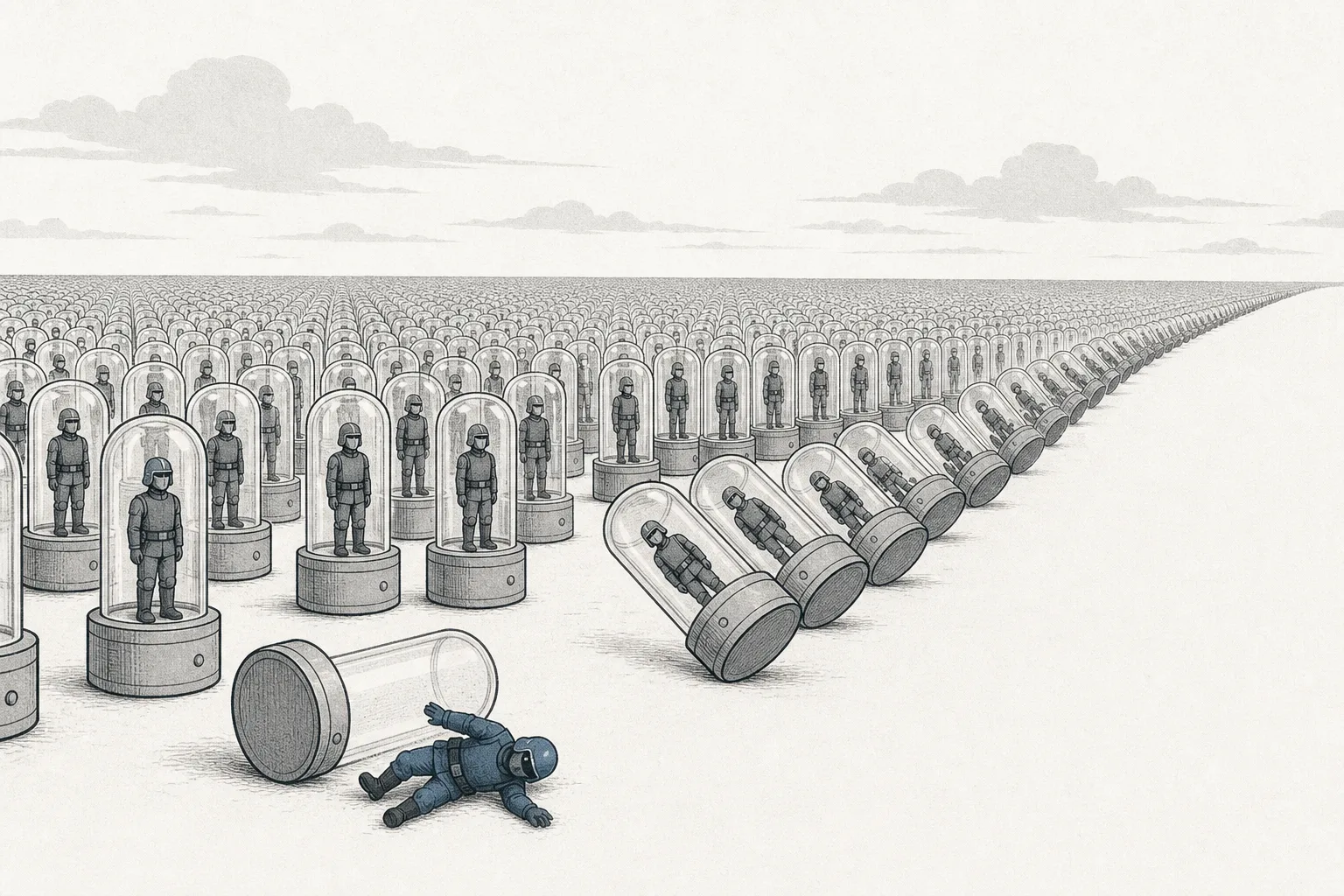
The first and biggest risk is the very thing that makes EDR powerful — the same agent embedded in millions of machines. If it fails, it fails everywhere at once. This isn't theoretical. On July 19, 2024, CrowdStrike pushed an update with a single bug, freezing about 8.5 million Windows machines worldwide on the blue screen all at once. Airlines, hospitals, banks, and stock markets ground to a halt, with damage to U.S. Fortune 500 companies estimated at about $5.4 billion (Delta alone claimed ~$500 million in losses). The lesson: the thing sitting deep in every machine to protect you is also the single point that, if it falls, takes down the whole army.
The second risk is Microsoft's bundling. When Defender comes free with E5, which most organizations already pay for, players selling EDR as a standalone product have to keep proving it's "good enough to pay extra for" — this pricing pressure squeezes margins and makes life hard for the smaller ones. It's a field where "free" becomes the most dangerous rival.
The third risk is "alert fatigue". EDR sees everything, so it generates a flood of alerts. Without a team or AI good enough to filter, analysts drown in the pile of alerts and miss the one that truly matters — this is why XDR (combining the picture) and MDR (hiring people to watch) grew up side by side. Because "seeing a lot" is worthless if you "can't read it in time."
In short: this node is the story of how the "guard" moved from the front door to inside every machine, switching from "memorizing the criminal's face" to "reading behavior" and then acting to stop it itself within seconds — the change that let organizations survive in an era of invisible attacks. But it came at the cost of a new fragility: when every guard is one and the same, a single mistake echoes across the whole world.