Megatrend · whole-trend overview
The fortress of the digital economy — and the gate everyone tries to pry open
Every dollar that flows across the net, every piece of data parked in the cloud, every AI we're starting to trust — all of it needs a gatekeeper. And the world is now paying over $213 billion a year for that guard, because a single breach costs $4.44 million on average. This lesson is the map that strings the 7 categories of defense together — from "identity," the new line of defense, to the SOC command center watching over everything — showing how they connect and where the power (and the profit) sits (each category has its own deep-dive chapter).
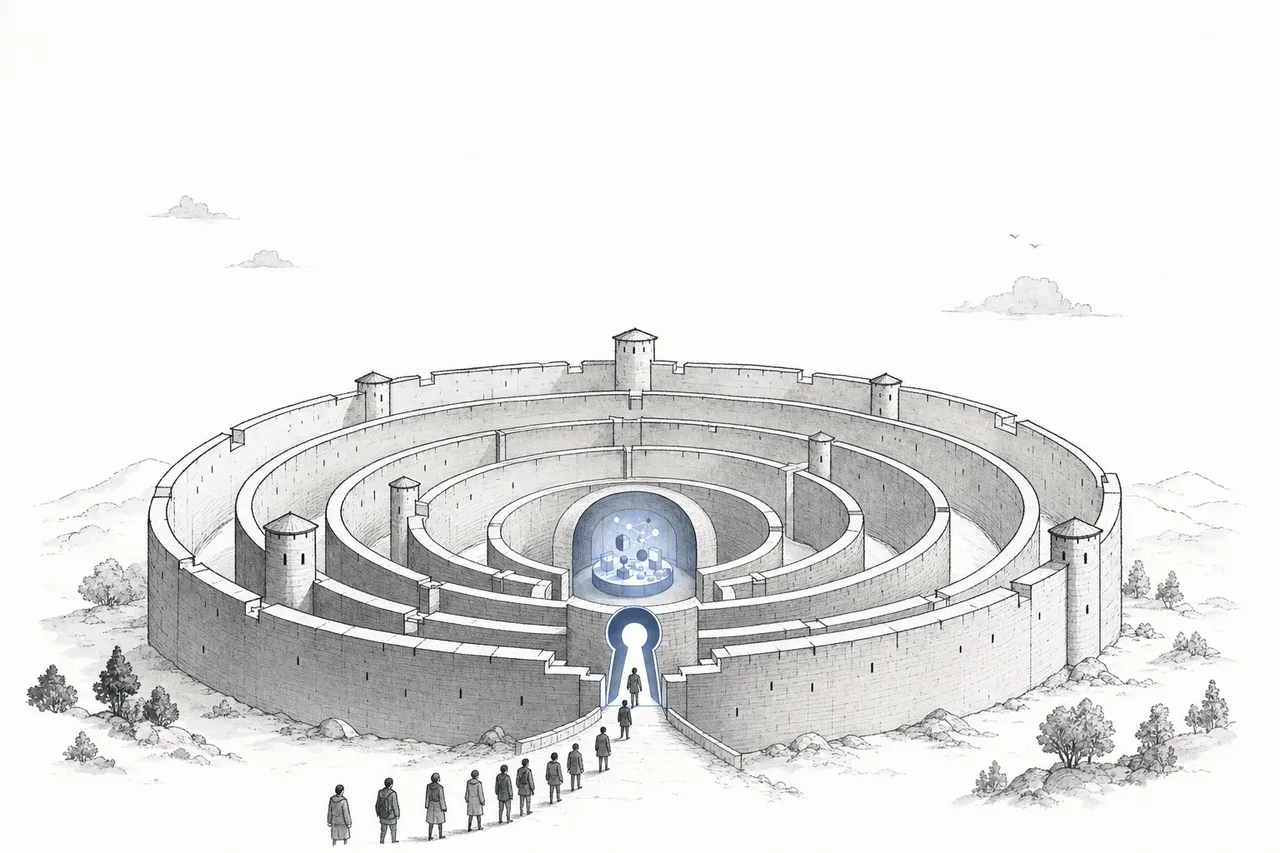
01The big picture: why pay $200 billion a year for a guard
Think about what today's economy actually rests on — money in your account is a number in a database, trade secrets are files on a server, your customer relationships are data in the cloud. All of it is an intangible "asset" of enormous value, and someone around the world is trying to steal it every second. Cybersecurity is the business of guarding these digital assets — the software, hardware, and services that protect systems, identity, data, and now AI too.
Why is it this big? Because the damage is real. The world is paying about $213 billion in 2025 for its digital "guard," expected to hit $240 billion in 2026 (growing ~12–13% a year). But the number that makes a board open the checkbook is the "price of failure" — a single data breach costs $4.44 million on average worldwide, $4.44 million, and in the US it spikes to $10.22 million per incident.
And what makes this industry special isn't just its size — it's that it never ends. Unlike building a road that's finished once it's done, defense is a race against an attacker who gets better every day. Every new technology (cloud, AI, quantum) opens a new "attack surface" you have to defend. That's what we'll "unroll the map" to show in this chapter.
02The map: what are the 7 sub-categories
The best way to understand cybersecurity is to see it as "defense by attack surface" — attackers have many ways in, so you need a checkpoint on every path. The industry splits into 7 categories, which group into 2 big layers in industry terms — the "platform" layer (software that manages security) and the "infrastructure" layer (the enforcement checkpoints and the root of trust). Each category has its own deep-dive lesson (tap to read):
The new line of defense — identity
- Identity & Access Management: controlling "who/what" is allowed to access what — single sign-on, privileged-account management (PAM), and governance. This is the core of the zero-trust idea we'll keep coming back to
The enforcement checkpoints — devices, network, cloud, and data
- Endpoint & Network Security: the front line that actually "enforces" — protecting computers/phones (EDR/XDR) and the network (firewall/SASE), where the sensors detecting intrusions sit
- Cloud & Workload Security: protecting cloud infrastructure and apps (AWS/Azure/GCP), containers and workloads — the fastest-growing battleground (Wiz was bought by Google)
- Data Security & Cyber Resilience: finding, classifying, and protecting the data itself (DLP/DSPM), plus ransomware-grade backup/recovery — the "last line" when other checkpoints fall
The emerging categories — defending AI and prepping for quantum
- AI Security & Agent Guardrails: protecting "the AI itself" — blocking model-tricking attacks (prompt injection), red-teaming models, and controlling the permissions of AI agents that are starting to act on their own. The newest field, just grown out of the AI boom
- Post-Quantum & Cryptographic Trust: the root of trust — certificates (PKI/certificates), key/secret management, HSM, and migrating to quantum-resistant cryptography (post-quantum) per NIST standards
The command center — watch and respond
- Security Operations (SIEM/SOAR/XDR/MDR): the "brain" that gathers logs from every checkpoint to analyze, detect, and respond automatically — the command center (SOC) that stitches every category together (Splunk now sits under Cisco)
03How it all connects (attack surface + defense in layers)
The key to this map is the phrase "defense in depth" (layered defense) — no single wall stops everything, so you stack checkpoints in multiple layers. If an attacker gets through one layer, the next still waits. And most important of all, in an age where everyone works from anywhere and everything lives in the cloud, the old "wall around the city" is gone — the new line of defense becomes "identity," because no matter where an attacker comes from, the first thing they have to do is "pretend to be someone with permission." Let's look at how all 7 categories surround each other:
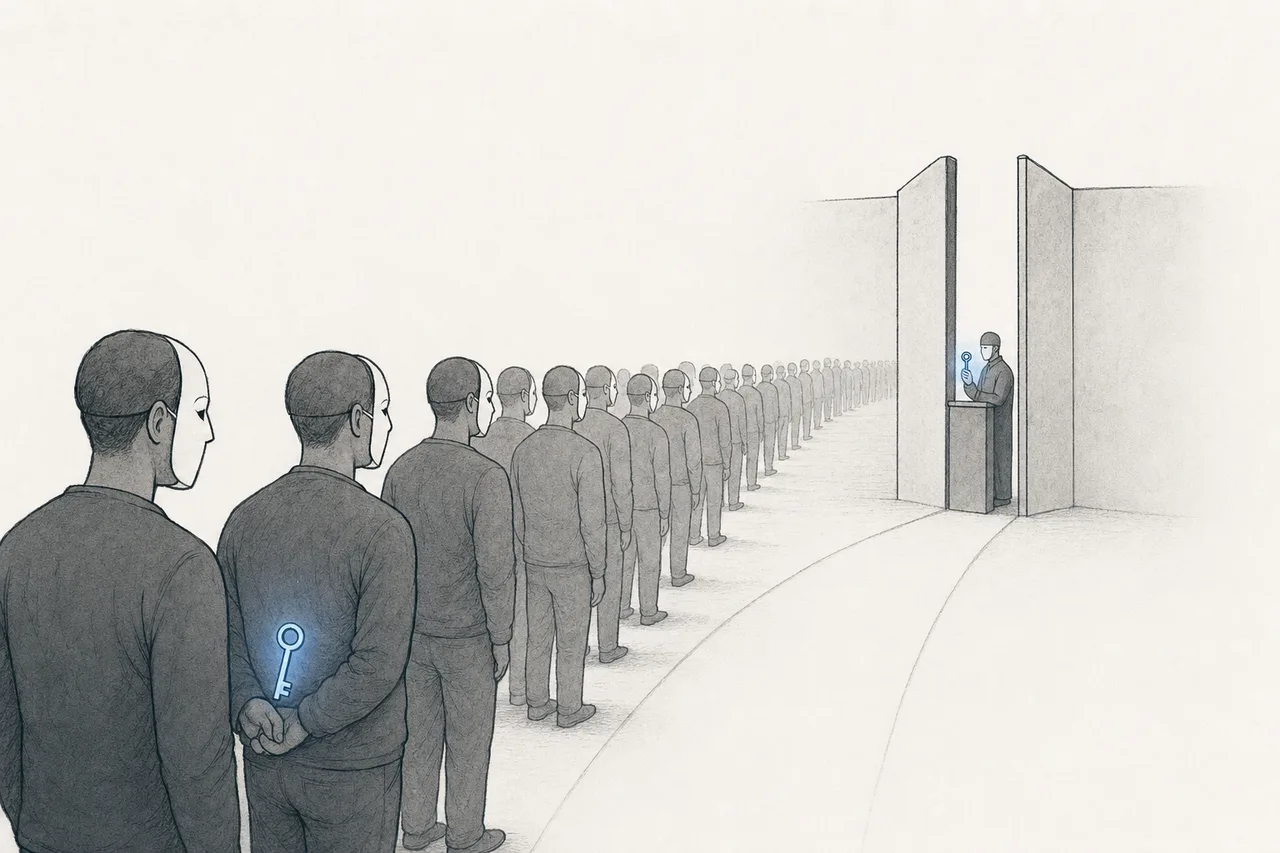
The most interesting part is "why identity is the core" — because the data all points the same way. About 80% of breaches involve a stolen password or account, and in 2025 "phishing" climbed to the No. 1 way in (16% of cases). Today's attacker doesn't "break down the wall" — they "walk in the front door with a stolen key." That's why the whole industry has pivoted to zero-trust — "trust no one, verify every time" — even when you're already inside the internal network.
The idea of "trust nothing by default" — the internal company network used to be considered "safe," but zero-trust says nothing is safe automatically. Every access request has to prove its identity and permissions again, every single time, whether it comes from inside or outside the organization.
04Where the value and power sit
A key rule of this industry is changing — customers used to buy security tools one at a time from ten or twenty vendors (a firewall from one, antivirus from another, a logging system from a third). But the trend now is "platform consolidation" — customers want to buy from as few vendors as possible who can do it all, because scattered tools are both expensive and impossible to see the whole picture with.
That's why power and profit are pooling around a few "platform builders." Look at the numbers from the leaders of the consolidation era:
What's striking is that Microsoft has become the world's biggest security company, with over $20 billion in revenue — even though it isn't a "cyber company" by birth. It just sells security bundled with the cloud and Office customers already use (the number of customers using 4+ security products is growing 40% a year). And the ones born for cyber — Palo Alto, CrowdStrike — are rushing to become full "platforms" too: Palo Alto's NGS ARR is expected to grow to ~$8.9 billion in FY2026 (~60% growth).
The lesson for reading this trend: don't just ask "does this company do security?" — ask "is it a platform customers consolidate onto, or a single tool that's being swallowed?"
05The forces that hit the whole trend
Even though each category differs, three big forces move the whole industry at once:
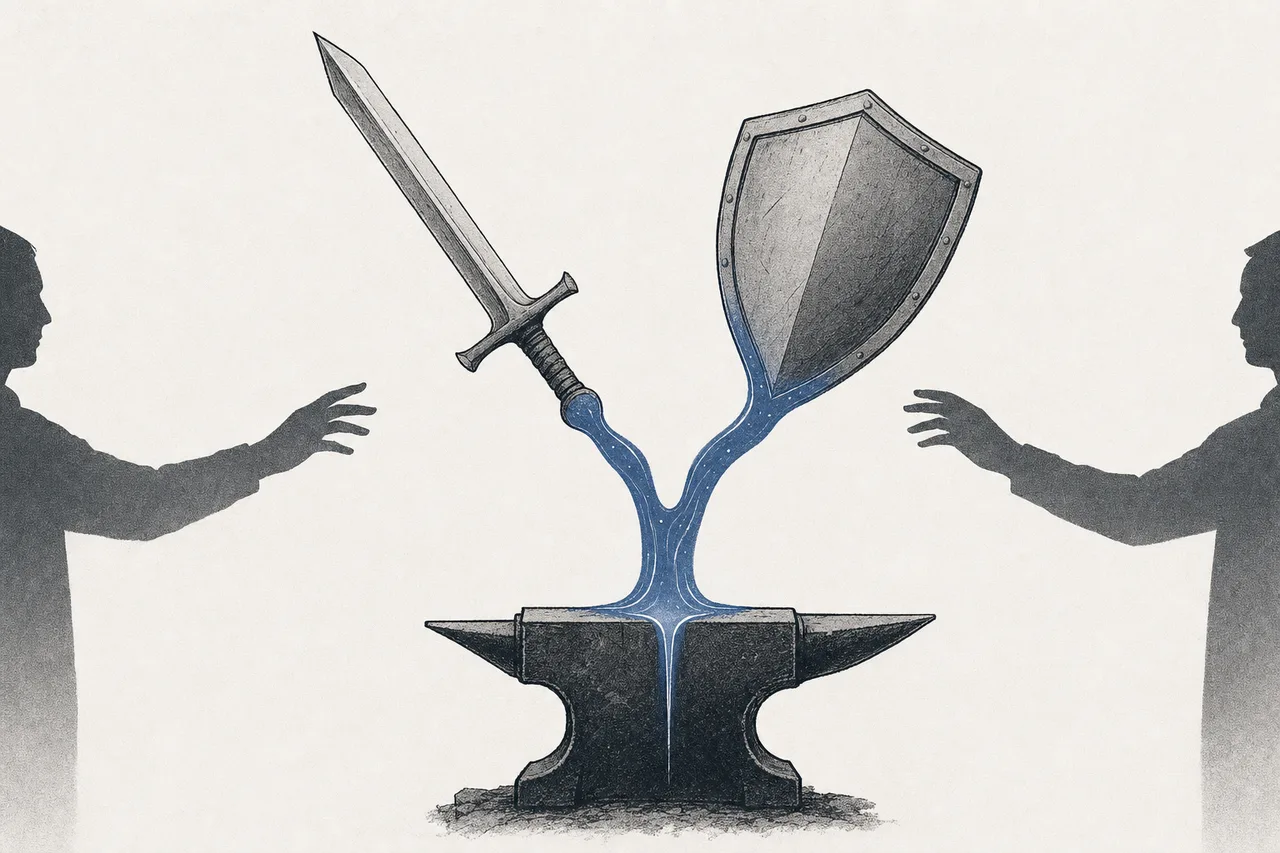
1. AI is both sword and shield — this is the biggest force. The attacking side uses AI to write slicker phishing and find vulnerabilities faster, while a brand-new "attack surface" appears: AI itself. In 2025, 20% of organizations were breached through "shadow AI" (employees secretly using AI without going through controls), adding $670,000 in cost per incident on average, and 97% of AI-related cases happened in organizations with no AI access controls at all — all of which is why the AI Security category just emerged and is growing so fast. On the flip side, defenders who fully used AI cut incident time by 80 days and saved nearly $1.9 million per incident on average.
2. Cloud + zero-trust swallow everything — once data moves to the cloud and people work from anywhere, the "wall around the office" style of defense no longer works. So the whole industry is shifting fast to zero-trust — organizations adopting zero-trust jumped from 24% (2021) to 61% (2025), and the zero-trust market is expected to grow from $36.5 billion (2024) to $78.7 billion (2029). Those who pulled it off saved an average of $1.76 million per breach.
3. Geopolitics and regulation — cyber has become a battlefield between states. Attacks on critical infrastructure and state-backed ransomware have made security a matter of "national security" (connecting to Defense and Digital Finance, which need high-grade security). On top of that, new rules force organizations to report incidents and invest in defense — pushing demand across the board.
06Where we are now + the champion of each category
2025–2026 is the era of "the great consolidation" — big deals keep coming: Google bought Wiz for $32 billion (the largest security deal in history, closed March 2026), Cisco bought Splunk for $28 billion to merge SIEM with XDR. Below are the "champions" of each category, reflecting how the power spreads across many types of players, from platform giants to specialist leaders:
07The future and the risks (including quantum)
Looking ahead, this trend has both steady tailwinds and its own particular risks you have to watch as a pair.
On the opportunity side: cybersecurity is one of the few industries where demand "never drops" — as long as the economy is digital, someone has to stand guard. And two new waves are creating whole new markets: defending AI (a field just beginning) and the migration to quantum-resistant cryptography (post-quantum).
The quantum story is more important and more urgent than you'd think. The threat called "harvest now, decrypt later" — attackers (and states) are "collecting encrypted data today" to decrypt later, once quantum computers are ready. That means data that has to stay secret for 10+ years is at risk right now. That's why NIST issued new cryptography standards (FIPS 203/204/205) in 2024, and the NSA requires critical systems to finish migrating their apps by 2030 and all infrastructure by 2035 — a job of "rebuilding the root of trust" for the entire internet (connecting directly to Quantum Computing).
A new generation of cryptography designed to hold up even when future quantum computers can crack the old kind — because the day quantum is ready, the cryptography protecting banks, the internet, and state secrets today goes "naked" instantly. So migrating to PQC is a project on the scale of replacing the foundation of the entire digital world.
On the risk side, there are three layers to watch:
- The attacker is always ahead: defense is a "chasing" game by nature — the attacker only has to find one hole, while the defender has to close every hole. AI lets the attacking side scale up even faster
- Consolidation = a single point of failure: when every organization relies on the same few platforms (like CrowdStrike), if the platform itself slips, the whole world goes down broadly at once — the convenience of consolidation comes with a new kind of fragility
- The talent and budget gap: the world is chronically short of cyber experts, while the attack surface (cloud + AI + IoT) expands faster than you can find people to watch it
And that's why this chapter is a "map," not a "deep-dive guide" — because the real value of seeing the whole trend is seeing that all the checkpoints surround the same one thing, stitched together by a single brain (the SOC) before you walk in to explore each checkpoint in detail — just tap into the deep-dive chapter of whichever category interests you.