Megatrend · Biotech & Genomic Medicine
A medicine no factory can simply make more of — not unless someone rolls up a sleeve
There's a multi-billion-dollar drug industry whose main raw material doesn't come from a chemical vat or a lab-grown cell — it comes from the blood of living people, donated one person, one arm at a time. This is an old, unglamorous, but indispensable corner of pharma, and it has one of the strongest moats in the business — because you can't just "order more."

01What is it?
Spin your blood in a centrifuge and a clear, yellow-amber fluid floats to the top — about half of it. That's plasma — the part that isn't red blood cells, packed with hundreds of proteins your body uses to fight infection, stop bleeding, and stay in balance. This node is about the industry that takes that plasma and "separates" it into several life-saving drugs.
The drugs you get split into three main families, each treating wildly different diseases:
- Immunoglobulin (IG): antibodies extracted from the plasma of thousands of donors. It's the real star of the industry, making up roughly 60% of market value. It treats people with weakened immune systems and certain neurological diseases
- Albumin: the most abundant protein in plasma (~55% of all of it), used in the ER, in liver patients, and in people in shock from blood loss — cheaper, but in enormous volumes
- Clotting factors: the proteins that stop bleeding, like Factor VIII for people with hemophilia (a disorder where blood won't clot)
On the megatrend map, Plasma-Derived & Blood Products is a sub-theme under Biotech & Genomic Medicine — but it's the odd one out in the family. While the other branches race to invent new molecules in the lab, this one is a business of "harvesting raw material from the human body." Its foundation is a network of donation centers in strip malls across town, not a high-tech research lab.
The process of "separating" each protein out of raw plasma — like distilling crude oil into gasoline, diesel, and fuel oil from a single liquid. So one lot of plasma yields IG, albumin, and clotting factors all at once. That's why this business always has to make several products at the same time — you can't just cherry-pick the most profitable one.
02Why the world can't do without it
The first reason is that there's no substitute. For many patients, a plasma-derived drug isn't one option — it's the only one. A child born with an immune deficiency has to take IG for life, and the moment they run out they're hit with a serious infection. People with hemophilia, without clotting factors, can die from bleeding in a joint or the brain. This is medicine whose "demand never goes away," because it's tied to a patient's survival, not their convenience.
The second reason — and the most important — is that you can't just make more of it at will. With a normal drug, if demand grows you build another factory and spin up a new line. But plasma-derived drugs are stuck in an inescapable trap: the starting material is the blood of living people, who have to come in and donate one at a time. Every drop on the market came from someone's arm. To "ramp up" you have to open more donation centers, recruit more people, pay more incentives — slow and expensive.
The result: IG demand grows steadily at roughly 6–8% a year, year after year, while the supply of raw plasma chases after it, out of breath. That creates a chronic global IG shortage — Japan got hit hard starting in 2019 and had to rush imports. So this is a rare kind of market in pharma: demand is a sure thing, but supply is locked by a physical limit — and whoever controls more plasma controls more of the game.
And here's what matters for public health — because the raw material comes from people, not factories, this market can't be disrupted by "getting cheaper" the way a tech product can. Just the opposite: the more demand grows, the tighter supply gets, and the more it favors whoever already owns the infrastructure to collect plasma.
03How plasma becomes medicine
The heart of the story is the donor bottleneck at the very top of the chain — get this, and you get the whole industry.
It starts at a donation center. A donor sits down, a machine draws their blood, spins out just the plasma, and returns the red blood cells to their body (this is called plasmapheresis), which lets people donate far more often than a regular blood donation. The plasma is frozen, pooled into giant 2,000–4,000 liter lots (from thousands of donors), and sent into the "fractionation" process at the plant.
Fractionation uses an old principle that dates back to the 1940s, called Cohn fractionation — slowly adjusting temperature, acidity (pH), and adding alcohol step by step so each protein "precipitates" out one at a time. Like distilling crude oil, a single batch of plasma yields clotting factors, albumin, and IG all at once.
This is why the business is almost entirely vertically integrated — the big companies own everything from the donation center to the fractionation plant to selling the drug. Because if you can't control the upstream (plasma), you can't make anything at all. And that's the source of a powerful moat: a new entrant can't even jump in to compete unless it's willing to invest in a network of hundreds of donation centers and wait years.
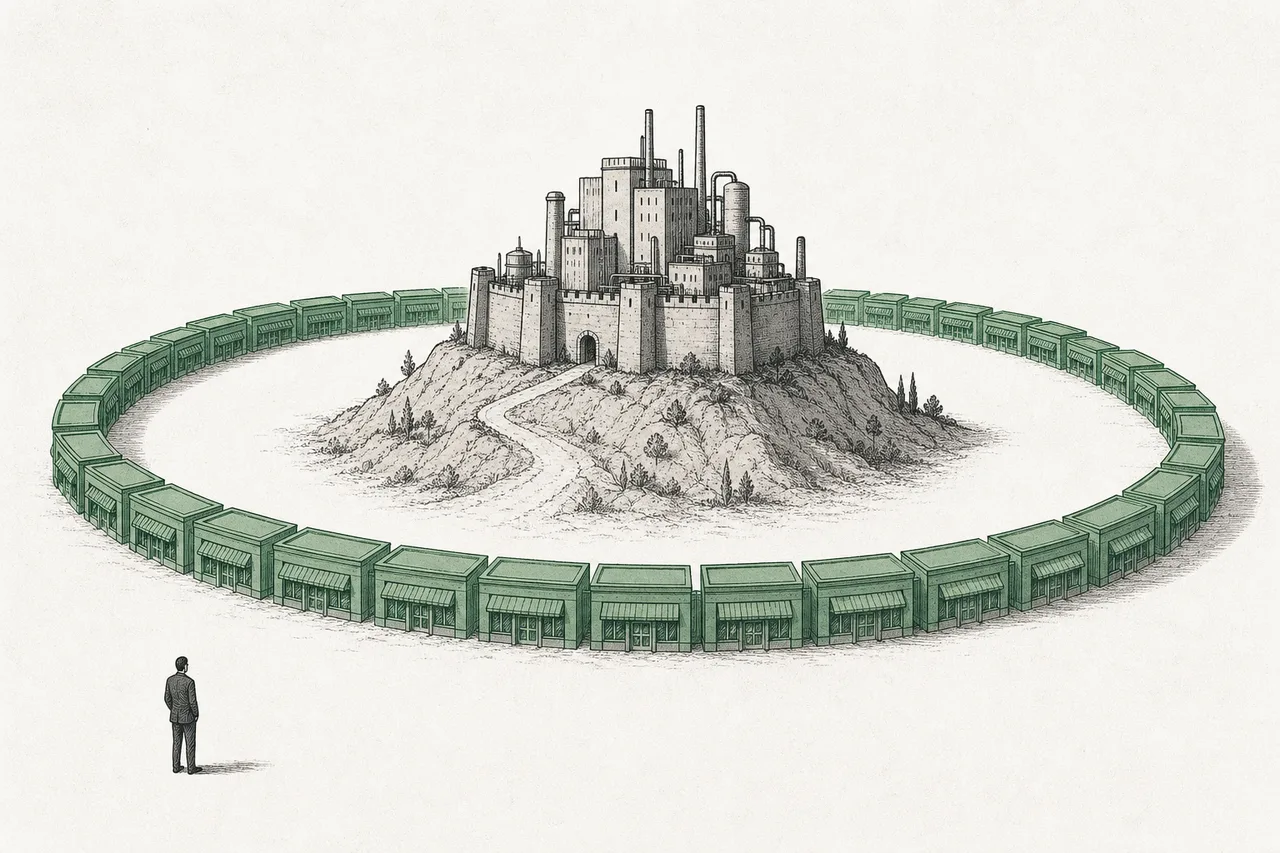
Plasma collected directly through a plasmapheresis machine to make drugs (as opposed to "recovered plasma" that comes as a byproduct of a regular blood donation). The US is the world's biggest source of source plasma because it allows paying donors an incentive. In countries that ban paying donors (like many in Europe), plasma is scarce and has to be imported from the US.
04How it connects in the ecosystem
It may look like an island in the sea, but Plasma-Derived Products is deeply entangled with the other branches of Biotech — and interestingly, most of those relationships are about "competing" more than "complementing":
- Overlaps with Autoimmune & Immunology: most IG is used to treat autoimmune diseases, like the neurological conditions CIDP and myasthenia gravis (MG) — but this is the very same battlefield a new drug class, FcRn inhibitors, is moving in to take (more in the risks chapter)
- An option for Rare Disease: congenital immune deficiency and hemophilia are both rare diseases. Plasma-derived drugs were the backbone of treating many rare diseases long before the gene-therapy era
- Being challenged by Biosimilars and recombinant drugs: plasma-derived clotting factors have already been largely replaced by "lab-synthesized" (recombinant) versions. It's a clear example of newer biotech eating away at plasma's share, piece by piece
05Where it stands now
The picture today is one of the tightest oligopolies in pharma. Three big companies — CSL, Grifols, Takeda — together control roughly 70% of global capacity, and add two more (Octapharma and Kedrion) and these five hold about 80% of the market. This isn't a market just anyone can walk into and compete in.
The big wave driving everything right now is IG — the leaders' sales are growing double digits, year after year. In the latest half, CSL's IG sales grew 15% to $3,174 million, while Grifols reported IG growth of 17.5%, pushing its 2025 group revenue to €7,524 million. The reason: doctors are diagnosing more of the diseases that need IG — especially neurological ones — and IG is being used in more and more new indications.
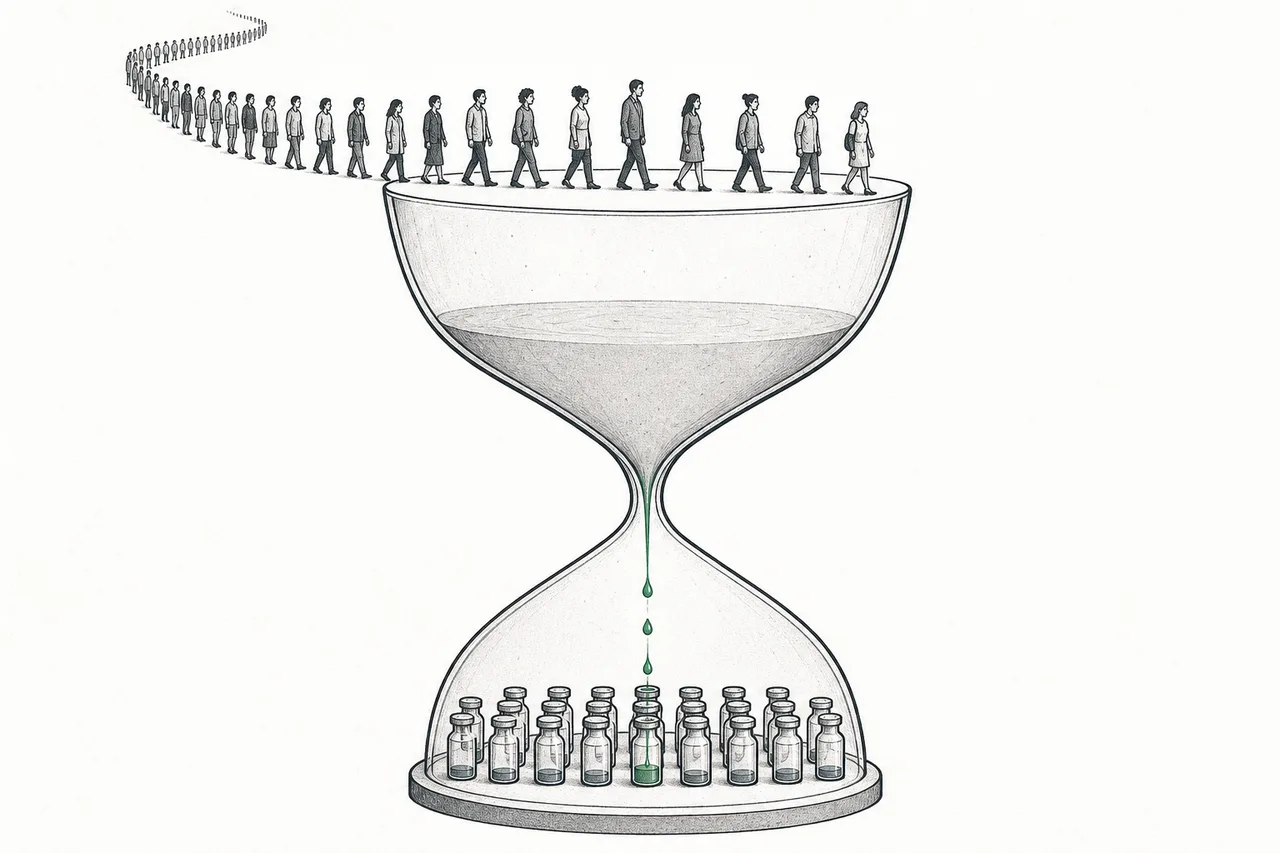
Because supply is tight, the game right now is who can scale up plasma collection and fractionation faster. So 2025 was busy with investment news — Grifols put €160 million into a new plant in Barcelona to double its fractionation capacity, while Octapharma won a contract to be the sole plasma fractionator for the UK's national drug program, and is expanding capacity in Switzerland and Sweden.
Geographically, Asia is the rising star — China especially, as a closed market where foreign companies can't collect plasma inside the country. That has bred strong local players like Shanghai RAAS and Tiantan Biological, and Takeda is investing heavily in Asia to capture the region's fastest-growing demand.
06The road ahead
The first direction is the chase for more plasma — as long as IG demand keeps growing 6–8% a year, the main game is who can open donation centers faster and control collection costs better. Add the technology to pull "more IG per liter" (yield) out of the same batch of plasma — a way to add capacity without finding more donors.
The second direction is the shift from IV to subcutaneous injection. Newer IG drugs like CSL's Hizentra are designed so patients can inject themselves at home, instead of sitting through hours of IV at the hospital — this is where leaders build differentiation and patient loyalty, not just compete on volume.
The third direction is Asia as the growth engine. The region's per-capita IG use is far below the West's, but it's catching up fast as healthcare systems and diagnosis develop. So China, Japan, and India are the fastest-growing demand battlegrounds — even though each country's rules on collecting plasma differ enormously.
07Challenges & risks
The "strong moat" appeal of this trend comes with its own specific risks you have to see clearly.
The biggest and most-talked-about risk in 2025 is a new drug class called FcRn inhibitors. These drugs — like efgartigimod (Vyvgart), which the FDA approved in 2024 for myasthenia gravis — work by "speeding up the removal of disease-causing antibodies" in the body, a mechanism that competes head-on with using IG in several autoimmune diseases (MG, CIDP, ITP). If FcRn takes a big chunk of these indications, IG demand that used to be a sure thing could stall. And because IG is ~60% of market value, the impact ripples across the whole industry.
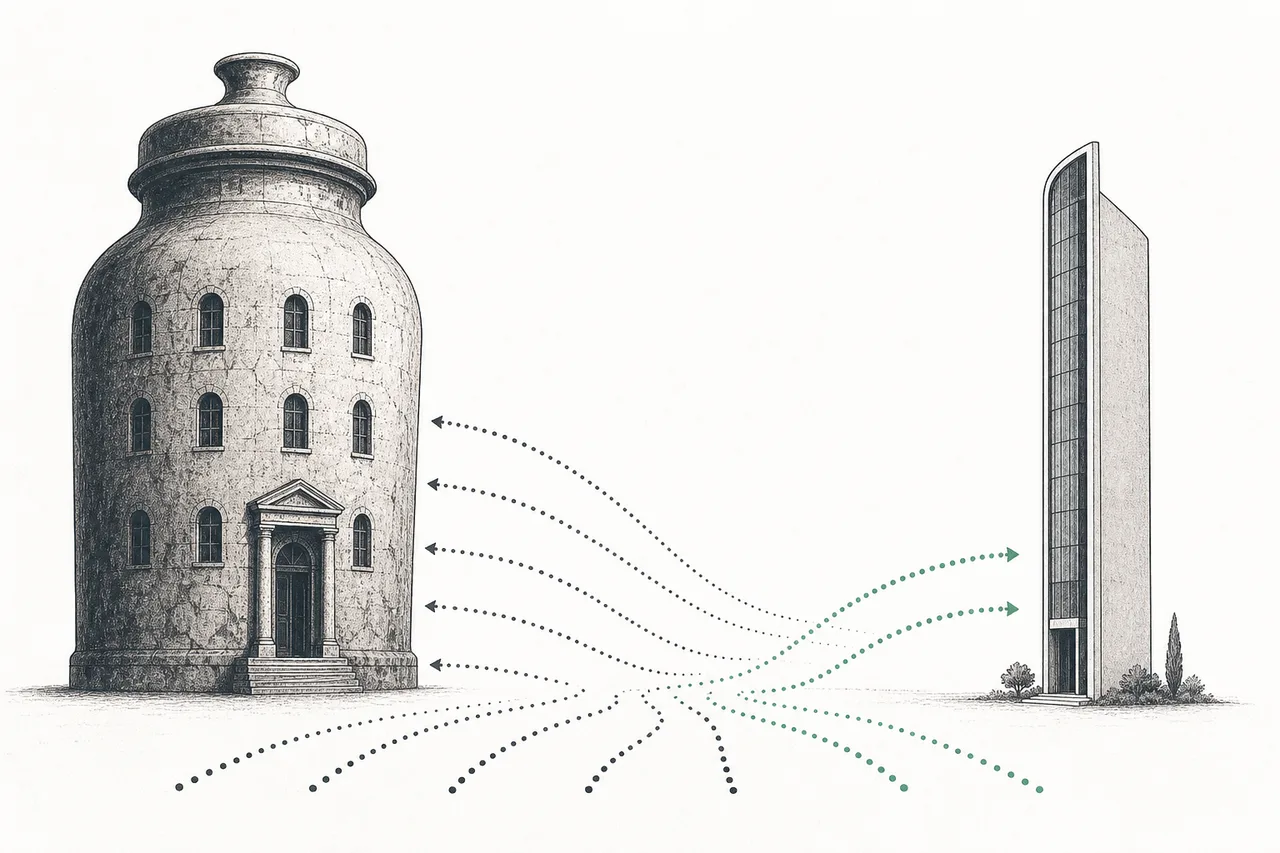
The second risk is replacement by synthetic technology. On the clotting-factor side, this has already happened — most hemophilia patients in developed countries have switched to recombinant Factor VIII (synthesized in a lab, no human blood needed) because it's safer from infection. And the next era of gene therapy aims to "cure hemophilia outright with a single injection" — which, if it succeeds commercially, eats further into the plasma-derived clotting-factor market.
The third risk is baked into the business's DNA — its dependence on paid donors. The entire model rests on people being willing to come donate plasma in exchange for money. If the economy gets good enough that people stop coming, or the law changes (say, limits on incentive payments, or tighter ethics rules on collecting plasma from vulnerable groups), the whole upstream shakes at once. And because the US supplies ~65% of the world's plasma, this risk is worryingly concentrated in one country.
In short: this is one of the oldest and quietest corners of biotech — a medicine that starts in a human arm, not a chemical vat. Its naturalness is both its strength (can't be copied, can't scale to meet demand) and its weakness (every scientific advance is someone trying to stop using human blood). Understanding these two opposing forces is understanding why this "boring"-looking node is one of the deepest stories in all of pharma.