Megatrend · Biotech & Genomic Medicine
When the body's own army turns on its owner — and the most expensive drug in history
Your immune system is built to protect you. But sometimes it gets it wrong, mistaking your own joints, skin, or gut for the enemy, and opens fire. That's the root of rheumatoid arthritis, psoriasis, and inflammatory bowel disease — and it's the battlefield that produced Humira, a drug that once made about $21 billion a year, more than any drug in history.
01What it is — when the immune system shoots its own side
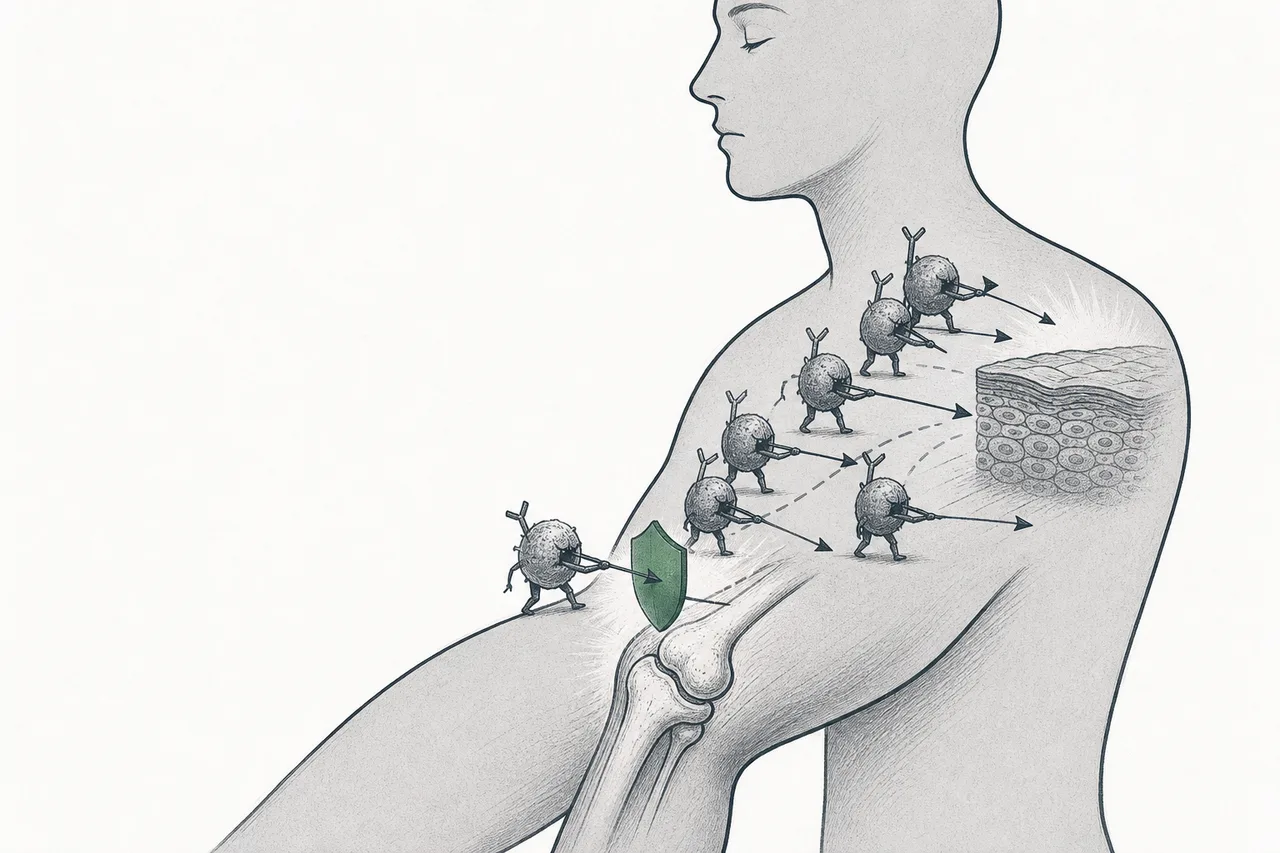
Your immune system is the army inside your body. Its job is to hunt down germs, viruses, and foreign cells. But in a huge number of people, this army 'misreads the labels' — it decides the body's own normal cells are the enemy and starts an attack that won't stop. The result is chronic inflammation that slowly destroys organs. This is autoimmune disease.
It isn't rare. Just the opposite — about 50 million Americans (~8% of the population) live with a disease in this group, and worldwide it's estimated at around 4% of people. Most of the diseases you've heard of are here: rheumatoid arthritis (the immune system biting the joints), psoriasis (biting the skin), inflammatory bowel disease/IBD (biting the gut), lupus, eczema, and over a hundred more. What's striking is that about 80% of patients are women — and the global incidence is rising several percent a year.
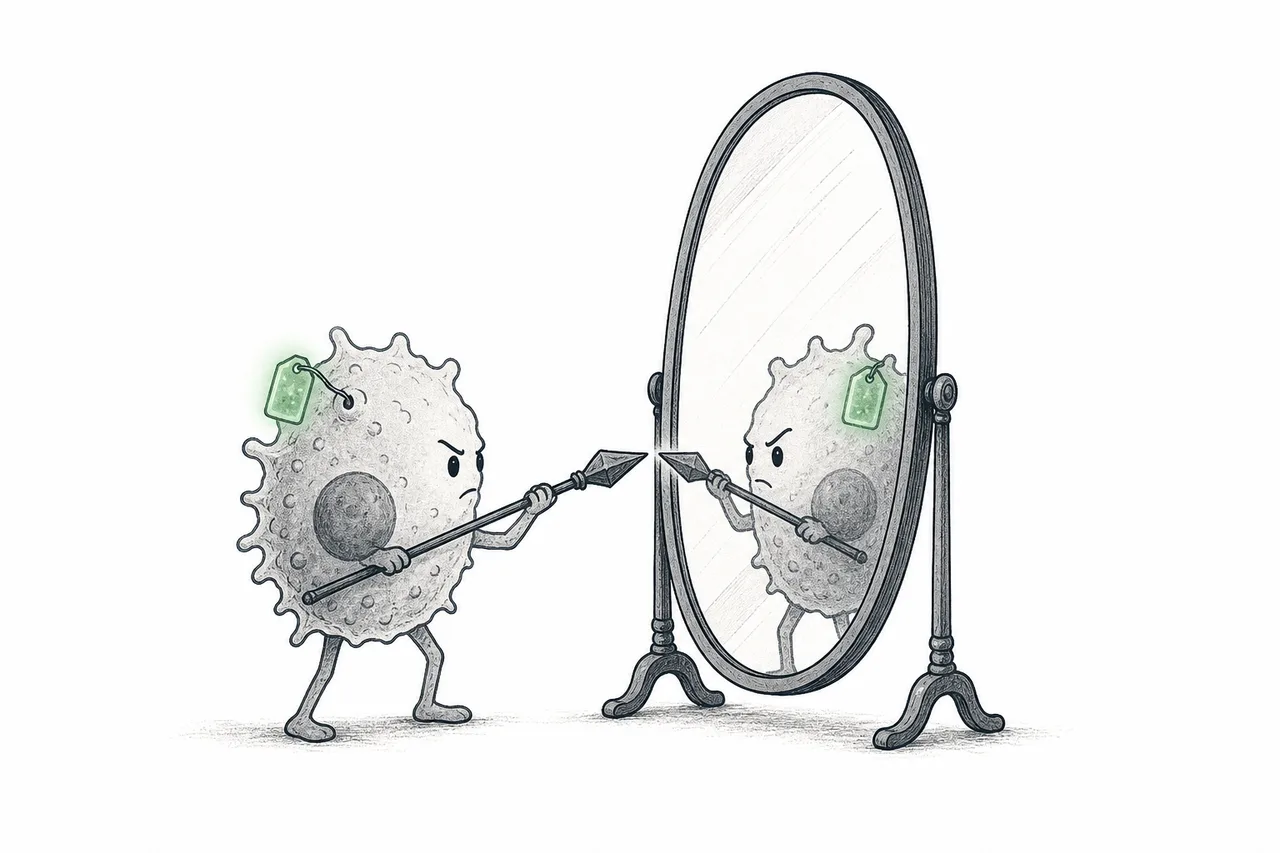
On our megatrend map, Autoimmune & Immunology Therapeutics is a sub-theme under Biotech & Genomic Medicine. It's the business of drugs that 'tell the army to stop firing' — not killing germs, not surgery, but tuning an overactive immune system back down to calm, without shutting it off entirely and leaving the body defenseless. That's the hardest art in this field.
Immune cells talk to each other using tiny signaling molecules called cytokines — a 'rallying cry' that orders inflammation. In autoimmune disease, these signals are too loud and won't go quiet. Almost every drug in this field works by 'muting' one of them — TNF, IL-17, IL-23. Those are the names of the cytokines doing the damage.
02Why it matters — home of the most lucrative drugs in the world
If there's one field in the drug industry that has 'made the most money,' this is it. Several of the best-selling drugs of all time aren't cancer or heart drugs — they're immune drugs. The reason is simple: these diseases are chronic — patients take the drug for life, not once and done. And the drugs are expensive biologics, so a single patient brings the company tens of thousands of dollars a year, for decades.
The symbol of all this is a drug called Humira, from AbbVie. In 2022 it made $21.2 billion in a single year — more than any drug had ever made in history. One drug bringing in more revenue than the GDP of many countries, and proof of just how big the business of 'telling the immune system to stop firing' really is.
And it's a big market that keeps growing. The global immune-drug market was worth around $108 billion in 2024, and is expected to reach $187 billion by 2030 (about 8% growth a year). That number is bigger than several whole industries you know well. Two forces drive it: a rising number of patients worldwide, and newer drugs treating more and more 'new diseases' (one drug typically gets approved for several diseases in this group).
03How it works — silencing the right inflammation signal
The core of every drug in this field is one idea: inflammation doesn't happen on its own — it's 'ordered' by tiny chemical signals. Cut that signal and the inflammation dies down, like cutting the phone line that keeps calling in reinforcements to fire on your body. The challenge is cutting the 'right line' — silencing the culprit signal without shutting down the whole system and leaving you prone to infection.
The evolution of these drugs reads as a story of finding 'the right line' in ever-finer detail:
- Generation 1 — TNF inhibitors (cut the main line): pioneering drugs like Humira, Enbrel, and Remicade grab a big cytokine called TNF-α, the 'main line' of inflammation. They work broadly, across many diseases, which is how they became legendary best-sellers
- Generation 2 — IL-17 / IL-23 (pick a narrower line): researchers found that in some diseases (especially psoriasis) there are more targeted 'branch lines' — IL-17 and IL-23. Silencing just these lines works better and is safer in certain diseases, which is how Skyrizi (IL-23) and Tremfya were born
- Generation 3 — JAK inhibitors (flip the master switch inside the cell): instead of intercepting signals outside the cell, JAK drugs shut off a 'master switch' inside the cell that translates several signals at once. The upside is they're pills you can swallow (no injection), like Rinvoq — but because they cut broadly, side effects need more watching
Most TNF / IL inhibitors are biologics — big antibody proteins that have to be injected, because they'd be digested if swallowed. JAK inhibitors, on the other hand, are small-molecule pills you can take by mouth — far more convenient. This difference matters both for patients (injection vs. pill) and for the business (injected biologics face biosimilars when their patents expire, while pills face generics that cut prices even harder).
04Where it sits within Biotech
This field has been the 'revenue pillar' of Biotech & Genomic Medicine for decades, because it's the field that turns innovation into chronic cash flow better than any other. But it doesn't stand alone — it's tightly tangled with other parts of the ecosystem:
- Feeds Biosimilars directly: immune drugs are the most expensive and best-selling biologics. So when their patents expire, they turn into a 'treasure chest' that biosimilar makers wait to harvest — Humira is the most famous case study in biosimilar history. You could say this field's success today is biosimilars' food 10–15 years from now
- Shares technology with Oncology: both fields share the same foundation — 'antibodies engineered to hit a target precisely.' Companies good at antibody engineering can usually play on both fields, and the next generation of immune drugs, bispecific (antibodies that grab two targets at once), borrows its technology straight from the cancer side
- Opening the door to RNA Therapeutics: some new approaches try to use RNA or cell therapy to 'reset' a misfiring immune system instead of just suppressing it for life — and if it works, it changes the game from 'controlling symptoms' to 'curing'
- Leans on AI for drug discovery: finding the 'right inflammation line' in each disease and designing molecules to hit the target precisely is work AI can speed up a lot
05Where it stands now
The biggest story in this field right now is 'life after Humira.' After Humira's patent expired in Europe in 2018 and in the US in early 2023, its sales fell off a cliff — from a peak of $21.2 billion in 2022 to $14 billion in 2023, $9 billion in 2024, and around $4.5 billion in 2025. This is one of the steepest patent cliffs in the history of drugs.
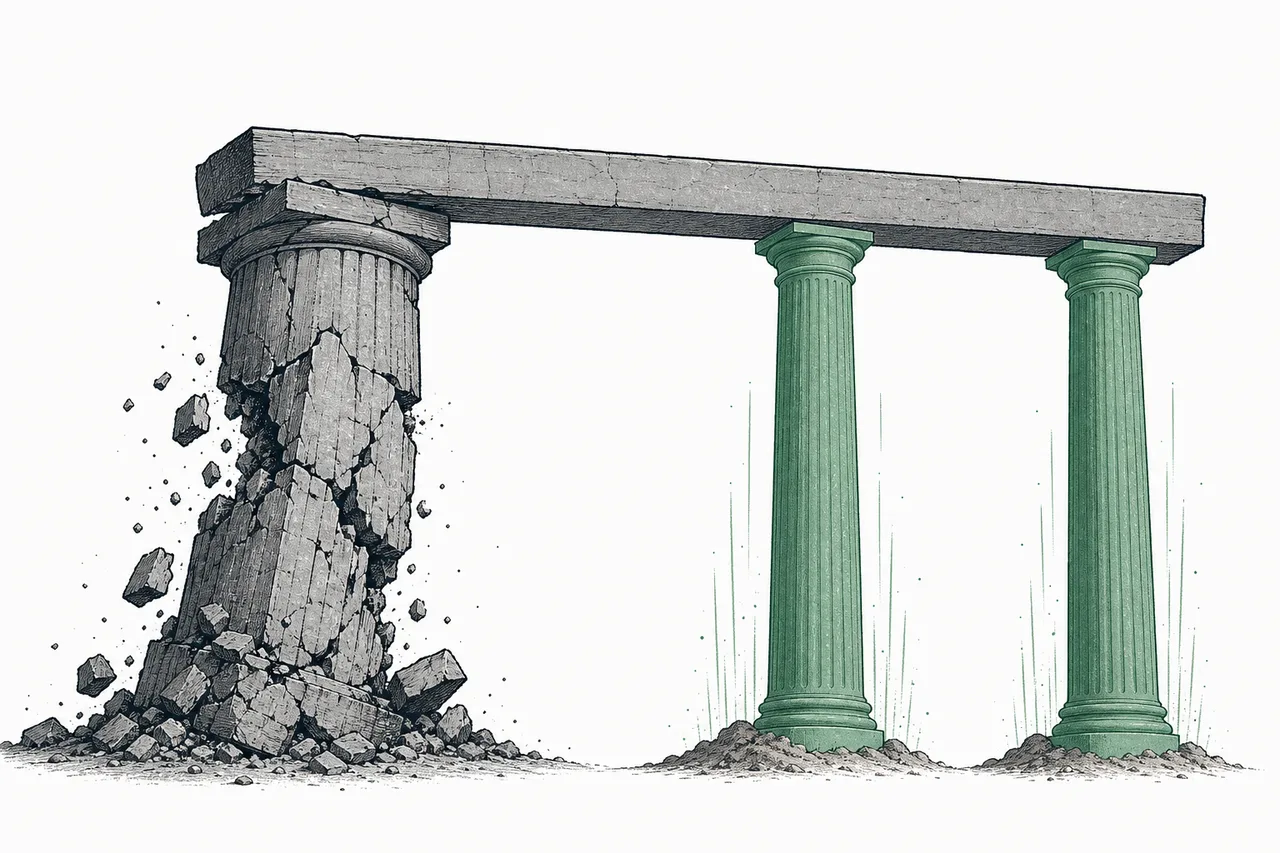
But what made this case a 'textbook' is that AbbVie didn't sit and wait to die — it launched two next-generation drugs ahead of time: Skyrizi (IL-23 class) and Rinvoq (JAK-class pill). In 2024 Skyrizi overtook Humira to become the company's number-one drug for the first time, and in 2025 the pair together made about $25.8 billion (Skyrizi $17.5 billion + Rinvoq $8.3 billion), pushing AbbVie's total revenue to a new record — higher than even when Humira peaked.
Another star of this era is Dupixent, from Regeneron and Sanofi. It started out treating eczema (atopic dermatitis) and gradually expanded to asthma, nasal polyps, and many more diseases, until it hit $14.9 billion in 2024 — a prime example of the 'one drug, many diseases' strategy that keeps immune drugs growing. Meanwhile, J&J is pushing Tremfya (IL-23) to replace Stelara, which is getting eaten by biosimilars.
So the big picture in 2025–2026 is a 'great generational handoff' — the first-generation TNF inhibitors are fading as patents expire and biosimilars arrive, while the IL-23/JAK generation and new pills rise to replace them. This is a field where enormous money is changing hands, and whoever calls the next-generation technology right gets to own the coming decade.
06The road ahead
The first direction is a race over 'convenience' — pills and self-injection at home. Patients are tired of going to the hospital just to get a shot. So the next era is a race to make oral drugs that work as well as injections, like the JAK class and oral peptides that mimic the effect of IL-23 antibodies in pill form — and if it really works, it unlocks a huge market of patients who are afraid of needles.
The second direction is bispecific — one antibody firing at two targets at once. Instead of silencing inflammation lines one at a time, new drugs try to shut two (say, TNF + IL-23 together) in a single molecule, hoping for better results in drug-resistant disease. Big deals are already happening — Sanofi, for instance, poured money into acquiring rights to several bispecific drugs in 2025, a sign that big players see this as the next battlefield.
The third and most ambitious direction is 'resetting' the immune system instead of suppressing it for life. New approaches like cell therapy (borrowed from the cancer side) try to wipe out the misfiring immune cells, then let the body rebuild a fresh set that 'remembers which side is ours.' Early research in severe lupus patients has produced very exciting results — and if it can be done at scale, it turns this field from 'a drug you take for life' into 'a treatment that cures,' which would upend the industry's entire economics.
07Challenges & risks
The first and biggest risk is the one we already saw with Humira — patent cliffs and biosimilars. Almost every drug in this field is an expensive biologic. Once the patent expires, biosimilars move in to cut prices, and a flagship drug's sales plunge fast. So every company in this group is racing the clock — it has to build the next generation in time before the old one gets eaten. Miss that beat, and tens of billions in revenue can vanish in a few years.
The second risk is safety and a crowded field. JAK inhibitors (pills) are convenient, but they carry warnings about heart and blood-clot risk, so some doctors still hesitate. And in each disease (psoriasis or IBD, say) there are now several good drugs from several companies all competing. That crowding pushes down both price and share — having a 'good drug' is no longer enough; to win, you have to be clearly better than the competition.
The third risk is government pressure on drug prices. Because these drugs are expensive and widely used, they become a target of price-control policy in many countries, including the price negotiations that are intensifying in the US. This could squeeze flagship-drug margins over the long run, even as demand keeps growing.
In short: this is a field born from a sad mistake in our own bodies — an immune system that turns to harm its owner — yet it became one of the biggest treasure troves in the drug industry. These drugs help tens of millions of people get their normal lives back, and as a business they're a money printer that has to 'keep running away from itself.' Understand the cycle of TNF → IL → JAK → bispecific, and understand that every success today is biosimilars' food tomorrow — and you understand the whole heart of this field.