Megatrend · Climate Adaptation & Water
Today's trash is tomorrow's mine
Garbage is the one thing every human produces every single day, good economy or bad — and there are companies that make money coming to collect it, bury it, burn it for electricity, and sort it back out to resell. It's a "toll-road" business with pricing power that shrugs off recessions. And now a new wave is changing the game: laws forcing the world to drop "use-and-toss" and switch to "keep it in the loop."
01What is it?
Think about what you do every morning without noticing — toss a water bottle, throw away a plastic bag, scrape out food scraps, and it all "disappears." But it doesn't go anywhere. Someone comes to collect it, hauls it dozens of kilometers, then has to decide whether to bury it, burn it, or turn it back into something new — and someone makes a fortune at every one of those steps.
That's this node: Waste Management & Circular Economy — the business of collecting, landfilling, burning for energy, handling hazardous waste, and recycling it back into use. It's a sub-theme under the megatrend Climate Adaptation & Water, sitting in the "infrastructure" layer — because like water and electricity, it's a service no city can live without.
There are 3 main business chunks you need to keep straight:
- Collection + landfill: garbage trucks come to your door and haul it to a landfill the company owns — this is the steadiest earner, because everyone has to throw something away
- Recycling + materials recovery: sort out the metal, plastic, paper, and electronic waste (e-waste), "clean it up enough to sell," then sell it back to factories
- Waste-to-energy + landfill gas: burn trash into electricity, or capture the methane a landfill gives off and turn it into renewable natural gas (RNG)
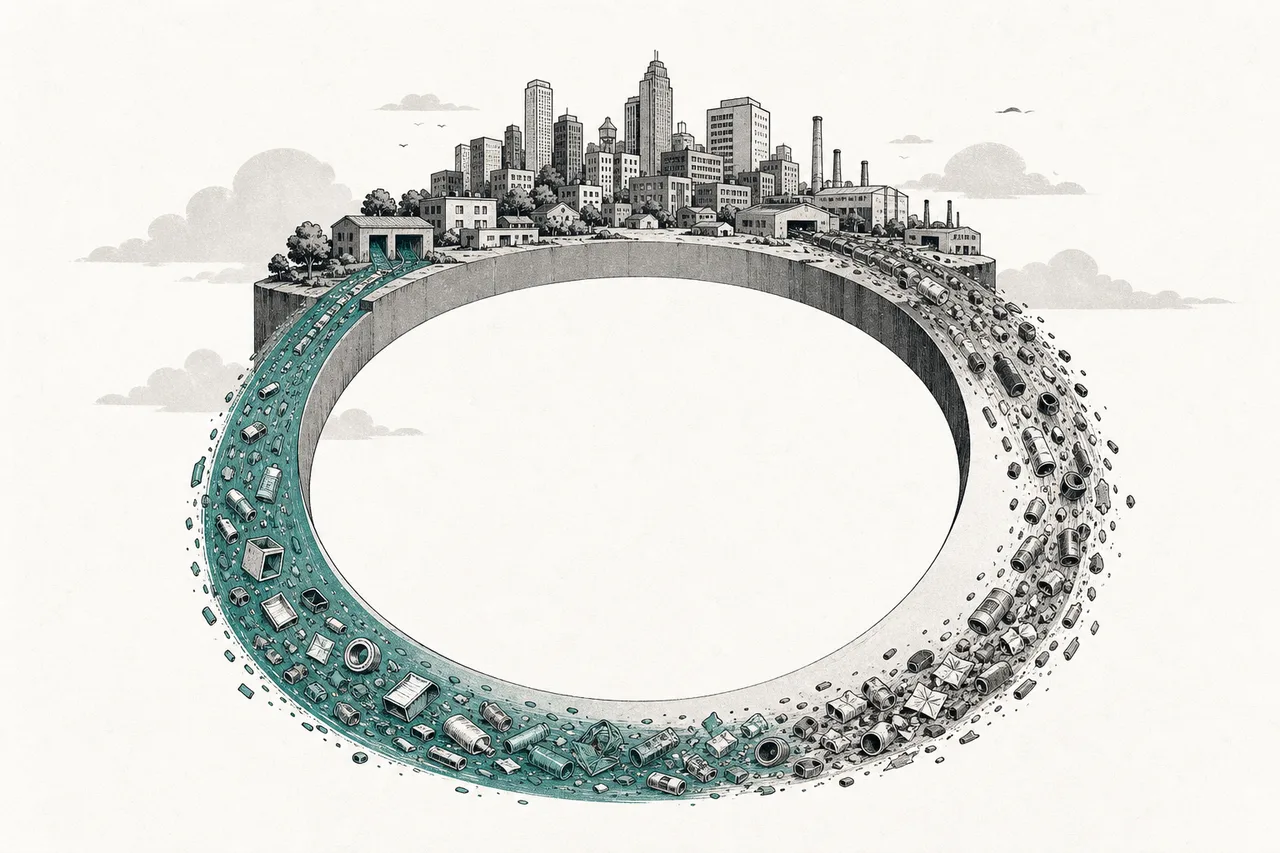
The old economy is a "line" (linear) — dig up resources → make stuff → use it → dump it in a hole, done · The circular economy tries to bend that line's end into a "circle" (circular) — collect → sort → recycle → reuse, then loop it back as fresh raw material. Every time it goes around, you pull value back out and send less to the hole.
02Why it matters — the "toll road" of trash
Start with a number that puts the scale in perspective: the world produces about 2.6 billion tons of municipal solid waste a year (2022), and that's expected to climb to nearly 3.9 billion tons by 2050, per the World Bank's What a Waste report — growing even faster than once predicted. The richer people get and the bigger cities grow, the more trash there is. This is demand that almost never shrinks.
Because demand never shrinks, the global waste-management services market is huge — roughly $1.2–1.5 trillion, expected to reach ~$2 trillion by 2030, compounding at about 5–6% a year. Not flashy, but boringly reliable.
But the real reason investors love this business isn't just size. It's the "toll-road-like" quality — think about it: trash has to go somewhere, and new landfills are very hard to build (nobody wants a trash hole next door). So whoever owns the existing holes is like whoever owns the tollbooth every garbage truck has to pass through — they have pricing power, they can raise prices with inflation, and their revenue isn't tied to whether the economy is good or bad.
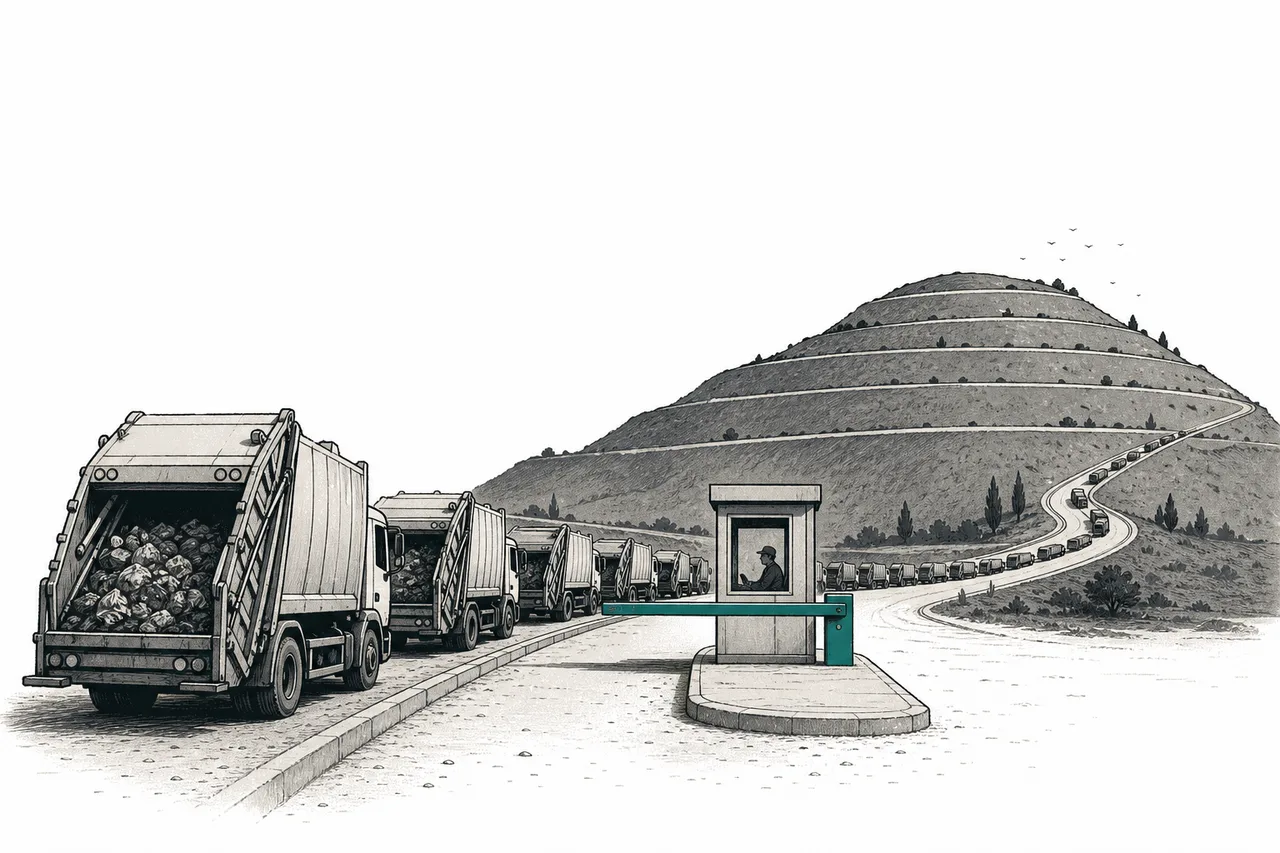
Warren Buffett once described businesses like this as a "moat" — and few industries have a moat as clear as owning the place where trash must end up.
03How it works — line vs circle
The heart of this trend fits in a single picture: the difference between a "linear" economy and a "circular" one.
The linear economy is what the world has always done — we dig up resources (take), make them into stuff (make), and dump them in a hole when we're done (dump). Everything flows one way and ends at the landfill. All the value is lost with the burial, and every time we bury, we have to go dig up new resources and start over.
The circular economy tries to bend that line's end back to meet itself as a loop — instead of ending in a hole, stuff gets collected → sorted → recycled → and fed back into production as raw material again. Every time the loop turns, you "pull value back out" and cut both the waste you bury and the new resources you dig.
But in reality, the loop still "leaks" badly — and that's both the problem and the opportunity. The world still landfills about 40% of its trash, recycles only ~24%, composts ~11%, and burns or mishandles the rest. So the "circle" isn't even half-closed — every percentage point pulled out of the hole and into the loop is a new market waiting.
04The circular economy + the laws changing the game
Recycling has always been a business that hung on "goodwill" and market prices — if recycled plastic costs more than virgin plastic, nobody wants to use it. But a new force is changing that equation: laws that make the "loop" happen whether anyone wants it or not.
"Responsibility extended all the way to the producer" — a law that forces the companies making packaging to pay to dispose of and recycle their own, instead of dumping the burden on municipalities and taxpayers · once producers have to pay, they're motivated to design packaging that's easier to recycle, and the fee money flows straight into the recycling system.
This wave is getting real — in the US, 7 states have already passed packaging EPR laws (California, Colorado, Maine, Maryland, Minnesota, Oregon, Washington), with Oregon the first to start enforcing on July 1, 2025. Meanwhile California's "recycled content" law (AB 793) requires plastic drink bottles to contain 25% recycled material in 2025, rising to 50% by 2030.
Europe is even stricter — the EU's new rules require all packaging to be recyclable by 2030, with steadily rising recycled-content targets. This turns "recycling" from a price-dependent choice into demand backed by law — and that's what's making investors look at recycling businesses with fresh eyes.
The "circular economy" opportunity is much bigger than just trash — Accenture estimates that fully closing the loop could unlock up to ~$4.5 trillion in economic value, by cutting waste, extending product life, and recovering materials.
05Where it sits in the Climate world
This node is one of the pillars of the megatrend Climate Adaptation & Water — the group of businesses that help society "withstand" a world of strained resources and erratic weather. It stands shoulder to shoulder with siblings that look a lot like it:
- Closest partner — Water Utilities & Infrastructure: water and waste are the same kind of "basic utility" — toll-road, pricing power, recession-proof. Many companies like Veolia do both at once
- Resource link — Critical Materials & Supply Chain: here's the deep part — metals recycled from e-waste (copper, lithium, nickel) are "urban mining" that cuts dependence on real mines. So recycling becomes an indirect but important source of raw materials
- A handoff to energy: landfill methane and trash incineration get turned into electricity and renewable natural gas — linking this trend to the world of clean energy
Here's an interesting angle: of all the Climate siblings, this node has "proven itself financially" the most — while many climate trends still lean on subsidies or run at a loss, the waste business turns high profits and has paid dividends for decades. It's a rare "defensive" anchor for the climate theme.
06Where it stands now + the players
The industry's current state boils down to two words: "consolidate" and "upgrade." In North America the market is owned by a few giants buying up small local players (Waste Connections closed 24 acquisitions in 2024 alone), because the more collection routes you control in one area, the more pricing power you have.
At the same time, this crowd is "upgrading" from just collect-and-bury to higher-margin businesses — building renewable natural gas (RNG) plants from landfill gas, and investing in automated sorting systems that make recycling profitable even when material prices fall. A clear example: Republic Services reported recycling EBITDA grew +18% in 2025 even as recycled-commodity prices dropped 35% — because automation cut costs and lifted the quality of the sorted material.
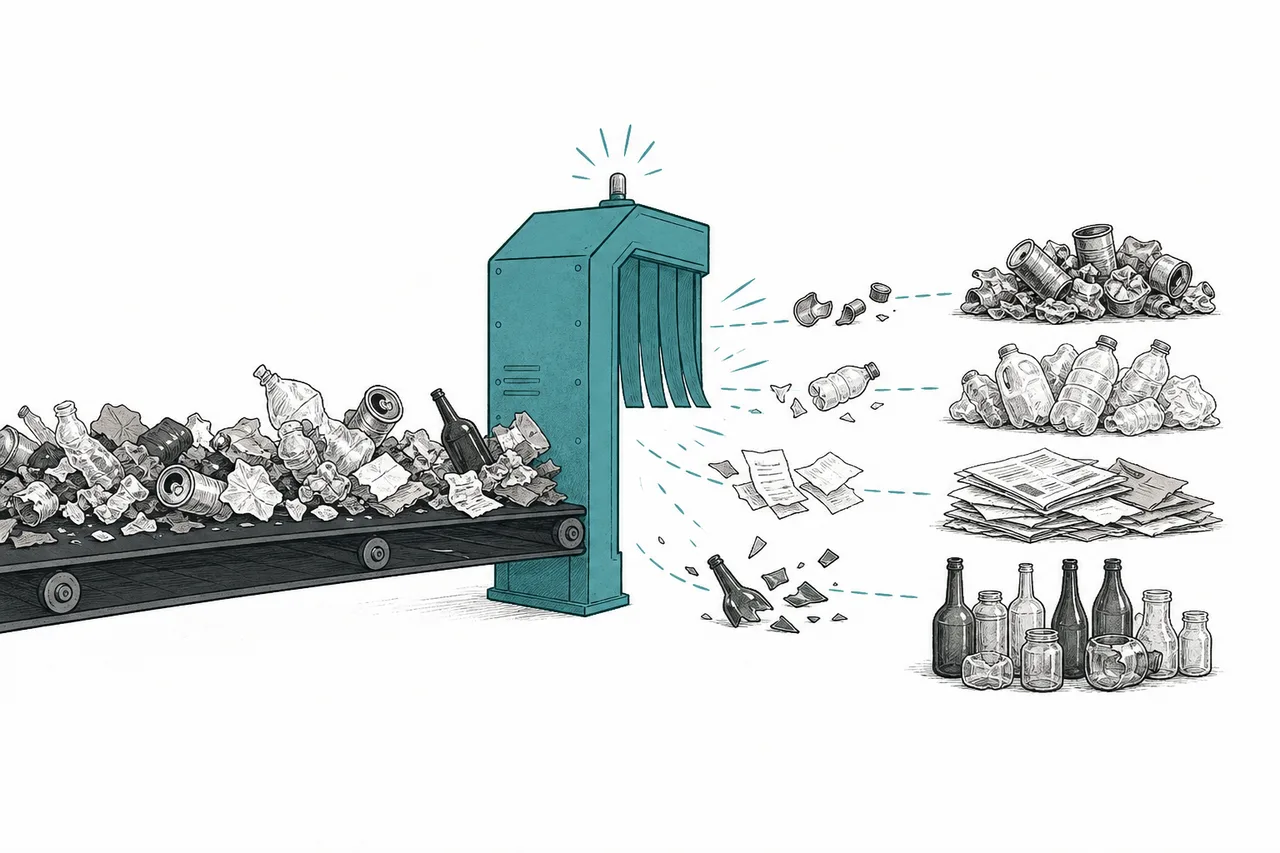
Looking across the whole field, the players break into groups — the integrated North American giants (collect-bury-recycle, end to end), the European leaders doing water-waste-energy, the hazardous-waste specialists, and the sorting / packaging-return technology makers. All of them are public companies:
07The road ahead
The first direction is that law becomes the main engine. The more states and countries pass EPR and recycled-content targets, the more demand for recycled material gets "backed" by law instead of just market price — turning recycling from a commodity-driven business into a steadier one, and giving owners of recycling infrastructure more leverage.
The second direction is that "urban mining" grows in importance. As the world needs more lithium, copper, and rare metals for EVs and clean energy, recovering metals from e-waste and old batteries becomes a strategic source of raw materials — connecting the waste business directly to critical materials.
The third direction is that sorting tech and RNG lift margins. AI and sorting robots make recycling cleaner and cheaper, while landfill gas that used to be pure waste becomes an energy product you can sell — together turning "cost" into "revenue," and giving a boring business a new growth angle the market is starting to value.
08Challenges & risks
This solid-looking business has weak spots you need to understand fully too.
The first risk is volatile recycled-material prices. The collect-and-bury side is steady, sure, but the recycling side sells commodities (old paper, scrap metal, plastic) whose prices swing with the global market. In 2025 recycled prices fell 35% — same work, but this slice of revenue swings hard. That's exactly why investing in automated sorting matters: it cuts the dependence on market price.
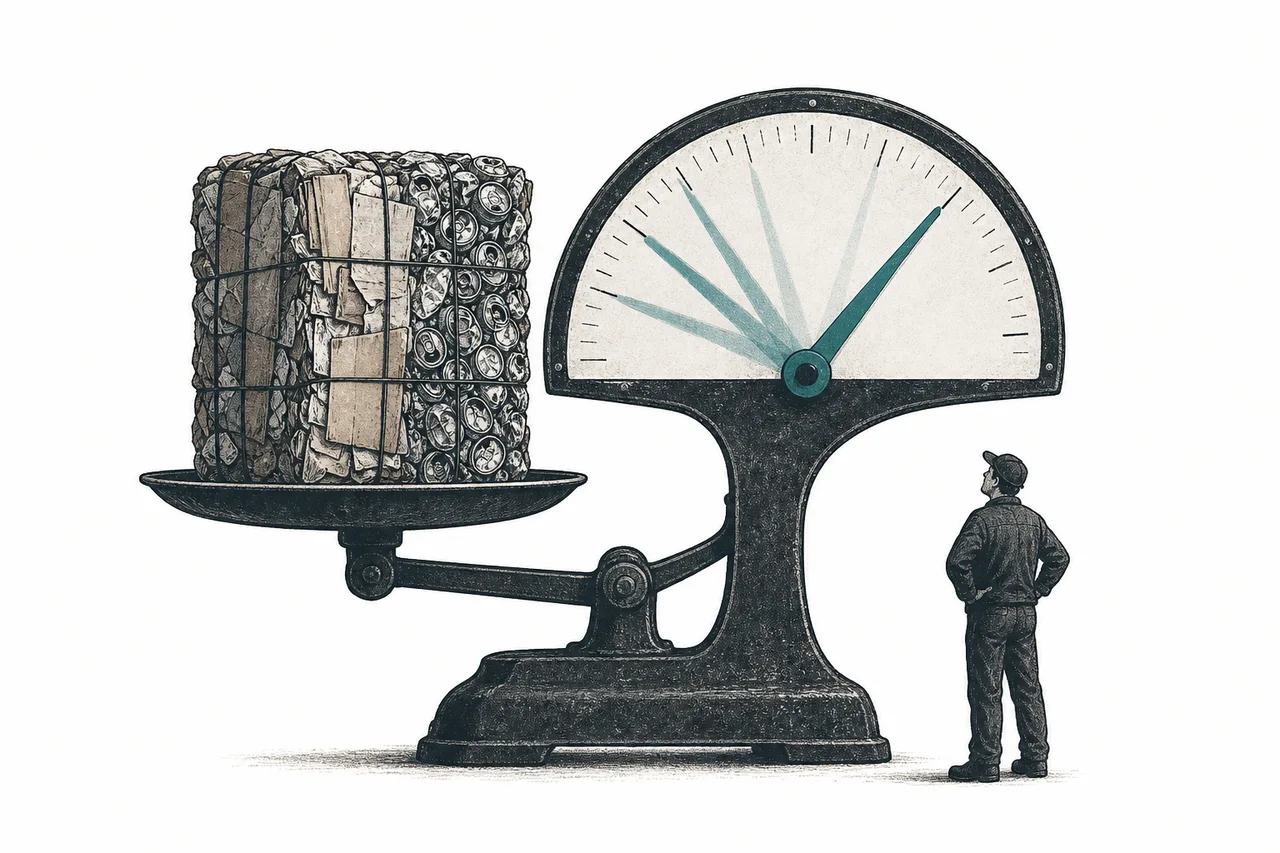
The second risk is dependence on law. Part of the growing recycling demand comes from EPR rules and recycled-content targets. If a new administration loosens the rules, pushes back deadlines, or enforces them loosely, the demand the market expected might not show up on schedule — a business where part of the growth "depends on a politician's pen."
The third risk is that it's capital-intensive. Landfills, incinerators, collection trucks, and RNG plants all take enormous investment and a long time to pay back. On top of that, tougher environmental rules (handling PFAS or methane, for example) could raise the cost of closing holes and long-term stewardship in hard-to-estimate ways.
And the last truth you have to admit: actual recycling rates are still low. For all the talk about the circular economy, the world still landfills about 40% and recycles only ~24%. Some plastics barely pay to recycle. The ideal "loop" is still far from reality — which you can read two ways: as a disappointment, and as the size of the opportunity still open.
In a sentence: this is the story of a business nobody wants to talk about at a party, yet one of the most recession-proof and profitable in the world — and one that laws are now pushing to shift from "trash collector" to "closer of the circular-economy loop." Understanding why a landfill has as much pricing power as a toll road, and why "quit using-and-tossing" is becoming law, is understanding why this most boring-looking node is an important defensive pillar for an era where resources are starting to run tight.