Megatrend · whole-trend overview
The trend underneath every other trend
One EV, one AI server, one rocket, one wind turbine — every one of them starts as a rock dug out of the ground, then passes through a "refining" step that mostly happens in a single country. This lesson is the map that strings the 9 material categories together: how stuff flows from mine → refinery → component, why the real "bottleneck" isn't the mine but the refinery, and why the West is pouring enormous money into bringing that middle step back home (each category has its own deep-dive chapter).
01The big picture: the raw materials of every megatrend
When we talk about cool megatrends like AI, EVs, clean energy, or defense, we tend to forget that all of it starts with something physical you can touch: the metals and minerals dug out of the ground. An EV motor needs rare-earth magnets, data-center wiring needs copper, batteries need lithium, chips need special gases and chemicals. So Critical Materials isn't "another trend" — it's the trend underneath every other trend. If the raw materials stall, everything above them stalls too.
The scale is enormous. The market for energy-transition minerals was about $320 billion in 2022, and the IEA expects demand to more than double by 2030 and grow 4x by 2050. The clearest example is copper — demand is surging from about 27 million tonnes (2024) toward 33 million tonnes in 2035, driven by EVs, the power grid, and AI data centers.
But what makes this a "geopolitical game" isn't just the size of demand — it's who controls which step in the chain. And that's exactly what this chapter unrolls the map to show: where stuff flows after the mine, who owns the most important spot, and why that spot isn't the "mine" that many people assume.
02The map: 9 categories across 4 families
The best way to remember these 9 categories is to group them into "material families" by what they feed — each category has its own deep-dive lesson (tap to read):
Family 1 — Energy-transition metals
- Copper: copper — the basic conductive metal under everything that runs on electricity, from the grid to EVs to AI data centers
- Lithium: lithium — the heart of the battery, and the most volatile price in the group
- Nickel & Cobalt: nickel and cobalt — the metals in a battery's electrodes, with a supply-concentration problem (almost all cobalt comes from Congo)
Family 2 — Magnets & precious
- Rare Earths & Permanent Magnets: rare earths and permanent magnets — the "spinning heart" of EV motors, wind turbines, and guided missiles, and the spot China controls most completely
- Precious & Platinum-Group Metals: gold and the platinum group (PGM) — both a safe-haven asset and a catalyst in cars and hydrogen
Family 3 — High-tech materials and nuclear power
- Semiconductor Materials: chip-making materials — silicon wafers, special gases (neon), and rare metals (gallium, germanium) that feed chip factories
- Specialty Chemicals & Industrial Gases: specialty chemicals and industrial gases — the "blood" that keeps chip plants, refineries, and hospitals running
- Uranium & Nuclear Fuel Cycle: uranium and the nuclear fuel cycle — the fuel for baseload power, hot again because AI eats so much electricity
Family 4 — Structural metals and reshoring
- Bulk & Structural Metals (Reshoring): high-volume structural metals (steel, aluminum) — the raw materials of the factories, grids, and infrastructure being rebuilt across the West
03How it all connects (mine → refine → component)
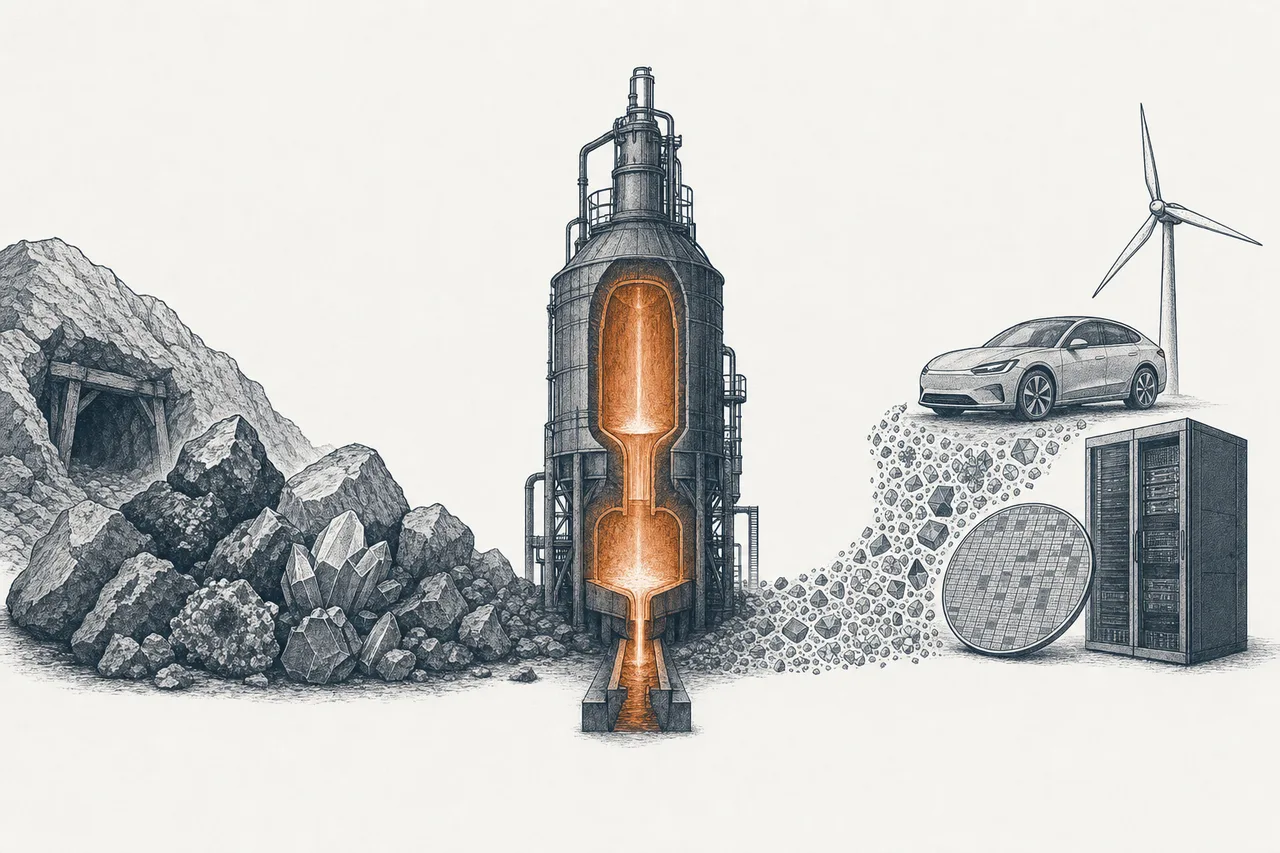
The heart of this map is a 3-step sequence — dig (mining) → refine/process (refining) → turn into components — and then stuff flows out to feed the downstream megatrends. People often think "whoever owns the mine controls the game," but the truth is the opposite — the real power sits in the middle step, the refinery. Because digging ore is spread across many countries, but turning raw ore into usable-grade pure metal is concentrated in China to a startling degree.
The number at the heart of this whole story is this: China mines about 60% of the world's rare earths, but refines around 90% of them (and for the "heavy" rare earths critical to heat-resistant magnets, up to ~98%). Same with lithium and graphite, where China owns most of the processing step. Put simply, you can have a mine in Australia or the US, but in the end the ore has to fly to China to be refined — and that's the "narrow gate" the whole world has to pass through.
04Where the value and power sit
The key rule of this field is counterintuitive: the power isn't with the mine owner — it's with the refinery owner and the downstream component makers (like magnets). A mine is a "commodity" business — prices rise and fall with the global market, and the lowest-cost player survives. Refining and magnet-making, by contrast, are "technical + scale" businesses that are hard to do, take accumulated know-how, and concentrate in a few hands — that's where the margins and the bargaining power pile up.
This explains why the "political game" over materials is so fierce — China doesn't use "refusing to sell ore" as a weapon (because ore can be found elsewhere). Instead it uses "controlling the refining and the magnet technology" as the weapon. In April and October 2025, China rolled out export controls on heavy rare earths and magnets, going as far as requiring an export license for any magnet containing even 0.1% of Chinese minerals or made with Chinese technology — leaving some US and European automakers forced to cut production or temporarily halt plants.
The lesson for reading this trend: don't just ask "what does this company mine?" — ask "does it stand at the refining/magnet step (where the power is), or at the commodity-mine step (where it just takes the market price)?"
05The forces that hit the whole trend
Even though each material category differs, three big forces move the whole board at once:
1. The demand super-cycle — this is the most fundamental force. EVs, the power grid, renewables, and AI data centers are all huge material-eating machines running at the same time. AI data centers alone will push copper demand from 1.1 million tonnes (2025) to 2.5 million tonnes (2040), and the world is heading into a widening "gap" between demand and supply.
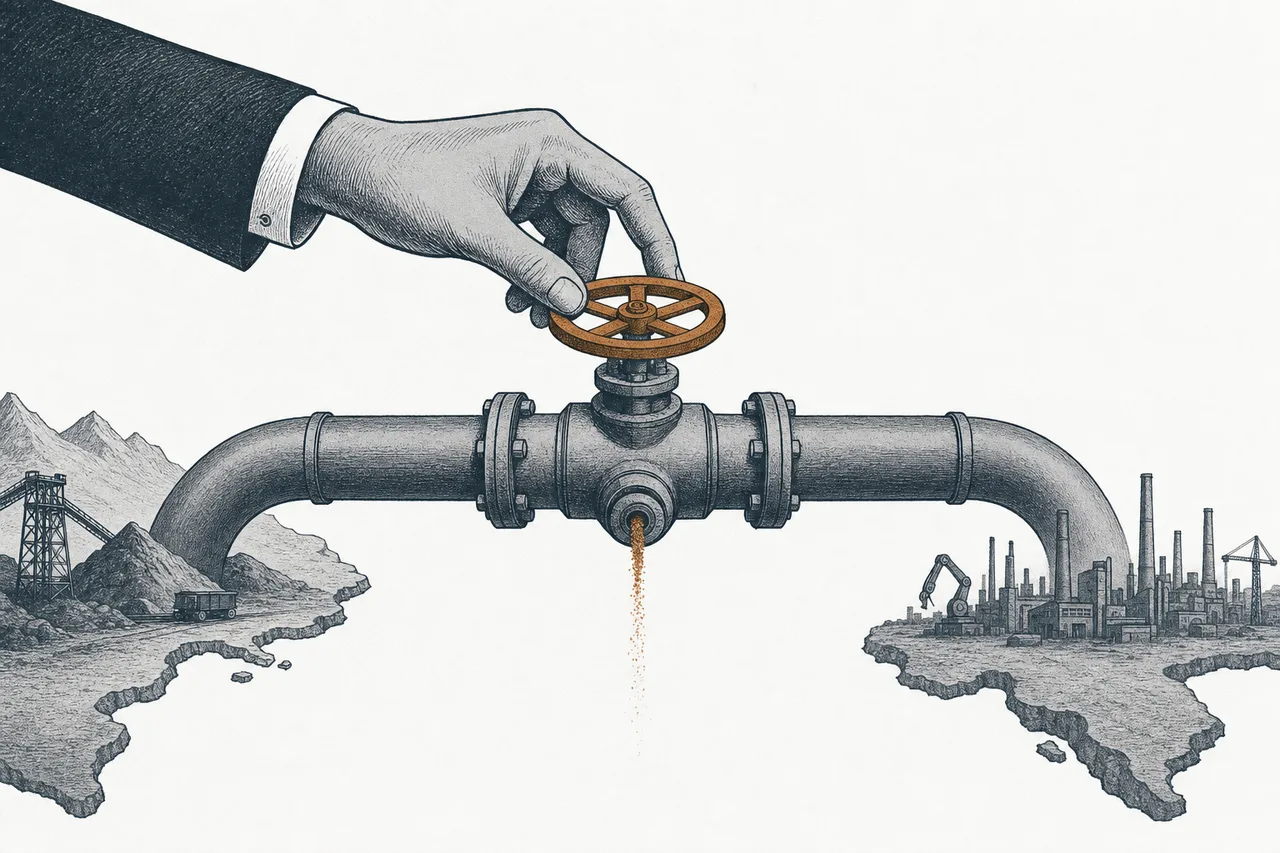
2. Geopolitics — materials become a weapon — once China controls the refining step, exporting raw materials itself becomes a political "lever." The clearest example is July 2023, when China restricted exports of gallium and germanium (metals indispensable to chips) — gallium exports collapsed from 6,876 kg (July 2023) to just 227 kg (October 2023) within a few months. This is a risk that isn't on the financial statements — it's on the world map.
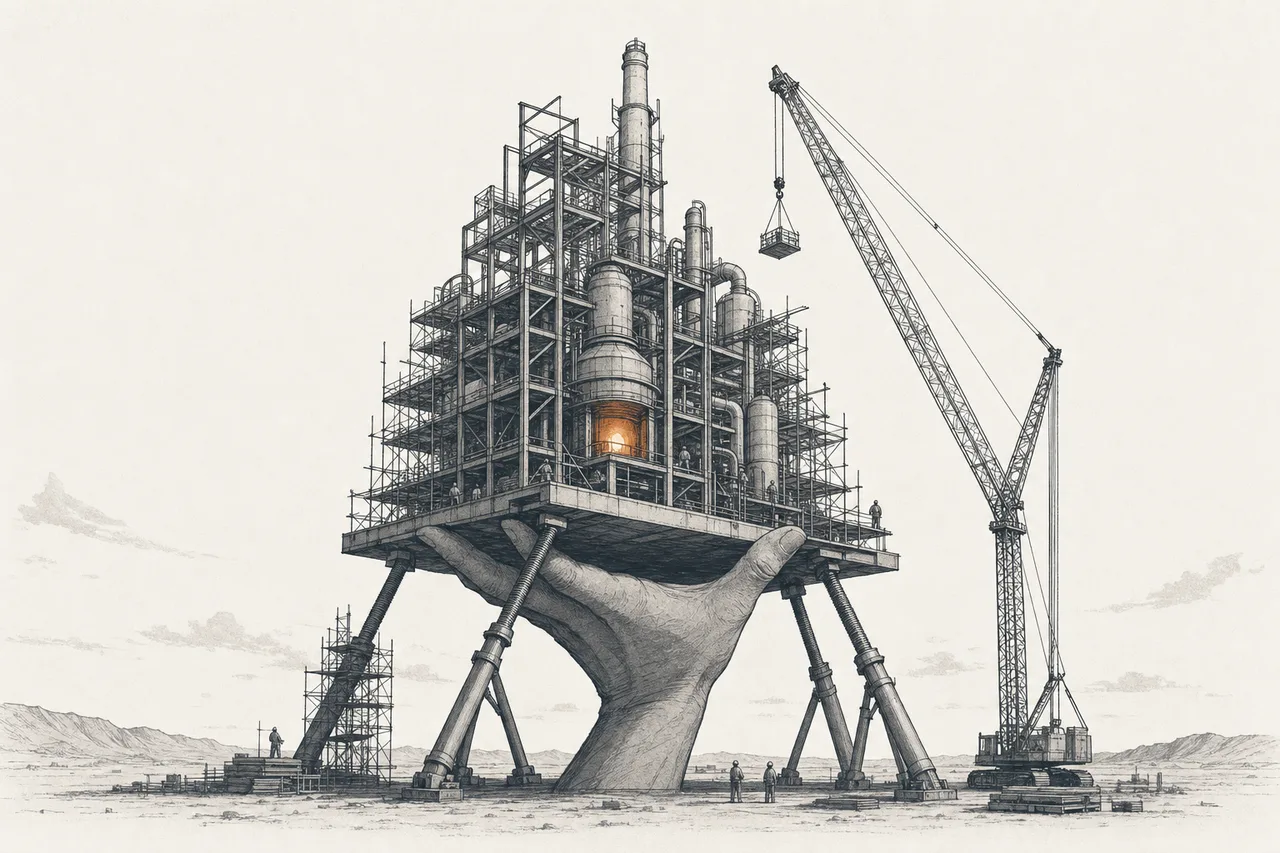
3. The wave of bringing production home (Reshoring & Friend-shoring) — the counter-reaction is the West pouring money into rebuilding the "middle step" (refining + magnets) outside China. The deal that symbolizes the era is the US Defense Department taking a $400 million preferred-stock stake in rare-earth company MP Materials, with a guaranteed "floor price" of $110/kg for 10 years on NdPr mineral (nearly double the market price at the time) — making Defense its largest shareholder at ~15%, followed by Apple putting another $500 million into the American magnet supply chain. This is a "subsidy for refining" that the free market has never done before.
06Where we are now + the champion of each category
2025–2026 is when materials clearly "split paths" — some surged, some just clawed back from the bottom. Lithium fell to ~$8,000/tonne in mid-2025 on a supply glut, then bounced back to ~$21,000/tonne by mid-2026 (a +162% recovery in about a year), while uranium climbed from $72/lb (late 2024) past $94/lb (early 2026) on nuclear-power demand from AI, and platinum ran a 1.1-million-ounce deficit in 2025. Below are the "champions" of each category, reflecting how the power spreads across many countries (US / Australia / Canada / UK / South Africa / Germany):
07The future and the risks
Looking ahead, the materials trend has both clear long-term tailwinds and specific risks you have to watch alongside them.
On the opportunity side: structural demand (EVs, grid, AI, nuclear) is a force that's "easy to switch on, hard to switch off," and supply can't keep up — a new copper mine takes 17 years on average to open, so the supply gap tends to widen (possibly 30–40% for copper by 2035). This is the basis of the "super-cycle." And the reshoring wave is creating new state-backed refining players outside China.
On the risk side, there are three layers to watch:
- Commodity cyclicality: materials swing harder than any other trend. Lithium just demonstrated it — diving ~70% then bouncing +160% within a few years. Today's shortage can become a glut a few years later, and a miner's profit is tied to a price it can't control
- Substitution and technology: prices that run too high give people a reason to find a "workaround" — like sodium batteries (instead of lithium), rare-earth-free motors, or magnet recycling. If those succeed, some bottlenecks could ease and put downward pressure on prices
- Two-way geopolitics: China can wield refining as a weapon, true — but reshoring that depends on state subsidies is itself fragile to domestic politics in the West. Projects like Lynas's Texas refinery, whose budget ballooned from $400M to $575M, show that "building the middle step anew" is more expensive and slower than expected
And that's why this chapter is a "map," not a "deep-dive guide" — because the real value of seeing the whole trend is seeing how a rock dug up today strings into tomorrow's AI, EVs, and defense before you walk in to explore each material in detail — just tap into the deep-dive chapter of whichever category interests you.