Megatrend · Smart City
Turning every truck into a monthly subscription
The Smart City megatrend is full of big dreams that don't make money yet — smart cities, self-driving cars, digital twins of whole cities. But there's one node that has quietly been "actually profitable" for a long time: bolting a small box onto trucks, delivery vans, and construction vehicles, then selling the software that reads it as a monthly subscription per vehicle. It isn't sexy. But it's a SaaS business with sticky customers and revenue that flows back every single month.
01What it is
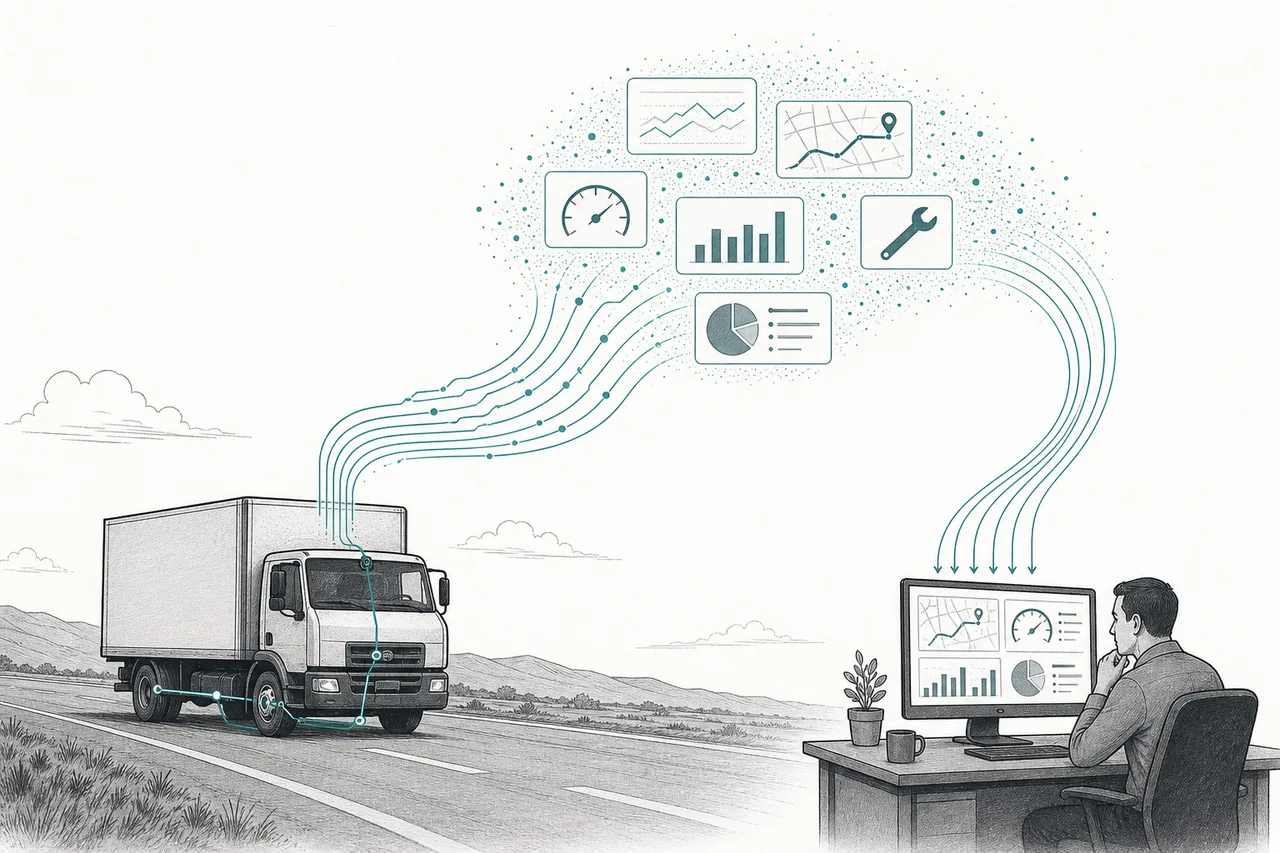
Picture a company running 500 trucks delivering goods across the country. The questions the manager has to answer every day are — which truck is where, who's speeding and burning fuel, which vehicle is close to breaking down and needs servicing before it dies on the road, and is a driver over the legal hours limit. In the old days, the answers came from phone calls and paper. Today they come from a small box plugged into every vehicle.
Connected Fleet & Telematics is the business of that box plus the software that reads it. "Telematics" comes from telecommunications + informatics — simply put, "sending data from a vehicle far away back to a central point." This box (or a modem fitted to the vehicle at the factory) collects GPS location, speed, fuel level, engine fault codes, and dashcam video, and streams it to the cloud constantly. The cloud software turns that raw data into things a manager can actually use: the best route, fuel savings, repair alerts before a breakdown, and compliance with driving-hours law.
This node sits under the megatrend Smart City / Autonomous Infrastructure, and its definition is straightforward: hardware + a cloud platform that connects vehicles and machines — GPS, video, analytics — sold as a subscription to fleet operators. That phrase, "sold as a subscription," is the heart of the whole story.
Telematics = the technology that sends data from a vehicle far away back to a central hub over a wireless network · Fleet = the group of commercial vehicles a single company owns and operates — haulage trucks, delivery vans, construction vehicles, service vehicles (plumbers/electricians), all the way to rental cars. The bigger the fleet, the more it has to rely on software to manage it.
02Why it matters (the boring stuff that makes money)
Most Smart City trends are bets on the future — beautiful, but not yet profitable. Telematics is different. It's a SaaS business that has proven it really makes money, and the reason is simple: it saves the customer money in concrete numbers from month one.
Look at the real numbers. Analyzing driver behavior (hard braking, hard acceleration, leaving the engine idling) and improving it cuts fuel costs by about 8–15% per vehicle, plus another 20–40% off brake/tire wear. All together, a modern telematics system saves on average $3,500–6,200 per vehicle per year. For a 500-truck fleet, that's millions of dollars a year — many times the subscription they pay. This is why customers buy and never leave.
But the side that makes customers the most money isn't fuel — it's safety. A single truck accident can cost $15,000–50,000, or far more if it goes to court. Smart cameras (AI dashcams) that catch risky behavior — a driver on their phone or falling asleep — and warn instantly cut accidents by 25–41% within a single year. And when fleets share the camera data with their insurers, many get a 5–20% premium discount right away.
With ROI this clear, the market keeps growing. The global fleet management market sat at about $33 billion in 2025 and is expected to grow to ~$67 billion by 2030 (about 15% a year). The installed base keeps expanding too — video telematics in North America and Europe alone will grow from ~9.6 million units at the end of 2025 to ~21.6 million units by 2030.
03How it works
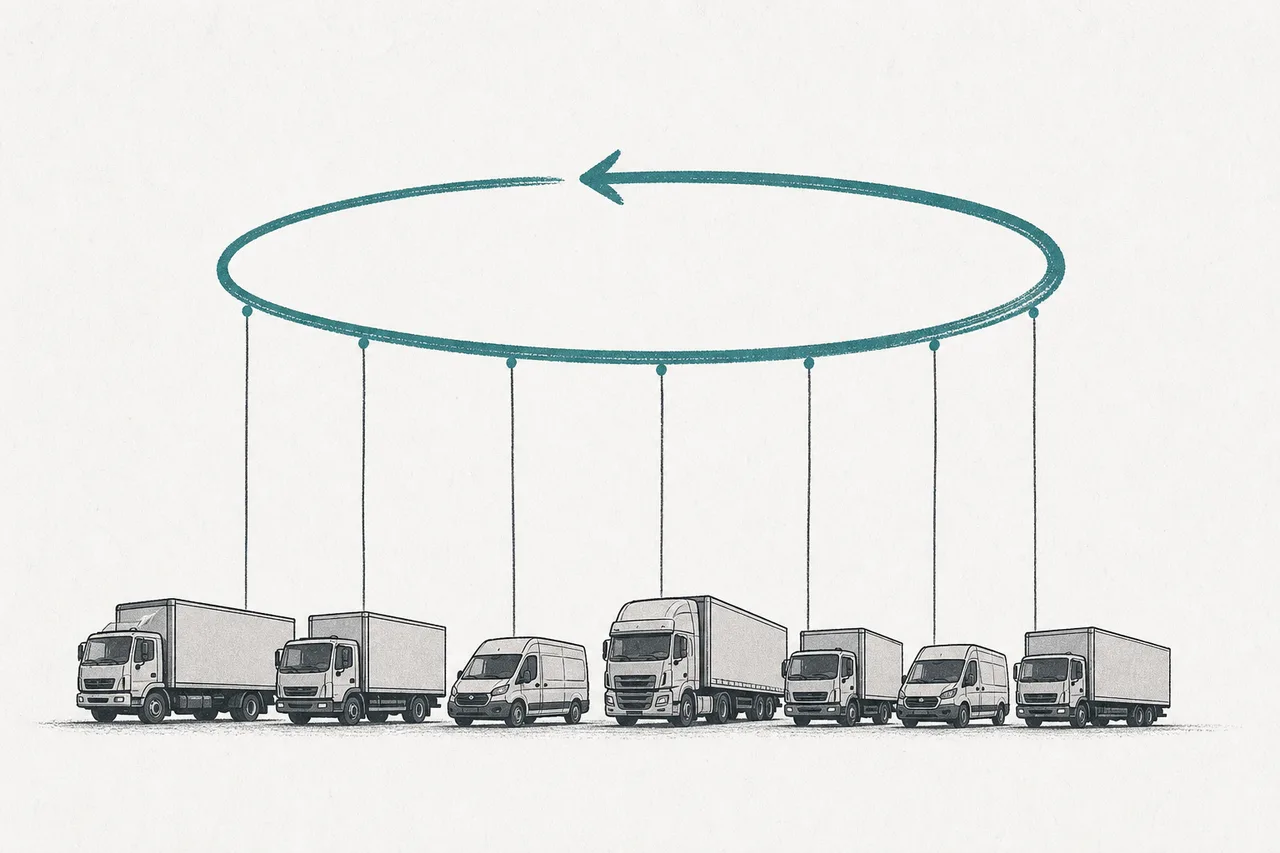
The whole mechanism is a simple but powerful three-step loop — from vehicle to cloud and back to the manager. And the key part is that it loops like that all the time, which lets the vendor keep collecting the subscription.
What makes this model beautiful as a business is that the hardware is just the "bait" — the software is what makes the money. The metal box in the vehicle is cheap and has become a commodity. But the software subscription charged every month per vehicle is what makes revenue flow back over and over. And the longer a customer uses it, the more historical data piles up, and the more painful it gets to switch to a rival — which is why the retention rates of the leaders in this group are very high.
04Where it sits in Smart City
If the Smart City megatrend is the effort to make cities and infrastructure able to "see and understand themselves," then Connected Fleet is its "data layer of vehicles in motion" — millions of sensors roaming the city all the time, and one of the largest real sources of mobility data that actually exists.
It connects tightly to other trends too:
- Relies on AI as its brain: what turns telematics from "a dot on a map" into "a smart assistant" is AI — it's the thing that watches the camera feed and tells you a driver is falling asleep, or predicts that an engine is about to fail. Leaders like Samsara position themselves as fleet AI companies outright
- Sits on cloud infrastructure: data from millions of vehicles has to flow up to the cloud and be processed in real time — without cheap cloud, this trend couldn't exist
- Mirror image of Intelligent Traffic & Tolling: while smart-traffic systems watch the road "from above" (traffic cameras, roadside sensors), telematics watches "from inside" (each vehicle's point of view). The two combine into a picture of the whole city's movement
- Tangled up with Electrification & Mobility: when a fleet switches to EVs, managing the battery, range, and charging becomes a new problem telematics software has to answer — opening up a whole new service category
05Where things stand now + the players
2025–2026 is the period when telematics "grew up." It's no longer a new thing that has to prove itself — it's a fierce battleground that keeps consolidating into itself. The numbers that tell the story best come from two leaders with different styles.
On one side is Samsara (ticker IOT in the U.S. market) — the fastest-growing tech newcomer, positioning itself as a "fleet AI company." Its annual recurring revenue (ARR) reached about $1.75 billion in Q3 of fiscal 2026, growing about 29% a year, with nearly 3,000 large customers paying over $100,000 a year. The most important number is net retention of 115–120% — meaning existing customers don't just stay, they pay more every year. That's the signature of a genuinely strong SaaS.
On the other side is a quieter leader that's bigger by vehicle count — Geotab, a private Canadian company ranked by ABI Research as the #1 commercial telematics provider in the world for 4 years running. Geotab supports more than 5 million connected vehicles from over 55,000 customers — and in October 2025 it acquired Verizon Connect's telematics business across several countries in Europe and Australia, underlining that this market is consolidating into a handful of big players.
The truth worth stating plainly is that many of the biggest real players are private companies not on the stock market — Geotab, Lytx, and the Verizon Connect unit buried inside a telecom giant. So we arrange the players by competitive standing and actual role in the market, rather than ranking them by raw market cap alone.
06The road ahead
The first direction is AI eating everything. The trend is shifting from "telling you what already happened" (where the vehicle is, how many times the driver braked hard) to "telling you in advance what will happen" — predicting which part is about to fail, which driver is at risk of an accident, which route will hit traffic. So value flows more and more from hardware to the intelligence of the software, which is good for the margins of players who are good at AI.
The second direction is expanding beyond the vehicle. Leaders like Samsara don't stop at vehicles — they extend to tracking machines, equipment, and whole construction sites, shifting from "fleet software" to "a data platform for every moving asset," which expands the addressable market (TAM) many times over.
The third direction is the EV wave and safety regulation. When a fleet switches to EVs, the new problems of range, battery, and charging become a new service category. Meanwhile, safety and environmental rules tightening worldwide (like the U.S. ELD mandate for electronic driving-hours records, in force since 2017) push fleets to have telematics not as an option but as a requirement.
07Challenges & risks
Even as a profitable SaaS, telematics isn't a flawless business — there are three risks you need to see clearly.
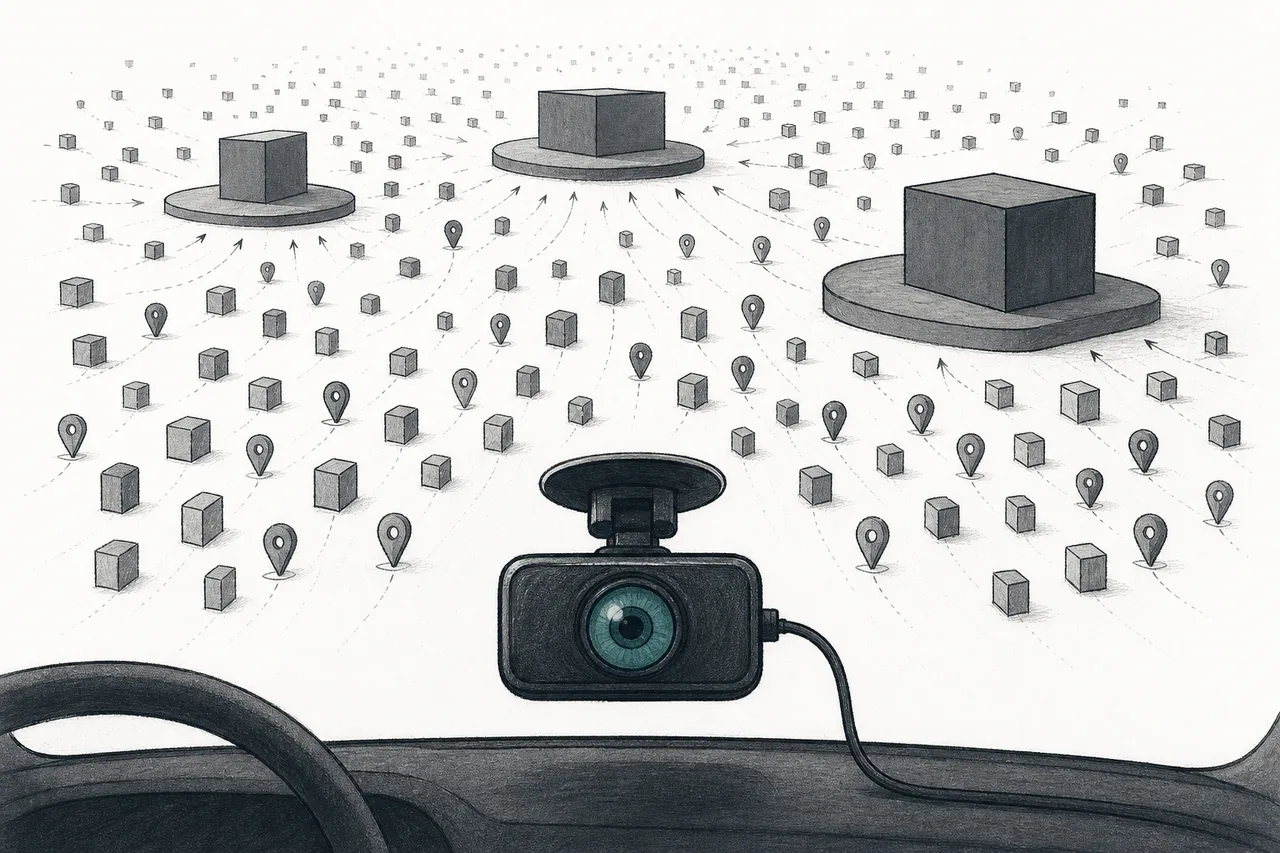
The first risk is competition and consolidation. This market has a lot of players, and the basic product (GPS + box) is all much the same. When the field gets crowded, prices get pushed down and small players keep getting acquired (the way Geotab bought Verizon Connect and PowerFleet merged MiX) — to survive, you need more than hardware, you need software/AI that's hard to copy.
The second risk is hardware becoming a commodity (commoditization). Anyone can make a GPS box today, and many new vehicles ship with a modem from the factory, opening the door for vehicle makers (OEMs) to grab the data layer directly. So value has to move up to the software layer — otherwise all that's left is competing to sell cheap metal.
The third and most delicate risk is driver privacy. Cameras that capture a driver's face and systems that track every move raise ethical questions and pushback from labor unions in many countries — drivers feel watched all the time. If privacy laws tighten (especially in Europe), how video data is collected and used could be restricted, which hits the safety selling point directly.
In short: while the rest of Smart City is still selling a vision of the future city, Connected Fleet & Telematics has quietly been collecting subscriptions from trucks, one at a time, for years. It's a lesson that technology that's "boring but really saves money" almost always makes a profit before technology that sounds flashier — and understanding why one ordinary truck turns into a monthly subscription the customer won't give up is understanding why this most "dull"-looking node is one of the most genuinely profitable nodes in the whole trend.