Megatrend · Psychedelic Medicine
What if you could keep the "benefit" of a psychedelic — without the "trip"?
First-generation psychedelics have two business problems that are hard to fix: their effect lasts for hours, so someone has to supervise the patient in a clinic (expensive), and the original compounds are natural substances you can't patent tightly (weak IP). This is the story of a group of chemists trying to design new molecules to solve both — making the effect shorter to cut clinic time, or, at the far end, cutting the trip out entirely while keeping the brain-rewiring benefit, so you can take it like an ordinary pill. And it's a very early, very uncertain bet, because the biggest question still has no answer: can you actually separate the "trip" from the "benefit"?
01What it is
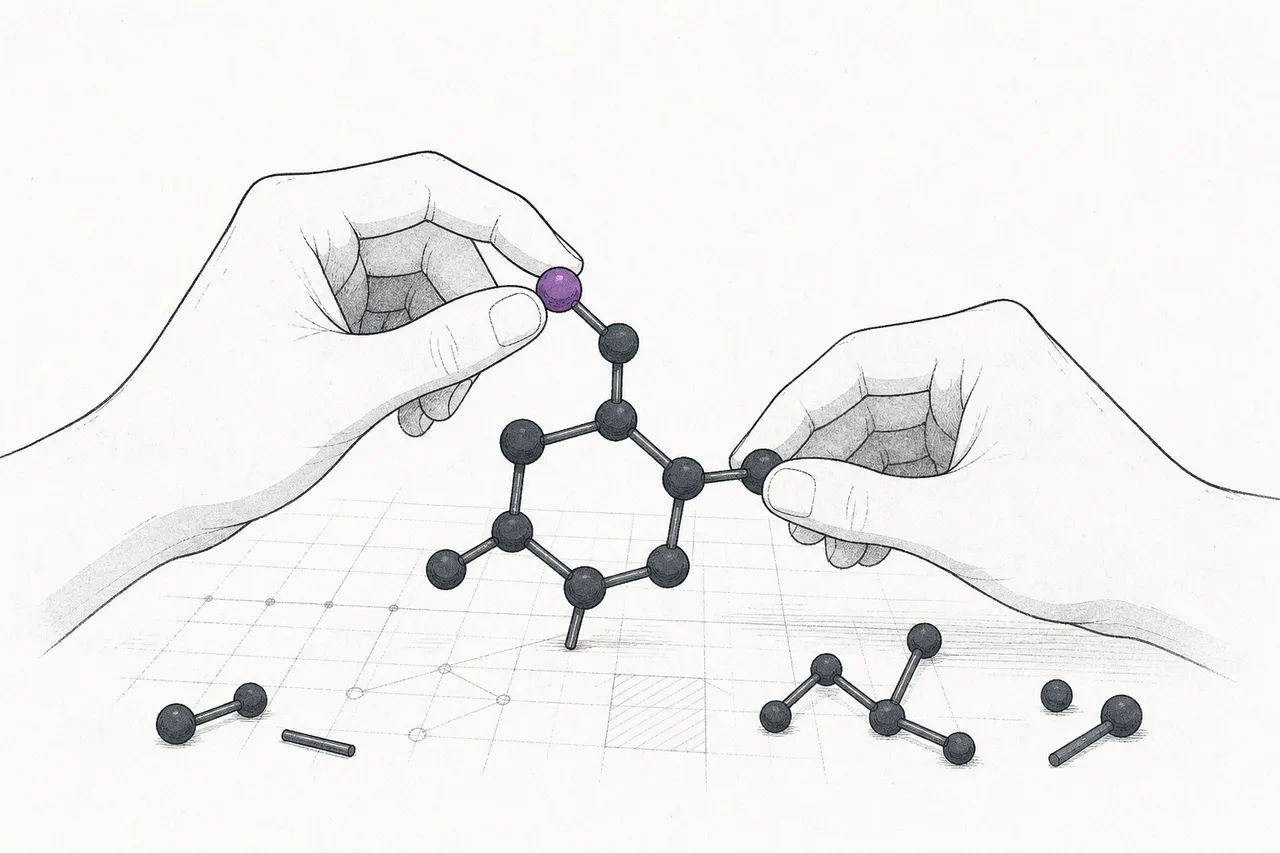
The earlier nodes in the same megatrend — Psilocybin, Ketamine, MDMA — all work with substances that already exist in nature or were discovered decades ago. This node is different: it's a "drug-discovery frontier" where chemists try to build new molecules from scratch to fix the weaknesses of first-generation psychedelics, not just test what already exists.
Novel Psychedelic & Next-Gen Pipeline is a leaf branch of the Psychedelic Medicine megatrend, and it's the "most upstream" line of all — mostly still from before human testing (preclinical) up to Phase 2–3, not on the verge of filing for approval like psilocybin. It spans several families of compounds: derivatives of LSD, DMT, 5-MeO-DMT, ibogaine — and, at the cutting edge, a group called "non-hallucinogenic" neuroplastogens.
The term researchers use (especially David Olson's lab at UC Davis) for compounds that prompt the brain to quickly build and rewire connections between neurons — believed to be the "core of the benefit" that lets psychedelics help depression. The key point is that many compounds can do this possibly without causing hallucinations — and that's the entire bet of this node.
To picture it: if psilocybin is taking "nature's recipe" and turning it into a standard drug, this node is rewriting the recipe from scratch, deciding upfront that you want a drug that acts shorter, is easier to manage, or doesn't hallucinate at all — so it can actually sell within the public health system, not just work in a trial.
02Why it matters — the two problems of the first generation
To understand why anyone would burn money building new molecules when the existing ones already "work," you have to understand the two business problems first-generation psychedelics never solved.
Problem 1 — clinic time is too expensive. One psilocybin session requires the patient to stay in a supervised clinic for 5–8 hours, with a trained attendant sitting alongside. So the cost per session can climb to $3,000 in Oregon's state clinics — and because insurance doesn't pay yet, the average patient who can actually access it earns around $164,000 a year, twice the state median. This isn't a drug you can scale across the whole system as long as "doctor time" is the main cost.
Problem 2 — weak patents. Investors overlook this, but it matters enormously. "Pure" psilocybin is a substance found in nature, so you can't get a "composition of matter" patent (the substance itself) — meaning anyone can copy it once other protections lapse. The whole pharma business model rests on "a period of patent monopoly"; without the monopoly, the incentive to invest hundreds of millions disappears. The next-gen answer is to build new molecules that don't exist in nature, so you can fully patent the substance itself.
A popular technique for making patentable new molecules: take the original compound and replace some hydrogen atoms with deuterium (heavy hydrogen), getting a substance whose effect is close to the original but is a legally new substance — so it earns full composition-of-matter protection. A company like Cybin uses this strategy on psilocybin (the CYB003 program), holding 33 granted patents and over 170 more pending.
Put the two together and you get the investment thesis: if you can keep the anti-depressant / brain-rewiring benefit but cut out the "long trip," and get tight patents, the market expands enormously — because the drug shifts from "an expensive in-clinic service" to "a pill made by the million and prescribed at will." From a niche luxury to a mass-market generic.
03How it works (the fork in the next generation)
The best way to understand next-gen is to start from the "single problem" of the first generation and watch it split into two solutions. The problem: a long, hallucinogenic trip = both expensive clinic time and a hard-to-patent original compound. From here, the research splits into two lines.
Line (a) — short-acting psychedelics. The patient still gets a "trip," but it's designed to end fast. The 5-MeO-DMT family stands out, because its effect is intense but very short (minutes to under an hour, instead of 6–8 hours), so the patient is ready to go home in a short time — cutting clinic time directly.
Line (b) — "non-hallucinogenic" neuroplastogens. This is the most cutting-edge and riskiest line. The idea: if the "core of the benefit" really is opening a window for the brain to rewire its circuits (neuroplasticity), maybe you can stimulate that core without causing hallucinations — getting a drug you take like an ordinary pill, with no supervision. In lab mice, compounds like tabernanthalog (a derivative of ibogaine) stimulated neuron growth and produced antidepressant-like effects without triggering behavior that signals a hallucinogenic effect.
04Where it sits in Psychedelic Medicine
If you view the whole Psychedelic Medicine megatrend as "development lines" running in parallel at different stages, this node is the most upstream line — the lab designing the next generation, while its siblings sit further downstream:
- Ketamine & Esketamine: the line that has "reached the market" — esketamine (Spravato) got FDA approval back in 2019, proving the "in-clinic drug + reimbursable" model can actually work
- Psilocybin Therapeutics: the line "on the verge of approval" — with full Phase 3 data and NDAs being filed. Next-gen is the crowd trying to make the generation after psilocybin cheaper and easier to manage
- MDMA-Assisted Therapy: the line focused on PTSD, and a cautionary tale — because the FDA rejected the first MDMA in 2024, hammering home that passing the trial isn't the same as passing the regulator
The clearest relationship is that this node depends on the Biotech & Genomic Medicine megatrend directly, because it's full-spectrum biotech drug discovery — synthesizing new molecules, screening them in the test tube, testing in animals, then entering human Phase 1-2-3, burning enormous cash before any revenue, and carrying the "fail midway" risk of any drug. What makes it harder than usual is that it carries the normal clinical risk plus an extra layer of basic-science risk (can you really separate the trip from the benefit?).
On the other side, next-gen also competes indirectly with other brain-rewiring technologies, such as brain stimulation and Brain-Computer Interface — every line is trying to answer the same question, "treat psychiatric disorders that existing drugs can't handle," just with a different tool.
05Where it stands now
Let me frame it clearly first: this whole node is still "early stage" — no next-gen compound is approved for sale. But the two lines we've talked about are moving at different paces — the short-acting line (a) has come as far as Phase 2/3, while the non-hallucinogenic line (b) is still in Phase 1, only just starting to prove itself in humans.
The short-acting line has this year's most exciting data. GH Research reported Phase 2b results for GH001 (inhaled 5-MeO-DMT) in 81 patients with treatment-resistant depression (TRD) in early 2025: it lowered the depression score (MADRS) by −15.5 points more than placebo (p<0.0001), an unusually large gap — and in the open-label extension group, about 77.8% reached remission at 6 months. The selling point is the very short effect, cutting psilocybin's "long supervision" problem.
atai Life Sciences (together with Beckley Psytech) reported Phase 2b for BPL-003 (intranasal 5-MeO-DMT) in mid-2025: a single 12mg dose lowered MADRS by −11.1 points versus −5.8 in the comparison group, and — crucial for the business — patients were ready to go home on average in under 2 hours. The company picked the 8mg dose to move into Phase 3.
There's another line closest to the finish: MindMed (listed under the name Definium Therapeutics), developing MM120 — an LSD orally dissolving tablet — for generalized anxiety disorder (GAD), not depression. Its earlier Phase 2b showed a 65% response rate and 48% remission at 12 weeks, and it's now the first Phase 3 trial of LSD in history (two trials, Voyage and Panorama), with first data expected in 2026.
The non-hallucinogenic line is still in Phase 1 — but human evidence is starting to appear. The leader is Delix Therapeutics (a private company founded out of David Olson's research at UC Davis). Its lead drug is zalsupindole (DLX-001) — a 5-MeO-DMT derivative designed to stimulate plasticity without causing hallucinations or dissociation. Phase 1 data indicate it genuinely acts in the brain and is well tolerated, and the company is running Phase 1b in MDD depression patients — the first step in proving the "you can cut the trip" bet in real humans.
06The future — if it works
The future of this node mostly hinges on a single scientific question: how much of the "trip" can you cut while keeping the "benefit" — and the answer splits the world into two clear scenarios.
In the good scenario, if the short-acting line (like 5-MeO-DMT) clears Phase 3 and gets approved, it sharply lowers the cost per session because clinic time shrinks from 6–8 hours to about an hour, genuinely opening access to more people. And if the non-hallucinogenic line proves equivalent in humans — that's the whole game changing, because the drug becomes "a pill you can prescribe like any antidepressant." The market expands from billions of dollars to many times that, no longer bottlenecked by clinics and attendants.
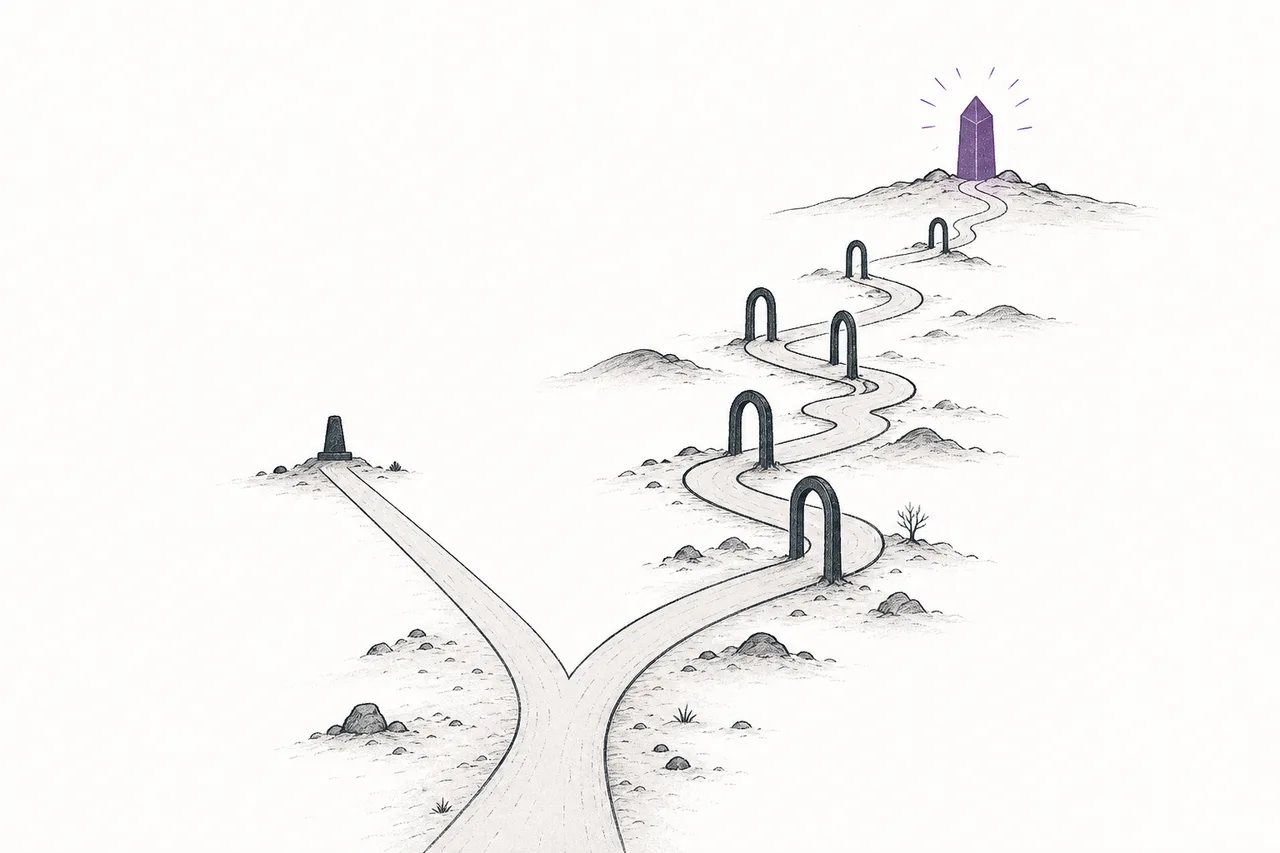
Patent strategy will decide who gets to "harvest." A company that invested in building new molecules (like Cybin's deuterated analogs) earns full composition-of-matter protection — unlike those working with purely natural substances, who can't patent the substance itself. Whoever holds tighter IP is more likely to command the market for longer if they succeed.
But don't forget the other scenario. If the non-hallucinogenic line fails in humans — meaning cutting the hallucination also makes the effect disappear — this node's biggest bet collapses. What's left is just the short-acting line, which still has to compete with psilocybin and esketamine that came first. This is why the share prices in this group swing so hard with every trial-result headline.
07Challenges & risks
This is the chapter to read with the clearest head, because this node is clearly riskier than the psilocybin or ketamine lines — it's further upstream and carries several extra layers of uncertainty.
1. The "can't separate the trip from the benefit" risk. This is the most fundamental risk and is unique to this node. It works in lab mice, but no one has proven in humans that a non-hallucinogenic compound delivers an antidepressant effect equal to the original. If the answer turns out to be "the experience itself is part of the treatment," the entire Line (b) bet is over.
2. The "early stage" risk. The more upstream, the easier it falls. Most of the non-hallucinogenic neuroplastogen line is only in Phase 1 — the stage where industry-wide statistics say most drugs never reach the market. Pretty mouse data doesn't mean it passes in humans.
3. The "can't keep it blinded" problem (functional unblinding). This is a methodological weakness of the whole psychedelic group. Patients who get the real drug feel the effect, so they guess which group they're in, contaminating the results with expectation — one of the main reasons the FDA rejected MDMA in 2024. Interestingly, the non-hallucinogenic line may solve this problem, because without a hallucinogenic effect, blinding can actually hold — a hidden advantage, if it works.
A good drug trial needs to be "blinded" — patients don't know whether they got the real drug or a placebo, to cut out bias. But with psychedelics, the patient who got the real drug feels the effect immediately and so guesses, making it harder to interpret whether the result came from the drug itself or from expectation. It's a problem the whole industry still hasn't fully solved — and one reason "non-hallucinogenic drugs" look attractive in terms of trial design.
4. Patent and competition risk. Building new molecules does help with IP, but it also opens the field for many players to build their own competing derivatives — and there's a question of how tightly a small derivative (like just changing an atom's position) can really keep rivals out in practice.
5. Small-cap volatility + cash runway. Almost all the players are small companies with no drug revenue, relying on fundraising. So their value swings violently with trial news, and you always have to watch "how long the cash lasts" alongside the clinical data — for an early-stage node like this, that risk is even higher than for lines already on the verge of approval.