Megatrend · Synthetic Biology
The dream that deflated, and the survivor hiding in a fermentation tank
A few years ago, "plant-based meat" was hyped as the thing that would change the world and help save the climate. Then the bubble burst — stocks fell 90%+ and companies collapsed one after another. The more interesting story is what survived and is quietly growing — not the burgers in the supermarket, but the protein "fermented" inside a tank.
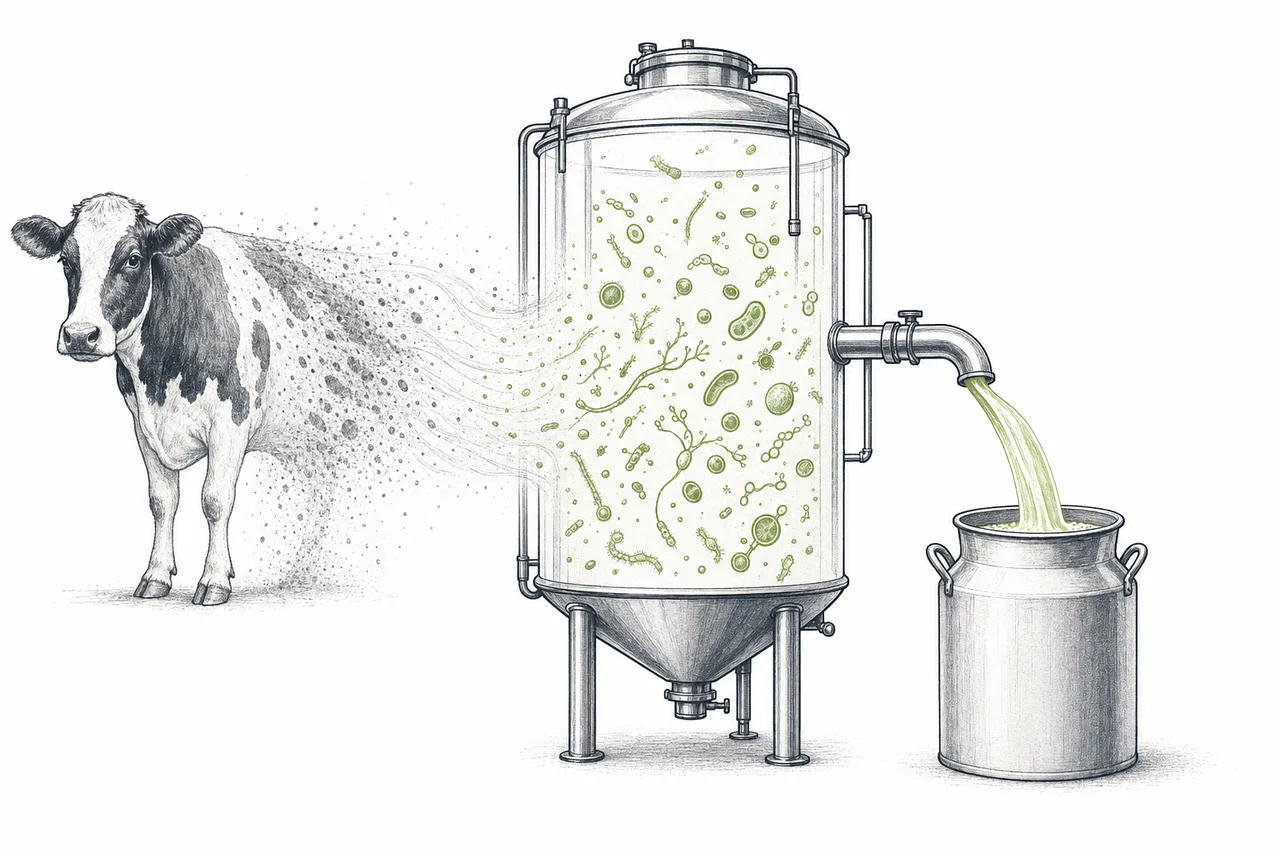
01What it is
Raising animals for meat and milk is one of the most resource-hungry activities on the planet — it uses enormous amounts of land and water, and emits roughly 15% of the world's greenhouse gases. The question that lit up this whole industry is: can we get the same old protein without raising animals?
There are three main approaches, and it's crucial to tell them apart — because their fates are wildly different:
- Plant-based: take pea or plant protein and engineer it to imitate the taste and texture of meat, like Beyond Meat — the easiest to make, but still just a "copy"
- Precision fermentation: use genetically engineered microbes to "ferment" animal protein (like the whey protein in milk) that is identical at the molecular level — this is the real hero of the lesson
- Cultivated meat: grow real animal cells in a tank, getting real meat without killing an animal — the most cutting-edge, but still expensive and tangled in regulation
A technique that uses microbes (like genetically engineered yeast) as "tiny factories" to make a specific protein or compound — similar to brewing beer, except instead of producing alcohol, the yeast is programmed to make whey, casein, or egg white. The result is protein that's "exactly like the animal version" but with no animal involved at all (the same technique that's been used to make insulin for decades).
On the megatrend map, this node sits under Synthetic Biology (non-pharma) — it's taking the tools of synthetic biology and applying them to "food" instead of medicine.
02The dream, and the bubble that burst
Around 2019–2021, this trend ran red-hot. Beyond Meat went public and its stock shot through the ceiling; investors believed "plant-based meat" would take a slice of global meat consumption. Then reality arrived — it cost more than real meat, the taste was "almost but not quite," the "ultra-processed" backlash made people question the health angle, and once the novelty faded, sales dove.
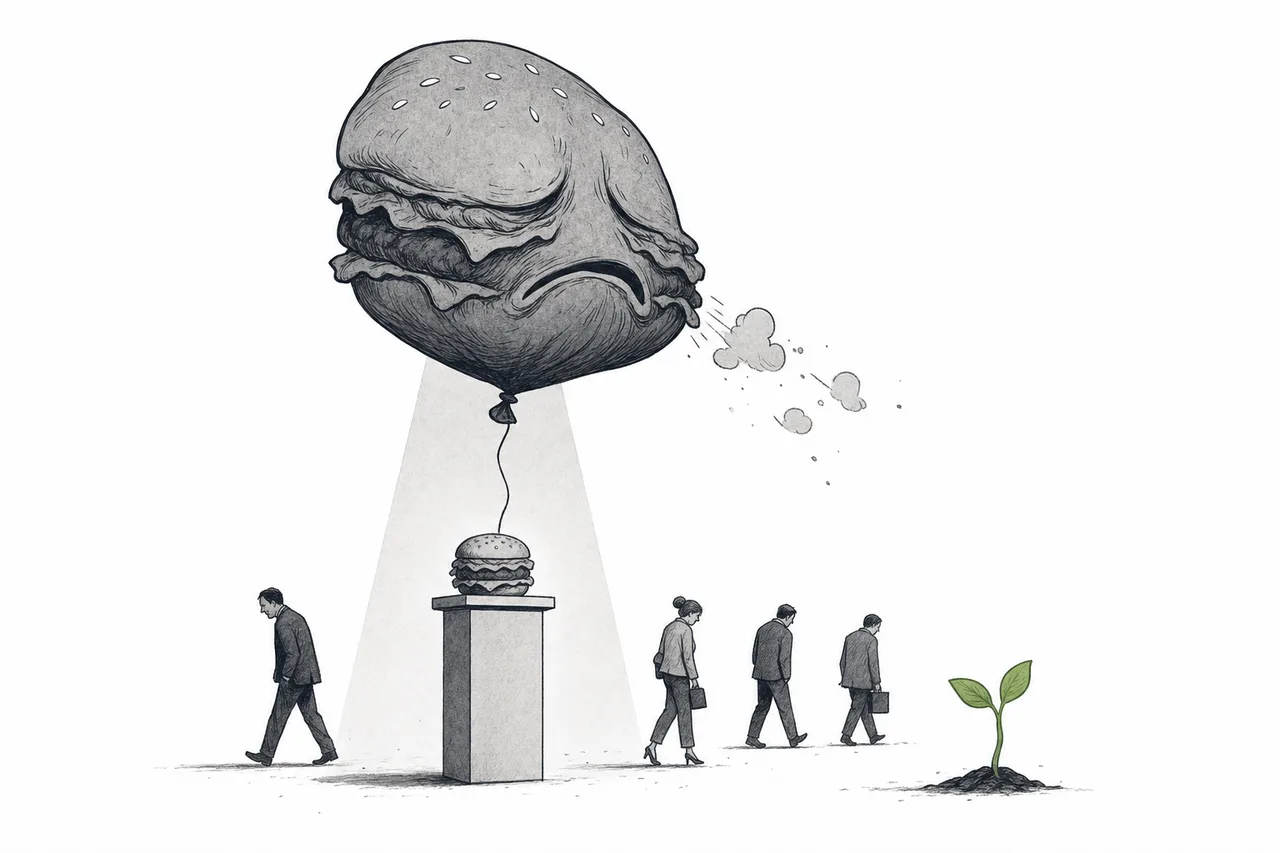
Beyond Meat's numbers tell the story clearly. Q1 2025 sales were $68.7 million (down 9% year over year), and worse, its gross margin was negative — the more it sold, the more it lost. The stock fell over 90% from its peak, the company had to restructure heavily, and it pulled out of China.
But this isn't the end of the story. It's a "shakeout" instead — because beneath the wreckage of the plant-based-meat trend, the overall alternative-protein market is still growing — it's just that money and hope are moving from "burger brands" to "the technology behind them."
03How it works (fermenting protein)
The key that sets precision fermentation completely apart from plant-based meat is one phrase: "exactly the same," not "imitation." Plant-based meat tries to fool your tongue with pea protein, but precision fermentation produces protein from the same molecule as the one in real milk or eggs.
Because it's the same protein, it behaves in food exactly like the real thing — it dissolves, foams, makes cheese, and delivers the same nutrition. Unlike pea protein, which usually shifts the taste and texture. That's why many see precision fermentation as the "right path" for alt-protein. The challenge is cost and scale — fermenting in large industrial-scale tanks is still expensive, and capacity is still limited.
04How it connects in the ecosystem
This node sits at an interesting intersection of several megatrends:
- Replaces land and resources: fermenting in a tank uses far less space and water than raising animals, making it an option that eases the pressure on the planet's resources
- Helps climate goals: livestock emits about 15% of the world's greenhouse gases, so fermented protein is seen as a decarbonization tool for the food system
- Leans on AI: "designing the microbial strain" to produce the target protein better and cheaper relies more and more on AI and computational biology
- Deeply tied to Biotech: it's built on the same fermentation technology used to manufacture biologic drugs — a company good at tank fermentation can play in both the drug and food worlds
05Where it stands now
The picture today splits clearly into two worlds. On one side, plant-based meat is still slumping, while on the other, precision fermentation is taking off — especially in the "sell ingredients to big brands (B2B)" model, not selling to consumers directly.
The clearest example is Perfect Day, which already has its fermented whey protein approved in the U.S. and has teamed up with food giants like Mars, Unilever, and General Mills (over $115 billion in combined revenue) to put fermented protein into their products — a smart "picks and shovels" strategy: no need to fight brand-to-brand on the shelf, just be the "ingredient behind the scenes" of every brand.
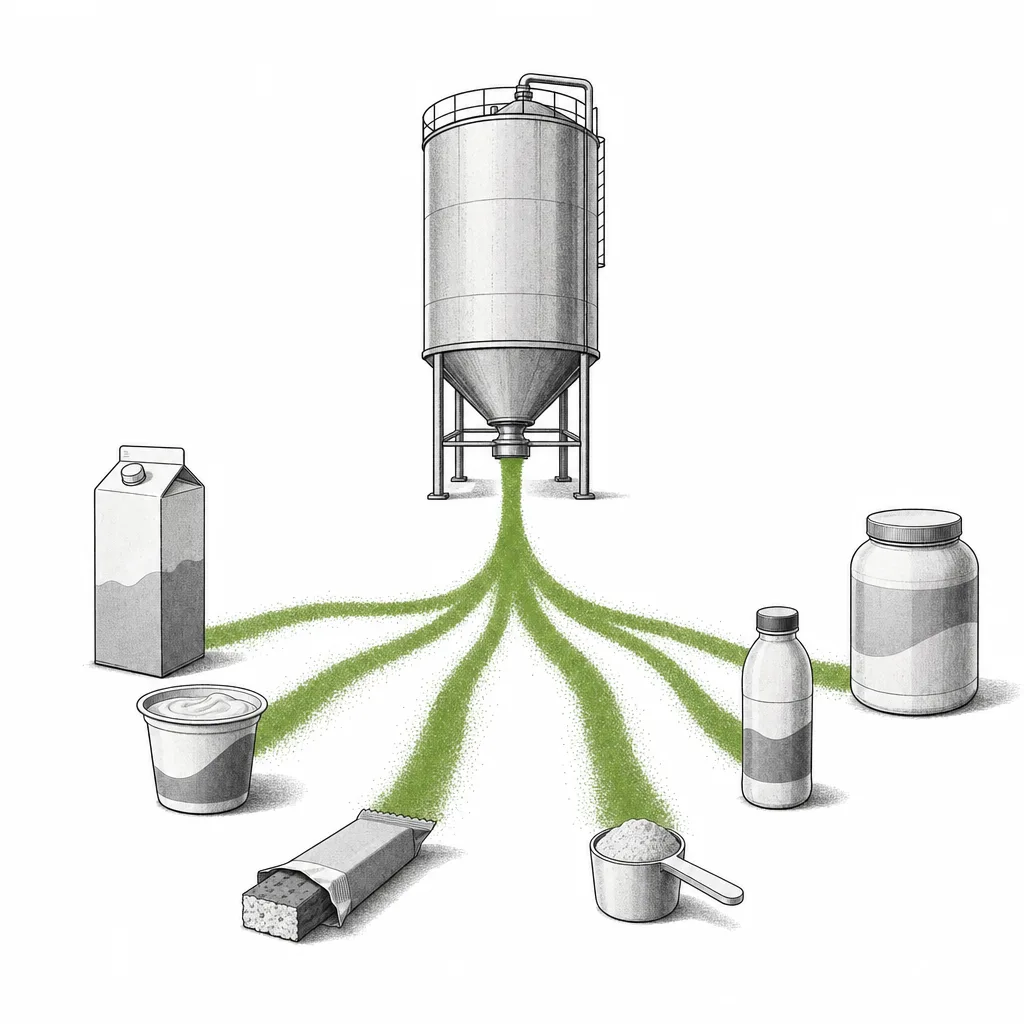
The precision-fermentation side itself has a very high growth rate (but off a small base, so read it carefully). The overall precision-fermentation market is estimated to grow from about $5.8 billion in 2025 to the hundred-billion-dollar range by the early 2030s, at a CAGR above 40%.
And don't forget the new tailwind from GLP-1 drugs, which are changing how a whole country eats. About 23% of U.S. households now use this class of drug, and nearly half of consumers worldwide plan to eat more protein.
06The road ahead
The first direction is "cost parity" — the big goal of precision fermentation is to make fermented protein cost the same as, or less than, animal protein, which many see as drawing near for some products. Once it hits that point, it's no longer a "premium for the environment" — it becomes a genuinely worthwhile choice.

The second direction is expanding from "milk" into other kinds of protein. The same fermentation technique can produce egg white, collagen, or specialized proteins, turning it into a "platform" rather than a single product — whoever controls the technology and the fermentation capacity can play in several markets at once.
The third direction is that the "ingredient behind the scenes" model will increasingly beat the "brand" model. The lesson from Beyond Meat taught the whole industry that supplying ingredients to food giants that already have distribution is safer and more sustainably profitable than building a competing brand of your own.
07Challenges & risks
Even though the technology story is exciting, the risks are real — and were just proven, freshly and painfully.
The first risk is the "graveyard of consumer brands" — the lessons of Beyond Meat and Oatly make it clear that being a direct-to-consumer brand in this market is brutal: high costs, fierce competition, and consumer tastes that shift fast. Investors who get pulled into chasing a "cool brand" usually get hurt badly.
The second risk is cost and scale. Industrial-scale tank fermentation is still expensive, and building fermentation capacity takes heavy investment. If costs don't fall to where they can compete with the real thing, the market will grow slower than the dream — and that pretty 40%+ CAGR comes off a very small base, so read it carefully.
The third risk is acceptance and regulation. Some consumers are still uneasy about "lab-made food" and "ultra-processed" products, and there's a fight over labeling too — can you call fermented protein "milk," or cultivated meat "meat"? That's a point the legacy livestock industry is fighting hard.
In short: Alt-Protein is the story of a dream that got too big, followed by a painful shakeout, and the discovery that the real survivor is quieter and in the back — inside the fermentation tank and the ingredient supply chain, not on the billboard. Understanding this difference is understanding why a trend where "the stock fell 90%" is still one of the most worth-watching trends of the era.