Megatrend · Aging Population
A pill you take every day for life is the most predictable revenue in the world
Heart disease, diabetes, high blood pressure, high cholesterol, lung disease — these chronic conditions don't get cured. They just get "managed" with a pill you take every single day, without a break. That means one patient is a customer who comes back to buy, every month, for the next ten or twenty years. And as society ages, the patient base grows on its own, no matter what the economy does. This is the story of the "chronic-disease drug franchise" — durable, predictable revenue, right up until the day the patent expires and the whole thing vanishes.
01What is it?
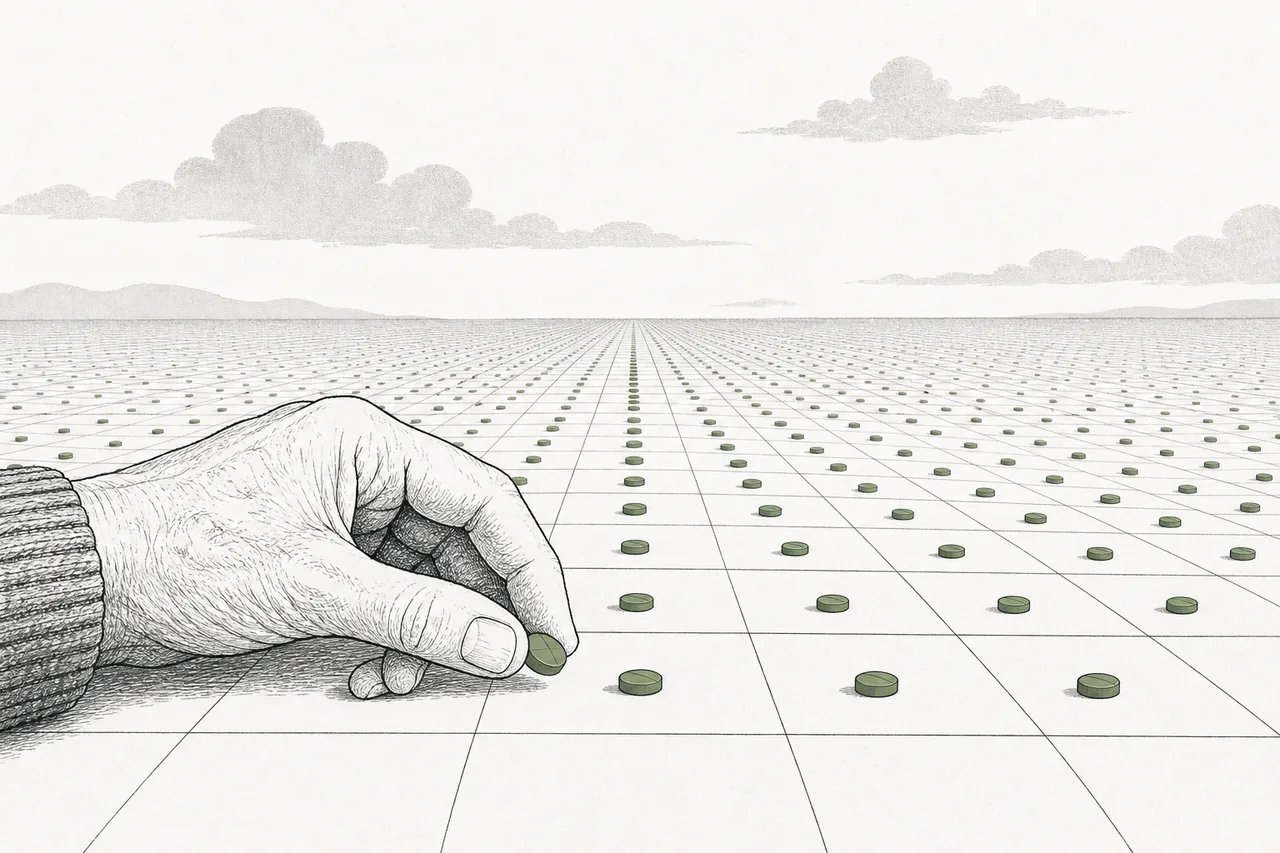
Picture your grandparents at home. They wake up and take a blood-pressure pill, a diabetes pill, a cholesterol pill — every day, no days off. This year, next year, ten years from now — because these diseases don't go away. They're only "managed" by the drug. Stop taking it and the blood pressure spikes, the blood sugar climbs.
This node is the business of "chronic-disease drugs that already sell and already throw off cash" — heart disease, diabetes, blood pressure, cholesterol, chronic lung disease (COPD), arthritis. These drugs are the revenue backbone of the world's biggest pharma companies.
One thing to make clear from the start: this lesson is not about the science of discovering drugs — molecules, biotech, lab research, the risk of whether a drug passes its trials. All of that lives in Biotech & Genomic Medicine. This node is about one thing only: the economics of the franchise — once a drug clears the science and becomes a product that sells, why does it turn into an unusually durable money-printer, and what makes that money-printer collapse overnight.
In the drug world, a "franchise" doesn't mean a chain of stores — it means a star drug (or group of drugs) that brings in huge, ongoing revenue and becomes a pillar of the company. Think BMS's Eliquis franchise, or AbbVie's immunology franchise Skyrizi/Rinvoq. A single drug can earn $10–20B a year — more than the entire revenue of a mid-size company.
02Why is this revenue so durable?
Most businesses in the world have to "re-sell" every day. A restaurant has to win customers back; a phone brand has to sweat over whether people upgrade next year. But chronic-disease drugs are completely different — because the patient has no option to stop. Quit your blood-pressure pill and you risk a stroke; quit your diabetes pill and you risk kidney failure. This is demand that doesn't flex with price or the economy. Good times or bad, sick people take the same amount of medicine.
The result is revenue almost as predictable as a subscription. Look at the scale: the global cardiovascular drug market alone was around $160B in 2025, and it keeps growing toward ~$189B by 2030. And that's just one disease group — heart disease — before you even count diabetes, lung disease, or arthritis.
So how much is a single customer worth? Do the rough math: a 65-year-old with heart disease who takes a blood-thinner for life might stay on it another 15–20 years. A single drug like Eliquis (the BMS/Pfizer anticoagulant) earned $13.3B worldwide in 2024 — from millions of patients taking it every day. That's the power of "lifetime repeat purchase" multiplied by a massive patient base.
03The economics of the franchise (the mechanism)
If you want to understand this node in a single picture, look at this one. It's the entire economic cycle of a chronic-disease drug franchise — from "society ages" upstream all the way to the "patent cliff" at the end.
The heart of it is stage 3. While a drug is still under patent, the company is the "only seller," so it has very strong pricing power. Add demand that doesn't flex, and the gross margin on a branded drug is usually 80%+ — because the actual cost of making the pill is tiny. Most of the money is the "patent rent" that the law grants as a temporary monopoly.
04Where it sits in the Aging megatrend
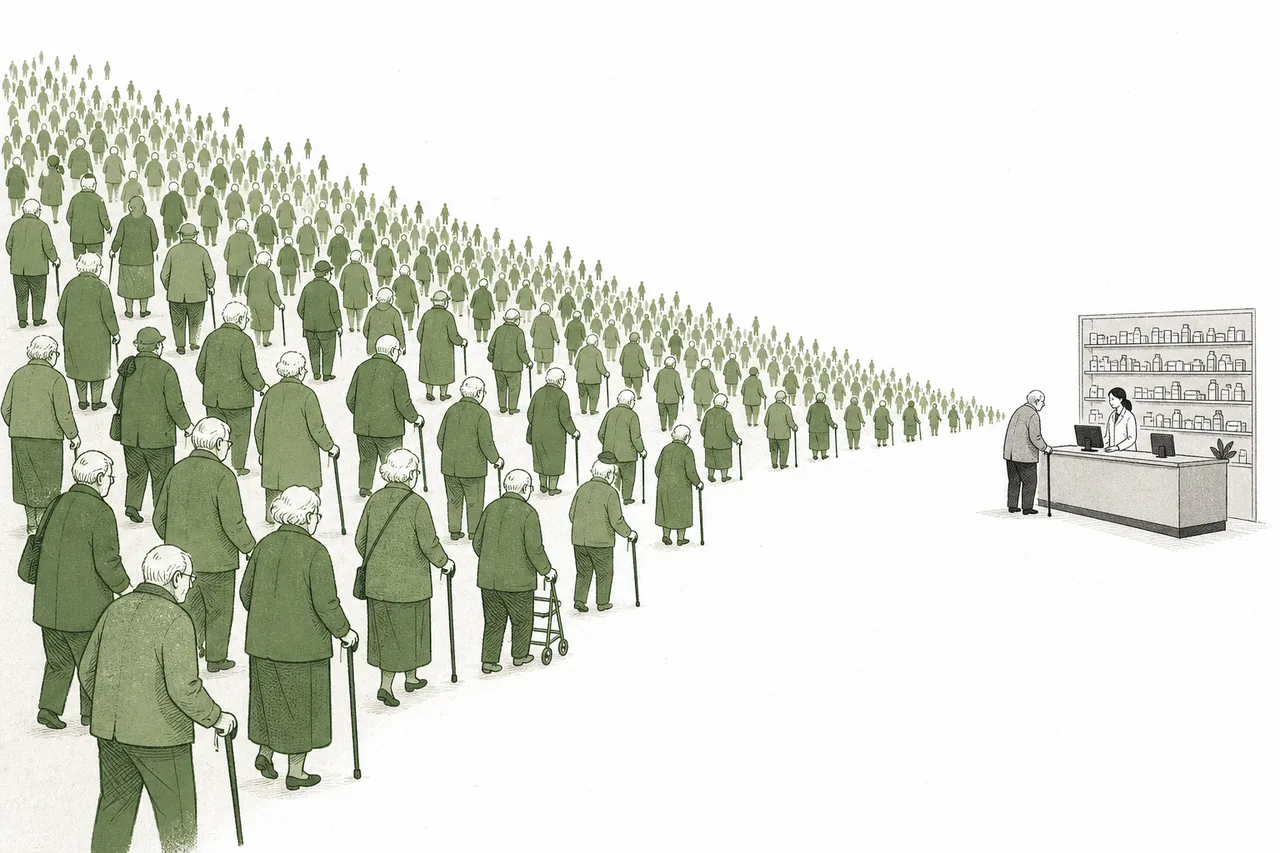
This node is an in-depth sub-theme (leaf) under the Aging Population megatrend, which covers every industry that benefits as the share of older people in the world rises. What makes the chronic-drug franchise special is that it's the most direct "demand harvester" of this whole trend — because getting older and chronic disease come almost as a pair.
The demographics tell the story clearly: the share of people aged 60+ worldwide will reach ~20% of the population by 2050 (up from ~12% in 2020). In the US alone, the number of people 50+ with at least one chronic disease is projected to nearly double — from 71.5M (2020) to 142.7M (2050). These are "new customers" arriving on their own, with no marketing required.
It also connects deeply with the neighboring sub-themes:
- Rests on the science from Biotech & Genomic Medicine: every drug in this franchise was once a risky research project in Biotech — Biotech is the "upstream that creates the drug," this node is the "downstream that harvests revenue from the drugs that made it"
- Overlaps with Metabolic — Diabetes & Obesity and Cardiovascular: diabetes and heart disease are the two pillars of chronic drugs — seen from the science side, they're those two nodes; seen from the franchise cash-flow side, they're this node
- A sibling of Medical Devices for the Aging Body: an aging body needs both "a pill every day" and "a device to help" — two sides of the same elderly patient
05Where it stands now + the players
The 2025–2026 picture is one of big pharma companies driven by a few "star franchises," all racing to build new franchises to replace the old ones nearing patent expiry. The clearest example is AbbVie, which once leaned on Humira (it earned ~$20B a year) — but when Humira lost patent protection, the company pivoted to a new immunology pair, Skyrizi + Rinvoq, which together earned $25.9B in 2025, hitting the target two years ahead of plan. It's a case study that "renewing a franchise" is possible — if you've got the goods.
On AstraZeneca's side, AstraZeneca has Farxiga (a diabetes/heart/kidney drug) as its number-one earner at ~$8.4B in 2025. Meanwhile Novartis just learned the patent-cliff lesson the hard way — its heart drug Entresto saw sales drop 45% to $1.2B the moment generics hit the US market in late 2025. You're watching "stage 4" from the diagram above play out in real time.
06The road ahead: the GLP-1 wave swallowing chronic disease
The thing reshaping this node the most is the GLP-1 class (Novo's Ozempic, Lilly's Mounjaro). At first these were diabetes and weight-loss drugs, but new research is turning them into "all-in-one chronic-disease care" — and that's the biggest chronic franchise there has ever been.
The turning point was the SELECT trial: in obese/overweight people with heart disease (but not diabetes), semaglutide cut major cardiac events (heart attack/stroke) by 20% and lowered the risk of kidney problems by 22% — meaning the drug isn't just for "weight loss" but genuinely prevents heart and kidney disease. That gives people a reason to take it for life, like a blood-pressure pill — not just when they want to slim down.
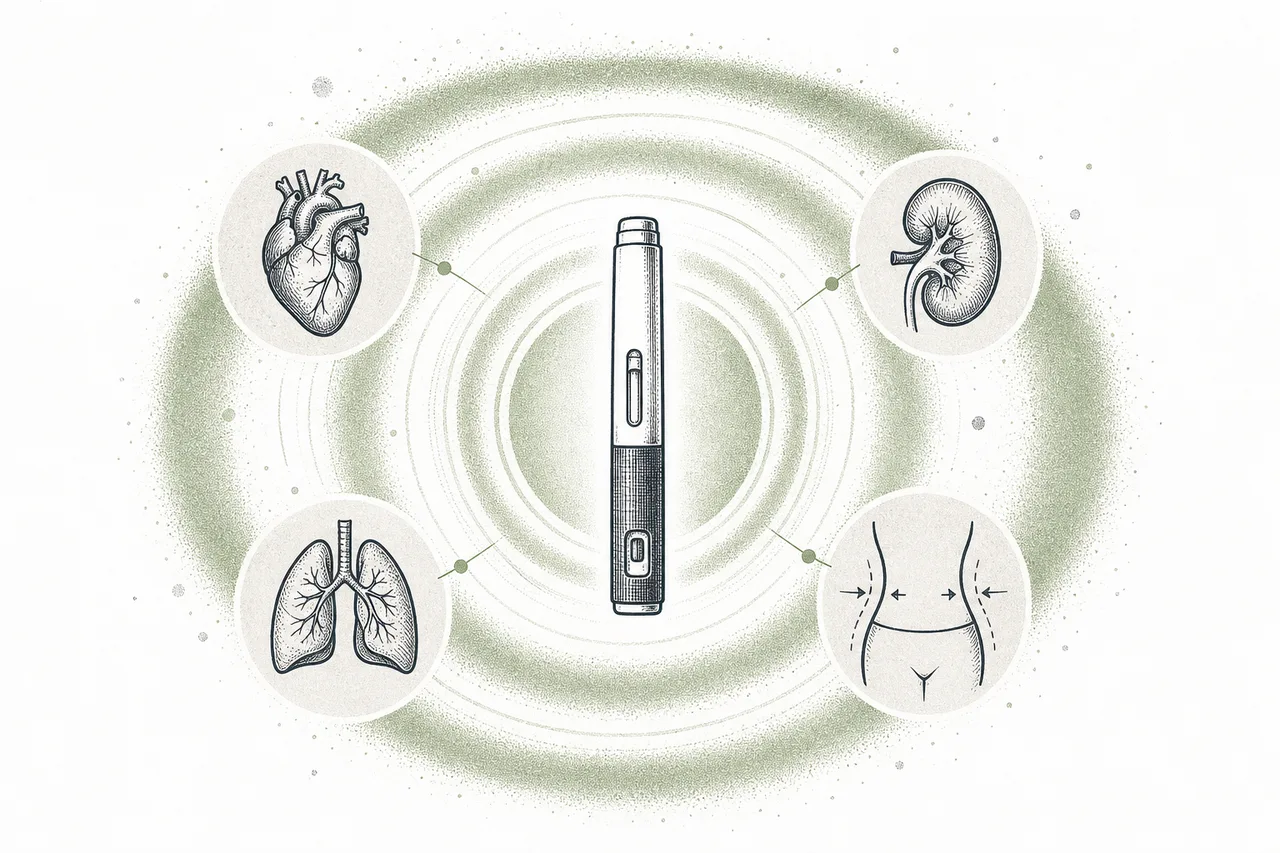
The business impact is enormous: the obesity/metabolic drug market is projected to reach ~$150B by the mid-2030s. In the first half of 2025, Ozempic became the world's second best-selling drug (~$9.5B), while Lilly's Mounjaro pulled in ~$23B for all of 2025 — this is a "new breed of chronic franchise" with a bigger patient base than the old chronic diseases, because obesity and metabolic syndrome affect hundreds of millions of people worldwide.
What follows is "label expansion" — a single GLP-1 drug is being approved, one disease at a time, for chronic kidney disease, sleep apnea, fatty-liver disease, and more. The more diseases it covers, the wider the base of patients who take it for life. This is the "stage 1–3" mechanism from the diagram above, just sped up by new science.
07Risks: the patent cliff & pricing
The appeal of the chronic franchise — durable, predictable revenue — comes with a weakness baked into its DNA. And it's "stage 4" of the mechanism: the patent cliff.
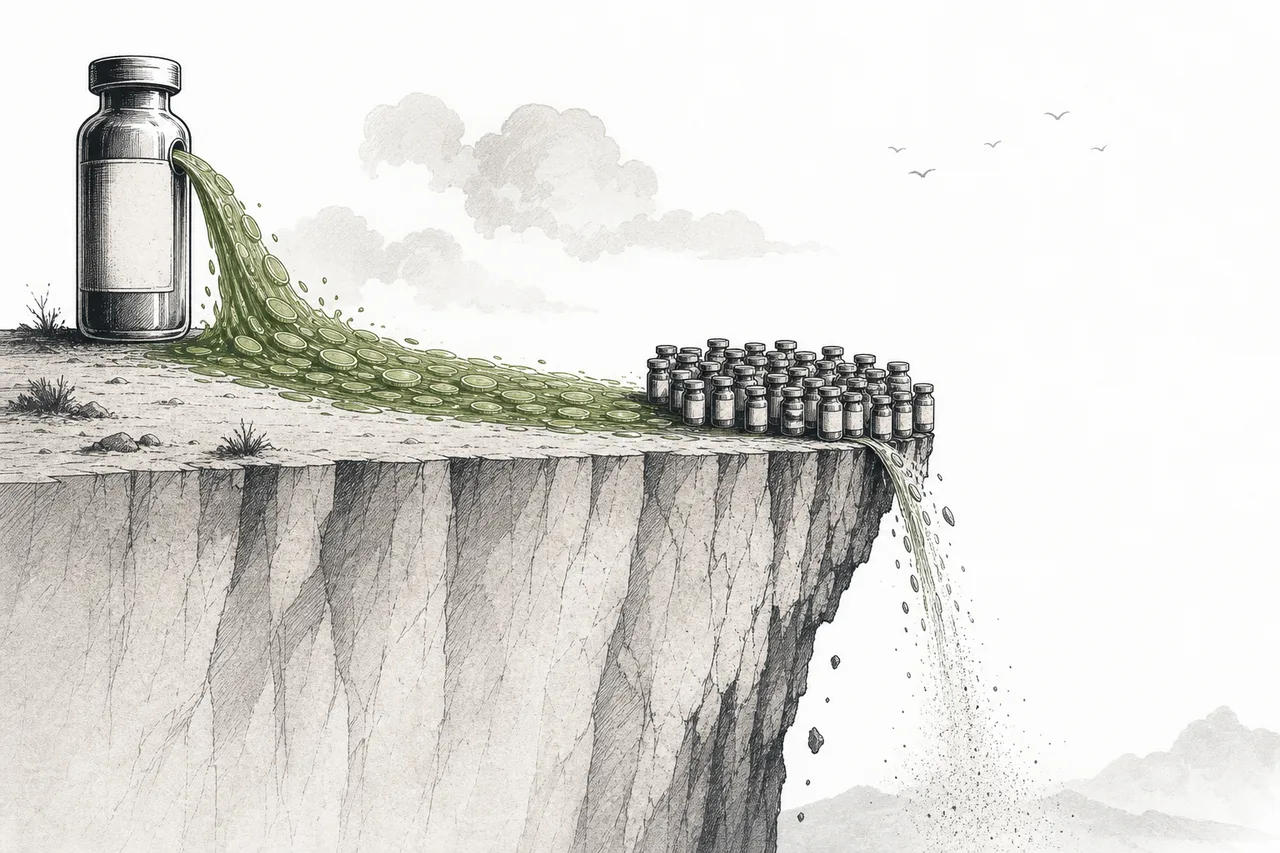
The first risk is the patent cliff. A drug patent protects for about 20 years (and the actual selling window is much shorter after you subtract the research years). The day it expires, generics priced many times cheaper enter the market instantly. For a small-molecule drug, the first year of competing with generics usually cuts price and sales by 80–90%. Revenue built over a decade disappears in a few quarters. And this isn't a distant risk — between 2025 and 2030, branded drugs with combined revenue of $200–230B a year are expected to go off-patent all at once, in what's called a "super-cliff."
The second risk is price policy. Governments have started pressing directly on chronic-drug prices. In the US, the IRA law lets Medicare negotiate the prices of its first 10 drugs, effective 2026 — and notably, 6 of the 10 are chronic-disease drugs (Eliquis, Jardiance, Xarelto, Januvia, Farxiga, Entresto). Prices were pushed down hard: Eliquis from $521 to $231, Farxiga from $556 to $178, Entresto from $628 to $295 — a sign that the bigger the franchise and the more patients it has, the more it becomes a target for price cuts.
The third risk is being disrupted by GLP-1. The irony is that the wave creating the biggest opportunity (GLP-1) is also a threat. If a single drug can deliver weight loss and control diabetes, heart, and kidney all at once, patients may no longer need separate blood-pressure, diabetes, and cholesterol pills. Some traditional chronic franchises could be replaced by a single injection — so the companies without a GLP-1 in hand are especially exposed.
In short: a pill you take every day for life is the business with the most predictable revenue, because patients can't stop and an aging society keeps feeding in new ones. But it's also a business that has to "run just to stay in place" — because every franchise has an expiry date already marked on the calendar. To understand this node is to understand why pharma companies are so immensely rich and so fragile at the same time.