Megatrend · Advanced Air Mobility
Why the first electric planes have to be "small and short-haul"
The world wants planes to stop spewing carbon, but one wall of physics stands in the way — batteries are too heavy. Jet fuel stores about 50 times more energy per kilogram than the best battery there is. So the answer in this early era isn't building a giant electric plane to cross continents, it's small 9–30-seat propeller planes flying short routes — and this story is full of both hope and the wreckage of companies that have already failed.
01What it is
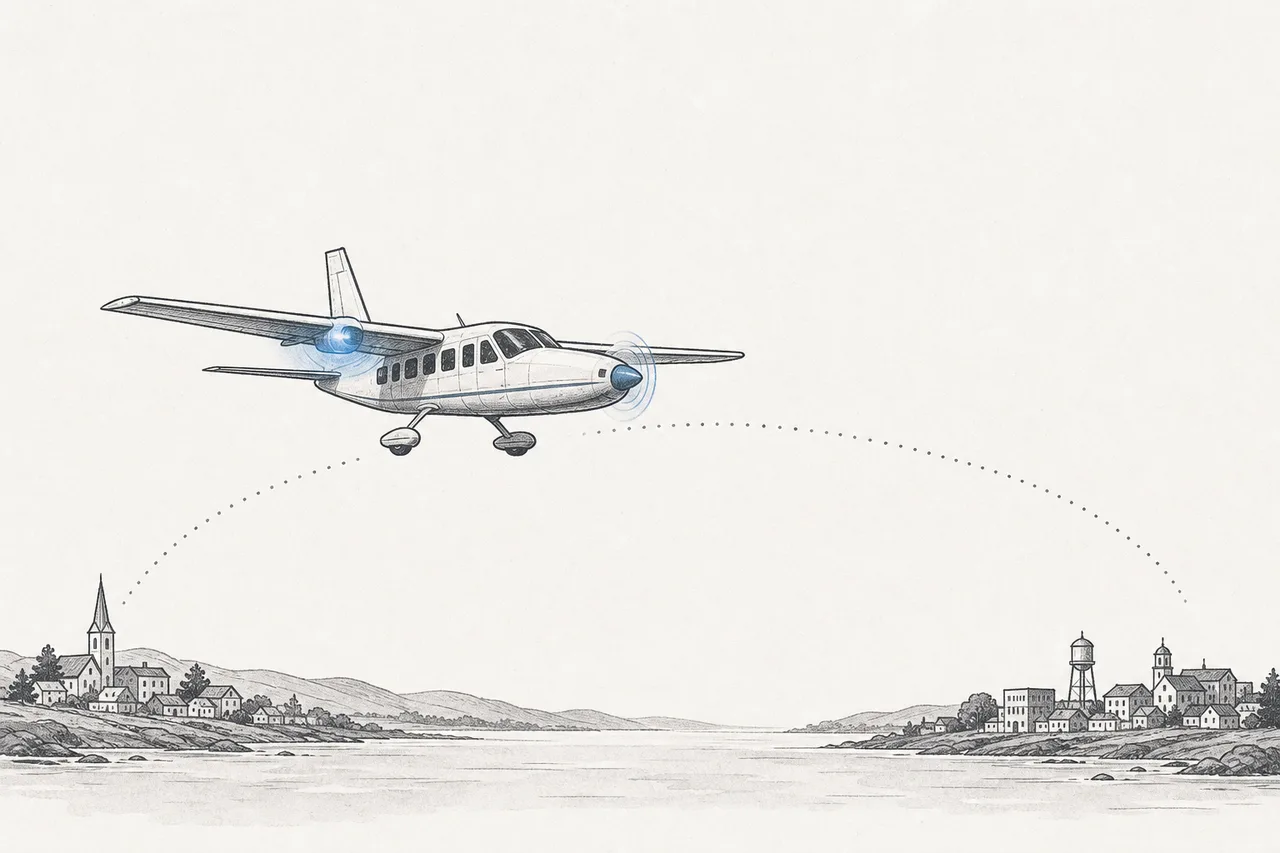
When people hear "electric plane," they usually mix up two things. This node is a completely different story from the vertical-takeoff air taxi (eVTOL) that lifts straight up in the city — this node is the "fixed-wing" plane we already know: it has wings, propellers, and rolls down a runway to take off normally. It just swaps the jet engine or fuel-burning propeller for an electric motor.
It's designed for a specific mission — regional short-haul routes under about 500 miles, like flying from a small town to a nearby big city, not crossing an ocean. And because of the battery-weight constraint (we'll dig into this in Chapter 3), it comes in two main breeds:
- All-electric: runs on batteries alone, suited to very small planes (9–19 seats) on very short hops, like Eviation Alice or Beta CX300. Today they can really only fly about 150–250 miles
- Hybrid-electric: has both an electric motor and a fuel engine (turbine) working together — using electricity at the key moments to save fuel and cut emissions, while the fuel engine "extends the range" so it can fly farther and carry more people, like the Heart Aerospace ES-30 (30 seats)
Another popular approach is the "retrofit" — instead of building a whole new plane, you take one already flying, like a Cessna Caravan or Dash-8, strip out the old engine, and drop in an electric or hydrogen-electric system instead. This is faster and cheaper, because you don't have to design a new airframe from scratch.
On the megatrend map, this node is a sub-branch of Advanced Air Mobility (AAM), clearly split off from its eVTOL siblings, because the "mission" and the "certification" are entirely different — regional planes fly farther, carry more people, and have to clear the full safety standards of a commercial aircraft.
02Why it matters — making short flights cheap and clean
There are two reasons people are pouring money into this, and both are tangible numbers.
The first is the emissions from short flights. About 17% of all airline carbon comes from flights shorter than 600 miles — and what's interesting is that a third of the world's flights are under 250 miles, which sits "within range of what electric planes can already do today." So electrifying this group of flights cuts up to 90% of the carbon on short hops, and even a series hybrid burns over 70% less fuel than a fuel-only plane.
The second is the cost of flying. An electric motor has far fewer moving parts than a fuel engine, so maintenance costs drop. Add cheap electricity that's steadier in price than jet fuel, and many developers estimate the direct operating cost of a regional hybrid plane will be 30–50% cheaper than a conventional turboprop — ZeroAvia even claims its own hydrogen-electric system cuts operating cost by about 40%.
That's why it's not just idealistic startups that are interested — real airlines like United, Air Canada, and Mesa are putting money down on pre-orders. Because if it really works, it reopens the "small routes" that used to lose too much money to fly with fuel planes, making them worth running again.
03How it works — the energy-per-weight wall
The heart of the whole thing comes down to a single number, and it's a wall set by physics — not a case of engineers not being clever enough.
Jet fuel stores about 12,000 watt-hours per kilogram. The best lithium battery today stores only about 250–330 watt-hours per kilogram — meaning fuel holds about 50 times more energy per weight than a battery. Even after you offset that against the advantage that electric motors are more efficient than combustion engines, fuel still delivers about 20 times more usable energy per weight.
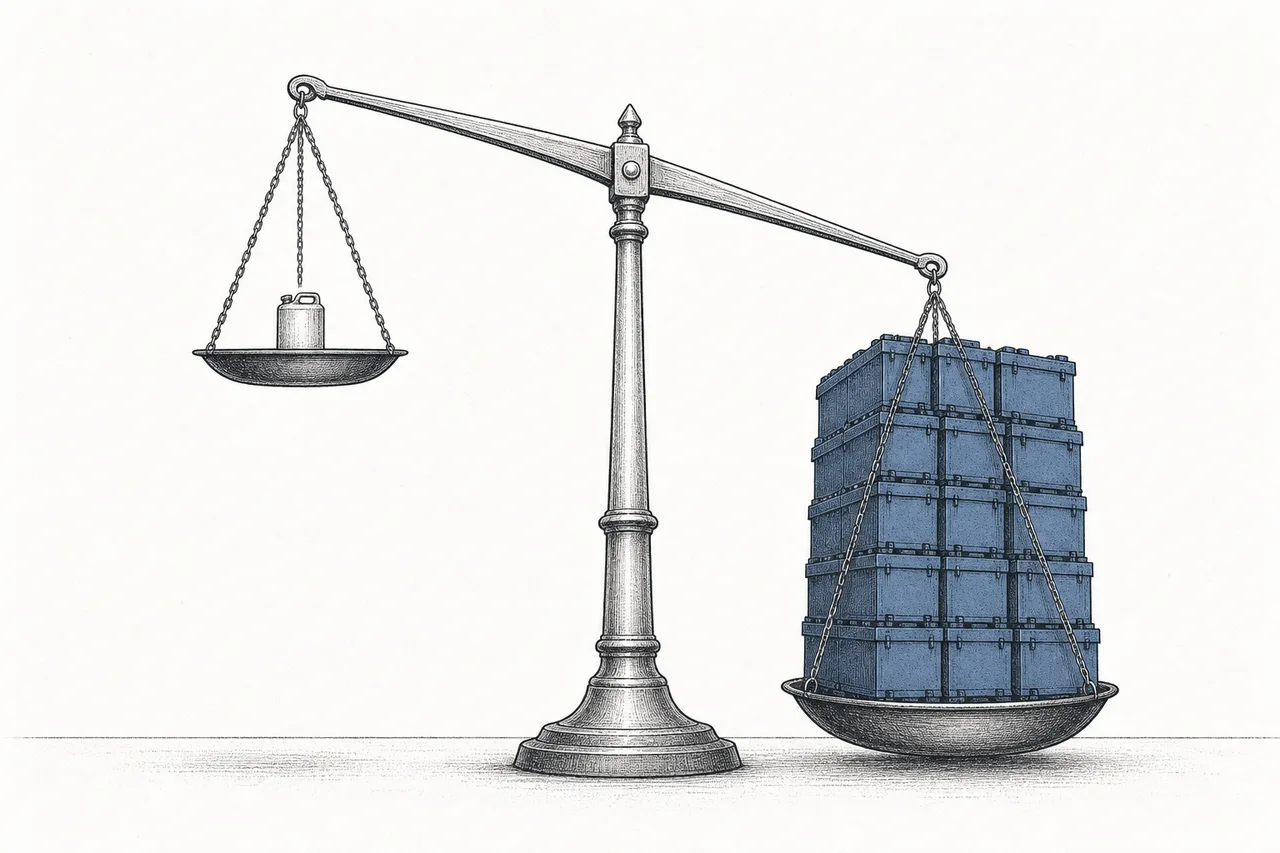
On top of that, there's a second layer to the problem. A fuel plane gets lighter and lighter as it flies, because burning fuel lightens it. But a battery weighs the same from the runway to the destination — you have to carry the full weight the whole way.
It means "the energy you can store per kilogram" — the number that decides the fate of an electric plane. The higher it is, the farther it can fly and the more it can carry. Researchers estimate it needs to reach about 800 Wh/kg before it can start to challenge long-haul flight — a target many think won't be hit before 2040.
Once you understand this wall, the engineering answer follows logically. There are two ways out, and the diagram below sums up both:
There's also a third path some companies are betting on — hydrogen-electric. It uses a fuel cell to turn hydrogen into electricity feeding the motor. Hydrogen is much lighter than a battery for the energy you get, so it could fly farther. But it comes with the problems of storing hydrogen (it has to be kept very cold or compressed under high pressure) and a refueling infrastructure that barely exists yet — this is the path of ZeroAvia.
04Where it sits in the AAM world
This node is one of the "arms" of the megatrend Advanced Air Mobility, and it's often confused with its siblings. Let's lay it out clearly:
- vs the eVTOL air taxi: eVTOLs take off and land vertically in the city, flying very short distances (a few dozen kilometers), aiming for speed within a city — while this node flies airport to airport normally, farther, and carries more people. Interestingly, some companies like Beta Technologies do both (the vertical-takeoff A250 and the fixed-wing CX300)
- Riding on the battery as its heart: everything in this node depends on how much better batteries get at storing energy per weight — progress in battery cells feeds straight through to the plane's range
- Complementing sustainable aviation fuel (SAF): these two technologies split the work — electric/hybrid handles short flights, while SAF (jet fuel made from biomass/recycled carbon) handles the long flights batteries can't yet reach. Together they make up the whole picture of cutting aviation's carbon
- Clashing with traditional aviation: it both competes with and depends on the aviation giants — engine makers like Rolls-Royce and Pratt & Whitney, plus aircraft makers like Embraer and Textron, are all jumping in to build hybrid systems themselves
The point to stress is that this node doesn't float on its own. It's the "test bed" for electrifying aviation — succeed first in small planes on short routes, then move up to bigger planes as batteries improve.
05Where it stands now
Let's be honest here — this is an early-era industry where there's something that really flies and several companies have already failed at the same time.
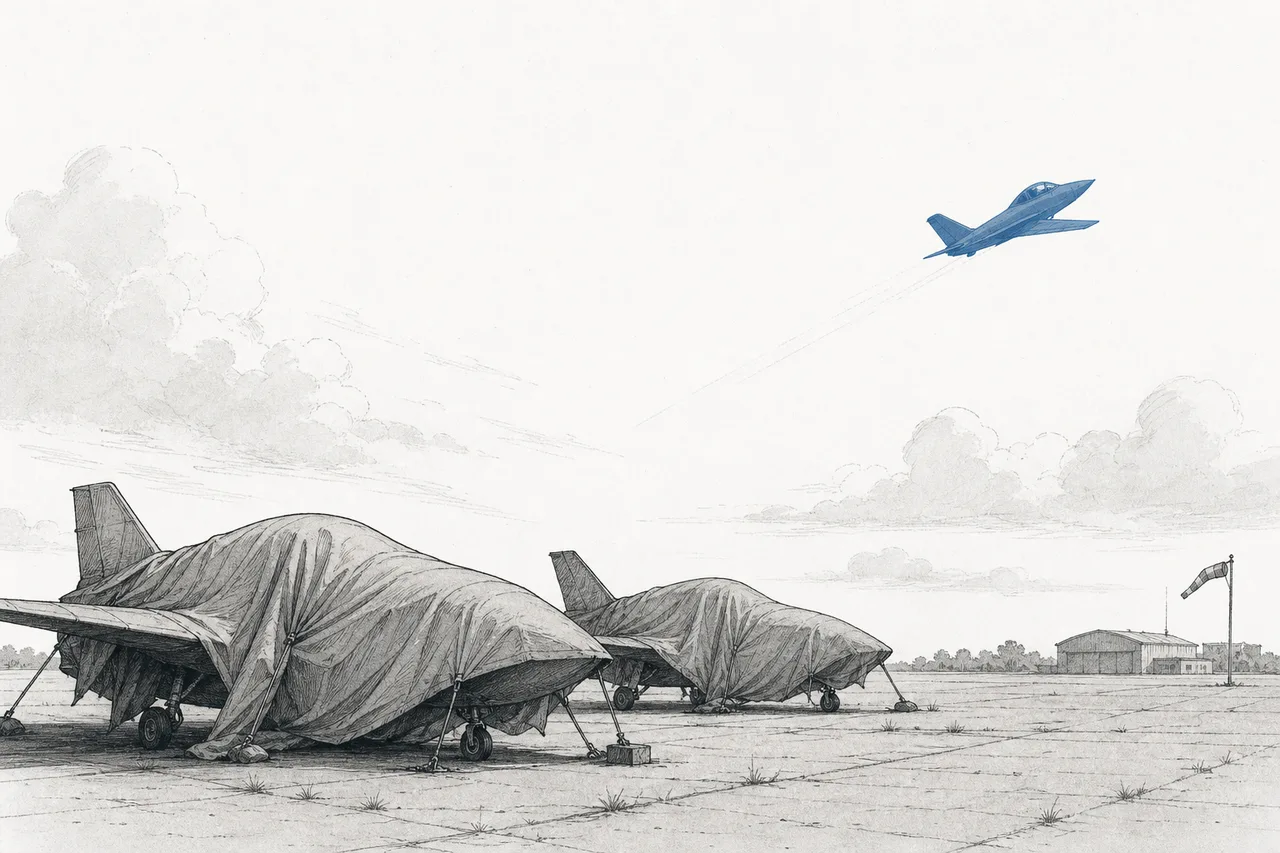
For honesty's sake, let's start with the painful side. In 2024, Universal Hydrogen — a hydrogen startup that had successfully flown a converted Dash-8 in 2023 — shut down and wound up after burning through the roughly $100 million it had raised, blaming cautious capital markets and high interest rates. Meanwhile Eviation, maker of the all-electric Alice that first flew in 2022, hit heavy delays, pushing back its entry into service and reshuffling its team several times — a reflection that even once you can fly, "making it commercially viable" is the second wall.
But the side that's still flying is making real progress:
The whole aircraft-electrification market (all systems combined) is estimated at about $10–14 billion in 2025 and expected to grow to $50–57 billion by 2035, at a compound growth rate of about 15–17% a year — a number big enough to pull in both startups and giants.
06The road ahead
The first direction is "all-electric first, hybrid follows." In the near term (2025–2030), what flies commercially first is the small 9–19-seat all-electric plane on the shortest routes — island hops, or small towns close together. Then 30-seat hybrids like the ES-30 follow once they clear certification late in the decade.
The second direction is retrofit leads new builds, because converting planes already flying (Caravan, Dash-8) clears certification far faster and cheaper than designing a whole new plane — we'll likely see hydrogen-electric or electric conversions enter commercial service (starting with cargo) before any clean-sheet design.
The third direction is the battery curve sets the ceiling. Everything hinges on how fast energy density climbs from ~250 toward 500+ Wh/kg. Every improvement translates directly into longer range and more seats — but the 800 Wh/kg ceiling that would unlock long-haul flight is still seen as far off (after 2040).
07Challenges & risks
This node has its charm — the environment and the cost — but the risks are just as real, and deeply rooted.
The first risk is a wall of physics that won't budge. Battery energy density improves very slowly — a few percent a year, not in leaps. As long as fuel keeps storing ~50 times more energy per weight, all-electric planes will stay stuck with "small and short" for a long time yet. This isn't a problem that vanishes overnight just by pouring research money at it.
The second risk is slow certification, and running out of money before reaching it. Certifying a new commercial plane takes years and eats huge sums. Many startups can fly a prototype but burn through their cash before the finish line — Universal Hydrogen (shut down 2024) and Eviation's repeated delays are the reminder that "can fly" doesn't equal "survives."
The third risk is economics that aren't proven yet. The 30–50% cost-reduction figures are still mostly developer estimates. There's no large commercial fleet flying continuously yet to show the real numbers. Add infrastructure that barely exists (high-power charging points at small airports, or hydrogen refueling systems) — it'll take a lot more investment before it can scale.
In short: this node is the story of trying to do what physics resists — flying on energy dozens of times heavier than fuel. So the answer isn't to force a big plane into existence, but to start with something small on short routes where batteries can still cope, then use hybrids to keep extending the range. It's still an early era full of both thrilling demo flights and the wreckage of failed companies — but if it succeeds, it will turn "short flights that used to lose money" back into something worth running, and significantly cleaner.