Megatrend · Psychedelic Medicine
The drug that almost healed veterans' wounds — until it hit the FDA wall
This is the story of an effort to turn MDMA — a substance most people know as a "party drug" — into a "prescription medicine" to treat PTSD (post-traumatic stress disorder). The phase 3 results looked so good that many thought approval was a sure thing. But in August 2024, the FDA "sent the application back" — an expensive lesson that shook the whole field, and a case study in just how hard it is to get a "drug + psychotherapy" approved.
01What it is — and why it's not a "pill"
First, let's be clear: this lesson has nothing to do with using MDMA recreationally. We're talking about a medical effort to develop MDMA into an "FDA-controlled drug" to seriously treat a psychiatric condition — under the supervision of therapists in a clinic.
The heart of what makes this node strange and interesting is that it's not a drug you take every morning like a blood-pressure pill. It's a "drug + psychotherapy" bound together as a single package. A patient receives MDMA only a few times (three, in the trial), in sessions where two therapists sit alongside them for 8 hours. The drug's job is to "open the door" so the therapy can move forward — it isn't the cure itself.
Post-traumatic stress disorder — it develops after a violent event (war, an accident, violence). Patients often have flashbacks (the scene replaying), nightmares, and stay over-alert, because the brain's "fear" center has "remembered" the event in a way it can't erase. Many don't get better with standard treatment — and that's the group MDMA-assisted therapy is aimed at.
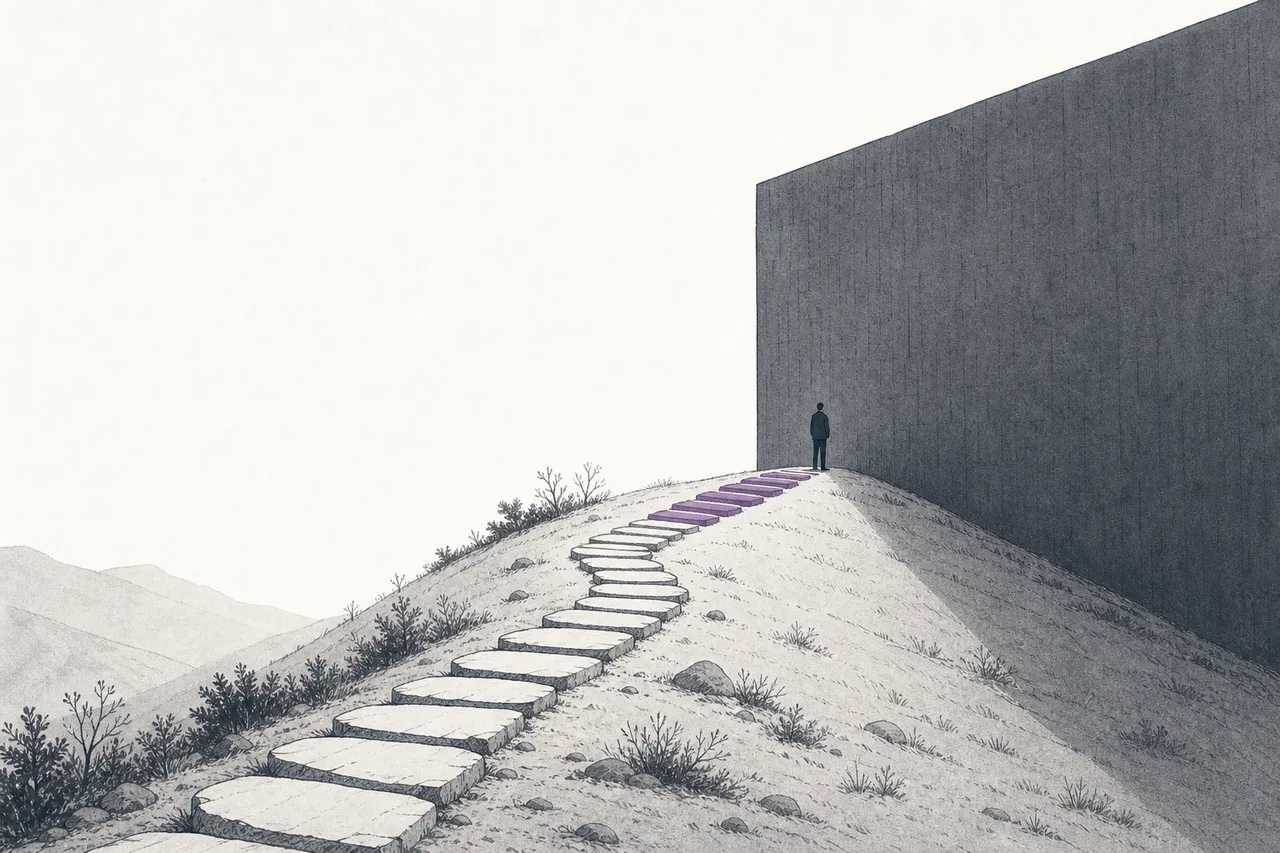
On the megatrend map, this node is a branch under Psychedelic Medicine, and its definition states plainly that today it's "stalled" — after being sent back by the FDA in 2024, with the leading company, Lykos, still a private company. This is the story of a drug that almost changed psychiatry, but tripped at the final gate.
02Why it matters — wounds today's drugs barely heal
Look at the numbers first. PTSD is not a rare disease — about 9 million Americans have it, and an ordinary person's lifetime risk is about 6% (up to 10–12% for women). But the group at the heart of this story is veterans — more than 1.7 million in the U.S., and among those who served in Iraq/Afghanistan, the lifetime rate jumps as high as 29%.
The problem is that today's drugs only suppress symptoms, they don't treat the root. The FDA has approved just two PTSD drugs (sertraline and paroxetine — both SSRI antidepressants), approved back around 2000, and you have to take them every day indefinitely. Many patients don't respond. This is a huge "treatment gap" that's stood open for more than 20 years.
Here's what makes this big: if a method using just a few doses can truly "cure" someone, it would flip the entire way we think about treating psychiatric illness — from suppressing symptoms for life to treatment that "ends as a course." But that word "if" is exactly where the story starts to get complicated.
03How it works — the drug is a "catalyst," not the cure
To understand why therapists have to sit alongside, you first have to understand the problem with PTSD. When a patient tries to recall a terrible event, the part of the brain called the amygdala — the brain's alarm center — instantly flares up, firing a signal that says "danger! run!" until the patient can't bear to hold the memory and has to push it away. So therapy can't move forward, because you can't "process" a memory you can't touch.
MDMA solves exactly this. Research finds it does two things at once: (1) it lowers the amygdala's overactivity, dialing down the level of fear, and (2) it raises the hormone oxytocin, which creates a feeling of trust and openness. The result: the patient can "look at" the painful memory without feeling threatened all over again — and work through it together with the therapist.
Scientists call the core of this mechanism "memory reconsolidation" — when we recall a memory, it goes briefly "soft" before being stored again. If, in that moment, the brain feels safe (not afraid), the old memory gets "re-labeled" with a new, less painful emotion. This is why the therapist has to be there — and why this is "drug + therapy" that can't be separated.
Every time we pull up a memory, it briefly returns to an "editable" state before being stored again. The idea of MDMA-assisted therapy is to use this window — while the brain is calm enough — so the patient can "re-store" a terrible memory with the weight of fear turned down.
04Where it sits in the psychedelic universe
MDMA-assisted therapy is one of the "siblings" under the megatrend Psychedelic Medicine — the shared idea across the whole group is to take substances once branded as "drugs" and develop them into formal psychiatric medicines. Each branch targets a different disease and mechanism:
- Psilocybin Therapeutics (the compound from magic mushrooms): mainly targets treatment-resistant depression. Its mechanism differs from MDMA — it acts on serotonin receptors in a way that produces "visions"
- Ketamine & Esketamine: the one that "actually reached the market" — esketamine (Spravato) has been FDA-approved since 2019 for treatment-resistant depression, proof that this path is possible
- Novel & Next-Gen Pipeline: a new generation with newly designed molecules, some trying to strip out the "visions/intoxication" to make approval easier
MDMA-assisted therapy is the one that's gone the furthest — it's the first psychedelic to file a full approval application with the FDA. So what happens to it becomes the whole field's "test case." Its success or failure directly affects confidence in every other psychedelic.
In terms of trend connections, this node also depends on Biotech & Genomic Medicine for the structure of clinical trials, the drug-registration process, and biotech-style funding — and it links indirectly to the aging-society theme, because mental health and emotional trauma are a growing burden worldwide.
05Where things stand now — the 2024 FDA wall
This is the heart of the story, and we'll tell it straight.
This drug's road runs nearly 40 years. A non-profit called MAPS (founded in 1986 by Rick Doblin) has pushed MDMA research since the era when it had just been classified as an illegal drug. By 2017, the FDA granted it "Breakthrough Therapy" status (a high-potential drug given specially expedited review), and MAPS then spun off a commercial company, Lykos Therapeutics, to carry the approval forward.
The phase 3 results did look genuinely good. In two trials (MAPP1 and MAPP2), the MDMA group had a clearly higher share who "recovered from PTSD" than the placebo group:
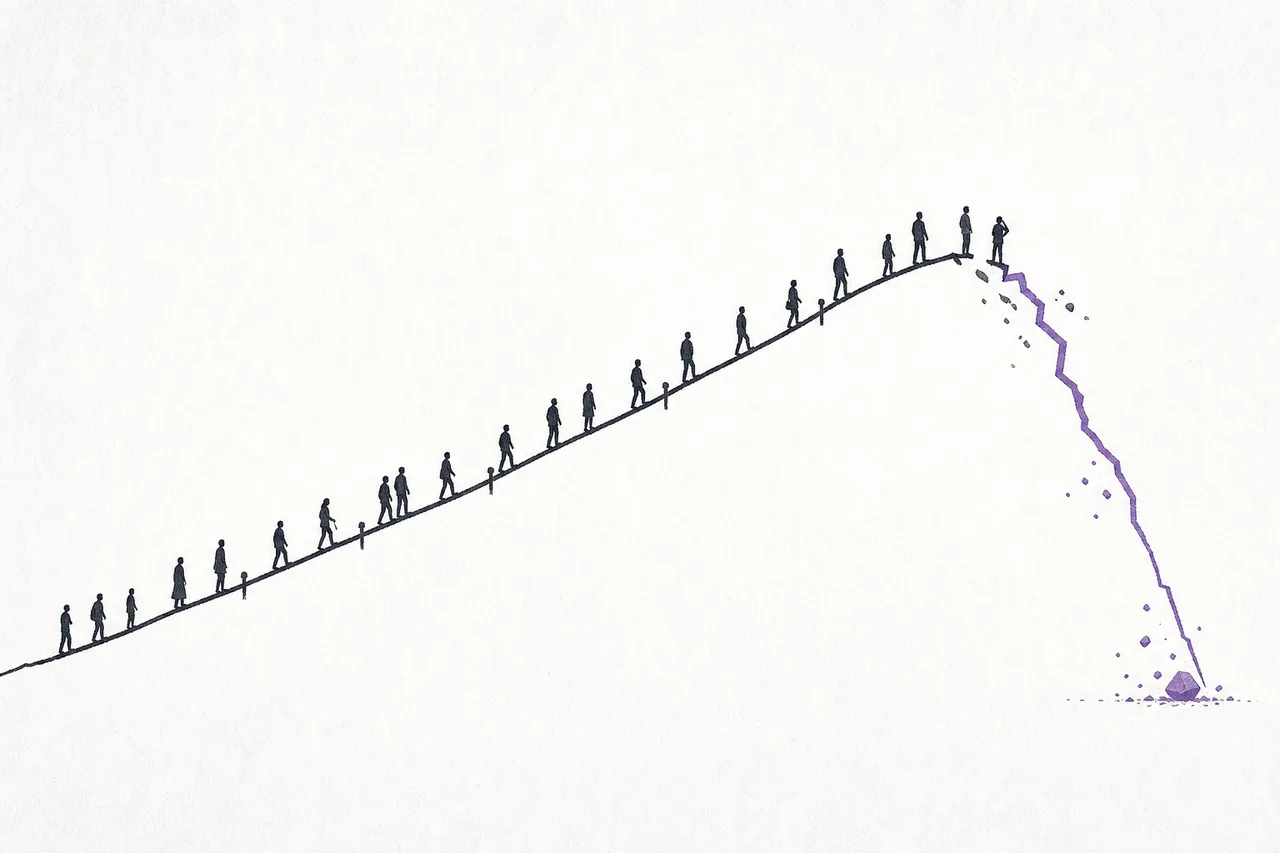
But then, in August 2024, the FDA sent a "Complete Response Letter" (CRL) — in plain terms, a "not approved" — asking for one more phase 3 trial. A few weeks earlier, the FDA's advisory committee had also voted strongly against it — 9 to 2 that the drug was "not clearly effective enough" and 10 to 1 that the benefits didn't outweigh the risks.
The letter the FDA sends a company when it "can't yet approve this drug based on the data submitted" — not a permanent rejection, but a notice of what needs to be fixed or added. In this case the FDA asked for a new phase 3, which takes years and enormous money.
Why didn't the FDA pass it? The biggest problem was something called "functional unblinding" — in a good trial, neither patients nor doctors should know who got the real drug and who got placebo (to remove bias). But MDMA's effect is so obvious that almost everyone immediately guessed they'd gotten the real thing. On top of that, ~40% of participants had used MDMA before, raising the possibility that the good-looking results were contaminated by "expectation" more than the drug's real effect.
The FDA also worried about long-term safety (not enough heart/liver data), and heaviest of all were allegations of therapist misconduct at one trial site, leading academic journals to retract 3 papers (just one day after the CRL) — hitting the credibility of the whole dataset.
The fallout was brutal. Lykos laid off about 75% of its staff (from ~100 people), the CEO resigned, and founder Rick Doblin left the board. At the same time, the whole group of psychedelic stocks fell at once — MindMed dropped 18%, and Cybin and atai fell about 9–10%, because investors read it as "if the one that's gone furthest gets sent back, the others are even riskier."
The players in this field are still very thin, because the lead actor, Lykos, is a private company — the market reality is that MDMA's real leader isn't on the stock market yet. What ordinary investors can reach are psychedelic companies with broader portfolios, which get hit on a "read-across" with MDMA's fate.
06The road ahead
This story isn't over — it just got a lot harder. The first direction is a new phase 3. Lykos says it has met with the FDA several times and still intends to refile. But one phase 3 trial takes years and hundreds of millions — for a company that just cut 75% of its staff, that's a tall order.
The second direction is a complete redesign of the trial to solve functional unblinding. Other psychedelic companies are learning from this lesson — some are trying an "active placebo" that makes patients unable to tell whether they got the real thing, and some are trying to separate the role of the "drug" from the "psychotherapy" more clearly, to prove the drug itself has a real effect.
The third direction is a "cultural turning point" that's still moving forward. Even though the FDA sent it back, some U.S. states (like Oregon and Colorado) have already opened a path to supervised psychedelic use at the state level, and esketamine (a relative of ketamine) has proven that the path "psychoactive substance → FDA-approved drug" really is possible — the field's hope is that MDMA can eventually follow that road, just slower.
07Challenges & risks
The MDMA case has become a "textbook" of the risks in developing this kind of drug — and each lesson is straightforward.
The first risk is that "drug + psychotherapy" is hard to prove within the FDA framework. The drug-registration system is designed to test "pills" whose effect can be isolated and measured cleanly. But when the treatment effect comes from a mix of "drug + therapist + expectation," the FDA always asks, "so how much does the drug itself actually do?" This is a structural problem every psychedelic company faces, not just Lykos.
The second risk is that the bar for data credibility is very high. The retraction of 3 papers and the misconduct allegations showed that even if the numbers look pretty, a flaw in the trial process can collapse the whole dataset — and investor confidence vanishes in that instant.
The third risk is stigma and politics. Developing a drug from a substance still illegal at the federal level (Schedule I) makes everything more complex, from research to prescribing to insurance payment. Even with approval, there are still several layers of walls before real, widespread use.
In short: this is the story of a drug that almost became the first psychedelic the FDA approves, and that might have changed the lives of hundreds of thousands of veterans — but tripped at the final gate over a problem with trial methodology. Its lesson doesn't say "psychedelics don't work" — it says "proving them to the standard of modern medicine is harder than everyone thinks." And that is the risk investors in this theme need to understand before anyone else.