Megatrend · Critical Materials
Four metals mined in just two countries — being killed by EVs, but hydrogen might bring them back
Platinum, palladium, rhodium, iridium — four metals almost nobody ever sees, yet they're hidden inside the exhaust of every gasoline car, turning toxic gases into clean air. The catch: they're really only mined in two places on Earth — South Africa and Russia. And right now they're standing at a fork in the road. Electric vehicles (EVs), which have no exhaust, are eating away their old demand, while the hydrogen economy is opening up a whole new one. This lesson follows them from the rock in the mine to the stock in the market — and shows why this group of metals is one of the most exciting bets of the energy transition.
01What is it? (Pt · Pd · Rh · Ir)
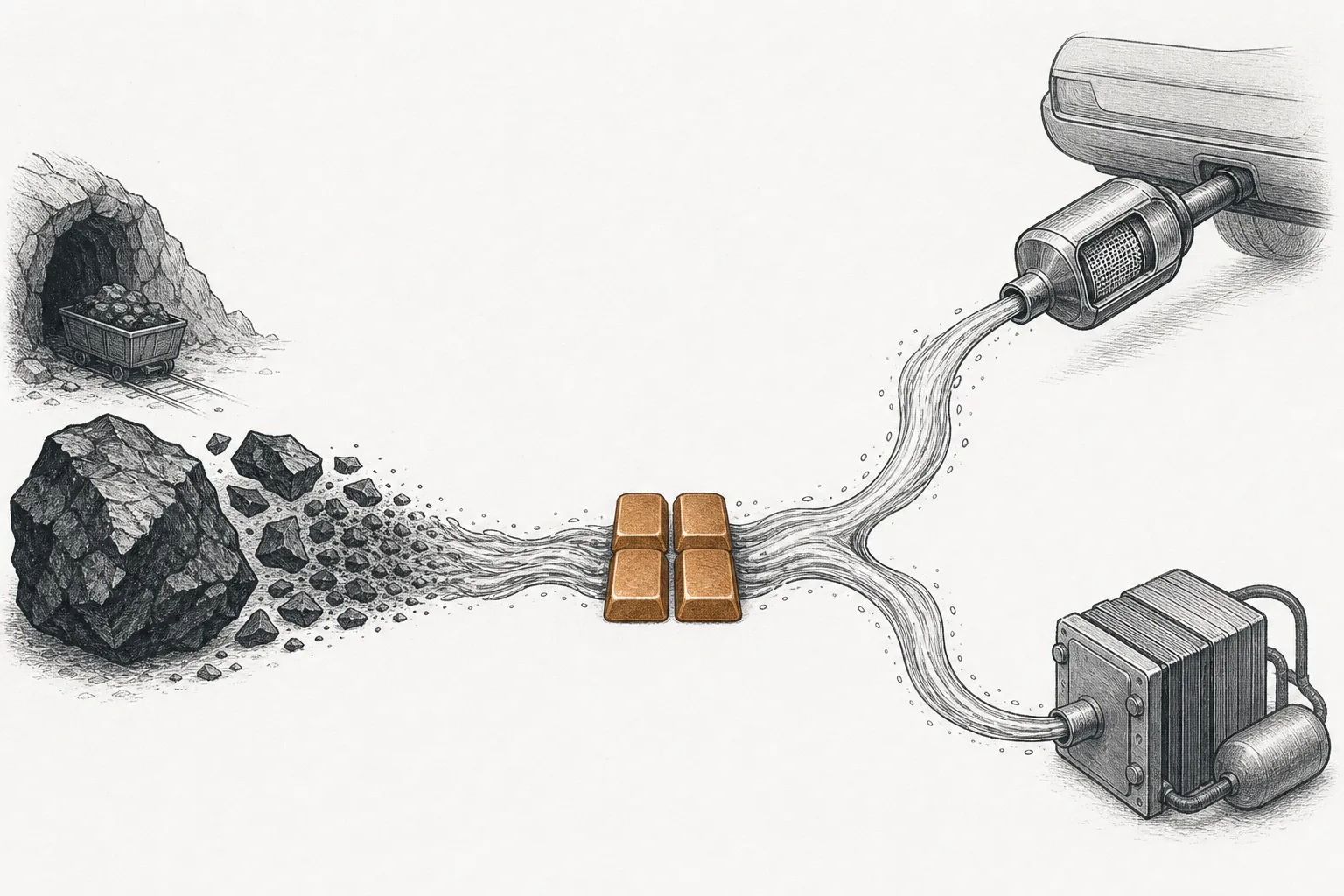
Picture a group of metals far rarer than gold, heavier than lead, able to take extreme heat — and with one special power that makes them enormously valuable: they speed up chemical reactions while barely wearing down themselves. These are the Platinum-Group Metals, or PGM — a family of six metals with very similar chemistry, but only four really matter commercially: platinum (Pt), palladium (Pd), rhodium (Rh) and iridium (Ir).
Each has its own personality. Platinum is the big sibling, used most widely (exhaust systems, jewelry, the chemical industry — and increasingly the heart of hydrogen). Palladium is the metal whose fate is tied most tightly to gasoline cars. Rhodium is the tiny one with the wildest price swings in the group (it once shot past $20,000 an ounce — many times the price of gold). And iridium is the rarest and toughest, a specialty material in the electrolyzers that make hydrogen, plus sensors and high-temperature crucibles.
On the megatrend map, this node is the deepest leaf under Precious & Platinum-Group Metals, inside the big trend Critical Materials & Supply Chain. It differs from its siblings in the "critical materials" family in one way: copper, lithium and nickel get scarcer the more the world shifts its energy. But PGM has a more complicated story — the energy transition is both a threat and an opportunity at the same time.
A substance that makes a chemical reaction go much faster without being used up itself — like a "matchmaker" that pairs molecules together but stays intact. PGM are the best catalysts in nature, which is why they're the heart of both the catalytic converter (turning toxic gases into harmless ones) and the fuel cell / electrolyzer (pairing hydrogen with oxygen). That's why these four metals are worth so much more than their size.
02Why it matters — an indispensable catalyst & mined in just two places
PGM matters for two opposite reasons: one, you can't do without it; two, it's rare and frighteningly concentrated.
The "can't do without it" side is about exhaust. Almost every car with an internal-combustion engine (gasoline / diesel / hybrid) needs a catalytic converter — inside is a ceramic mesh thinly coated with PGM that turns toxic gases (carbon monoxide, nitrogen oxides, hydrocarbons) into harmless ones. Emissions laws worldwide require it on every car. The result: about 40% of platinum demand, and over 80% of palladium demand, comes from the auto industry alone. This isn't "one of the uses" — it's the main artery of the whole market.
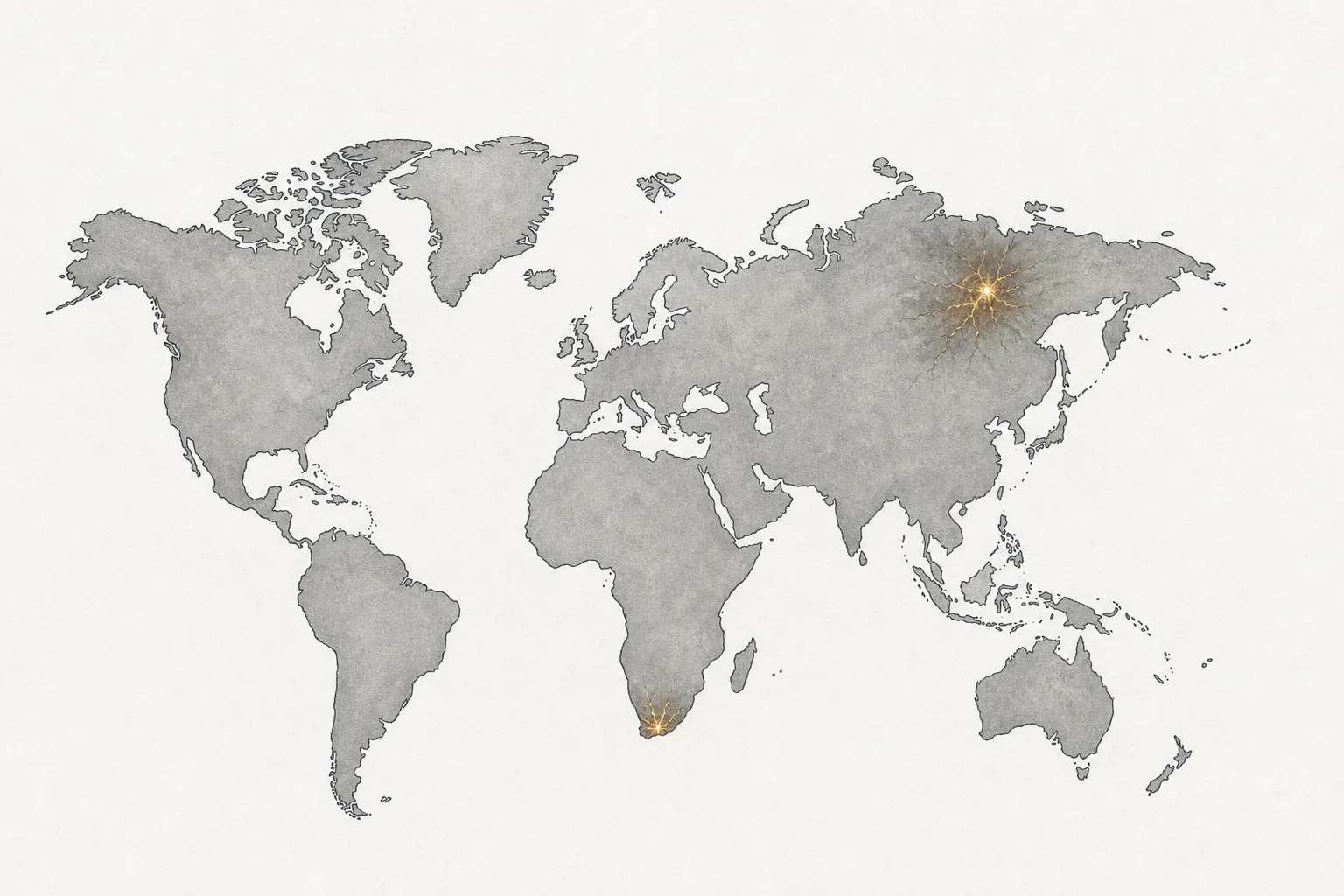
The "rare and concentrated" side is about the world map. Almost all PGM comes from just two sources — the Bushveld complex in South Africa and the Norilsk mines in Siberia, Russia. South Africa holds ~91% of the world's platinum reserves and produces about 70–80% of annual mine supply (70.8% in 2024). Russia controls the bulk of palladium through Norilsk. So just these two countries can set the price fate of the entire market.
This concentration is a double-edged sword — when supply runs short, prices spike because there's no backup source to turn to. But it's also extremely fragile: South Africa faces chronic load-shedding and surging power and labor costs that have pushed many mines into the red and forced shafts to close, while Russia carries a constant sanctions risk. That makes PGM both a "strategic material" and a "weak point in the global supply chain" at once.
03How it works (from rock to exhaust)
The journey of PGM from "rock underground" to "the thing in our hands" is longer and more complex than you'd think — a ton of ore holds only a few grams of PGM, and it takes several rounds of crushing, smelting and refining before each metal can be separated out. Let's walk through it step by step.
Two things make this journey "hard." First, the concentration is extremely low — you have to mine and crush enormous amounts of rock to get just a little metal, which makes the cost per ounce high and loses out to power and labor costs the moment prices drop. Second, separating the metals from each other — Pt, Pd, Rh and Ir are mixed together in the same ore and have very similar chemistry, so purifying them takes specialized technology only a handful of companies in the world can do (for example, Johnson Matthey, which is both a refiner and a catalyst maker).
Another pillar of supply, growing more important all the time, is recycling — when an old car is scrapped, its catalytic converter still holds PGM that can be recovered and reused at efficiencies as high as ~95%. Recycling from auto catalysts now makes up about 75–84% of all PGM supply that comes from recycling. And when prices spiked in 2025, recycling became more worthwhile — platinum supply from auto recycling is expected to grow ~6% to 1,210,000 ounces in 2025, reversing a decline that had run since 2022.
04Where it sits in the ecosystem — EV vs hydrogen
What makes PGM interesting as a megatrend isn't that it's growing — it's that it stands between two megatrends pulling it in opposite directions. One is eating its old demand, the other is creating new demand.
The threat side is passenger EVs. Pure BEVs have no exhaust, so they don't use a catalytic converter at all. That means every EV sold is one gasoline car gone — and PGM gone from the market for good. Palladium, which leans ~85% on gasoline cars, is the most fragile to this force. It's a rare case of one megatrend "eating" another megatrend.
The opportunity side is hydrogen and fuel cells. As the world turns to hydrogen, platinum (and iridium) become the heart of it again — both in fuel cells that turn hydrogen into electricity (used in trucks and buses) and in electrolyzers that split water into "green" hydrogen. Both rely on PGM as the catalyst.
Beyond these two megatrends, PGM feeds a wide range of uses — as a catalyst in the chemical industry and oil refining, as a material in sensors and electronics, and as fine jewelry. At the same time it's a sibling in the same family as the gold and precious metals covered in the parent lesson — but the difference is that gold is a "financial safe haven" while PGM is an "industrial thing" whose price depends on factories and cars, not on fear in the market.
05Where it stands now
2025 was the year PGM made the news again after years in the doldrums. The reason: the deepest deficit on record — WPIC (the World Platinum Investment Council) confirmed the 2025 platinum market ran a deficit of 1.082 million ounces, the largest annual deficit in its data going back to 2014 (on top of three straight years of deficit: ~500koz in 2022, ~896koz in 2023, ~992koz in 2024).
When supply runs short, prices spike — platinum rose more than 130% year over year, hitting a new record in late December 2025 at around $2,400 an ounce. Rhodium, with the wildest swings, jumped alongside it. The shortage comes mainly from the supply side — South Africa's mine supply keeps falling (output shrank from ~5.3 million ounces in 2006 to ~3.9 million ounces in 2025, a drop of about 26%) thanks to power cuts, surging costs, and old mines where the ore is getting leaner.
The players on this field split into three groups: (1) PGM mines in South Africa, the heart of global supply — Anglo American Platinum (which spun off and renamed itself Valterra in 2025), Sibanye-Stillwater, Impala Platinum (Implats) and Northam Platinum · (2) refiners and catalyst makers like Johnson Matthey, downstream · and (3) multi-metal miners + recyclers that have PGM as one part of their portfolio.
06The road ahead
The future of PGM hinges on a tug-of-war between three forces pulling the price in different directions.
The first force is a deficit that drags on. WPIC expects the platinum market to stay in deficit, averaging about 689,000 ounces a year over 2026–2029 — roughly 9% of total demand. Some shops think 2026 could come close to balance (a deficit of just ~240koz, near-balanced, depending on the recovery in supply and recycling), but the overall picture is "production can't keep up with use" — and that's the floor holding prices up. Many analysts forecast an average 2026 price of $1,500–2,200 an ounce (Metals Focus sees a high of ~$2,190, +71% YoY), while rhodium could rise another ~62% to ~$10,200.
The second force is the hydrogen lifeline. If hydrogen projects worldwide move ahead as planned (fuel-cell trucks + electrolyzers making green hydrogen), a new chunk of platinum and iridium demand arrives in the second half of this decade — a structural tailwind that helps make up for what EVs take away. But it's also a force that easily "arrives later than hoped," because the hydrogen economy is still in its early days.
The third force is substitution between the metals. Back when palladium was far pricier than platinum, automakers gradually redesigned catalysts to use platinum in place of palladium — good for platinum, but more pressure on palladium. That's why the futures of these three metals are splitting apart: platinum gets the deficit, hydrogen and substitution all on its side · while palladium, tied to gasoline cars alone, is the most at risk (some shops expect palladium to flip into surplus from 2027).
07Challenges & risks
The first risk is EVs killing gasoline-car demand permanently. This is a structural threat, not a cyclical one. Every EV sold is PGM gone from the market for good. If EVs grow faster than hydrogen can make up for, demand keeps shrinking — palladium (~85% reliant on gasoline cars) is the most fragile, and rhodium, with its wild swings, is even more dangerous when demand flips.
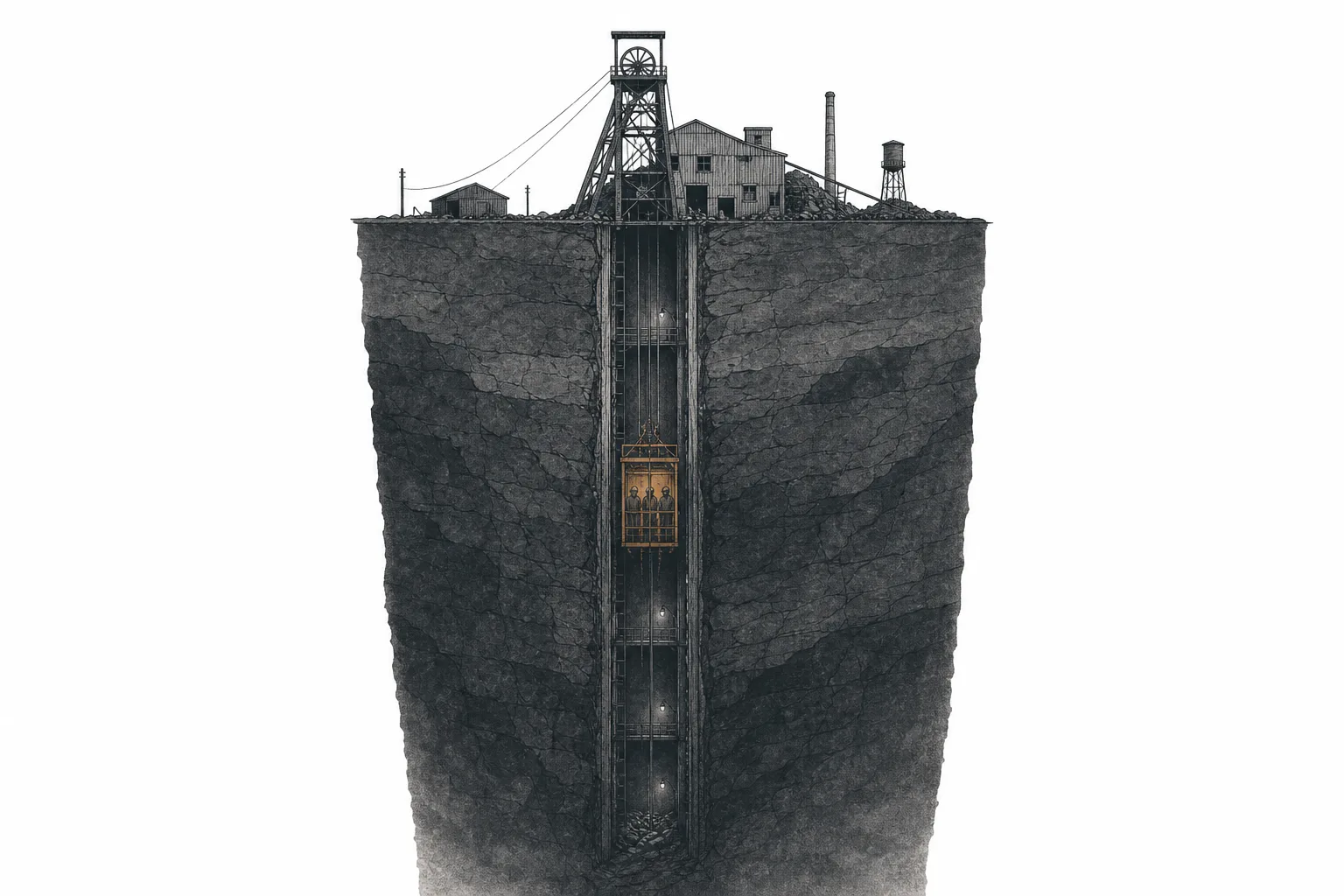
The second risk is problems in South Africa. When one country controls ~70% of mine supply, its problems swing the whole market — chronic load-shedding that halts production, surging power and labor costs, and old, deep mines where the ore is getting leaner and the work more dangerous. These have pushed many mines into the red, forcing them to shut shafts or cut staff during the recent price downturn. Today's losses become tomorrow's lost supply — good for prices, but bad for the stability of the chain.
The third risk is Russia and geopolitics. The bulk of the world's palladium comes from the Norilsk mines in Russia. Sanctions risk, or a cut to supply, can swing prices sharply higher (as happened in early 2022) — but it also injects uncertainty into the whole chain, a double-edged sword that makes PGM prices more volatile than ordinary commodities.
The fourth risk is the violence of the price itself. PGM is a small market (the entire platinum market is only ~7–8 million ounces a year), and when a market is small but demand and supply swing, the price swings hard — palladium hit ~$3,400 in 2022, then fell more than 70% in two years. Anyone investing in this group has to be able to stomach that kind of volatility.
In short: PGM is four metals mined from just two corners of the world, embedded in every car that runs on gasoline, now standing at the seam of the energy era — being swallowed by EVs on one side, brought back to life by hydrogen on the other. Whoever understands which of these two forces wins, understands the entire fate of this group of metals.