Megatrend · Electrification & Mobility
When the simpler car beats the complex one: who will own the automobile this century?
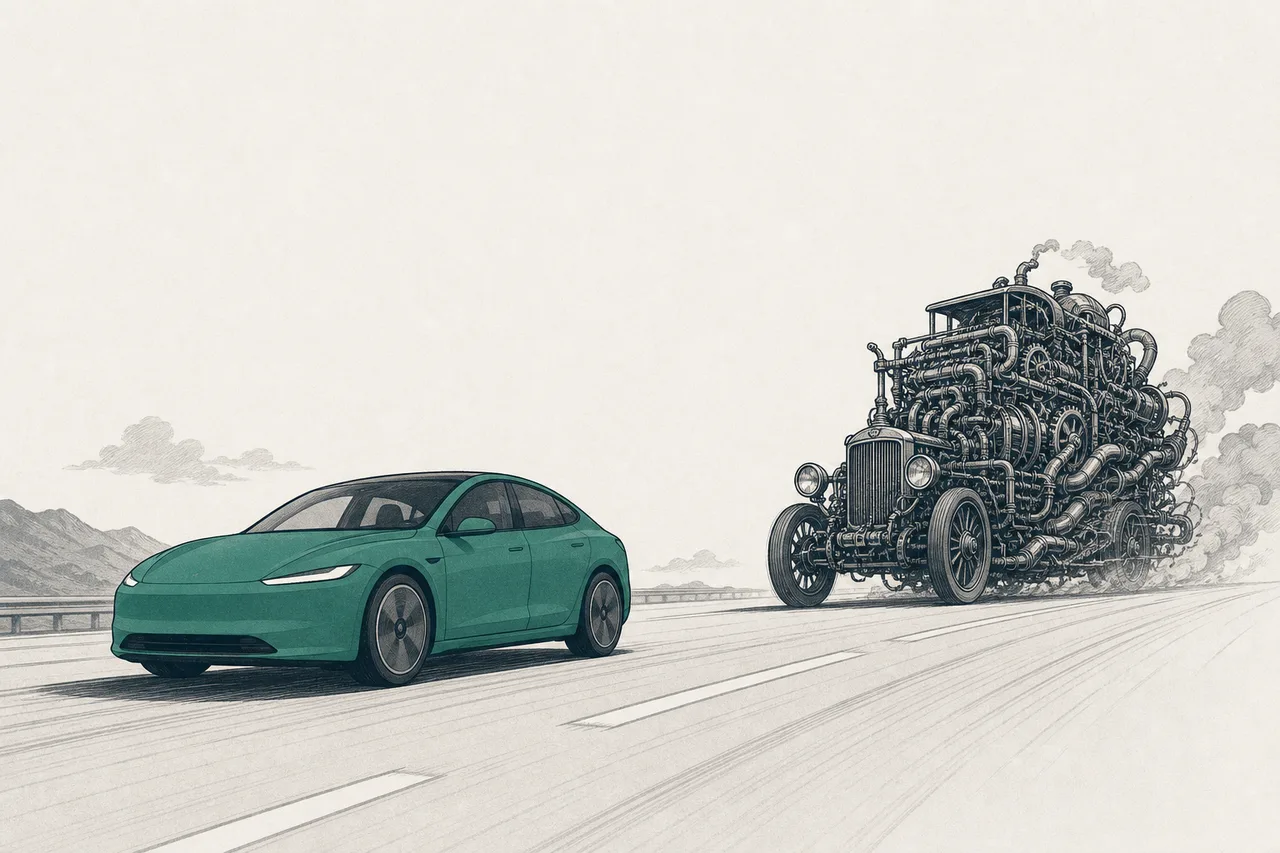
The electric vehicle is the most visible front line of the energy transition — and it's overturning a multi-trillion-dollar industry that sat still for a hundred years. The reason hides in the mechanics: an EV has only ~20 moving parts, while a gas car has ~2,000. That lower manufacturing wall let newcomers like Tesla, and a wave of Chinese brands, leapfrog the old market leaders — and in 2025, BYD overtook Tesla to become the world's #1 EV maker for the first time.
01What it is
This node is the heart of what most people picture when they hear 'EV' — the companies that build and sell electric passenger cars, whether that's Tesla, BYD, Volkswagen, or Toyota. It's a sub-theme under the megatrend Electrification & Mobility, and it's the 'end point' a consumer can actually touch, while the rest of the chain (batteries, motors, chargers) sits behind it.
But before we go further, let's clearly separate the two terms in the node's name, because they're two species fighting over the future:
BEV (Battery Electric Vehicle) = a pure electric car, running on battery and motor only — no engine, no gasoline · PHEV (Plug-in Hybrid) = a car with both an electric motor (you can plug in to charge) and a backup gasoline engine; it can run on electricity for short trips but you never have to fear running out of charge mid-journey — a 'bridge' for people not ready to give up gasoline entirely.
On the megatrend map, this node also splits into two camps in direct collision — and this is the main storyline of the whole lesson:
- China NEV Leaders (the new-energy-vehicle leaders from China): BYD, Li Auto, NIO, Xpeng, Geely — a group born in the electric era, with low costs, ruthless pricing, and a push abroad now underway
- Western / Legacy & Pure-play OEMs (the Western old guard + pure-plays): Volkswagen, GM, Ford, Toyota — giants whose profits still lean on the gas engine, plus pure-plays like Tesla and Rivian that were born to do electric only
The term 'NEV' (New Energy Vehicle) is what China uses to cover BEV + PHEV together — an official term you'll see often in this story.
02Why it matters — a trillion-dollar industry being flipped
The auto industry is one of the largest on earth, employing tens of millions and forming the economic core of several countries (Germany, Japan, the US, Korea). It sat still for a hundred years — who'd have thought a newcomer could ever break in? But 2025 was the year every line on the chart pointed the same way.
In 2025, global EV sales blew past 20.7 million units, up ~20%, and for the first time EVs made up more than 1 in 4 (25%) of all new cars sold worldwide. This is no longer a niche market — it's the mainstream, and its center of gravity is in China: China sold more than 13 million EVs in 2025, 6 out of every 10 EVs sold worldwide.
Why does this shake the whole economy? Because it isn't just 'switching the power source' — it changes who gets the profit. The makers of engine parts, transmissions, exhaust pipes, and fuel pumps — a whole chain that feeds millions — are being replaced by a new chain built around the battery. And that new center happens to sit in China, not Detroit or Wolfsburg.
03How it works — why the 'simpler car' can win
The heart of this whole story isn't 'electricity is cleaner than gasoline' — it's a single engineering fact: an EV is vastly simpler than a gas car, and that simplicity is what shattered the wall that used to protect the old market leaders.
The internal combustion engine (ICE) is one of the most complex machines humans mass-produce — pistons, valves, a crankshaft, ignition, cooling, exhaust — and it has to be paired with a multi-speed gearbox, because the engine only makes good torque in one band of revs. All told, a gas car's drivetrain has hundreds to ~2,000 moving parts.
An electric motor does the opposite — it makes full torque from zero revs, so it needs only a single-speed gear. An EV's drivetrain comes down to just a few main components: battery → inverter → motor. The moving parts drop to around 20.
This is why Tesla — a company that had never made a car — could break through, and why dozens of new Chinese brands sprang up in just a few years. The engine expertise Toyota or Volkswagen spent a century building loses its meaning in a world driven by motors. The battlefield moved to batteries, software, and cost instead — three things the old guard isn't especially better at, and that China happened to spend the longest preparing for.
04Where it sits in the world of Mobility
EV makers are the 'storefront' the consumer sees, but behind it they sit on top of a very long chain. This node is the biggest customer of several of its trend siblings:
- Eats into Battery Cells & Pack: the battery is ~30–40% of a car's cost; whoever controls cheap, good batteries controls the game — one reason BYD has the edge is that it makes its own batteries (the LFP 'Blade')
- Depends on Charging Infrastructure: EVs only sell when there's enough charging — the two grow together, and neither works without the other
- Driven by EV Powertrain & Power Electronics: the motor, inverter, and power chips (SiC) are the new 'engine' that lets a car go farther on the same battery
And it crosses over to another red-hot trend — autonomous driving. An EV is the platform best suited to carrying a brain (a computer), because the whole car is controlled electrically. But the self-driving brain itself (sensors, AI chips, decision systems) is a whole other node's world. If that interests you, head to Autonomous Vehicles — this lesson stays focused on 'the car, the power, and the brand war,' and tells the self-driving story separately.
From the parent's view, this node is one of the biggest children of Electrification & Mobility — the 'end application' that pulls demand through the whole chain, from lithium mines to charging stations. If EVs sell well, everything in the trend benefits; if they stumble, the whole chain shakes.
05Where it stands now — BYD vs Tesla vs the old guard
2025 was the year the throne changed hands. For the first time in history, BYD overtook Tesla as the world's #1 seller of pure electric vehicles (BEVs) — BYD sold 2.26 million BEVs (up ~28%), while Tesla managed 1.64 million (down ~9%). Two graph lines running in opposite directions tell the whole story in a single picture.
But count NEVs including PHEVs and BYD's lead widens even further, because half of BYD's sales are affordable plug-in hybrids. In China itself in 2025, BYD held a 27.2% NEV share, while Tesla slipped to 5th at just 4.9% — the home of world-class EVs became a field the local Chinese players control outright.
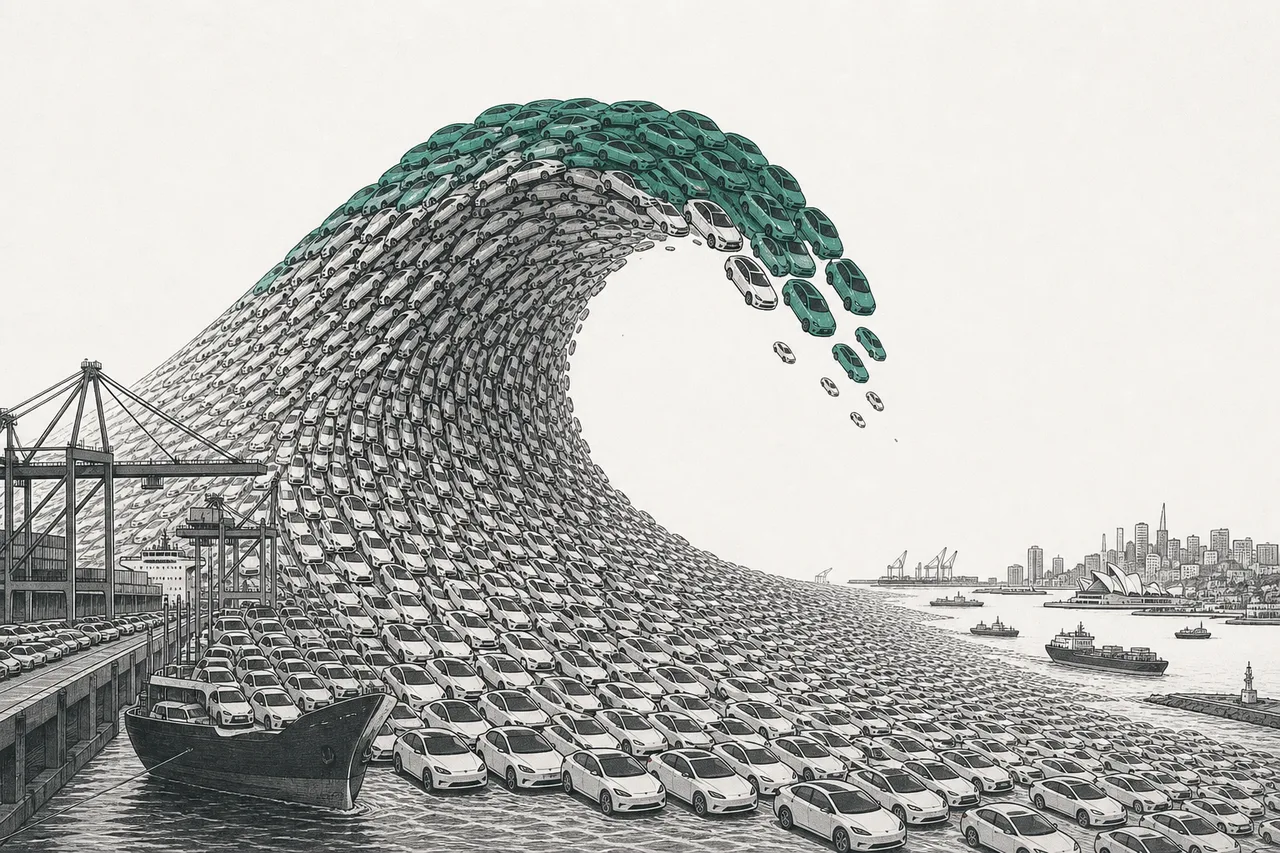
On the other side of the board are the Western old guard, who are hurting badly. Their problem is structural: profit still comes from gas cars. Every time they push out an EV, they lose money on almost every one, because battery costs are still high and their scale is still small next to China's.
The result: the old guard began to openly 'retreat' — together, the Western old guard booked about $52 billion (Big 3: GM, Ford, Stellantis) in provisions and losses to pull back. It's the exact opposite of China. The West has split into three poles — Tesla, whose growth has slowed and which has pivoted toward robotaxis; the old guard, burning cash to transform; and the startups fighting to survive (who's cutting which model, who's stretching the engine's life — the per-company deep dive is at → Western / Legacy & Pure-play OEMs).
And the smaller Chinese pure-plays? After years of losses, several rising Chinese EV stars finally turned a real profit in 2025 — a sign the business model is starting to stand on its own, not just burn cash (per-company detail at → China NEV Leaders).
06The road ahead — the PHEV comeback + the battles to come
The biggest surprise of 2025 was the comeback of plug-in hybrids and hybrids. After years of everyone assuming pure BEVs would sweep the board, the reality is that many consumers still fear 'running out of charge mid-trip' (range anxiety) and there still isn't enough charging. So the PHEV became a perfect bridge — run electric in the city, top up with gasoline on a long trip.
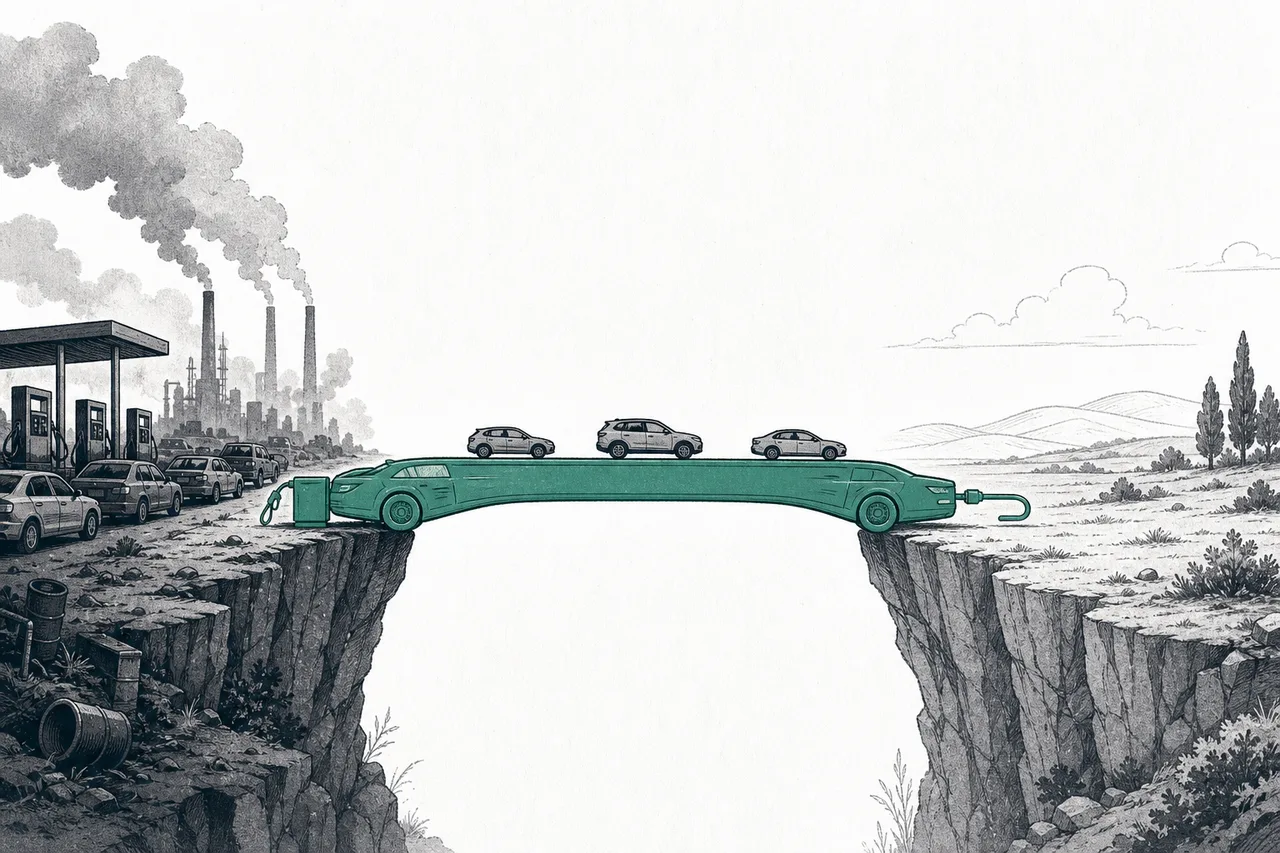
China used this opening best. BYD sold cheap PHEVs by the million, while Li Auto built up the market for 'range-extender' cars (EREV — the engine only generates electricity, it doesn't drive the wheels) into a best-seller. Toyota, long accused of being 'slow,' actually drew praise when the hybrid wave came back — the lesson is that 'the transition' may not be a straight line to pure BEV, but a winding road where the PHEV is an important resting point.
Looking further out, three forces will decide who stays and who goes:
- The push outside China: the home market is saturated and competing to the point of bloodshed, so Chinese brands have to export — Europe, Latin America, and Southeast Asia (Thailand included) are the new battleground, and the reason many countries are starting to raise tariff walls
- Software decides it: as hardware keeps getting cheaper, the difference will come down to the in-car experience, driver assistance, and over-the-air (OTA) updates
- The shakeout: many analysts believe that of the hundreds of Chinese brands, only ~15 will survive to 2030 — this game is entering its most brutal culling phase
07Challenges & risks
The appeal of growth comes with a wound just as deep — and the biggest one is named 'the price war'.
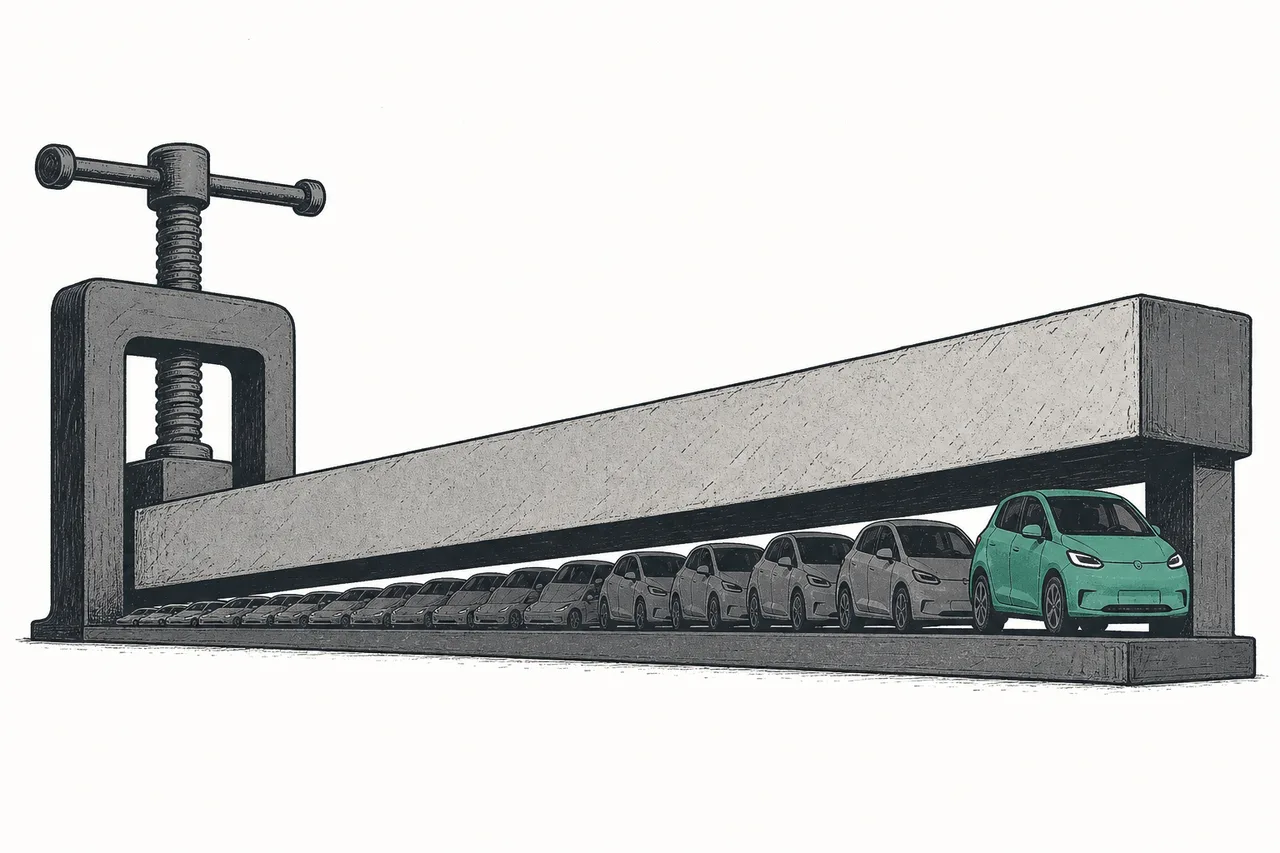
In 2025, BYD cut prices on 22 models by an average of ~32%, touching off an industry-wide price war so severe that Beijing itself warned about 'involution' (competing in a race to the bottom until everyone gets hurt). The result: the whole Chinese auto industry's margin fell to ~4%, and only a handful (BYD, Li Auto, Seres) are still profitable — the rest are losing money across the board.
The second risk is tariffs and politics. When Chinese cars are cheap and flooding in, other countries start to fear their home industry will die. So the US and Europe slapped import tariffs on Chinese EVs — and the exports that were a lifeline for Chinese brands (since their home market is saturated) face steadily stronger headwinds. Politics may decide their fate more than the quality of the car.
The third risk is demand stalling and the old guard retreating. In the West, EV growth slowed once subsidies were cut, sending many of the old guard back toward hybrids. The economics of an EV 'still don't pay' without state help — a warning that this trend isn't yet standing fully on its own feet in every market.
In short: Passenger EV OEMs is the story of a hundred-year industry flipped by a single engineering fact — the EV is far simpler, so the wall that kept outsiders out came down, letting Tesla, and then a wave of Chinese brands, overtake the old guard. In 2025 BYD rose to world leader, the Western old guard retreated, and the PHEV came back as a bridge. The big question of this decade isn't 'will EVs come?' — they're already here — it's 'who will actually make money from them, when everyone competes until profit has nearly vanished?'