Megatrend · Artificial Intelligence
The graphics-card rental shop that's bigger than many banks
When every company wants to build AI but nobody can get enough of NVIDIA's GPUs (graphics cards), a new business is born — the 'neocloud.' Its only job is to buy hundreds of thousands of GPUs and rent them out by the hour. A newcomer like CoreWeave grew from zero to $5 billion a year faster than any cloud company in history. But behind it is a business model that borrows enormous sums to buy something that loses value every year — plus a circular flow of money where NVIDIA invests in the very customers who use that money to buy NVIDIA chips.
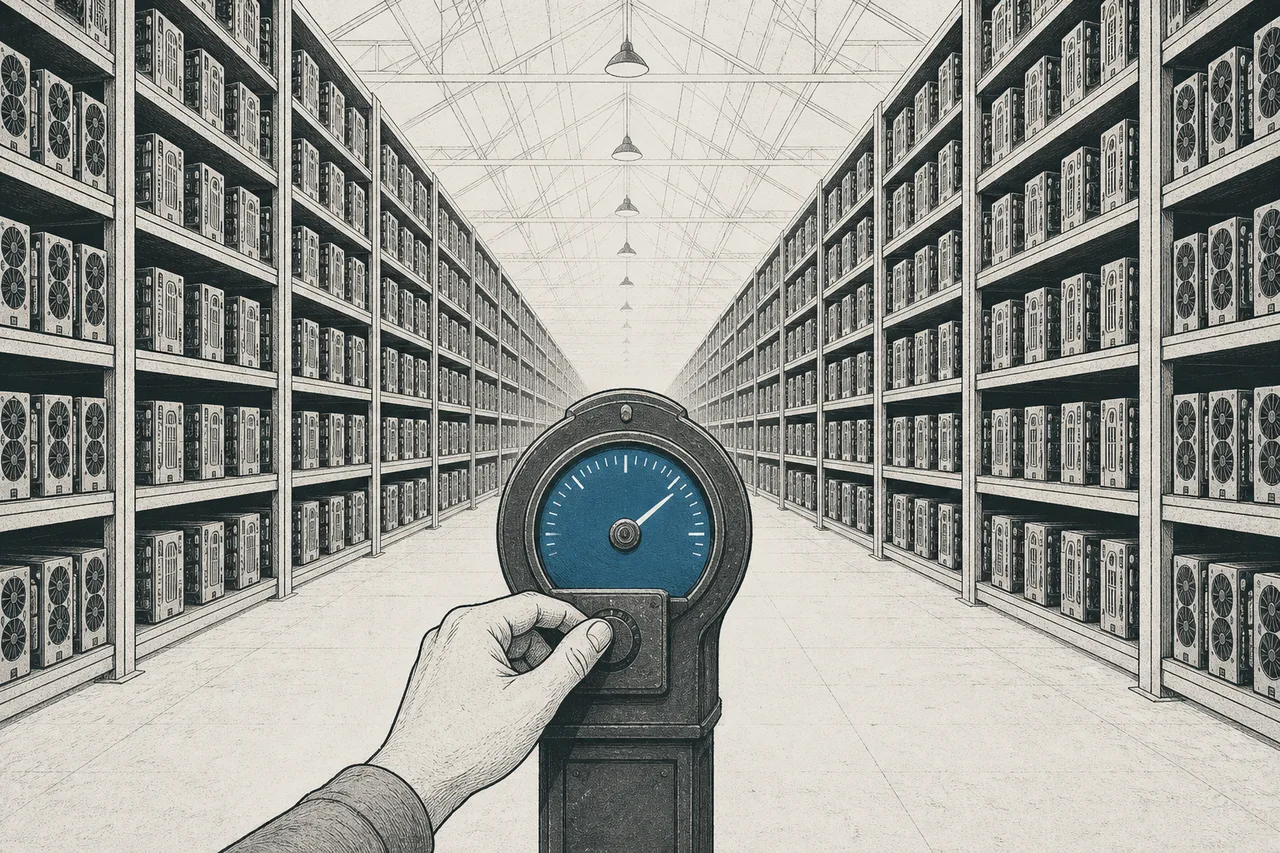
01What a neocloud is
Picture the American gold rush. The richest people often weren't the miners — they were the ones selling 'picks and shovels.' In the AI era, the picks and shovels are GPUs — NVIDIA's processing cards used to train and run AI models, and right now they're in severe shortage.
A neocloud is one kind of 'pick seller' — it borrows a large sum to buy tens or hundreds of thousands of GPUs, plugs them into a data center, and rents them by the hour to companies that want to build AI but don't want to (or can't, in time) build their own GPU farm. This business model has a name: GPU-as-a-Service (GPUaaS).
A 'new breed' of cloud that does one thing: rent out pure AI compute (GPUs). Unlike the original giant clouds (AWS, Azure, Google Cloud — collectively the hyperscalers) that sell everything from databases to email, a neocloud has none of that. It's a pure 'GPU gas station' — so it's cheaper, faster to spin up, and laser-focused.
This node sits under the megatrend Artificial Intelligence, and its definition is literal: 'renting out pure AI compute — a direct bet on the AI compute cycle itself, more than on cloud in general.' Put simply, if you want to invest in 'the AI world's hunger for GPUs' with nothing diluting it, this is the most direct way in.
The best-known newcomers are CoreWeave (formerly a crypto-mining company), Nebius (spun out of Russia's Yandex), Lambda, and Crusoe — the last two are still private companies that haven't gone public.
02Why it came to exist
Here's a fair question — with AWS, Azure, and Google Cloud already around, why did the world need a new breed of cloud? The answer is two words: 'shortage' and 'speed.'
In 2023–2024 every company in the world wanted to build AI at once, but NVIDIA could only make so many GPUs. The result: GPUs became the scarcest thing in tech, and whoever booked them first won. The rental price of an H100 spiked to $8 per card per hour at the peak. Companies bold enough to borrow and buy up GPUs before anyone else — then rent them out — became hugely profitable overnight.
The second reason is speed. Even Microsoft, which invests over $100 billion a year, couldn't build data centers fast enough for its own Azure, OpenAI, and Copilot demand. The fix is to rent from neoclouds — which is why Microsoft became CoreWeave's biggest customer (about 67% of 2025 revenue).
This demand shows up in the capital spending (capex) of the giant clouds, which has exploded like never before — from $256 billion in 2024 to about $443 billion in 2025, and projected to top $600 billion in 2026 — with roughly 40–50% of that going to buy GPUs and AI chips.
This enormous GPU hunger is the 'playground' that let neoclouds exist and grow — the neocloud market grew over 200% a year, hitting $5 billion in Q2 2025, and is expected to reach about $180 billion by 2030 (growing ~69% a year).
03The economics of renting GPUs
The heart of this business is a flow of money that sounds simple but is more fragile than it looks. It turns in four beats — and understanding that cycle is understanding both the appeal and the risk of this whole node.
The fragile point is 'depreciation.' A GPU isn't land that appreciates — it's something that loses value every year and gets replaced by a newer model fast. So a neocloud writes off a GPU's value within 4–6 years (Nebius over 4 years, Lambda 5, the giants stretch it to 6). Writing off over 4 years means you have to collect the full cost back in rent within 4 years — or you lose money.
And here's the scarier number: once you subtract everything (power, space, depreciation, interest), the margin on renting out bare-metal GPUs can be just 14–16% — and the moment utilization drops below 80%, that profit flattens. Put simply, an idle card is a money-losing card.
To manage this risk, neoclouds lock in customers with 'take-or-pay' contracts — the customer books compute 2–5 years ahead at a fixed price and pays whether they use it or not. That's why the 'backlog' figure (the total value of contracts booked ahead) matters so much: it's the assurance that the money to pay the debt will be there.
Take-or-pay = a contract where the customer pays for what they booked, whether they use it or not — like an annual gym membership you pay even if you never go · Backlog (or RPO) = the total value of future contracts already signed but not yet recognized as revenue. The bigger the backlog, the more clearly visible future revenue is.
04Where it sits in the AI ecosystem
A neocloud doesn't float in a vacuum — it's a 'platform layer' that sits on top of other pieces of the AI megatrend and feeds power to the top layer. Let's trace it bottom to top:
- Sits on AI Compute & Accelerator Silicon: all of its assets are GPUs from NVIDIA (and rivals like AMD) — no chips, nothing to rent. This node is the 'biggest buyer' of the chip layer
- Needs AI Data Center & Build-out: GPUs need buildings, power, and cooling — so a neocloud is inseparably entangled with data-center construction and the power grid (this node's relations note that it 'drives demand' for both energy and key raw materials)
- A cousin of Cloud & Digital Infrastructure: it's a kind of cloud, but extremely specialized — relations clearly state that a neocloud 'depends_on' the traditional cloud foundation
- Feeds power to AI above: large language models (LLMs), AI applications, and autonomous agents all need the compute neoclouds sell — it's the 'fuel' for everything above it
What makes this node interesting as an investment is that it's the most 'pure' bet on the AI compute cycle. Buy NVIDIA and you get a chip maker; buy Microsoft and you get a software company with AI as one part. But buy a true neocloud and you get only 'the world's demand to rent GPUs' — rising hard and falling hard directly with that cycle.
A neocloud's competition isn't its peers — it's the hyperscalers (AWS, Azure, Google Cloud) that also rent out GPUs. The big question is — once the giants build enough data centers, will neoclouds still have a place? So far the answer is 'yes,' because even the giants can't build fast enough, so they end up renting from neoclouds themselves.
05Where it stands now + the players
2025 was the year neoclouds fully 'stepped onto the big stage.' CoreWeave went public in March, followed by a run of enormous contracts — the largest being a deal with OpenAI worth about $11.9 billion through 2030. That pushed the company's backlog (future contracts) to $66.8 billion by the end of 2025.
But the number investors worry about most is the dark side of that backlog — about 67% of CoreWeave's revenue comes from a single customer, Microsoft, and most of the rest from OpenAI. That much concentration means that if just one big customer stumbles, the whole company shakes.
On the European side there's Nebius, growing just as fast — Q3 2025 revenue was $146 million, up 355% year over year, and it just signed a deal with Microsoft worth about $17.4 billion through 2031, plus another $2.9 billion with Meta. The hyperscalers and Oracle are playing on the same field too — Oracle reported its backlog (RPO) topped $523 billion, most of it from GPU cloud contracts.
06The road ahead
The first direction is the shift from 'training' to 'running.' In 2023–2024 most GPU demand came from training new models, but from 2025 on the weight is shifting toward inference — taking a trained model and serving it to people millions of times a day. Inference demand is steadier and more predictable, which is good news for a business model that needs high utilization.
The second direction is the line getting blurry. As Oracle and the hyperscalers jump fully into the GPU cloud game, 'neocloud' may no longer mean a small newcomer — it's becoming a 'category' where small players and giants compete. The long-term winner is whoever has the lowest cost per GPU-hour and the highest utilization.
The third direction is the question of new chips' depreciation. NVIDIA ships a new chip every year (Hopper → Blackwell → next). Every time a new one lands, the value of older cards still being paid off gets pushed down. The big question of the decade is whether older GPUs will 'still find renters at a lower price' or 'become scrap metal' — and that answer decides the fate of the whole industry's balance sheet.
07The risk: money that goes around in a circle
A neocloud's appeal — fast growth, a pure bet on AI — comes with deep, structural risk. The one talked about most is what's called 'circular financing.'
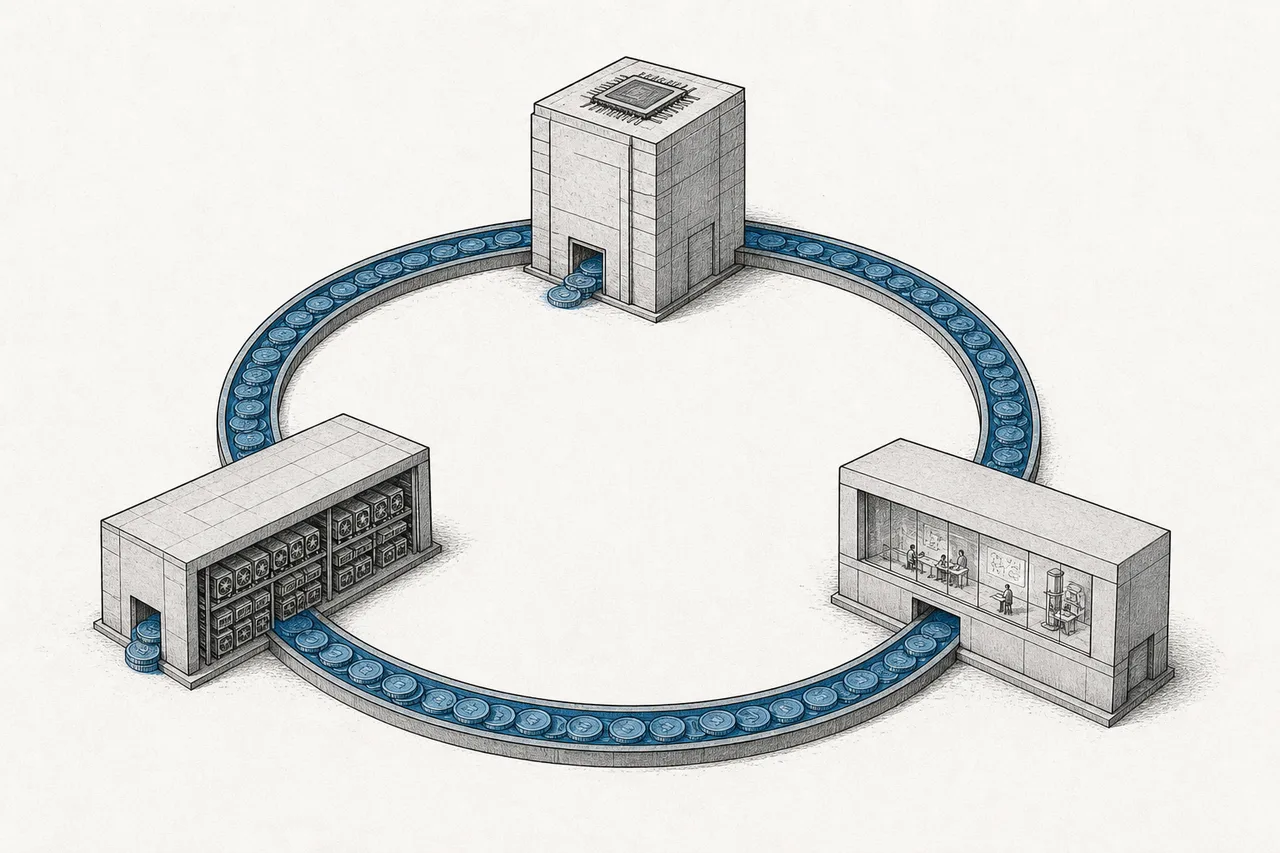
Here's how it works: NVIDIA holds about an 11% stake in CoreWeave and has also signed a contract to buy about $6.3 billion of CoreWeave's unsold compute (a 'safety net' if it can't find enough customers) — while CoreWeave uses that money to buy chips from NVIDIA. And the big customer, OpenAI, gets investment from Microsoft, which in turn sells cloud to OpenAI.
The upside view: this is a partnership that props each other up and grows the whole system fast. The cautious view: if AI demand stumbles, this circling money could shrink all at once — and because a neocloud borrows enormous sums to buy depreciating assets, the debt risk is especially high. There are reports that the GPUs used as collateral for some loans have already lost 60–75% of their peak value, while the repayment burden keeps running.
The second risk is customer concentration. When most revenue comes from a few customers (CoreWeave: Microsoft ~67%), losing or being squeezed by a single customer shakes the whole company — and ironically, those big customers are themselves racing to build their own GPU farms.
The third risk is 'overbuild.' If everyone — neoclouds and giants alike — rushes to build data centers at once just as demand slows, GPU rental prices will dive (you can already see hints in the price that's fallen 64% from the peak). Once utilization drops below 80%, profits vanish and the debt burden suddenly stands out.
In short: a neocloud is the story of the pick seller in the AI gold rush — when GPUs are scarce and everyone's hungry, the graphics-card rental business grows astonishingly fast. But behind it is a financial game where you always have to 'run faster than depreciation' — and understanding the capex → rent → depreciation cycle and the circular flow of money is understanding why this node is exciting and worrying at the same time.