Megatrend · Critical Materials
The metal you 'can't electrify anything' without
Copper is an old, boring-looking metal — but it's the bloodstream of everything that runs on electricity. An EV uses about 4× the copper of a gas car, a single AI data center swallows the copper of half a million EVs, and power lines and wind turbines need it by the ton. All of that is now slamming into a supply side that 'can't keep up' — ore grades are falling, and opening a new mine takes about 17 years on average. This is the story of a gap that's widening — and why it matters to the whole world economy.
01What copper is, and why it's special
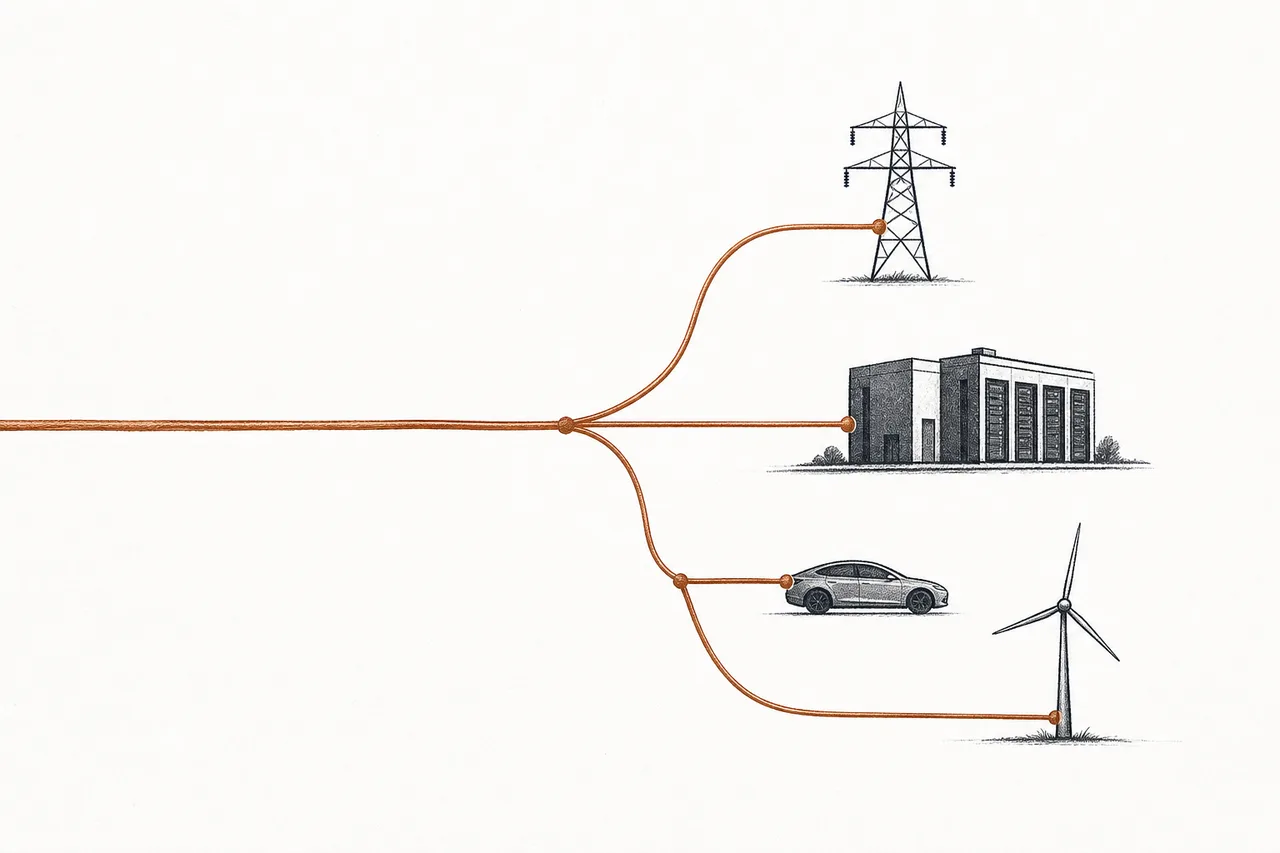
Humans have used copper for thousands of years. It doesn't sound exciting — but think about it this way: every time electricity has to 'travel' from one place to another — from the outlet to your phone, from the power plant to your house, from the battery to an EV's motor — it almost always runs through copper. That's because copper is the second-best conductor of electricity after silver (which is far too expensive to wire a whole city with). On top of that, it's easy to shape, durable, and nearly 100% recyclable without losing quality.
This node's definition puts it bluntly: copper is the 'base metal of the shift to electrification and AI data centers,' and the 'real bottleneck of AI.' About 65% of the copper used in the world goes into 'transmitting and distributing electricity.' It's no accident that investors have started calling it 'the metal of electrification.'
On the megatrend map, copper is a sub-theme under Critical Materials & Supply Chain — the group of 'real stuff in the ground' that props up all the technology trends. Copper is the big sibling of this group, because unlike Lithium or rare earths, which are tied to specific uses, copper is in 'almost everything' that runs on electricity.
A 'base metal' is a cheap-per-unit industrial metal used in massive volumes (copper, aluminum, nickel, zinc) — the opposite of a 'precious metal' like gold or silver. What makes copper interesting is that it's a base metal that 'became strategic,' because the whole world is electrifying at the same time.
02Why it matters to the whole world
The reason is simple: you can't 'electrify' anything without copper — and the world is electrifying everything at once: cars, heating, factories, and the newest one, AI. Here are some numbers that make it concrete:
A gas car has about 23 kilograms of copper, but an EV uses about 83 kilograms — more than 3–4× as much, because the motor, battery, and wiring all need copper. A wind turbine eats about 8 tons per megawatt, and every transmission line in the grid is, well, copper.
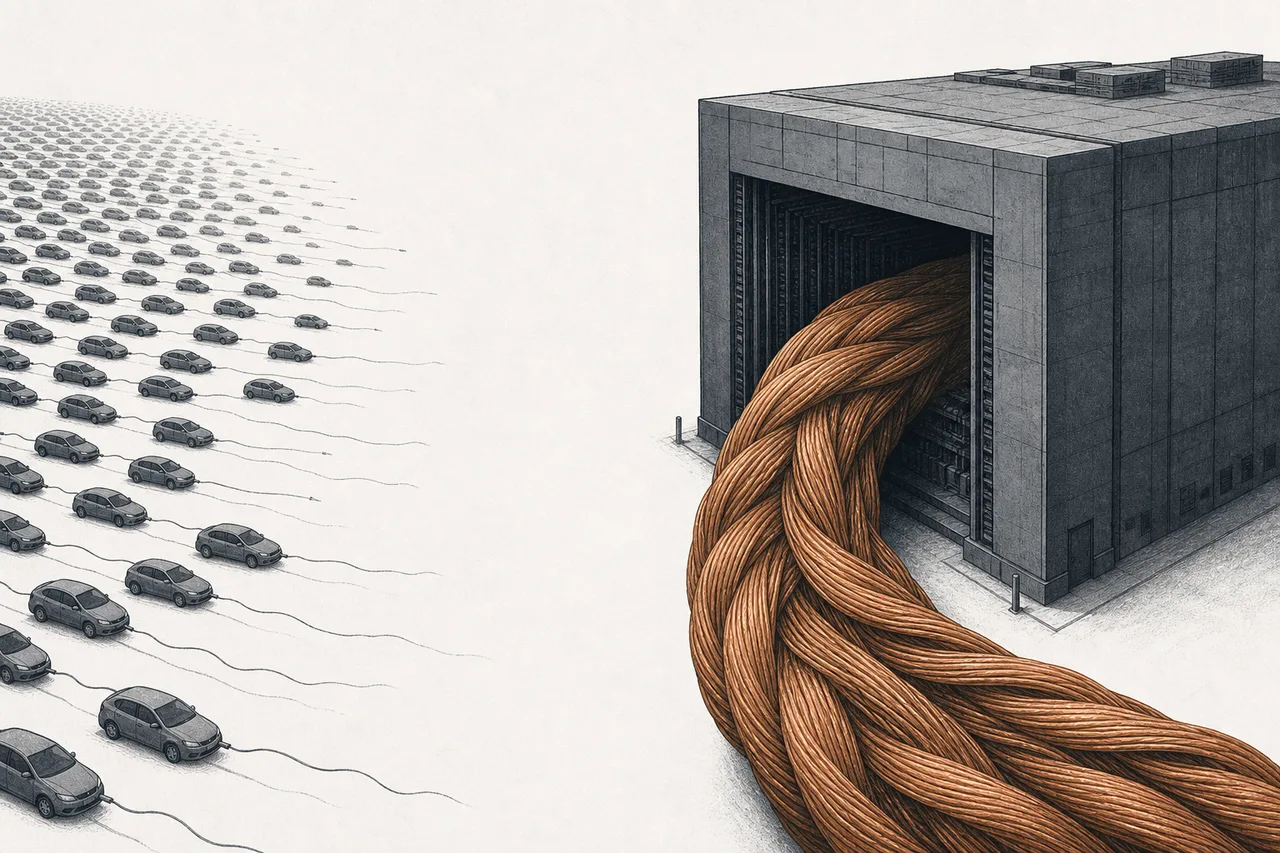
But the new player changing the game is the AI data center. It needs enormous amounts of copper — in the wiring inside racks, in power-delivery systems, and in the cabling between servers. The number that stunned the industry: a 1-gigawatt AI data center uses about 50,000 tons of copper — the same amount that goes into building nearly half a million EVs. BloombergNEF estimates that copper demand from AI data centers will average around 400,000 tons a year over the next decade, peaking at about 572,000 tons in 2028.
Add every force together and total world copper demand is around 27–28 million tons in 2024–2025, and is expected to grow to about 33 million tons by 2035 (some forecasters see 40-plus million). Demand from the grid and clean energy alone is projected to reach about 9–10 million tons a year by 2030, up from just about 5 million tons in 2020.
03The mechanism: demand crashing into the supply 'gap'
The heart of the copper story isn't just 'demand is growing' — every commodity's demand grows. It's that the supply side can't keep up. Picture two lanes of a road running toward each other: one lane is demand accelerating from four directions at once; the other is supply stuck in three kinds of mud. Where they meet, the gap in the middle is the 'deficit' that pushes prices up.
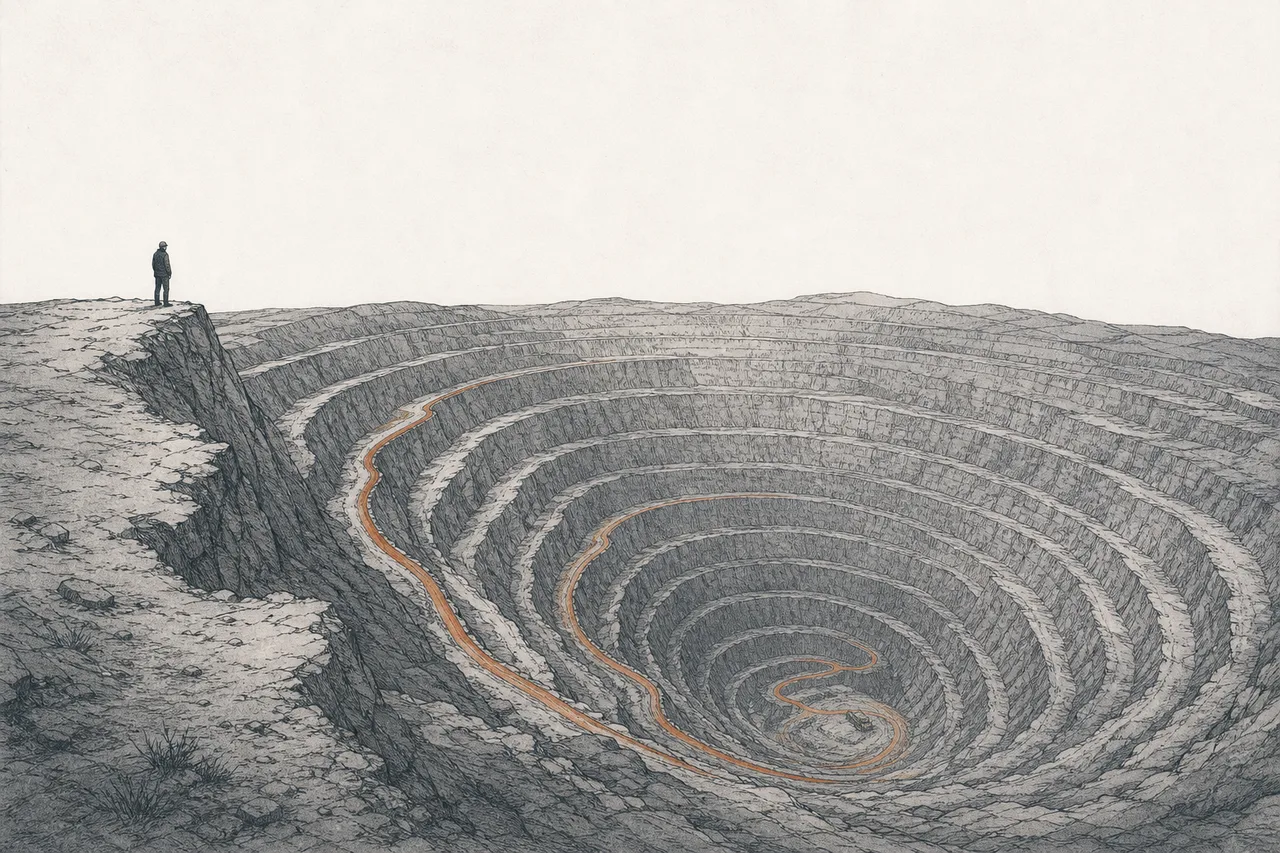
The supply side is stuck because of (1) falling ore grades — old mines have already dug out the good parts, so today you have to dig more rock to get the same copper. (2) New mines take a very long time to open — on average, from 'discovering a deposit' to 'actual production' is about 17.9 years for mines that started up in 2020–2023 (versus about 12.7 years back in 2005–2009), because permitting, impact studies, and local opposition drag on. And (3) hardly any big new deposits are being discovered — plus political risk in the major producing countries.
The result of this gap is a number many forecasters agree on. BloombergNEF estimates that by 2035 the world will be short about 6 million tons of copper a year (needing ~35 million tons but producing only ~29 million). S&P Global and the IEA see a shortfall of about 30% of demand in 2035. And importantly — the market starts entering a 'structural' shortage from 2026 onward, not just a temporary cycle.
04Where it sits in the materials chain
Copper is one of the key materials under Critical Materials & Supply Chain, alongside siblings like Lithium, rare earths, and nickel/cobalt. The difference is that lithium and rare earths are tied to specific uses (batteries, magnets), while copper is in 'almost everything that runs on electricity' — which makes it the 'base' that other trends stand on.
The lines connecting copper to other trends are very clear:
- Feeds AI data centers: every watt that powers a GPU runs through copper — the fastest-growing new source of demand, and the reason copper is called 'the real bottleneck of AI'
- Feeds the grid and transmission: wiring, transformers, and substations are all copper — the biggest and most durable chunk of demand
- Feeds electrification and vehicles (EVs): the motor and wiring in an EV eat 3–4× the copper of a gas car
- Connects to Energy Transition and Defense: every kind of clean energy (wind, solar) and modern weaponry needs more copper
What makes copper economically 'dangerous' is that it's a shared bottleneck across several megatrends at once — if copper tightens, it doesn't hit just one industry, it hits AI, the grid, EVs, and clean energy all at the same time. That's why investors view copper as an 'index of the whole world's electrification.'
05Where it stands now + the real players
2025 was the year the copper market clearly 'woke up.' The price on the LME hit an all-time record of about $12,960 per ton late in the year, in its biggest rally in over a decade — driven by stumbling supply, a weak dollar, and above all the 'flood of money pouring into AI.' Goldman Sachs sees the price climbing to $15,000 per ton by 2035 (about $11,500 in 2025 money).
Production is still concentrated in a few countries and a few companies. Chile produces about 23% of the world's copper, followed by Congo (DRC) and Peru. The world's largest producers in 2025 are BHP (~1.47 million tons), Chile's state-owned Codelco (~1.44 million tons), and Freeport-McMoRan (~1.08 million tons). The worrying part: Chile's output fell for the last 5 months of 2025 in a row, and Peru saw a mine hit by protest road blockades — a fresh reminder of just how fragile the supply side is.
06The road ahead
The first direction is the gap that keeps widening. If demand from AI, the grid, and EVs keeps accelerating as expected, but supply still can't open new mines fast enough (remember, ~17 years on average), the market stays in a 'structural shortage' for years — which, in theory, means copper prices stay high, and is why many investors see copper as a 'long-term theme' rather than a short trade.
The second direction is recycling and using copper more efficiently. Copper's advantage is that it recycles at nearly full efficiency. Today, about 40–65% of copper in some markets comes from recycled scrap, and accelerating recycling is one of the main ways to plug the gap — but recycling alone isn't enough. S&P estimates the world still needs more than 8 million tons/year of new mine capacity, plus about 3.5 million tons/year of recycled scrap, by 2035.
The third direction is a geopolitical scramble for resources. Once copper becomes strategic, countries and companies compete to 'lock up' upstream deposits — clearly visible in China (through Zijin and others) racing to buy mines in Africa and South America, while the US and Europe try to cut their dependence. This turns 'who owns the copper in the ground' into a global political issue.
07Challenges & risks
The copper theme is compelling, but you need to understand the risks fully — not just the pretty demand side.
The first risk is commodity cyclicality. Copper is nicknamed 'Dr. Copper' because its price reflects the health of the global economy — when growth slows, copper demand shrinks and the price can drop fast. A good long-term theme doesn't mean the price goes up in a straight line; it still swings hard with the economic cycle.
The second risk is dependence on China. China accounts for about 54–57% of the world's refined-copper consumption, which means copper's price is tightly tied to China's economy. If China's property sector or investment stumbles, that huge chunk of copper demand wobbles instantly — the single biggest concentration risk in this theme.
The third risk is substitution. When copper gets expensive enough, manufacturers switch to aluminum for some uses (like certain high-voltage power lines). It's estimated that about 60% of all copper uses 'could be substituted,' even if the quality is worse — so a price that runs too high can erode its own demand over the long run.
The fourth risk is politics and permitting in producing countries. The big mines are concentrated in Chile, Peru, and Congo, all of which carry risks of local protests, higher mining taxes, or rule changes — and those delays are exactly why the supply side responds so slowly (and, at the same time, why prices stay high).
In short: copper is the story of an old, ordinary-looking metal that suddenly became the bottleneck of every trend that runs on electricity — from AI to EVs. What makes it special is that it's in 'almost everything,' and the supply side that has to refill it moves the slowest in the world (~17 years per mine). Understand the gap between demand that sprints and supply that crawls, and you understand why this plain-looking metal became one of the most important materials of the electric age.