Megatrend · Biotech & Genomic Medicine
A wearable artificial pancreas: when the sensor talks to the pump on its own
Diabetes isn't only about drugs. There's also "hardware" that works alongside them — a tiny sensor under the skin that reads your blood sugar every few minutes, and an insulin pump that doses the drug automatically. Once those two can talk to each other, they become an "artificial pancreas" that adjusts your insulin all day and all night. This is a business growing from ~$12B toward $50B — with one big question hanging over it: will GLP-1 weight-loss drugs kill this market, or make it bigger?
01What is it?
People with type 1 diabetes face the same problem every day: the pancreas can't make insulin, so the body can't control its own blood sugar. The old solution is to "prick a fingertip" several times a day to check your sugar, then calculate and inject the insulin yourself — tiring, painful, and easy to get wrong. Imagine having to be a calculator for your own body, 24 hours a day, with no days off.
This category is the hardware that steps in to do that job — not a drug, but a device. It has three main parts:
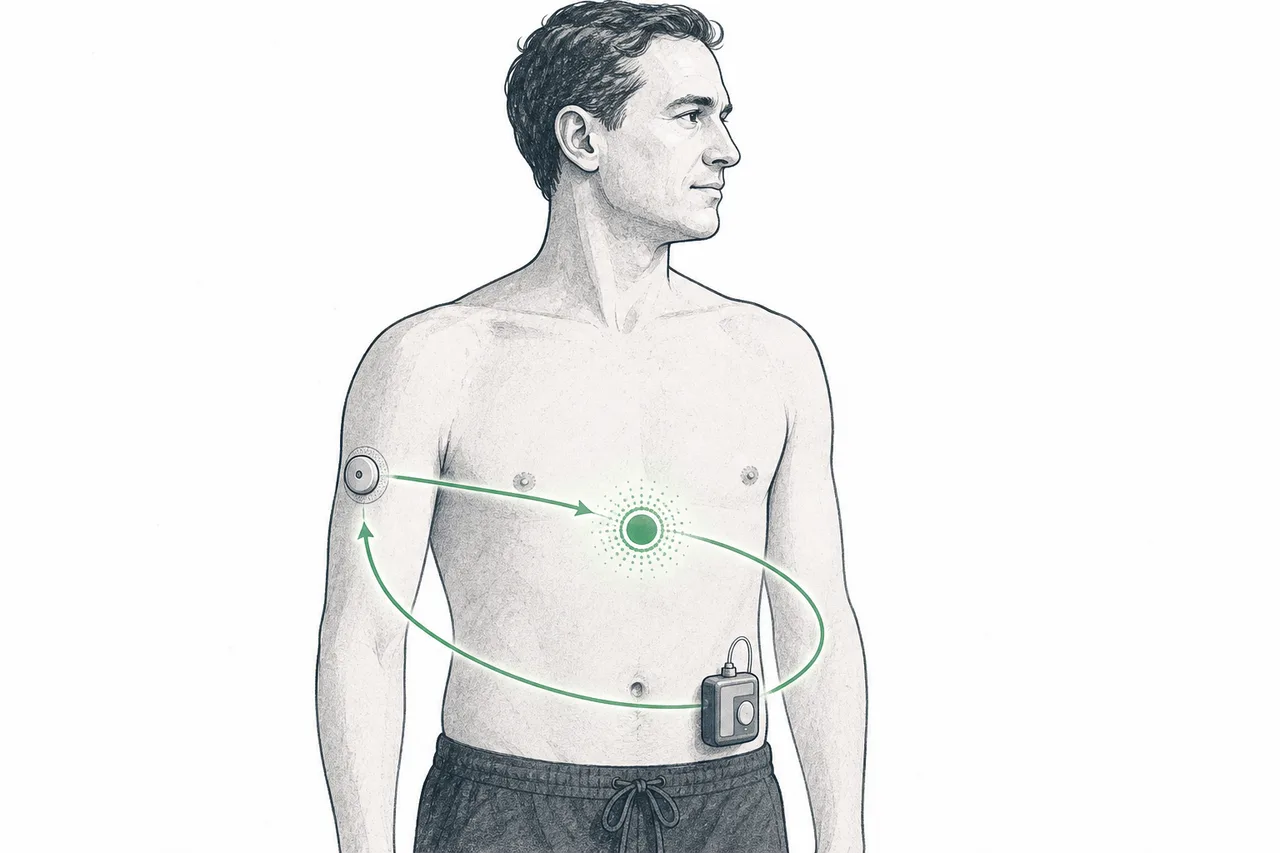
- CGM (Continuous Glucose Monitor) — a sensor the size of a coin, stuck on the arm or abdomen, with a tiny needle under the skin that reads your sugar every 1–5 minutes and sends it to your phone — replacing the fingertip prick. The best-known are the Dexcom G7 and the Abbott FreeStyle Libre
- Insulin pump (Insulin Pump) — a small device that delivers insulin into the body continuously through a thin tube, instead of multiple daily injections. Some are wireless and stick right on you, like Insulet's Omnipod
- Closed loop (Closed Loop / AID) — the real star: when the CGM can "talk" to the pump, an algorithm reads your sugar and tells the pump to deliver insulin automatically. This is what the field calls an "artificial pancreas"
A sensor with a tiny "filament" sitting under the skin. It doesn't measure blood sugar directly — it measures the fluid between cells (interstitial fluid), which tracks your blood sugar closely. The advantage is that you see the "trend" all the time — whether your sugar is rising or falling, not just a single point at the moment you prick. One sensor lasts about 10–15 days, then you swap it.
On our megatrend map, this category sits under Biotech & Genomic Medicine as the "device side" of diabetes care — the hardware partner walking alongside the drug side, Metabolic, Diabetes & Obesity. Drugs control the disease; hardware controls the day-to-day.
02Why it matters to the world
Start with the size of the problem. In 2024, 589 million adults worldwide had diabetes (the latest IDF Diabetes Atlas figure) — more than the entire population of North America combined, and the number keeps climbing every year. About 95% of them are type 2; type 1 (which needs insulin for life) accounts for around 9.5 million. This is a market where demand never shrinks.
The second reason is money. The CGM market alone is worth around $12–13B in 2024–2025, and most analysts expect it to grow at roughly 15–16% a year, pushing past $47–55B by the early 2030s. The insulin-pump market adds another $7–8B or so, growing a bit slower (~8% a year). Together, this is one of the fastest-growing corners of the medical-device industry.
But the reason that runs deeper than the numbers is that it's still just getting started. As famous as it is, this technology still reaches only a fraction of people — an estimated 30% of type 1 patients in the US use a CGM or pump, and the type 2 side worldwide is far lower, just 10–15%. That means the market still has enormous "open space" to grow, simply by getting the people who should use it to actually use it.
And the last reason is that it actually works. Studies clearly show that closed-loop systems control blood sugar better than self-injecting — cutting both nighttime lows (which can be deadly) and long-term complications like kidney failure, blindness, and amputation. All of those are huge costs for public health. Hardware that looks like a high-tech toy is, in fact, an investment that saves money down the line.
03How the closed loop works
The heart of this category is a single word: "loop". A healthy person's pancreas works as an automatic circuit — sugar goes up, it releases insulin; sugar goes down, it stops. It runs this loop all day without you noticing. In type 1 diabetes, that circuit is broken. The closed loop is about rebuilding that circuit with devices.
It works in three beats, repeating every few minutes, around the clock:
The word "closed" matters a lot. Older systems were "open loop" — the CGM warned that sugar was rising, then left the patient to command the pump themselves. In a closed loop, the algorithm handles everything; the patient just says they're about to eat, and the machine does the rest. That difference is the difference between an "assistive tool" and a "replacement organ."
The formal name for the "closed loop," short for Automated Insulin Delivery — a system where the CGM, the algorithm, and the pump work together to adjust insulin automatically. It's sometimes called a hybrid closed loop because the patient still has to announce meals (the system doesn't yet guess them 100%). Best-selling examples are the Omnipod 5 (Insulet), Control-IQ (Tandem), and MiniMed 780G (Medtronic).
There's an interesting detail hidden here: the CGM doesn't measure blood sugar directly — it measures interstitial fluid, which "lags" the real value by about 5–10 minutes. So the algorithm has to predict ahead where the sugar is going, not just react to the current value. This is where AI and learning from data come in — and it's the arena where each player competes over whose algorithm is smarter.
04Where it sits in the ecosystem
This category is "hardware" in a world that mostly talks about "drugs." So it connects to other trends in ways that sometimes complement and sometimes clash:
- Partner to Metabolic, Diabetes & Obesity (the drug side): this is the most important relationship. The drug side (insulin, GLP-1s like Ozempic/Mounjaro) treats the disease itself, while the device side manages the "day-to-day." One patient usually uses both at once — insulin is the "ammunition," and the pump and CGM are the "aiming and trigger system." You need both to make it complete
- Depends on AI: the algorithm that predicts sugar ahead and orders the insulin dose is the real AI. The smarter the model, the more seamlessly the loop controls sugar. This is where players build an edge that's hard to copy — hardware can be cloned, but data and algorithms refined over years cannot
- Tied to an aging society: type 2 diabetes rises as the population ages. The older the world gets, the more people have diabetes, and the more device demand grows — especially among older patients who forget to prick and forget to inject, where automated systems cut errors dramatically
- A distant cousin of Brain-Computer Interface: both are "implanted devices that read signals from the body and respond." The CGM is one of the most successful biosensors ever implanted in people and sold at scale — a template for the next generation of implantable sensor tech
05Where it stands now
The picture right now is an extremely concentrated market. In CGM alone, the three giants — Abbott, Dexcom, Medtronic — together hold over 98% of shipment share in 2025, with Abbott leading on volume (the FreeStyle Libre sensor is cheaper and sells in enormous quantities) and Dexcom leading on accuracy and software. This isn't an arena for small players — it's a war between a few giants.
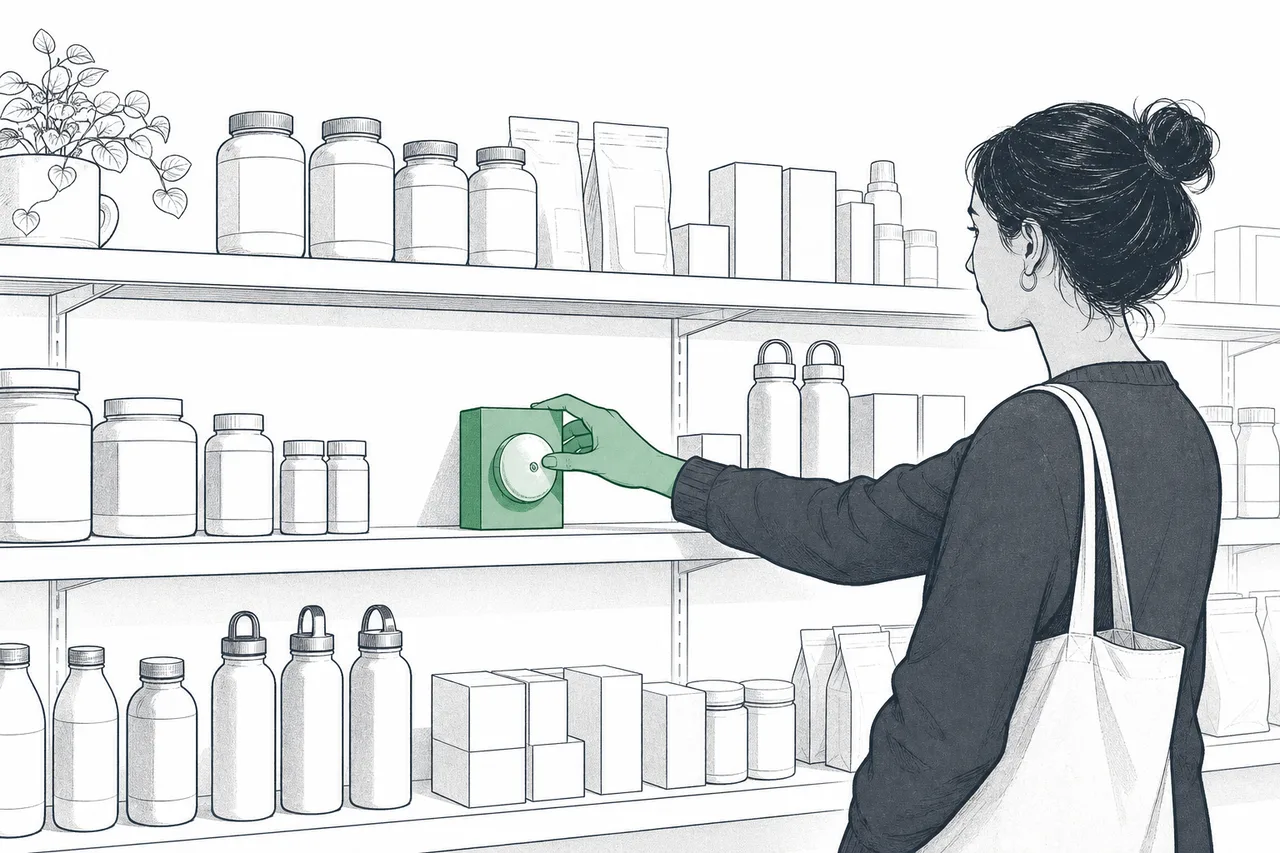
The hottest milestone of this cycle is CGMs you can buy yourself without a prescription (OTC). In March 2024, the FDA approved Dexcom Stelo as the first over-the-counter CGM, followed by Abbott Lingo in June. This opens a huge door — because it aims at a group far larger than people with diabetes: those with prediabetes (nearly 98 million in the US) and ordinary people who want to look after their health. At around $49 per 14-day sensor, it turns the CGM from a "medical device" into a "health gadget" anyone can buy.
The pump and closed-loop side is growing strongly too. Insulet's Omnipod 5 became the most-prescribed AID system in the US in 2024, with its "wireless, tubeless" stick-on selling point, while Tandem and Medtronic fight back with new-generation algorithms. This year almost everyone is moving from "just a pump" to a "full closed loop" — the battlefield has shifted from hardware to whose algorithm controls sugar more smoothly.
06The future: will GLP-1 kill this market or extend its life?
This is the biggest question hanging over the whole category, and the point the stock market argues over most fiercely. When the GLP-1 family of weight-loss drugs (Ozempic, Wegovy, Mounjaro) exploded, people feared: "if drugs make people thinner and diabetes rarer, who buys the devices?" Dexcom and Insulet shares fell hard on that fear.
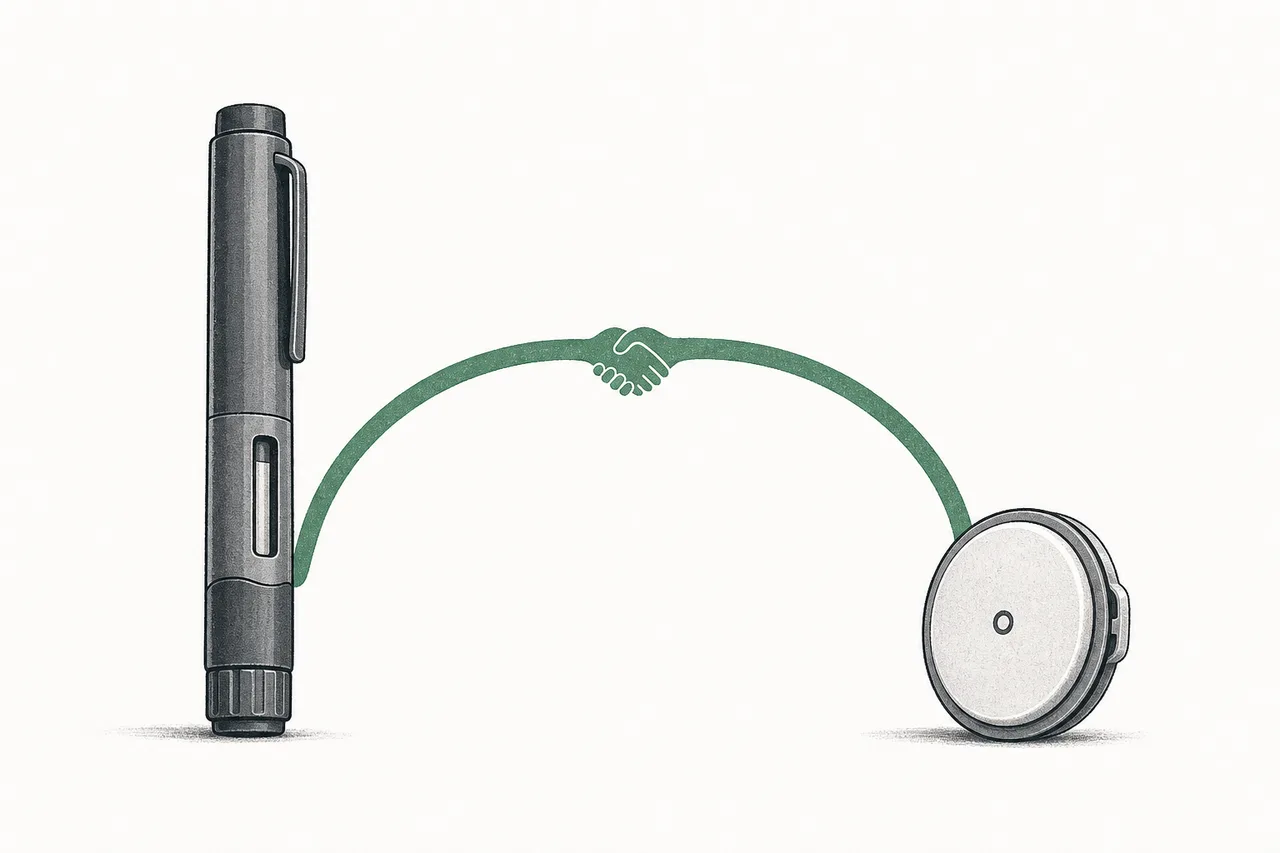
But look deeper and the picture is far more complex, and the weight of evidence is starting to tilt toward "reinforcing each other" more than "destroying each other", for three reasons:
- Doctors prescribe them together: Dexcom reports that patients on GLP-1 drugs actually use CGMs more, because doctors want to see the sugar data while adjusting the drug — instead of competing, the two walk side by side
- GLP-1 doesn't touch type 1 patients: people with type 1 diabetes (the core customers of pumps and closed loops) still rely on insulin for life. GLP-1 doesn't replace that, so many analysts conclude the impact on the pump market is only "minor"
- OTC expands the market far beyond diabetes: Stelo and Lingo target the 98 million ordinary people with prediabetes, many times larger than the existing patient base. If the CGM becomes an everyday health item like a smartwatch, the market grows because of the wellness wave, not in spite of it
The most sensible view in 2026 is this: GLP-1 may genuinely reduce serious diabetes over the long run, but over the next 5–10 years, the force of CGM expanding into the mass market (untapped type 2s, prediabetes, the general wellness market) is far stronger. On net, the market should keep growing, not shrink. So the real risk is one of "timing" more than "direction."
Beyond the GLP-1 drama, the technology's direction is clear: closed loops will keep getting "fully closed" (the goal is patients not even having to announce meals), sensors will last longer and get more accurate, and prices will fall enough to reach emerging markets. And AI-driven algorithms will become the main battlefield — whoever has more patient data, for longer, can train a smarter algorithm.
07Challenges & risks
The growth picture is beautiful. But there are real risks worth stating plainly.
The first risk is price wars and margins. As Abbott keeps cutting the price of the FreeStyle Libre to grab volume share, rivals are forced to follow. In a market where three players hold 98%, that infighting can turn into a price-cutting war that eats everyone's profit — especially as the OTC era makes CGMs easier for buyers to comparison-shop.
The second risk is dependence on insurance and reimbursement. Most of this category's revenue comes from insurers or governments agreeing to pay for the devices. If policy changes — say, an insurer decides to cover CGMs only for patients on insulin — the market could shrink overnight. This is a policy risk companies can't control at all.
The third risk is user churn and the burden of use. The number above is alarming: roughly one in four users quits the CGM within the first year — sensors falling off, adhesive rashes, frequent replacements, or data overload that wears them out. For a business whose profit comes from "buying again every month," churn is a fierce enemy. So designing for ease and durability matters just as much as accuracy.
The fourth risk is technology that could replace it. Over the long run, if a way to actually cure type 1 diabetes emerges (such as pancreatic-cell transplants or stem-cell therapy — see Regenerative Medicine), the need to wear a device for life will fade. That's still far off, but it's a shadow hovering at the end of the road.
In short: diabetes devices are about using engineering to replace a broken organ — sensors, algorithms, and pumps that stand in for the pancreas more smoothly every year. It's one of the few corners of Biotech that earns recurring revenue by "selling a consumable," and it holds one of the most entertaining strategic questions in the field — whether a drug that looks like a rival might actually be its best ally.