Megatrend · Aging Population
The best hospital might be your own bedroom
Almost every older person wants to live out their final years at home — not in a hospital or a nursing home. And it just so happens that 'home care' is far cheaper than a hospital bed, so a big payer like Medicare is pushing patients back home. This is the story of moving the 'place of care' out of expensive buildings and into the house — from a nurse visiting after surgery, all the way to hospice, the care for the last stage of life. Hospice in particular has become a high-margin business with steady cash flow, which is why the big health insurers are fighting to buy it.
01What it is (the three kinds of home care)
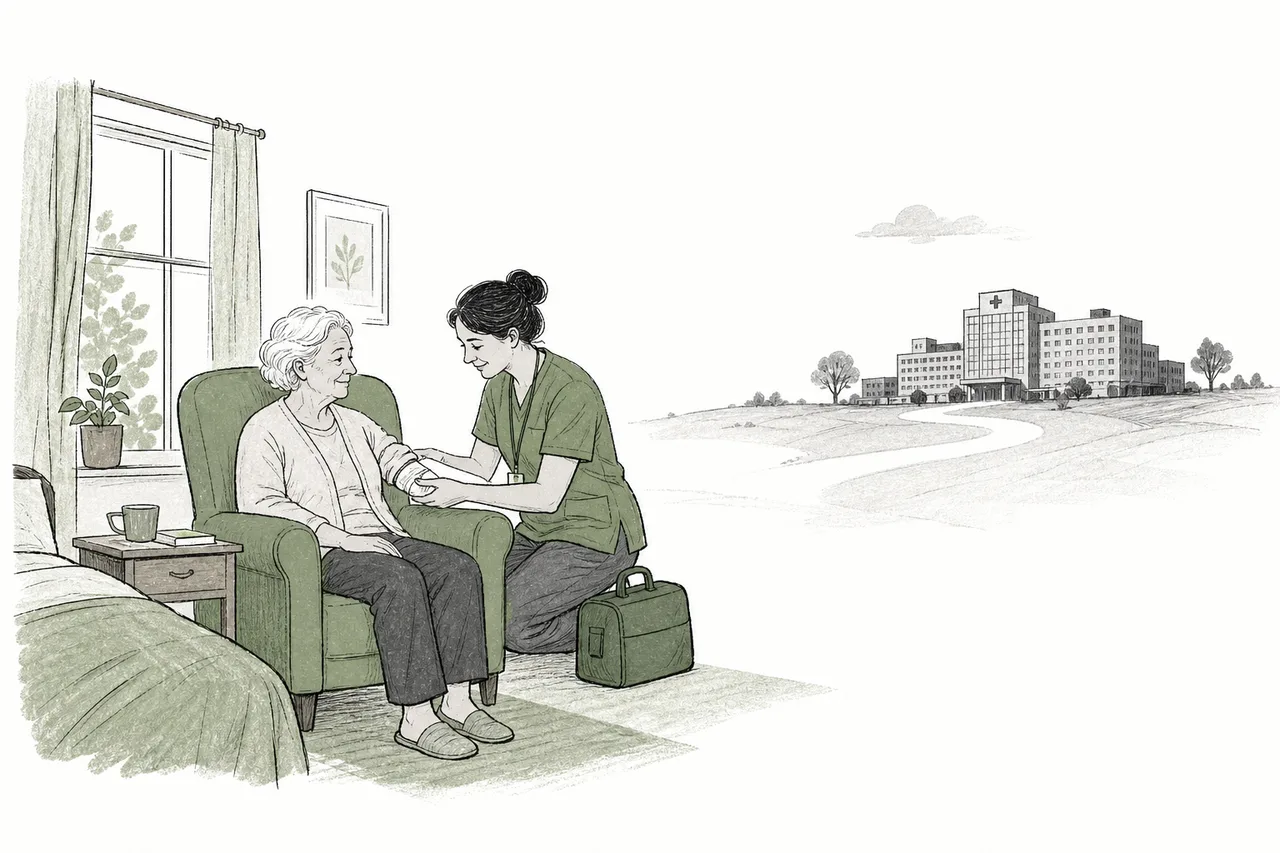
Picture this: an 80-year-old grandmother has just had hip surgery. In the old days, the doctor would have kept her in the hospital for several more days for physical therapy and wound care. But today the picture is different — she goes home sooner, and instead a nurse visits her at home. This node is about moving the 'place of care' out of an expensive building and into the patient's own house, and it splits into three clearly different kinds.
- Skilled home health (nurse home visits): care that needs a professional license — nurses giving injections and dressing wounds, physical therapists, occupational therapists. It usually happens after a hospital stay or surgery, a short stretch until the patient recovers. Medicare is the main payer
- Personal / non-medical home care (personal-care aides): not treatment, but help with daily living — bathing, dressing, cooking, walking. It's the most labor-intensive work, billed by the hour, and paid by Medicaid or the family's own money
- Hospice (care for the last stage of life): when curing the illness is no longer the goal, hospice keeps a terminal patient 'comfortable and dignified' — managing pain, caring for the patient's and family's emotional needs. Most of it is done at home, and it's the business star of this lesson
Palliative care manages symptoms and pain, and can run alongside treatment that's still trying to cure. Hospice is palliative care for the final stretch only — typically for a patient a doctor judges to have ≤6 months to live, who has chosen to stop trying to beat the disease and focus on quality of life instead.
On the megatrend map, this node is a sub-theme of Aging Population — the downstream 'service' that takes the demographic wave head-on. More old people = more people who need care, and most of them want that care at home.
02Why care is moving home
The first reason is about the heart. Almost everyone wants to grow old and die in their own home, not in a building. A 2025 survey found that about 94% of seniors want to stay in their current home, for as long as possible, to the end. This idea has a name: 'aging in place' — growing old right where you are, without moving to a nursing home.
The second reason is money, and it matters more than you'd think. Because the one putting up the biggest money for American seniors is the government, through Medicare (public health insurance for people 65+) — and beds inside a building are staggeringly expensive. A private room in a nursing home costs nearly $128,000 a year on average, while home care is far cheaper. When the patient wants to go home + home is cheaper + the payer wants to save, every force pushes the same way.
The result: home health has become the 'fastest-growing place of care' in the health system. The combined US home health and hospice market is worth about $307 billion in 2025, and is expected to reach $523 billion by 2032 — a number bigger than many industries that get talked about far more.
03The mechanism: why home is cheaper
Why is a hospital bed so expensive? Because the price of a bed isn't just the cost of caring for the patient. It bundles in the cost of the whole building's infrastructure — the building itself, operating rooms, expensive equipment, a 24-hour nursing team, electricity, cleaning. All of it gets spread across the per-day bed rate. Even if a patient is just lying there recovering, they still 'pay for the building.'
Home care cuts that big cost away. The house already belongs to the patient, so there's no building cost. The nurse just drives over to visit as needed, instead of watching 24 hours a day. The result is a much lower cost per day — studies find the 'hospital at home' model cuts the cost of care by about 30%, with lower mortality and fewer readmissions to boot.
On the hospice side, the business model is even more interesting, because Medicare pays 'per diem' — a flat rate per day, whether that day's care is heavy or light. The 'routine home care' rate (ordinary care at home, which is over 95% of hospice care days) runs about $200+ per patient per day. Since a patient is typically in care for several weeks to several months, this becomes revenue that flows in steadily every single day. Low cost per day, high margin — that's exactly why hospice is the target everyone wants.
Per diem = a flat daily payment, so a hospice operator has to manage costs within that daily allowance. On days a patient needs less, they keep the difference · But there's an aggregate cap — an annual ceiling per patient (~$35,361 for FY2026). If the average comes out over it, they have to pay Medicare back — a brake against just keeping patients on the books for as long as possible to make money.
04What it connects to
This node doesn't sit on its own. It's a downstream endpoint that absorbs force from other trends, and it's tightly linked to its siblings under the Aging Population roof:
- Competitor and complement to Senior Care (senior-care facilities): this is the 'other side' of the same coin — home care pulls patients out of buildings, so every person who can stay home is an empty bed in a nursing home
- Pressure on Senior Housing REITs (senior real-estate funds): if old people can stay home longer, demand for service-equipped housing shifts — it's both a competitor and a complement
- Drives demand for Medical Devices for the Aging Body (medical devices): home care needs equipment you can use yourself — ventilators, remote vital-sign monitors, hospital beds. The more care happens at home, the more devices it needs
- Leans on AI & robotics down the road: as caregivers grow critically scarce, remote monitoring and care-assist robots become a necessary answer, not a toy
The most important angle is that home health is the 'pressure-release valve' for the whole health system. When an aging population floods hospitals with chronic patients, being able to move people home safely is what keeps the whole system from collapsing — which is why the government and the payers are throwing their weight behind this trend.
05Now: the fight over the 'home' (2024–2026)
Across 2024–2026, the phenomenon that defines this trend played out: the big health insurers fighting to buy up home-care companies. The reason is straightforward — an insurer that owns a Medicare Advantage plan (a private plan that takes a flat payment from the government) wants to control costs. The best way to control costs is to own the provider yourself, then push patients to the cheapest setting: home care. Analysts call a company like this a 'payvider' — both the payer and the provider in one.
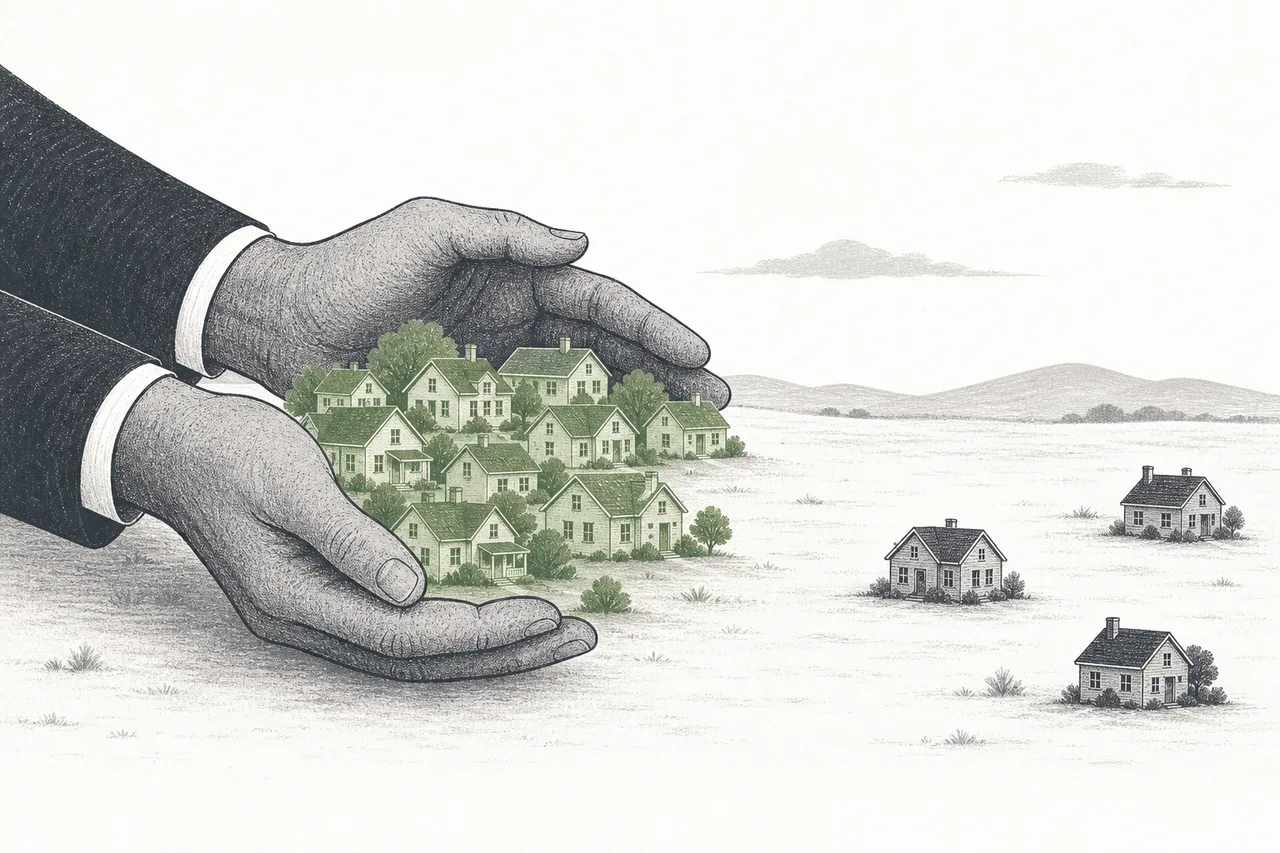
The biggest deal is UnitedHealth, the #1 health insurer in the US, which through its services arm Optum went and bought two major home-health companies: LHC Group ($5.4 billion, 2023) and Amedisys ($3.3 billion). The Amedisys deal was a hard slog — the US Department of Justice (DOJ) sued to block it, worried UnitedHealth would control more than 30% of the home health/hospice market in several states. In the end it had to agree to divest 164 locations across 19 states before the deal could close in mid-2025.
What's interesting is that the 'buyers' of those 164 forced-sale locations were BrightSpring and Pennant Group — two independent players that grew out of the scraps of the giant deal. And UnitedHealth's main rival, Humana, isn't sitting still either: it owns CenterWell, the largest home-health platform in the country. Both are building 'end-to-end care systems' that start at the insurance plan and end at the bed in the patient's home.
While the giants consolidate the skilled-home-health side, the independent players still in the public markets are growing nicely too — especially on the hospice side, which is becoming the growth engine for nearly every public home-care company. For example, VITAS (under Chemed) grew net patient revenue 15% to $407 million last quarter, with average daily census up 13%. And Addus HomeCare pushed full-year 2025 revenue past $1.42 billion (up from $1.15 billion), caring for about 107,000 people across 23 states.
06The road ahead
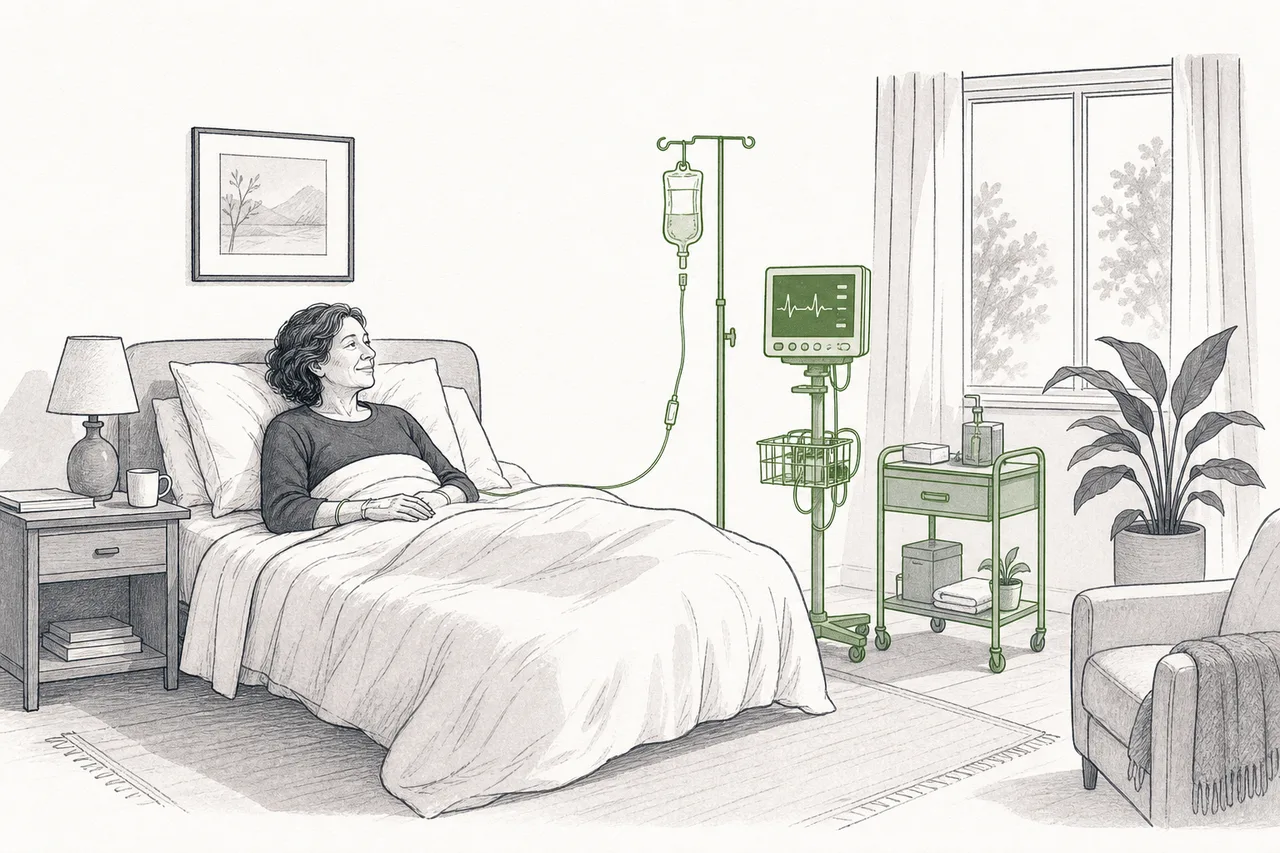
The first direction is 'hospital at home' becoming the real thing — taking hospital-level care (IV drips, close monitoring) to the home of an acute patient. Medicare originally allowed it as a temporary 'waiver' during COVID, but in late 2025 Congress passed a law extending the program through September 2030. More than 419 hospitals across 147 systems are already approved — opening the door for this market to expand from 'after a hospital stay' to 'instead of a hospital stay.'
The second direction is technology stepping in to fix the labor shortage. As caregivers get harder and harder to find, remote monitoring, in-home sensors, and AI that warns before a patient deteriorates become the tools that let one nurse care for more patients — not as a luxury, but out of necessity.
The third direction is consolidation keeps going. The US home-care market is still very fragmented, with thousands of small players. The payvider giants and the public players will keep acquiring, especially on the high-margin hospice side — the fight over the 'home' isn't over.
07Challenges & risks
The appeal of this trend comes with three very tangible risks.
The first, and heaviest, is the caregiver shortage crisis. Home-care work is hard, the pay is low (median around $17 an hour), caregiver turnover runs as high as ~75% a year, and the US will need to fill more than 6 million direct-care positions by 2034. Without people to do the work, all that huge demand is just a number on paper — this is the real bottleneck of the whole node.
The second is reimbursement risk. Because the bulk of revenue comes from Medicare, the government sets the price — and it's always looking for ways to trim the budget. In the latest example, CMS issued a 2026 rule that cuts home-health payment by a net 1.3% (much better than the 6.4% cut originally proposed, but still a cut). A business that leans on government payment faces this policy uncertainty every year.
The third is consolidation and regulation. When a big insurer controls both the money and the care, conflict-of-interest questions arise — a payvider has an incentive to 'care less' to save money. The DOJ suing to block the Amedisys deal is a signal that regulators are watching this closely, and may block big deals in the future — especially on the hospice side, where there's concern that the profit incentive could hurt the quality of end-of-life care.
In short: home care is the point where three forces converge — old people who want to stay home, payers who want to save, and a health system that has to move people out of its buildings. The result is that the 'best hospital' for a lot of seniors is becoming their own bedroom — and whoever does this well and cheaply will own one of the fastest-growing, most durable service markets of the aging era.