Megatrend · Aging Population
The landlord the whole world's seniors are walking toward — while almost no one builds new
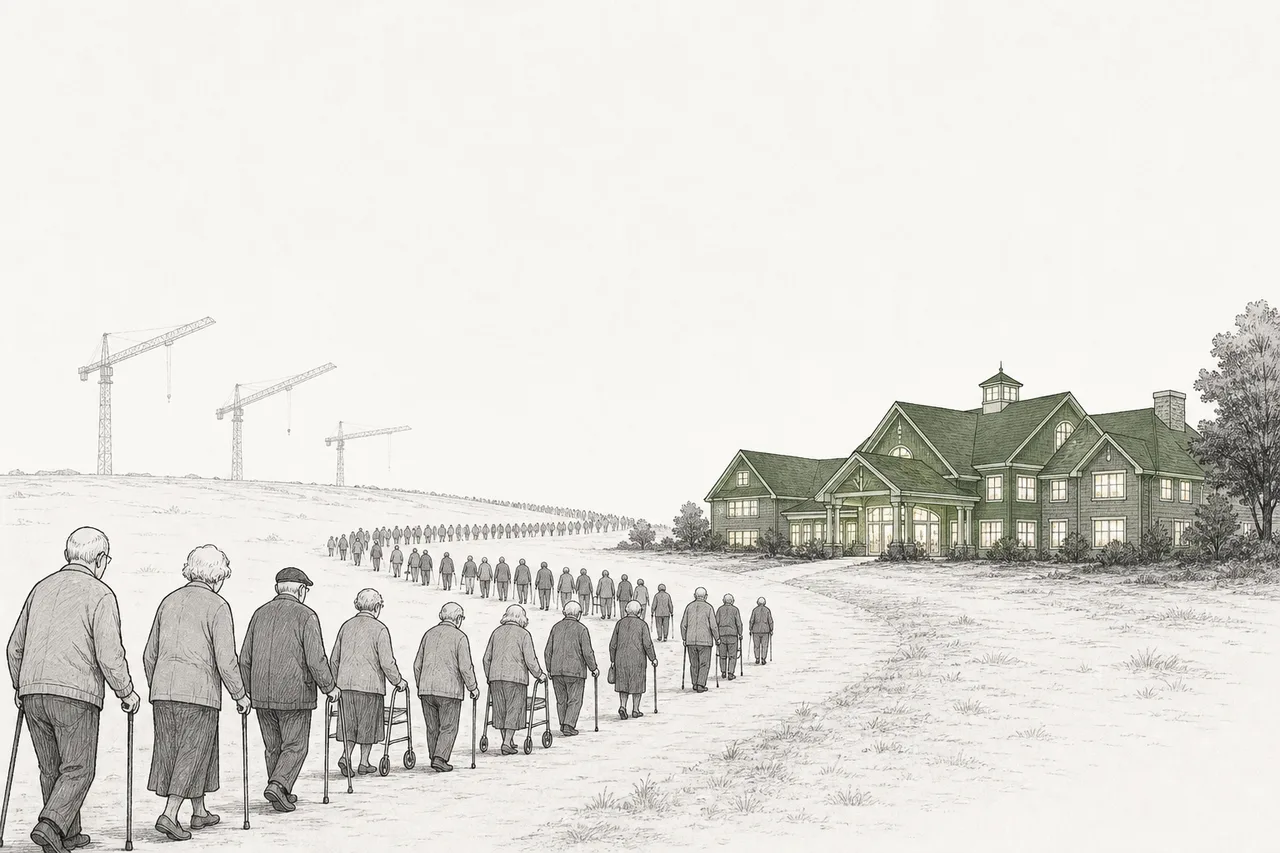
Older people are growing faster than at any point in history. Americans aged 80+ will jump from 14.7 million in 2025 to nearly 19 million by 2030. They need somewhere to live — senior housing, care facilities, medical buildings. Yet at the very same time, construction has fallen to a 15-year low, thanks to expensive interest rates and the scars of COVID. The result is a rare setup: a flood of demand meeting a tight supply — and the ones who win big are the industry's 'landowners,' a group called healthcare REITs.
01What it is
As people age, many eventually move out of their own homes to 'somewhere with care' — a community where they can still live independently (independent living), a residence with assistance staff (assisted living), or a facility needing intensive nursing (skilled nursing). And as doctor visits pile up, they're in and out of medical office buildings all the time. The question is — who owns those buildings?
The answer is usually a group of companies called healthcare REITs. This node is their story — companies that own the real estate where aging happens and collect rent or a share of the profit from it. The node's definition is explicit: this is a 'scarce real-asset layer' — the building owners, not the people caring for the seniors (that's Senior Care, a separate node).
What they hold comes in three big buckets that behave very differently:
- Senior housing: residential communities for retirees, from independent to assisted living — the hottest bucket right now
- Skilled nursing: long-term care facilities for people who need nursing; most of the revenue leans on government money (Medicare/Medicaid) — stable but slow-growing and exposed to policy
- Medical office / outpatient: clinics and out-of-hospital treatment centers that doctors rent to work in — steady income that grows with the number of aging patients
A company structure built specifically to 'hold income-producing real estate.' It comes with one key rule: it must pay out most of its profit (in the US, ≥90% of taxable income) as dividends, in exchange for not paying corporate tax. So investors buy REITs mainly for 'steady cash flow' — and that becomes both a strength and a weakness in the later chapters.
02Why it's such a good business
Think of the owner of a rental building: one heavy investment up front to build it, then rent collected for a long time after — a healthcare REIT works just like that, but better, because its 'product' is something that's very hard to replace and comes with a customer base that's guaranteed to grow by biology.
A good senior housing property isn't just a building — it's land in a location close to family, a permit that's hard to get, and a team that took time to build a reputation. Putting a rival across the street is expensive, slow, and risky. This is what's called the 'moat' of this kind of real estate. And most important of all — its demand doesn't ride the economy, it rides age. People get a year older every year, whether the stock market goes up or down.
How big is this pool of demand? The senior living market in the US alone is worth about $944 billion in 2025, and is expected to grow to $1.33 trillion by 2033 — one of the real estate markets most directly tied to demographics.
But the real beauty is in its profit machine. Once a building is 'nearly full,' each additional resident costs almost nothing extra, while the rent comes in full — so profit climbs much faster than revenue. In mid-2025, the operating margin of senior housing crossed 25% for the first time since 2018. That's a sign pricing power is moving back into the owners' hands.
03The heart of the story: the supply/demand squeeze
If you remember just one picture from all this, make it this one — because it's the whole reason 2024–2026 is a 'golden window' for this group. It's two scissor blades opening in opposite directions.
Blade one — demand surges: Americans aged 80+ (the group that actually uses senior housing) will rise from 14.7 million in 2025 to nearly 19 million by 2030 — up ~27% in just five years — and will reach nearly 23 million by 2035 (more than 55% above today). This isn't a guess. These people are already born; we're just counting their age.
Blade two — supply shrinks: At the same time, construction collapsed. In 2024, fewer than 10,000 new units broke ground — down nearly 40% from the year before, and the lowest since 2009. The cause: expensive interest rates made building loans not worth it, plus the COVID scars that left developers wary. In Q3 2025, new units added to the primary market grew just 0.7% a year — the lowest ever recorded since 2006.
When things get this tight, the result is rising rents — senior housing rents (same-store asking rent) grew 4.3% a year in Q3 2025, above general inflation. And because buildings fill up while rents rise, 'income from operations,' or NOI, jumps especially hard. This is the mechanism that's made the profit numbers of REITs in this group look unusually beautiful over the past two years.
NOI (Net Operating Income) = rental income minus the building's operating costs — the 'raw profit' of a property, before interest and depreciation. When NOI grows, it means the building is genuinely earning better · FFO (Funds From Operations) = the REIT's standard profit measure, which adds depreciation back in (because real buildings don't age as fast as the books write them off). REIT investors watch FFO per share more than ordinary net income.
04How it connects in the ecosystem
This node is the 'real estate layer' of the Aging Population megatrend — the physical place where the whole story of aging happens. The key connections are these:
- A landlord-and-tenant pairing with Senior Care: the REIT owns the building, while the senior-care company is the one that comes in to 'operate' and actually care for the seniors. Sometimes the two are cleanly split (the REIT just collects rent), sometimes they join hands to share the profit — this relationship is the heart of the risk in the final chapter
- Hands off to Home Healthcare & Hospice: not every senior moves into a facility — many choose to stay in their own home with a nurse coming to them. This is an 'alternative/competitor' to senior housing that's growing fast, and a variable for long-term demand
- Same model as Telecom Towers & Colocation: both are 'landlords' in REIT form — build one big asset once, collect rent for a long time, and equally sensitive to interest rates. Understand the economics of cell towers and you instantly understand this group
- Boosted by Biotech & Genomic Medicine: drugs and treatments that let people live longer = more seniors to care for, for longer = longer demand for housing and care. The definition of Aging is clearly separate from Longevity (slowing aging) — this node cares for 'people who are already old,' not 'stopping them from aging'
Put simply, if Aging Population is the 'city' of seniors, this node is the city's land and buildings — not flashy, but everything else has to stand on it.
05Where it stands now
2025 was the year this group's numbers 'exploded' — especially on the senior housing side. Market leader Welltower reported full-year FFO per share of $5.29, up 22.5% from the year before, while NOI on its senior housing portfolio (same-store) grew 23.4%, with occupancy climbing 420 basis points (4.2 percentage points) in a single year. This is the look of a business where demand is genuinely overflowing — not just on a slide.
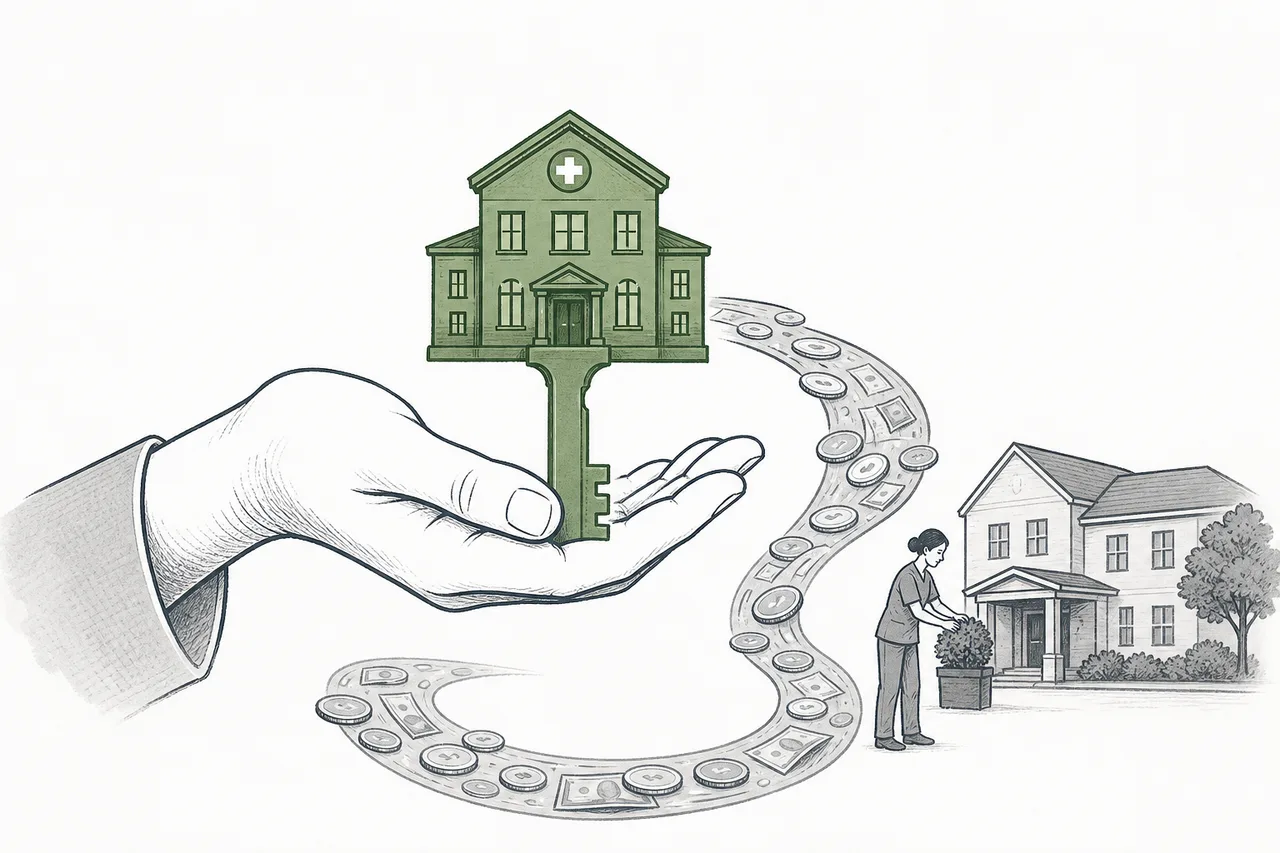
But 2025 was also the year that revealed this group is not one homogeneous thing — each company bets on a different 'part' of the chain. The senior housing side (Welltower, Ventas) runs hot on demographic demand; the care-facility side (Omega) is steady but tied to government money; the medical-office side (Healthpeak) is quieter and slower-growing. Ventas's numbers tell the hot side well — NOI on its senior housing portfolio (SHOP) grew 15% in 2025, its 4th straight year of double-digit growth.
The effect of overflowing demand also shows in the volume of money flowing in to trade these assets — senior housing transaction value over the trailing four quarters hit $21.8 billion, up more than 40% from the year before, with listed REITs as the main buyers. It reflects a conviction that this demographic wave is only just beginning.
06The road ahead
The first and strongest direction is that the demographic wave is only just beginning. The demand seen in 2025 is merely the edge of the wave, because the first cohort of baby boomers is only just touching age 80. NIC MAP estimates the US will need to add roughly 550,000–806,000 senior housing units by 2030 to meet demand — a tailwind visible years in advance.
The second direction is that the game is decided by 'short supply,' not 'finding customers'. When demand overflows and supply can't keep up, the winners are those who already own buildings in good locations, and those with the budget to go buy new assets before everyone else. That's why Welltower and Ventas poured tens of billions into buying up senior housing portfolios in 2025 — racing to stockpile space before the big wave fully arrives.
The third direction is the choice between risk and reward. The long-lease model (triple-net) gives steady income but no upside when buildings earn well, while the RIDEA model (sharing the operating profit) gives the full upside in an upswing like now — but also carries the full cost and operating risk. So companies that chose RIDEA, like Welltower and AHR, grow fast in this period but are also more fragile if the cycle flips.
07Challenges & risks
The charm of this group comes with three specific risks investors have to understand cold.
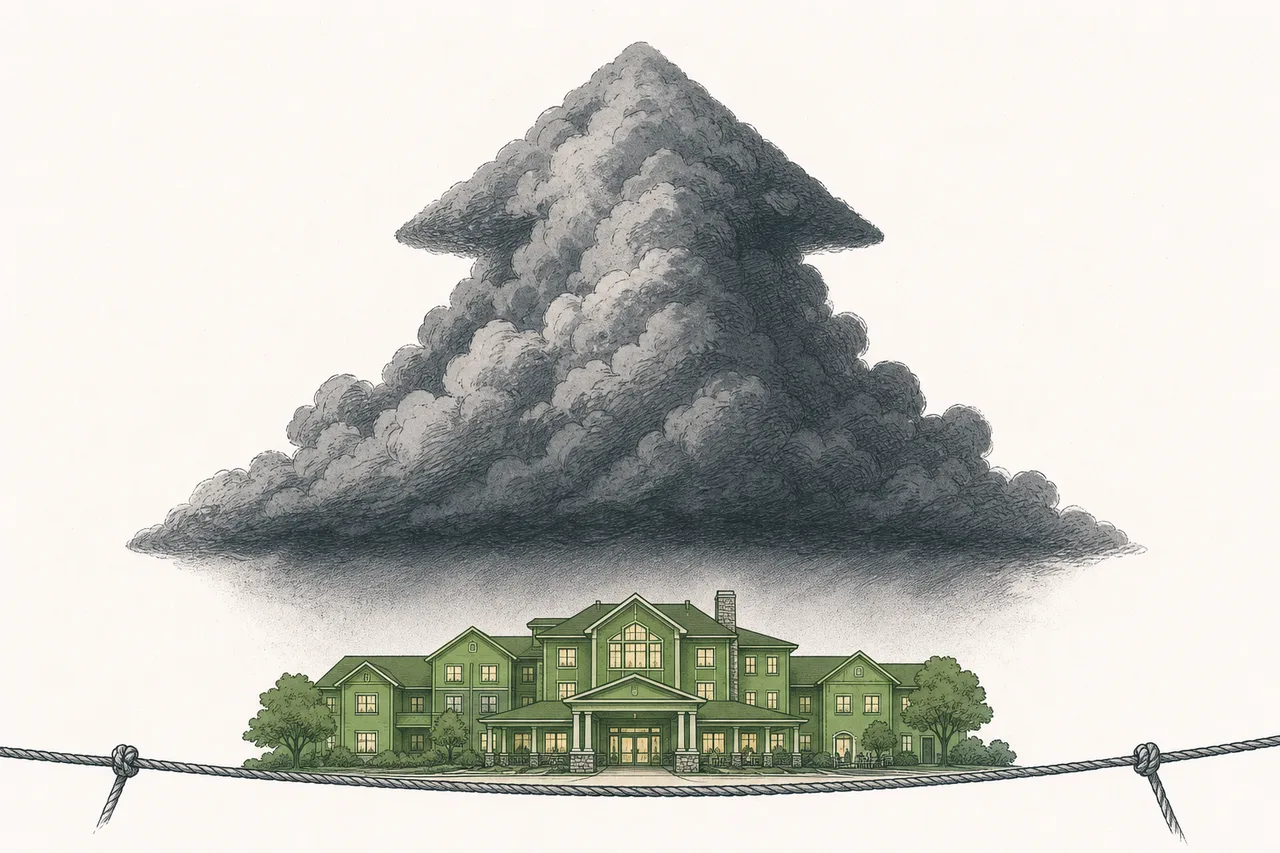
The first risk is interest-rate sensitivity. Because a REIT has to pay out almost all its profit as dividends, it relies mainly on borrowing to expand its assets — which makes the share price very sensitive to rates. Rising rates mean costlier borrowing, and dividend-seeking investors shift their money into bonds that now yield more. This is why these stocks performed poorly during the 2023–2024 rate-hike period, even though the actual buildings stayed full and earned well.
The second risk is labor and operating costs. Caring for seniors is very labor-intensive, and the wages of nurses and aides shot up after COVID. In the RIDEA model, where the owner shares the operating profit, higher labor costs bite into profit directly — part of today's beautiful profit comes from wages starting to settle. If they spike again, margins can shrink fast.
The third risk is operator risk. In many deals the REIT owns only the building, while the company actually caring for the seniors is the tenant. If the tenant manages badly, runs a loss, or goes bankrupt, the owner is left with an empty building and lost income. Especially on the skilled nursing side, which leans on government money (Medicare/Medicaid) — a single budget cut or change in reimbursement policy can rattle the financial health of an entire group of tenants.
Triple-net (NNN): a long lease to the operator, where the tenant pays a fixed rent plus taxes, insurance, and repairs — the owner's income is steady and predictable, but gets no upside when the building earns well · RIDEA: a structure that lets the REIT owner 'share the operating profit' of the senior housing directly — full upside in an upswing (like now), but it also carries the full cost and occupancy risk on the way down.
In short: behind the phrase 'aging society,' which sounds like a social problem, there's a quiet but powerful real estate business hiding — the people who own the buildings where aging happens and collect rent from the largest demographic wave in history. The fact that demand is visible in advance while no one builds new buildings fast enough is exactly why this 'boring'-looking node has become one of the most interesting angles in aging-megatrend investing.