Megatrend · Longevity
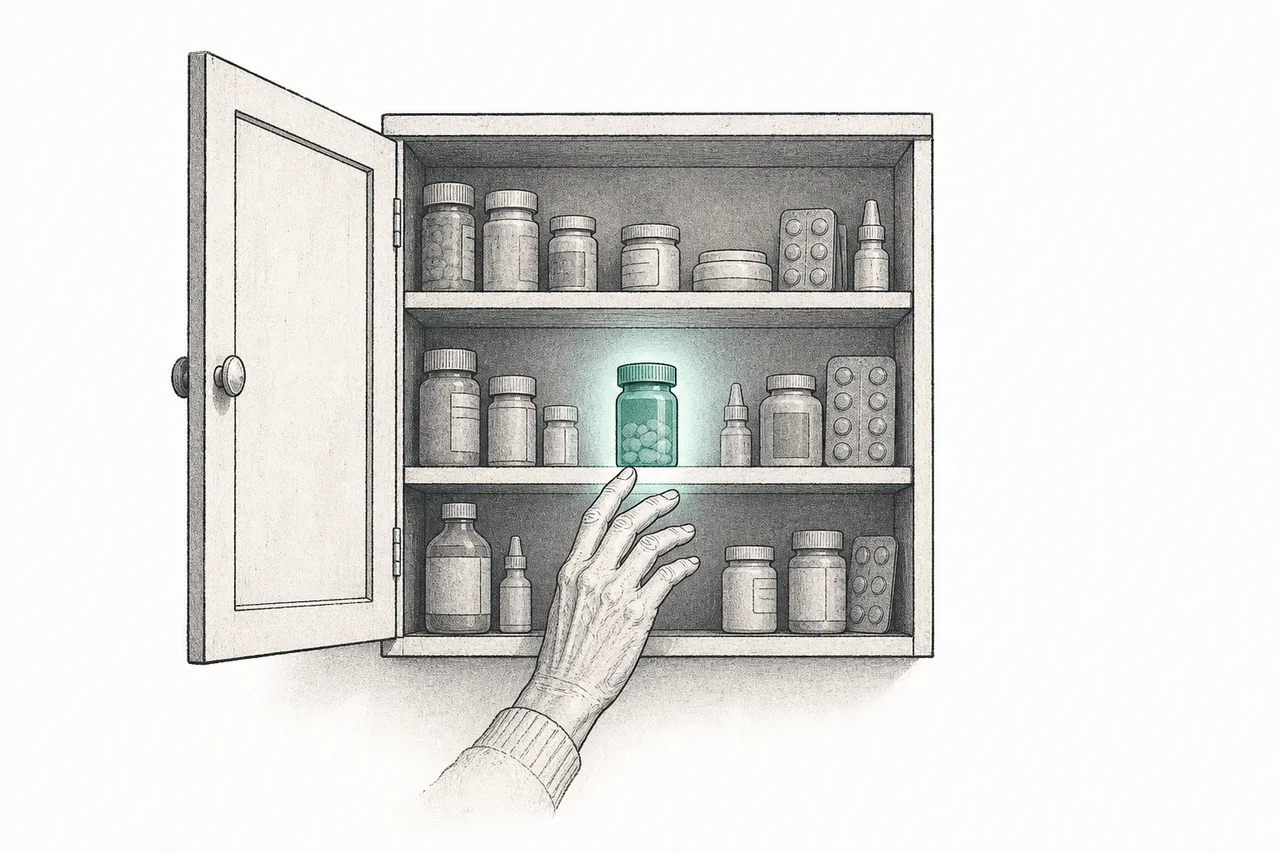
The best anti-aging drug might have been sitting in your medicine cabinet for years
Here's an idea that's both amazing and maddening at the same time: the drugs that might "slow aging" aren't million-dollar cutting-edge therapies — they're cheap old drugs doctors have used to treat diabetes for decades, like metformin and rapamycin. They work by "tricking" the body into thinking it's starving. In lab mice the effect is clear. But in healthy humans, no one has proven it yet. And because they're generics anyone can make, almost no pharma company wants to invest in proving it — this is a story of exciting science trapped, sadly, by money.
01What it is
Picture it this way first — instead of trying to "treat" age-related diseases (heart disease, cancer, dementia, diabetes) one by one, after they've already shown up, what if we could slow the aging process itself, the root cause of all of them at once? That's the dream of the geroprotector — a drug or molecule meant to "protect against aging" (gero = aging + protector = one that protects).
This node — Metabolic Aging & Geroprotectors — sits under the megatrend Longevity & Life Extension, and one thing sets it completely apart from the other fields in the same group: it isn't trying to invent a new drug. Instead, it takes old drugs we know well, that are cheap and have been used for decades — and asks a new question: "Could this drug also slow aging?"
The word "metabolic" (relating to how the body burns energy) is the key, because this class of drugs works through the body's nutrient-sensing pathways — the system that constantly checks whether we're well-fed or starving, then tells cells which mode to run in. Scientists found that "tuning" this system toward the starvation mode seems to make lab animals live longer and healthier — and that's the whole story of this lesson.
Geroprotector = a substance or drug meant to slow the aging process itself (not to treat age-related diseases one by one) · Drug repurposing = taking a drug already approved for one disease and using it for something else — here, taking diabetes/immune-suppressant drugs and testing them for "slowing aging." The upside is we already know their safety well; the downside is they've usually lost their patent — which becomes the big problem we'll run into throughout this lesson.
02Why it matters — the drug that may already be in your cabinet
What makes this idea matter is, purely and simply, that it's "cheap." Developing one new drug costs an average of over $1,000–2,000 million and takes 10–15 years. But most geroprotectors are drugs that already exist, tested for safety in humans millions of times, and cost just cents a pill. If they really work, this would be a way to "slow aging" that the whole world can reach — not just the wealthy.
The market behind it is huge, too. The "longevity & anti-senescence therapy" market is estimated at about $5.3 billion in 2024, possibly growing to ~$12.4 billion by 2030 (some houses that count more broadly see it as high as ~$44 billion) — the numbers swing wide because no one yet knows how an "anti-aging drug" will actually be sold.
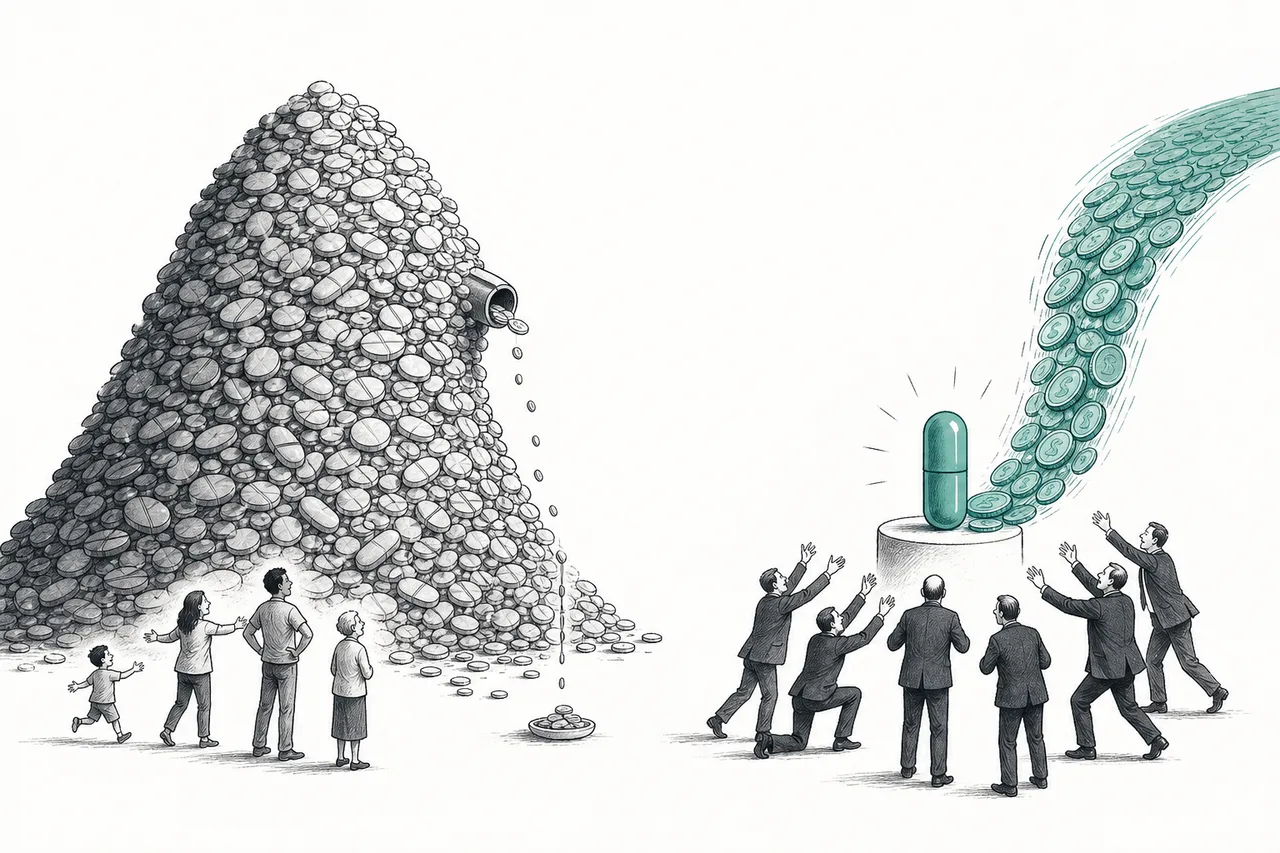
But here's the paradox that makes this so interesting: what's good for humanity (cheap drugs anyone can reach) is the worst thing for investors. Because once a drug's patent has expired and anyone can make it, no company will pay hundreds of millions to prove it — there's no profit in it for them. The result: the drug that might be most useful becomes the one no one wants to invest in proving.
03How it works — the "food switch" inside us
To understand how a diabetes drug can slow aging, we first need to understand one thing — every cell in your body has a "sensor" constantly checking whether food is abundant or running short. It uses that information to make a big decision: to "grow fast" or to "conserve and repair."
It's like a big switch in a house, with two modes:
- Abundance mode: when the body senses lots of food/sugar, it tells cells to "grow fast, build new things, divide a lot" — good in childhood when you need to grow. But leave this mode on for life, and cells rush to grow, wear out faster, and age faster
- Scarcity mode: when the body senses little food (during fasting, say), it switches to telling cells to "stop growing, turn to repair, clean up the garbage inside the cell (autophagy), conserve energy" — this mode is what makes animals that eat little (calorie restriction) live clearly longer in hundreds of studies
The heart of a geroprotector is this — it "tricks" this switch into leaning toward scarcity mode without you actually having to fast. This switch is controlled by a few specific chemical pathways with their own names — and each drug presses or pushes a different point.
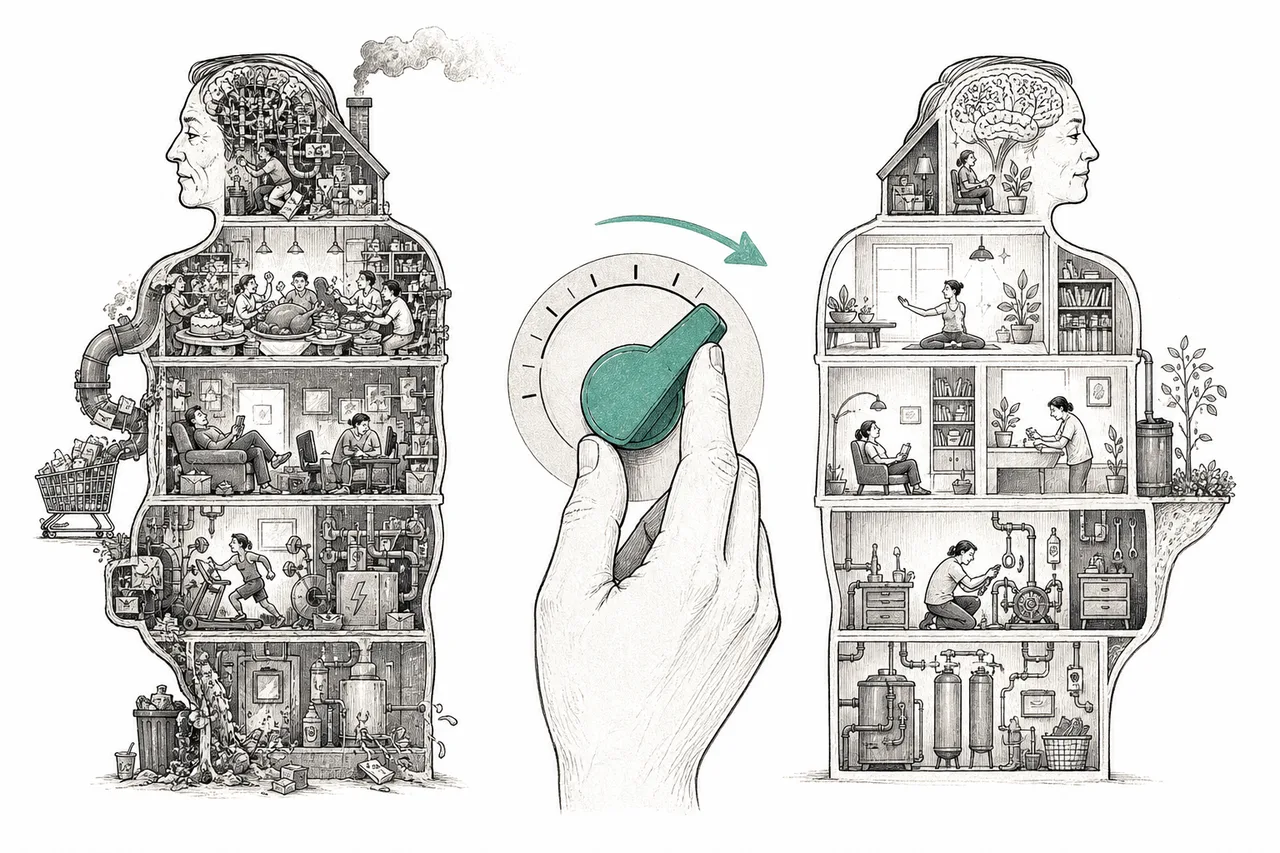
The two main chemical pathways of the "food switch" · mTOR is the "grow" accelerator — when there's lots of food it works hard and tells cells to build new things · AMPK is the "low energy" sensor — when energy is low it tells cells to conserve and repair · rapamycin works by suppressing mTOR, while metformin works by activating AMPK — different entry points, but the same goal: pushing the switch toward "repair."
04The five frontrunners (and their real evidence)
The strongest evidence in this field comes from a project called the ITP (Interventions Testing Program) at the U.S. National Institute on Aging — a "gold-standard" drug test that gives the drug to several mouse strains across three labs at once, to prevent cheating. The results are far more credible than a single lab's. And here's what ITP found:
Let's go through them one by one:
- Rapamycin (the real star): an immune-suppressant long used for organ-transplant patients (named sirolimus, FDA-approved) that works by suppressing mTOR directly. In ITP it extended male mice by +23% and females by +26% — the strongest lifespan-extension evidence of any drug
- Metformin (the headline star with weaker evidence than you'd think): the most widely used diabetes drug in the world, which activates AMPK — but here's a fact many don't know: in the 2016 ITP, metformin alone did not significantly extend mouse lifespan, and human trials (like MET-PREVENT) have been disappointing too. It's still the field's leading character more because it's "cheap and safe" than because of clear lifespan evidence
- Acarbose: a diabetes drug that slows sugar absorption in the gut (like tricking the body into eating less sugar). In ITP it extended mouse lifespan to a level close to rapamycin, especially in males
- SGLT2 inhibitors (canagliflozin): a newer class of diabetes drug that flushes sugar out through urine. In ITP it extended male mice by +14% — but had no effect in females, a puzzle that comes up often in this field (many drugs work differently in the two sexes)
- Spermidine: a natural substance found in foods (like fermented soy, mushrooms) that helps trigger autophagy — a group that can be sold as a supplement, so it's "easier to make money from" than generic drugs
An exciting new direction is combining drugs — a 2025 study in Nature Aging found that giving rapamycin alongside the cancer drug trametinib extended mouse lifespan more than either alone (an additive effect), reflecting a field shifting from "single drugs" toward "combination regimens."
05How it connects in the Longevity world
This node is just one of 7 approaches under the megatrend Longevity & Life Extension, and it differs from its siblings in being the "mimic fasting with drugs that already exist" approach, while the others try to build something new:
- Inseparable from Longevity Diagnostics & Aging Clocks: the big problem with geroprotectors is "how do you know the drug worked?" People don't die fast enough to wait and measure actual lifespan — so we need a "biological clock" that can measure the body's age. This class of drugs and the age-measuring tools depend on each other inseparably
- Feeds Longevity Clinics & Healthspan Services: many anti-aging clinics worldwide already prescribe rapamycin/metformin off-label (outside the registered indication) to clients — interestingly, the money in this field may not be in the drug itself, but in the clinics and services that prescribe these cheap drugs
- A cousin of GLP-1 Healthspan Proxies: GLP-1 weight-loss drugs (like Ozempic) also work through a similar metabolic system, and are increasingly talked about in terms of "slowing aging" — the difference is that GLP-1 still has its patent and makes enormous money
- Sits on the foundation of Biotech & Genomic Medicine: designing new-generation drugs (like a rapalog = a patentable rapamycin derivative) takes the biochemistry know-how and drug development of the Biotech world
- Leans more and more on AI: companies like InSilico use AI to find "dual-purpose targets" that are a point of disease and a point of aging at once — to design new, patentable (and profitable) drugs
Notice that this node's value-creating path tends to run outside itself — to measurement (diagnostics), to services (clinics), or to patentable new-generation drugs (biotech/AI), because the generic drugs themselves are "hard to make money from."
06Where it stands now
Let's be blunt up front: in healthy humans, no geroprotector has yet been proven to slow aging or extend lifespan. Everything is still at the stage of "very good evidence in animals + not enough evidence in humans." Anyone who tells you there's an anti-aging drug that definitely works — is selling something.
The field's most important trial is TAME (Targeting Aging with Metformin), led by Dr. Nir Barzilai and the AFAR foundation. Its ambition is bigger than just testing a drug — it's designed to get the FDA to accept "aging" as a treatable indication, which would change the whole field. Because if it works, pharma companies could legally develop drugs "to slow aging" for the first time.
TAME's numbers tell the problem clearly: a trial in ~3,000 people, aged 65–79, over 4–6 years, with a total budget of ~$75 million. That doesn't sound like much compared with an ordinary drug, yet it's been very hard to fund because no pharma company wants to pay (metformin is a generic). In the end AFAR put up about $35 million and has to wait on another ~$40 million in private donations — so the trial is delayed and hasn't started in full.
On the public-company side, the story reflects the field's difficulty just as clearly:
07The road ahead
The first direction is "patentable new-generation drugs." Because generics don't make money, capital flows toward designing rapalogs (rapamycin derivatives) and new molecules that can suppress the mTOR/AMPK pathways more precisely, with fewer side effects, and — most important for investors — that can be patented. This is where value will concentrate, not in the old drug.
The second direction is proof through "biological clocks." If the aging clocks field can measure the body's age accurately enough, anti-aging drug trials get much faster and cheaper, because you don't have to wait for people to actually age/die — you just measure whether the drug "slows the clock down." This could be the key that unlocks the whole field.
The third direction is waiting on TAME's results and "aging as an indication." If the FDA accepts that aging is treatable (whether through TAME or another route), it opens the door for pharma companies to officially invest in developing anti-aging drugs for the first time — turning "research in the shadows" into a real industry.
08Challenges & risks (straight up)
This field is exciting, but you have to look at it with cold eyes, because it's full of limits that still aren't solved.
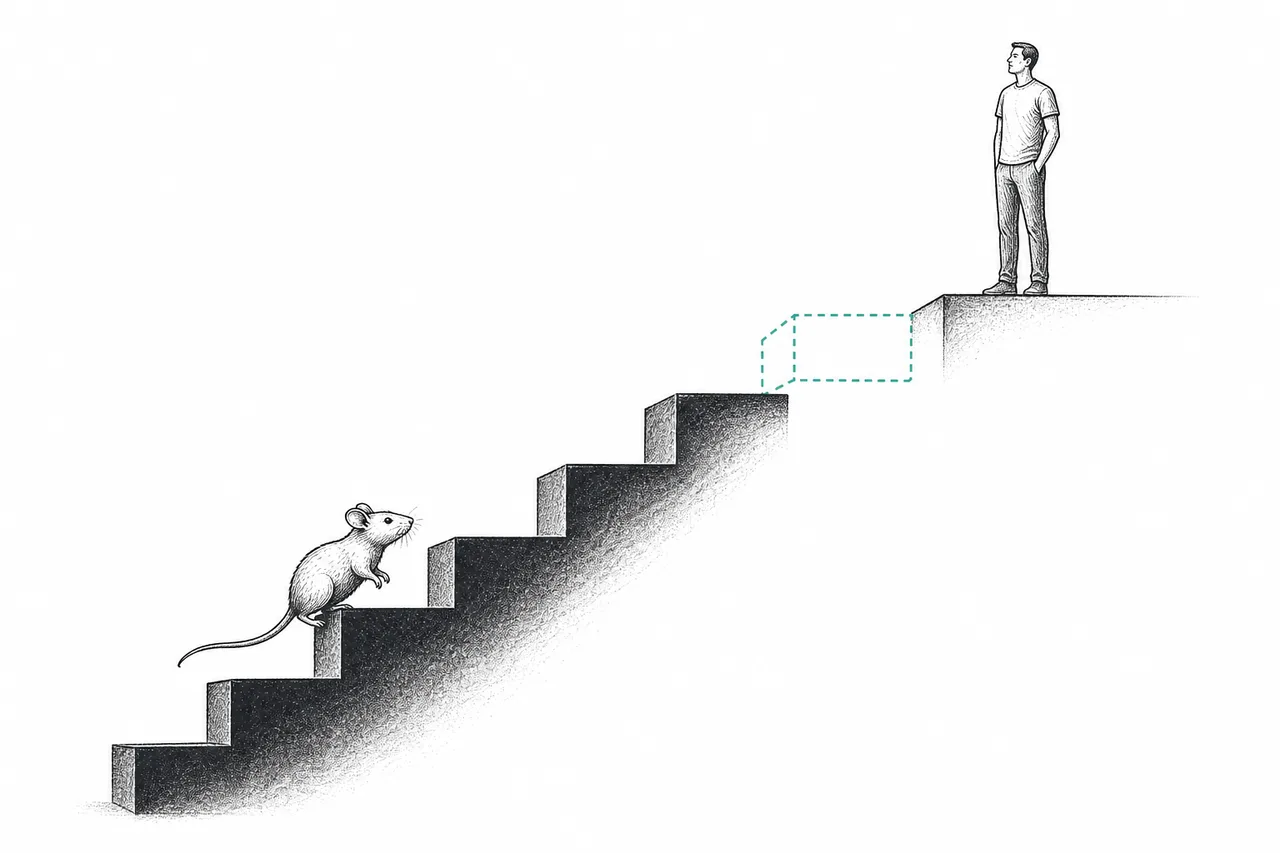
The first and biggest risk is "it's not proven in humans yet." The results in mice are beautiful, but mice and humans are very different, and the human trials so far (metformin in MET-PREVENT, resTORbio's rapalog RTB101 that failed in Phase 3) have been disappointing many times — history warns that "working in mice doesn't mean it'll work in humans."
The second risk is "off-label use without enough evidence." Today many people (including the wealthy in Silicon Valley) already take rapamycin/metformin to slow aging, even though there's no confirmation in healthy humans — and these drugs do have real side effects (rapamycin suppresses the immune system, metformin may interfere with building muscle from exercise). Using them this way is gambling with your own body.
The third risk is "the monetization problem," which is deeply structural. The best drugs (generic, cheap, safe) are the hardest to make money from. As long as there's no clear business model (patent a new rapalog? charge through clinics? sell it as a supplement?), research funding will stay scarce, and the drug that might help the most people will stay "unproven."
In short: the appeal of this node lies in the possibility that "the best anti-aging drug may have been sitting in your medicine cabinet for years" — but the truth we have to accept is that we don't yet know whether it really works in humans, and the economics of drugs simply aren't built to prove cheap things anyone can make. Understanding this node is understanding why, sometimes, what's best for humanity is what the market cares about least.