Megatrend · Defense & Geopolitical Fragmentation
The superpower that can't build warships fast enough
This century's great-power rivalry will be decided at sea — and China's navy just became the largest in the world by number of hulls. But the more alarming story is that the US can't keep up building warships and submarines, because it has too few shipyards left and not enough skilled workers. This is a story about an industry that's capital-heavy, slow, and ringed by a wide moat — but whose 'capacity ceiling' has become a national-security problem.
01What it is
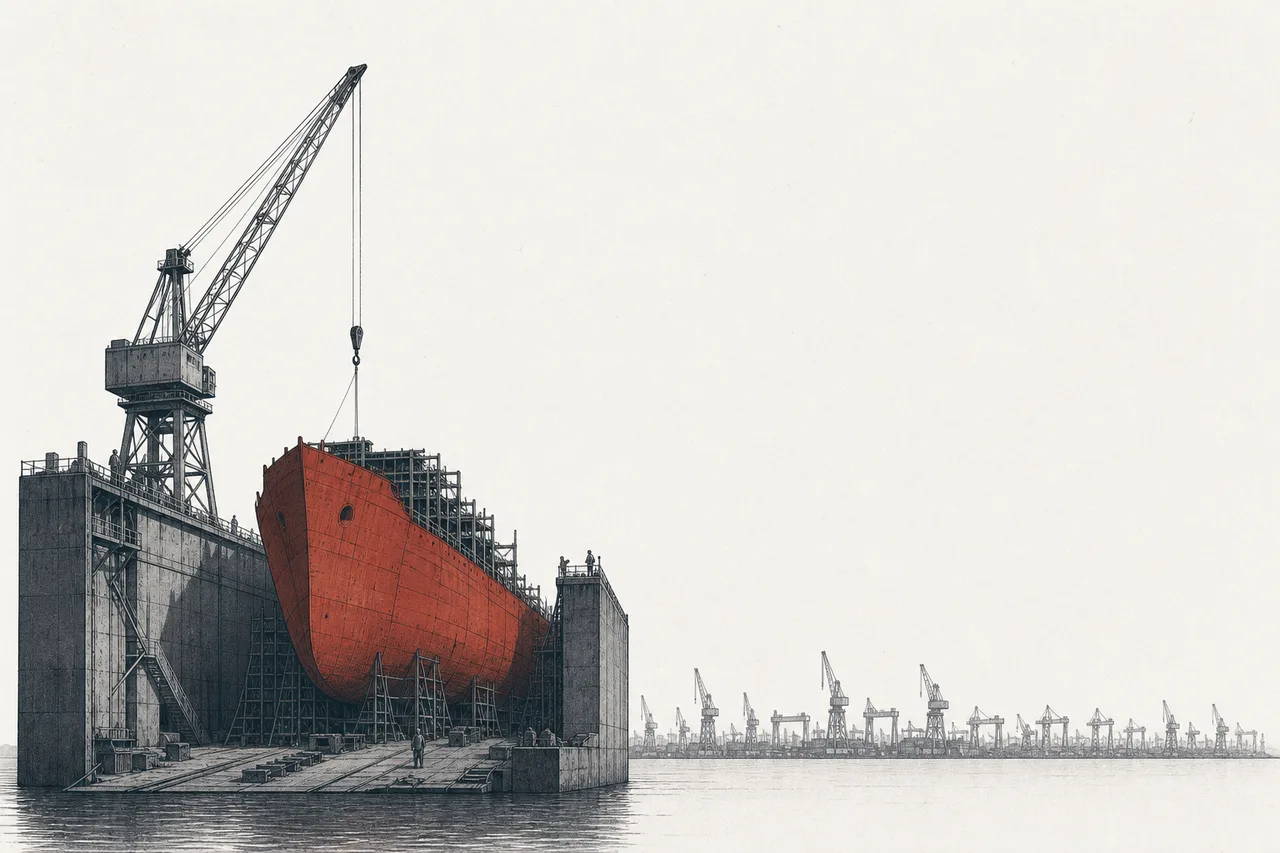
When people think 'military power,' most picture fighter jets or tanks. But in great-power rivalry, the real star is at sea — aircraft carriers, destroyers, and above all 'submarines.' This node is about building and repairing all of those warships — including propulsion and onboard systems — and, more importantly, about 'who has enough shipyards to build them.'
It splits into two big worlds:
- Surface combatants: aircraft carriers, destroyers, frigates — the big-ticket ships that pack the 'heavy punch' and symbolize sea power
- Submarines: the real heart of deterrence, especially nuclear-powered subs, which can hide underwater for months without surfacing — the 'unseen card' the other side has to worry about most, and the hardest to build of all ships
SSN = a nuclear-powered attack submarine (e.g. the Virginia class), used to hunt enemy ships and gather intelligence · SSBN = a submarine carrying nuclear missiles (e.g. the Columbia class), a pillar of nuclear deterrence · Dry dock = a giant concrete basin that can be pumped dry, used to assemble and repair ships — building a new one takes years and enormous money, so it's the 'scarcest resource' in the whole industry.
On the megatrend map, Naval Systems & Shipbuilding sits under Defense & Geopolitical Fragmentation, and it's the longest-running 'infrastructure layer' — because a single warship takes 5–10 years to build and stays in service for 30–50 years. So this is a business measured in decades, not quarters.
02Why it's a big deal
For decades after the Cold War, the US ruled the seas unchallenged, so it gradually cut its number of shipyards, closed some, and let shipbuilding skills fade out with the older generation. Then one day the world woke up to a reality that shifted the balance of power: China's navy became the largest in the world by number of hulls — and it's still growing, while the US fleet is shrinking.
The numbers tell the story clearly. The US Office of Naval Intelligence (ONI) estimates China's battle fleet will reach ~395 hulls in 2025 and ~435 in 2030, while the US Navy has about 290 hulls — and under budget plans is set to fall to ~294 by 2030. Every line on the chart is running in the opposite direction.
But the most sobering number isn't how many ships exist — it's the capacity to build more. A leaked US Navy intelligence slide estimated that China's shipbuilding capacity is roughly 200 times the US. On the commercial side, China builds over 50% of the world's new merchant tonnage. In 2024, a single Chinese yard built more ships (by tonnage) than the entire US shipbuilding industry has produced since World War II.
Why does this matter for the economy and for investors? Because it sets off a long-cycle wave of demand. The global market for building warships and submarines was around $80 billion in 2024 and is expected to grow to ~$130 billion by 2035, driven by accelerating naval build-ups across Asia, Europe, and the US — demand tied to government defense budgets, not the normal economic cycle.
03The bottleneck: why shipbuilding can't keep up
The question everyone asks is, 'just build more ships — what's so hard about that?' The answer is the heart of this whole node — and understanding it means understanding why the richest superpower in the world can't build submarines fast enough.
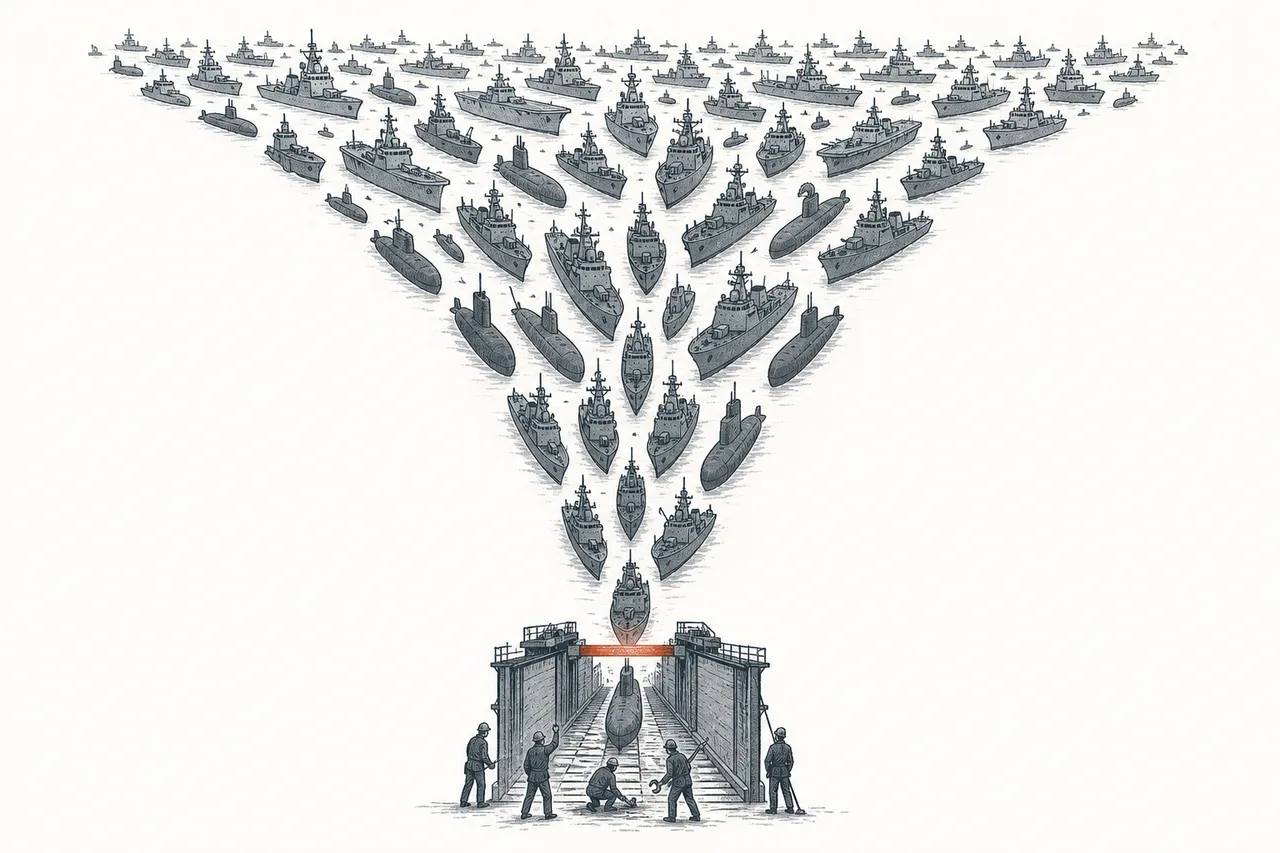
The problem isn't 'money' or 'orders' — there's a surplus of both. The problem is a physical bottleneck, two layers deep: very few shipyards and a shortage of skilled workers. Nuclear submarines can only be built in a handful of yards on Earth, each project uses tens of thousands of highly skilled workers, and training a single submarine-grade welder takes years — throwing money at it won't make these people appear overnight.
The clearest example is the US Virginia-class submarine (SSN). The Navy wants to produce ~2.3 a year (plus one Columbia-class missile sub a year), but since 2022 the yards have actually managed only ~1.2 a year — nearly half short of target. And the Navy says bluntly that hitting it will take adding roughly 10,000 more skilled workers, engineers, and supervisors.
The term for the 'whole ecosystem' that makes building submarines possible — not just the big yards, but thousands of parts suppliers (some with only one maker in the country) and, most importantly, people. The lesson here is that a nation's capacity isn't finished on the day you place the order — it has to be nurtured slowly over decades, and once you let it wither, reviving it is expensive and very slow.
04How it connects in the ecosystem
This node is the 'backbone' of sea power — it takes raw materials and technology from upstream and assembles them into the largest, longest-lived platform the military fields:
- Sits under Defense & Geopolitical Fragmentation: a warship is the 'platform' that carries everything in modern defense — the base that gives other systems a place to stand in the middle of the ocean
- Paired with the major US defense companies and European & Asian defense companies: most warship builders are the big defense companies themselves (GD, HII, BAE, Mitsubishi) — shipbuilding is one of their biggest and steadiest revenue streams
- Carries missiles and guided weapons: destroyers and submarines are the mobile 'launch pads' for Tomahawks and interceptors — these two segments are sold as a package
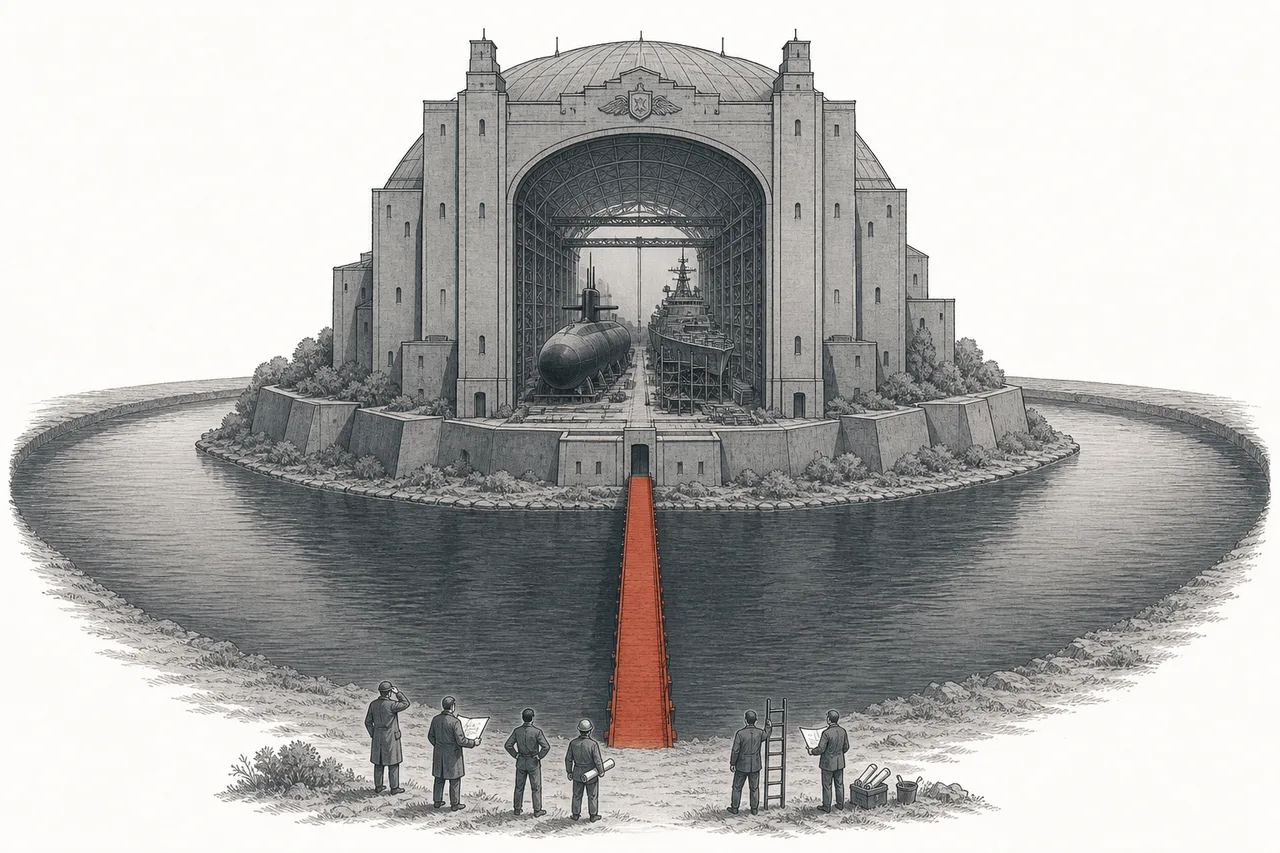
- Depends on Sovereign Supply & industrial reshoring: this is the most important link — fixing the shipyard bottleneck is the challenge of rebuilding the domestic industrial base, from factories to supply chains to skilled labor
- Consumes steel and metals from Bulk & Structural Metals: a single warship is tens of thousands of tons of specialty steel, plus rare metals for submarine hulls — so surging ship demand drags structural-metal demand up with it
05Where it stands now
The whole industry is in 'major rebuild' mode. On the US side there's both the SHIPS for America Act and the executive order 'Restoring America's Maritime Dominance' (2025), which set up a shipbuilding-policy office directly in the White House, along with fees on China-built ships to push demand back toward Western yards.
But reality on the ground is still bumpy. The Constellation-class frigate program that Fincantieri was building for the US was canceled in 2025 after roughly 3 years of delays and over $1 billion in cost overruns (keeping two part-built hulls) — a fresh lesson that 'redesigning while you build,' on top of yards with eroded skills, can derail even an ordinary surface ship.
Meanwhile, the deal that ties everything together is AUKUS — the agreement under which the US will sell Virginia-class submarines to Australia in the 2030s, a project worth up to ~$368 billion over 30 years. But the deal only works if the US can build submarines for itself fast enough first — which loops right back to the same bottleneck.
In business terms, the main players are selling at their best in decades. Huntington Ingalls (HII), the largest US shipbuilder, holds a record backlog of about $53–57 billion. And the Marine Systems unit of General Dynamics (owner of the Electric Boat yard that builds submarines) booked $16.7 billion in revenue in 2025, up 16.6% for the third year running — both can't build fast enough. The problem is 'producing in time,' not 'finding customers.'
06The road ahead
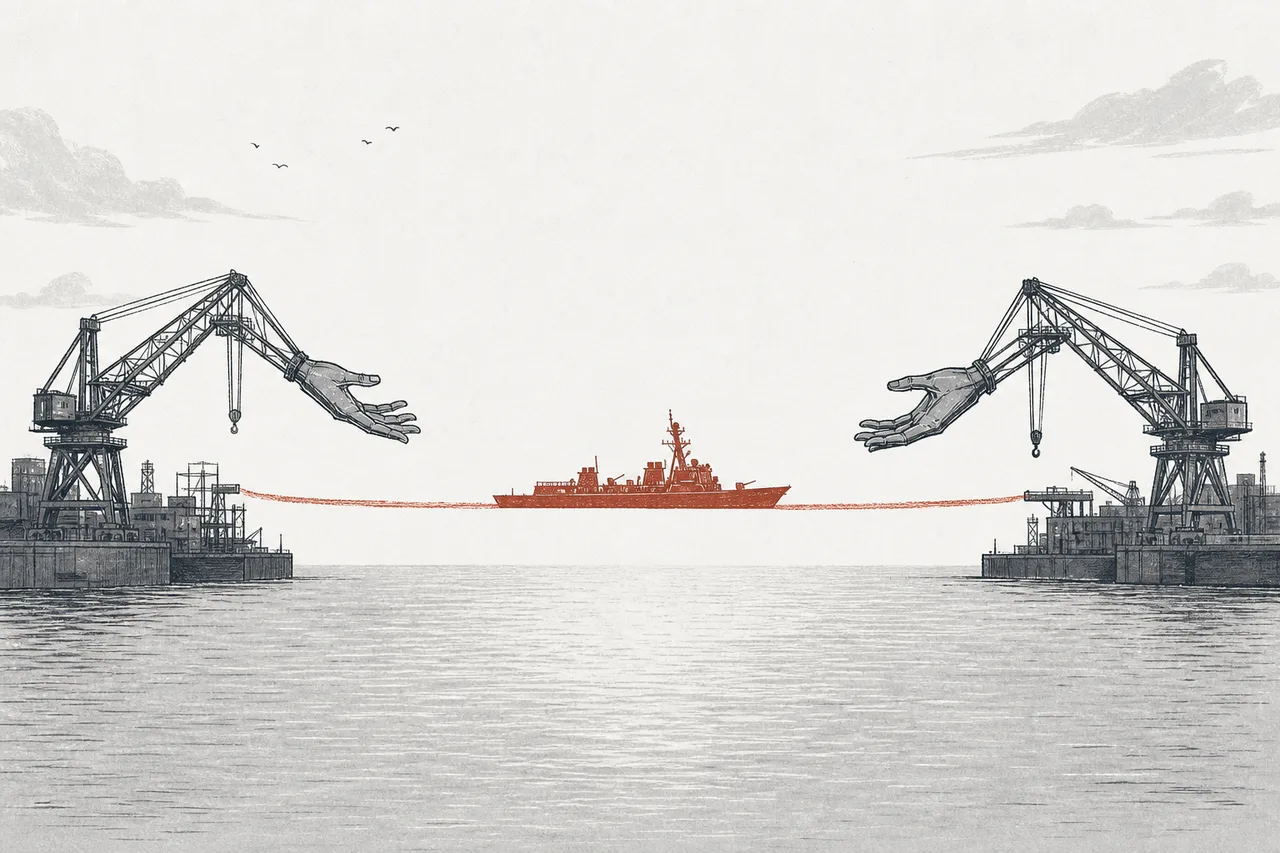
The first direction is 'leaning on allies to plug the bottleneck.' When the US can't build and repair its own ships fast enough, the near-term fix is to send work across the ocean to allied yards with spare capacity — especially Korea and Japan, which have large, efficient commercial shipbuilding industries. Hanwha buying a yard in Philadelphia and starting to take US Navy repair work is the first sign of an era where 'shipyards become an allied matter, not a single nation's.'
The second direction is 'bringing yards and people back' (reindustrialisation). The SHIPS Act, investment in the submarine industrial base, and skilled-worker training programs all aim at the root cause — but this is a long game measured in decades. Raising the submarine build rate from 1.2 to 2.3 a year means adding tens of thousands of workers and expanding the whole supply chain at the same time.
The third direction is 'uncrewed and cheap, in large numbers.' Beyond the expensive big ships, the Navy is starting to invest in uncrewed surface ships and submarines that are far cheaper and can be built faster in smaller yards — an attempt to 'sidestep the bottleneck' by changing the definition of what a fleet is made of, tied directly to AI and automation.
07Challenges & risks
This trend may look strong on demand, but there are shadows you need to see in full.
The first risk is the 'capacity ceiling' at the core of the whole node — even with orders and money to spare, if there aren't enough yards and workers, revenue can only grow as fast as you can deliver. That's why a huge backlog doesn't mean profits will jump right away — these companies are constrained by physics, not demand.
The second risk is cost overruns and chronic delays. Warship programs usually take years and have a habit of blowing past budget — the Virginia-class sub has seen its per-hull cost rise sharply, and the Constellation frigate was canceled outright. On a fixed-price contract, cost blowouts eat straight into the builder's profit.
The third risk is long cycles and reliance on government budgets. Demand for this node comes mainly from defense budgets and politics. Because projects run a decade long, they're sensitive to policy shifts and budget cuts — plus there's the ESG issue, with some funds avoiding weapons stocks, though lately many European funds have started to ease up on security grounds.
In short, this node teaches that sea power isn't measured by the prettiest ship, but by 'how fast the shipyards can keep up.' The superpowers only just discovered that the shipyard is the real front line — and this race to rebuild yards will set the balance of power at sea for decades to come.