Megatrend · Defense & Geopolitical Fragmentation
When Europe stops leaning on America, and Korea becomes the free world's 'arsenal'
The story of the big defense companies usually gets told through American eyes — but right now the hottest center of growth is outside the US. It's driven by two completely different engines: a Europe that has woken up and is racing to rearm itself, and an Asia — South Korea above all — that has become the fastest-rising arms exporter in decades. This is the story of the defense giants that don't speak American English.
01What is it?
In the sister lesson on the major US defense companies we talked about the 'primes' — the handful of firms that contract for 'the whole system,' an entire fighter jet, an entire warship, against a giant defense budget. This node tells the same story from 'the non-American side' — the major defense companies of Europe and Asia, which are growing faster and for different reasons.
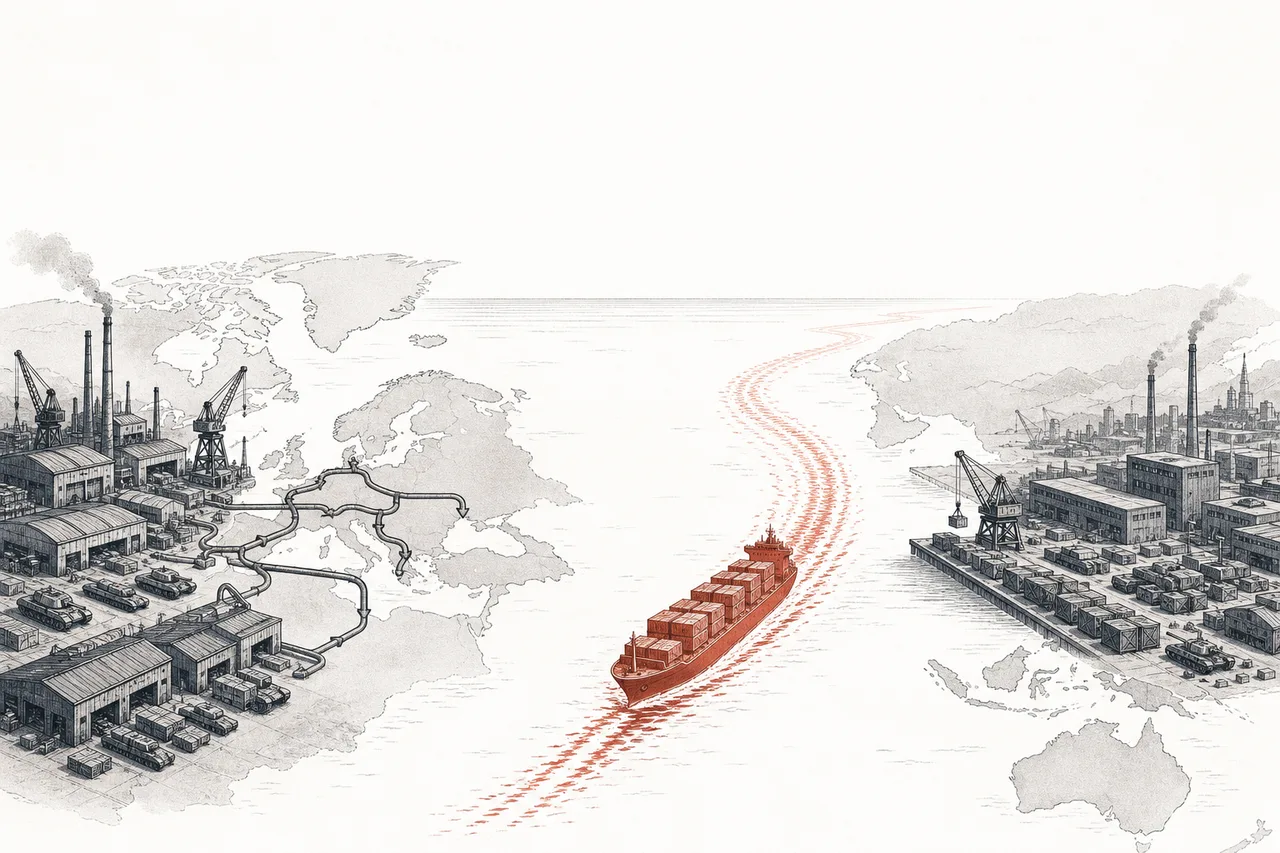
Why split it into its own node? Because its growth driver is a different thing entirely from the US side. American primes grow because the Pentagon budget was already huge and got bigger. Non-US primes grow because of two engines that just fired up at the same time:
- Europe — the 'domestic demand' engine: after Russia invaded Ukraine in 2022, a Europe that used to rely on the US woke up and started rearming itself. Defense budgets jumped, orders flooded in, and crucially, Europe increasingly intends to 'buy European' — the standout is Germany's Rheinmetall
- Asia — the 'export' engine: South Korea became an arms exporter that can deliver fast, cheap, and on time, landing big deals from Poland and the Middle East. Japan, meanwhile, has only just begun rearming seriously for the first time in decades
Prime contractor = the company that signs the main contract with the state and is responsible for the whole project (read the full version in the US primes lesson) · Strategic autonomy = Europe's idea of being able to make and buy its own weapons without depending on the US · Rearmament = the big return to raising defense budgets and production capacity, after letting them wither for years following the Cold War.
On the megatrend map, Defense Primes — Europe & Asia is a sub-theme under Defense & Geopolitical Fragmentation, and it stands in parallel with the US primes — similar business model (selling whole systems, carrying a long backlog), but 'why it's growing now' is a different story. That's the heart of this lesson.
02Why it matters
Start with the biggest picture. In 2025, global defense spending hit a new record of ~$2.89 trillion (SIPRI) — the highest in 16 years. And what 'pushed it up' wasn't the US, it was Europe, which raised its budget 14% to ~$864 billion in a single year — Central and Western Europe's strongest growth since the Cold War ended.
The event that changed everything was the NATO summit in The Hague in June 2025, where members agreed on a new target: spend a combined 5% of GDP on defense and security by 2035 (split into 3.5% for core defense + 1.5% for infrastructure/security) — a leap up from the old 2% target in place since 2014. For European defense companies, this means the 'floor' of demand just got raised another notch, and locked in for a decade.
The country-level numbers are striking too. Germany raised its budget 24% to ~$114 billion (breaking the 2%-of-GDP ceiling for the first time since 1990); Spain raised its by 50% to ~$40.2 billion. And the whole EU is planning 'ReArm Europe', mobilizing up to ~€800 billion in defense money by 2030.
The Asian engine is measured in 'exports.' In 2025, South Korea exported ~$15.4 billion in arms, up 60% from the year before, and its four big defense companies (the Big-4) posted record combined revenue of ~₩40.45 trillion. Korea has climbed to become one of the world's largest arms exporters — from a country almost no one mentioned a decade ago.
Why does this matter to the world economy? Because it's a 'decentralization' of the defense industry. From being concentrated mainly in the US, money and production capacity are now flowing to new centers in Europe and Asia — reshaping supply chains, jobs, and the balance of technological power all at once.
03How the two engines work
The key to this node is understanding that the record-breaking backlog (unfilled orders) of the non-US giants comes from 'different pipes' — one is demand born at home, the other is demand running across continents to reach them. Both pipes converge in the same place: an order book that keeps getting longer.
Engine 1 — Europe 'buys its own' What makes the European engine especially powerful isn't just 'a bigger budget,' it's that the money is forced to flow back into European companies. In late May 2025, the EU approved a tool called SAFE, offering up to €150 billion in low-interest loans so member states can buy weapons together — but with a key condition that at least 65% of the value must be produced in Europe (or Ukraine/the EEA). This 'reserves a seat' directly for European primes, and it's why Rheinmetall, BAE, and Leonardo benefit more than their American rivals.
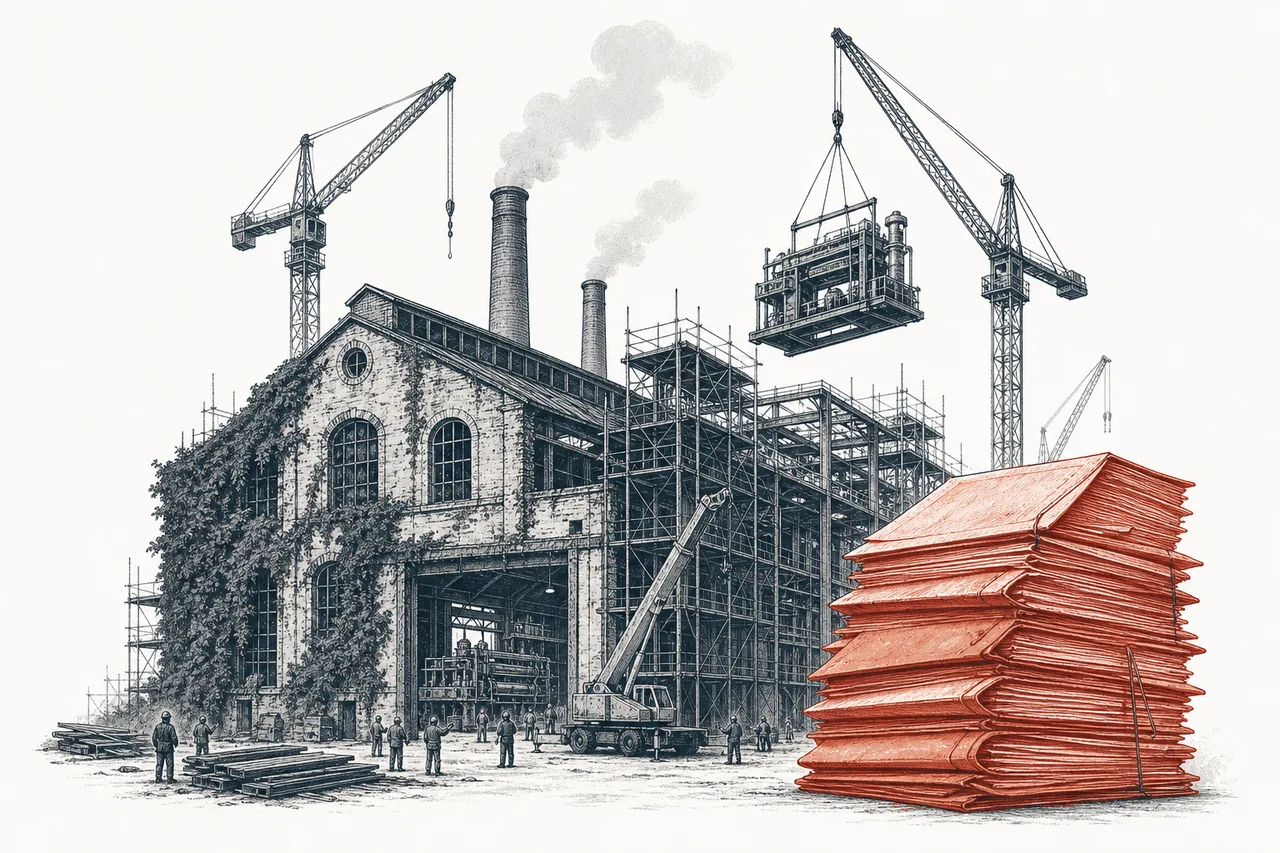
Engine 2 — Asia 'delivers faster than anyone' South Korea's edge isn't the most advanced kit, it's speed and on-time delivery. While European and American factories can't produce fast enough to meet orders (see the production-ceiling story in the missiles and munitions lesson), Korea has kept its large production lines running because it's still in an armistice with North Korea — so it's 'ready to ship' immediately. The most famous example is Hyundai Rotem's K2 tank deal with Poland, worth ~$6.5 billion (180 units), with the first batch delivered in just a few months — fast enough that Western rivals couldn't keep up.
A mechanism where the state 'ties a condition' that defense budget money must employ production at home, in its own country or region, for a set share (for example, the EU's SAFE = at least 65% in Europe). The goal is to create jobs, preserve a nation's production capacity, and reduce reliance on foreign suppliers — it's a 'wall' that gives in-region primes an advantage over outsiders.
04Where it sits in the defense system
Non-US primes stand in the same spot as the US primes: the 'furthest downstream,' signing contracts directly with governments and then pulling in the remaining sub-fields to assemble a platform. The difference is they serve a different set of customers and supply chains. Let's see who they connect to:
- In parallel with the US primes: the business model is the same (long backlog, visible revenue), but they compete for the world's export market — and in Europe, the 'buy European' rule is squeezing the share America used to hold
- Pulls work from missiles and munitions: Rheinmetall and Hanwha are both primes and leaders in artillery shells — the jets, ships, and tanks they sell need a steady feed of 'ammunition,' which becomes recurring revenue
- Overlaps with naval systems and shipbuilding: several Asian primes are very strong in warships — Japan's Mitsubishi Heavy just won a frigate-building contract for Australia, an unprecedented export success
- Relies on raw materials and reshoring and critical materials: 'buying in-region' only truly works if you have your own base for raw materials and components — otherwise you're just moving the dependency somewhere else
- Depends on AI and cybersecurity: like every prime, how 'smart' a modern platform is depends on the software, sensors, and cyber defense wired into it
05Where it stands now
The picture right now is 'record-full order books on both sides.' On the European side, the standout that has become the symbol of this era is Germany's Rheinmetall — in 2025 sales reached €9.94 billion (up 29%), backlog hit a record €63.8 billion (from €46.9 billion the year before), and guidance says 2026 sales will grow another 40–45% to €14–14.5 billion. The company is aiming as far as ~€50 billion by 2030. The share price reflects that expectation — up more than 1,000% since Russia invaded Ukraine.
But Rheinmetall isn't alone. The whole of Europe is setting backlog records at once: Britain's BAE Systems posted record sales of £30.7 billion with backlog reaching £83.6 billion · Sweden's Saab saw order intake up 74% with backlog ~SEK 274.5 billion (~$30 billion) · Italy's Leonardo has backlog ~€44 billion · and France's Thales set its own backlog record too — a picture of 'a rising tide lifting the whole fleet.'
On the Asian side, the headline is Korea's rise as an exporter. In 2025 it exported ~$15.4 billion (+60%). Hanwha Aerospace saw exports top 50% of its defense revenue for the first time, with operating profit breaking ₩3 trillion. Hyundai Rotem entered an era of operating profit above one trillion won for the first time, on the back of the K2 tank deal with Poland — and the K9 self-propelled howitzer is now in service in 10 countries, making it the most-exported artillery piece in the world.
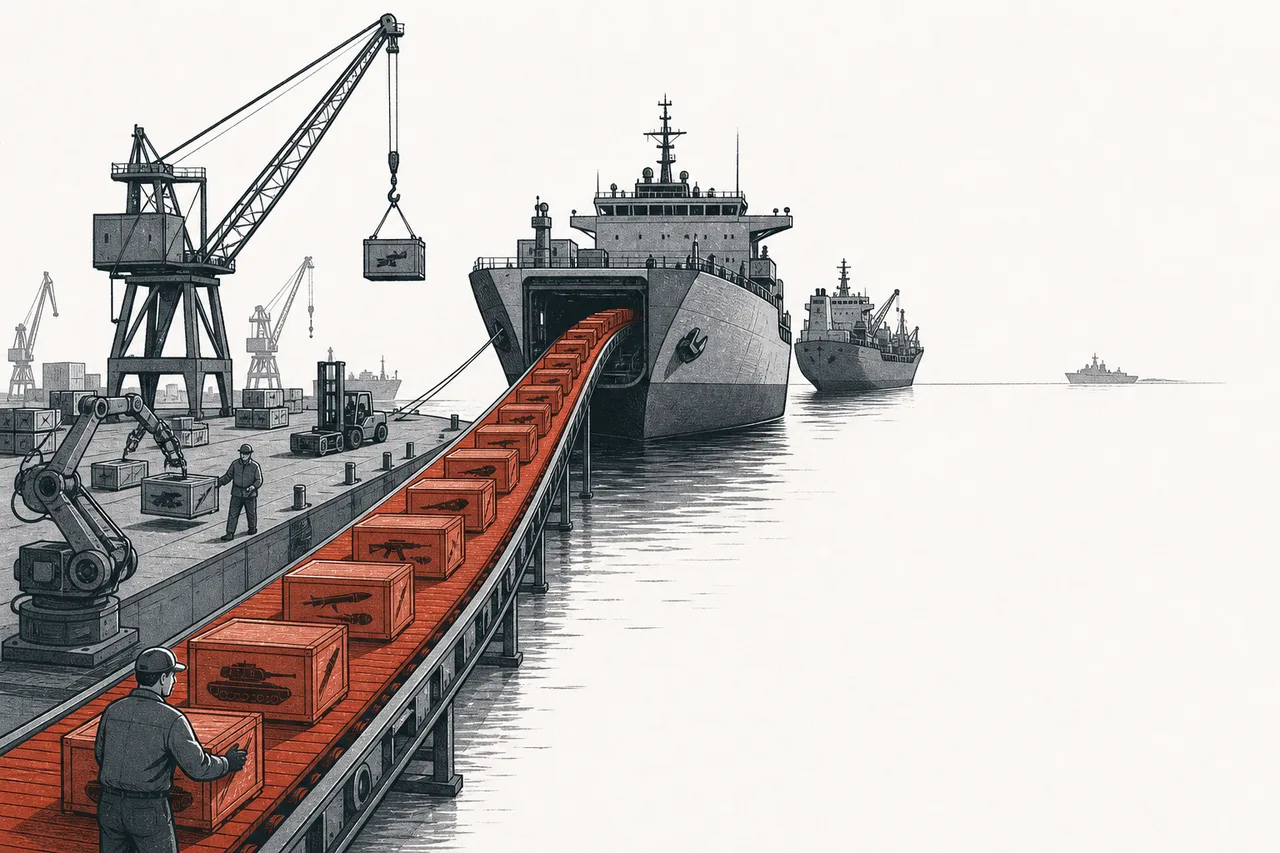
Japan, meanwhile, is the 'engine that just started.' The cabinet just approved a record defense budget of ~¥11 trillion (~$70 billion), pushing it past 2% of GDP by fiscal 2027 — making Japan the world's 3rd-largest defense spender, and it has just begun to truly 'export' — Mitsubishi Heavy won a contract to build Mogami-class frigates for Australia, a historic export success after Japan gradually eased decades-old rules barring weapons exports.
06The road ahead
The first direction is a 'long-locked super-cycle.' Unlike a temporary budget bump, the NATO 5% target is locked in through 2035, and the ReArm Europe €800B plan frames a decade-long horizon. That means Europe's demand isn't a flash in the pan — it's a new floor that's been raised and held there. So the challenge shifts from 'finding orders' to 'expanding factories fast enough to fill them.'
The second direction is 'consolidation and building European champions.' Europe has primes scattered across many countries (unlike the US, with only a few left). The pressure to 'buy European' is pushing mergers and cross-border joint programs — even if some, like the FCAS joint fighter, are still stumbling over how to divide the work. Whoever consolidates into a 'continental champion' first will have the edge.
The third direction is 'Asia climbing the value chain.' Today Korea wins on price and speed, but the next goal is to sell higher-tech, higher-margin products (the KF-21 fighter, submarines, air-defense systems). Japan has just stepped through the export door. If they can keep it up, Asia will shift from 'cheap producer' to 'full-fledged rival' of the Western giants.
07Challenges & risks
This trend may look red-hot, but there are shadows you need to see in full.
The first risk is 'orders on paper vs. goods actually delivered.' A record backlog is a 'promise to pay,' not 'cash in hand.' Turning backlog into real revenue and profit means expanding factories, finding skilled labor, and untangling supply-chain bottlenecks — things that take years and can pressure margins along the way. This gap is the risk hidden beneath the pretty backlog numbers.
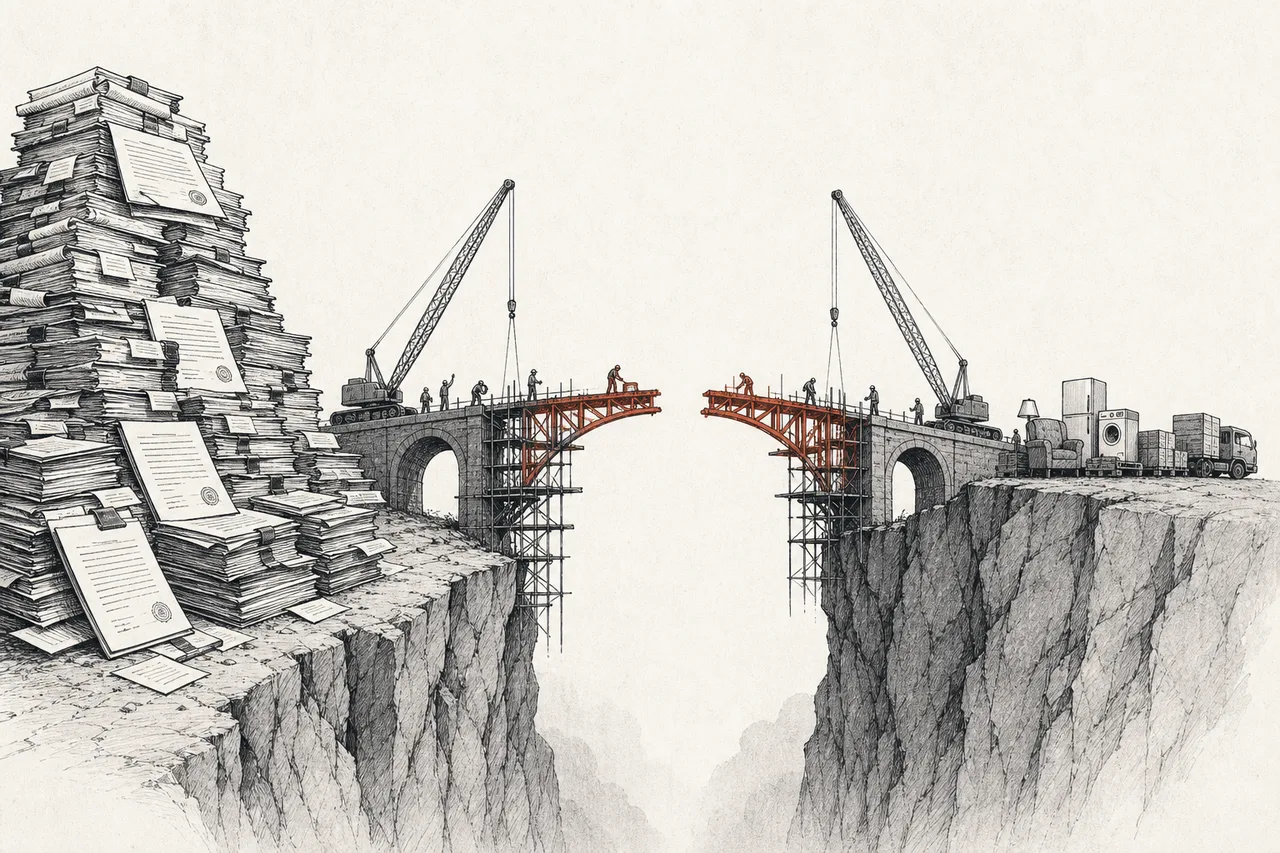
The second risk is 'fiscal discipline and the political cycle.' The 5% target is a 'pledge,' not money already in hand. Many European countries carry high debt and have domestic politics that could change course. If the Ukraine crisis eases or a government shifts direction, the urgency to spend could fade — demand that looks certain today still rests on a 'political will' that can wobble.
The third risk is 'fiercer competition and supply-chain fragility.' On the Asian side, exports hinge on diplomatic relations and cutthroat price competition. And both regions still rely on key raw materials and components from outside (see raw materials and reshoring) — 'buying in-region' only truly succeeds if you build your own supply chain, not just move the dependency somewhere else.
The fourth risk is ethics and ESG. Many funds have policies against investing in the weapons sector, which makes this group's investor base narrower than usual — though in Europe lately, many funds have started to relax that on national-security grounds, a factor that has specifically helped support these stocks' valuations this time around.
In short: this node is the story of the 'non-American' defense giants that are growing the fastest in decades. Europe has woken up to arm itself and reserve seats for its own companies, while Korea and Japan are proving that the world's center of weapons production is no longer just the West. The strength is long-locked demand and a massive backlog; the fragility is turning orders into real goods, and a political will that still has years left to prove itself.