Megatrend · Electrification & Mobility
The battery world's "holy grail" — always 5 years away, for 15 years now
Today's lithium-ion batteries are good enough to power every EV on the planet. But they're hitting a wall of physics: the liquid inside can catch fire, and there's a limit to how much energy you can pack in. Two new waves are trying to break that wall — solid-state, which turns the liquid into a solid (safer, more energy), and silicon-anode, which holds ten times more lithium than graphite. Both have been promised "in a few years" for ages — but in 2026 the race is getting real. Pilot lines are open, and Toyota's and VW's deadlines are within reach.
01What it is — two holy grails
There's a saying in the battery world that solid-state is the technology that's "always 5 years away" — people have said it since 2010 and they're still saying it. So why does the entire industry, from Toyota to VW, keep pouring billions into chasing it? Because if it works, it's a full reset of the battery game.
This node is the deepest branch of Battery Cells & Pack Manufacturing, under the megatrend Electrification & Mobility. If its sibling — Incumbent Li-ion Cell Makers — is "the cell that powers the world today," this node is the next-gen cell that hasn't fully been born yet. It's focused on getting past the limits of conventional lithium-ion, along two main paths:
- Solid-state: replace the flammable "liquid electrolyte" with a solid — unlocking a "lithium-metal" anode that packs more energy, and cutting out the fire risk
- Silicon-anode: swap the anode material from "graphite" to silicon, which holds about 10× more lithium per gram — more energy without changing the whole system
The difference is how "radical" they are — silicon-anode is an upgrade that makes the existing lithium-ion cell stronger (so it arrives sooner and is already in real cars), while solid-state changes the architecture wholesale (so it's harder, slower, but the prize is bigger). What's interesting is that the two are often fused — many next-gen cells use both a solid electrolyte and a silicon/lithium-metal anode at once.
A battery cell has three main parts: the Cathode = the positive electrode, the Anode = the negative electrode (made of graphite today), and the Electrolyte = the "go-between" that lets lithium ions shuttle back and forth between the two. Today the electrolyte is a liquid. Next-gen cells play with the latter two — turning the electrolyte solid (solid-state) or turning the anode to silicon (silicon-anode).
02Why it matters — more energy, and it won't burn
The best lithium-ion cells today store about 250–300 Wh/kg (watt-hours per kilogram — the higher it is, the farther a car goes without lugging a heavy battery). That number is climbing more slowly now, because it's hitting the physics wall of the old materials. The target for next-gen cells is ~450–500 Wh/kg — nearly double. That means the same car, at the same weight, goes much farther — or goes the same distance with a smaller, cheaper battery.
But "going far" may not even be the most powerful reason. The second reason is safety. The core of why a lithium-ion battery can catch fire is the liquid electrolyte, a volatile, flammable substance. When a cell short-circuits or overheats, you get "thermal runaway" — a chain reaction that spreads into a fire that's hard to put out. The solid electrolyte of solid-state doesn't burn, so it cuts out almost all of this risk. In a world where news of EV fires shakes consumer confidence, that's a selling point carmakers will pay dearly for.
The third reason is fast charging. QuantumScape's QSE-5 cell claims to charge from 10% to 80% in about 12 minutes, while Toyota is targeting under 10 minutes — close to the time it takes to fill a tank, which is a major psychological barrier for people who still won't switch to an EV.
In market terms, this is why huge money is flowing in, even though real sales are still small. The global solid-state market was worth about $1.6 billion in 2025, and many research houses expect it to break $12 billion by 2030 and reach ~$48 billion by 2035 — growing nearly 40% a year on average. The silicon-anode side is growing at a similar pace. It's a bet on the "next generation" of an industry worth hundreds of billions.
03How it works (liquid → solid / graphite → silicon)
These two paths solve different parts of the cell. Let's look at one at a time.
First path — solid-state: change the go-between from liquid to solid. In a conventional cell, lithium ions shuttle through a liquid electrolyte, but this liquid has two problems: it's flammable, and it forces you to use a graphite anode (use pure lithium-metal and you get "dendrites" — sharp lithium whiskers that grow until they pierce through and short the cell). When you switch to a solid electrolyte that's strong enough, it acts as a "barrier" that dendrites can't pierce, which unlocks the lithium-metal anode — which stores far more energy. This is the mechanism that makes the energy denser and safer at the same time.
Second path — silicon-anode: pack more lithium into the anode. The graphite that's long been used as the anode stores about 372 mAh/g, while silicon stores up to ~3,579 mAh/g — nearly 10× more. It sounds like a free lunch, but there's a big trap: when silicon soaks up lithium to the full, it swells more than 300%, then shrinks back on discharge. Swell, shrink, repeat — until it cracks and degrades fast.
The fix is to not use pure silicon, but to make a silicon-carbon composite (Si-C composite) — embedding tiny silicon in a porous carbon framework that absorbs the swelling — plus a pre-lithiation technique (adding lithium ahead of time to make up for what's lost on the first cycle). The result is "some" of the full energy potential, but durable enough for real use. This is why silicon-anode reaches real cars before solid-state — it's a step-by-step upgrade, not a teardown of the whole system.
Dendrite = the sharp lithium whisker that grows on the anode until it pierces through and shorts the cell — enemy number one of the lithium-metal anode · Si-C composite = silicon mixed into a carbon framework to prevent swelling and cracking · Pre-lithiation = adding lithium in advance to make up for the lithium lost on the first charge cycle, extending the life of a silicon cell.
04What it builds on in the ecosystem
Next-gen cells don't appear in a vacuum. They build on, and depend inseparably on, their neighbors in the megatrend.
- Standing on the shoulders of Incumbent Li-ion Cell Makers: the next-gen players that survive must lean on the production base and scale of the existing giants — CATL, Samsung SDI, and SK On all have their own solid-state teams, while a startup like QuantumScape chooses to "borrow the factory" by licensing a big maker to produce for it
- It needs a new breed of Battery Components & Materials: this is the most important point — solid-state needs a solid electrolyte (sulfide/oxide) and silicon-anode needs silicon-carbon powder, materials of a different kind from the old ones. Many of the real winners in this arena are actually "materials" companies, not "cell" companies
- Powering the premium side of Passenger EV OEMs: expensive and new things always land in luxury cars first — Toyota, VW, BMW, and Mercedes are the first customers, because they can absorb the high cost and use "far range + fast charge + safe" as a selling point
- Opening the door to an arena today's batteries can't reach: much higher energy density matters especially to Advanced Air Mobility (eVTOL) — electric aircraft that take off and land vertically, where every gram of weight is life-or-death (Amprius already sells silicon cells to the drone/aviation market)
05Where it stands now
After being just a promise for ten years, 2026 is the year many things start to become "tangible" — and each player is walking a different path.

On the solid-state side, the most-watched is QuantumScape, which partnered with PowerCo, Volkswagen's battery subsidiary. In late 2025 it began shipping samples of the QSE-5 cell (844 Wh/L, or 301 Wh/kg, charging 10–80% in ~12 minutes) for customer testing, and is set to open its "Eagle" pilot line in February 2026. The heart of it is a new process called Cobra that anneals the separated layers about 25× faster than the previous version — because the big problem with solid-state isn't "can you make it," it's "can you make it fast and cheap enough to produce by the millions." Under the licensing deal, PowerCo can produce up to 40 GWh a year (expandable to 80 GWh).
A different strategy comes from Toyota, which has laid out its own solid-state roadmap to real production around 2027–2028, claiming roughly 1,000 km of range and charging under 10 minutes, with Idemitsu (a Japanese oil refiner) building it a solid-electrolyte plant to be finished by the end of 2027. Meanwhile Samsung SDI has an S-Line pilot producing cells at 900 Wh/L and targets mass production in 2027, and Solid Power (backed by BMW and SK On) has stepped back from being a cell maker to become a seller of technology and sulfide electrolyte instead — earning about $21.7 million in 2025 from technology-transfer deals.
On the silicon-anode side, this is the path that's "shipping real product." Amprius ships its SiCore cell (315 Wh/kg) to light-EV and aviation customers. Enovix has begun producing 100% silicon batteries for smart glasses and is eyeing a deal with a major smartphone maker in the second half of 2026. Meanwhile Sila and Group14 (both private companies) are rushing to build silicon-powder plants — Sila's Moses Lake plant targets 10 GWh of material capacity within 2026 — and silicon is already starting to slip into real cars, like the Mercedes-AMG that uses a silicon anode for 600 kW-class fast charging.
The most telling story happened in China: NIO once rolled out a 150 kWh semi-solid battery pack from WeLion at a cell-level density of 360 Wh/kg, running over 1,000 km — but in late 2025 it stopped production after making only a few hundred packs, because it was too expensive and demand wasn't enough. This is the real picture of this industry: you can make it work in the lab, but making it cheap enough for people to actually buy is a question no one can yet answer with full confidence.
06The future — real deadlines, and the semi-solid "shortcut"
The question isn't "will it come," it's "when, and in what form." The most realistic answer is that it'll come in steps, not one big bang.
The first step is that "semi-solid" is a shortcut. Before reaching full solid-state that uses an all-solid setup, the industry passes through semi-solid — cutting the liquid down but not removing it entirely, so it can be made on existing machinery. China clearly leads here (WeLion, and CATL with its own "condensed" battery). Even though NIO's lesson warns that price is still a wall, semi-solid is the bridge that carries the industry over to full solid-state.
The second step is to start with the expensive and the tiny. Next-gen cells won't land in mass-market cars right away; they'll start in three arenas willing to pay a premium: premium cars, portable devices (glasses/phones — Enovix's arena), and electric aviation/drones (Amprius's arena), where every gram counts. Then they flow down to ordinary cars as costs fall with scale.
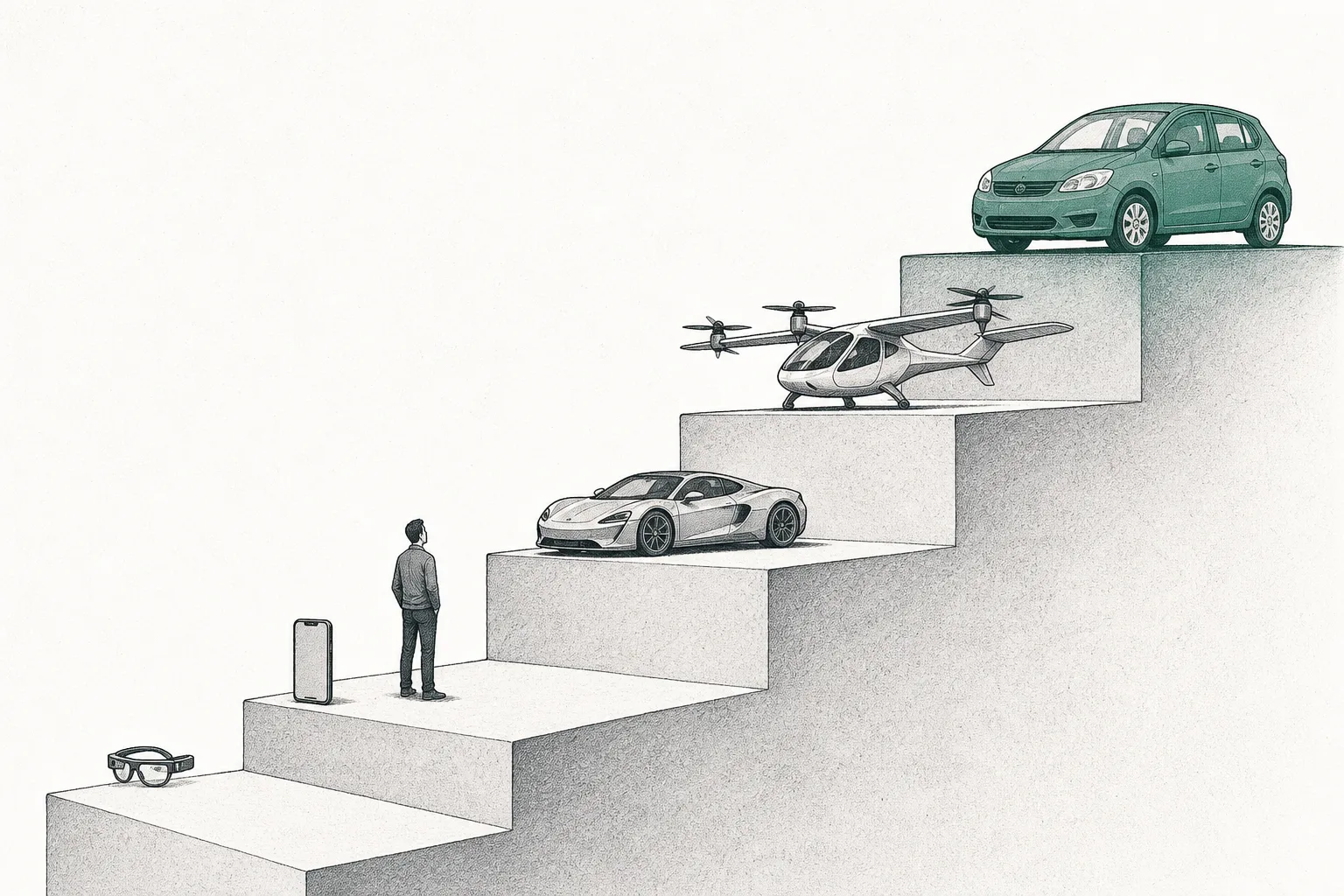
The third step is that the 2027–2028 deadline is the real test. Toyota, Samsung SDI, and PowerCo have all planted their flags in this window. If they really produce on schedule — even starting in small volumes at high prices — it'll be the first time "5 years away" becomes "this year," proving this road can continue. But if it slips again (which has happened many times before), the confidence and funding of the smaller players will be tested hard.
The big picture not to forget: silicon-anode is likely to "win sooner" in terms of actually reaching the market, because it builds on the existing system, while solid-state is the bigger prize that's farther off but more game-changing. These two paths aren't a fight to the death — in the end, the best cell may use both a solid electrolyte and a silicon anode at once.
07Challenges & risks
This is the arena where "the technology is cheap, but the business is still unproven" — so the risk is especially high.
The first risk is that scaling up production is the real hell. Making one beautiful cell in the lab is doable, but making millions of them identical is a completely different story. The solid electrolyte is a hard, brittle material that has to be rolled into micron-thin sheets without cracking or leaving pores. The manufacturing cost of solid-state today is still about 3–5× higher than ordinary batteries, because of the special materials and the bone-dry production rooms required — and this very wall is what forced NIO to stop its semi-solid pack.
The second risk is the "5 years away" that keeps slipping. This industry's history is full of postponed deadlines. Each time it slips, the money burned grows and investors' patience shrinks. For a small player with no real revenue yet, every postponement is a risk to survival.
The third risk is that the stationary target is moving fast. While everyone chases next-gen cells, the conventional lithium-ion cell (especially China's LFP) keeps getting cheaper and better every year. The faster the "old target" moves, the narrower the gap the new thing has to prove its worth in. If silicon-anode and solid-state come too late or too expensive, the market may "settle" for ever-cheaper lithium-ion until the next-gen products struggle to find a place to stand.
In short: this node is a "holy grail" that became much more tangible in 2026 — pilot lines are open, the giants' deadlines are near, and silicon is starting to show up in real cars. But the last stretch, from pilot to profitable mass production, is still the most brutal gate — and the gate that decides who will rule the battery of the next decade.