Megatrend · Electrification & Mobility
The world's biggest EV revolution doesn't have four wheels
Everyone talks about Tesla and BYD. But if you measure by "number of vehicles," the biggest, quietest, and most genuinely profitable EV revolution is the story of two wheels — electric scooters and motorbikes in Asia. They outsell electric cars several times over, they're cheap, they pay for themselves fast, and they're the most electrified segment in the world. This lesson is about a revolution the West has almost entirely overlooked.
01What it is
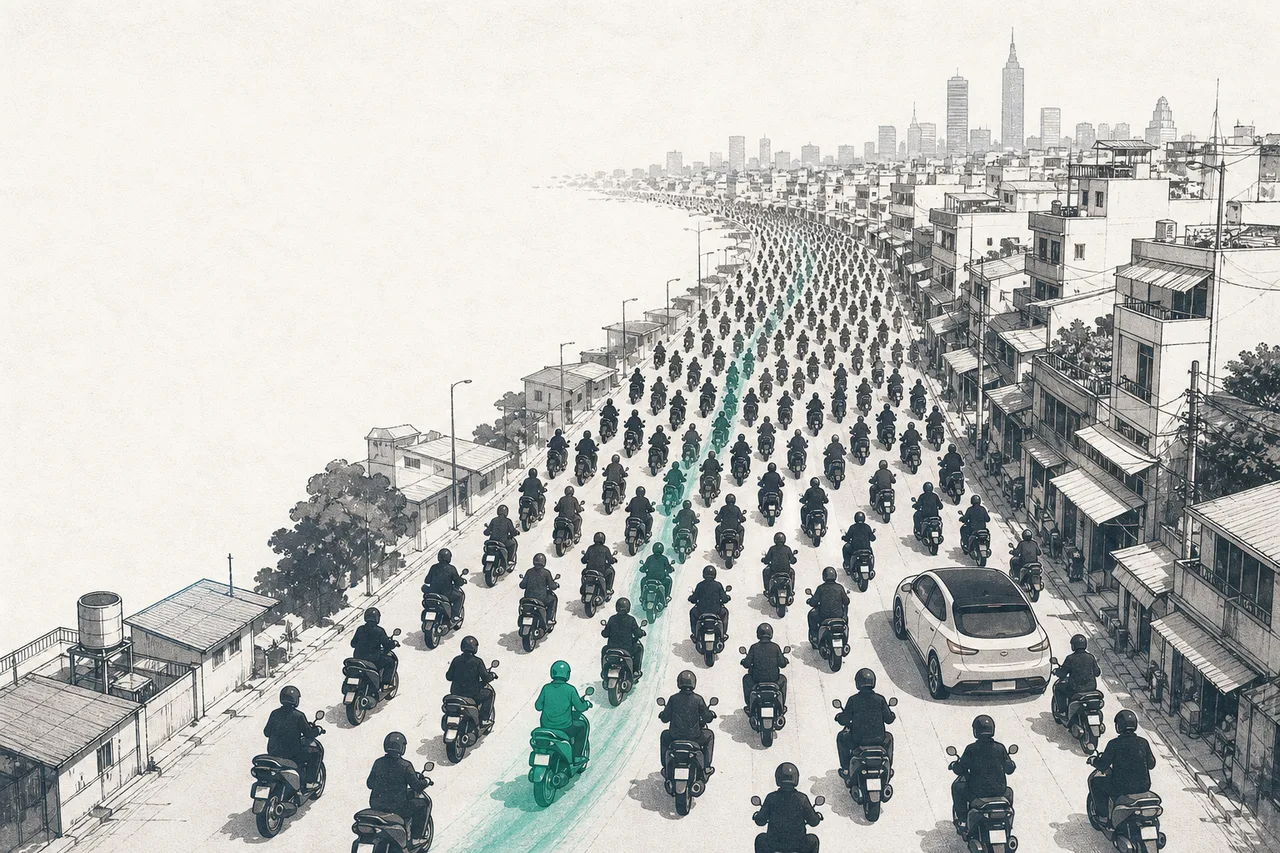
Picture the streets of Bangkok, Hanoi, Delhi, or Jakarta in the morning. What fills the road isn't cars — it's motorbikes and scooters, millions of them. This is "the vehicle of the majority" in Asia. And this node is about that fleet switching from gasoline to electric.
"Two-wheeler & Micromobility" is a sub-theme under the megatrend Electrification & Mobility, covering several kinds of small electric vehicles:
- Electric scooters & motorbikes (e-2W): the heart of the story — the mass market in Asia, cheap, built for dense-city riding. This is the "volume story" that makes this node big
- Electric bicycles (e-bike): fast-growing in Europe and the US — half bicycle, half vehicle, used for both exercise and commuting
- Shared e-scooters: the West's hottest thing five years ago — and the one whose "bubble burst" the hardest (more on that later)
- Battery-swapping networks: the key innovation that made electric two-wheelers actually usable in dense cities
Here's what to grasp from the start — this node is asymmetric. 90% of the story sits in Asia's mass market (China, India, Vietnam), while the West (e-bikes, shared scooters) is just a small slice. That's not a bias — it's a market fact: two-wheelers are the main vehicle for billions of people in the developing world, and that's where electrification is actually happening at massive scale.
02Why it's the biggest EV revolution
Here's the fact that always surprises outsiders: measured by "vehicles on the road," electric two-wheelers outnumber electric cars plus every other type of EV combined. In 2024, the world's stock of electric two- and three-wheelers was larger than all other EV types put together — and it's the most electrified vehicle segment, with about 15% of new sales going electric (higher than cars).
So why does something this big get overlooked? Because it's concentrated in Asia and it's a "cheap thing" that isn't as sexy as an electric sports car. Over 95% of electric two-wheeler sales are in China, India, and Vietnam alone — with China by itself taking more than half of global sales.
There's clear logic to why Asia leads by such a margin: cities are dense, daily trips are short, huge numbers of people already use two-wheelers as their main ride — and most of all, it's cheap. The average scooter in India runs about $1,000, versus an EV ten times pricier. When something is cheap and pays back its fuel cost fast, electrification spreads in a way cars simply can't match.
And unlike many Western EV businesses still losing money, the two-wheeler leaders in Asia actually turn a profit. Yadea, the Chinese leader, did about $5.44B in revenue and ~$435M in net profit in 2025, up a full 129% — this is an EV revolution that doesn't have to wait for "the future," because it's already making money today.
03Why two-wheelers electrify the fastest
The short answer is battery size — and it's the key to why two-wheelers win while electric cars still struggle with cost.
An electric car has to lug a huge battery (50–80 kWh) because it's heavy, goes far, and has to accelerate hard. A scooter doing a few dozen kilometers a day in the city needs only about 2.5 kWh — roughly 8 times smaller than a car's battery. When the core of an EV's cost is the battery (30–40% of the total), a two-wheeler needing a far smaller battery means it's cheaper, lighter, and far more worthwhile to electrify.
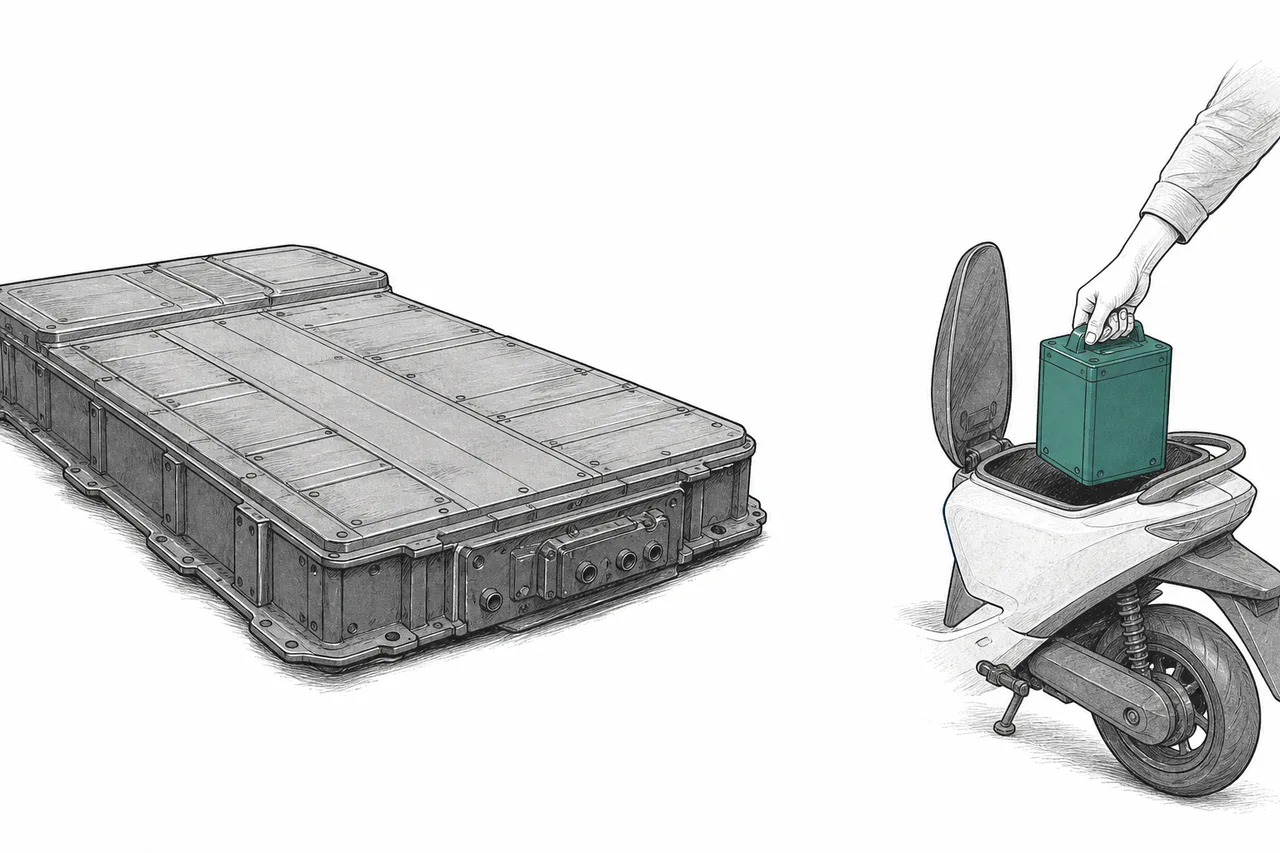
But a small battery has its own problem: it can't go far, and charging is hard in cities where people live in apartments and shophouses with no outlet. The game-changing answer was a simple idea — don't charge it; swap the battery.
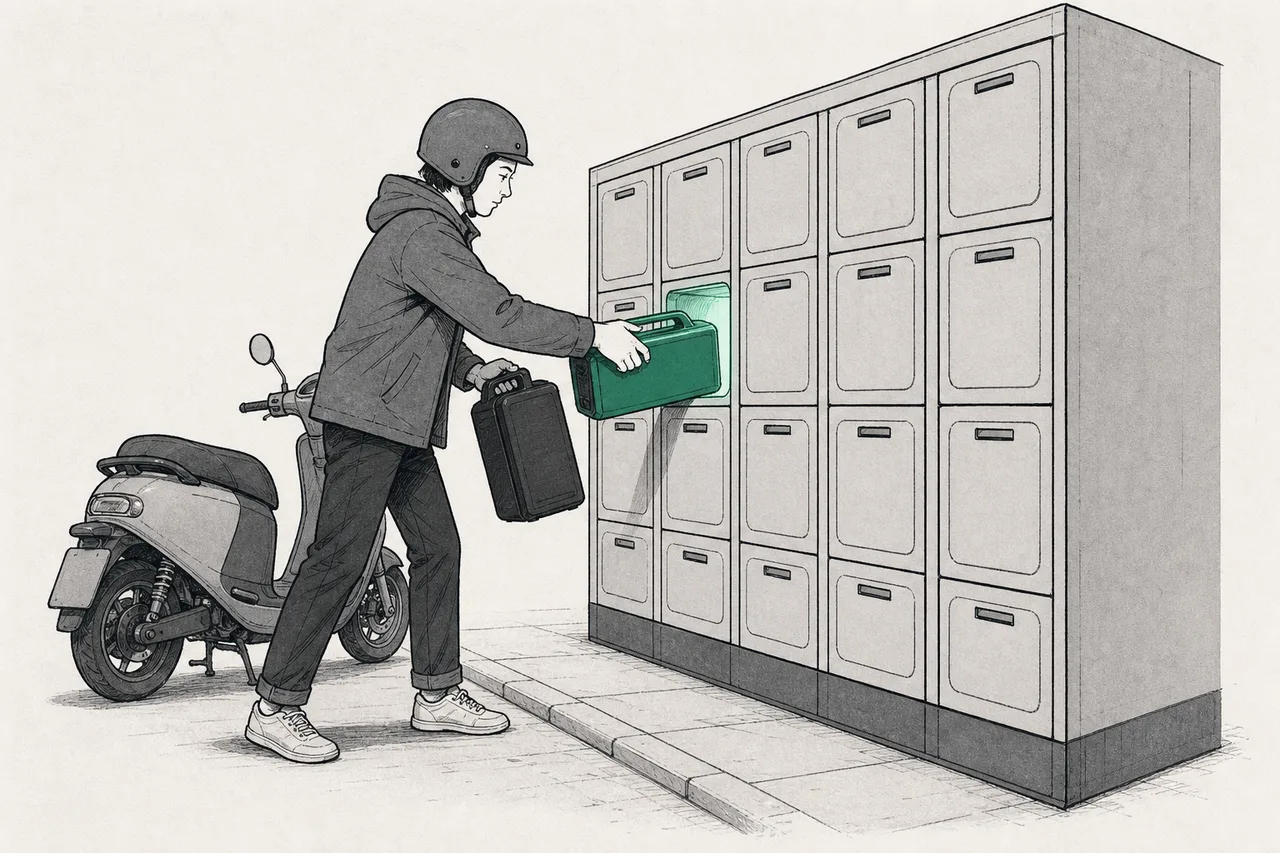
When the battery is small enough to lift one-handed, you don't have to sit and wait an hour to charge. You just ride into a swap station, pull out the empty pack, slot in a full one, pay, and ride on — a few seconds, like changing a gas cylinder. This is what Gogoro of Taiwan pioneered into the world's largest battery-swap network.
Instead of charging the battery inside the vehicle, the user rides into a station, pulls out the empty pack, and immediately slots in a fully charged one — like changing a gas cylinder. This model solves two problems at once: (1) no waiting to charge, and (2) the user doesn't buy the battery (the priciest part) but "rents the use" through a monthly subscription, which lowers the vehicle's price and gives the operator recurring revenue.
04How it connects in the EV megatrend
This node is a "sibling" of the other sub-themes in the Electrification & Mobility megatrend, and they connect deeply:
- Uses the same battery as Battery Cells: electric scooters use the same lithium cells as an EV, just far fewer of them — when cell prices fall thanks to mass car production, two-wheelers ride that price drop too
- Has an "energy top-up option" that Charging Infrastructure doesn't: cars must rely on charging stations, but two-wheelers add another option — "battery swap" — a different kind of infrastructure better suited to dense cities
- A cousin of Passenger EV OEMs but playing a different game: electric cars compete on range and technology, while two-wheelers compete on "cheapest price and best service network" in the mass market
- Uses motors and inverters from EV Powertrain: just a much smaller, simpler version than a car's
Here's the interesting angle — electric two-wheelers may be the "doorway" that brings people into the EV world before anything else. In countries where most people still can't afford a car, a $1,000 electric scooter is their first EV, and it's where cutting oil dependence actually happens at mass scale — faster and broader than cars can manage in those countries.
05Where it stands now + who the real players are
2025 was the year the numbers told the story most clearly — both the surging side and the collapsing side.
China side (the volume story): Yadea closed 2025 with electric-scooter sales of about 4.82 million units (up 22.6%), holding more than half the China market. NIU hit a record ~1.2 million units, up 30%. Numbers at this "millions a year" scale are what make two-wheelers the biggest EV revolution by count.
India side (the growth story — and the lesson): in 2025 India sold a record ~1.28 million electric two-wheelers (up 11%), about 6% of all two-wheeler sales — still a vast runway to grow. But the most dramatic story was the fall of Ola Electric, once the market leader: sales crashed from a peak of ~407,000 units (2024) to ~200,000 (down ~51%) on quality, service, and fire problems, while TVS, an incumbent with a nationwide dealer network, surged into the lead with ~299,000 units.
Battery-swap side: Gogoro of Taiwan has about 2,500 swap stations (GoStation) and ~644,000 subscribers paying a monthly swap fee as recurring revenue — and it's expanding into India with Hero MotoCorp. This is the model that turns "selling a vehicle" into "selling an ongoing energy service."
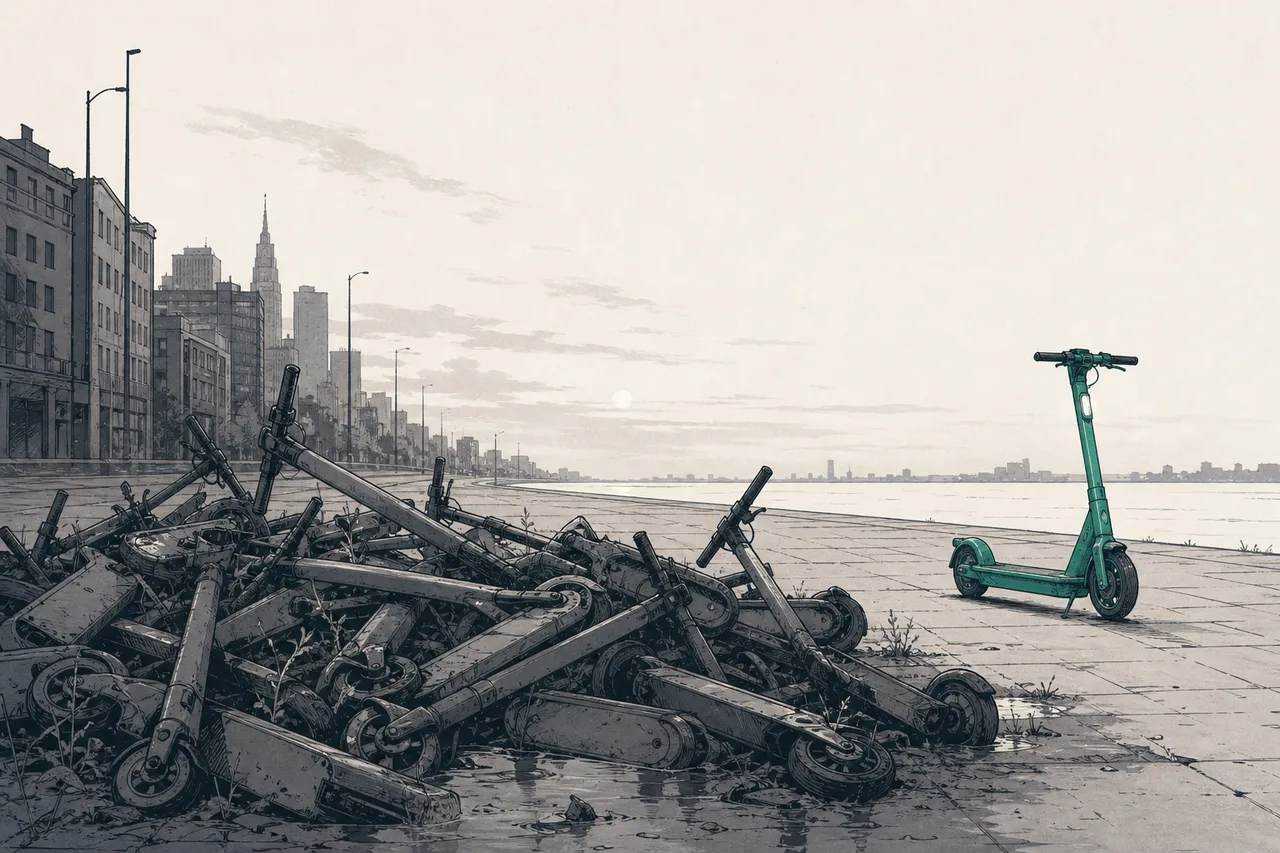
E-bike and shared-scooter side (the West): the global e-bike market is worth about $57–70 billion in 2025 and still growing. But the once red-hot "shared public scooter" business turned into an expensive lesson — Bird, once valued at $2.5B, went bankrupt with accumulated losses of about $1.6B, while Tier and Superpedestrian were badly hurt. Only Lime survived and began turning a profit.
06The road ahead
The first direction is India and Southeast Asia are the next battleground. India's electric two-wheelers are only ~6% of sales, meaning a vast runway remains — many expect it to hit 8–10% within a few years, while Vietnam jumped from ~10% to over 20% in a single year. Asia is still the main growth engine.
The second direction is the battery-swap standards war. If "battery swapping" becomes core infrastructure, the question is who controls the standard — Gogoro, Honda (pushing a shared standard in Japan), or Indian players like Sun Mobility. Controlling the swap standard could matter as much as controlling the charging plug in the car world.
The third direction is the shift from "selling vehicles" to "selling a service". Gogoro's monthly battery rental turns revenue into recurring income — if the model spreads, a business's value moves from one-time hardware sales to a subscriber base paying for energy every month, a steadier, higher-margin business.
07Challenges & risks
Even as the biggest EV revolution by count, electric two-wheelers carry their own risks that investors need to understand.
The first risk is thin margins, fierce competition. A mass market means competing on price. Hundreds of Chinese makers undercut each other, making profit per unit very thin. Even a leader like Yadea is profitable, but countless small players barely make any money — and turning a profit in a cheap mass-market business requires enormous scale, full stop.
The second risk is quality and service matter more than marketing. The Ola Electric case is a brutal lesson — it grew fast on marketing and price, then broke on quality problems, fires, and after-sales service that couldn't keep up. In a business where people use it daily as their main ride, reliability is everything, and a service-center network (which an incumbent like TVS has) becomes an edge startups find hard to copy.
The third risk is the shared-scooter bubble lesson. The shared-scooter business in the West raised huge money on a beautiful story, but the economics didn't work (scooters break fast, collection-and-charging costs are high) — until Bird went bankrupt with $1.6B in losses. A warning that not every "micromobility" model makes money: the "ownership" model in Asia has proven itself, but the "sharing" model in Western cities is still a question mark.
The fourth risk is concentration in Asia. Almost the entire market sits in China, India, and Vietnam, which means this business is tightly tied to government policy (India's FAME subsidies, China's rules) and the economies of just a few countries. A single change to subsidy policy could shake sales across the whole market.
In short: while the world watches Tesla and BYD, the EV revolution that changed the most lives has been happening quietly, on two wheels, in the crowded streets of Asia — cheap, fast to pay back, genuinely profitable, and the most electrified segment of all. Understanding that "the real EV for most of the world has two wheels, not four" is understanding where the energy transition is actually happening first.