Megatrend · Energy Transition & Power Demand
The power plants the world almost gave up on — now the electricity AI fights over
A decade ago nuclear looked like a dying technology — plants were shutting down one by one, unable to compete on price with gas and renewables. Then AI data centers got hungry for electricity in a way the world had never seen, and they needed power that's 'on around the clock' with no carbon. Suddenly the old reactors that had been ordered shut became the most valuable asset around — to the point that Microsoft agreed to pay to 'wake up' a plant that had already been closed and bring it back online.
01What it is
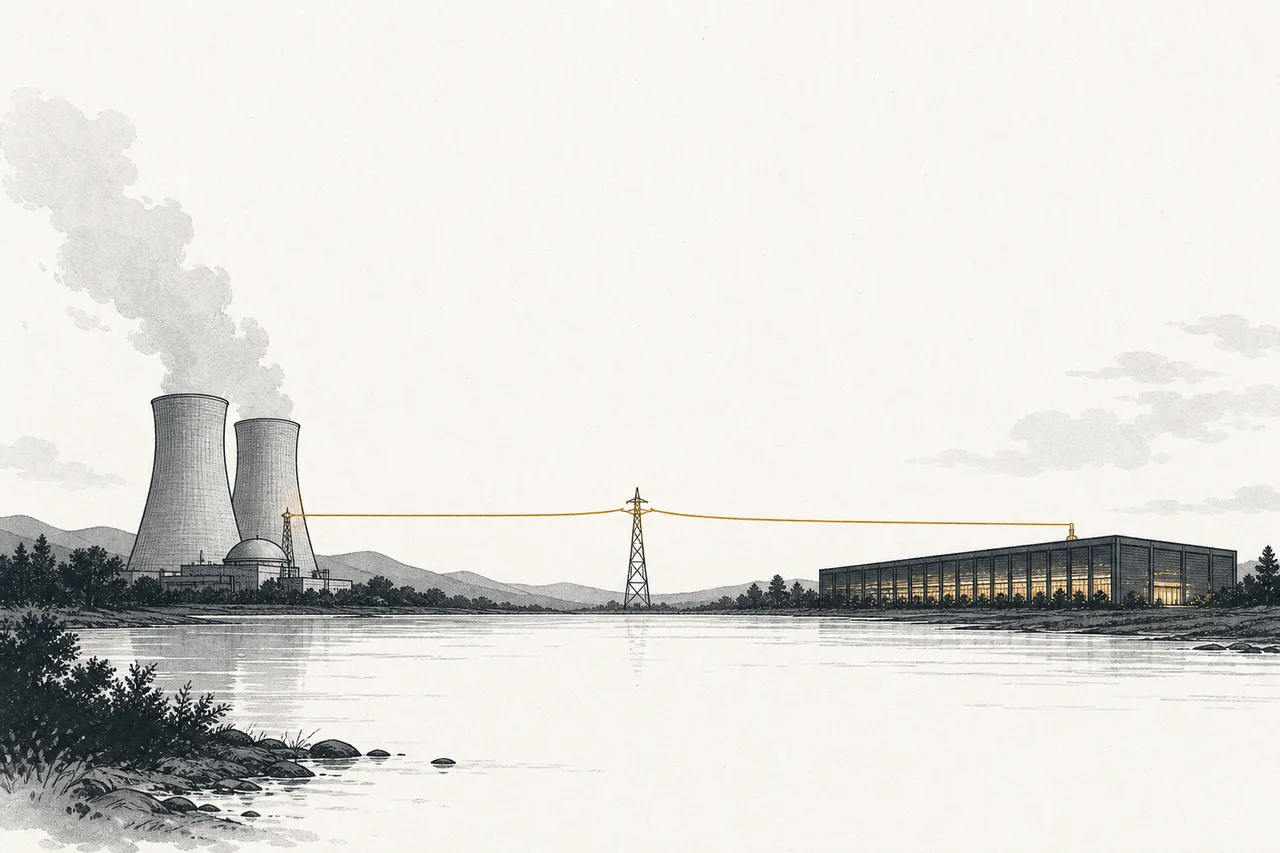
This node isn't about 'building new reactors' — that's the job of its sibling next door, Advanced Nuclear — SMR & Microreactor. This node is about the large reactors that already exist and are running right now — along with the utilities and independent power producers (IPPs) that own them and squeeze profit out of them.
Put simply, it's the 'fleet' of nuclear plants that are already built — most of them from the 1970s–1990s — that suddenly gained new value in the AI era. The definition says it outright: it's the 'default vehicle' for getting baseload power to feed AI, because it has supply you can deliver today — no waiting another 10 years to build new.
Utility is an electric company that's usually price-regulated by the state, selling power to homes in its own territory at a set rate (e.g. Duke, Southern) · IPP (Independent Power Producer) is a producer that sells power on the 'open market,' where the price moves with demand (e.g. Constellation, Vistra, Talen) — and this difference matters a lot, because IPPs are the ones who capture the full upside when electricity prices spike on AI demand, while price-regulated utilities benefit later and less.
On the megatrend map, this node sits under Energy Transition & Power Demand, the big category covering the 'supply side' of power that has to chase the enormous electricity demand from AI and the electrification of everything. And among all the ways to make power, nuclear has one standout strength that's now become priceless: it runs around the clock.
02Why it matters now — 'always-on' power for AI
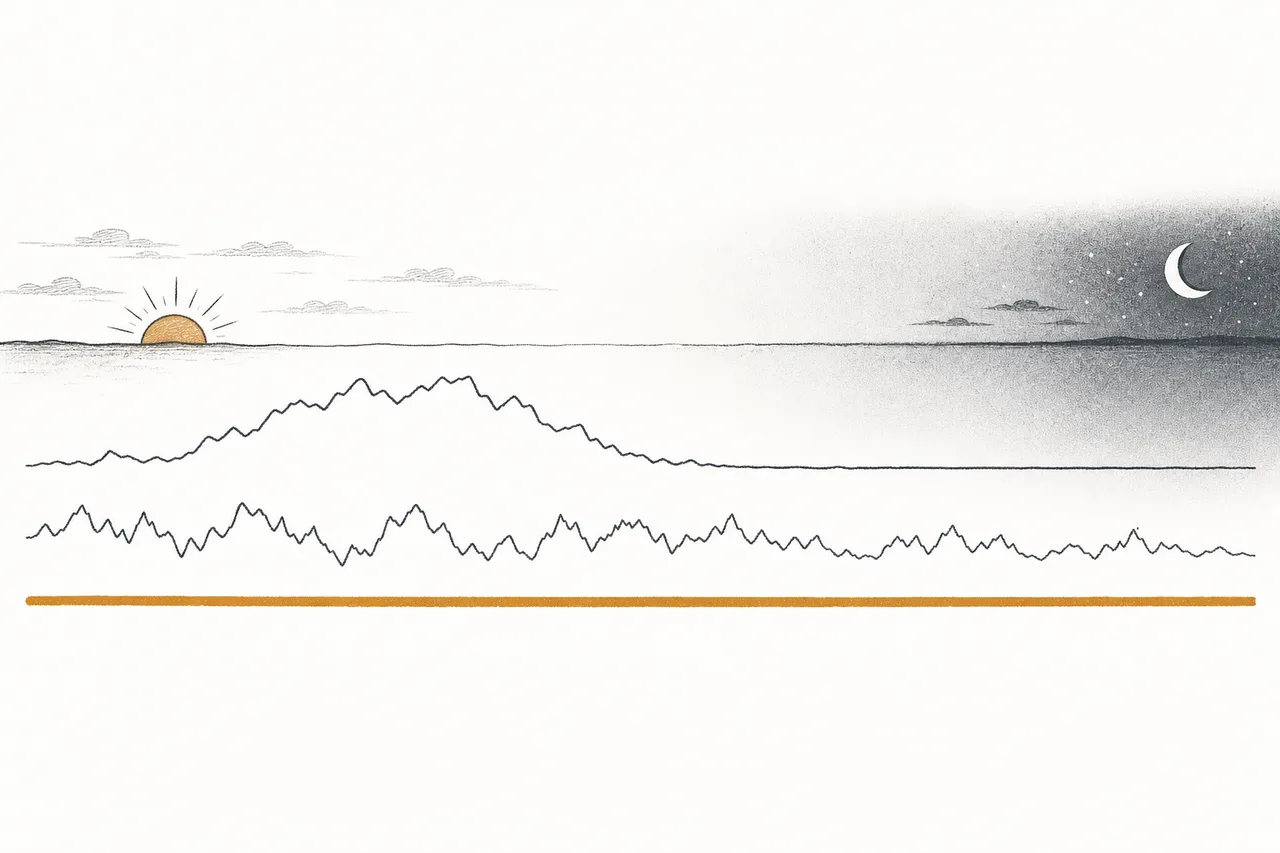
The heart of this story is a single word: 'firm' (power that's steady and dependable). AI data centers don't just use a lot of electricity — they use it all the time. The GPUs training models worth billions of dollars can't 'wait for the sun' or 'wait for the wind.' They need power flowing steadily, 24/7 — and ideally with no carbon, since every tech company has already announced net-zero targets.
This is where nuclear wins hands down. A metric called capacity factor (the share of time a plant actually runs at full power) sits around 92–93% for nuclear — meaning it runs at nearly full tilt all year. Solar is only ~23% and wind ~34%, because the sun and wind aren't always there. Put another way: to get the energy of one 900-megawatt reactor, you'd need nearly 800 wind turbines — and even with 800, they stop producing the moment the wind dies.
Baseload: a power source that runs steadily all the time, the 'floor' of the electricity system — nuclear, coal, and gas are in this group · Intermittent: solar and wind, which only produce when there's sun or wind, so they need a backup (batteries or gas) to fill the gaps · the word 'firm' in the energy world means power guaranteed to be delivered when you need it — and that's exactly what AI wants most.
This demand is no small thing. The IEA estimates the electricity the world's data centers consume will nearly double, from 485 TWh in 2025 to ~950 TWh in 2030 (more than the whole of Japan uses in a year). In the U.S. alone, data-center demand will grow from 183 TWh (2024) to ~426 TWh in 2030 — up 133% — and the fastest-growing piece is AI servers, which need the steadiest power of all. When demand grows this fast, open-market electricity prices spike right along with it.
03How it works — from the nucleus to the wall socket
It sounds high-tech, but the heart of a nuclear plant is shockingly simple — it's the 'biggest, hottest kettle in the world.' The only special part is how it boils the water.
An ordinary plant (coal, gas) boils water by burning fuel. But nuclear boils water by 'splitting' the nucleus of uranium — a process called fission. When a uranium atom splits, it releases an enormous amount of heat with no smoke and no carbon at all. From there on, it's exactly like any other plant: heat boils water → water turns to steam → steam pushes the turbine blades → the turbine spins a generator → you get electricity.
This simplicity is why 'waking up old reactors' is actually doable. The main structures — turbine, generator, cooling systems — are still all there. What you have to do is swap parts, load new fuel, and pass safety inspection again, which is vastly cheaper and faster than building from scratch.
And because it 'splits' atoms, the fuel delivers incredibly dense energy — a piece of uranium the size of a fingertip carries the energy of nearly a ton of coal. That's why a single nuclear plant can power millions of homes around the clock, using very little land and fuel.
04Where it sits in the energy system
Nuclear doesn't stand alone. It's one piece in the big jigsaw of Energy Transition & Power Demand, and it's deeply connected to the trends around it:
- Demand pulled directly by AI Data Center and AI: this is the main force behind the whole story — data centers hungry for steady, clean power are the new customer that made nuclear valuable again
- Same-generation rival SMR & Microreactor: the new small reactors are the 'future version,' hoping to be built fast and placed near data centers — but most won't really run before the end of the decade. Until then the load falls on the existing big reactors in this node
- Depends on Nuclear Fuel Cycle (uranium & enrichment): no fuel, no power — and this fuel chain still leans heavily on Russia, making it a geopolitical weak spot
- Has to connect through Grid & Transmission: even if you can make the power, you need lines to carry it to the data center — the bottleneck of transmission and interconnection is one of the biggest obstacles right now
What's interesting is that nuclear both 'competes' and 'complements' renewables at the same time. It competes with solar/wind over which becomes the clean power a data center picks — but in the real system, they complement each other: solar/wind give cheap power when there's sun/wind, and nuclear gives the 'floor' that never drops. That's why many have stopped seeing it as 'nuclear vs renewables' and started seeing both as one team fighting fossil fuels.
05Where it stands now + the real players
The most dramatic moment came in September 2024, when Microsoft signed a 20-year power purchase agreement with Constellation Energy to wake up a shut-down reactor at Three Mile Island Unit 1 (renamed the Crane Clean Energy Center) and bring it back online in 2028 — 835 megawatts, with 100% of the power going to Microsoft's data centers. Constellation will invest about $1.6 billion and can borrow up to another $1 billion from the U.S. Department of Energy. It was the first time in history a nuclear plant was 'brought back to life' specifically for a tech company.
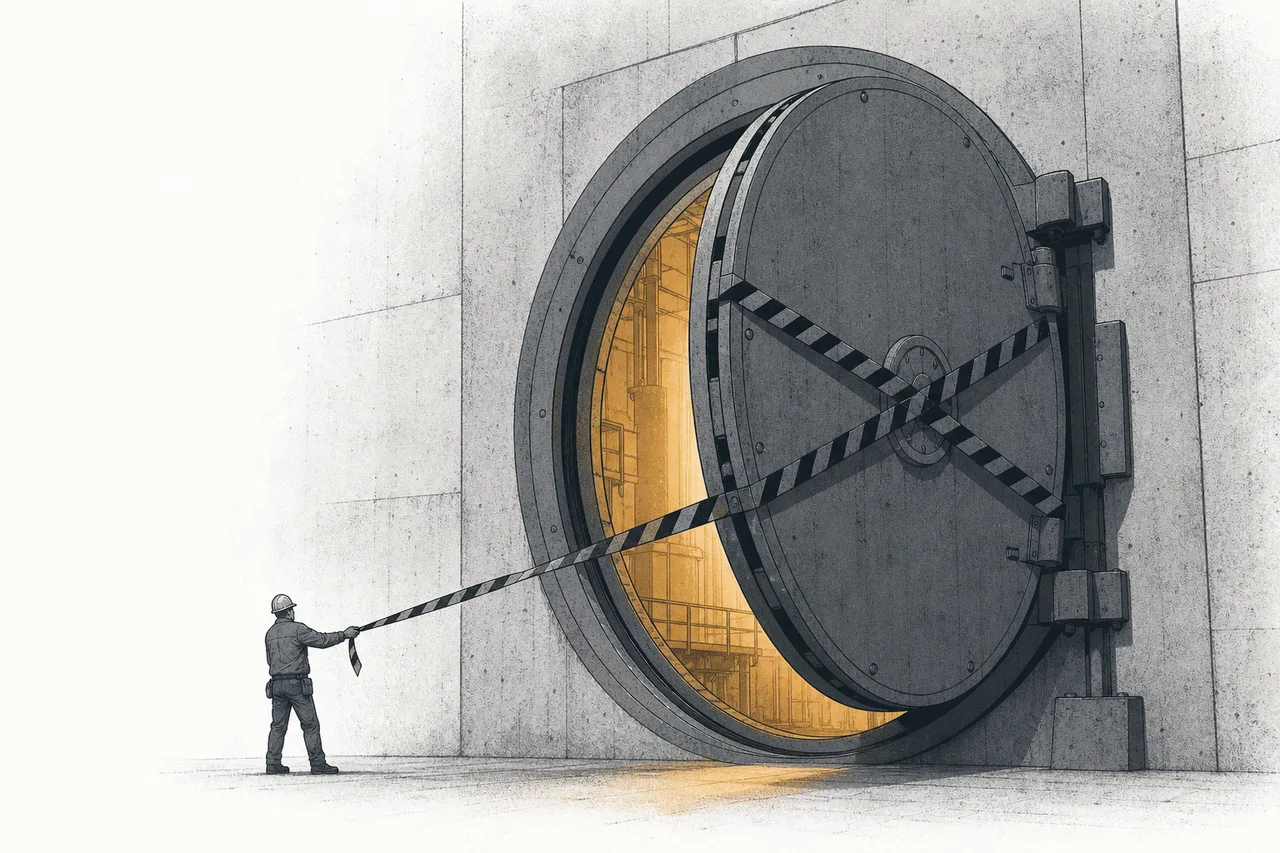
Then the floodgates opened: Amazon struck a deal with Talen Energy to buy up to 1.9 gigawatts from the Susquehanna nuclear plant through 2042 (estimated total value around $18 billion), and agreed to explore building SMRs in Pennsylvania. Vistra also signed with Amazon to supply up to 1,200 megawatts. Meanwhile Google bet on small reactors — teaming up with Kairos Power and TVA to buy the first Gen-IV power in the U.S. (targeting 500 megawatts by 2035) — and teamed up with NextEra to bring the Duane Arnold reactor (615 megawatts) back online around 2029.
The effect on the financials is clear. Constellation's revenue moved from $23.6B (2024) to $25.5B (2025), and Vistra's stock is up more than 695% since 2021 — a sign the market has re-rated these companies, from slow-growing utilities into 'sellers of power to AI' with pricing power. But it can swing hard: in early 2026, Constellation's stock once fell more than 23% when the market worried that power prices might not keep rising as hoped.
06The road ahead
The first direction is the wave of 'reactor restarts' and life extensions. Palisades in Michigan is about to become the first U.S. nuclear plant to come back after a permanent shutdown (closed in 2022, restarting 2025), followed by Three Mile Island and Duane Arnold. The next question is 'which other shut-down reactors can be restarted?' — and many of the remaining ones are applying to extend their licenses from 40 years to 60 or 80.
The second direction is global growth. At COP28, 31 countries pledged to triple the world's nuclear capacity by 2050. Today the world has around 440 reactors (~397 GWe), generating a record 2,667 TWh in 2024, with about 70 more under construction (+77 GWe). China is the fastest builder of new ones in the world.
The third direction is the 'direct sale' (behind-the-meter) model and the re-rating of utilities. The Amazon–Talen deal was kicked back by the regulator (FERC) in its original form, which wired power straight into the data center while bypassing the public grid, so it had to be reworked to sell through the normal grid. This issue will decide how tightly a data center can be 'bound' to a plant, and who has to bear the transmission cost — a regulatory battlefield that will determine who this profit lands with.
07Challenges & risks
Nuclear's appeal comes with risks as deep and old as the technology itself.
The first risk is the safety image. The name Three Mile Island is itself the site of the largest nuclear accident in U.S. history, in 1979, followed by Chernobyl (1986) and Fukushima (2011), which planted fear in the public mind. Even though modern statistics are very safe, a single accident can flip a whole country's policy (as Germany chose to shut all its reactors after Fukushima).
The second risk is the cost and delay of building new. Projects to build new reactors in the West are notorious for blowing up — Vogtle in Georgia (the most recent new U.S. reactor) took over a decade and ran more than double over budget. That's why this node leans on 'what already exists' over building new — but it also means actually adding capacity can only happen slowly.
The third risk is nuclear waste and fuel. Spent radioactive waste still has no permanent storage site in the U.S. to this day, and the fuel chain (uranium enrichment) still leans heavily on Russia, making it a geopolitical weak spot.
The fourth risk is the power-price cycle. The value of IPP stocks is tied to open-market electricity prices that spiked on AI demand — if AI investment slows, or new capacity (gas, solar+battery, SMRs) comes in and supply stops being tight, power prices could soften, and the re-rating that drove the stocks up could reverse just as fast (as you saw with Constellation's stock swinging in early 2026).
In short: nuclear is a classic lesson that an asset's 'value' can change when the world around it changes. Reactors once seen as obsolete and bound to be shut down suddenly became assets that trillion-dollar companies will sign 20-year contracts to lock in — because in an age where everything runs on AI, the scarcest thing isn't just power, but power that never goes out.