Megatrend · Energy Transition & Power Demand
The fuel that feeds the reactor — and the one gate Russia controls
The world is rushing back to build nuclear plants to power AI and electric cars. But before uranium can become fuel in a reactor, it has to pass through a four-step 'refining belt' — mine → convert → enrich → fabricate. And one step is the hardest, the bottleneck, and happens to be controlled by Russia across nearly half the world. This is the story of a fuel supply chain that turned into a geopolitical game.
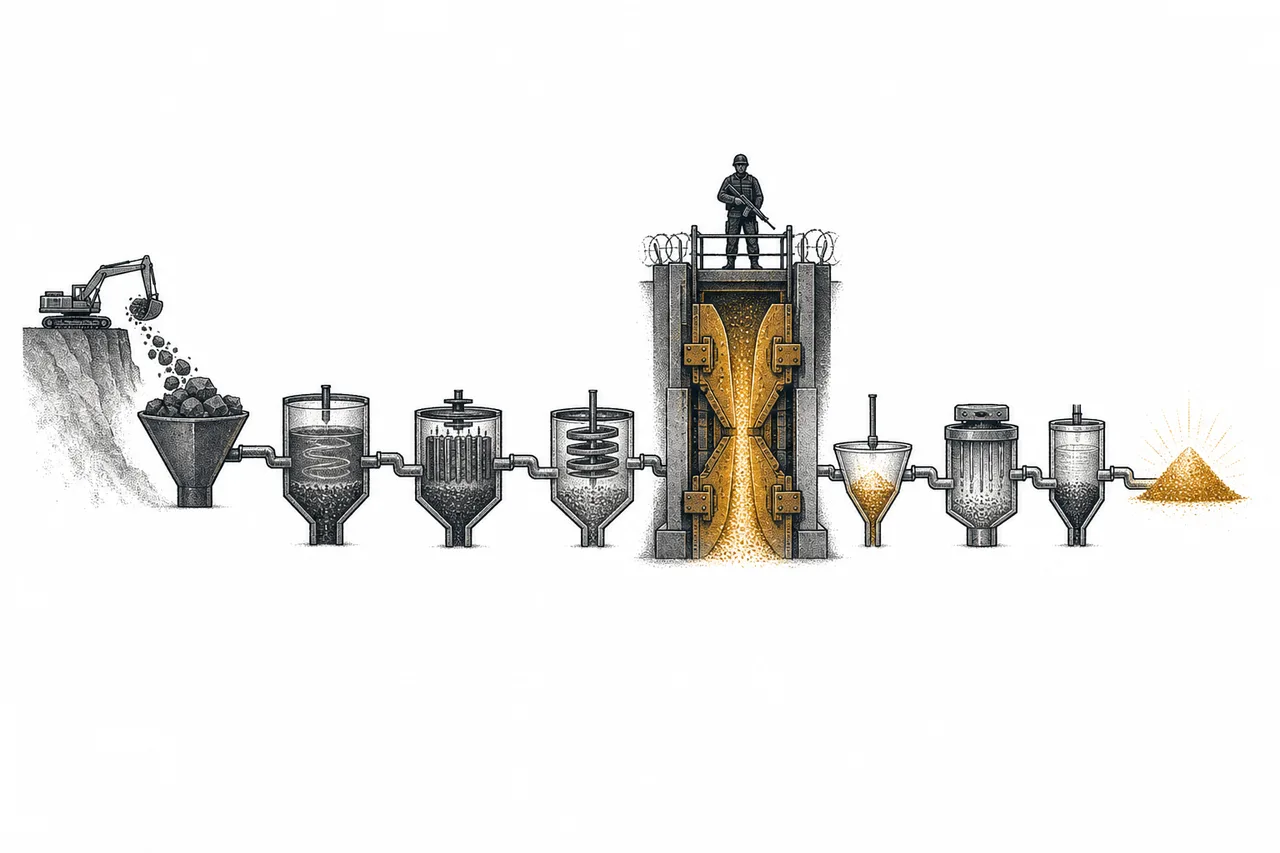
01What it is (the four-step refining belt)
When we talk about 'nuclear power,' most people picture reactors and giant cooling towers. But the reactor is just the endpoint. Before it sits an entire industry whose job is to 'make the fuel' for it — and that's this node, the Nuclear Fuel Cycle.
The heart of the story is one fact that sounds alarming: uranium dug straight out of the ground can't be used in an ordinary reactor at all — it's too dilute. Natural uranium contains just 0.7% of the 'ignitable' isotope (U-235); the other 99.3% is U-238, too inert to start a chain reaction. An ordinary reactor needs fuel with about 3–5% U-235 — so you need a 'refining belt' to raise the concentration.
This belt has four steps in a row, and this node splits into the two components that cover them:
- Upstream — uranium mining (Uranium Mining): dig out the ore, then crush and extract it into a yellow powder called 'yellowcake' (U₃O₈). This is the raw-material side
- Midstream — conversion, enrichment & HALEU (Conversion & Enrichment): turn the yellowcake into a gas (UF₆), 'enrich' it to raise the U-235 concentration, then fabricate it into fuel pellets. This is the technology-and-bottleneck side
The two are the same story — the upstream and midstream of one chain. On the megatrend map this node sits under Energy Transition & Power Demand and also connects to Critical Materials, because uranium is itself a strategic mineral.
Yellowcake (U₃O₈) = the yellow, concentrated uranium powder you get from milling the ore — a commodity traded on the market · UF₆ (uranium hexafluoride) = the gaseous form of uranium, made so the isotopes can be separated in the next step · Enrichment = the process of raising the share of U-235 above 0.7% — the hardest step of the whole belt
02Why it matters — it's the security of a nation's whole power supply
This chain is heating up again because of two forces at once. The first is exploding electricity demand. AI data centers eat enormous power and need power that's 'stable 24/7' (firm power), which nuclear delivers better than sun and wind. So the world is rushing back to build nuclear plants and develop new small reactors (SMRs) — and every new reactor needs fuel supplied for its entire operating life.
The second force is the scary numbers. In 2025 the world produced about 173 million pounds of uranium, but demand was around 204 million pounds — a deficit of more than 30 million pounds. And that gap is set to widen further from around 2030 on. The market has held up by drawing down old stockpiles — but stockpiles aren't infinite.
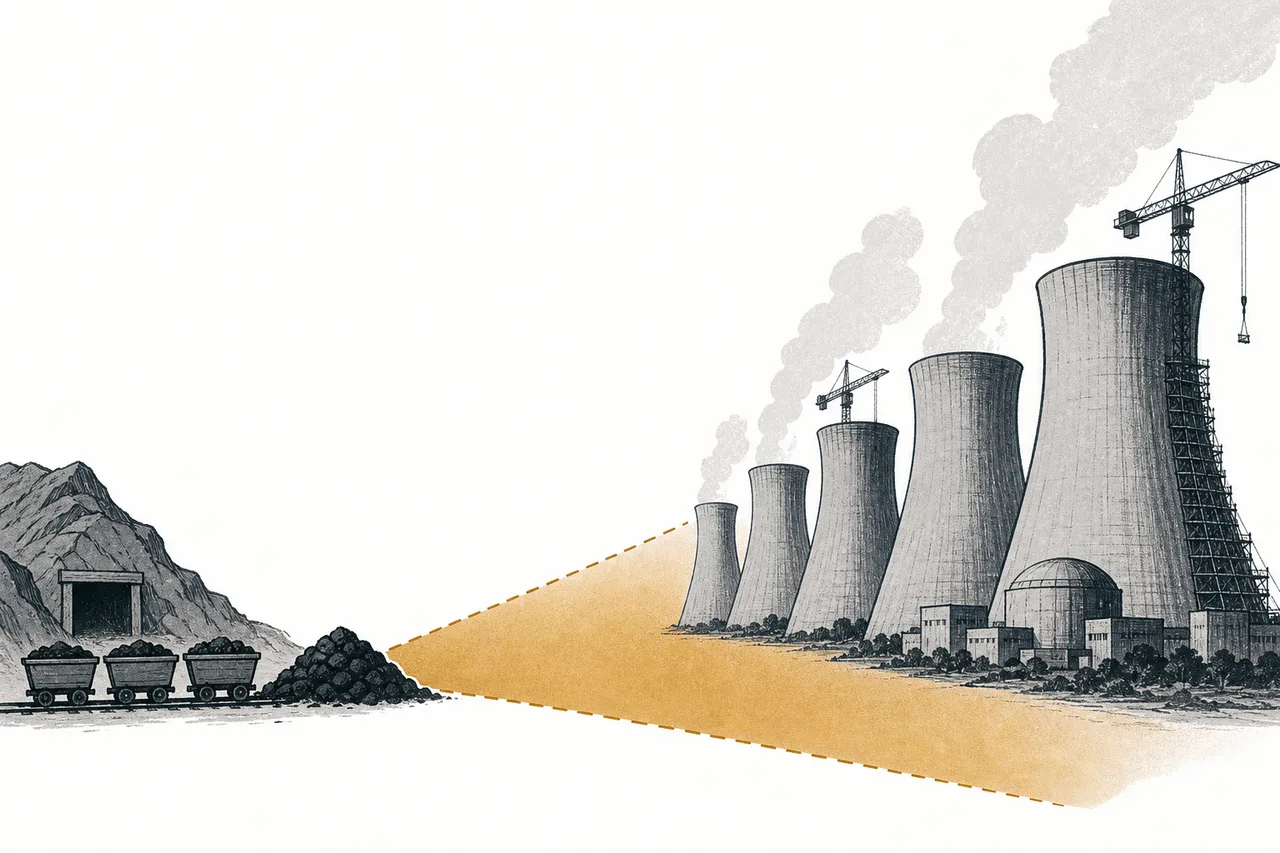
The result: uranium prices have surged. Spot was around $30 a pound in 2020, then broke $106 a pound for the first time since 2008 in early 2024. In early 2026 it's still swinging hard, touching ~$101 before easing back to ~$85 a pound (about 30% higher than a year earlier).
And more important than the spot price is the long-term contract price, which shows how much a plant will pay to 'lock in' fuel for years ahead. The long-term price hit $93 a pound (March 2026) — the highest since 2008. The striking part: plants worldwide have 'contracted for less than they actually use' for 13 years running, meaning a large backlog of demand is waiting to come back to the market.
03How it works — and where the bottleneck is
Let's follow a single piece of ore from the ground to finished fuel, so you can see why the 'third step' is the star of this story.
This step is hard because U-235 and U-238 are isotopes of the same element — chemically identical, differing only by a tiny bit of weight. You have to run UF₆ gas through centrifuges spinning at 100,000 rpm, chained together in a 'cascade' of hundreds — the same technology used to make weapons, so it's tightly controlled worldwide. The unit that measures this work is the SWU, and its price has become a quiet battlefield that's now heating up.
The details on centrifuges and SWU are in the enrichment lesson.
04Upstream: uranium mining & the shortage crisis
Start with the uranium mining side, because without ore there's nothing to refine. And this side is clearly 'concentrated' geographically.
The real market leader is Kazatomprom, Kazakhstan's state-owned company, which produces over 40% of the world's uranium — the biggest on Earth by a wide margin. In 2025 the Kazatomprom group mined roughly 25,800 tonnes in total. Its method is in-situ leach (pumping a solution underground to dissolve the ore out), which is very low-cost — making Kazakhstan the 'Saudi Arabia of uranium.'
On the Western side, the big player is Canada's Cameco, the largest uranium producer outside Kazakhstan. In 2025 Cameco posted revenue of about $3,482 million (up 11%), producing around 21 million pounds of U₃O₈. Cameco's edge is that it doesn't just mine — it goes down into conversion and holds a stake in the enrichment business too, one of the few Western companies that spans a broad slice of the chain.
The key point on the upstream side is that 'a higher price doesn't mean supply arrives fast.' Opening a new mine or restarting an old one takes years and enormous money. Even Kazatomprom has announced it will cut its 2026 production target (partly because of a shortage of the sulfuric acid used to leach the ore) — underscoring how slowly supply responds, which is prime fuel for a price upcycle.
Still, the mining side is stirring too — Canada just approved its first 2 new uranium mines since 2004 (Denison, NexGen), and a physical-uranium holding fund (SPUT) keeps pulling material out of the market, tightening supply further (deep dive in the mining lesson).
05The heart of it: enrichment & the Russia game
This is the most important part of the whole node — the enrichment side that became the West's strategic weak point.
The world's enrichment market is held by just four main players, and the biggest is Rosatom, Russia's state nuclear company, controlling about 40–44% of global capacity. Next come Urenco (Europe), Orano (France), and a fast-expanding China (CNNC). Count Russia and China together and they hold over 60% of the world's enrichment capacity.
This dependence was never a problem — until Russia invaded Ukraine. Suddenly the West found itself buying enrichment services from a country that had just become an adversary. The US responded by passing a law banning imports of Russian enriched uranium from May 2024 — but the problem is the West still doesn't have enough capacity of its own to replace it.
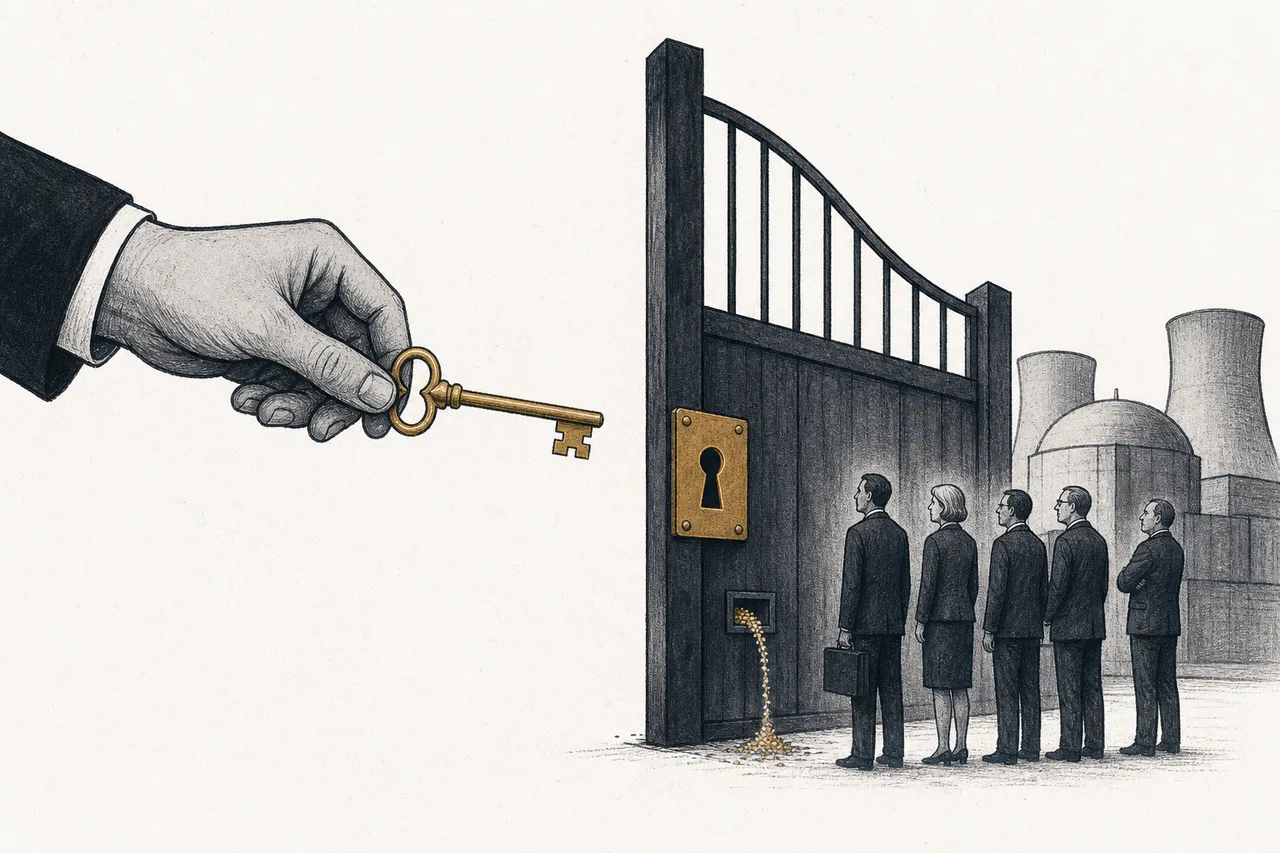
The result is a 'gap' analysts call a crisis over the next 3–4 years, where enrichment demand outside Russia will be greater than available capacity — filled by drawing down reserves while waiting for Urenco and Orano to expand their plants. This is why the SWU price surged from ~$34 (2018) to ~$188 (mid-2025) — a price that says 'we urgently need new enrichment plants.'
This is exactly where HALEU comes in to accelerate the problem. Many new reactors — especially SMRs and microreactors — need more concentrated fuel, with U-235 at around 5–20% (versus 3–5% for ordinary reactors). That's called HALEU. Making HALEU consumes several times more SWU per unit than ordinary fuel. And the big problem is that originally only Russia (via the firm Tenex) could make HALEU commercially — the West had almost none.
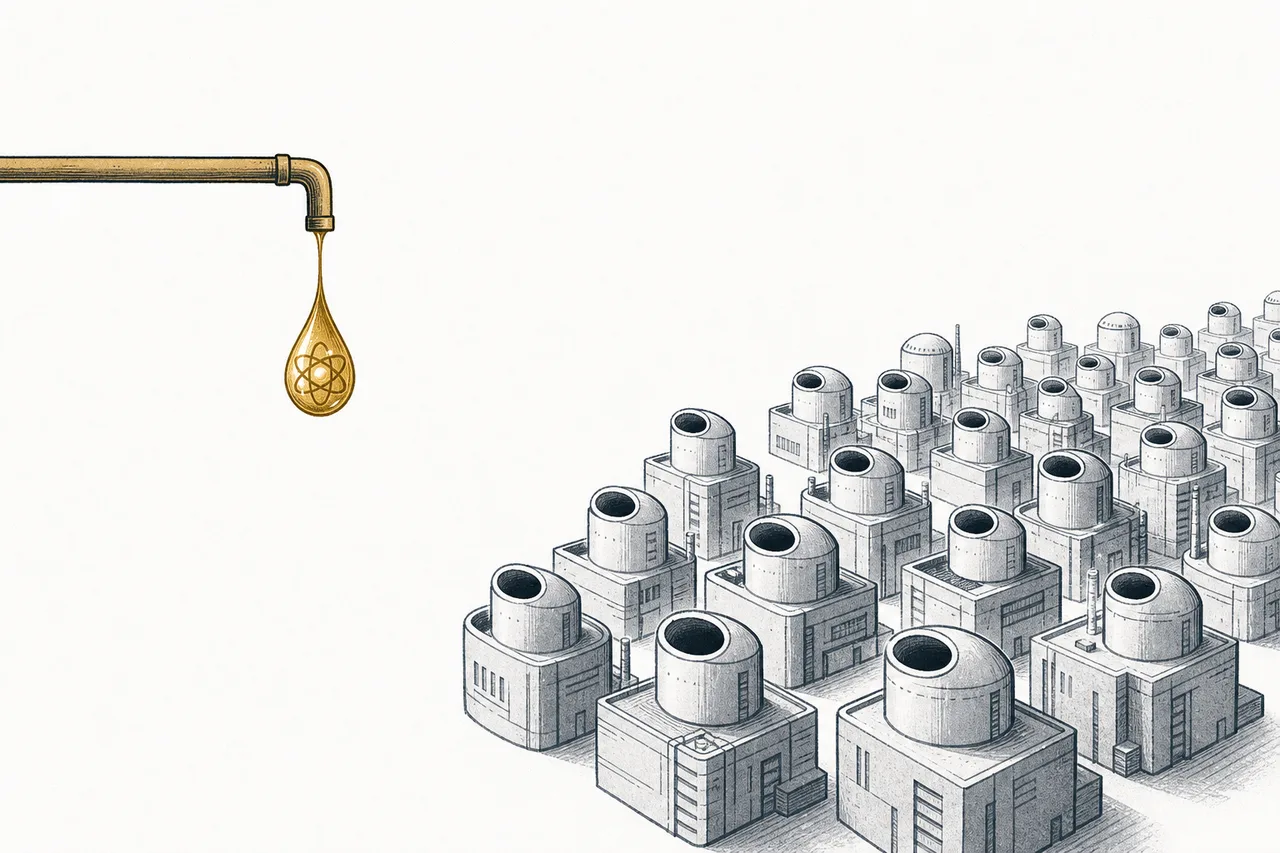
The West's hope now rests on America's Centrus Energy, which became the West's first commercial HALEU plant (having delivered about 900 kilograms by mid-2025) — details in the enrichment lesson.
06How it connects in the ecosystem
This node is the 'upstream of nuclear power,' so it connects up, down, and sideways:
- Feeds Nuclear Generation & Utilities directly: the fuel that comes off this belt is what goes into a plant's reactor — no fuel, no power
- A bottleneck for Advanced Nuclear (SMR): new reactors need HALEU; if HALEU isn't made in time, the whole SMR field can finish building but have no fuel to run
- Part of Critical Materials & Supply Chain: uranium is a strategic mineral too — so this node is dual-homed with rare minerals and raw-material security
- The endpoint is AI and electricity demand: everything is heating up because AI and explosively growing power use are pushing the world to need more firm power
Step back and this node is 'the point where geopolitics meets clean energy' — it's a low-carbon story, but at the same time a story about bargaining power between nations, something you rarely see in other clean-energy trends like sun or wind.
07Where it stands now — the real players
The 2026 picture is 'prices rising across the whole chain, alongside a rush to rebuild the Western supply chain from scratch.' Uranium is in deficit, the long-term contract price is the highest since 2008, and US/European government money is flowing into the enrichment side to 'stop depending on Russia.' The players split clearly into two groups — the mining side (upstream) and the enrichment side (midstream, which has more pricing power).
08The road ahead & risks
There are three directions to watch.
The first is 're-shoring' the Western supply chain. Government money is flowing into both mines and enrichment plants in the US/Europe to end the dependence on Russia. This is a structural investment theme that could run for a decade — but it's slow, because building new enrichment capacity takes years (Centrus's new machines won't really run until 2029).
The second is HALEU as the bottleneck that decides the fate of SMRs. If Western HALEU production can't keep up, beautifully designed new reactors may finish building but have no fuel to run. Whoever controls HALEU production first will have enormous bargaining power in the coming decade.
The third is the price cycle. Uranium is a commodity with a history of sharp ups and sharp downs. This upcycle comes from a real shortage, but if mines worldwide rush back online together over the next 3–5 years, supply could glut and prices could plunge — as they have every time before.
In short: the story of this node is the story of the hardest step in the fuel belt. Many countries can mine the ore, but 'enrichment' is the bottleneck Russia controls across nearly half the world — and the West is now pouring vast sums to build this step anew as its own. Understand that 'the power is in enrichment, not the mine' and you understand why nuclear fuel became a story about energy and security at the same time.