Megatrend · Spatial Computing / AR/VR
Pixels that light themselves — and the secret chemistry every premium screen pays a royalty for
Every time you look at a flagship phone, an OLED TV, or a Vision Pro headset, you're looking at organic molecules that "light up on their own" when electricity flows through them — no backlight like the old screens. Behind these screens is a real industry already making enormous money today, not a future XR dream. And the fattest profits aren't in the screen factories — they're in a handful of chemical companies that hold the patents on the "recipe for light," the toll the whole world has to pay.
01What it is — pixels that light themselves
Compare two kinds of screens. An old-school LCD (the kind in budget TVs and laptops) works like "stained glass with a lamp behind it" — there's a backlight that's always on, and a color-filter layer blocks that light dot by dot. The problem is that black is never truly black, because the backlight still leaks through, and the screen has to be thick because there's a lamp inside.
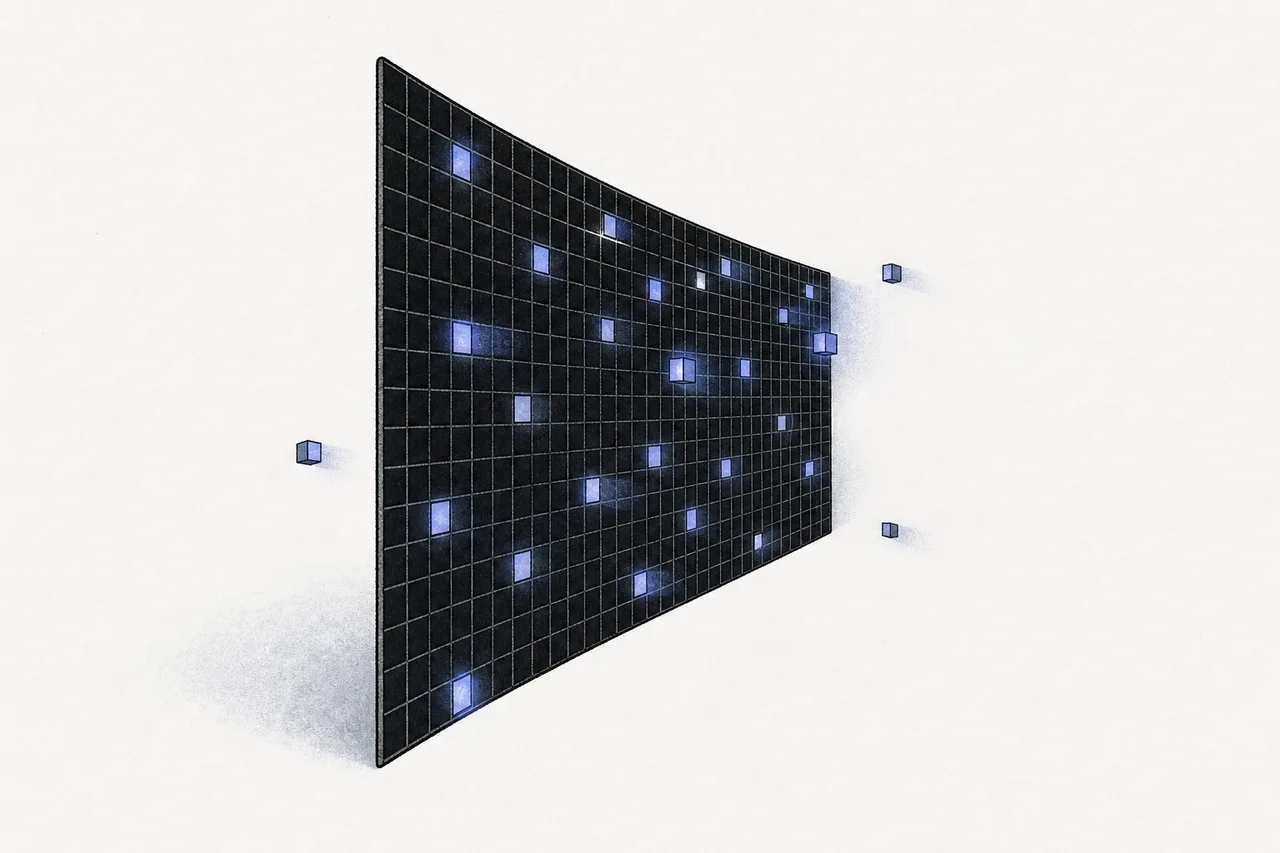
An OLED screen does the opposite — there's no backlight at all. Each pixel is an organic molecule that emits its own light when a current flows through it. Want a spot to be black? Just switch that pixel off — and it really goes dark. The result is a screen that's ultra-thin, high-contrast, bendable and foldable, and uses less power on dark images. That's why almost every flagship phone, high-end TV, and smartwatch has moved to OLED.
OLED = Organic Light-Emitting Diode — a diode that emits light from organic material. "Organic" here doesn't mean pesticide-free like food; it means molecules with carbon at their core (organic chemistry), designed to emit red, green, or blue light when electricity excites them.
On the megatrend map, this node isn't about the finished screen — it's about the "raw materials fed into the screen factory", especially the high-value secret chemistry of the emitter and the host, plus the fine-metal mask and various films used to build the screen. It's a sub-field in the supply chain of the Spatial Computing / AR/VR megatrend — the "foundation layer" that every screen, including XR screens, has to stand on.
02Why it matters to the world economy
What makes this node more interesting than other XR categories is that it's a real business already making enormous money today, not a bet on the future. The global OLED display market was worth about $58 billion in 2025 and is expected to grow to ~$65 billion in 2026, at double-digit annual growth, as phones, TVs, tablets, and monitors switch from LCD to OLED.
But what investors should understand is — profit isn't spread evenly across the chain. Screen factories burn through huge capital, compete fiercely on price, and get beaten down by China to thin margins. Meanwhile, the companies that sell the chemical "recipe for light" run a sky-high-margin business, because they hold patents no one can copy. The clearest example is Universal Display (UDC) — a company that sells materials and collects OLED royalties, with a gross margin as high as ~76% in 2025, a number screen factories can only dream of.
The OLED materials market itself was worth about $31 billion in 2024 and is growing even faster than the display market (CAGR ~22%). Of that, the most expensive and most profitable layer is the emissive-layer material, which accounts for about 38% of total material value, or ~$10.2 billion in 2025 — because it's the heart that decides a screen's color, brightness, and lifespan.
03How it works (+ why XR needs micro-OLED)
The heart of a single OLED pixel is a "sandwich" of several thin layers. When you apply power, electrons (negative charge) come in from one electrode, and "holes" (the empty space left by an electron, acting like positive charge) come in from the other. They meet in the emissive layer in the middle and "recombine" — and the energy released at that moment becomes a particle of light (a photon). Repeat this millions of times a second, and the pixel glows continuously.
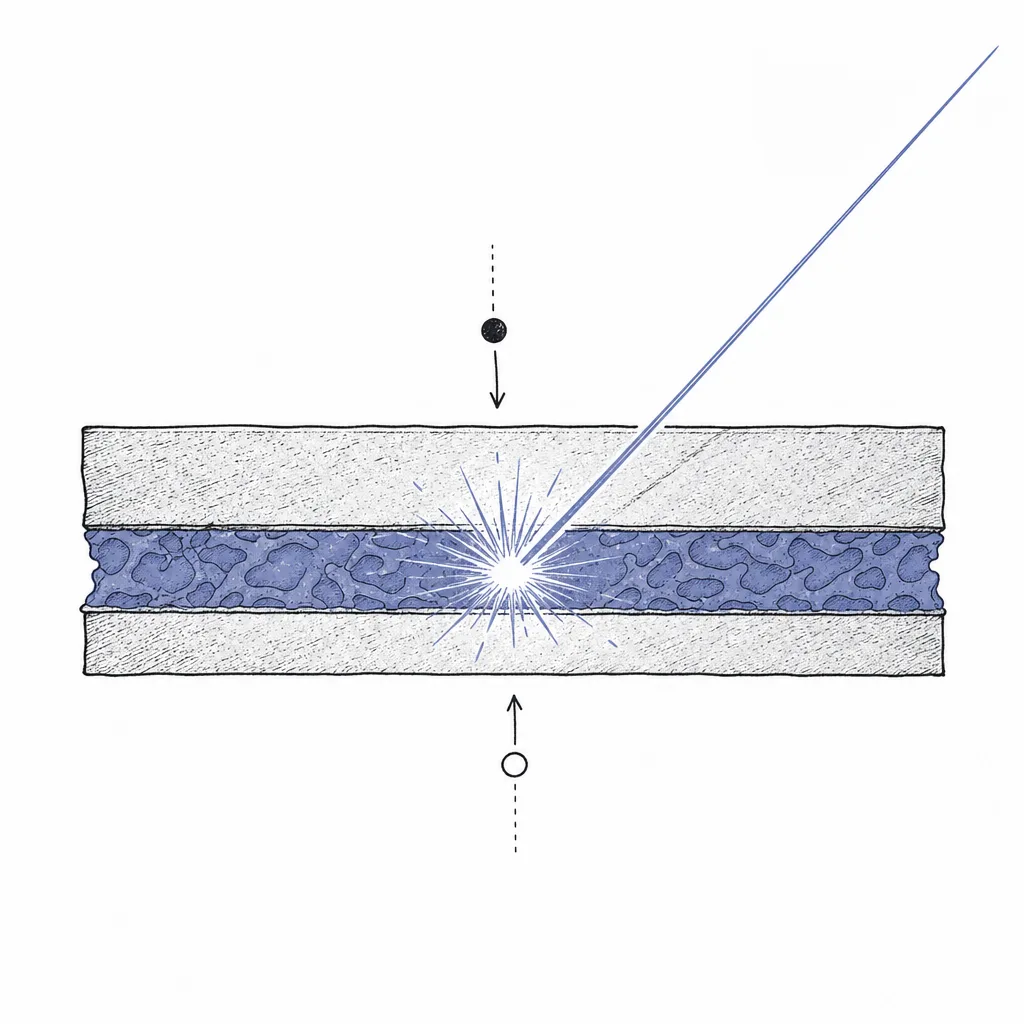
This is where the "secret chemistry" is worth a fortune. The earliest OLED recipes used fluorescent materials, which convert only ~25% of the energy into light — the rest is wasted as heat. But the phosphorescent OLED technology that UDC holds the core patents on pushes internal efficiency to nearly 100% — brighter, more power-efficient, nearly 4× as much. That's why every world-class OLED screen factory has to buy materials and pay royalties to UDC.
The emissive layer isn't made of a single material — it's a "host" doped with a small amount of "emitter / dopant". The host receives the charge and passes the energy to the emitter to emit light. Finding a host–emitter pairing that gives the right color, is bright, and lasts is an art that takes years of R&D — and it's the source of the patents that dig a moat for just a few companies.
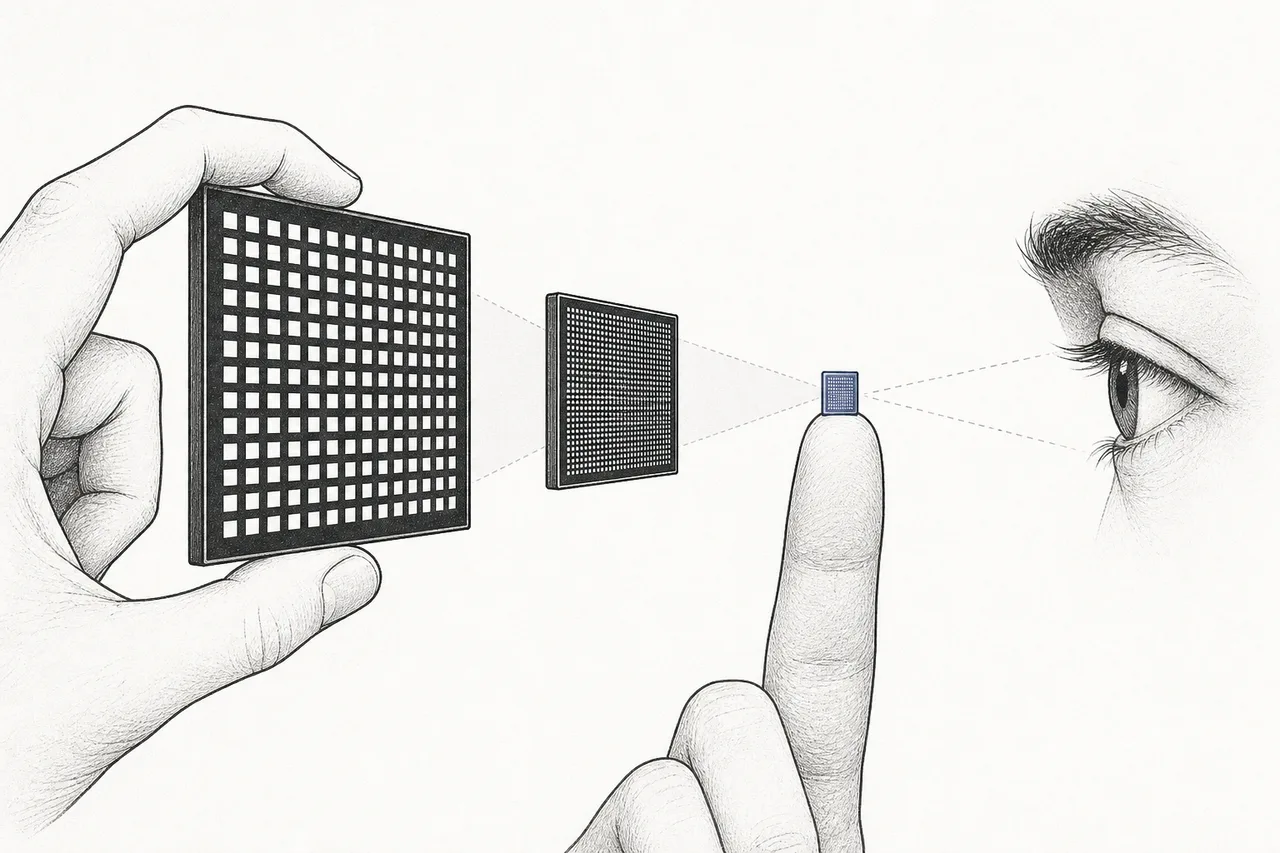
So how does XR come in? A phone screen sits about a foot from your eyes, but the screen in a VR/AR headset is only an inch away. Use a normal-resolution screen and you'll see the pixel grid like looking through a screen door. The fix is micro-OLED — building OLED directly onto a silicon wafer (OLED-on-silicon), making pixels tiny and packing in a huge number. The micro-OLED in Apple Vision Pro has a density of about 3,400 pixels per inch (ppi) on a screen just 1.25 inches across — compared with flagship phones at ~460 ppi.
04Where the money is in the chain
If you remember just one thing from this lesson, remember this line: "In the display chain, the more upstream you are, the fatter the margin." Let's go left to right.
(1) Emissive materials (the very top of the chain) — an IP (intellectual property) business selling special chemistry + collecting royalties. Few players, high patent walls, margins of 70–80%. UDC and Japan's Idemitsu Kosan together hold over 60% of the emissive-materials market.
(2) Screen factories (midstream) — building a factory takes tens of billions of dollars, competing on capacity and price. Margins are thin and swing with the cycle. This is the layer China is attacking hardest.
(3) The device itself (downstream) — Apple, Samsung, and Sony assemble screens into products. The profit is in the brand and the system, not the screen itself.
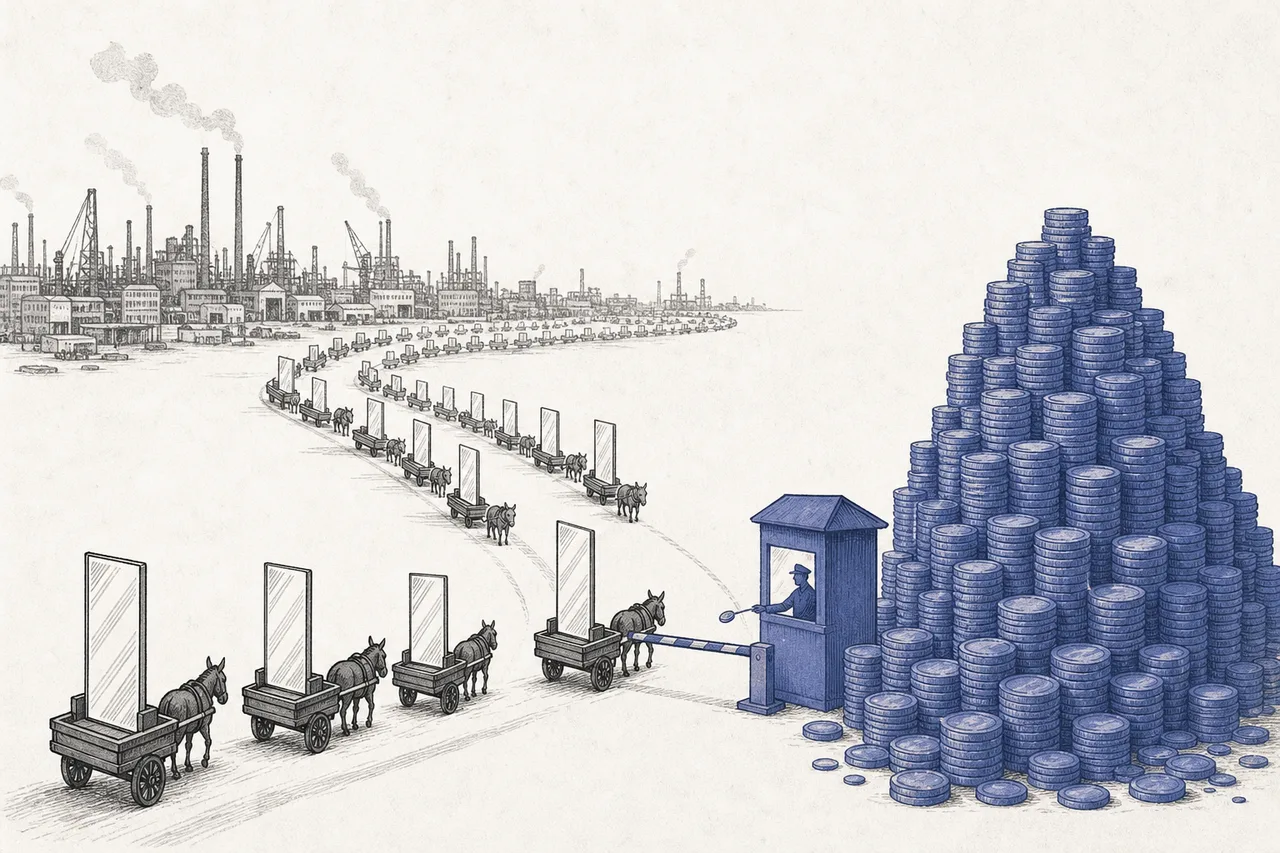
That's why smart investors tend to favor the "one who sells picks to the gold miners" over the miners themselves — no matter which brand's screen wins, everyone still has to buy emissive materials and pay royalties. So upstream materials take a cut of the entire screen market, not just one brand's screen.
05How it connects to Spatial Computing
Under the Spatial Computing / AR/VR megatrend, this node is the "foundation layer that every XR device has to stand on". No matter how impressive the glasses are, the image that reaches your eye ultimately comes from a screen — and the screen good enough for XR (small, fine, bright, low-power) is the micro-OLED this node is the source of.
- Directly linked to Optical & Display Components: this node makes the "light," and the optics field makes the "path of light" (lens + waveguide) that carries the image from the micro-OLED and floats it right in front of your eyes — the two layers are an inseparable pair in AR glasses
- Feeds VR / MR Headsets: Vision Pro and the new high-end headsets use micro-OLED at their heart — and it's the most expensive part in the device
- Meets Semiconductors: micro-OLED is "OLED on silicon," so it needs wafers and semiconductor fabs — the world of screens and the world of chips meet right here
- Depends on key raw materials: many high-efficiency emissive materials rely on a rare metal like iridium at their core — if raw materials tighten, costs shake
Put another way: while other XR categories are still a bet on the future, this node is the part that makes money from the world's screen market today (phones, TVs) and has XR as an added growth engine — XR isn't the whole story, it's the "fast-growing bonus."
06Where it stands now
Three things define the state of this industry right now:
One — Korea controls value, China controls volume. In 2025, Samsung Display was still number one with about 48% revenue share, followed by LG Display surging to ~21%. But measured by unit count, Chinese makers (led by BOE) have together passed 50% of the screens shipped worldwide — the classic picture of an industry where "Korea eats the value, China eats the volume," and that line keeps getting pushed up by China.
Two — emissive materials are the juiciest business. UDC guided 2026 revenue to $650–700 million at ~76% margin, and recently bought an OLED patent portfolio from Merck KGaA (over 300 patents) to harden its IP wall further — a sign that this game is decided by who holds the patents on the hardest chemistry to make.
Three — micro-OLED for XR is still small and expensive. The global micro-OLED market is still tiny, about $0.86 billion in 2026, and the Vision Pro screens, made almost solely by Sony, cost as much as ~$228 per screen (two = ~$456 per device), making it the most expensive part in the headset. That's why top-tier XR devices are still pricey and sell in limited numbers.
07The road ahead
The first direction is the "blue sky" everyone is chasing. Red and green have used high-efficiency phosphorescent materials for a long time, but blue is still the hardest problem, because high-efficiency blue tends to be short-lived. Whoever cracks "durable phosphorescent blue," or a new technology like TADF, commercially will unlock screens that are even more power-efficient — this is the biggest R&D battlefield in the materials layer right now.
The second direction is cheaper micro-OLED. XR screens are expensive now because they're hard to make and there are few makers. But as Samsung, BOE, and Chinese players like SeeYA / Lakeside compete more with Sony, the cost per screen will fall — a key condition for AR/VR glasses to become affordable and sell in the millions, instead of being an expensive toy.
The third direction is competition with the next technology. OLED isn't the end of the story. microLED (a screen using tiny inorganic LEDs, brighter and more durable) is being developed as an option for bright outdoor AR. But microLED is still hard and far more expensive to make, so OLED/micro-OLED will hold the market for years — but it's a long-term risk to watch.
08Challenges & risks
This node's appeal comes with risks you have to look at squarely. It's not all rosy.
The first risk is cycles and price wars. The screen-factory side is a deeply cyclical business — there are periods of screen glut where prices crash and losses come in waves. Building a factory costs a fortune and pays back slowly. Get the timing wrong and you get hurt badly. This is not a business with steady, even profits.
The second risk is China pressing margins down. Chinese makers (BOE, Tianma, ChinaStar) get state subsidies and ramp capacity hard, pushing their volume share past 50%. Even though Korea still controls the high-end value, the price pressure from China will keep squeezing screen-factory profits — which is why the "upstream materials" layer is safer than the "factory" layer.
The third risk is micro-OLED for XR is still small and uncertain. The whole XR market hasn't proven itself yet. If Vision Pro and other headsets don't sell as hoped, the micro-OLED demand so many people are excited about could grow slower than expected — this part is still a "future accelerant," not today's main revenue.
The fourth risk is dependence on patents and technology rivals. A high-margin business like UDC leans heavily on its patent wall. As some core patents expire one by one, or if microLED / new technology replaces it faster than expected, its pricing power could be challenged (UDC buying up more patents is exactly to guard against this risk).
In short: every time you look at the most beautiful, thinnest screen, you're looking at the work of a few organic-chemistry recipes that just a few companies hold the patents on. It's an industry that makes real money, grows for real, and has its profit power clearly concentrated upstream — and XR is the next chapter that will keep shrinking those "self-lighting pixels" until, one day, they're small enough to fit in glasses you can wear all day.