Megatrend · Cloud & Digital Infrastructure
In an arena ruled by the Big Three, some players don't compete on "scale" — they compete on "specialization"
The whole world's cloud is held by three giants — AWS, Azure, Google Cloud. But just behind their shadow sits another group, the fastest-growing in the business: the "neoclouds" that rent out hundreds of thousands of Nvidia GPUs, like CoreWeave; the platforms developers love, like Cloudflare and DigitalOcean; and Oracle, which suddenly roared back with AI deals worth hundreds of billions. They don't race the giants on scale — they pick the gaps the giants left behind: price, simplicity, speed, and the GPU power the whole world is fighting over.
01What is it? (cloud outside the Big Three)
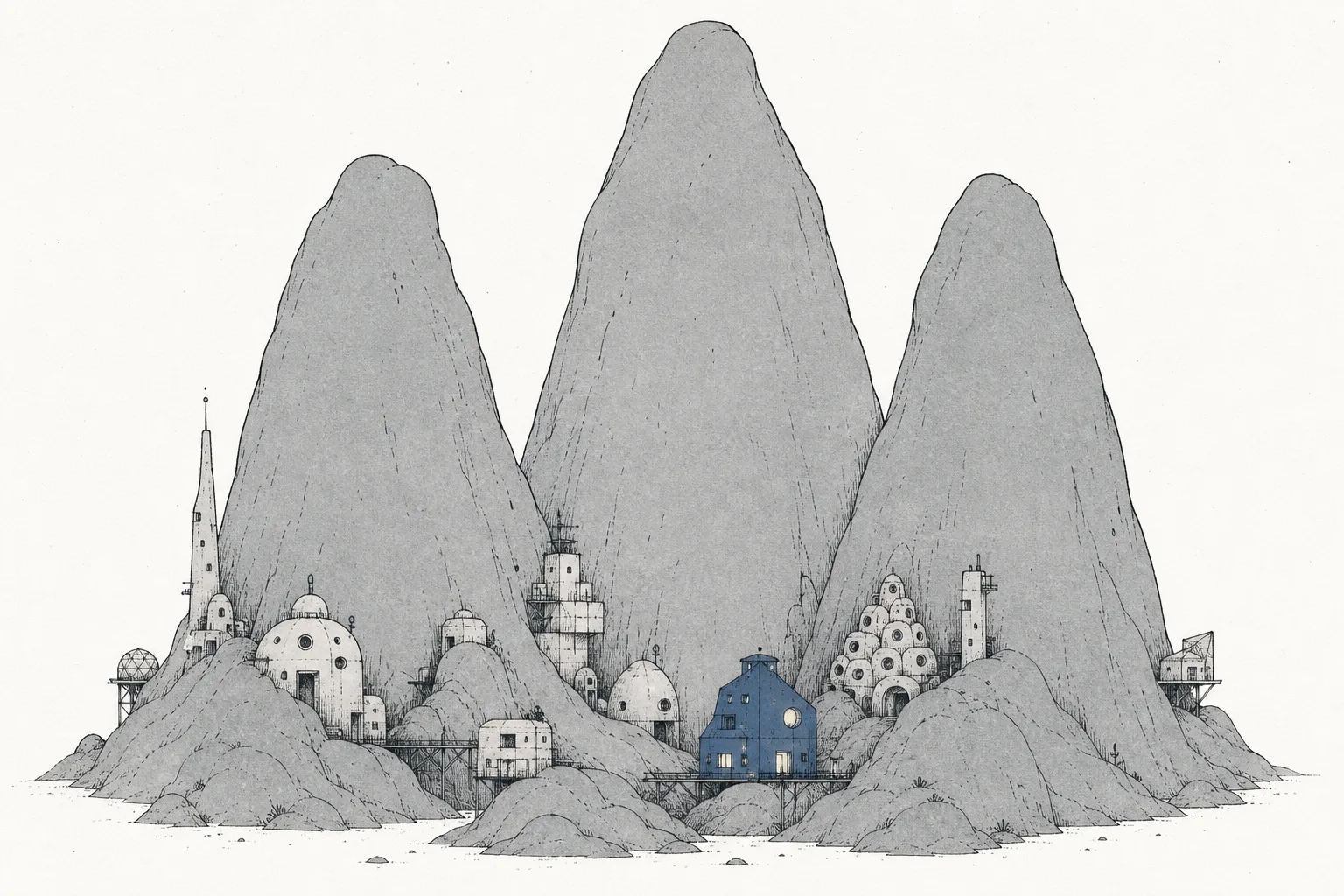
Picture the cloud market as a city ruled by three "big department stores" — AWS, Microsoft Azure, and Google Cloud, the so-called Big Three. Together these three take over 60% of the world's cloud market, with hundreds of services, everything in one place. But here's the question — how does anyone who isn't a giant survive in this city? This node's answer is: don't compete on size, compete on specialization.
This node is the group of clouds that sit outside the Big Three — smaller, but sharper at the one point they pick. Instead of selling everything to everyone, they target a specific set of customers or services: some sell only GPU power for AI work (the group called "neoclouds"); some sell simplicity and predictable pricing to developers and small businesses; some start as a content delivery network (CDN) sitting close to users worldwide and build up into a cloud; and some are hosting providers that handle everything for customers who don't want to deal with the technical side.
On the megatrend map, this node is a sub-branch under Hyperscale Cloud (IaaS / PaaS) inside the big trend Cloud & Digital Infrastructure. Its sibling next door is Mega-cap Hyperscalers — the actual Big Three themselves. If the sibling node is "the big store that has everything," this node is "the specialty shop that's best in the world at one thing" — and here's the interesting part: in the AI era, some specialty shops are growing faster than the big store.
Neocloud = a new breed of cloud built to sell just one thing — the processing power of graphics cards (GPUs) for training and running AI models. Unlike the Big Three that sell every service under the sun, neoclouds focus purely on GPUs, so they're cheaper and get access to Nvidia's newest chips faster · the most famous examples are CoreWeave and Nebius.
02Why it matters — the GPU-as-a-Service wave
If specialized clouds were just "the little guys who sell cheaper," they wouldn't be all that interesting. But what changed everything is the AI wave — when the whole world started fighting over Nvidia GPUs to train models, it turned out the giants couldn't produce GPU power fast enough to meet demand. That gap opened the door for newcomers selling pure "GPU rental" to rise faster than anything in cloud history.
The numbers show this clearly. The global neocloud market in 2026 is worth around $20B and is expected to surge to ~$180B by 2030 — nearly 9× in under five years. Meanwhile some analysts (ABI Research) estimate that neocloud "GPU rental" (GPU-as-a-Service) revenue alone could top $65B in that same year. This is the fastest-growing segment of the entire cloud industry.
The reason neoclouds are cheaper and faster comes straight from their "specialization." When you rent an Nvidia H100 through the Big Three, it costs around $98 per hour. But rent the same chip through a neocloud and it drops to around $34 per hour — about 65% cheaper, because neoclouds don't have to carry the cost of all the extra services the giants run. They design everything around squeezing the most out of GPUs and nothing else.
The most surprising twist is that even the Big Three themselves rent GPUs from neoclouds — Microsoft was once CoreWeave's biggest customer (about 67% of 2025 revenue), because it couldn't build GPU power fast enough for OpenAI's demand. That's a sign that the gap specialized players are drilling into isn't "scraps the giants don't want" — it's a gap even the giants have to rely on.
03How it works — four camps drilling into different gaps
Specialized cloud isn't one block — it splits into four camps, each drilling into a different gap. They all share one thing: pick something the Big Three don't do all that well, then do it better than anyone in the world. Let's look at the map of this arena.
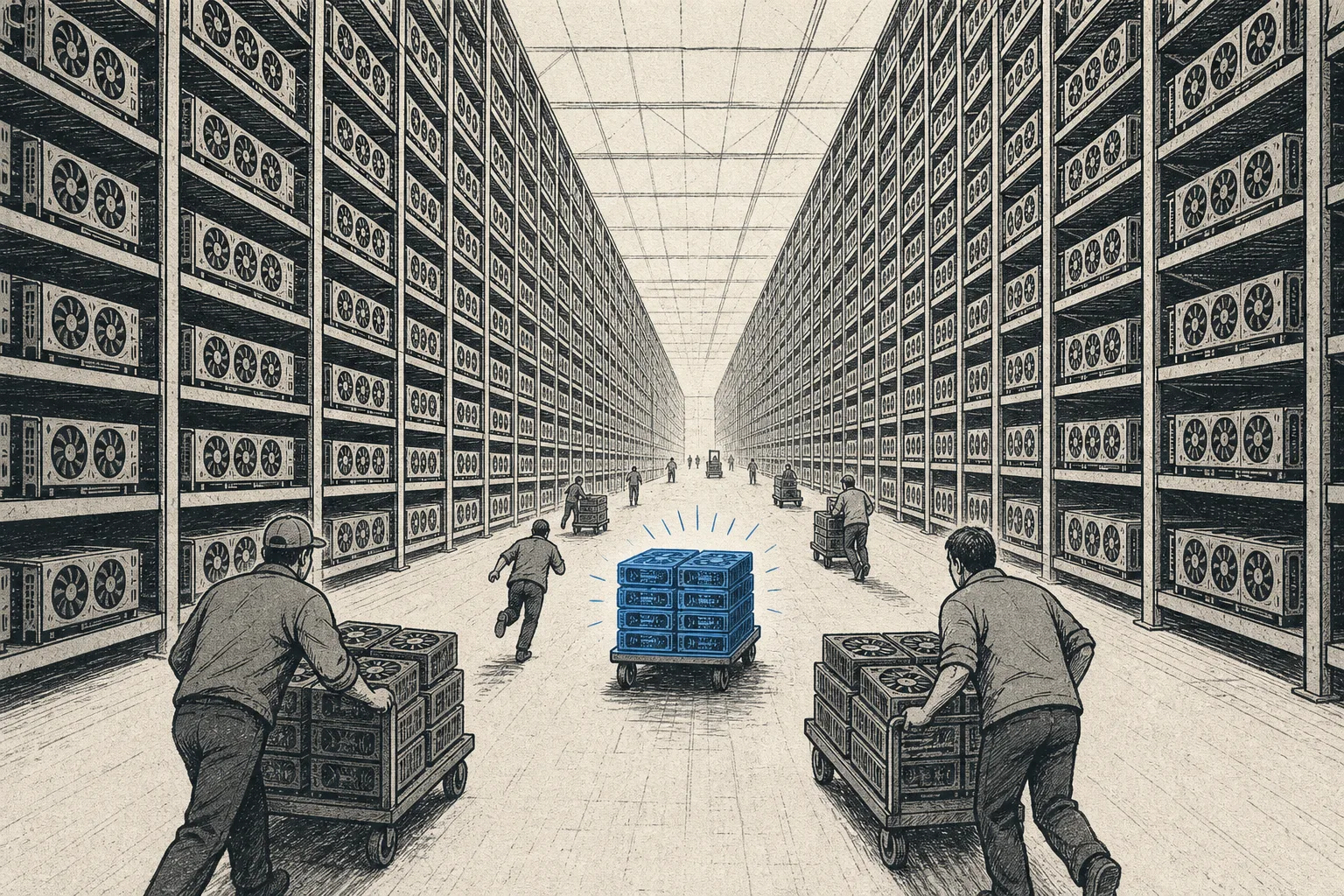
Camp 1 — neoclouds are the stars of this era. They buy hundreds of thousands of Nvidia graphics cards, build data centers purpose-built for AI work, then rent out the processing power by the hour. CoreWeave and Nebius are the two best-known names — both grew out of the explosion in model-training demand.
Camp 2 — developers and edge go the opposite way entirely. Instead of selling raw power, they sell "an experience developers love" — set up in a few clicks, predictable pricing, no surprise bills. Cloudflare goes further with the edge idea — placing hundreds of small servers spread close to users worldwide, so apps respond as fast as if they were next door. And its killer selling point is not charging for data egress — the opposite of the Big Three's expensive fees. DigitalOcean, meanwhile, focuses on simplicity for startups and small businesses.
Camp 3 — enterprise (OCI) is Oracle, which uses its existing enterprise customers (banks, airlines, governments) as a bridge into the cloud, then flipped the game by landing huge AI deals worth hundreds of billions. Camp 4 — managed hosting targets people who want a website or system but don't want to look after their own servers. Companies like GoDaddy and IONOS handle everything, from registering a domain to running the site — an unflashy market, but one with millions of real customers.
04How it connects in the ecosystem
Specialized cloud sits right in the middle of several trends at once — it rents hardware from upstream, sends processing power downstream, and at all times has to live "under the shadow" of the far larger Big Three.
- Renting graphics cards straight from Semiconductors: the heart of a neocloud is the Nvidia graphics card. Every one it buys is a big chip order, and "getting access to new chips before anyone else" is the make-or-break of this business — whoever gets Blackwell first gets the customers
- Supplying the main fuel for AI: every AI model needs vast GPU power to train and run. The neocloud is the "gas station" pumping that fuel — the more AI demand grows, the more this camp grows right with it
- Always under the shadow of the Big Three: this relationship is complicated — sometimes a competitor (fighting over AI customers), sometimes a customer (the giants rent GPUs on top), sometimes both at once. It's a tightrope specialized players have to walk carefully, because your biggest customer could become your competitor tomorrow
- Hitting the energy ceiling: GPU data centers devour enormous power. Whether you can expand capacity depends not just on money or chips but on whether you can find the electricity to feed it — energy has become the real constraint on growth
05Where it stands now
The biggest story of 2025–2026 is the leapfrogging rise of neoclouds. The star is CoreWeave, which hit $2,078M in Q1 2026 revenue — up 112% year-over-year, with a signed backlog of nearly $100B. Nebius grew even harder — AI cloud revenue jumped 841% year-over-year to ~$390M in a single quarter, and it's expected to reach a run-rate of around $4.3B by the end of 2026. Both landed huge deals with Microsoft, Meta, and OpenAI.
The second story is the return of Oracle — a company once seen as having missed the cloud, suddenly a dark horse thanks to huge AI deals. Its OCI cloud grew 68% last quarter. But the number that shook the industry is its backlog (RPO) surging to $523B — up 438% year-over-year. At its core is the Stargate project with OpenAI, worth over $300B, in which Oracle will build up to 4.5 gigawatts of AI data centers.
On the developer and edge side, growth has been steady too. Cloudflare posted full-year 2025 revenue of around $2,090M, up ~25%, with its standout being a developer platform (Workers, R2) that doesn't charge for data egress — a deliberate counter to the Big Three. DigitalOcean, meanwhile, brought in around $897M, with over 640,000 customers and a 41% jump in customers paying more than $100,000 a year — a sign that small businesses that grow up tend to stay with it. And Akamai is transforming from an old-school CDN network into cloud compute and security.
06The road ahead
The first direction is GPU cloud becoming a new asset class. Once a graphics card worth hundreds of thousands becomes something you can borrow against, the whole financial market starts building tools around it — neoclouds borrow against their GPUs, use the money to buy more GPUs, and spin this in a loop. As long as AI demand keeps growing, this model can scale very fast — but it's also a double-edged sword (see the next chapter).
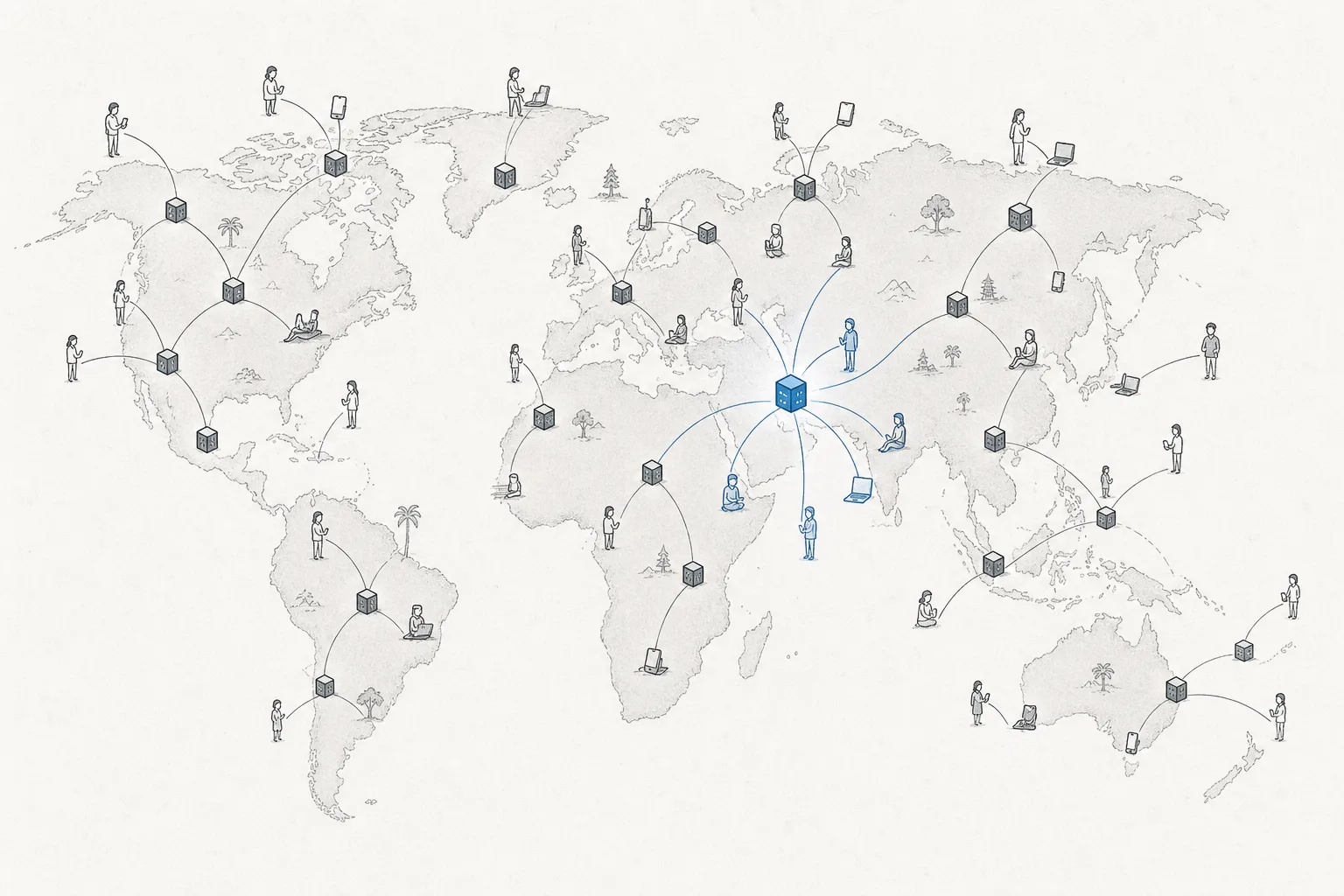
The second direction is the war shifting from "training models" to "actual use" (inference). Today most GPU demand comes from training giant models, which clusters with a handful of neoclouds. But once AI is used in real time, every second, across millions of apps, the game shifts to "who can run AI closest to the user and fastest" — and this is exactly where edge camps like Cloudflare, with servers spread close to users worldwide, have a chance to rise into a leading player.
The third direction is consolidation and shakeout. Right now dozens of neoclouds are being born, but not all of them will survive. As the market fills up and the cost of money rises, the ones without big customers or deep enough financial runway will be swallowed or fade away, leaving just a few that become the "new Big Three" of the AI world — the same selection cycle the first generation of cloud once went through.
07Challenges & risks
The appeal of specialized cloud — fast growth, drilling into the gaps the giants left — comes paired with especially heavy risks, particularly on the neocloud side.
The first risk is the mountain of debt and GPU depreciation. Neoclouds borrow enormous sums to buy graphics cards — CoreWeave alone carries about $24.9B in debt. The problem is that graphics cards lose value very fast. Companies usually depreciate them over 4–6 years, but Nvidia ships a new chip every 1–2 years — and once the new chip arrives, the rental rate for the old one plunges (the H100 once fell from ~$8 to ~$2 per hour when supply flooded the market). The moment demand stumbles, revenue can vanish faster than the debt that has to be paid.
The second risk is dependence on a few customers (concentration). CoreWeave got about 67% of its revenue from Microsoft alone in 2025. If a big customer decides to build its own GPU power, or delays its plans, that huge revenue wobbles instantly. On top of that, a neocloud's biggest customers are often the Big Three themselves — which are direct competitors. This "customer who is also a competitor" relationship is fragile by nature.
The third risk is the Big Three squeezing from above. The giants have far deeper capital, and once they catch up on building their own GPU power, the gap neoclouds drilled into can narrow. The developer/edge camp, meanwhile, has to fight the Big Three copying their selling points and doing it themselves (like starting to cut egress fees a bit). For specialized players, survival isn't just "growing fast" — it's "keeping your gap deep enough that the giants can't copy their way in."
In short: this node is the story of those who refuse to give up in a game the giants rule. They don't fight on scale, they fight on specialization — price, simplicity, speed, and the GPU power the whole world is fighting over. Some will become the new giants, some will disappear under a mountain of debt — and that's why this is one of the most watchable arenas of the AI era.