Megatrend · Spatial Computing / AR/VR
Hardware doesn't sell itself — software is what gets people to put the headset on
We talk a lot about VR/AR headsets, but people buy a headset because there's "something to do" inside it. This node is the entire software layer of the XR world — the tools that build 3D worlds (Unity, Unreal), the stores that distribute content and take a cut (Meta Store, visionOS), and the content that gives people a reason to wear the headset (games like Beat Saber). It's also the most brutal "chicken-and-egg" story in tech: good content needs enough users to be worth the cost, but users only show up once there's good content first.
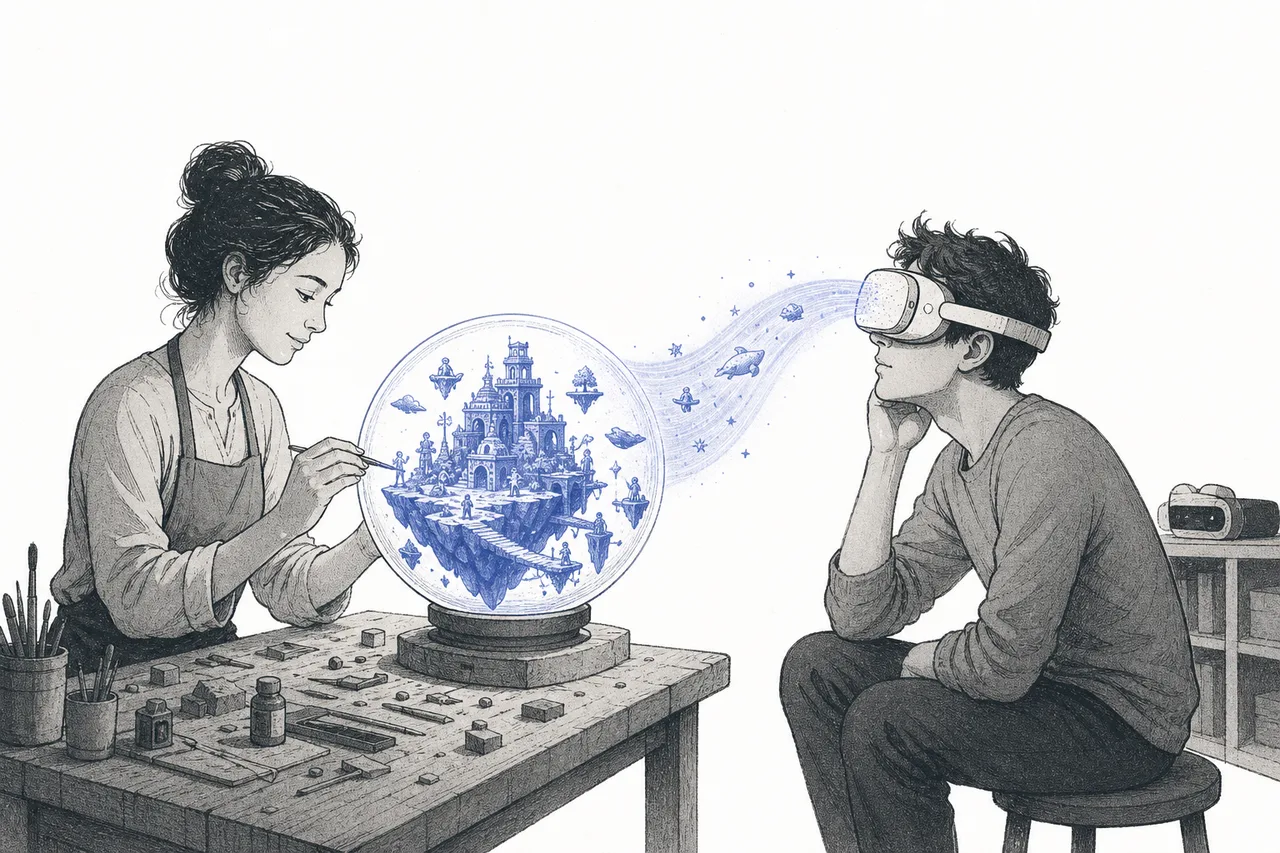
01What it is — the 3 layers of XR software
When we think of VR/AR, we usually picture the headset itself — the lenses, the chip, the display. But think about why people buy a Nintendo Switch: not because the box looks nice, but because they want to play Zelda. Headsets are the same. People will pay a lot of money to strap something heavy on their face only when there's "something" inside worth doing. This node is the story of that "something" — the whole software layer that sits on top of the hardware.
It breaks into 3 layers that hand off one to the next:
- Engine — the building tool: the program developers use to "sculpt" interactive 3D worlds in real time. The biggest are Unity and Unreal Engine (from Epic Games). Think of it as the Photoshop of 3D worlds — the common tool almost everyone has to use
- Platform/Store — the distributor: where content is sold, downloaded, and paid for, like the Meta Horizon Store (on Quest), the visionOS App Store (Apple Vision Pro), and SteamVR. These stores take a "cut" of every sale
- Content — the thing people actually want: games, apps, experiences, from a rhythm block-slashing game like Beat Saber to work apps. This is the "reason" people actually put a headset on
A real-time 3D engine is software that redraws an entire 3D world 60–90 times a second, responding instantly to every move of the head and hands (unlike an animated film, which is rendered in advance). That "real-time" quality is the heart of XR — because if the image lags the head's movement by even a fraction of a second, the person wearing it gets dizzy right away.
On the megatrend map, this node sits under Spatial Computing / AR/VR. Its definition is "the real-time 3D engines and the social/creator platforms that produce and host spatial content" — in plain terms, everything that isn't the hardware itself.
02Why it matters — the layer that takes a cut of everything
The reason the software layer is more interesting than hardware as a business is that it has a more durable "tollgate model." Hardware sells once and it's done, but software keeps earning — the engine takes a license fee from developers, and the store takes a cut of every sale. And crucially, software isn't tied to one headset brand — Unity makes money whether the game runs on Quest, Vision Pro, or Steam.
The market is also growing fast. The overall Spatial Computing market (with XR software at its core) is expected to grow from about $20 billion in 2025 to about $86 billion in 2030, an average of roughly 33% a year.
But the real heart of it is where you sit in the chain. Look at the store: every time a $30 game sells on the Meta Quest Store, Meta takes a "hardware platform fee" of about 30% right off the top — the developer sweats to build the game, but the store gets a share without building anything. This is why everyone wants to be the "store owner" in the XR ecosystem.

03How it works — the stack and the chicken-and-egg trap
Trace the path of one VR game from birth to the player's hands, and you'll see who the money flows through.
- Built with an engine: the developer opens Unity or Unreal, sculpts the scene, writes the gameplay logic, then "exports" it as an app — paying a license fee to the engine's owner
- Distributed through a store: the app goes up on a store (Meta Store / visionOS / Steam), which handles sales, payments, and updates, and takes a ~30% cut
- Reaches the user: someone buys it, downloads it, puts on the headset, and plays — and this is the "reason" they bought the headset in the first place
It sounds simple, but there's a "chicken-and-egg trap" hidden in it, and it explains every headache in this industry.
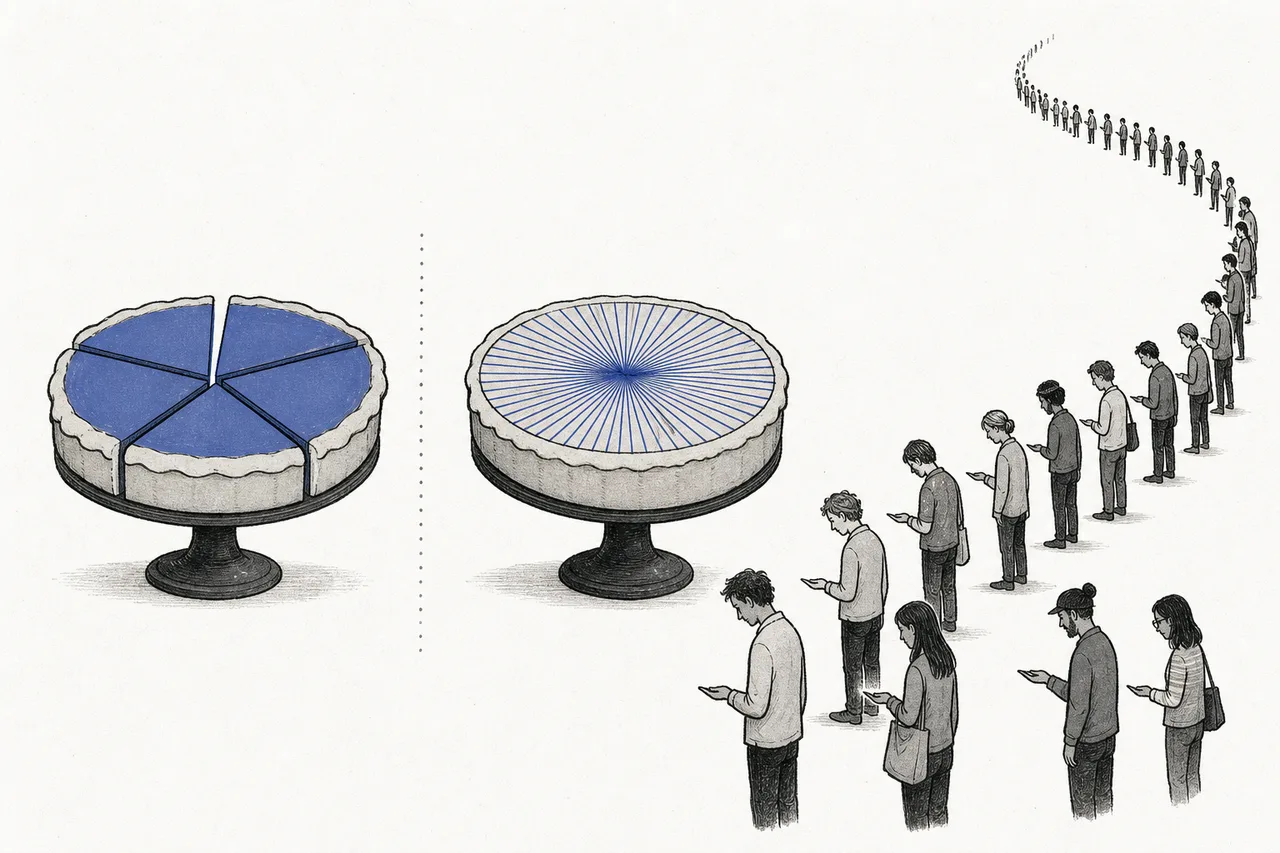
Why is this cycle so brutal? Because building a good VR game costs millions of dollars, but the user base is still small — Quest sold only about 6.9 million units in 2024 (down 10% from the year before), with roughly 22 million actively in use. Compared to billions of phones, it's a rounding error. So studios hesitate to pour big money into a small market. The result: little AAA-grade content → people have even less reason to buy a headset → the market grows even slower. And round it goes.
A platform where users create the content themselves instead of waiting for big studios — like Roblox, which has millions of games made by creators worldwide. This is one way out of the chicken-and-egg trap: if you let "everyone" be a creator, the "too little content" problem eases — at the cost of being much harder to keep quality up.
04What it connects to
This software layer sits right in the middle of the Spatial Computing ecosystem — it's the "brain and soul" that gives the hardware of its sibling nodes meaning:
- Indispensable for VR/MR headsets and Enterprise AR: even the best headset is just a lump of plastic without software — this node is what gives those headsets "something to do," on both the consumer and enterprise side
- Leaning on AI more every day: building 3D scenes by hand takes enormous time, and AI is becoming the helper that sculpts models, generates textures, and writes logic — cutting the cost of making content, which could ease the chicken-and-egg trap. Unity itself pivoted to put AI at the center of its new strategy
- Sitting on Cloud & Digital Infrastructure: social worlds with many people at once (multiplayer) rely on cloud servers that sync everyone's position in real time
- A cousin of Industrial Metaverse / Digital Twin: the same engines (Unity, Unreal) that build games are also used to build "digital twins" of factories and cities — shared technology, different markets
The key point behind it: the engine is a horizontal technology that flows across every node — games, industry, film, architecture. This is why the engine business is more durable than a business tied to one headset brand.
05Where it stands now
Let's be blunt: the economics of XR content right now are very "brutal." In 2021–2022 there was a "metaverse fever" when everyone believed virtual worlds would change everything. Capital poured in, studios sprang up like mushrooms — and then that bubble burst.
The number that tells the story best is "the slice got thinner." At the end of 2023, the Meta store had about 400 games/apps. By the end of 2024 it jumped to about 10,000 — a 25× increase. But the total money people spent grew only ~12%. The result: average revenue per game crashed from about $250,000 to just ~$10,000. Many studios reported sales down 50–80%.
Still, it's not all dark — good stuff still sells very well. Beat Saber, the game where you slash blocks to the music's beat, reached nearly 10 million owners on Quest alone and over $255 million in lifetime revenue — Meta's best-selling game of all time. And in 2025, Meta said more than 100 apps had each made over $1 million in total — meaning the "top of the market" still has money, but the "long tail" has almost nothing left.
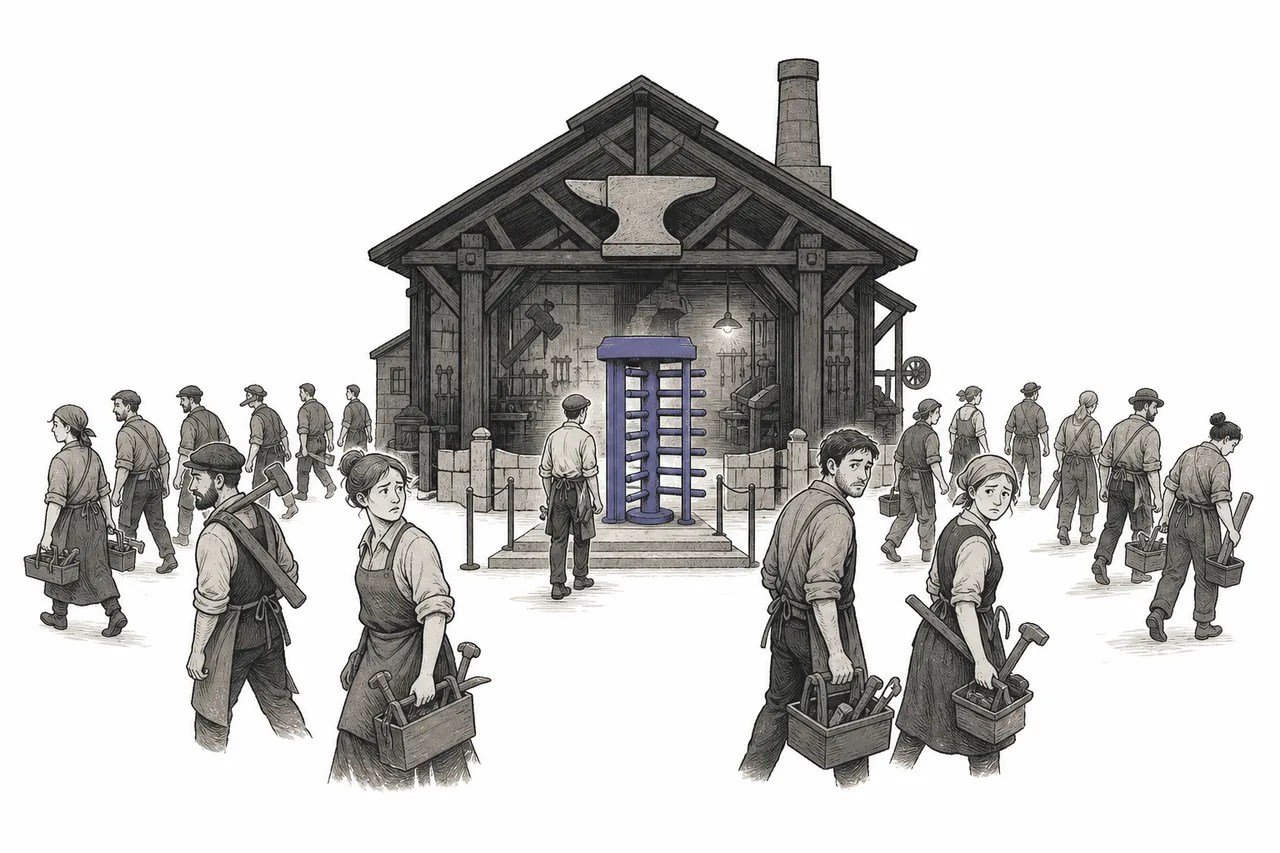
The engine side has its own drama. Unity holds the title of most-used engine (about 24–25% of the game-dev market vs. Unreal's ~15–16%, and 71% of the top 1,000 mobile games are built on Unity). But in 2023 the company announced a "Runtime Fee" — charging developers per "number of times the game is installed." The developer community was furious, and many threatened to move to another engine. In the end Unity had to scrap the Runtime Fee entirely in September 2024, ousted its old CEO, rebuilt the team, and laid off 25% of staff. The company is still losing money today — in Q3 2025, revenue was $471 million (up 5%) but the net loss was $127 million.
What's interesting is that the one that "survived" and grew against the current was the UGC side, where users make everything themselves — Roblox made $1.41 billion in Q4 2025 (up 43%), with about 144 million daily users and record payouts to creators. It solves the chicken-and-egg trap by not waiting for big studios — it lets the user base make content for each other.
06The road ahead
The first direction is AI cutting the cost of making content. XR's biggest pain is that "building 3D worlds is expensive and slow." If AI can build more of the models, textures, and scenes on its own, the cost per game drops — small studios can make good things without needing a big user base first. This could be the key to unlocking the chicken-and-egg trap, and it's why Unity bet its future on AI.
The second direction is engines flowing out beyond gaming. Unreal and Unity are used more and more to build film (virtual-production scenes), cars (in-car displays), architecture, and digital twins of factories — revenue from outside gaming may become a steadier pillar than the still-volatile VR market.
The third direction is the store-cut war. The "store takes 30%" model is being challenged from every direction — both by law (the EU forces alternative stores to be opened) and by rivals like Epic touting "a cheaper cut." If the toll comes down, power shifts more from the store owner toward the content creator.
07Challenges & risks
The XR software layer has the charm of a tollgate model, but it also carries deep-rooted risks.
The first risk is content economics that still don't pay off. As long as the user base is small (headsets sell in the millions, not the billions), big investments in content risk a loss. Average revenue per game falling from $250k to $10k is a sign that the "long tail" of this market has almost no money left — which is why private capital flowed out after the metaverse bubble burst.
The second risk is developer trust is fragile. The engine business survives because developers trust it. The lesson of Unity's Runtime Fee shows that changing the terms just once can fracture the community and send it fleeing to a rival. Whoever controls the common tool has to constantly balance "being able to charge" against "not making the users angry."
The third risk is dependence on hardware that still isn't selling. No matter how good the software is, it can't sell if people don't buy the headset. Quest sales fell 10% in 2024, and Meta's Reality Labs loses nearly $18 billion a year — if the giant subsidizing the whole industry pulls back, the software layer sitting on top shakes too.
In short: the story of this node is — XR hardware never sells itself; it needs a "reason" for people to wear it, and that reason is software. The building tools (Unity, Unreal) are the durable layer because they flow across every market; the store is the layer that takes a cut; and content is the hardest layer but the indispensable one. Understanding how the "chicken-and-egg trap" makes this market grow slower than everyone once dreamed — and understanding who stands where in the stack — is understanding where the money in XR really flows.