Megatrend · Electrification & Mobility
The country that sells 6 of every 10 EVs in the world — and is flooding our market with them
In less than a decade, China went from a follower in the auto industry to the owner of the world's largest EV market. In 2025, China's new energy vehicles (NEVs) make up more than 6 of every 10 sold worldwide — led by BYD, which passed Tesla to take the top spot. It builds its own batteries, its own chips, its own cars, driving costs so low that rivals can barely keep up. This lesson tells how China pulled it off, why it matters to the whole world, and why that success came bundled with the most brutal "price war" in automotive history.
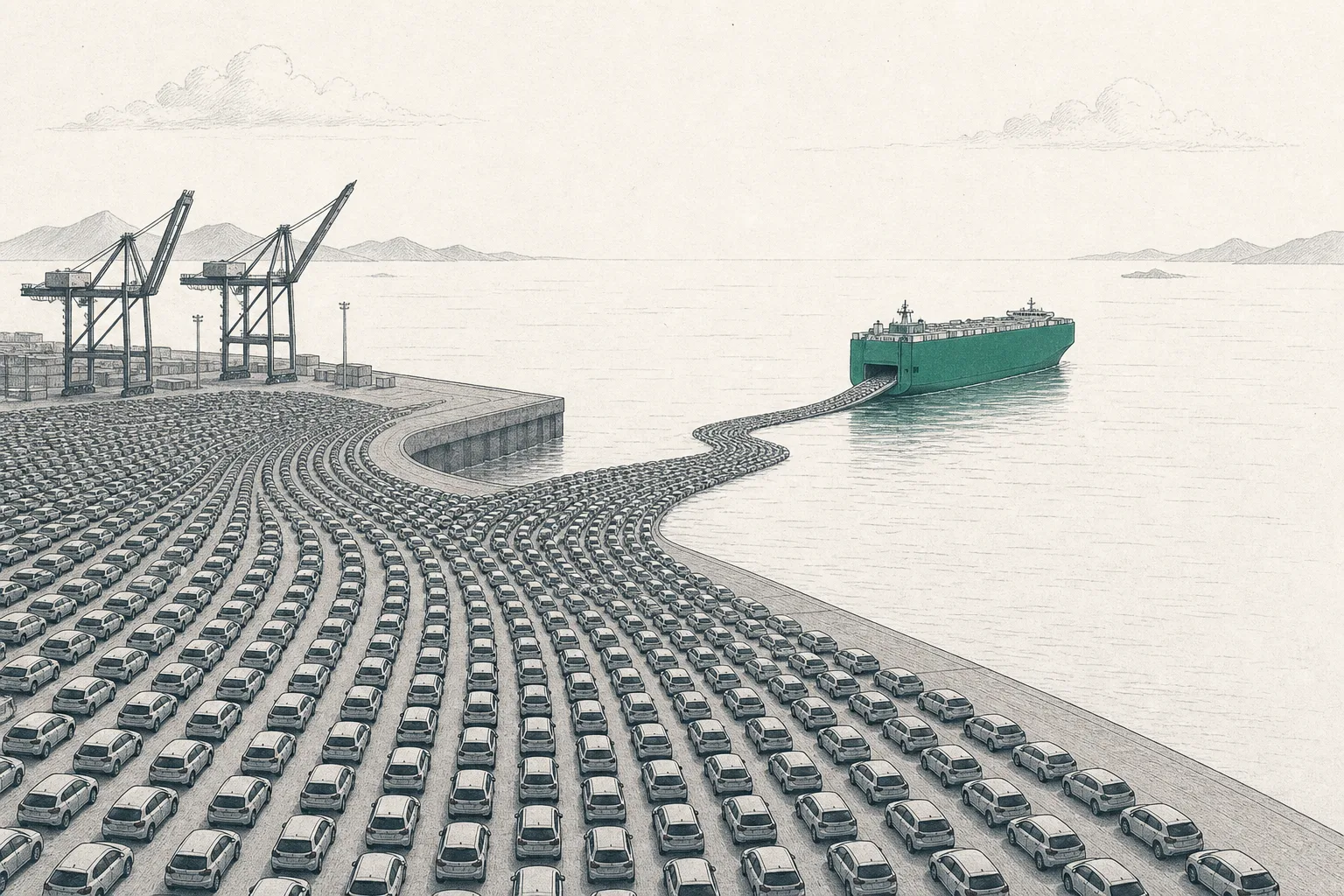
01What it is — NEV, and why China leads the world
If you told the story of the world's EVs in one sentence, it would be this: a decade ago, no one thought China could build good cars. Today, 6 of every 10 EVs sold worldwide are Chinese brands. And the ones driving the whole thing are the companies in this node — China's new energy vehicle makers, led by a name now famous around the world: BYD.
This node is a branch under Passenger EV OEMs within the megatrend Electrification & Mobility. It's the "China side" of the EV war, clashing head-on with the West and the incumbents (Tesla, Volkswagen, Toyota) — two camps fighting over the future of a multi-trillion-dollar auto industry.
Before we go further, you need one word that runs through the whole story: "NEV" — China's term for new energy vehicles. It's broader than the "pure electric car" most people picture:
NEV (New Energy Vehicle) is China's official term, covering three kinds of car: BEV, a pure electric car running on battery and motor alone · PHEV, a plug-in hybrid with both an electric motor (you can plug in to charge) and a backup gasoline engine · FCEV, a hydrogen fuel-cell car (still a very small group) — so when China says it "sold this many NEVs," that combines BEV + PHEV. That's why BYD's numbers look so big: half of them are affordable PHEVs.
The question is, why China? The short answer is that three forces converged at just the right moment: (1) state policy — China poured in subsidies and planned to push EVs for over 15 years, well before the West got serious · (2) the battery supply chain — China controls everything from the mines and refining to the cell factories, so it gets batteries cheaper and faster than anyone · (3) a wall that fell — as the parent lesson explained, an EV has vastly fewer moving parts than a gasoline car. A century of engine know-how that the incumbents had banked suddenly meant nothing, opening the door for dozens of Chinese newcomers to jump in.
02Why it matters — 6 of every 10 in the world
The one number that tells the whole story in a single line: in Q2 2025, China accounted for 63% of all new energy vehicle sales worldwide. Put simply, of every 10 EVs sold on this planet, 6 are sold in China — and most are Chinese brands, not just the Tesla plant in Shanghai.
At home, the transition is happening shockingly fast — 2025 was the first year NEV sales overtook gasoline cars in China, with NEVs taking over 50% of new cars sold in the country in the second half of the year, up from a niche few percent just five years ago.
Why does this shake the whole global economy? Because the auto industry is one of the largest there is, employing tens of millions and sitting at the core of the German, Japanese, U.S., and Korean economies. When the center of profit shifts from Detroit and Wolfsburg to Shenzhen and Hangzhou, it isn't just about cars — it's the axis of a century-old industry tilting east. And the cheap, abundant Chinese cars flowing out are dragging car prices down worldwide too.
And BYD is just the lead locomotive. Behind it is an army of dozens more Chinese brands — Geely, Chery, SAIC, Li Auto, XPeng, NIO, Leapmotor, Xiaomi — each producing in the millions and storming the global market all at once. This isn't a single-company phenomenon; it's a whole industrial ecosystem waking up together.
03How it works — the secret recipe called "build everything yourself"
The question everyone asks is, how can Chinese cars be that cheap? The deepest answer isn't "cheap labor" (Chinese labor isn't cheap anymore) — it's the one strategy BYD does better than anyone in the world: vertical integration, or "building the whole chain yourself".
An ordinary car is assembled from the parts of hundreds of suppliers, each layer carrying its own profit that the automaker has to pay. BYD does the opposite — it makes almost all the key parts itself: its own batteries (the Blade Battery from subsidiary FinDreams), its own motors and power electronics, and — what many don't realize — its own chips (BYD Semiconductor, founded back in 2004). The result: BYD makes about 75% of each car in-house, versus a Tesla that still has to buy batteries and chips from outside.
This edge is clearest in the battery, which is ~30–40% of a car's cost — BYD uses LFP (lithium iron phosphate) batteries in a "Blade" form that's cheaper and safer than the nickel batteries the West prefers. And because it makes them itself, it can tune the spec to each model without depending on anyone. In 2025 BYD also unveiled its "Super e-Platform" fast-charging architecture at 1000V, fast enough to add 400 km of range in a few minutes — something only possible because it controls both the battery and the electronics.
04Where it sits — eating batteries, different from the West
China's EV makers are the "storefront" that consumers see. But behind it sits a very long supply chain. This node is the single biggest customer of several of its trend-mates:
- Eats the heart out of Battery Cells & Pack: the battery is the most expensive part. Whoever controls cheap, good batteries controls the game — and China has the biggest edge here. China's two battery giants, CATL and BYD, together supplied ~55% of the world's EV batteries in 2025, so Chinese automakers buy quality batteries at prices the West can only watch
- Runs on EV Powertrain & Power Electronics: motors, inverters, and power chips are the new "engine" — and as noted, BYD makes nearly all of this part itself
- Depends on Charging Infrastructure: EVs only sell when there's enough charging. China has built the most charging stations in the world — another reason its home market grew so fast
But what makes this node "a story of its own" is that it differs completely, structurally, from the West and the incumbents — and this is the heart you have to understand:
This one difference explains everything: why Ford and Volkswagen "retreated" back to hybrids when EVs lost money, while BYD and Geely floored it. The Western camp has to balance the old business that makes money against the new one that still loses it — the Chinese camp has nothing old to worry about; they have only the new, and they bet everything on it.
05Where things stand now — BYD vs the rising Chinese EV stars
2025 was the year the throne changed hands. For the first time in history, BYD passed Tesla to become the world's No. 1 seller of pure electric cars (BEVs) — BYD sold 2.26 million BEVs (up ~28%) while Tesla managed 1.64 million (down ~9%). And counting NEVs including PHEVs, BYD hit 4.6 million for the full year, leaving everyone in the dust.
But the more exciting story than BYD is that the group of "rising Chinese EV stars" that burned cash for years started turning real profits in 2025 — a sign that China's EV business model is beginning to stand on its own, not just raise money to sell:
- Leapmotor flipped to its first full-year profit (~$78 million) from a $410 million loss the year before. Its China sales doubled to ~597,000 cars, passing Li Auto to become the No. 1 rising star — and Stellantis (owner of Jeep, Peugeot) holds a stake and helps take it to the global market
- XPeng delivered ~429,000 cars, surging 126%, and turned its first Q4 profit (~¥380 million). Strong in driver assistance and software
- NIO delivered ~326,000 cars (a record, +47%) and posted its first quarterly profit in Q4 (~¥283 million). Its standout is "battery swap" stations that switch an empty battery for a full one in minutes
- Xiaomi, the dark horse from the phone world, saw its first model — the SU7 — become the No. 1 best-selling sedan in the over-¥200,000 price band, and its car business flipped to a full-year profit faster than anyone, with gross margin hitting ~24%
- Li Auto, the pioneer of "range-extender" cars (EREV — the engine only generates power, it doesn't drive the wheels), stumbled this year, delivering ~406,000 cars (down ~19%) with profit shrinking to nearly break-even — a reminder that no one survives the price war easily
The backdrop is an army of much larger traditional Chinese automakers — Geely, Chery, SAIC, Changan, Great Wall — producing both gasoline and electric cars in the millions, and leading the export charge, with Chery and Geely in particular topping the export charts in 2025.
06The future — exports, consolidation, high tech
When the home market saturates and competition turns bloody, the Chinese camp's path to survival is one word: exports. And this is the battlefield that will define the next decade.
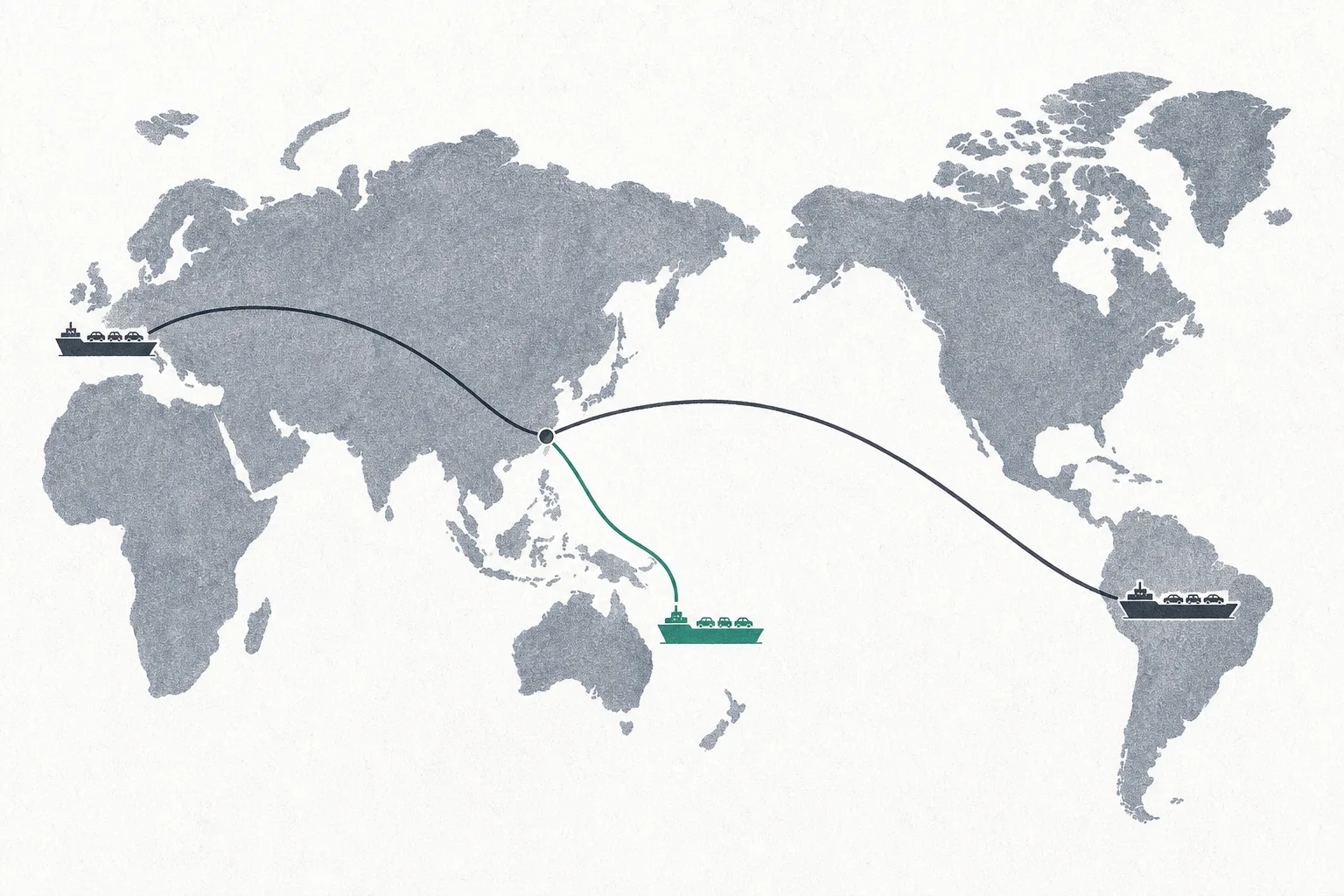
In Southeast Asia, the Chinese camp has nearly swept the board — about 70% of EVs sold in ASEAN's major economies are Chinese brands, and Indonesia was the world's second-fastest-growing market for Chinese car exports in 2025. Thailand itself is a production base where BYD, Great Wall, Chery, and others have set up plants. In Europe, even facing tariff walls, the Chinese camp answers by moving to build plants in Europe itself — for example Leapmotor (with Stellantis) shifting to production in Spain to vault over the import-tariff wall.
The second force is consolidation. China today has about 129 NEV brands still selling (down from a peak of ~500). Analysts believe only about 15 brands will genuinely survive by the end of the decade. The game is entering a "knockout" phase that XPeng CEO He Xiaopeng warns will last about another 5 years.
The third force is competing on high tech. As hardware keeps getting cheaper, the point of difference shifts to software, driver assistance, fast charging, and the in-car experience — XPeng leads on driver assistance, NIO builds out its battery-swap network, Xiaomi sells the "smartphone on wheels" that links to its own phone ecosystem. The next war won't just be about "who's cheaper" but "who's smarter."
07Challenges & risks
The allure of growth comes with a wound just as deep — and the biggest one is named "the price war."
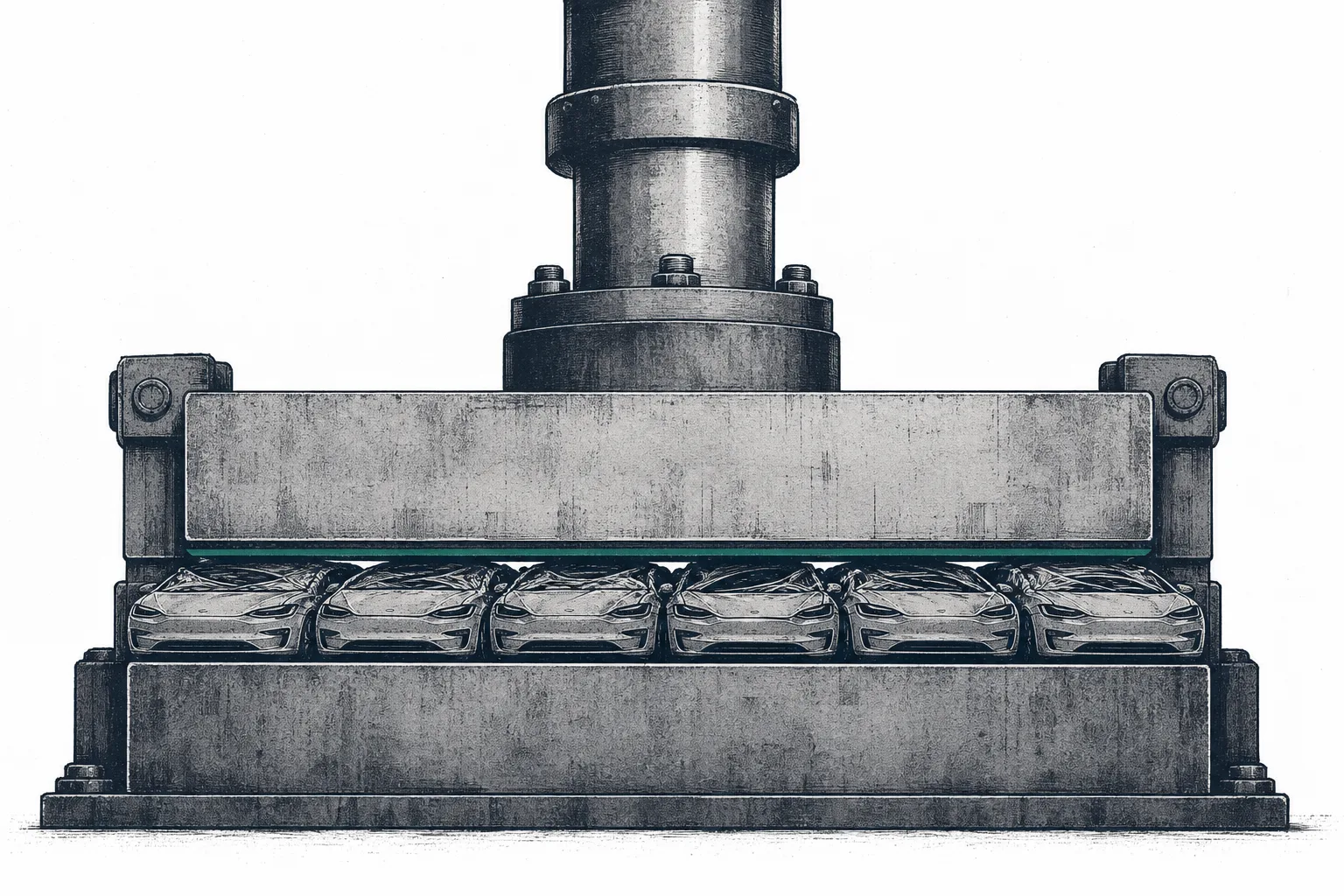
The first risk is the price war and overcapacity. Competition is so fierce that Beijing itself had to warn about "involution" (racing each other to the bottom until everyone gets hurt). The result: the average margin across China's whole auto industry fell to just ~4%, the lowest in history. And scarier still — by 2026 China's car production capacity will hit ~25 million a year, nearly equal to total global EV demand combined. They've built massively too much. This is the root of the price war: even BYD's 2025 net profit fell ~19% despite higher sales.
The second risk is tariff walls and politics. When Chinese cars are cheap and abundant, other countries fear their home industries will die. So the EU imposed an extra average ~20.8% tariff on Chinese EV imports on top of the existing 10%, while the U.S. raised walls high enough to nearly close the market. The result: the value share of Chinese cars in Europe's EV imports fell from ~55% to ~42% in a little over a year — the "export" escape route is facing ever stronger headwinds, and politics may decide their fate more than the quality of the cars.
The third risk is a wave of failures. When margins are razor-thin and the market is flooded, brands without enough scale or deep enough capital will fade one by one. Going from 129 brands to ~15 means most won't survive — for investors, this is an arena where "growing sales" does not mean "safe," because many grow by selling at a loss.
In short: China has already won the EV war at the level of production and market share — 6 of every 10 cars worldwide are Chinese brands, led by BYD, which builds everything itself until costs are too low for rivals to match. But this victory came with a price war that squeezes the whole industry's profit, and tariff walls that block the export path. The big question of this decade isn't "will China lead EVs" — it already does — but "who in the Chinese army will survive to actually reap the fruits of that victory."