Megatrend · Aging Population
The tech that lets older people stay in their own homes
Three out of four people over 50 say they want to "age in place" — in their own home, not a care facility. But a body that's starting to fail, plus children who don't have the time, makes that wish hard to keep. Until you add the right device. From a cane that costs a few dollars, to a power wheelchair, an exoskeleton, and a watch that calls an ambulance for you when you fall. This is the story of an industry shifting from "generic medical equipment" to "the technology of independence."
01What is it?
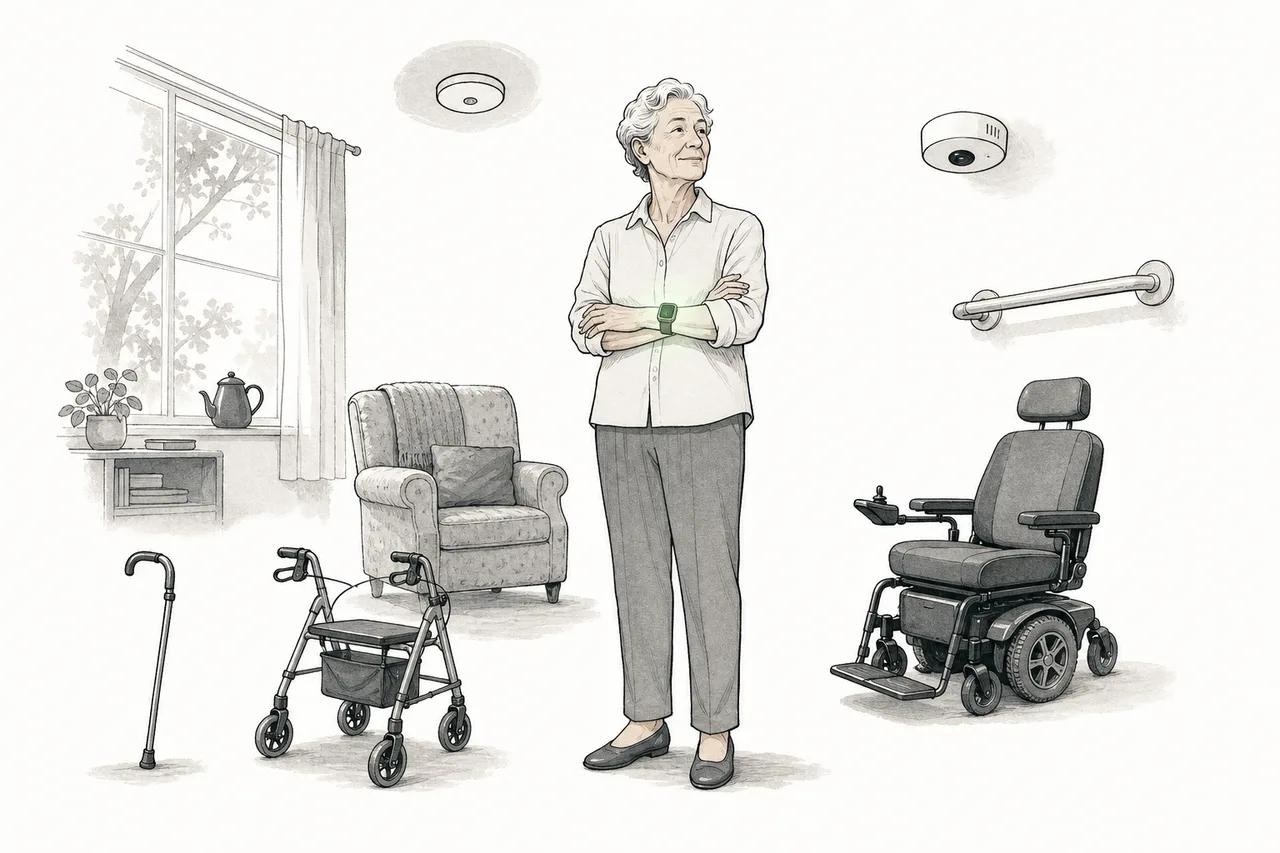
Picture your parents, or your grandparents. One day, getting out of a chair, walking to the bathroom at night, or showering alone starts to become risky. What stands between "can still live at home" and "has to move into care" usually isn't some miracle drug — it's something ordinary. A cane. A grab bar in the bathroom. A wheelchair.
This node is about "mobility aids & assistive technology" — everything that helps people whose bodies are starting to fail (mostly older adults and people with disabilities) keep moving, take care of themselves, and get through daily life. It spans a huge range, from cheap and basic gear to high-tech machines that are almost robots.
On the megatrend map, this node is a sub-theme under Aging Population — it's the "device layer" of that trend. While siblings like Senior Care handle the people and Medical Devices for the Aging Body handle the diseases, this node handles the ability to stay independent as the body declines.
DME means "durable medical equipment" — reusable gear like wheelchairs, hospital beds, and home ventilators, as opposed to drugs or disposables. In many countries, most DME is reimbursable through public insurance (like Medicare in the US). That sounds great, but it also means the government "sets the price" — and that matters a lot to a company's profit. We'll come back to it in the final chapters.
02Why it matters: the "age in place" wish vs. the missing caregivers
The reason this trend isn't just "selling wheelchairs" comes down to two numbers that collide.
The first is enormous demand. The World Health Organization (WHO) estimates more than 2.5 billion people worldwide now need at least one assistive device. Of those, about 80 million need a wheelchair — but actual access ranges from just 5–35% depending on the country. And as the world keeps aging, that demand is expected to climb to 3.5 billion by 2050.
The second is the missing caregivers. This is what turns "assistive devices" from a luxury into a necessity. Three out of four Americans over 50 say they want to "age in place" — but over the next decade (2024–2034), direct care work will have 8.9 million job openings that can't be filled. Home care alone will be short about 4.6 million workers by 2032. Today, roughly 800,000 older Americans are stuck on a waitlist for a caregiver.
The result is a large, steadily growing market. Wheelchairs and walking aids (mobility aids) alone are worth about $11.7 billion in 2025 and are expected to grow to ~$16.1 billion by 2030 (about 6.6% a year). Include all of "assistive technology," and the number is several times bigger.
03The ladder of assistive devices: from a cane to an exoskeleton
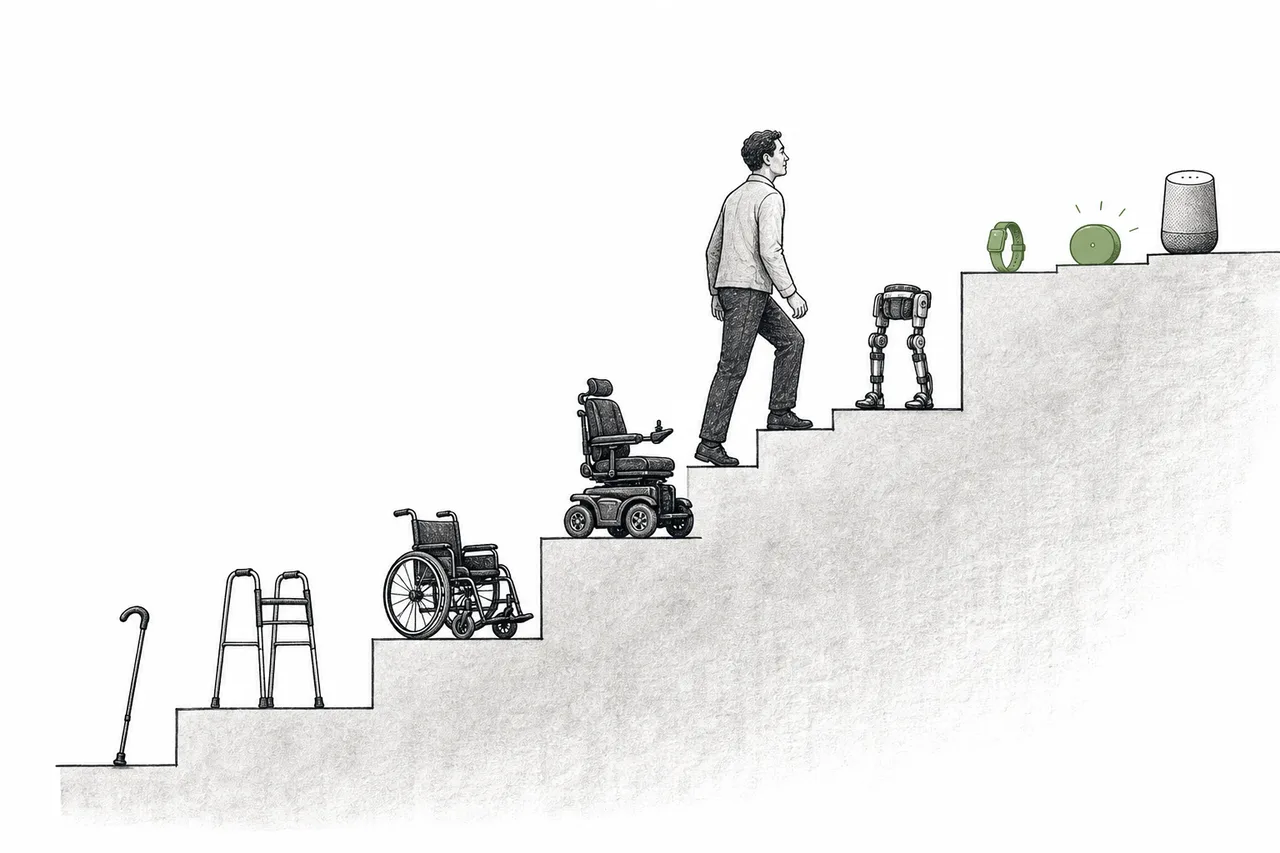
The best way to understand this trend is to see it as a three-rung "ladder" that climbs from cheap and simple to expensive and smart. All three rungs do the same job — preserve independence — but the business behind each is a totally different story.
Rung 1 — basic aids is the bottom of the ladder: manual wheelchairs, walkers, rollators (wheeled walkers), canes, scooters, stairlifts, and hospital beds. This stuff is easy to make, fairly standardized, and anyone can build it — so they compete on price. It's a thin-margin "commodity," and most sales come from insurance reimbursement.
Rung 2 — power steps up to gear with "a motor and a brain": power wheelchairs that adjust your seating, and at the far end, exoskeletons — motorized wearable frames that support and move the legs so people who can't walk on their own can stand up or walk. This rung is far pricier (a good power wheelchair runs into the thousands or tens of thousands of dollars), but margins are fatter and it's harder to copy.
Rung 3 — smart age-tech is the new "invisible" wave: watches and wearables that detect falls, in-home sensors that watch whether someone's still moving normally, remote-monitoring systems that alert family or nurses, and voice assistants for older adults. This is where assistive devices start becoming software and data — and where the new value is flowing.
Aging in place = the idea that older people should get to stay in their own homes as long as possible, instead of moving into a care facility · Age-tech = the technology built to make that idea real, especially smart gear like fall-detection sensors and monitoring systems — the fastest-growing part of this trend.
Here's the interesting part: "value" and "volume" sit on different rungs — Rung 1 sells the most but earns the least, while Rungs 2–3 sell less but grow and earn much more. The age-tech market (Rung 3) is projected to grow from ~$27 billion in 2025 to ~$72 billion by 2034 (about 11–12% a year) — nearly twice as fast as the base of the ladder.
04How it connects in the ecosystem
This node sits at an interesting crossroads — between the world of "elder care" and the world of "robotics and AI." The higher you climb to Rungs 2–3, the more it becomes a technology.
- Part of Aging Population: it works hand in hand with its siblings in the same trend, especially Home Healthcare & Hospice (care at home) — visiting nurses and assistive devices are two sides of the same coin that make "aging in place" real. And it complements Medical Devices for the Aging Body, which handles the disease itself
- Where it meets Humanoid Robots and Consumer & Home Service Robots: this is the hottest connection — an exoskeleton is a wearable robot, and home-care robots are moving into the work caregivers can't keep up with. On the megatrend map, this node has a direct relationship with Robotics & Physical AI, both as "an aging society creates demand for robots" and "robots make assistive devices smarter"
- It leans on advances from Biotech & Genomic Medicine: especially on the prosthetics side, which fuses materials with control by nerve signals
05Where it stands now + who the real players are
If one word describes this field, it's "fragmented." Unlike trends like chips or software, where a handful of giants own the market, the assistive-device industry is full of small and mid-size companies scattered by region — and many of the most important players are private companies that aren't on the stock market. This isn't a winner-take-all market; it's one where niche expertise and distribution channels are the moat.
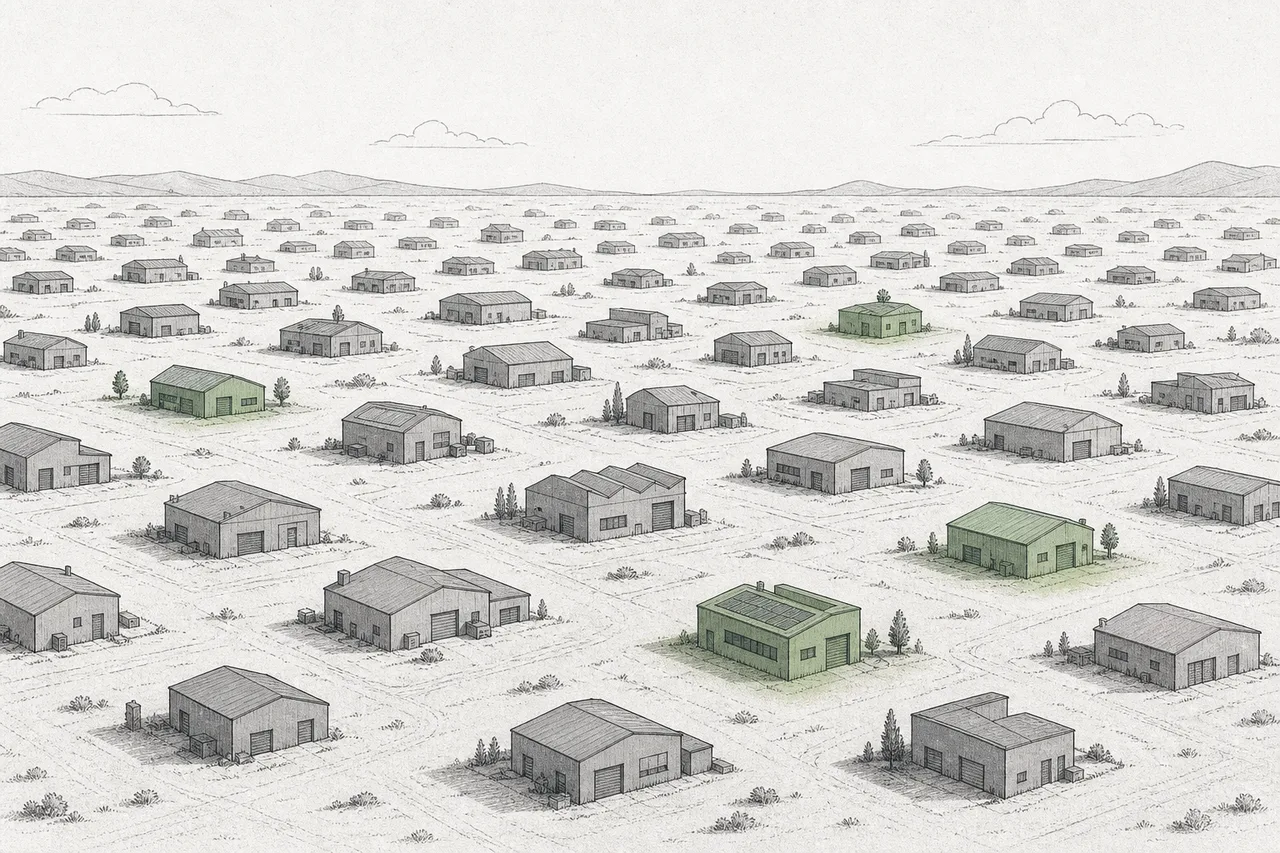
2025 was an unusually busy year for this field. The big turning point was October 2025, when Ottobock — the German prosthetics and exoskeleton giant — listed in Frankfurt at a valuation of about €4.2 billion (Germany's largest IPO of the year), a sign that investors are starting to take the high-tech side of this trend seriously. Meanwhile, the basic side changed hands fast: Drive DeVilbiss was sold to the Kingswood fund (Oct 2025) and Invacare was bought by Direct Healthcare Group (Jan 2026) — reflecting how the basic DME side is consolidating to find the scale it needs to fight thin margins.
On the fastest-growing age-tech side, the player who reaches the most people isn't a medical-device company at all — it's Apple. The fall-detection feature on the Apple Watch turns on automatically for users 55 and older, and if it detects a hard fall and the user doesn't respond within 60 seconds, it calls emergency services itself. Since 1 in 3 people over 65 falls at least once a year, this small feature has already become an assistive device on millions of wrists.
06The road ahead
The first direction is assistive devices getting "smarter" and more tied to robotics. Exoskeletons, a small market today (~$1.9 billion in 2025), are expected to grow around 13% a year and could reach ~$4.5 billion early next decade, with motor-driven (active) models already over 80% of the market. Meanwhile, wheelchairs will start to gain the ability to drive themselves and avoid obstacles — this is where robots really walk into older people's lives.
The second direction is age-tech becoming the fastest-growing layer, because it solves the "caregiver shortage" right where it hurts — sensors and monitoring systems let one family member or nurse watch over several older people at once, remotely. As AI gets better at "reading" daily behavior to warn before something happens (like noticing a person's gait change before they fall), even more value will flow here.
The third direction is the line between "medical equipment" and "everyday gear" blurring. As the Apple Watch showed — the next generation of assistive devices may no longer look like medical equipment, but hide inside a watch, a speaker, or a piece of furniture, so older people don't feel like they're "using sick-person gear." That lowers the psychological barrier that keeps people from using aids at all.
07Challenges & risks
Even a trend with rock-solid demand (the world ages every year) has traps that keep "demand growing" from equaling "profit growing."

The first risk is dependence on reimbursement. Most basic items like wheelchairs and beds are sold through Medicare/insurance reimbursement, which means the government sets the price. In the US, there's a competitive bidding system that makes suppliers bid low for the right to serve patients in an area — pushing prices and margins down hard. Players without enough scale struggle to survive (one reason AdaptHealth sees the return of competitive bidding as an "opportunity for the big players" — because the small ones get squeezed out).
The second risk is commoditization at the base. Ordinary wheelchairs and walkers are easy to copy, and low-cost Chinese makers (like Yuyue and Intco) use scale to push into the market and keep driving prices down. Whoever's stuck on Rung 1 of the ladder is most exposed — which is why the smart players try to climb to Rungs 2–3, where margins are fatter and copying is harder.
The third risk is the fragmentation itself. Because the market is split among many small players, and many are private, nobody has the scale to make the kind of big R&D bets the robotics or chip side can. Building a good exoskeleton or age-tech takes capital and cross-disciplinary expertise — which could let big tech companies (like Apple) "cut in" and take the fastest-growing part of the trend before the incumbents can react.
In short: this trend was born from a simple truth — the world is aging, caregivers are disappearing, and older people want to stay in their own homes. Assistive devices are what make that wish possible. It starts with a cane that costs a few dollars, but it's ending up as exoskeletons, life-saving watches, and homes that quietly look after the people inside them — understanding this three-rung "ladder" is understanding why the most ordinary-looking gear is one of the front lines where robots and AI are walking into our daily lives.