Megatrend · Quantum Computing
The quantum machine that actually sells — because it settled for being "good at just one thing"
While most quantum computers are still lab machines you can't really use, one branch has been selling its machines to business customers for over a decade. Its secret is to "give up" from the start — instead of trying to do everything like a general quantum computer, it built a machine that's good at exactly one thing: finding the best answer among a vast number of options. Its method is to let the quantum system "flow downhill" to its own lowest-energy point, like a drop of water finding the bottom of a valley. This is the story of Quantum Annealing and D-Wave, the company that dared to go against the whole industry.

01What it is
Picture a problem like this: a delivery company has 50 trucks and 1,000 customer stops, and needs to decide which truck runs which route to make the total distance as short as possible. The number of possible arrangements is larger than the number of atoms in the universe. An ordinary computer has to "try one at a time" or use shortcut formulas to guess a good-enough answer — but there's no guarantee it's truly the best one. This kind of problem is called an optimization problem, and it's everywhere — from routing deliveries to scheduling staff to picking an investment portfolio.
Quantum Annealing is a special kind of quantum computer built specifically to solve this kind of problem. At its heart is a simple but deep idea: instead of "calculating" the answer, it turns the problem into a landscape of energy, designed so that the "lowest point" of that landscape lines up exactly with the best answer. Then it just lets the quantum system flow down to that lowest point, following the law of nature that every system wants to settle into its lowest-energy state — like a ball dropped into a bowl rolling on its own to the bottom.
On the megatrend map, this node is one of the "hardware branches" under Quantum Hardware — Pure-plays, inside the big trend Quantum Computing. But it's the branch that plays a completely different game from its siblings — Superconducting, Trapped-Ion, and Photonic are all "general-purpose" (gate-based) quantum machines meant to do everything someday. Annealing took the opposite road: it settled for doing only one thing, in exchange for being usable today.
Annealing = a word borrowed from metalworking — slowly cooling metal so its atoms settle into the most orderly arrangement (lowest energy). This machine mimics that process with quantum physics · Optimization = a problem of finding the "best answer" among a vast number of options · Special-purpose = a dedicated machine that does one thing, unlike general-purpose machines that do everything — like a calculator versus a computer.
02Why it matters — a machine that actually sells
In a quantum field full of promises about the future, annealing stands out with something rare: customers who actually pay. While most gate-based quantum machines are still lab prototypes, D-Wave, the annealing market leader, has more than 135 customers — over 70 of them commercial, including more than two dozen Forbes Global 2000 companies — and in 2025 it brought in $24.6 million in revenue, up 179% from the year before. The numbers are still small, but they're "real" — coming from actually selling machines and services, not just subsidies.
The reason it sells is that optimization is a problem businesses genuinely feel the pain of and genuinely lose money on every day. Look at examples already happening: D-Wave partnered with Pattison Food Group, a Canadian supermarket chain, to schedule online-delivery drivers. What used to take 3–4 employees a full week to arrange, with annealing the initial scheduling cut the human effort by about 80%. Ford Otosan uses it to schedule factory production, cutting the time by 83%, and Volkswagen uses it to route vehicles and sequence the car paint-shop line.
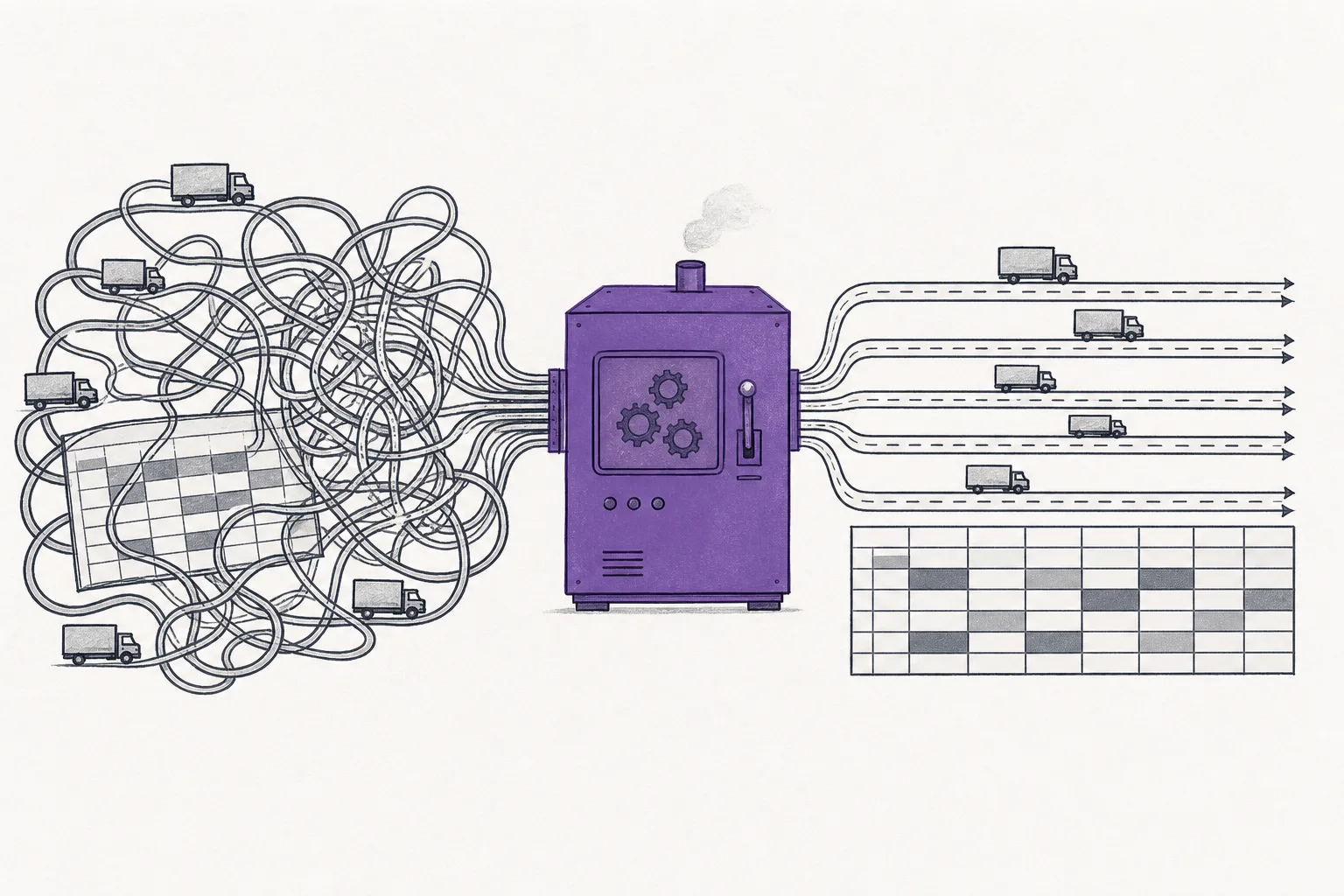
This is where annealing is smart: it doesn't wait for the day quantum "decodes the world" the way the gate-based branch dreams. It goes to make money from problems that already exist today. The result is that it has become the most commercially mature quantum architecture — a quantum machine that real customers run over the cloud every day, not just a research topic.
03How it works (flowing down to the valley floor)
This is the heart of what makes annealing so striking. Let's walk through, step by step, how this machine solves a problem without ever "calculating" the way the computers we know do.
First, we encode the problem into an energy landscape — assigning each possible answer (say, each way of arranging the routes) an "energy" value, designed so that better answers have lower energy. The result is a landscape full of valleys of uneven depth, and the deepest valley floor is the best answer we're looking for.
The next step is to start the machine with every qubit in a state of superposition — being all answers at once — like a drop of water spread out covering the whole landscape. Then the machine slowly "anneals", gradually adjusting the field so the system flows down to the low point. It has to be done slowly, to give the system time to find the truly deepest way down — not to rush and stop at the first shallow valley it hits.
What makes it truly "quantum" is quantum tunneling. The classical method, when it hits an energy mountain blocking the way, has to "climb over" it — which takes energy and sometimes leaves you stuck on the wrong side. But a quantum system can punch straight through that mountain, like walking through a wall. This ability helps it escape "shallow valleys" (good-enough but not best answers) and find deeper valley floors more easily — this is the edge annealing is betting on.
04How it differs from other quantum machines
This is what investors get confused about most often, because "quantum computer" in the news usually means a different kind. Annealing and its gate-based siblings differ as much as a calculator versus a computer — it's not that one is better, they're built for completely different purposes.
- The gate-based branch — Superconducting and Trapped-Ion: general-purpose machines that can run a wide range of quantum algorithms (including Shor's, for code-breaking). One day they'll be immensely powerful — but today they're still small, with only hundreds of usable qubits, and most have barely any revenue. They're chasing a long-term goal that's still years away
- The annealing branch (this node): a special-purpose machine that can only do optimization and sampling problems. Running a code-breaking algorithm like Shor's isn't possible — but in exchange it's already commercially usable today, with thousands of qubits, because building an annealing qubit doesn't need to be as precise as gate-based
The fact that D-Wave has thousands of qubits while the gate-based branch has only hundreds doesn't mean it's superior — because annealing's qubits do far more limited work, and their quality (fidelity) doesn't have to be as high. It's like comparing the number of gears in a watch to the number in a car engine — completely different jobs. The real point is that annealing chose "many but specialized," while gate-based chose "few but able to do everything."
In the larger ecosystem, annealing works as an optimization tool that complements the world of AI and automated decision-making — just as Agentic AI has to plan and allocate resources in complex problems, annealing is a machine designed specifically to find the "best plan" in exactly those kinds of problems. So it's a specialized part in the modern computing toolkit, not a replacement for the general computer.
Gate-based (general-purpose) = can run a wide range of quantum algorithms through a sequence of "gates" acting on qubits — this is the branch that will break codes and discover drugs someday, but it's still early · Annealing (special-purpose) = uses flowing down to the lowest energy + tunneling to solve only optimization/sampling problems — but it's already usable. It trades generality for readiness.
05Where it stands now
2025 was a milestone year for annealing. D-Wave's flagship Advantage2 went into full operation on May 20, 2025, through the Leap cloud service, and customers can also buy it to install on-premises. The machine has over 4,400 working qubits and doubled the time qubits stay stable (coherence) compared to the previous generation — customers write programs through the Ocean toolkit and send jobs to the real machine over the cloud.
The loudest milestone came in March 2025, when D-Wave published a paper in the journal Science claiming the world's first "quantum supremacy on a useful real-world problem." The task was simulating the behavior of a complex magnetic material — the Advantage2 machine took about 36 microseconds, while Frontier, one of the world's most powerful supercomputers, was estimated to need nearly a million years and more electricity than the world uses in a year to do the same job. It's a heavy claim — though it drew debate afterward (more in the risks chapter).
The business side is just as hot. The 2025 revenue of $24.6 million (+179%) comes with a gross margin as high as 82.6% — meaning almost every dollar sold drops through as gross profit, which is extremely rare in the quantum field. More important still, bookings (advance orders) surged to $33.4 million in Q1 2026, nearly 20 times the year before, led by big deals like selling half of an Advantage2 machine's capacity to a center in Lombardy, Italy (€10 million), selling a machine to Florida Atlantic University ($20 million), and a cloud contract with a Fortune 100 company ($10 million). The company also holds about $884 million in cash and securities, an important buffer for a business still posting net losses.
06The road ahead
The first direction is to grip real optimization problems even tighter. Annealing's strength isn't chasing the dream of decoding the world — it's being a tool businesses actually open and use to solve scheduling, routing, and resource allocation. The more complex the world gets — longer supply chains, energy that has to be allocated in real time, portfolios with more variables — the more valuable these problems become. And that's the field annealing is already playing on.
The second direction is hybrid — mixing quantum with classical. Most of D-Wave's real revenue today comes from hybrid solvers, which let an ordinary computer do the part it's good at and send only the "core" of the optimization problem to the quantum machine for help. This matters because it lets customers benefit right away, without waiting for a pure quantum machine to be fully ready — it's a bridge between "today" and "the day quantum matures."
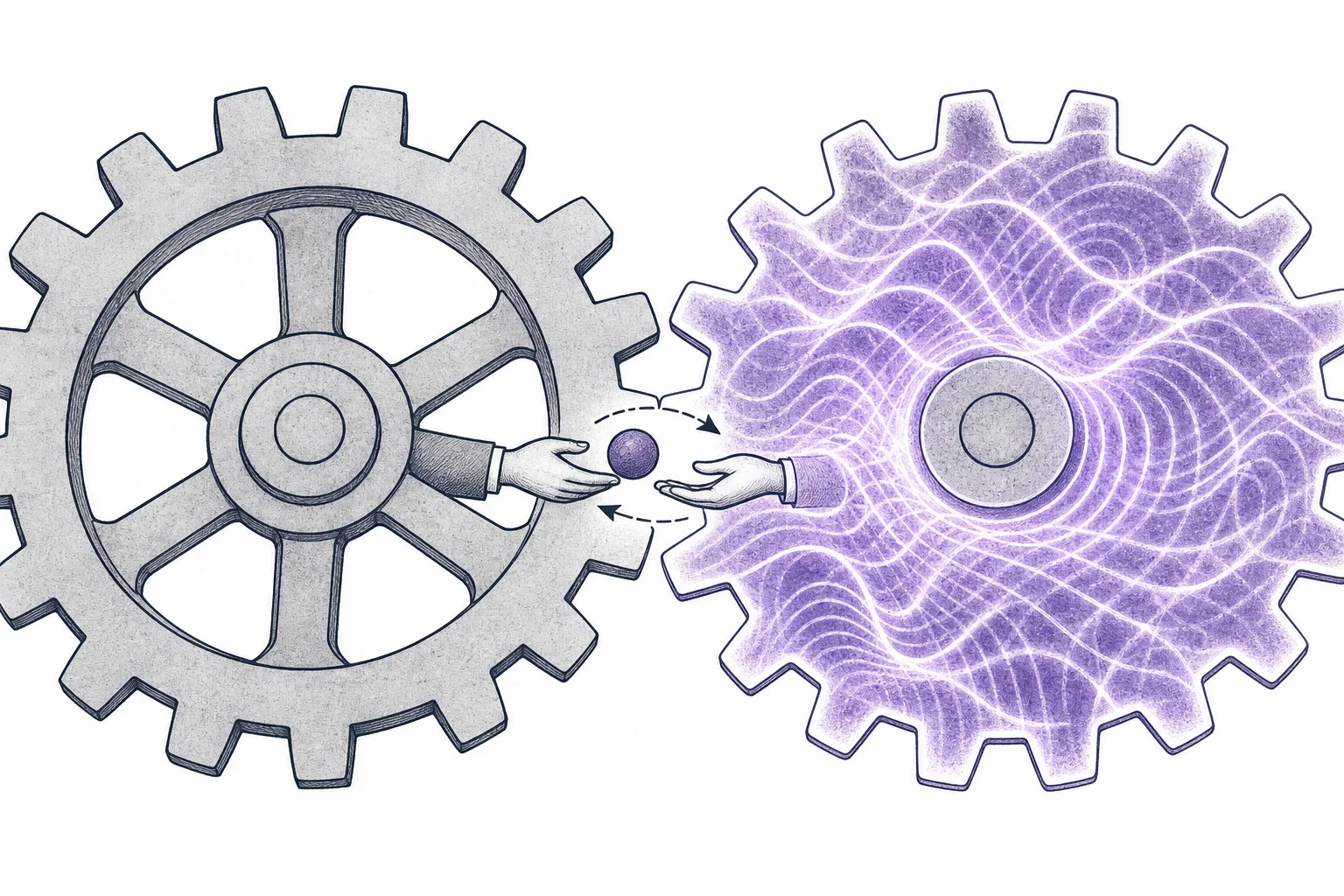
The third direction is stepping partway toward gate-based. D-Wave itself has begun investing in gate-based quantum research alongside its core work, because it knows that one day, to expand the market beyond optimization, a special-purpose machine alone may not be enough — but this is a long-term bet still in its early stage, and it has to compete with branches that started years ahead.
07Challenges & risks
The first and most important risk is that annealing is not a general-purpose machine. It can only solve optimization and sampling problems — it can't run a code-breaking algorithm like Shor's, and can't do the general quantum work that would "change the world" the way the gate-based branch dreams. If a general-purpose quantum computer ever truly works, it could swallow the work annealing does, squeezing annealing's market.
The second risk is the unsettled debate over "quantum advantage". D-Wave's supremacy claim in March 2025 was challenged almost immediately — research teams from the Flatiron Institute and EPFL showed they could solve similar problems with an ordinary computer, and scientists like Scott Aaronson questioned whether an annealing machine is really faster than a classical computer on commercially useful work, since many studies find that in many situations a good classical solver can match or beat annealing. The question of "when is quantum truly worth it" is still being debated.
The third risk is a still-narrow market and reliance on a single player. Commercial annealing is almost entirely a D-Wave story — there's barely a pure-play annealing rival on the stock market. On one hand this is an advantage (a near-monopoly), but on the other it means this whole "technology branch" rests on one company. And the optimization market that actually sells today is still small compared to the promise of general-purpose quantum. The company is still posting net losses (about $140 million in 2025, mostly non-cash accounting items) and still has to rely on raising capital to keep going.
In short: this node is a quantum machine that dared to go against the whole industry — settling for doing one thing so it could be usable before anyone else. It has proven that quantum can make money, not just be a research topic. But it still has to answer the big question of when "faster on a test problem" becomes clearly "worth more on real work" — and how well it can hold its edge as general-purpose quantum machines grow up.