Megatrend · Robotics & Physical AI
You call a taxi, open the door — and the driver's seat is empty
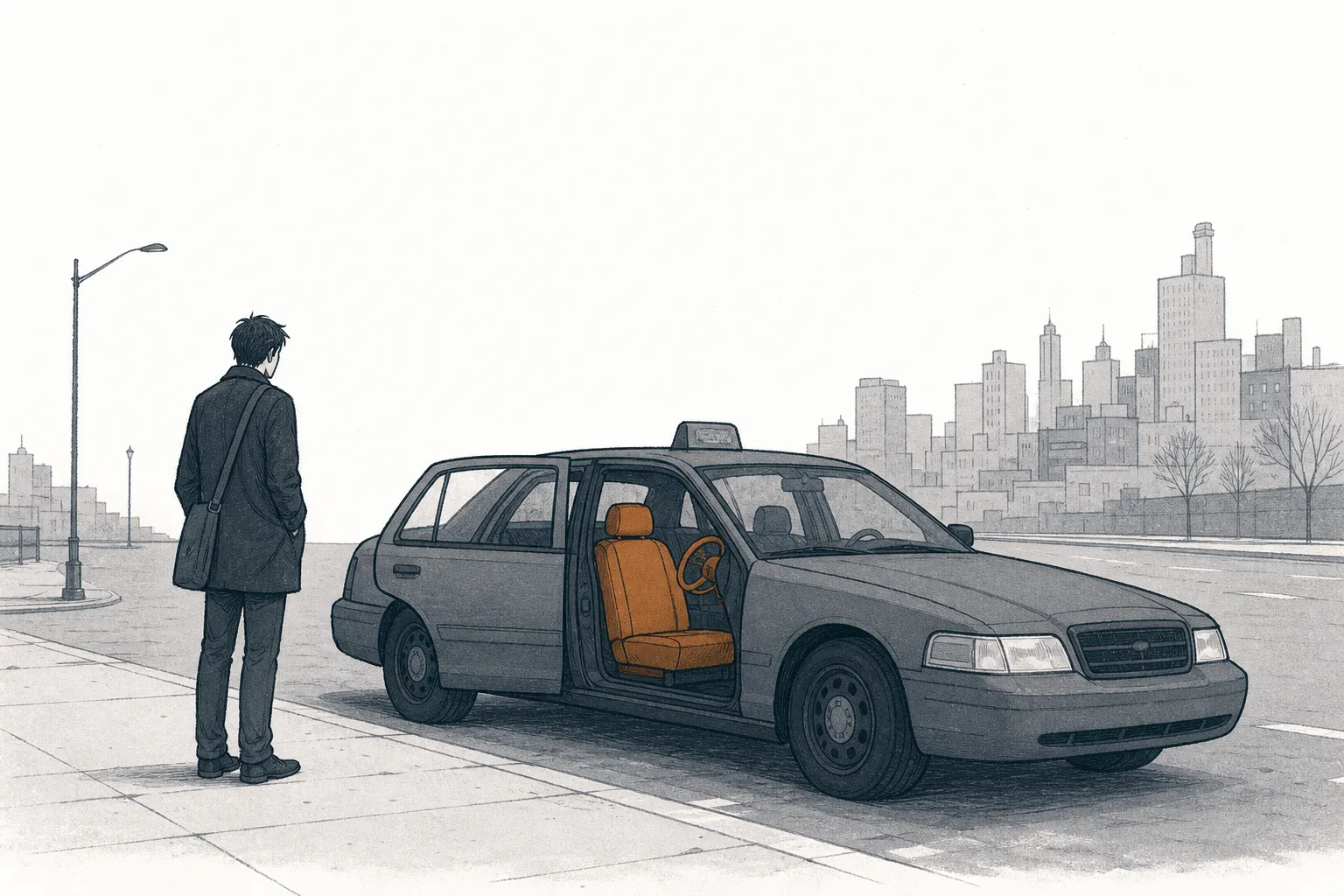
Picture calling a car in an app. It pulls up, you open the door — and there's no one behind the wheel. This isn't the distant future anymore. In 2026, Waymo carries roughly 500,000 paying rides a week across 10 cities. This lesson is about the business of "taking the driver out of the taxi" — because the driver is the single biggest cost (~60% of the fare). Cut that out and the cost per ride flips entirely. We'll look at how it works, who's leading (Waymo · Tesla · China), and why pushing into every "city" is harder than it sounds.
01What it is — a taxi for hire with no driver
Let's separate the terms first. A "self-driving car" and a "robotaxi" aren't quite the same thing. A self-driving car is the technical capability — a car that can drive without a person. A robotaxi is the business that turns that capability into money: running driverless cars to pick up and drop off passengers hailed through an app, charging a fare per ride, just like Grab or Uber — but with no one up front. This node is that "business" side — the ones who own the fleet, keep it running 24 hours a day, and the platform that matches cars to passengers.
On the megatrend map, this node is a sub-branch under Autonomous Vehicles & Robotaxi, in the larger Robotics & Physical AI family. It has one sibling you need to keep distinct: Autonomous Trucking & Delivery — driverless trucks and delivery. The difference: trucking hauls goods on straight, predictable highways, while robotaxi carries people through the messiest part of the city (pedestrians, intersections, bikes) — far harder, but a bigger market and the face of the whole trend.
L4 = the level of autonomy where a car drives fully on its own with no one in the car, but only within a defined area and set of conditions — this is the level a robotaxi has to reach before it can actually operate · ODD (Operational Design Domain) = the "zone where self-driving is allowed," like only in City A, during these hours, in this weather — every robotaxi grows its business by expanding its ODD one city at a time · teleassist (remote operator) = a staffer sitting in a control center who helps the car from a distance when it hits a situation it can't decide on its own — not driving for it, but showing it the way.
The thing to grasp from the start is that a robotaxi doesn't sell cars — it sells "rides". The business model is to own the entire fleet yourself, then harvest revenue from each car running all day and all night without rest, paying no driver wages. That's why the numbers for "cost per mile" and "hours the car can run per day" matter more than how many cars get sold — because this is a service business, not a product business.
02Why it matters — take out the driver = flip the cost
The whole thing boils down to one sentence: in a single fare you pay Grab/Uber today, the biggest chunk is the "driver's cut" — analysts estimate the driver takes about 60–70% of the cost per ride. Take the driver out, and what's left is just the cost of the car, electricity/fuel, and maintenance. This is the entire reason global companies are willing to burn tens of billions of dollars to get here, because if they pull it off, it doesn't just trim costs a little — it flips the economics of "moving people" for the whole industry.
The market numbers reflect the size of this prize. Goldman Sachs estimates the global robotaxi market reaches about $415 billion by 2035, and what's even more striking is the number of vehicles — the world's commercial robotaxi fleet is expected to grow from about 7,000 cars in 2024 to around 1 million in 2030 and around 6 million in 2035. That's nearly a 1,000× rise in a single decade — but read it carefully, because it's an estimate resting on the assumption that the technology and the laws go as planned, which no one can guarantee yet.
But what made this bet "real" in 2026 isn't just future numbers — it's that it's already making real money. Alphabet's Waymo carries paying passengers about 500,000 rides a week (early 2026), up from just ~10,000 rides/week two years ago. Meanwhile in China, Baidu's Apollo Go does about 300,000 rides/week, and Pony.ai and WeRide are starting to hit "city-level break-even" in some cities — this is no longer a lab experiment, but a service people hail and pay for every day.
03How it works (from the car's brain to the ride-hailing app)
People often think a robotaxi is just "a car that can drive itself," but actually making it a business that truly runs takes three layers stacked together — and the layer people overlook most (fleet care and the remote-assist team) is usually the most expensive and hardest one. Let's trace how a single ride happens, from the moment you press the button to the destination.
Layer 1 is the "driving brain" — the circuit that looks around, understands what it sees, predicts where everything will move, then plans and drives (the deep detail of this layer is in the parent Autonomous Vehicles lesson). Layer 2 is the one outsiders usually forget: the fleet-care depot. Driverless cars still need people to charge, clean, and maintain them — and most importantly, teleassist — staff sitting in a control center who help the car remotely when it meets a strange situation it can't decide on its own (like construction suddenly closing a lane, or a police officer waving against the traffic light). Layer 3 is the ride-hailing app that matches an available car to a passenger, calculates the price, and collects the money — like Uber, but the car at the other end has no driver.
The reason to understand layer 2 well is that it's where the "cost hides". Many players advertise "no more driver," but in reality they still have to employ a teleassist team where one person watches several cars, plus the depot cost, charging cost, and mapping cost — these costs didn't disappear, they just moved from the "front seat" to the "back office." The key to profit is letting one teleassist operator watch as many cars as possible, and making the cars need help as rarely as possible.
04Where it sits in the ecosystem
Robotaxi is the "downstream" of the self-driving trend — the point where all the technology comes together into a service ordinary people actually use. And because it sits downstream, it "eats" a huge amount of technology from other trends.
- Eats LiDAR and sensors as its eyes: nearly every robotaxi (except Tesla) carries LiDAR — lasers that fire millions of points per second to build a 3D map of everything around the car. LiDAR that once cost tens of thousands of dollars is now down to the ~$1,000 range per unit — and every time it gets cheaper, the economics of robotaxi improve
- Relies on AI that moves a body (embodiment) as its brain: the ability to "predict the future" — will this pedestrian step off the curb to cross, will that car cut in — comes from AI models trained on hundreds of millions of miles of driving — the same problem as teaching a robot to move in the real world, so the lessons flow into each other
- A sibling of driverless trucks/delivery, but a different arena: both use the same autonomy, but trucking hauls goods on straight, repetitive highways (easier, may earn money first), while robotaxi carries people in the most complex cities (harder, but a bigger market)
- Feeds back into AI and extends to an aging society: every mile a robotaxi drives is a fresh round of AI training data, and over the long run, it's an answer for an aging society that can no longer drive itself but still needs to get around
05Where it stands now
The 2026 picture splits the robotaxi world into two big camps walking different paths — the U.S. vs China — plus one expensive lesson reminding everyone that vast money doesn't guarantee success.
The U.S. side: Waymo is the real thing, clearly in the lead. Paying rides jumped from the low tens of thousands per week two years ago to about 500,000 rides/week across 10 cities (early 2026), with a target of 1 million rides/week by the end of 2026, plus plans to expand to Washington, Las Vegas, and Denver and to test as far as London and Tokyo — Waymo bets on "dense sensors + safety first," even though the cost per car is high.
Tesla just entered the game, but it's coming in strong and cheaper. It launched robotaxi service in Austin in mid-2025, with a "safety operator" up front at first, then gradually removed them, until in June 2026 it covered the whole Austin metro with no one watching in the car (unsupervised) — but with a starting fleet of only about 20 cars. Tesla bets on "cameras only, drop the LiDAR" to make the cost per car as cheap as possible, and has started building the two-seat, steering-wheel-free Cybercab at its Texas factory. If this approach works, Tesla can scale faster and cheaper than anyone — but it still has to prove "cameras-only full autonomy" at scale.
The China side: playing the "cheap and fast" game. Baidu's Apollo Go does about 300,000 rides/week across 20+ cities, with cumulative self-driving distance past 330 million kilometers, and its biggest strength is vehicle cost — the RT6 model costs under $30,000 per car (the next model targets under $20,000), several times cheaper than a Waymo car. That lets Apollo Go hit break-even in cities like Wuhan, and it's started going abroad — winning an L4 license in Switzerland and teaming up with Uber/Lyft to push into the Middle East and Europe.
On the China side, two companies listed on the U.S. market — Pony.ai has a fleet of over 1,700 cars (May 2026), targets 3,500, and hit "city-level break-even" in Guangzhou (Nov 2025) followed by Shenzhen (Feb 2026), while WeRide has a fleet of about 1,125 cars and is teaming up with Uber to put at least 1,200 robotaxis in the Middle East by 2027 — underscoring that China chose a global game as the "car + technology maker," letting platforms like Uber/Lyft run them under their own name.
And don't overlook the middleman platforms — Uber and Lyft don't build self-driving cars themselves, but position themselves as "the place passengers come to hail a ride," then plug partners' robotaxi fleets (Waymo, WeRide, Baidu) into the app. This model keeps them a seat at the table even without self-driving technology of their own.
06The road ahead — one city at a time, the price per mile falls
The first direction is the "one city at a time" race. A robotaxi doesn't flip a switch and work nationwide — each city needs its map made, local permits secured, and adjustments for its roads and laws. So over the next 3–5 years, you'll see robotaxi in "patches" in the cities that have opened, not blanketed everywhere at once. And "how many cities they can actually open per year" is the best gauge of progress — better than listening to a promise that "next year for sure."
The second direction is the cost-per-mile war. The key to profit isn't just "being able to drive itself," but "driving itself for less than a driver's wage." Goldman Sachs estimates that the total cost per mile for a full-stack operator will fall below $1 per mile in the U.S. by 2035, especially vehicle depreciation dropping from about $0.35 to $0.14 per mile as cars get cheaper and run more hours per day — at that point, a robotaxi might even be cheaper than owning a private car.
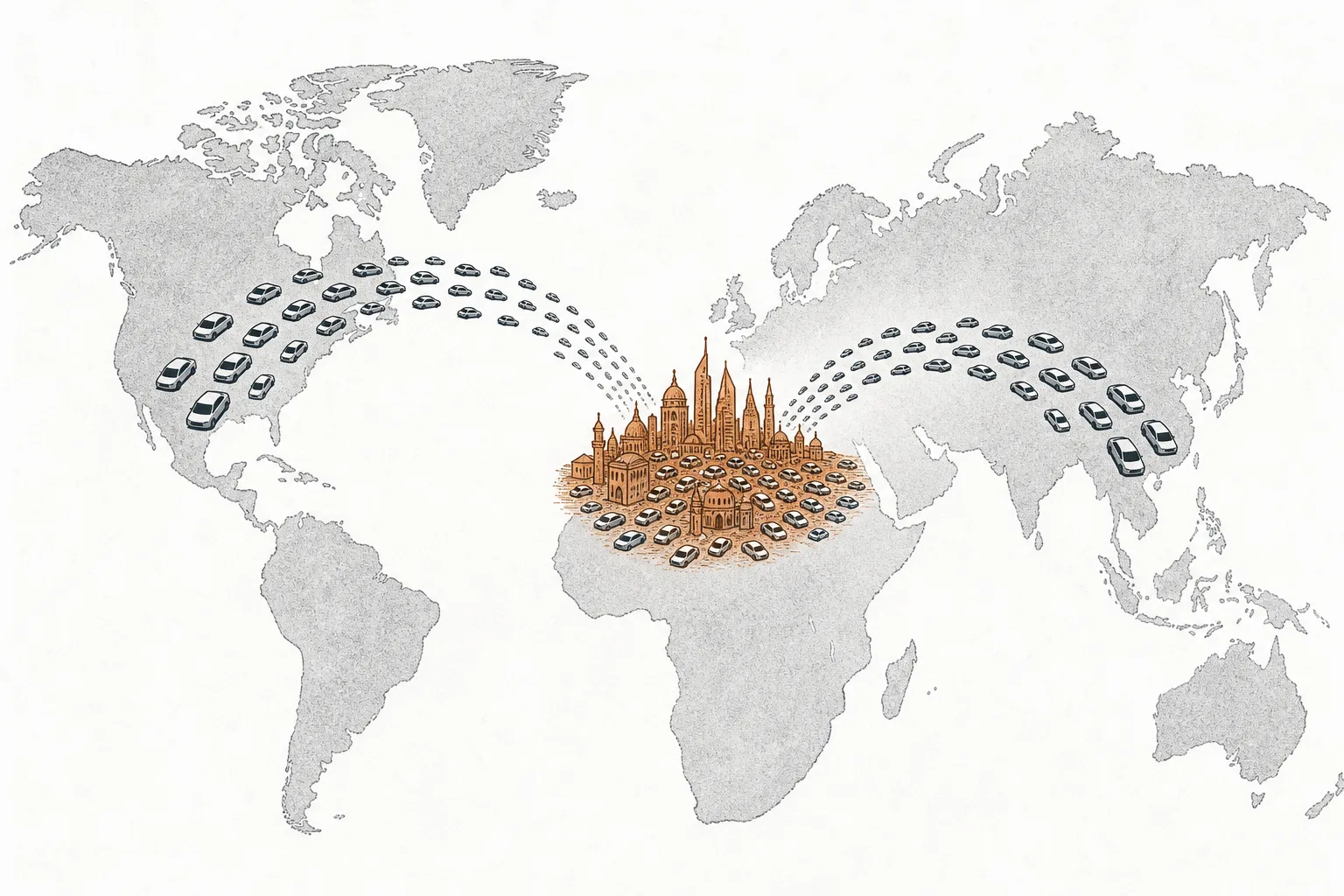
The third direction is the split into two worlds, US vs China. The two camps walk by different philosophies — the U.S. emphasizes "safety first, dense sensors, expensive but sure," while China emphasizes "cheap and fast, scale first." And both are heading out to fight over a third market (the Middle East, Europe, Southeast Asia) through partners like Uber/Lyft — the real battlefield of the coming decade may not be at home, but in a "third city" where no one is yet the market leader.
07Challenges & risks
Robotaxi is a business that's "near the finish line, but the finish line still moves" — because its risk is baked into the very nature of carrying human lives on software and burning vast money before any profit shows.
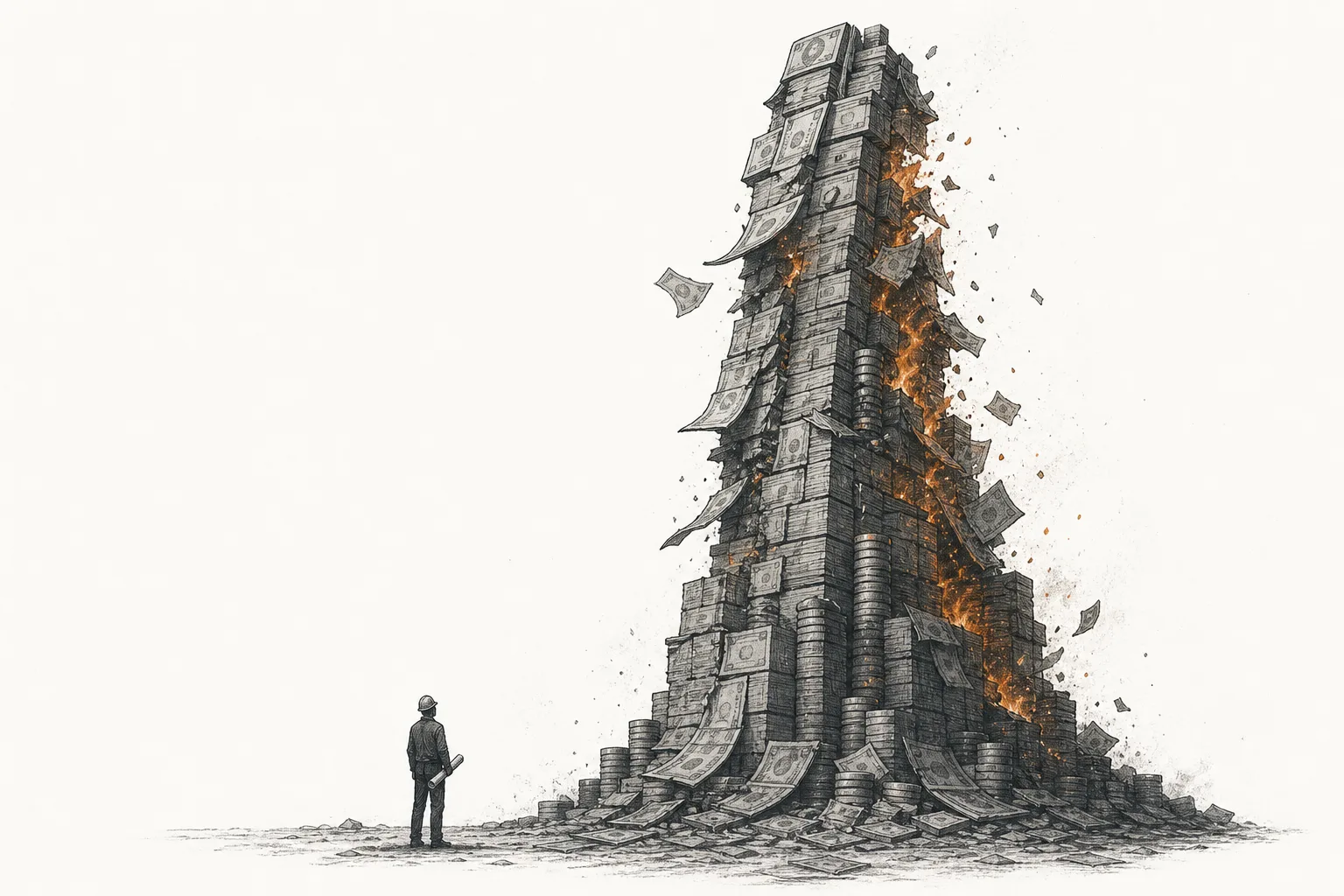
The first risk is the enormous capital spending (capex) and profit that's still not fully proven. A single robotaxi plus its sensor suite can run into the hundreds of thousands of dollars, on top of the depot cost, teleassist team, mapping, and insurance — to break even, it has to run a lot, for a long time. Even though some Chinese cities are starting to hit city-level break-even, whether "the whole company is profitable at scale" is still a question no one can answer clearly.
The second risk is fragile public trust — and this is the lesson of Cruise. After GM poured in over $10 billion (cumulative losses topping ten billion against revenue under $500 million), it decided to quit the robotaxi business in late 2024. The trigger was a Cruise car dragging a pedestrian — who'd been hit by another car — under its chassis in San Francisco, followed by incomplete reporting to regulators, until its license was suspended and the game ended — a single prominent accident plus poor handling can erase all trust.
The third risk is regulation and geopolitical decoupling. The legal framework for "if a self-driving car hits someone, who's liable" still isn't settled in almost any country, and the split into two camps, US and China, means Chinese companies may be shut out of the U.S. market and vice versa — leaving each camp's players able to operate only in their own hemisphere and whatever third cities remain open. As for teleassist, it's still a hidden cost many players don't want to discuss — as long as the cars frequently need a human's remote help, the phrase "fully driverless" still carries an asterisk.
In short: this node is the business of taking the "driver" out of the taxi and replacing it with an AI brain + a fleet-care depot + a ride-hailing app — because the driver's wage is the biggest cost of a single ride. 2026 proved that it can truly make money (Waymo at half a million rides/week, China hitting break-even in some cities), but also that it's genuinely hard and expensive (Cruise's collapse, vast capex, teleassist still not cut). Understanding this node means understanding why "a car with no driver" has come this far — and why the last step to profit at scale is still the hardest step of all.