Megatrend · Whole-trend overview
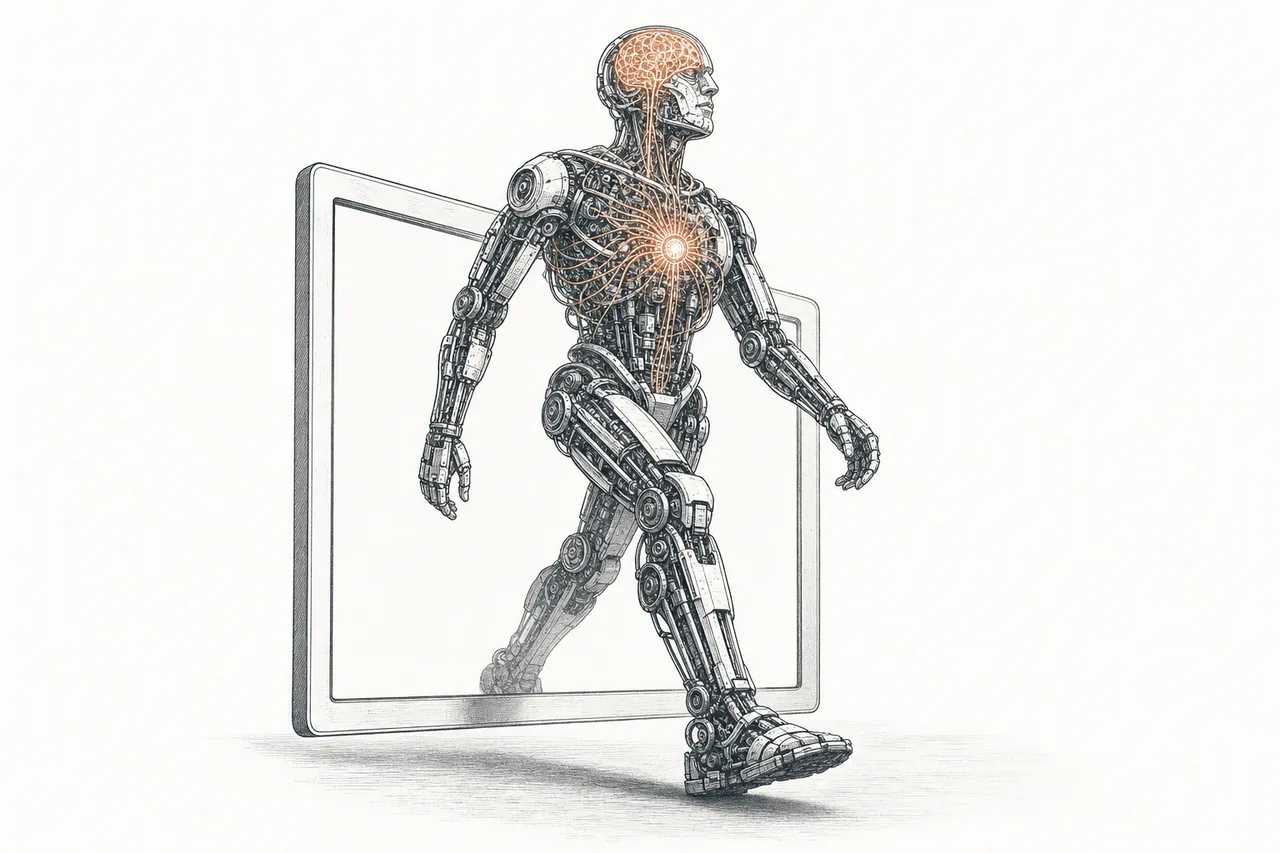
When AI stepped off the screen and started walking in the real world
For years AI kept getting smarter — but it stayed trapped in the screen: answering chats, writing code, drawing pictures. 2025–2026 is when it started to grow a "body" and come out to grab things, walk, drive, and even perform surgery in the real world. This is what Jensen Huang calls the "ChatGPT moment for robots." This lesson is the map that strings the 9 categories of the robotics industry together — from the "body" (motors, gears, sensors) to the "brain" (AI), then how they assemble into robot arms, warehouse robots, self-driving cars, and humanoids, how they connect, and where the money pools (each category has its own deep-dive lesson).
01The big picture: AI with a body
Think about this difference — the AI we're used to (ChatGPT, Gemini, Claude) is very smart, but it has no hands. It can't pass you a glass of water, can't walk into a warehouse to fetch something, can't drive. Robotics & Physical AI is about putting that intelligence into a "body" so it can work in the real, physical world — which is why it's a separate megatrend from AI (the bodiless models and chips live in the AI trend; the "body" comes here).
And this market is growing fast. The global robotics industry was worth about $90B in 2024, and is expected to grow to over $205B by 2030 — roughly 15% a year. The "service robot" side (outside the factory — warehouses, healthcare, the home) is already the bigger, faster-growing half compared with the traditional factory side.
But what makes 2025–2026 special isn't just the size — it's two waves arriving at once. The first wave: AI got smart enough to actually "understand the real world." The second: the mechanical parts (motors, gears, sensors) got cheap and good enough to build a robot at a reachable price. When the two waves met, robots jumped from "an arm in a cage on the factory floor" to "a machine that works alongside people." That's what we'll lay out on the map in this lesson.
02The map: what are the 9 sub-categories
The best way to understand this industry is to see it as a layered "stack" — the body (parts) and the brain (AI software) combine into applications (the actual robots you put to work). The 9 categories sit across these 3 layers — each with its own deep-dive lesson (tap to read):
Foundation layer — body & brain (every robot uses these)
- Robotics Components & Actuation: the "body" — precision motors, reduction gears (reducers), and sensors that perceive. The parts that decide how far any robot can go, and the bottleneck of the whole industry
- Robotics AI & Embodiment Software: the "brain" — AI models for robots (robot foundation / VLA models), simulation, and the on-robot processing — the heart of the phrase "Physical AI"
Top layer — applications (the robots actually put to use)
- Industrial Automation & Cobots: factory robot arms and robots that work alongside people (cobots) — the industry's most mature revenue pillar
- Warehouse & Logistics Robotics: warehouse robots — grab, store, move (AMRs) for e-commerce and distribution centers
- Surgical & Medical Robotics: surgical-assist robots — the best business model in the industry, with recurring revenue from instruments and services
- Autonomous Vehicles & Robotaxi: L4/L5 self-driving vehicles — the focus is the "drive-itself system" (the EV drivetrain lives in Electrification)
- Civil Drones & UAV: commercial drones — surveying, delivery, inspection (military drones live in Defense)
- Humanoid Robots: general-purpose humanoids — the hottest topic of the era, though most of the makers are still private companies
- Consumer & Home Service Robots: home robots — vacuum cleaners, lawn-mowing robots, pool cleaners, and home service/companion robots
03How it connects (body + brain)
The heart of this map is a simple equation: robot = body + brain. Whether it's a factory robot arm, a self-driving car, or a humanoid, they're all built from the same two foundation layers — the only difference is the "shape" and the "job" sitting on top.
Look at it this way and you can see why the humanoid is the "endpoint" of the whole trend — it demands both the most complex body (two-legged walking, hands that grab) and the smartest brain (general work, not just one task). When the two foundation technologies improve, it doesn't only help the humanoid — it lifts every category at once. That's why progress in the "brain," like AI, ripples across the entire robotics industry in one go.
Physical AI = AI that understands the "physical world" (gravity, collisions, objects you can grab), not just text or images · VLA (Vision-Language-Action) = a model that takes an image + a language command and outputs a robot "action," e.g. "pick up the red cup and place it on the tray" — the core that lets a robot do new tasks without being programmed step by step
04Where the value and the power sit
The key rule of this industry: value often isn't in the "robot itself" but in the bottleneck parts and the recurring revenue. Take the clearest example — for a single humanoid, more than half the parts cost (BOM) goes to the actuator (motor + reduction gear + the sensors that move a joint precisely).
This explains why companies that look like they "sell boring stuff" — makers of high-precision reduction gears (like Harmonic Drive of Japan, Nabtesco, or Green Harmonic of China) — matter so much. They sit on the body bottleneck that every robot depends on, just like ASML controls the equipment bottleneck in semiconductors.
In the application layer, the categories that make the best money are the ones with "recurring revenue." The classic example is Intuitive Surgical's surgical robots — the machine is sold once, but it charges for instruments and services every time it's used, so about 85% of revenue is recurring. Meanwhile categories that only sell a "hardware box," like robot vacuums, have to fight a brutal price war.
The lesson for reading this trend: don't just ask "does this company make robots" — ask "does it control a body/brain bottleneck, or have recurring revenue — or is it just selling a hardware box in a price-war zone?"
05Forces that move the whole trend
Even though the categories differ, three big forces move the entire robotics industry at the same time:
1. The Physical AI wave — this is the biggest force. When AI gets smart enough to "understand the real world," robots start doing work they couldn't before. NVIDIA launched a foundation model for robots (Isaac GR00T), and Jensen Huang declared that "the ChatGPT moment for robots has arrived" and that "every industrial company will become a robotics company" — a better brain lifts every category at once.
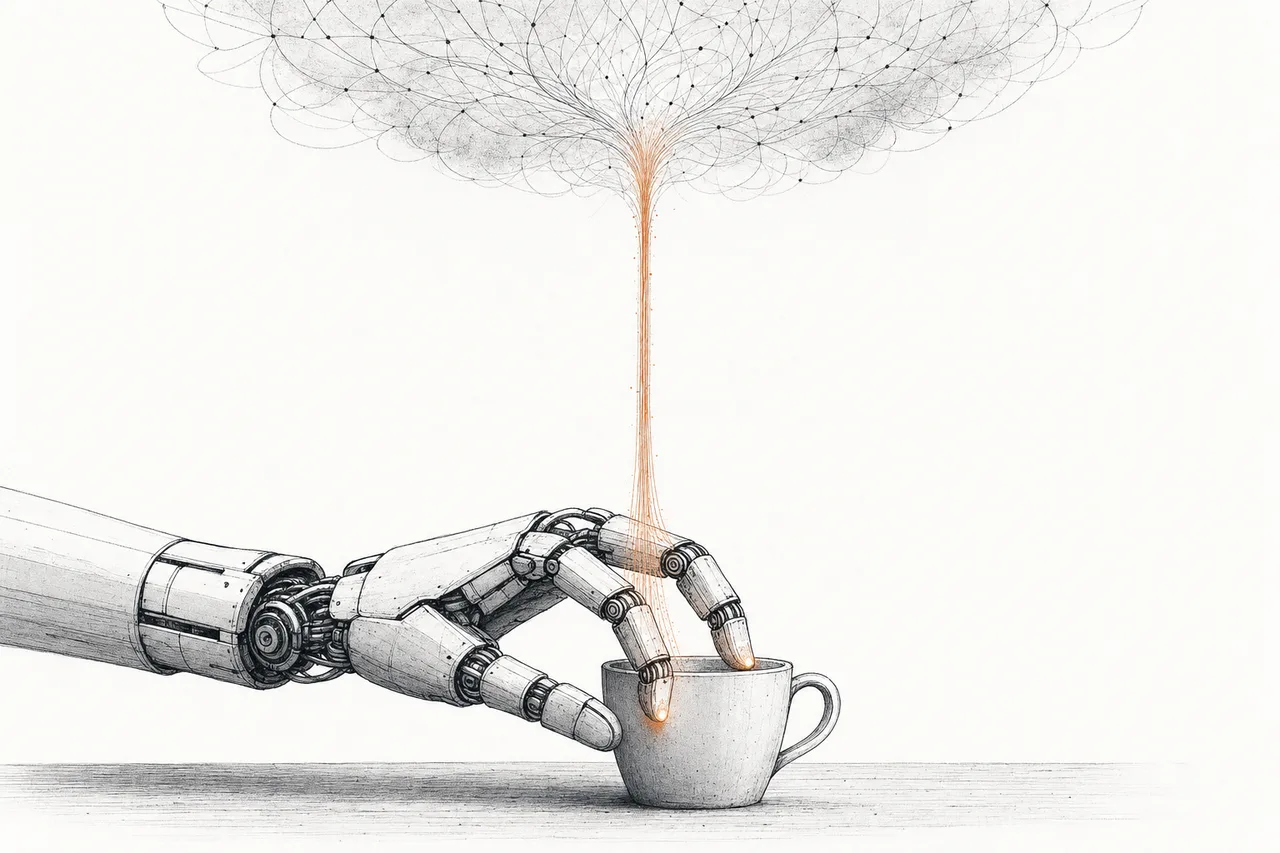
2. Labor shortage + aging society — the world is running short of workers for heavy, repetitive, and dangerous jobs, while the population is aging (see Aging Population). So robots aren't just "a high-tech toy" — they're an answer to a structural problem. That's why Amazon has already installed over 1 million robots in its warehouses and why factories worldwide are rushing to use robot arms — this demand is long-term pressure that doesn't depend on fashion.
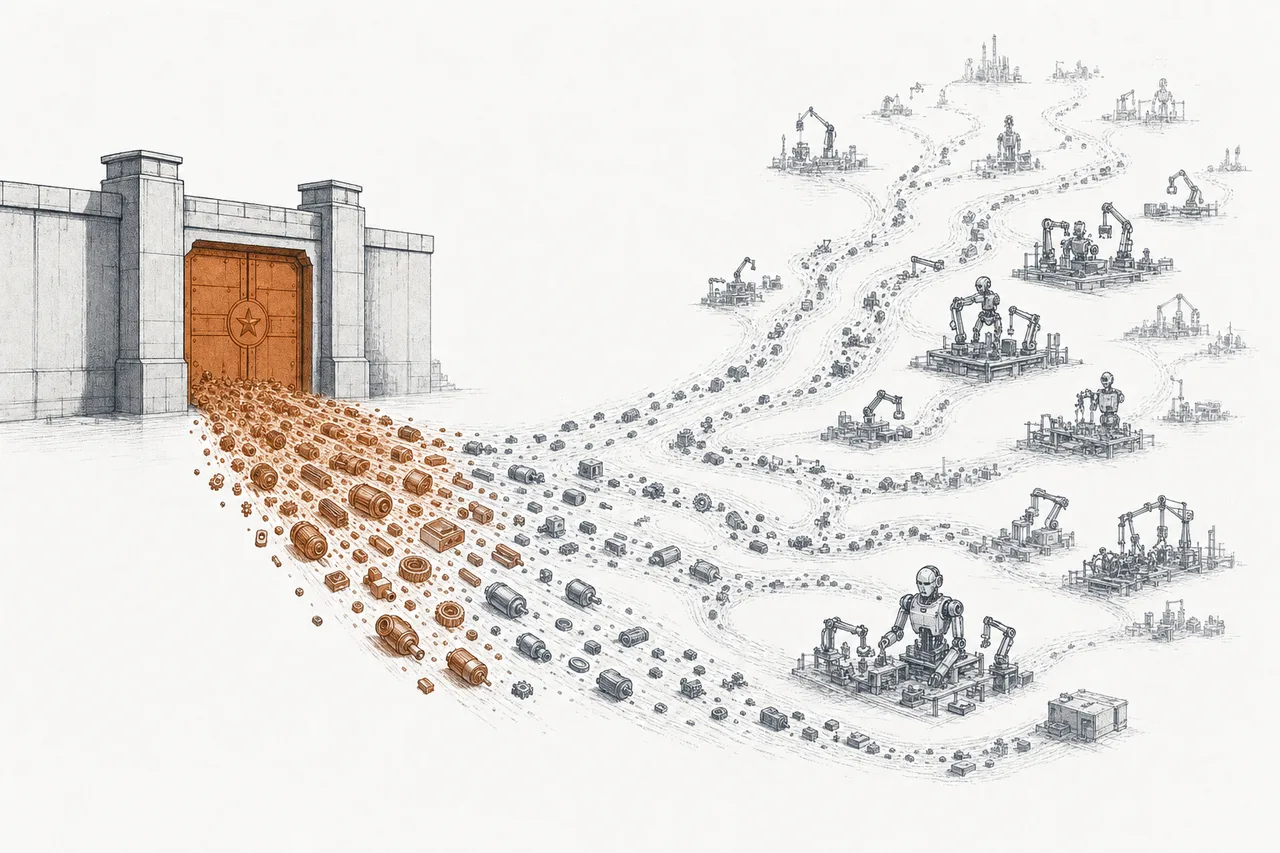
3. The supply chain China controls — this is the biggest geopolitical risk. China controls about 90% of the world's rare-earth refining, which is essential to the magnets in every motor, and it's also the low-cost parts base. One estimate finds that building a Tesla Optimus with no Chinese supply at all would push the parts cost from about $46,000 to over $131,000 per unit (nearly 3×). When China rolled out rare-earth export controls in April 2025, robot production was hit immediately.
06Where it stands now + the champion of each category
2025–2026 is a turning point — the factory and warehouse side is "already in wide use" (the number of industrial robots operating worldwide passed 4.6 million in 2024), while humanoids are still "at the starting line" (Tesla aims to make Optimus in the thousands in 2025, scaling to hundreds of thousands in 2026). Below are the "champions" of each category, which show how the power is spread across several countries (US/Japan/Europe/China):
Notice that many of the big names (Amazon, Alphabet, NVIDIA, Tesla) are "multi-leg" companies for which robotics is just one piece — while the "pure" players whose main business really is robotics tend to be Japanese/European companies in the body layer (Fanuc, Keyence, Harmonic Drive), or private companies on the humanoid side that are still hard to reach through the stock market.
07The future and the risks
Looking ahead, this industry has both tailwinds and risks that you need to watch as a pair.
On the opportunity side: the biggest prize is the humanoid. Goldman Sachs expects the humanoid market to reach $38B by 2035 (shipping over 1.4 million units). Morgan Stanley looks even further, to $5 trillion by 2050 — if humanoids really become as commonplace as smartphones, this will be one of the largest markets in history.
On the risk side, there are three layers to watch:
- Expectations running ahead of reality: humanoids are still more "demo in a video" than "working at scale." Real shipments are still in the thousands to tens of thousands. If the market expects too much too fast and the goods don't arrive as promised, there's a risk of serious disappointment
- Geopolitics and rare earths: depending on China for both raw materials (magnets) and low-cost parts is a risk that isn't on the financial statements but is on the world map — a single export-control measure shakes the whole chain
- Safety and regulation: machines that move on their own alongside people (especially self-driving cars and surgical robots) have to pass strict safety standards and regulation — a single accident can slow a whole category
And that's why this lesson is a "map," not a "deep-dive guide" — because the real value of seeing the whole trend is seeing that the body, the brain, and all the applications string together into one story before you walk in to explore each room in detail — just tap into the deep-dive lesson of whichever category interests you.