Megatrend · Defense & Geopolitical Fragmentation
Every missile and every fighter jet is dead weight without a tiny magnet China controls 90% of
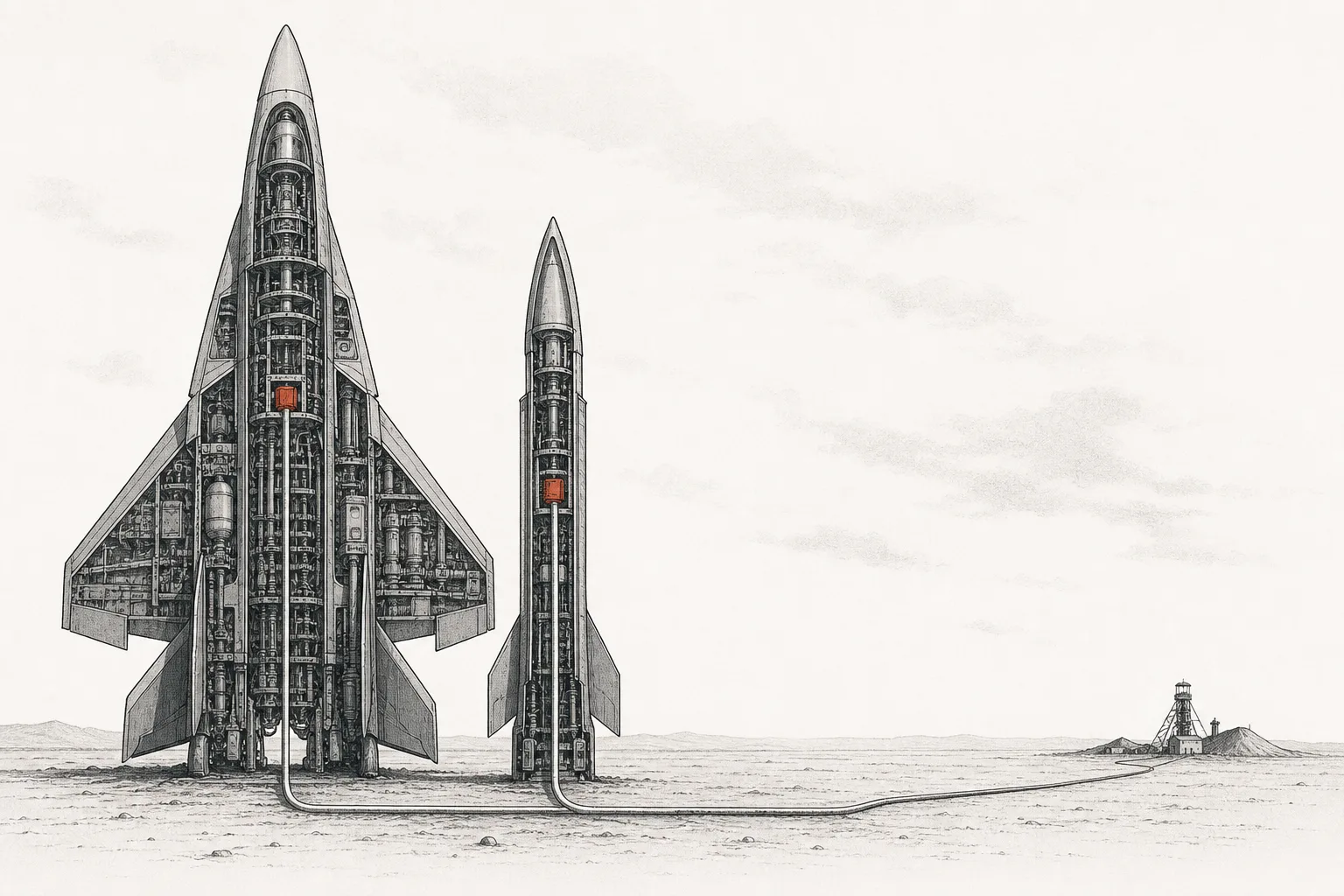
The heart of a modern weapon isn't gunpowder — it's the "permanent magnet" made from rare earths. It drives the motors in drones, steers missiles, and turns the mechanisms inside fighter jets. The problem: over 90% of the processing and magnet-making at this level sits in China — the same country the West is arming against. This is the story of taking back the military's deepest "bottleneck" — with governments themselves putting up the money to build the mines, the separation plants, and the magnet factories.
01What it is
When we picture a fighter jet or a missile, we usually think of a powerful engine or a warhead. But there's a small part that's indispensable — and that outsiders almost never talk about: the strongest kind of "permanent magnet" in the world. It's what makes the motors turn, moves the fins that steer a missile, spins a drone's propellers, and lets a radar sweep for targets. Without these magnets, all that cutting-edge gear is just a block of metal that can't move.
This node is about building a "rare earths → magnets" supply chain of your own, for security — from mining rare earths outside China, to separating and refining them to high purity, to standing up domestic magnet factories. The goal isn't pure profit; it's making sure the "guts" of an entire weapons system don't depend on a strategic rival. There are three main stages strung into one line:
- Mining: finding and digging "rare-earth elements" out of the ground — especially neodymium (Nd) and praseodymium (Pr), used to make magnets, plus the "heavy rare earths" like dysprosium (Dy) / terbium (Tb) that let magnets withstand heat
- Separation / refining: the hardest stage — pulling the mixed-up elements inside the ore apart and purifying them. This is where China owns the market outright
- Magnet making: taking rare-earth metal, alloying it, and pressing it into NdFeB magnets (neodymium-iron-boron) — the strongest commercial magnet, the one that ends up inside the weapon
Rare-earth elements = 17 elements that aren't actually "rare" in the earth's crust, but are so scattered that pulling them out pure is hard and expensive · NdFeB magnets = the strongest commercial permanent magnet, made of neodymium-iron-boron — the "muscle" of motors and guidance systems · Separation (refining) = the processing step that splits each element from the others — a chemical process that's complex, dirty, and takes decades of accumulated know-how. That's why the real "bottleneck" is separation, not mining
On the megatrend map, this node is a branch under Sovereign Supply — Minerals & Reshoring Industrials, within the larger trend Defense & Geopolitical Fragmentation. It's the "deepest layer" of defense — deeper than missiles or shells, because it's the raw material used to build those things in the first place. Its sibling next door is Defense Industrial Base — Strategic Materials (titanium, heat-resistant metals, engine parts) — if the sibling handles "the airframe and the engine," this node handles "the magnets that make everything move."
02Why it matters — every weapon eats magnets
There's one number that keeps the Pentagon up at night: China controls about 90% of rare-earth separation/refining and about 93% of permanent-magnet making worldwide, plus roughly 70% of mining. Put simply, even if you mine the ore elsewhere, almost all of it still has to go back to China to be processed and turned into magnets — the real bottleneck isn't "the mine," it's "the separation plant" and "the magnet factory."
Why is this especially serious for defense? Because modern weapons "eat magnets" in huge quantities. One F-35 fighter uses over 400 kilograms of rare earths; one Virginia-class submarine uses about 4 tons; and the U.S. military as a whole uses several thousand tons of rare-earth magnets a year — these magnets are embedded in everything from the guidance systems of Tomahawk missiles to radars, the motors of Predator drones, and the control mechanisms inside fighter jets.
And this is no longer a theoretical risk. In October 2025, China rolled out the strictest export controls on rare earths and magnets it has ever imposed — declaring that even a magnet made overseas, if it contains even a trace of Chinese-origin rare earths or uses Chinese technology, needs Beijing's permission before it can be exported. And for the first time, it took direct aim at foreign "defense sectors" — meaning China openly turned rare earths from a "commodity" into an "economic weapon," and woke the whole industry up to the fact that this bottleneck can really be squeezed.
03How it works (from ore in the ground to a magnet in a missile)
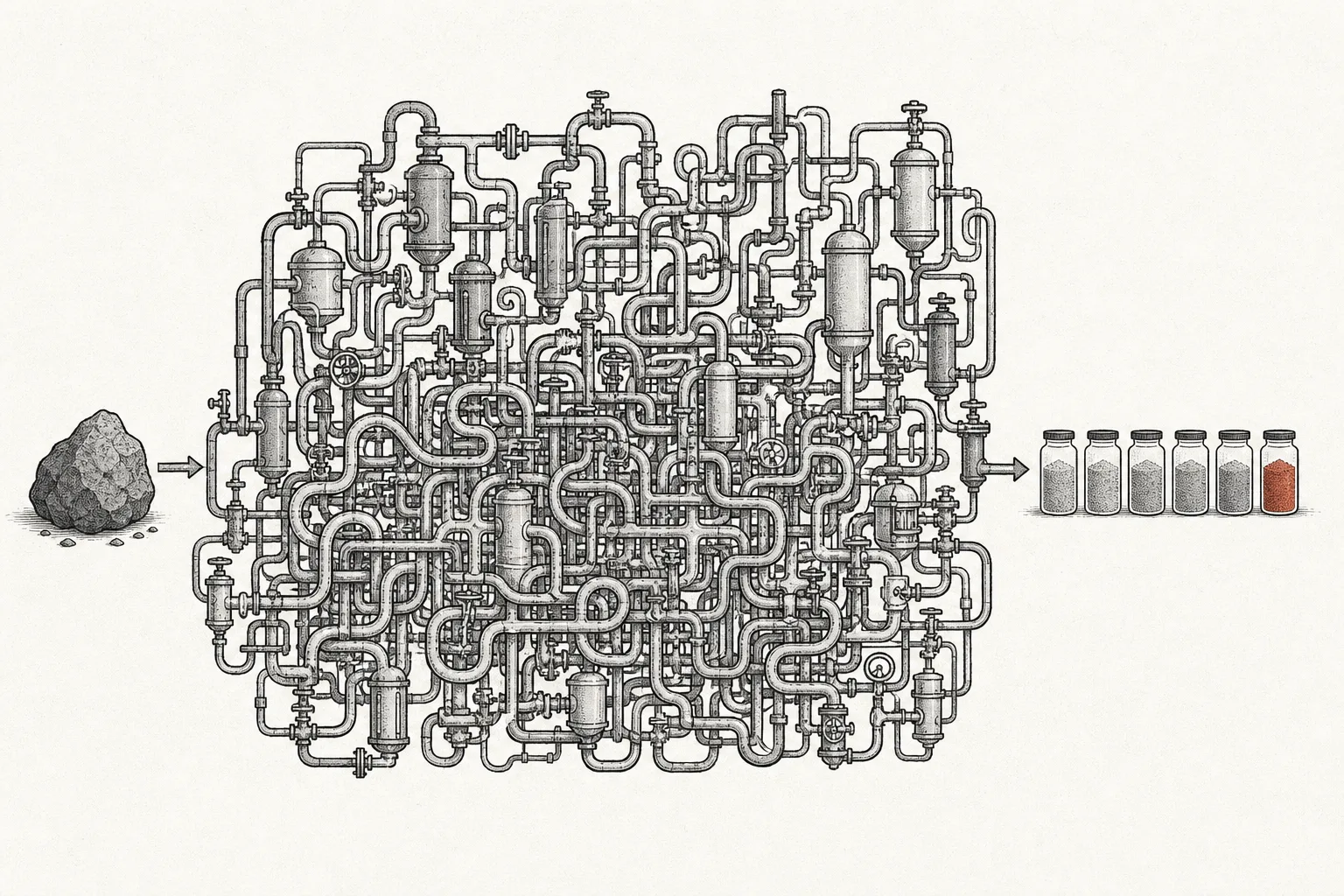
To see why China controls the game, you have to follow the whole "journey" of a single chunk of rare earth — from sitting in the ground to becoming a magnet in a missile. Let's walk through it stage by stage — and watch for which stage is where the whole world hits a bottleneck.
What makes the "separation" stage so enormously hard is that all 17 rare-earth elements usually sit mixed together in a single ore, with chemical properties so similar they're extremely difficult to pull apart. It takes hundreds of chemical cycles, vast amounts of chemicals, and produces waste that's hard to handle. China has borne the environmental cost and accumulated this know-how for over 30 years — until it became a wall the West crosses only slowly. Not because it can't do it, but because doing it can't compete on price. That's why this stage became the real strategic bottleneck.
04How it connects in the ecosystem
Rare earths and NdFeB magnets are raw materials that "everyone wants," so this node connects out in many directions — but what makes it special is that it looks at the same raw material through a lens of "security and sovereignty," not just a market lens.
- The security face of Critical Materials & Supply Chain: exactly the same raw material, but Critical Materials looks at it through a market and clean-energy lens (EVs, wind turbines, global supply and demand), while this node looks through a defense and national-security lens (China as rival, the state investing itself, magnets in weapons) — two sides of the same ore
- Shares magnet technology with Servo Motors & Magnets: the very same NdFeB magnet that drives robot and EV motors is the one inside a weapon's motor — so magnet-making know-how crosses back and forth between the civilian and defense worlds, and both sides fight over the same raw material
- Feeds the sibling Strategic Materials & Components and the major defense companies: magnets from this node + titanium / heat-resistant metals from the sibling = the full set of raw materials that makers of missiles, aircraft, and drones need. If this layer is missing, the layer above can't be built
- Underpins demand for electric vehicles and wind power: most of the world's magnet demand actually comes from EVs and wind turbines. Defense is a small share but "indispensable" — civilian demand growing makes the business case for building a chain outside China stronger, so it doesn't rest on the defense budget alone
05Where it stands now
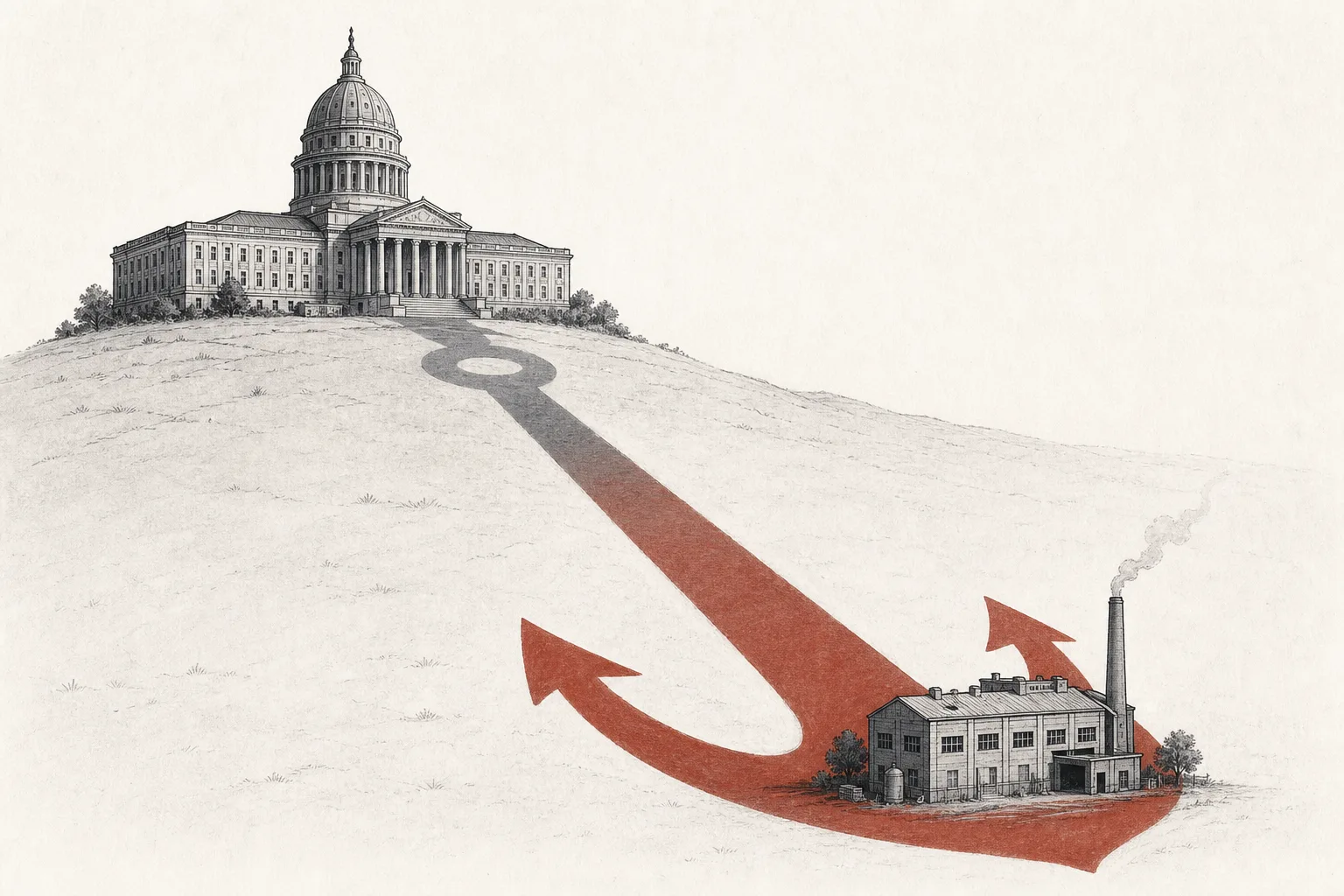
2025 is the year this theme "exploded" into the mainstream. The deal that became the template for the whole industry was the Pentagon's deal with MP Materials in July 2025, which flipped the state's role from "weapons buyer" to "investor in the raw-material supply chain" directly.
In this deal, the U.S. Department of Defense bought $400 million of convertible preferred shares, becoming MP's largest shareholder (about 15% when fully converted), along with a 10-year contract that guarantees a price floor for NdPr at $110/kg and buys all the magnets from a new plant (the "10X Facility," producing 7,000 tons/year) — which, combined with the Independence plant expanding to 3,000 tons, will push MP's magnet capacity toward 10,000 tons/year. This mechanism is the opposite of a free market — it's the state "removing the price risk" entirely in exchange for having a supply chain of its own.
This deal immediately set off the deals that followed. A few days later, Apple announced a $500 million investment in MP to buy recycled magnets made in Texas (deliveries starting 2027) — a sign that even the commercial sector will pay more to avoid depending on China. Meanwhile, in Australia, Lynas became the first producer of heavy rare earths (dysprosium) outside China in May 2025, and began producing terbium in June — confirming that separation "outside China" can really be done now, not just on paper.
Domestic "magnet making" is taking shape too. USA Rare Earth opened an NdFeB magnet plant in Stillwater, Oklahoma (the Innovation Lab) in March 2025 and produced its first lot of "sintered magnets," aiming to climb to about 600 tons/year by year-end and up to 1,200 tons/year by early 2027. Upstream players like Energy Fuels and NioCorp are racing to develop domestic rare-earth deposits in parallel — the overall picture is money from both the state and the private sector flowing into every stage of the chain at once.
06The road ahead
The first direction is "the MP model will be repeated." A deal where the state invests, buys, and guarantees the price has now proven it can actually wake up a domestic plant. Expect the same pattern to spread to other kinds of magnets and to domestic separation stages — the long-term goal is "the whole line," from mining to separating to making metal to making magnets, without passing through China at even a single stage.
The second direction is the demand behind it is growing every which way. The global rare-earth magnet market is around $22 billion in 2025 and expected to grow to about $30 billion by 2030 (with estimates as high as nearly $57 billion by 2035), driven by defense, EVs, and wind power all at once — demand growing in every direction makes the business case for building a chain outside China stronger, not just a security one.
The third direction is "friend-shoring" and recycling. Instead of doing everything at home (which is expensive and slow), the West is teaming up with allies — Australia (Lynas), Japan, Canada, and Europe — to spread the risk and share the cost. At the same time, recycling old magnets (as Apple–MP are doing) is becoming an alternative source of raw material that doesn't depend on a new mine at all. Building a "free-world supply chain" that bypasses China will be a decade-long investment problem.
07Challenges & risks
This hot-looking theme has shadows you need to see in full.
The first risk is "China retaliates with price." China's most powerful tool isn't an export ban — it's opening the tap and dumping cheap ore back into the market just as a Western plant is about to open, to drive it into losses until it has to close — the way it once pushed NdPr prices in China below $60/kg. That's why the state's $110/kg price floor matters so much, but it also means these projects rely on state subsidies. If the state ever stops backstopping them, the business model could wobble overnight.
The second risk is "time and cost." Building a chain from mine to magnet at home takes years and costs several times more than buying from China. Even if you pour in money today, it's still years before a plant runs at full capacity — the gap between "announcing a deal" and "actually producing in volume" is the hidden risk, and China is still several lengths ahead. Even Lynas's Texas plant has run into ballooning costs that may force it to ask the state for more money.
The third risk is "price cycles and political continuity." Ore and magnet prices swing hard with the commodity cycle, and this whole theme is tied to political will that can change with every election. A project that takes 10 years to pay off, with policy that changes every 4 years, is the uncertainty investors have to weigh — the real value lies with whoever "actually produces and has the state's backing," not just a name in a deal headline.
In short: this node is the lesson that modern military power begins at "the mine and the magnet factory," not on the battlefield. The world has just discovered that a tiny magnet is the most fragile point in an entire weapons system — and that has turned governments from "weapons buyers" into "investors in mines and smelters" on the biggest scale in decades.