Megatrend · Digital Finance
Can you buy NVIDIA stock at 3 a.m.? You can — if the stock lives on a blockchain
The world's stock markets keep set hours, close on weekends, sell in whole shares, and take another full day before money and stock actually "clear." Here's the idea that tears all of that up: park real shares with a custodian, then issue a "token" on a blockchain one-for-one to stand in for them — that token trades 24 hours a day, buys in fractions of a dollar, and settles instantly. The people actually doing this aren't just crypto natives — they're Robinhood, Kraken, and Coinbase. And the harder part isn't the stock itself; it's the "rails" underneath — the registry and rules that make it legal.
01What is it?
Start with a simple picture: say you want to buy Apple stock, but just $5 worth, at 3 a.m. on a Sunday — the normal stock market won't let you. The market's closed, you have to buy whole shares, and you go through a broker during business hours. Tokenized equity exists to fix exactly this.
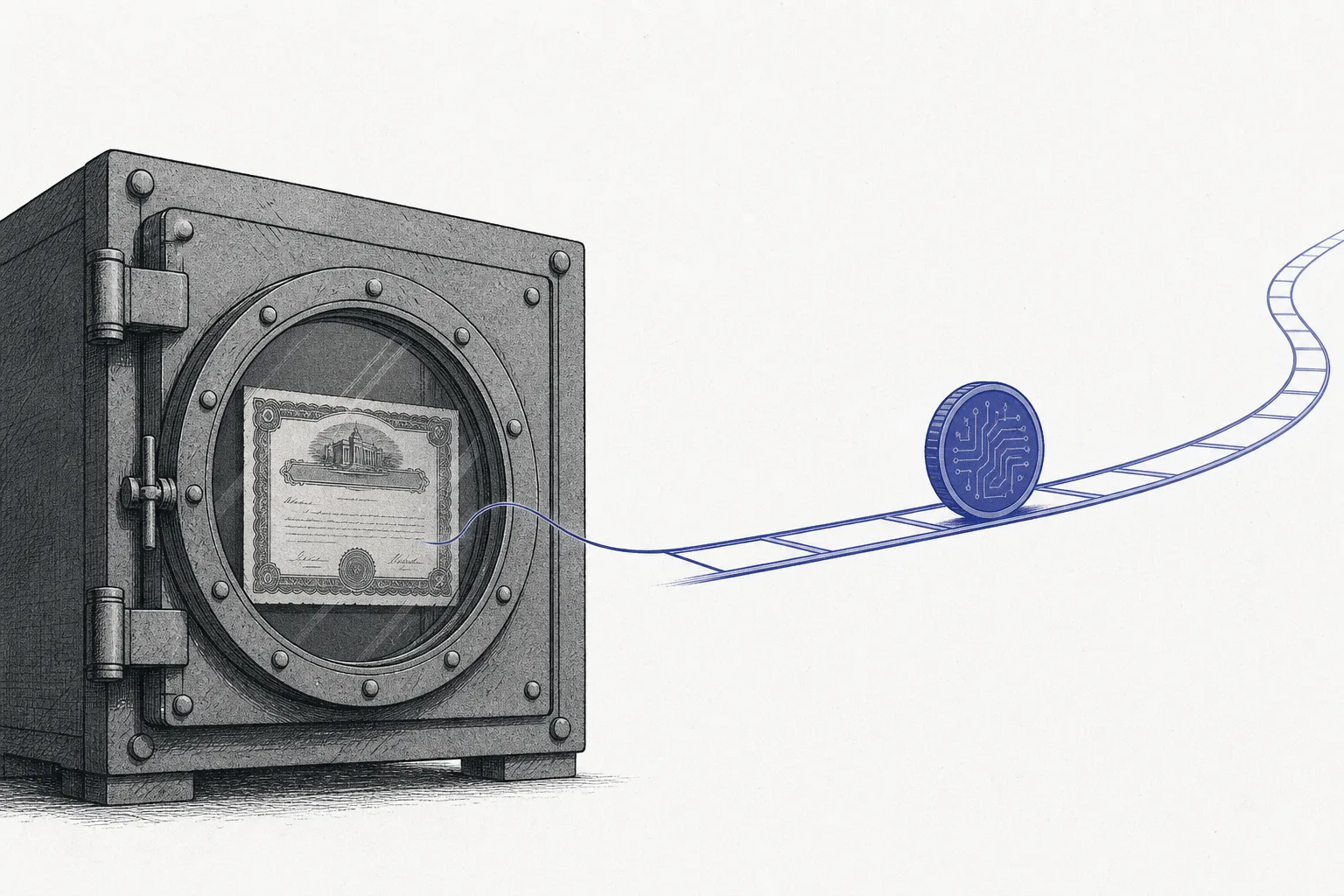
The idea has two layers. The first is the "tokenized stock" itself: take one real share (say NVDA), park it with a licensed custodian, then issue a "token" on a blockchain that represents ownership one-for-one — that token is the digital twin of the real share. Its price tracks the real stock, but it moves like something on a blockchain: it trades 24/7, buys in fractions, and settles instantly.
The second layer is the word "rails" in this node's name — and this is the real star everyone overlooks. Issuing a token to stand in for a share is "offering a security," which sits under strict rules. Who's allowed to hold it, who can transfer it to whom, who is the official shareholder register, how dividends get paid — all of this is the "rails," the issuance-settlement-compliance infrastructure that makes tokenized stock actually work and stay legal, not just a toy on a chain.
On the megatrend map, this node is a leaf under Real-World Asset Tokenization, inside the bigger trend Digital Finance & Tokenization. It focuses specifically on stocks and securities — unlike its sibling next door, tokenized funds and bonds, which puts government bonds and money-market funds on-chain. Stock is much "harder" than bonds, because it's tangled far more deeply with securities law and shareholder rights.
Custodian = the institution that holds the real shares as backing for the token; in the xStocks case, the real stock is held at Clearstream · Atomic settlement = delivering "money" and "stock" together in one transaction on-chain, done in seconds (unlike the old market, where you wait for T+1) · Transfer agent = the keeper of the official shareholder register — on-chain, this is the key piece that makes a token count as "real stock," not just a simulation.
02Why it matters — a market that never closes
Why put stock on-chain when buying shares through an app is already easy? Because it unlocks three things the old stock market can't — and all three are a game-changer specifically for people "outside the U.S."
The first is time — the U.S. stock market is open only about 6.5 hours a day, Monday to Friday. But tokenized stock trades 24 hours, and once you hold it in your own wallet, it trades even on weekends. People in Asia no longer have to wake up at 2 a.m. to watch the U.S. market. The second is fractional shares — you can buy a stock priced in the thousands with just $1. The third is access — people in over 100 countries who can't open a U.S. brokerage account can now hold a digital twin of U.S. stock.

Here's a slightly ironic part: a product that sells "U.S. stocks" still won't let Americans buy it — Backed/Kraken and Robinhood are open to Europe and 100+ countries, but they exclude the U.S., U.K., Canada, and Australia, because securities rules in those countries still aren't clear. That's why Coinbase asking the SEC to open U.S. trading is such a big deal.
The market is still tiny next to the real stock market's hundreds of trillions of dollars — but it's growing at a startling pace. The value of tokenized stock on-chain jumped from just ~$2 million in mid-2025 to the billions of dollars by mid-2026 — roughly a hundredfold in about a year.
03How it works (real stock → token → rails)
The heart of this is a four-step journey where one real share becomes a token that trades all night. Let's walk through it step by step to see why it's faster and more flexible than the old system.
The step people skip over is the last one, and the bottom layer. In the old stock market, when you buy a share, the money and the stock only really "clear" the next business day (T+1). During that wait, several intermediaries have to post money to backstop the risk. On-chain, the delivery of money (paid with stablecoin) and the delivery of stock happen together in a single transaction, done in seconds — this is atomic settlement.
But the real difficulty isn't minting the token — it's the "rails" in the dashed box at the bottom. A stock token has to know who's allowed to hold it (some countries are barred), who can transfer it to whom, who is the shareholder register the company recognizes, and when the company pays a dividend or holds a vote, how that flows through to token holders. All of this has to be baked in as rules, both into the token itself and into the system behind it — which is why a company like Securitize, or whoever serves as the on-chain transfer agent, matters just as much as the trading platform.
04Where it sits in Digital Finance
Tokenized stock doesn't float around on its own. It's one piece inside Digital Finance & Tokenization, and it only works by leaning on its siblings in the same family:
- A different thing from tokenized funds/bonds: the sibling next door puts "government bonds and money-market funds" on-chain, which is much easier, because those assets are already highly liquid and clearly valued — you're just making them faster. This node puts "individual stocks" on-chain, which is tangled more deeply in securities law and shareholder rights — so it grows slower and hits more walls
- Has to run through digital-asset exchanges and distribution channels: once a stock token is minted, it needs somewhere to trade and somewhere safe to be held — Kraken, Bybit, Robinhood, Coinbase, and DeFi markets are the "storefronts" that put tokenized stock in front of people worldwide
- Needs stablecoin as the cash leg: when you buy tokenized stock, what do you pay with? Mostly stablecoin (digital dollars), which lets both legs of the delivery complete together, atomically
- Leans on Cybersecurity & Digital Trust and Cloud & Digital Infrastructure: with billions of dollars running on smart contracts, if the code gets hacked or a custodian fails, everything collapses at once — so security and cloud infrastructure are the foundation you can't do without
05Where it stands now
2025 was the year tokenized stock's "real deals" hit the field all at once. The starting point was June 2025, when Backed Finance launched xStocks — minting blue-chip stocks like AAPL, NVDA, and TSLA as roughly 60 tokens on Solana, with the real stock held at Clearstream as collateral, then opening them for trading on Kraken and Bybit. That same day, Robinhood opened over 200 tokenized stocks to European customers and announced it would build its own blockchain, Robinhood Chain.
From there, everything moved fast. By the end of 2025, Robinhood had expanded tokenized stock on Arbitrum past ~2,000 tokens. Kraken/xStocks climbed from 60 to 100, aiming past 500 by the end of 2026. The most striking is Ondo Global Markets, the first tokenized-stock platform whose on-chain value passed $1 billion, in May 2026 — and it pushed into the advanced "rails" too, partnering with Broadridge to let token holders vote their shares from a crypto wallet, covering 250+ stocks/ETFs worth about $700 million.
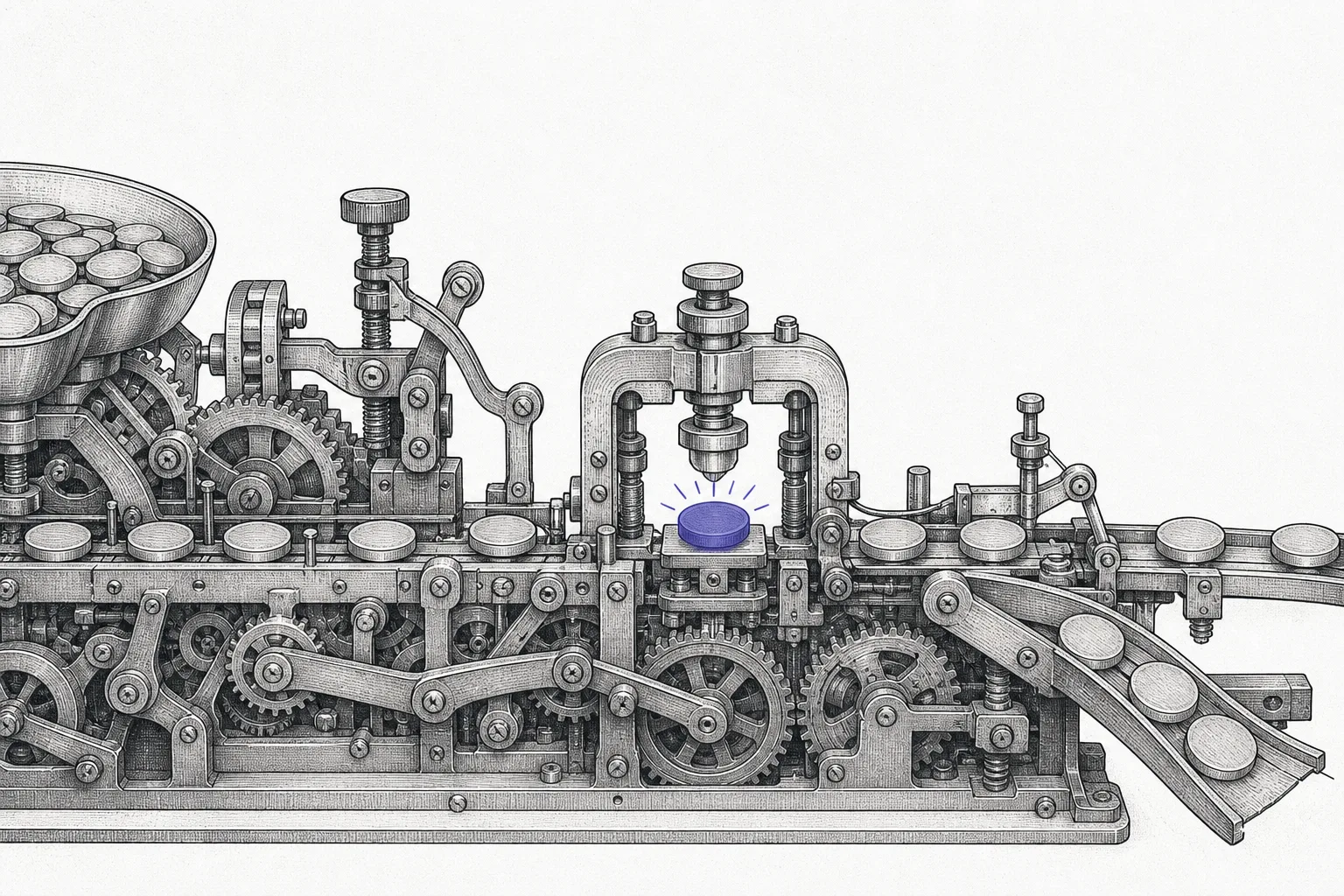
Deeper than the numbers is the industry splitting into two approaches. The first is "wrapping what already exists" (wrapped) — park the real stock and issue a token on top, the way Backed's xStocks does. The second one, now rising, is "issuing securities directly on-chain" (native issuance) — where the token isn't just a replica, but a share recorded in the official shareholder register from the very start, the way Securitize does with Computershare, and the way Figure uses a blockchain as its real securities register — these are the most legally sound "real rails."
And the spot everyone's watching is the U.S. — the world's biggest stock market, still keeping its door shut to tokenized stock. Coinbase has clearly called this its "highest priority" and is asking the SEC to open on-chain stock trading inside the country. If it gets the green light, it'll unlock the biggest market for the whole industry.
06The future — when the U.S. opens the door
The first and most important direction is the U.S. shifting from "banned" to "there's a framework". In late January 2026, the SEC issued a landmark statement on tokenized securities, laying down the principle that "the plumbing can change, but the rules stay the same" — a token that represents a share is a security and sits under the same rules as ordinary stock. That sounds strict, but it's really the "clarity" the industry had long been waiting for, because it spells out exactly which rules you have to follow to be legal. That was followed by Nasdaq and NYSE filing rules to allow trading securities in tokenized form on the same board as ordinary stock.
The second direction is the "rails" becoming the real competitive arena. Once everyone can do the token itself, what decides the winner is who has the complete rails — a register the company recognizes, voting rights and dividends that reach the actual holders, and issuing securities directly on-chain instead of wrapping existing ones. The industry is shifting from "simulated stock on-chain" to "real stock issued on-chain from the start" — which is where Securitize, Computershare, Broadridge, and the on-chain transfer agents grow more valuable.
The third direction is the merge with DeFi. Once a stock becomes a token, you can immediately use it as "collateral" to borrow on-chain, or drop it into an automated portfolio — things a stock in a traditional brokerage account can't do. This "programmable" power could make tokenized stock not just "stock you can trade for longer," but a new raw material for the whole financial system — though it comes with new risks to watch.
07Risks — real vs overhyped
Tokenized stock is a trend where "real" and "overhyped" are mixed at high concentration. Telling the two apart is the single most important skill in understanding it.
The first risk is law and regulation — this is the biggest wall, not the technology. The SEC has stressed that a stock token is a security under strict rules. Issuing or trading against the rules risks being outright illegal, and that's why most products still exclude people in the U.S., U.K., Canada, and Australia — the lack of clear rules in each country is what walls off growth, and the rules themselves can still change at any time.
The second risk is liquidity and price gaps. The tokenized-stock market is still tiny next to the real stock. After hours, when the real stock is closed, there's no reference market to set the price, so a tokenized stock's price can drift from the real one (premium/discount), spreads run wide, and big blocks are hard to trade — "trades 24/7" doesn't mean "someone's there to trade with you all the time."
The third risk is you don't hold the real stock — you hold a "promise of stock". Most tokens today give no voting rights, and their value rides on the "real thing" behind them. If the issuer or custodian fails, or the collateral isn't truly a full 1:1, the token can be worthless. Add the risk of smart contracts being hacked, plus concentration in a handful of issuers — users still have to trust intermediaries, just new-face ones.
In short: Tokenized Equities & Securities Rails is about moving stock and the securities market onto digital rails that never close, buy in fractions, and settle instantly. The turning point was 2025, when Robinhood, Kraken, and Backed actually moved — and the deciding factor is the "rails" and the "rules," especially the day the U.S. decides to open the door.