Megatrend · Artificial Intelligence
A bare GPU doesn't work — someone has to build it into a "rack that thinks"
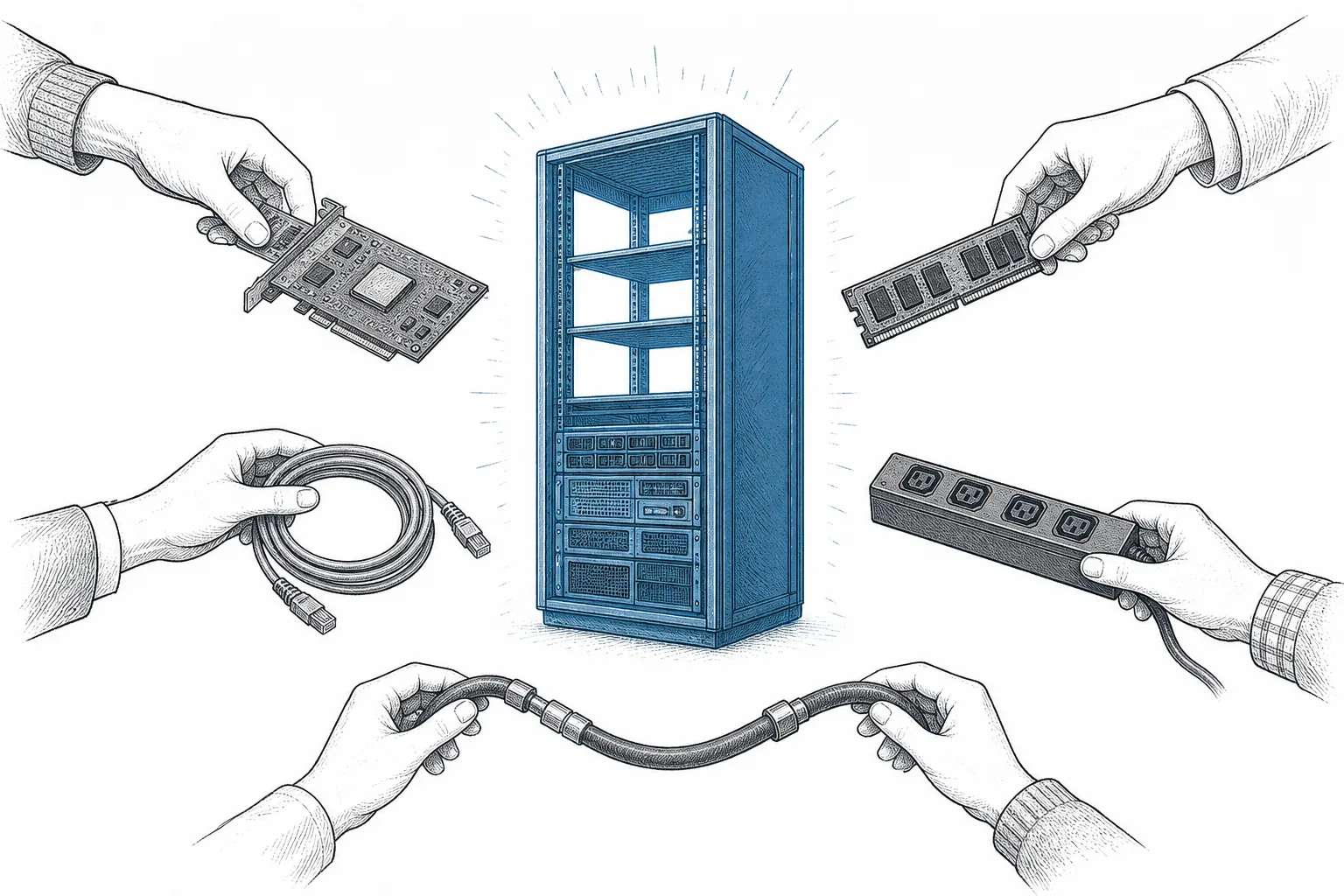
NVIDIA designs the chips, but a bare chip sitting on a table can't do anything at all. Another group has to take the GPU and combine it with a CPU, memory, network cards, power panels, and cooling, cram it all into a cabinet, and deliver it as a "ready-made rack" you can plug in and run right away. This lesson introduces those people — Dell, Super Micro, HPE, Lenovo, and the giant Taiwanese factories like Foxconn, Quanta, and Wiwynn — a business with sales topping a hundred billion dollars, but razor-thin profit per unit, now being upended by the "rack-scale" era.
01What it is
When we hear that "NVIDIA's AI chips are selling like crazy," we tend to imagine the buyer just plugs the chip in and uses it. That's not how it works. A GPU coming out of the factory is just a slab of silicon on a circuit board — it's missing almost everything that makes it run. Not enough memory, no power supply, no cooling, nothing to connect it to other GPUs, and no cabinet to live in. This node is about the people who combine the chip with everything else to turn it into a working "machine".
To picture it: if the GPU is the "engine," these people are the car assembly plant that drops the engine into a body and adds the transmission, electrical system, cooling, wheels, and seats until you have a car that can drive on the road. They take a GPU + CPU + memory + network cards + power panels + cooling and assemble it into a single server, then pack many servers into one rack (a cabinet as tall as a person) — delivered to the customer in a "plug it in and it runs" state.
On the megatrend map, this node is the deepest leaf under AI Data Center & Build-out, within the big trend Artificial Intelligence. It has two siblings on either side, each with a different job on the same site: Colocation & Hyperscale REITs (the building owners who lease out the space) and Build-out, Construction & Engineering (the contractors who build the structure itself) — while this node is "the people who move the furniture into the house": the ones who assemble the servers and carry them in to install them for real.
OEM (Original Equipment Manufacturer) = a company that sells servers under its own brand, with service and warranty — like Dell, HPE, Lenovo · ODM (Original Design Manufacturer) = a factory that designs and assembles for big customers who put their own brand on it (or use it themselves), often Taiwanese — like Foxconn, Quanta, Wiwynn · System Integration = the work of taking many parts, assembling, testing, and tuning them to run together as one system — the heart of this business.
02Why it matters — the people who turn chips into machines
The money flowing into this field is staggering. The global AI server market was worth about $245 billion in 2025 and is expected to grow about 18% a year to ~$524 billion by 2030. The key point: every dollar NVIDIA, AMD, or a tech giant spends ordering AI chips always has to pass through these people first before it becomes a machine you can switch on — this node is the forced bottleneck between "chips" and "data centers".
But the number that tells the story best is one company's. Dell booked over $64 billion in AI server orders in fiscal 2026, has already shipped over $25 billion, and still carries a $43 billion "backlog" of unshipped orders going into fiscal 2027 — with a target of ~$60 billion in AI server sales in a single year, versus just $9.7 billion two years ago. That's more than 6x growth in a few years.
Why does this work "need someone to do it" rather than the customer assembling it themselves? Because it's far harder than it looks. Hundreds of parts from dozens of suppliers have to fit together exactly, tens of thousands of GPUs have to be tuned to talk to each other without a bottleneck, cooling pipes have to be routed without leaking over hardware worth millions, and the whole system has to be tested before shipping. Customers who want AI fast don't want to waste time doing it themselves — they'll pay professionals to assemble it and back it with a warranty. Speed and reliability are what sell in an era where everyone is racing to build AI.
03How it works (from chip to a rack that thinks)
The heart of this work is "building it up in layers," from small parts to a giant system. Let's walk through, step by step, how a pile of GPU chips becomes a whole "rack that thinks."
The thing that changed the whole game is the term "rack-scale" (the level of a whole rack). In the old days the unit you sold was "one server." But a new-generation rack like the NVIDIA GB200 NVL72 combines 72 GPUs and 36 CPUs with NVLink running at 130 TB/s, so the whole cabinet works like one giant single GPU. That means the unit you sell shifts from "a machine" to "a whole rack," and the assembly gets enormously more complex.
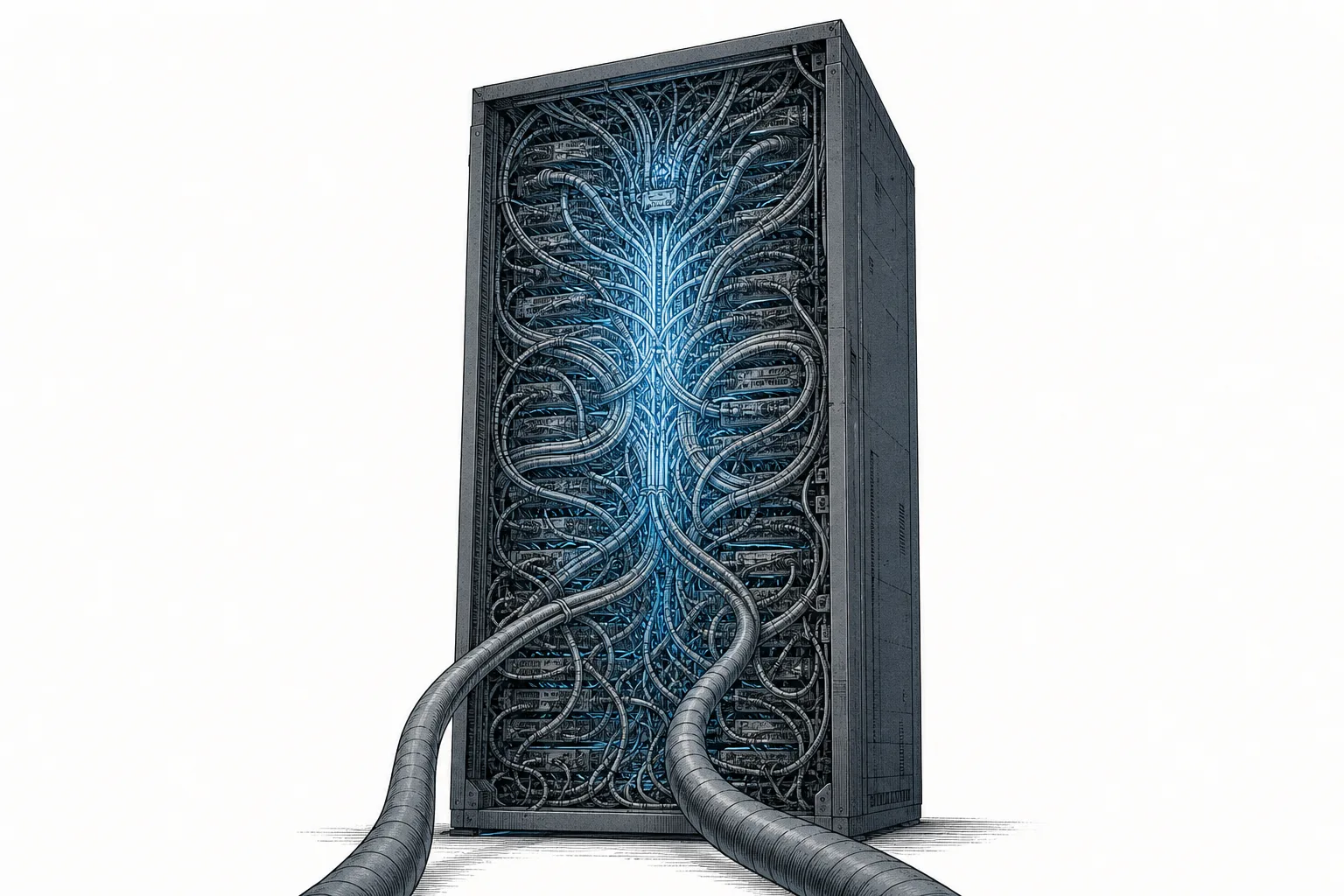
That complexity is very real and tangible. One NVL72 rack weighs about 1,500 kilograms, packed into less than a square meter, with more than 5,000 cable connection points — and almost all of it has to be liquid-cooled, because air can't keep up anymore. Routing tens of thousands of cables and coolant pipes correctly, without a leak, is the skill that makes a great assembler valuable. Not just anyone can do it.
04Where it sits in the AI ecosystem
This node is the "meeting point" where all the parts of AI come together. So it connects inseparably with its neighbors in the ecosystem:
- Takes chips from GPU & AI Accelerators to assemble: this is the main raw material — GPUs from NVIDIA/AMD and custom accelerators. These people are the "biggest customers" of the AI chip makers, and the hands that turn chips into something usable
- Needs AI Power & Cooling at its core: in the rack-scale era, liquid cooling is no longer an add-on but part of the assembly from the very start — the assembler who handles cooling well is the one who delivers a rack that actually works
- Places the rack into Colocation & Hyperscale REITs: a finished rack needs a "home" to live in — a data center building with power and network ready, which the building owner / REIT provides
- Goes on-site alongside Build-out, Construction & Engineering: while the contractors build the structure and run the systems, the server assemblers are the team that carries the rack in and installs it as the final step — the three have to be in sync before a data center can open
05Where it stands now
This field splits clearly into two camps. The first is the famous-brand OEMs that sell to enterprises with service — Dell is number one, followed by HPE and Lenovo. The second is the Taiwanese ODMs, the giant factories that assemble directly for the tech giants, led by Hon Hai (Foxconn), Quanta, and Wiwynn — and in the AI era, it's these Taiwanese ODMs that are growing fastest and taking the biggest jobs.
The Taiwanese side's growth numbers are stunning. By mid-2025, AI servers made up over 60% of server revenue at both Foxconn and Quanta, expected to hit 70% by year-end. Wistron's Q3 revenue jumped 108% year over year, and Wiwynn — which supplies AI servers to about half of the major cloud providers — grew revenue 149% in a single year from shipping GB200 racks.
The OEM side isn't far behind. Dell targets ~$60 billion in AI server sales in fiscal 2027 and holds a $43 billion backlog. HPE reported its latest-quarter AI systems sales at $1.54 billion, up 66% year over year, and just merged with Juniper to strengthen networking. Meanwhile, Lenovo uses its Asian manufacturing base and competitive pricing to pressure rivals in the standard-rack market.
The most dramatic story in the industry is the return of Super Micro (SMCI), a pioneer of liquid-cooled servers. In August 2024 the company was hit with accounting accusations by short-seller Hindenburg, followed by auditor Ernst & Young resigning and a risk of being delisted from Nasdaq, sending the stock plunging. But an independent committee investigated and found no evidence of fraud; the company filed its overdue financials by the deadline, kept its listing, and bounced back with fiscal 2025 revenue of $22 billion, up 47%, targeting at least $36 billion in fiscal 2026 — a lesson that this business is both fast-growing and fragile on credibility at the same time.
06What's ahead — the era of ready-made racks
The first direction is that the unit you sell keeps getting bigger — from a "server" to a "whole rack," and next maybe a "whole row's worth of pod." Selling at rack-scale is good for the assembler, because the value per order rises and the work gets harder — whoever can assemble a complex rack fast and without mistakes has more bargaining power than someone selling an empty box.
The second direction is that liquid cooling becomes a core skill, not an add-on. When a rack draws 130+ kilowatts, liquid cooling is mandatory, and it's "hard work that can earn a margin." The liquid-cooling market for AI data centers is expected to grow from ~$3.2 billion in 2025 to ~$15.3 billion in 2035, and assemblers who integrate cooling into the rack well from the start can escape the pure-hardware price war.
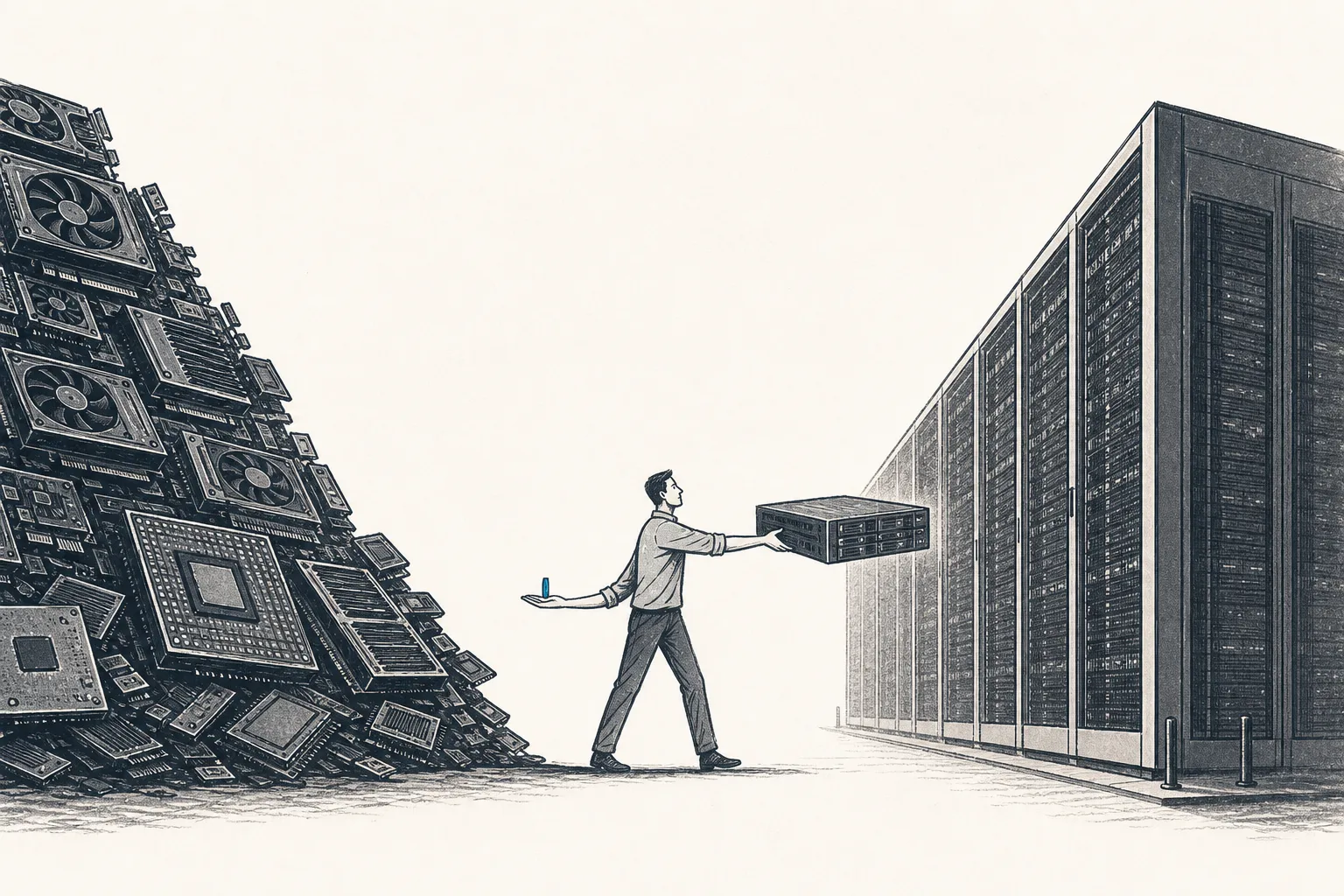
The third direction is that the line between OEM and ODM blurs. Many tech giants skip the OEM and order directly from Taiwanese ODMs to cut costs, while OEMs like Dell/HPE try to sell "above the hardware" with service, software, and whole-system care — because the profit from pure assembly keeps thinning. So the real battlefield of the future isn't "who assembles cheapest," but "who delivers the whole working system fastest and most reliably."
07Challenges & risks
The first and biggest risk is razor-thin margins. Server assembly is a business with enormous sales but very low profit per unit. The margins of top ODMs are only around 5–8%, and OEM gross margins have fallen from about 12% to 6–8%, because most of the cost is the GPU, whose price NVIDIA sets — so the assembler is like a "middleman" taking a thin cut on expensive goods. That's very different from the chip makers or specialized liquid-cooling vendors (operating margin ~17%), who earn far more.
The second risk is dependence on a few customers and suppliers. Most of the big orders come from just a few tech giants (Microsoft, Google, Amazon, Meta, and neocloud players). If any one of them delays or cuts its investment plan, revenue wobbles instantly. At the same time, the core part — the GPU — comes mainly from NVIDIA — so the assembler is squeezed from both sides, by concentrated customers and by a supplier that holds the power.
The third risk is credibility and governance. The Super Micro case clearly shows that a business growing this fast can stumble badly if its accounting and oversight can't keep up — from the risk of being delisted to customer and investor confidence vanishing in an instant. In an industry that competes on "the trust to deliver on time," credibility is the most valuable intangible asset there is.
In short: next time you hear that AI chips are selling like crazy, picture the people one step further down the line — the team that takes that chip and combines it with everything, routes tens of thousands of cables, connects the cooling pipes, and tests it into a "rack that thinks" to deliver to the data center. They're the hands that turn AI's power into something you can actually use — quiet work with sales in the hundreds of billions, but it takes real skill to survive on a razor-thin margin.