Megatrend · Cloud & Digital Infrastructure
Where your company's data ends up — and becomes the moat of the AI era
Every company sits on a mountain of data — sales, customers, inventory, every click on the website. But raw data is like raw material piled up in a warehouse with no shelves: you can't actually use it. A "Data Platform" is the place where all that data comes together, gets organized, and can be queried fast enough to drive decisions. And right now it matters ten times more than it used to — because for AI to get smart about your business, it has to feed on your company's data — the data your rivals don't have. That's why this has become a battlefield where Snowflake and Databricks fight it out at valuations in the hundreds of billions.
01What is it? (Your company's data warehouse)
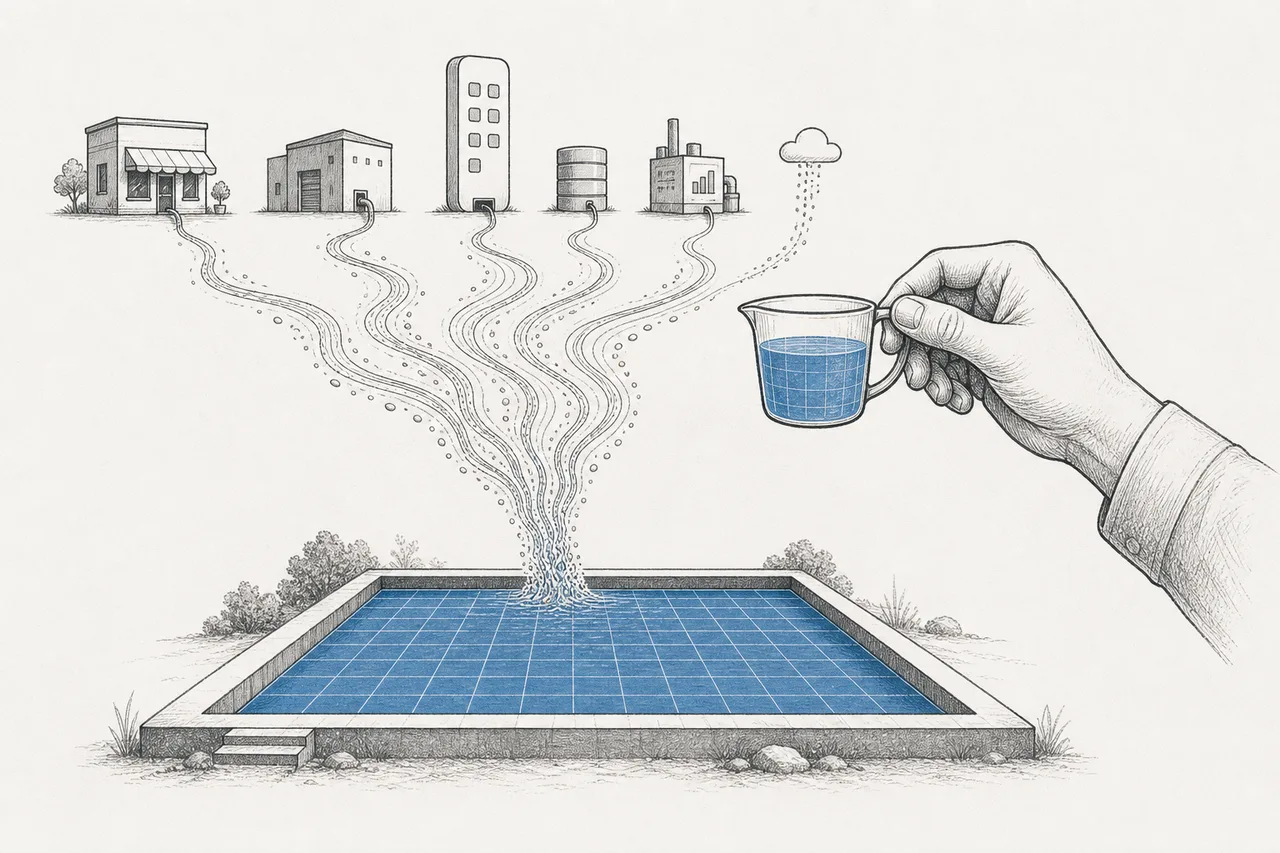
Picture a company with data scattered everywhere — sales in one system, customer info in another, inventory somewhere else, every click in the app in yet another place. Data like this, just sitting there, is like raw material stacked in a warehouse with no shelves: you can't pull it out and use it. A Data Platform is "the organized warehouse" — it pulls all that data into one place and lets you ask a question in seconds, like "What did customers in the north region buy most last quarter?"
This node is a sub-theme under the Cloud & Digital Infrastructure megatrend. It bundles together several technologies that handle "where data is stored and where data is queried." There are three main families:
- Data Warehouse (the organized data warehouse): stores data neatly arranged into tables (structured) for reporting and analysis — like a filing cabinet with every drawer labeled: fast to search, but everything has to be put in its place first. The heart of this side is Snowflake
- Data Lake / Lakehouse (the data lake): dumps in every kind of "raw" data — tables, images, text, logs — cheaply first, and organizes it later. A "Lakehouse" is the version that blends the lake's strengths (cheap, flexible) with the warehouse's (fast to query, reliable) into one — Databricks' home turf Databricks
- Operational / NoSQL Database (the database that runs the app): the database that sits "behind the app," handling data in real time every time you press a button — like MongoDB. Unlike the two families above, which are about "analysis," this one is about "live use"
The database world splits work into two kinds · OLTP (operational) = "live" work, one record at a time, like logging an order the moment you hit buy — it has to be fast and exactly right (MongoDB, Postgres) · OLAP (analytical) = "analysis" work, sweeping through millions of rows to get the big picture, like summing up a year's sales (Snowflake, Databricks). This is why a company needs several systems, not just one.
02Why it matters — it's the foundation under both BI and AI
For decades, the Data Platform was seen as a boring "back-office" thing — just a place to keep data for making reports (the work called BI / Business Intelligence: turning raw data into the charts and numbers an executive can look at to make a decision). Then AI changed the whole game. Because there's one truth every company has only just woken up to:

This is why the Data Platform became the "moat" of the AI era. If you want AI to really answer questions about your business — not general knowledge — it has to reach your data in an organized way, and that data lives in the Data Platform. So whoever controls a customer's data platform is standing at the front door of the entire AI era. That's why enormous money pours into this field.
And most of that money is being pushed by AI directly — Gartner estimates the market for "data for AI" specifically will more than double from $3.1B to $6.4B by 2027, while global IT spending in 2026 tops $6.15 trillion, with AI as the main driver. When a company wants to use AI, it always has to invest first in "the place that stores the data for AI to feed on."
03How it works — the data pipeline, and a secret called "separating storage from compute"
The heart of a modern Data Platform is the "data pipeline," which has four stages. Picture a processing factory: raw data comes in → gets stored → gets organized → then gets queried.
But the secret that makes today's platforms revolutionary is a simple idea: "separate the storage layer from the compute layer." In the old days, where data was stored and the machine that processed it were bolted together. Want to ask a bigger question? You had to buy a bigger machine, the whole block — expensive and inflexible.
Snowflake was the first to "split these two layers apart" in the cloud. That lets you keep data cheaply on the bottom layer and "turn on the calculator" only when you want to ask a question — then shut it off, paying nothing. And if the question is huge, you spin up several machines at once, like opening the tap or the lights only when you actually use them. This idea comes paired with a pricing model called consumption pricing — pay for what you actually use (not a fixed monthly subscription), which is both a strength and a weakness of this business (more on that in the risks chapter).
Lakehouse = an architecture that combines the data lake (raw, cheap, flexible storage) with the warehouse (fast to query, reliable) in one place · it works thanks to open table formats like Apache Iceberg and Delta Lake — open standards that add "orderliness" (reliable transactions, time travel) to cheap raw files in the cloud. The result is that one body of data can be read by many engines without copying it over and over — which is why the warehouse side (Snowflake) and the lake side (Databricks) keep looking more and more alike.
04Where it sits in the Cloud
The Data Platform is one of the "layers" of the Cloud & Digital Infrastructure megatrend. If you picture the cloud as a building, each floor does a different job:
- Sits on top of Hyperscale Cloud (IaaS/PaaS): Snowflake and Databricks don't build their own data centers — they "rent" the machines and storage from AWS, Azure, and Google Cloud, then layer their intelligence on top. This is the layer below us
- Fuels Artificial Intelligence: this is the most important relationship — AI can get smart because it feeds on the organized data from the Data Platform, especially the data prep and training work that connects straight into AI Tooling & MLOps and ultimately feeds Foundation Models so they can answer questions about your business
- Paired with Cybersecurity & Digital Trust: once all of a company's data is piled in one place, it becomes the biggest target — so governance, controlling who can access what data, is an indispensable part of a data platform
What sets it apart from its neighbors on the same floor: Observability & DevOps watches whether "the system is still running well," while we store the "business data" to answer strategic questions. And unlike Enterprise Data Storage Systems, which sell "the hardware that stores data" — we sell "the software that makes data queryable."
05Where it stands now — the Snowflake vs Databricks war
The biggest story of this node in 2026 is the fight between two giants that started from opposite corners but now collide in the middle of the field.
Snowflake (SNOW) comes from the "warehouse" side — it started as the easiest-to-use cloud data warehouse. In fiscal 2026 it made $4.47B in product revenue, up 29%, and it has a metric software investors love called net revenue retention of 125% — meaning existing customers spend, on average, 25% more every year without the company finding new ones. Its market value is about $85B (mid-2026).
Databricks comes from the "lake" side and is the real rival — but it hasn't gone public yet. It's actually growing faster: annual revenue hit $5.4B, up 65% in early 2026, with the directly AI portion around $1.4B (~26% of revenue), and its latest funding round valued it at $134B in late 2025 — higher than Snowflake's market cap, even though it's still a private company.
Why do these two camps collide, when they started from different points? Because each is pushing into the other's strength. Snowflake added the ability to handle raw data and AI (full support for open formats like Iceberg), while Databricks got faster at warehouse-style querying — and in the end both became "lakehouse + AI platforms" that look more and more alike and compete for the same customers.
But this field isn't just two camps. There are specialist players strong in their own corner — and cloud giants that have come down to play themselves.
There are also rising open-source stars eating into the market from below — ClickHouse (blazing-fast analytics, revenue ~$160M growing over 250%, raised at a $15B valuation in early 2026) and DuckDB (a tiny analytics engine that runs on your own machine, ~37 million downloads a month). Both show that this field stays open to new-technology challengers.
06The road ahead
The first direction is "data becomes the place where AI actually works" — no longer just a storage spot. Both Snowflake and Databricks have launched tools to build "AI agents" that run directly on a customer's data — ask in plain language and get an answer from the company's data. The idea of "data platform = AI platform" will only get clearer, and that's why both are willing to pour money into buying AI companies for their portfolios.
The second direction is the win for "open standards" (open table formats). Apache Iceberg is becoming the common standard every camp has to support. The result is that customers get less "locked in" to any one vendor, because one body of data is open to many engines to read — good for customers, but it forces vendors to compete on "intelligence" rather than on hoarding data.
The third direction is consolidation. Companies are tired of having 10 scattered data tools — Microsoft Fabric bets squarely on this trend, arguing that putting everything in one place cuts data budgets by 30–45%. This trend is both an opportunity (the all-in-one platform wins) and a threat (the cloud giants that already own every layer have the advantage).
07Challenges & risks
The charm of this business comes with a risk baked into its own business model.
The first risk is the double-edged sword of consumption pricing. Charging for what's actually used means revenue surges when customers use a lot — but it also means revenue "swings" with how customers behave. When the economy slows, customers tighten their belts and "cut back on queries" to save money, making a vendor's revenue more volatile and harder to predict than a fixed-subscription model. This is one reason these stocks swing hard whenever the market worries about spending.
The second risk is competition from the cloud landlords. Snowflake and Databricks both rent machines from AWS/Azure/Google — but those same three also have their own data products (like Microsoft Fabric, Google BigQuery) that they can bundle right in with the cloud. Competing with "the owner of the platform you're standing on" is an inescapable structural risk.
The third risk is open standards weakening lock-in power. As open table formats make it easier to move data between camps, the "moat" that used to come from locking data in gets shallower. Vendors have to compete harder on features and price, which pressures margins over the long run — on top of the open-source stars (ClickHouse, DuckDB) nibbling specialist markets from below.
In short: the Data Platform used to be a boring back-office story. But now it's one of the most important battlefields of the AI era, because of a single truth — anyone can buy an AI model, but your company's data is something your rivals don't have. So whoever controls "where the data ends up" controls the deepest moat of this era. And that's why Snowflake and Databricks are fighting it out with hundreds of billions at stake.