Megatrend · Artificial Intelligence
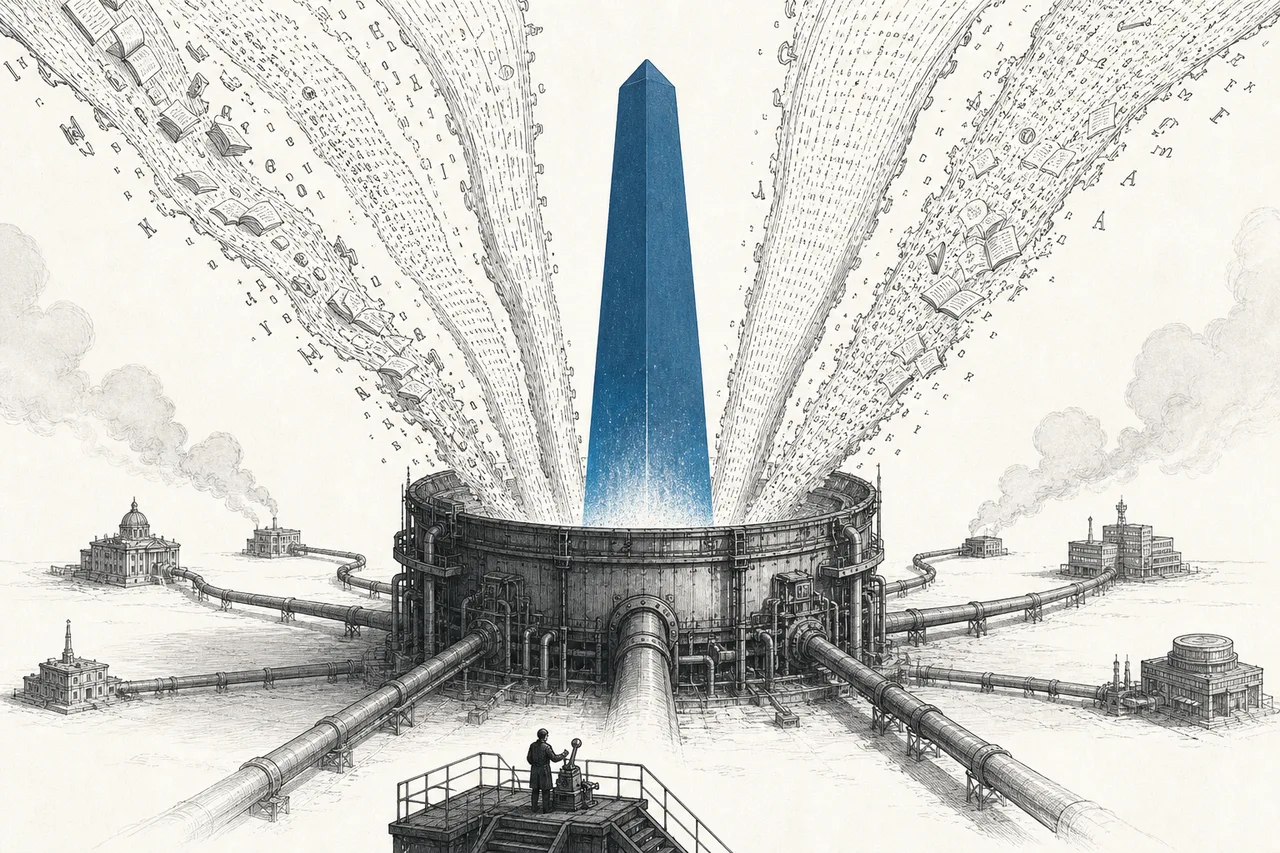
The furnace that melts the world's data into a single 'brain'
Behind ChatGPT, Claude, and Gemini sit just a handful of labs, each burning hundreds of millions of dollars per model to 'train' the frontier AI of the moment. This is the layer at the very heart of the AI megatrend — and the strangest part is that almost all the real players are still private companies you can't buy directly.
01What it is
Every time you type a message to ChatGPT, Claude, or Gemini, you're talking to the 'output' of one of the most expensive and complex processes in the history of technology. This node is about the companies that 'train' those models — not the people who build apps on top of a model, but the ones who build the model itself.
The term foundation model means a giant AI model trained broadly on a huge amount of general data — so it can do a bit of everything: write code, translate, summarize documents, answer questions — without being rebuilt for each job. Think of it as an 'all-purpose engine' others bolt into many different cars. A frontier model, meanwhile, is the biggest, smartest model of its moment — the real deal that eats the most resources, and only a few companies in the world can build it.
Foundation model = a base model trained broadly, then adapted to many tasks · Frontier model = the most cutting-edge foundation model at a given moment (the latest GPT, Claude, Gemini) — 'frontier' because it pushes the limit of what AI can do and takes the most compute. Every frontier model is a foundation model, but not every foundation model is at the frontier.
On the megatrend map, this node is a sub-theme under Artificial Intelligence, and it's the 'platform layer' — the heart that every other AI layer depends on. Chat apps, smart assistants, self-running agent systems — none of them can exist without a foundation model underneath to stand on.
02Why it's the center of everything
The first reason is money — it's bigger and growing faster than ever before. Just look at the revenue. OpenAI's annual run-rate climbed from about $13B in early 2025 to roughly $25B (early 2026), while Anthropic raced from ~$1B in late 2024 to over $47B by May 2026 — more than 80× in a little over a year. This is a multi-tens-of-billions business built in a timeframe almost never seen in software.
The second reason is investment — valuations have shot up to historic levels. OpenAI raised a big round at a valuation of about $850B, while Anthropic overtook it to become the most valuable AI startup at roughly $965B in mid-2026. And in the first quarter of 2026 alone, money flowing into AI worldwide topped $180B — more than all of 2024 combined.
But the deepest reason isn't the numbers. It's strategic position. The foundation model is the 'tap' every AI app has to plumb into to drink — whoever controls the smartest and cheapest model controls the cost and capability of a whole new generation of software. That's why every tech giant — Microsoft, Amazon, Google, Meta, Nvidia — is pouring huge money into this layer, both building their own and investing in other labs.
03How it works
Building one frontier model breaks into three big stages. Understand the three and you understand why it costs this much, and why only a few companies can do it.
The first stage is pretraining — feeding the model nearly all the text on the internet (trillions of words) and training it to predict the next word, over and over, trillions of times, until it soaks up the structure of language, knowledge, and reasoning into billions of numbers (parameters). This stage eats the most compute and money — it needs tens of thousands of GPUs running nonstop for months.
The second stage is post-training. A freshly pretrained model is smart but 'raw' — it knows a lot but doesn't know how to talk to people. So this stage teaches it manners and safety. The main technique is RLHF (Reinforcement Learning from Human Feedback) — real people score the answers, and those scores tune the model to respond in ways that are helpful and not toxic. Later in this stage comes 'reasoning' training — teaching the model to think step by step — which became the point where the newest models leapt ahead.
The third stage is inference — the moment you type a question and the model answers. This is the stage that 'burns money' every day, all the time, because every answer uses real compute chips. The more people use it, the more inference costs balloon — and that's why a lab's compute bill never ends when training does.
So why do costs jump every year? The answer is a rule called scaling laws. Research found that the bigger the model + the more data you feed it + the more compute you use, the more its ability grows, predictably — but at a rate that demands you multiply resources to get one more step smarter. That means the training cost of a frontier model has run from the tens of millions in the GPT-4 era (~$78–100M) up to $200–500 million per model in 2025–2026, and analysts expect it to hit $1–3 billion per model by 2027.
04Two species: closed vs open
The world of model labs splits into two clearly opposed philosophies — and these are the two sub-themes of this node.
The first is Closed / Frontier Labs — train the best model you possibly can, then 'lock it up' so it's only reachable through an API or app. You can rent the intelligence, but you don't get the model. This is the path of OpenAI, Anthropic, Google DeepMind, and xAI. Almost all the world's strongest models sit on this side, and the premium revenue comes from here too — Anthropic takes only about 12% of usage by volume, yet earns far more than that in dollars, because it prices high for enterprise work.
The second is Open-Weight Model Developers — train a model, then 'hand out the blueprint' (release the weights to download). Anyone can run it themselves and tune it on their own machine. The leaders here are Meta (the Llama family), France's Mistral, and China's DeepSeek/Qwen. The selling point is sovereignty and control — an organization or country that doesn't want to hand its data to an American API can run an open model in-house.
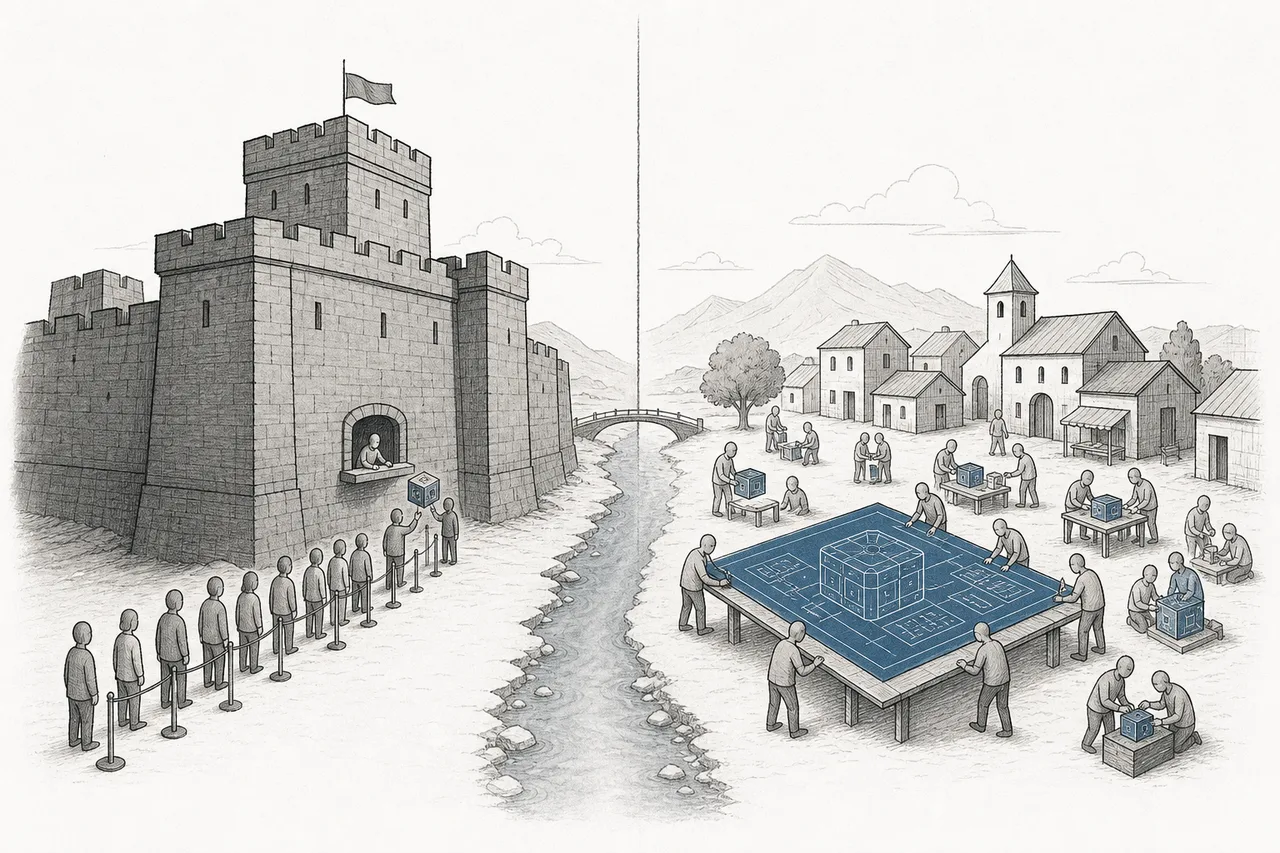
This dividing line is moving in an interesting way. In 2024, open models trailed closed ones on quality by nearly a year; by 2025–2026 the gap had narrowed to about 6 months. And here's the startling part: Chinese models (DeepSeek, Qwen, MiniMax, Moonshot) jumped from under 2% of usage on model-aggregator platforms to over 45% of token volume in a single year.
Open-weight = releasing the 'trained numbers' (weights) so they can be downloaded, run, and tuned — but usually without disclosing the training data or the full recipe, which makes it different from regular open-source software that opens everything · Crucially, open-weight is free to run but not free to 'build' — training still costs hundreds of millions. The one who benefits is the user, not the maker.
05How it connects in the ecosystem
This node sits at the dead center of the whole AI megatrend. It's the 'platform layer' that the other layers both depend on and feed back into:
- Draws enormous power (compute) from AI Compute & Accelerator Silicon: every stage — pretrain, post-train, inference — runs on expensive GPU/accelerator chips. Lab demand is what drives Nvidia's sales and makes compute the bottleneck. This is the most direct and deepest relationship
- Supplies the raw material for AI Applications & Copilots: chat apps, coding assistants, document-summarizing tools — all plumbed in from the foundation model. If the model gets cheaper or smarter, a whole wave of apps benefits at once
- Is the engine of Agentic AI & Autonomous Workflows: AI systems that run themselves over many steps need models that can 'think step by step,' which comes straight from the newest post-training
- Soaks up energy from Energy Transition & Power Demand: the data centers running these models eat city-scale power, to the point that electricity has become the real constraint on scaling the next generation of models
And it also 'lights a fire' under trends outside AI too — from Biotech (AI-designed drugs) to Cybersecurity. This is why many people call the foundation model a 'general-purpose technology,' like electricity or the internet — it isn't a single product, but a base layer that everything else builds on.
06Where it stands now
Before we talk about the players, you need one fact that shapes how you invest in this entire layer: almost all the real players training frontier models are still private — OpenAI, Anthropic, xAI, and Mistral are all unlisted (OpenAI has only just started preparing to file for an IPO). This isn't a disappointment; it's an important 'market fact': the way an ordinary investor gets exposure to this layer is through the listed giants that are both the funders and the owners of the compute behind those labs.
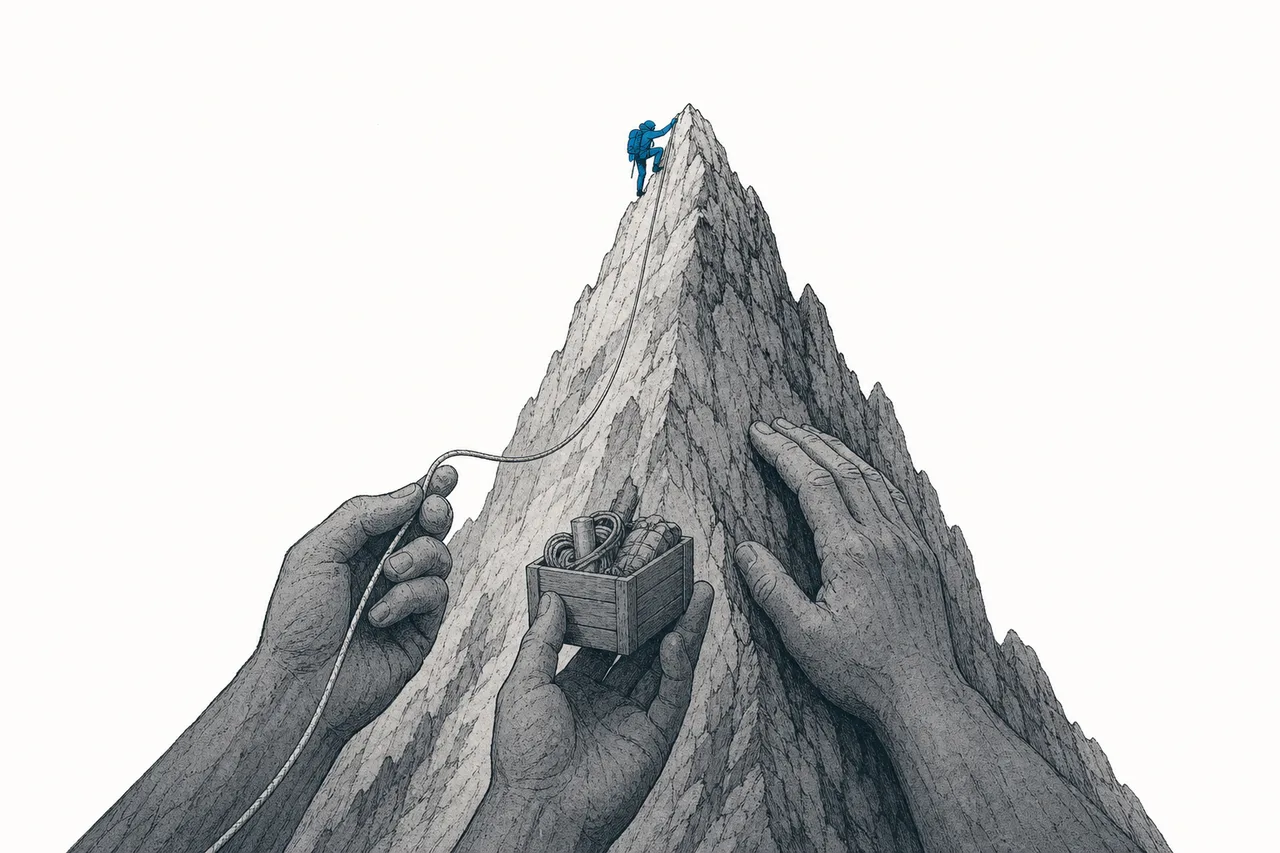
The money runs in a clear 'capital flywheel': listed giants like Microsoft, Amazon, and Alphabet pour cash and compute into the closed labs, and the labs turn around and use that money to buy chips and rent data centers right back from those same giants — the money circles back as both revenue and a stake on the backers' books. This is the mechanism that lets ordinary investors get exposure to the private labs through their backers' stock (the deal-by-deal detail — Amazon/Trainium, xAI/SpaceX, hundreds of billions in combined capex — is in Closed / Frontier Labs).
Asia has its own listed players riding this trend too — Baidu (the Ernie models), Alibaba, and Tencent are each investing in their own foundation models, while smaller names like SenseTime and MiniMax focus on specialized models. So even though the world's leading labs are private, there are still a fair number of 'listed proxies' you can touch in the Asian market.
The open side has its own pillars too — Meta (the Llama family) is the American pillar, Mistral carries Europe's flag, and China's Qwen/DeepSeek leads on usage volume. In terms of buyable stocks, the open players you can actually touch are Meta and Alibaba (Qwen's parent) — the deep dive is in Open-Weight Model Developers.
07The road ahead
The first direction is training models to 'think' rather than to be 'big'. For years, ability came from scaling up the model and the data (pretraining scaling). But the new wave comes from pouring compute into the 'think step by step' stage at answer time (test-time / reasoning) — the model spends longer thinking to answer hard questions better. This shifts the cost equation: the old way burned money during training; the new way burns more and more during inference.
The second direction is the constraint moving from chips to power. Last year the bottleneck was getting enough GPUs. This year the bottleneck is becoming 'getting enough electricity and data-center sites.' Training the next generation of models (which could hit $1–3 billion each by 2027) will be limited more by energy than by money or chips — this is where AI ties inseparably into the energy trend.
The third direction is open closing in on closed. If the quality gap between open and closed models keeps shrinking toward zero, the big question is: can the closed labs hold their pricing power when something 'nearly as good' is given away free to run yourself? The answer will decide where the enormous value flowing into this layer ends up over the long run.
08Challenges & risks
The layer at the very heart of AI is also the layer with the most risks of its own.
The first risk is commoditization. As open models catch up and Chinese models keep cutting prices, 'intelligence per token' could become a commodity competed on price alone — exactly as DeepSeek shocked the market in early 2025 by suggesting something near the cutting edge might not need billions of dollars (the full 'DeepSeek Monday' story is in Open-Weight Model Developers).

The second risk is costs that never end. Training costs that jump every generation (toward $1–3 billion per model), plus inference costs that balloon with the number of users, mean labs have to keep raising enormous sums nonstop. If one day investors start asking when revenue will catch up to cost, the fundraising could stumble — and in a business where 'stop training and you get overtaken,' a stumble over money is a very big risk.
The third risk is concentration and geopolitics. The world's most powerful models are in the hands of just a few companies, and they depend on advanced chips that only a few places can make. Chip export controls, US–China competition, and the safety questions around ever-smarter AI are all variables that could redraw the whole landscape faster than you'd think.
In short: if AI Compute is the 'machine' of the AI era, the foundation model is the 'factory' that casts the world's data into sellable intelligence. Understanding that most of the real players are still outside the stock market — and that the buyable stocks are the ones 'holding the rope and paying the power bill' for them — is understanding why this node, the one that looks hardest to reach, is the node that sets the direction of the entire megatrend.