Megatrend · Biotech & Genomic Medicine
The organ drugs can't reach — and medicine's final frontier
The brain is the most complex mass in the body, and the one place 98% of drugs can't reach. That's why diseases like Alzheimer's, Parkinson's, and depression have been the field where drugs fail most often in the history of pharma — but after decades of silence, 2024–2026 suddenly brought new drugs breaking through the wall, one at a time. And a market that grows with the world's aging population is now opening up.
01What it is
Picture someone you love who, one day, can't remember your name. That's Alzheimer's. Or a hand that shakes so badly it can't lift a glass of water — Parkinson's. Or a darkness so heavy you can't get out of bed — depression. All of these share one thing: they're diseases of the brain and central nervous system, the group of diseases pharma has 'beaten' the least over the past hundred years.
This node is the business of drugs that try to treat these diseases — formally, the CNS (Central Nervous System) class. It has two biggest battlefields. One is neurodegenerative disease (neurodegenerative) — Alzheimer's, Parkinson's, and ALS, where brain cells slowly die and never come back. The other is psychiatric and mood disorders like schizophrenia and depression.
A group of diseases where neurons in the brain gradually weaken and die, so the brain works worse and worse — Alzheimer's (memory), Parkinson's (movement), ALS (muscle). What sets them apart from ordinary diseases is that 'dead cells don't grow back.' So most treatments can only slow them, not cure them — and that's the harshest problem of all.
On our megatrend map, Neuroscience is one of the sub-fields under Biotech & Genomic Medicine. What makes it different from siblings like cancer or diabetes drugs is this — those fields have 'real products' that have clearly worked for a long time. The brain is the area where even a small success is still global front-page news, because it's so rare (note: therapeutic psychedelics are a separate field, at 52000000).
02Why it matters most
The first reason is the biggest unmet need in all of medicine. Think about it: we have hundreds of cancer drugs, and blood-pressure, cholesterol, and diabetes drugs by the basketful. But for Alzheimer's — a disease that destroys a whole person — until just a few years ago there were almost no drugs that could change the course of the disease. Only ones that eased the symptoms. When demand is enormous but the product is missing, the value waiting to be unlocked is enormous too.
The second reason is the world's population is aging fast, and neurodegenerative disease is squarely a disease of old age. The longer people live, the more get Alzheimer's. This isn't demand that rises and falls with the economy or with fashion — it's a fast current driven by the age structure of humanity itself.
Together, these two forces make the CNS drug market huge already — about $135 billion in 2025, expected to grow to $254 billion by 2030 at roughly 10% a year. The 'Alzheimer's drug' slice on its own, where real products have only just appeared, is still small (about $5.7 billion in 2025) but growing fastest in the group.
Put simply, Neuroscience is the trend with the 'highest stakes' in two senses at once — the human stakes are high, because these are the diseases that strip away who we are; and the business stakes are high, because anyone who can put out a drug that truly works opens the door to a market that's both large and still empty.
03Why the brain is hardest
If the market is this big and demand this clear, why have drugs only shown up in the last few years? The answer lies in a double barrier that makes the brain the most drug-resistant organ of all.
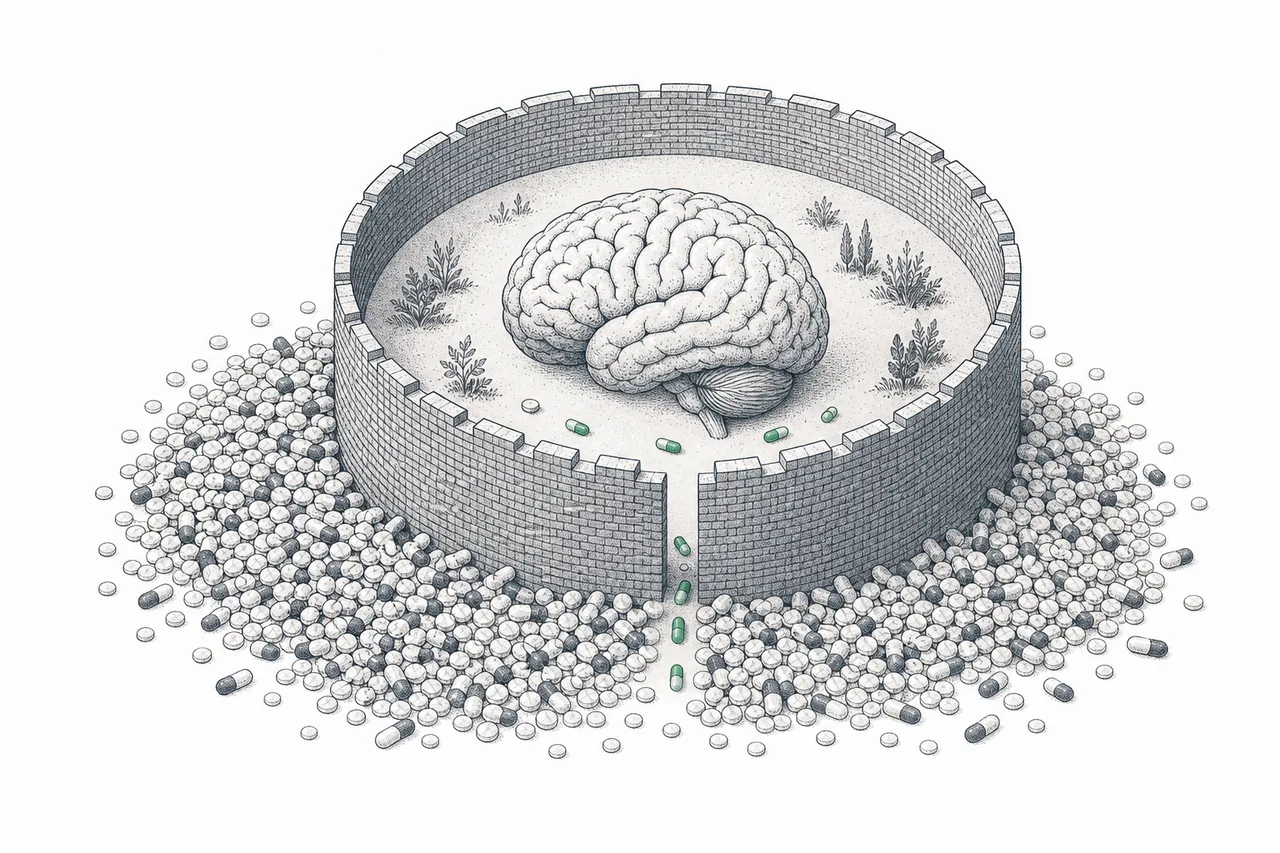
The first barrier is a wall called the 'blood-brain barrier' (BBB). Our body built it to protect the brain from toxins and pathogens in the bloodstream. It's an extremely strict, selective gate — so strict it keeps out 98% of small-molecule drugs and nearly 100% of large-molecule drugs (like antibodies). Put simply: we can design brilliant drugs, but they can't reach their destination.
The second barrier is that we still don't know what really causes the disease. For heart disease, we know cholesterol is the culprit, and lowering it helps. But for Alzheimer's, scientists have argued for decades over whether the 'amyloid plaque' that builds up in patients' brains is the cause of the disease or just a byproduct. When you don't know the cause clearly, designing a drug is like shooting at a target in the dark.
The leading theory of Alzheimer's for over 30 years, holding that the 'beta-amyloid' protein plaque that accumulates between neurons is what breaks the brain. Every new-generation drug (Leqembi, Kisunla) is built on this theory — but it's still contested, because some healthy people have the plaque without being sick, and the amount of plaque doesn't clearly track with how degraded the brain is. This is the 'crack' running beneath the foundation of the whole field.
The two barriers combined show up as a startling number: of drugs that enter human trials, only about 6% of CNS drugs make it to approval, versus ~13% for other diseases. For Alzheimer's specifically, between 2002 and 2012, 99.6% of drugs in trials failed — nearly all of them. That's why many drugmakers 'retreated' from the brain entirely a decade ago.
04What it connects to
Neuroscience is where several trends meet — precisely because it's so hard, it has to pull in every new tool of this era:
- Demand driven by aging: This is the main artery of the whole trend — neurodegenerative disease is squarely a disease of old age. The more the world ages, the more the market grows; it's the most direct relationship there is
- Leans on AI Drug Discovery and AI: when we still don't know the cause clearly, AI is used to find new targets and to predict which molecules can cross the BBB — cutting down the 'shooting in the dark'
- Connects to Gene & Cell Editing and RNA Therapeutics: many brain diseases have roots in genes. An RNA drug like Spinraza (which treats SMA, a muscle-wasting disease) proved that fixing things at the gene/RNA level really can treat nervous-system disease — and gene-editing tech is queuing up for Parkinson's and ALS
- A partner to Brain-Computer Interface: one side fixes the brain's 'chemistry' (drugs), the other fixes the brain's 'electrical signals' (devices that link to the brain). These two approaches are converging in the treatment of Parkinson's and paralysis
05Where it stands now
After decades of silence, 2024–2026 is when the door truly began to open — drugs that can actually 'change the course of the disease' are coming out one by one, even if none is perfect yet.
The most talked-about milestone is two anti-amyloid drugs for Alzheimer's — Leqembi (from Eisai with Biogen) and Kisunla (from Eli Lilly). Both work the same way: antibodies that go in and 'wash the amyloid plaque' out of the brain, and they're the first class of drugs in history proven to actually slow early-stage Alzheimer's decline.
But here's where we have to be honest: the benefit is 'real but small.' The drugs slow decline by about 27–35% in trials, which in real life means a delay of only a few months. In exchange, you have to go in for an infusion every two weeks, at $26,500 (Leqembi) to $32,000 (Kisunla) a year, plus the risk of a side effect called ARIA (brain swelling or small bleeds). That's why early uptake has been gradual.
Short for Amyloid-Related Imaging Abnormalities — the signature side effect of anti-amyloid drugs. When the drug washes out the plaque, some blood vessels in the brain can swell or bleed slightly, so patients need periodic brain scans (MRI) to monitor it. This is a major gate that holds back wide use, and a problem the next generation of drugs is trying to solve.
Slow to start, but the numbers are climbing — Leqembi did about $264 million in the first half of 2025, with the latest quarter up more than 82% year over year. Analysts see sales climbing to ~$3.8 billion (Leqembi) and ~$1.6 billion (Kisunla) by 2031 as diagnosis and reimbursement systems get ready.
But the most exciting story of this era may not be Alzheimer's — it may be schizophrenia. In October 2024, the FDA approved Bristol Myers Squibb's Cobenfy — and it's the first schizophrenia drug with a new mechanism in over 30 years. Every older schizophrenia drug acts on 'dopamine,' which comes with heavy side effects. Cobenfy instead acts on 'muscarinic' receptors — a whole new way of thinking. BMS paid $14 billion to buy Karuna, the company that invented it, a sign of how much the industry believes a 'new mechanism' in the brain is worth.
Cobenfy's 2025 launch has been decent — about $105 million in total sales over the first nine months. Not flashy yet, but the real bet is on expanding into 'psychosis in Alzheimer's patients,' a far bigger market.
06The road ahead
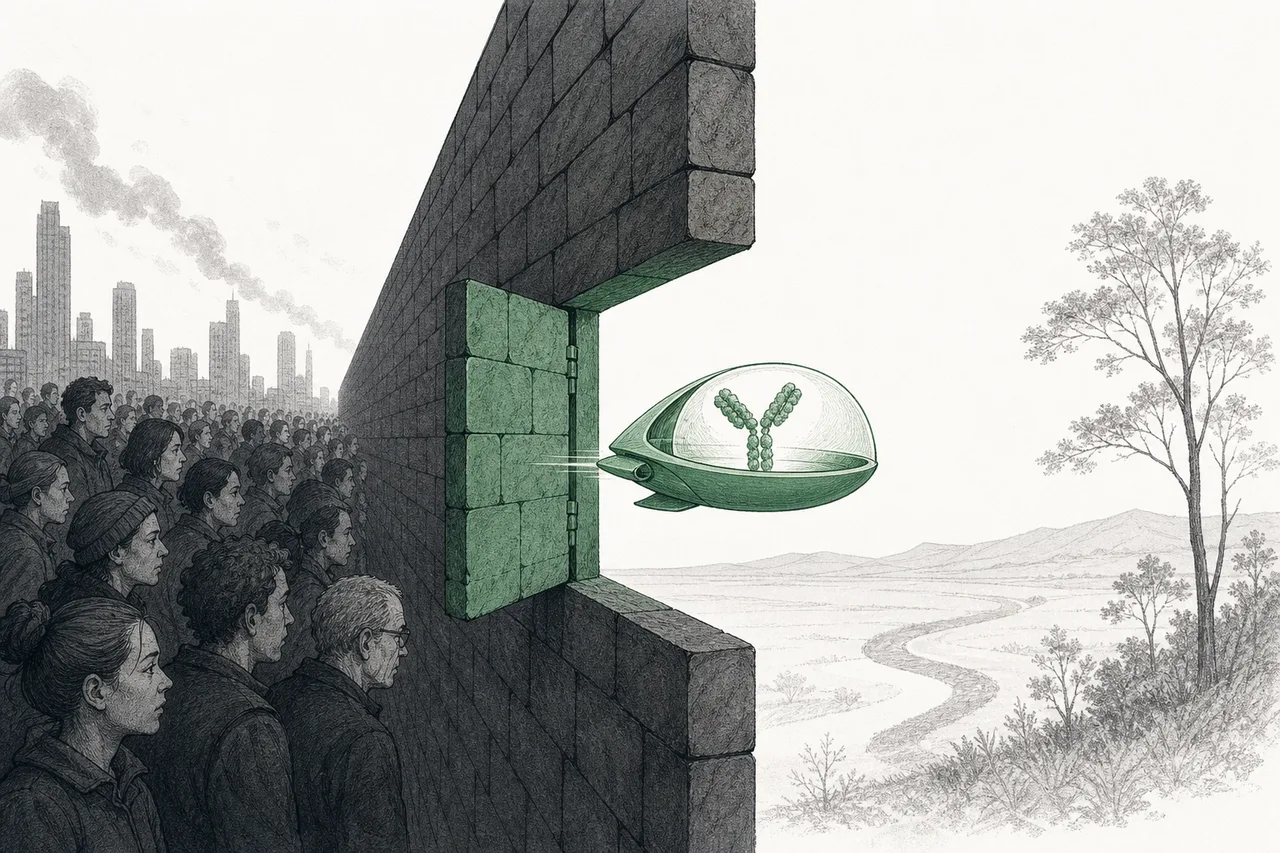
The first and most important direction is truly breaking through the BBB. The problem with the first-generation drugs is they crossed into the brain only a little, so they had to be dosed in large amounts and worked only so well. New tech like Roche's 'brain shuttle' designs the molecule to trick the wall into opening the gate — early results cleared 91% of plaque in 7 months, a sign that if it works, the next generation of Alzheimer's drugs could be several times stronger.
The second direction is diagnosis getting easier and cheaper. Confirming who has Alzheimer's used to require an expensive PET scan or a spinal tap. But in 2025, 'blood tests for amyloid plaque' that are accurate enough for real use began to appear. If testing gets easier, people can reach the drugs sooner and more widely — a key condition for the market to actually grow.
The third direction is shifting from 'slowing' to 'preventing'. If amyloid plaque builds up for years before symptoms, giving the drug before someone is sick might work better than giving it after the brain is already damaged. Trials in people who don't yet have symptoms are underway — and if they work, it would turn Alzheimer's from an 'incurable disease' into a 'preventable one if you catch it in time,' much like what cholesterol drugs did for heart disease.
07Challenges & risks
This is a trend with a beautiful story, but the risk is buried deeper than in any field of Biotech — and we have to spell it out in full.
The first and biggest risk is a brutally high failure rate. As we saw earlier, only ~6% of CNS drugs make it through, and Alzheimer's alone once failed nearly 100% of the time. This isn't ordinary risk — it's the nature of a field where 'failure is the default.' A company can burn billions on a Phase 3 trial and get a zero in a single day. Investors in this trend need to understand they're playing on a field with unusually high volatility.
The second risk is the 'crack beneath the foundation' — the amyloid debate. Almost all new Alzheimer's drugs are built on the same hypothesis, that amyloid plaque is the cause. But the clinical benefit that's come out is so 'small' that some scientists are starting to ask whether we're aiming at the wrong target. If amyloid is one day proven not to be the real cause, the enormous value poured into this approach could wobble across the board.
The third risk is price and reimbursement. A drug at $26,000–32,000 a year, plus the cost of monitoring MRIs, makes health systems hesitate — in the UK, the agency NICE once refused to provide Leqembi and Kisunla on the NHS because 'the benefit doesn't justify the price.' When the product exists but people can't afford it, a market that looks big on paper may grow far slower than hoped.
In short: Neuroscience is the last frontier still most wide open in medicine — where human need is greatest, but where nature defends itself most tightly. That drugs are starting to break through the wall in this era, however small they still are, is a sign that a door shut for a century is creaking open. And anyone who can read this game in full — both its hope and its risk — understands why this 'hardest' node is one of the most important nodes for the future of humanity.