Megatrend · whole-trend overview
When the ticket to space gets 50x cheaper, the whole world changes
Space used to be a game for superpower governments — spend tax money on a rocket, fly it once, then drop it in the ocean. But once SpaceX made rockets reusable, the price of putting something in orbit crashed from tens of thousands of dollars per kilo to a few thousand — and that unlocked everything above us, from satellite internet to real-time images of Earth to going back to the Moon. This lesson is the map that strings the 7 categories of the space economy together — who does what, how they connect, and where the real value sits (each category has its own deep-dive chapter).

01The big picture: a $1.8 trillion economy
Think about opening Google Maps for directions, checking the weather, paying with a card, or watching satellite TV — all of it works because something is floating above your head in space. So the space economy isn't a distant rockets-and-astronauts story; it's infrastructure that daily life and businesses worldwide quietly depend on.
And it's growing fast. A report from the World Economic Forum and McKinsey (2024) estimates the global space economy will grow from ~$630 billion in 2023 to $1.8 trillion by 2035 — about 9% a year on average, several times faster than world GDP (the bull case reaches $2.3 trillion).
But what makes this era different isn't just the size — it's who's doing it. Space used to be a government game: each launch cost a fortune and the whole rocket got thrown away. Today private companies have made rockets reusable, costs have crashed, and the whole chain of activity overhead has opened up. That's what we'll "map out" in this lesson.
02The map: what are the 7 sub-categories?
The space economy splits into 7 categories, which line up as "layers" along the chain — first you go up, then you do business once you're up there. Each category has its own deep-dive lesson (tap to read):
Foundation layer — going up (Launch)
- Launch Services & Propulsion: rocket launch services and propulsion systems — the "door" everything has to pass through. The cheaper the ticket, the more every layer above it becomes possible (this is the bottleneck and the unlock for the whole trend)
Middle layer — build and connect (Build & Connect)
- Satellite & Spacecraft Manufacturing: factories that build satellites and spacecraft — moving from one-at-a-time craftwork to mass production on an assembly line to feed the mega-constellations
- Satellite Connectivity & Direct-to-Device: internet and signal from satellites, including beaming straight to your phone (direct-to-device) — the category making the most money right now (Starlink lives here)
- Earth Observation & Geospatial Data: imaging and measuring the Earth's surface from orbit, then selling it as data — used in everything from agriculture to insurance to tracking climate
End layer — the new frontier (Frontier)
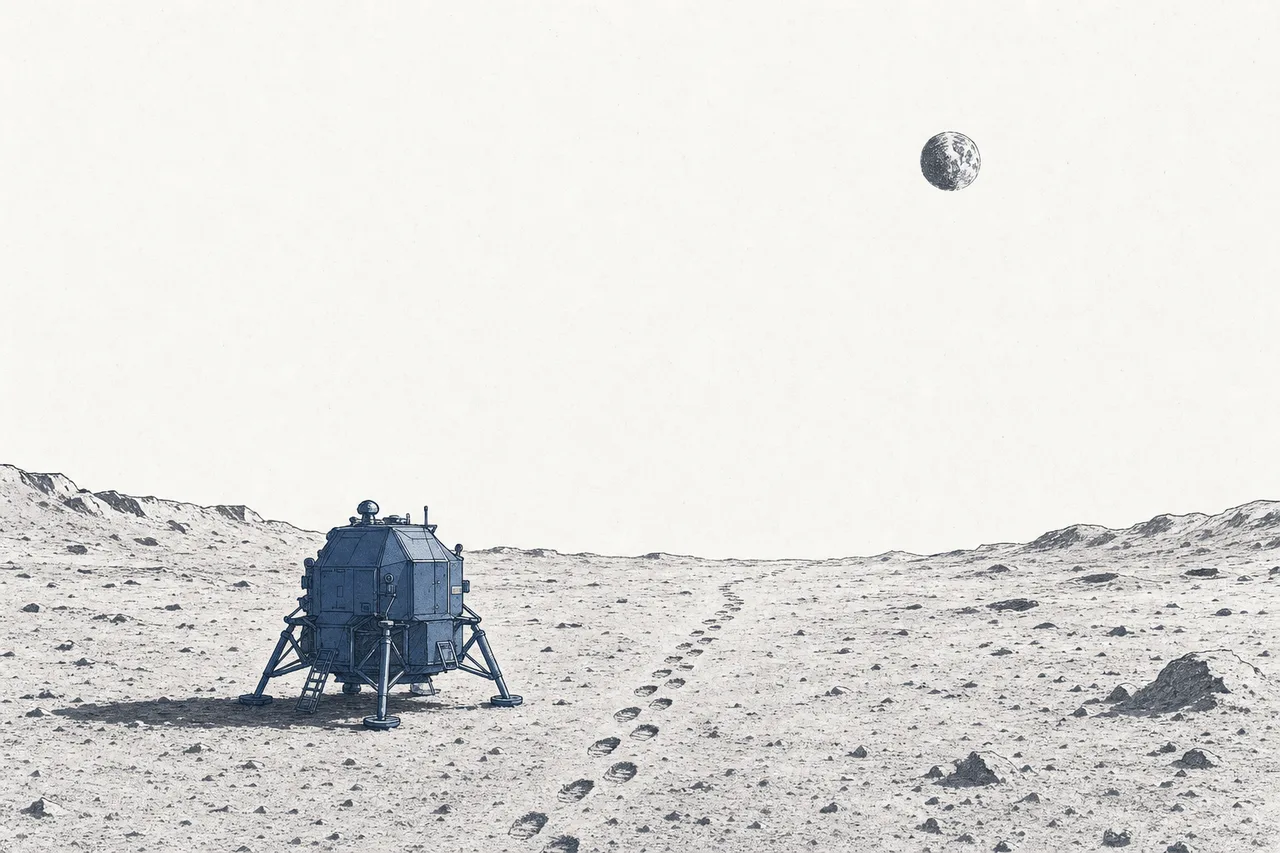
- Lunar & Cislunar Logistics: transport to and from the Moon and the space between Earth and Moon — kicked off by NASA's Artemis program, which hires private companies to deliver cargo to the Moon
- In-Space Manufacturing & Commercial Stations: making things and doing research in orbit, plus commercial space stations to replace the ISS when it retires
- Human Spaceflight & Space Tourism: taking humans to space, both missions and tourism — the most newsworthy category but still the smallest in dollar terms
03How it all connects (value chain)
What makes this trend remarkable is that it's a stack of pillars — everything starts with launch (the foundation). If you can't get up, or it's too expensive, every layer above it is dead. As getting up gets cheaper, you build more satellites, internet and data services start to sell, and at the far end are the Moon and living in space. Look at the overall flow:
The most important phrase here is the "unlock" — launch isn't just one step, it's the factor that decides the whole board. In the Space Shuttle era, putting cargo in orbit cost about $54,500 per kilogram. Once SpaceX built the reusable Falcon 9, the price crashed to about $2,720 per kilo, and the new Starship aims for under $100 per kilo — every time this number drops, you can launch more satellites for less, which makes internet, data, and every new frontier viable as a business.
04Where the value and the power sit
Here's the key rule of this trend: the money isn't in the rocket, it's in the "recurring services" above it. Launch is the indispensable foundation, but it's a one-and-done hardware sale — thin margins, competing on price. What makes huge, continuous money is selling a monthly service — internet, Earth-imaging data, signal — that customers keep paying for every month as long as the satellite keeps orbiting.
McKinsey splits the space economy in two: the "backbone" (satellites, rockets, base services) and the "reach" (the value other industries create because they have data from space — agriculture, logistics, finance). In 2023 the two were about equal (~$330B vs ~$300B), but by 2035 "reach" pulls ahead to over $1 trillion — meaning the biggest value isn't in the rockets or satellites themselves, but in what people do downstream with the data from space.
The lesson for reading this trend: don't just ask "does this company do space?" — ask "does it sell one thing once, or a service customers pay for every month?" — because a satellite with customers paying for internet is worth far more than a rocket that's done after it fires.
05The forces that move the whole trend
Even though each category differs, four big forces move the whole space economy at once:
1. Falling launch costs (reusability) — this is the biggest force. SpaceX's rocket reuse pushed the number of active satellites in orbit from ~3,371 (2020) to ~11,539 (2024) — more than triple in just 4 years. Every category benefits at once because "going up" got cheaper.
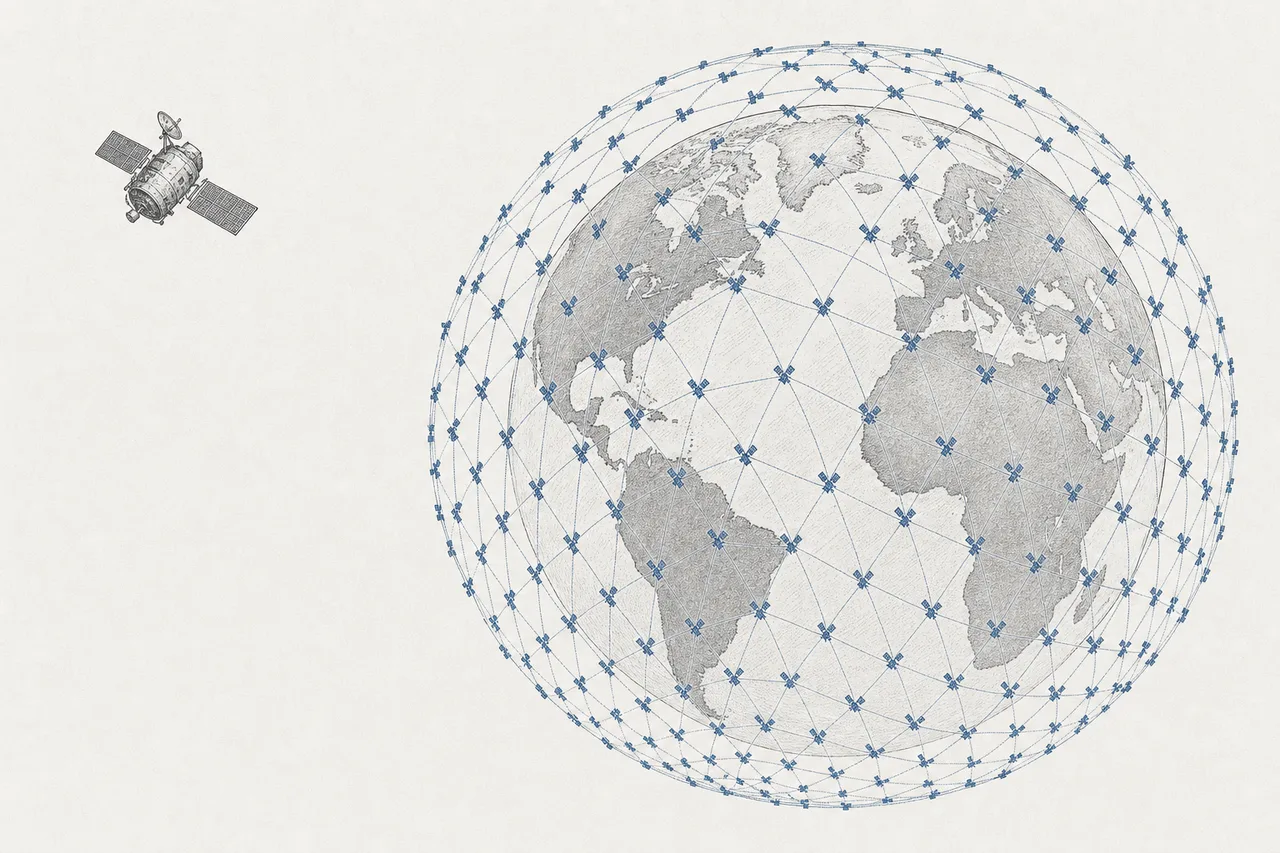
2. Mega-constellations — instead of a few expensive big satellites, the new model is launching thousands of cheap small ones to cover the whole planet. Starlink alone has over 10,000 satellites (about 65% of all active satellites in space), with Amazon (Kuiper) and OneWeb following — it turns satellite-building from craftwork into an assembly line.
3. Geopolitics and defense — space has become a strategic competition. The US holds about 65% of the launch market and about 83% of commercial satellites. Satellite internet has become security infrastructure (clear in the Ukraine war), so this trend gets plenty of demand from the Defense side — even though defense space itself is counted separately.
4. Congestion and space rules (space sustainability) — the more you launch, the more crowded orbit gets, raising the risk of collisions and "space junk." Rights to orbits and frequencies, and sustainability, are becoming a policy constraint that hits every category at once.
06Where things stand now + the champion of each category
2024 set a record with 259 launches (an all-time high), sent up 2,695 satellites, and commercial launch-service revenue hit $9.3 billion (+30%). But the real standout is the service side — Starlink earned about $11,400 million in 2025 (+50%) from nearly 10 million users. Below are the "champions" of each category, showing power is still concentrated mostly in the US, but new specialist players are emerging:
07The future and the risks
Looking ahead, the space economy has both tailwinds and traps to watch together.
On the opportunity side: if Starship hits its target (launch cost under $100/kilo), every layer above it gets cheaper again — direct-to-device could give every phone a signal even where there's no tower, real-time Earth imagery becomes base data for agriculture, insurance, and finance, and going back to the Moon (Artemis) opens an entire new economy.
On the risk side, there are three layers to watch:
- Capital intensity: building a constellation means burning billions before any revenue — many companies are "strike it rich or go broke" bets. AST SpaceMobile and Intuitive Machines still have to prove they can make it pay off
- Speculation running ahead of results: many space stocks have run on "story" more than real revenue. The gap between expectations and the financials is still wide — you need to separate "the real thing" from "the dream"
- Concentration in SpaceX: the most important unlock for the whole trend is in one company's hands — even though SpaceX has now gone public (SPCX, June 2026), the structural risk remains: if SpaceX stumbles (technical, legal, or financial), the whole board shakes
And that's why this chapter is a "map," not a "deep-dive manual" — because the real value of seeing the whole trend is seeing that all the pieces string together into one pillar standing on a reusable rocket, before you walk in to explore each layer in detail — just tap into the deep-dive chapter of whichever category interests you.