Megatrend · Semiconductors
Before there's a circuit pattern, there has to be a "board" to draw it on — and that board keeps getting pricier, because of AI
Every printed circuit board (PCB) starts from the same thing: a base material made by soaking glass fabric in resin, pressing it against thin copper foil with heat until it becomes a single sheet. It's called a copper-clad laminate, or CCL. It's the "blank paper" the whole electronics industry draws its circuits onto. It sounds like a cheap commodity — but once AI arrived and signals started running fast enough, the "paper" itself began eating signals and losing them. So the special-grade base material that lets signals survive became a scarce product priced 30–50% above normal, and only a handful of companies in the world can make it.
01What it is
Flip over the board in your phone or computer and you'll see a greenish sheet with copper wiring running across it. Everyone notices the "circuit pattern," but no one asks what the board the pattern sits on is made of. The answer is copper-clad laminate (CCL) — literally a "laminate sheet clad in copper." It's a ready-made base material that board makers buy as large sheets, then etch the excess copper away to leave just the wiring pattern they need.
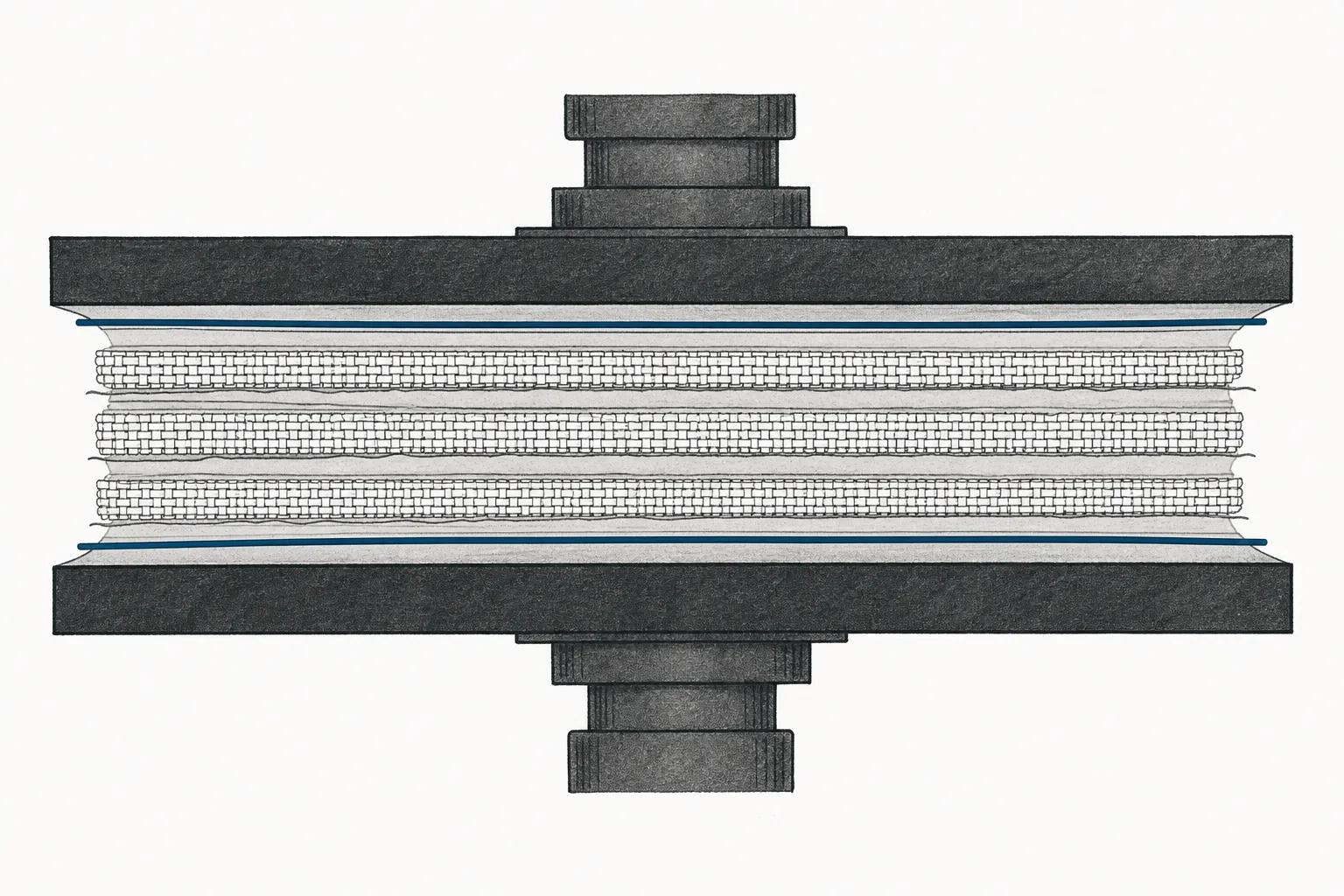
The heart of CCL is bonding three materials together: (1) resin, usually epoxy, acting as glue and insulator · (2) glass fabric, the frame that keeps it stiff and warp-free · (3) thin copper foil, the conductive layer that will later be etched into the pattern. The three are pressed together with heat and pressure into a single, inseparable sheet. The most common grade is called FR-4 (epoxy + glass + flame-retardant) — the base material for nearly every board in the world.
On the megatrend map, this node is the deepest branch under Interconnect & Passive Components within the big trend Semiconductors. It sits at the "very upstream of board-making" — the one making the material that the board (PCB) factory then processes further. Put simply, if a PCB is "the road electricity runs on," CCL is "the ground you build the road on" — no one sees it, but if the ground is bad, the road falls apart.
CCL = the ready-made copper-clad base material sheet (the core) · Prepreg = glass fabric soaked in resin but still "half-cured," used as the glue that bonds the layers when building multilayer boards · FR-4 = the standard epoxy + glass flame-retardant grade, the most widely used · Dk/Df (Dielectric constant / Dissipation factor) = numbers that say how much a material "slows" and "eats" an electrical signal — the lower the better for high-speed signals. This is the number that decides which grade can be used in AI servers.
02Why it matters — the blank paper of the AI era
At a glance, CCL looks like a boring commodity — cheap material sheets sold by the ton. But it has a property that makes it very important: every electronic device in the world needs a board, and every board starts from CCL. From wristwatches to phones to cars to multi-million-dollar AI servers — there's no shortcut around it. It's the "blank paper" the whole electronics industry has to buy before it draws anything.
The market size reflects this: the global CCL market was worth about $16.8 billion in 2025 and is expected to grow to around $24 billion by 2031 — an average of ~6% a year. Not a flashy number like a tech stock, but a big base that grows steadily along with electronics worldwide.
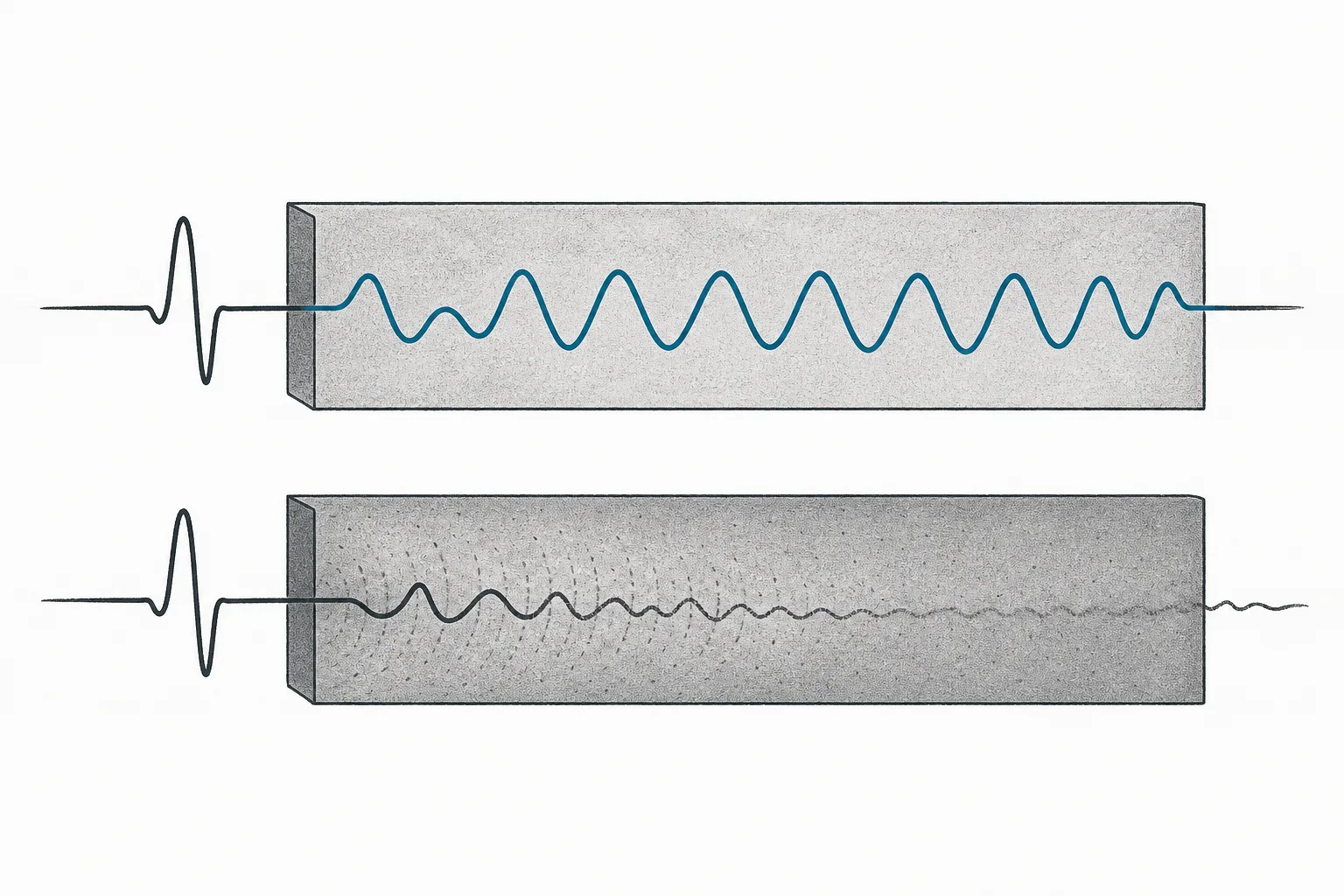
But the thing that really changed the game is AI. Inside AI servers, GPUs talk to each other with enormous high-speed signals, and at that speed the base material itself starts to "eat" signals, losing them as heat. It's like shouting through a thick wall — the worse the material, the more sound disappears. So AI server boards need a special-grade base material with "very-low-loss," which is several times harder to make than ordinary FR-4. The result: AI-grade material can be priced 30–50% above the general grade, and only a few companies can make it.
This is why a "boring" thing like CCL is back on investors' radar — because it has shifted from a thin-margin commodity into a specialty material with bargaining power and high margins at the top grade. And whoever can make the top grade is the real bottleneck of the AI supply chain.
03How it works (stack 3 layers, then press with heat)
Making CCL means stacking three materials into a sandwich, then pressing it with heat into a single sheet. Let's walk through it step by step.
All the "difficulty" lives in the resin formula. For ordinary work, plain FR-4 is enough. But once signals run at AI-server speed, the material needs a very low Dk/Df — meaning the resin formula has to change (adding PPO/PTFE or ceramic, for example), the glass fabric has to be a special grade with low electrical values, and even the surface of the copper foil has to be especially smooth. Because at high frequencies the signal runs along the copper surface, and a rough surface makes the signal stumble and get lost. That's why the top grade is hard to make, and why only a handful of companies in the world can do it.
04Where it sits in the chain
CCL sits at the very upstream of board-making. It takes raw materials from above and hands the base material to the people below to process further. Let's see who it connects to.
- Feeds boards (PCB & HDI) directly: this is the main customer. PCB factories buy CCL by the sheet, etch the copper down to a pattern, drill holes, and bond many layers with prepreg — so CCL and PCB are an inseparable upstream-downstream pair. The more layers AI server boards need, the more base-material demand grows
- Depends on Critical Materials & Supply Chain: the three main raw materials — epoxy resin (from petrochemicals), glass fabric, and copper foil — all swing in price with global commodity markets, especially copper and the natural gas used to make resin. So CCL's cost is sensitive to commodity prices
- Drives AI and Cloud & Digital Infrastructure: boards in AI servers and data centers need the expensive, hard-to-make low-loss grade — the fastest-growing and highest-margin part of the CCL market right now
- Supports Electrification & Mobility and Robotics: automotive radar and autonomous driving also need special high-frequency-grade material (premium margins like the AI grade), while robots and general electrical equipment push standard-grade demand to grow along too
05Where it stands now
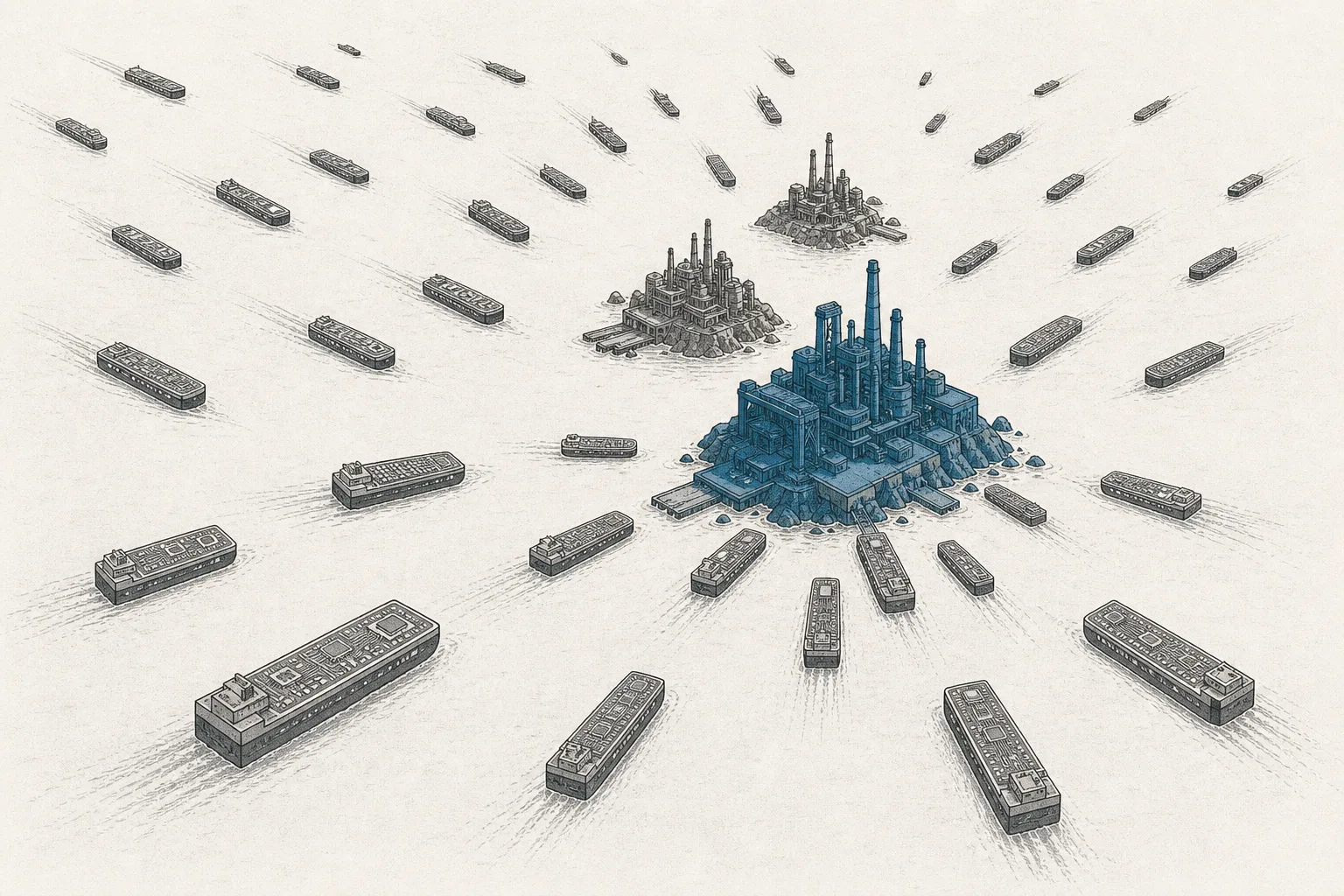
The most striking thing in the industry right now is concentration in Asia. The Asia-Pacific region takes about 35% of the global CCL market and is also growing the fastest (~7.8% a year), with China as the largest consumption base, while Taiwan and Japan control the top grade — these three lands are almost the entire world of CCL. Outside Asia, volume-grade makers have almost vanished.
The material structure is still mostly epoxy and glass fabric — epoxy resin takes about 66% of the market, rigid boards about 78%, and glass fabric as the reinforcing frame about 72%. This is FR-4 and its relatives, still the backbone of general electronics. But the growth is concentrated in the special grades: heat-resistant polyimide material, PTFE/high-frequency material, and low-loss grades for AI all grow clearly faster than the market average.
The main tailwind right now is AI servers. The "material qualification" cycle of Nvidia-level customers has become what decides who gets the big orders — a winner-take-most game where the few suppliers that pass qualification eat most of the cake. On the Taiwan side, Elite Material (EMC) and Taiwan Union (TUC) are names often cited in the supply chain for top-grade GPU boards, while Japan stands out for chemistry formulas that are hard to copy.
The other side is China climbing up — China used to be good only at the general grade, but now Shengyi Technology, China's largest maker and one of the largest in the world, is chasing into the low-loss grade for AI too, while Kingboard controls enormous volume in the general grade — giving the base-material chain the same dynamic as chip-making tools: China takes the lower segment, then slowly climbs upward.
06The road ahead
The first direction is the top grade taking an ever-larger share of the value. The total market grows ~6% a year, but the low-loss/high-frequency segment grows faster and commands a 30–50% premium. This is a change in the face of the business — from selling thin-margin commodity material to selling profitable specialty engineering material. Whoever shifts their portfolio to the top grade fastest gets better margins than rivals stuck with ordinary FR-4.
The second direction is the sub-materials becoming the bottleneck. It's not just CCL that's short — the things used to make CCL get tight too, especially the extra-smooth-surface copper foil and the low-electrical-value glass fabric (low-Dk glass) needed for the AI grade. The makers of these specialty raw materials (like copper-foil makers such as Anhui Tongguan or Mitsui Kinzoku) gain bargaining power along with it, because without good-grade foil, no matter how divine the resin formula is, you can't make AI-grade material.
The third direction is the line with chip-package substrate starting to blur. As AI chips get bigger and more complex, the material that sits directly "under the chip" (such as the build-up film family of materials for IC substrate) needs properties similar to the top grade of CCL — bringing high-grade chemistry players like those in Japan to play on both sides, and opening a new value gap that sits between "board material" and "chip-package material."
07Challenges & risks
The first risk is the commodity nature of the lower grade. Most of the market is still ordinary FR-4 with thin margins, competing on price. When the electronics cycle goes flat, or copper/resin prices spike, makers stuck at the lower grade get their profits squeezed instantly — this business is only safe in the part that can move up to the top grade.
The second risk is dependence on the cycle and on a few customers. The good-margin AI grade is tied to data-center investment, which rises and falls in strong waves with the ordering cycle of giant cloud companies. If the AI cycle slows or a big customer pushes back its plans, the top-grade demand that just boomed can shrink quickly. And because orders are concentrated in a handful of customers, losing the material qualification of a single customer can shake things.
The third risk is geopolitics and the concentration in Asia. With nearly all top-grade base material made in China, Taiwan, and Japan, regional tensions, export controls, or a disruption in Taiwan can all instantly hit the entire AI supply chain — and China climbing the top grade is a double-edged sword too: good for China's own security, but pressuring the margins of the existing leaders in Taiwan/Japan.
In short: this node is the invisible foundation of all electronics in the world — the base material sheet that every board has to start from. It's usually quiet and boring, but AI turned "the quality of the blank paper" into the bottleneck that decides whether the signal in a multi-million-dollar server survives or gets lost. And that has given this boring sheet bargaining power once again.