Megatrend · Climate Adaptation & Water
Before the crop ever hits the soil, half its fate is already decided — at the seed, the fertilizer, and the spray
When people talk about "adaptive agriculture," they usually picture high-tech tractors or drip irrigation. But the thing that decides whether a crop lives or dies in a year of extreme heat, drought, or disease is usually settled before it ever goes in the ground — at the seed that's been bred or gene-edited to be tough, the nutrients (NPK fertilizer + biological helpers) that feed it, and the crop protection that fends off insects, weeds, and fungus. This node is the business of "the inputs that let crops survive a harsher climate" — markets that add up to hundreds of billions of dollars a year, controlled by a handful of giants, and the very first gate of global food security.
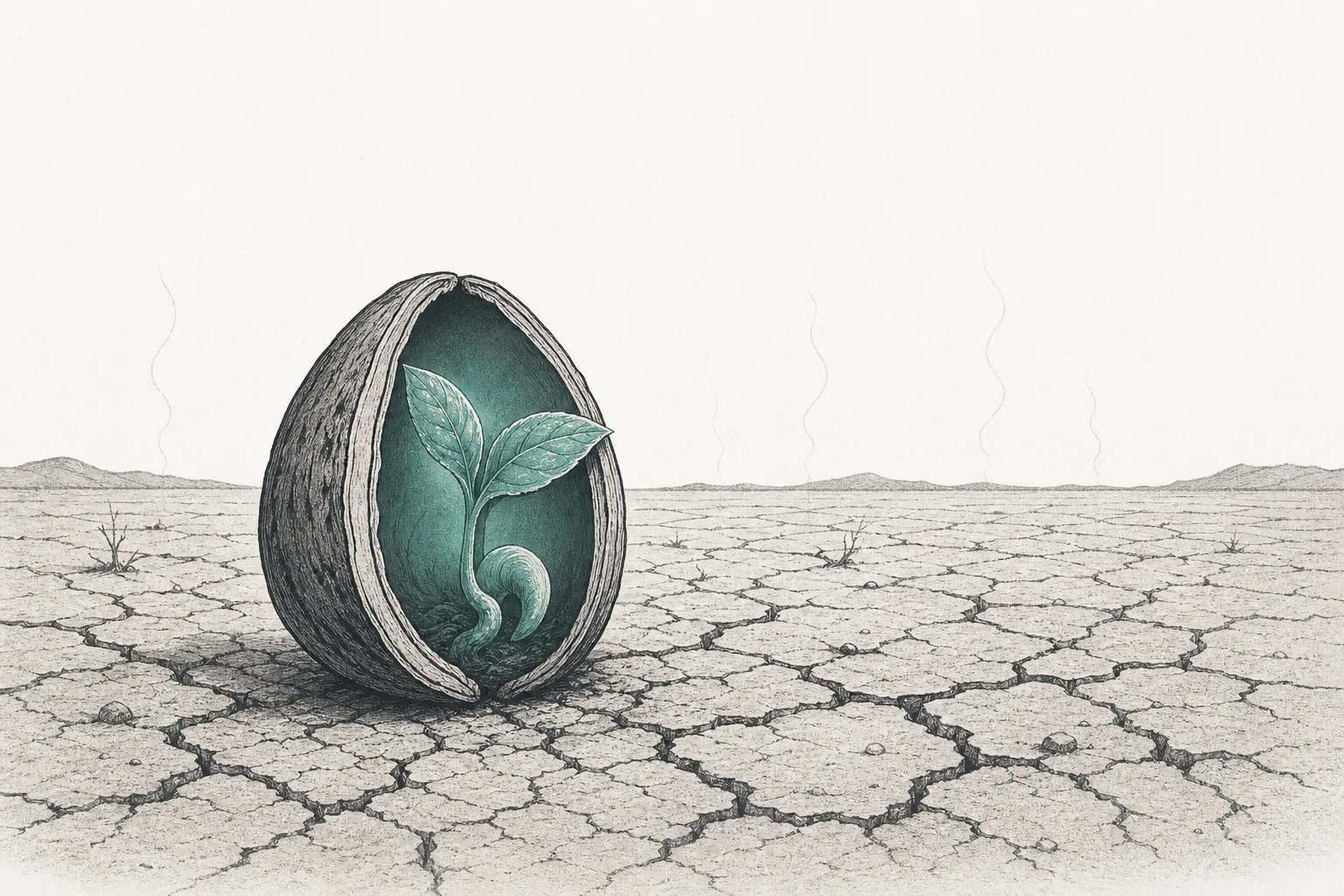
01What it is (the three layers of inputs)
Picture a farmer about to start a new growing season. Before he drives the tractor out or opens the drip-irrigation valve, he has to make three decisions that look ordinary but matter most: which seed to plant · which fertilizer to use · which spray to keep off insects and weeds. Those three answers decide how well his crop will hold up in a harsh-weather year — and the three of them together are the node we're talking about.
On the megatrend map, this node is a leaf under Climate-Resilient Agriculture & Food, within the larger trend Climate Adaptation & Water. It's the first of "three levers" that work on the same field — the lever about making the plant itself stronger. The other two siblings are precision water systems (delivering water to the roots) and precision farm machinery (placing inputs exactly where they're needed) — this node is the "inputs" that those other two go on to manage.
The inside of this node splits into three layers that line up like the production line of a single plant:
- Layer 1 — seed & traits: seeds that have been bred (breeding) or gene-edited (gene-editing) to resist drought, heat, and disease, or to ripen earlier to escape a shortening season — this is the "blueprint" for a crop's toughness
- Layer 2 — nutrients: NPK fertilizer (nitrogen-phosphorus-potassium) plus high-efficiency fertilizers and biostimulants that help the plant absorb food and water better under stress
- Layer 3 — crop protection: sprays against insects, weeds, and fungus, plus "biologicals" that use microbes instead of chemicals — because warmer weather tends to spread insects and plant diseases harder and farther
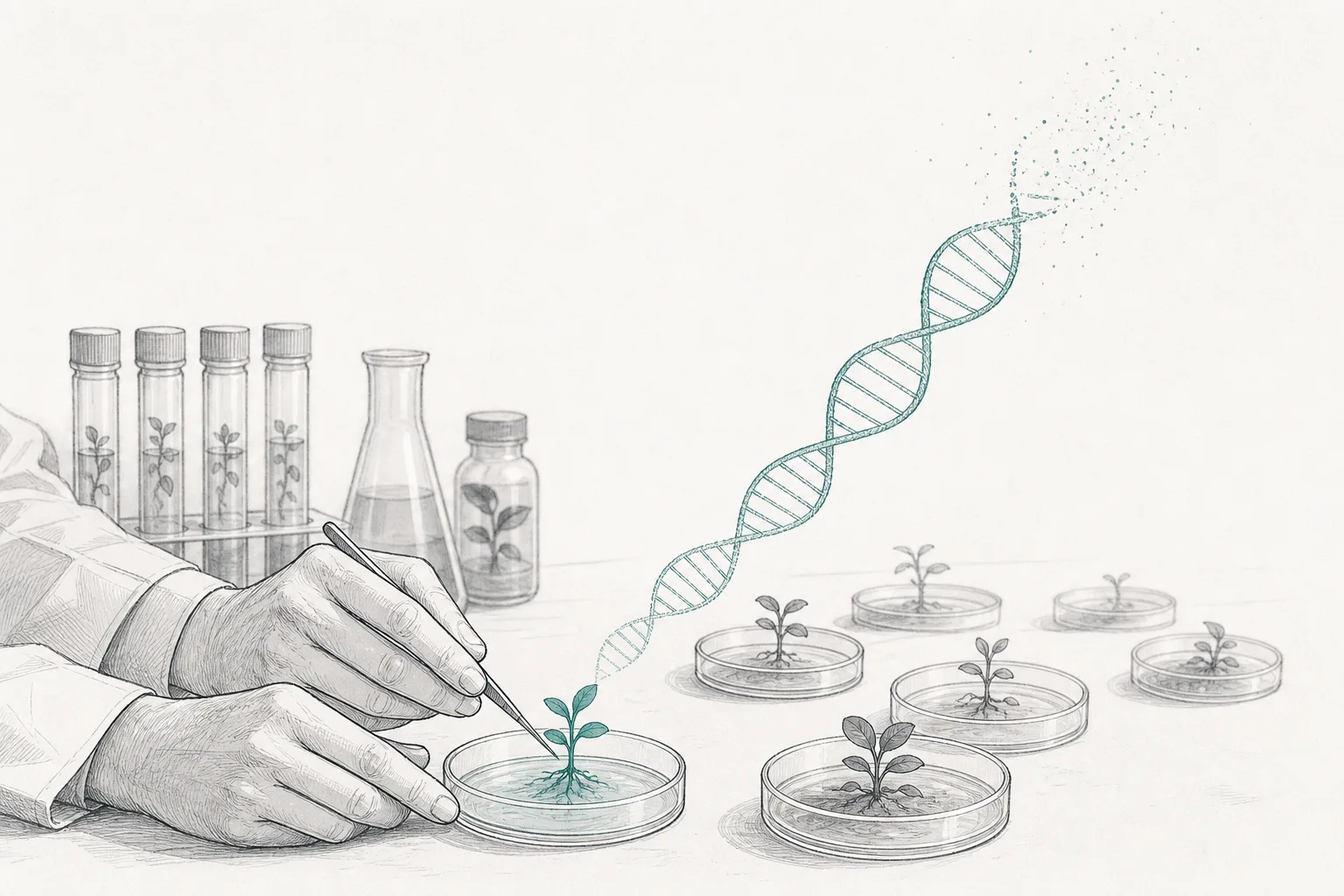
This node covers traditional "breeding," selective breeding, and the gene editing of plants (for example, CRISPR that edits the plant's own genes to make it tougher) — but engineering a new organism from scratch, like a synthetic microbe that fixes its own nitrogen, belongs to the separate Synthetic Biology trend. This line matters when you're working out who plays on which field.
02Why it matters — the first gate of food security
The reason these inputs matter more than they look is that they're the very first gate of the whole world's food chain. No matter how good the AI tractor is or how precise the drip irrigation, if the seed can't take drought, the fertilizer falls short, or the disease spray is weak, the harvest collapses from the start — and in a world that has to produce about 70% more food by 2050 (per FAO's estimate) while the climate eats away at yields, making the plant itself stronger isn't an option, it's a requirement.
Market size shows this clearly. The three layers add up to enormous sums — the global fertilizer market is the biggest, at about $230 billion in 2025 and projected to reach ~$282 billion by 2030 · the crop protection market is about $83 billion in 2025 → ~$106 billion by 2030 · and the whole seed market is about $67 billion in 2025, with the "technological breeding" (plant breeding) slice at ~$8.9 billion and growing fastest (CAGR ~9%).
But what makes this node interesting isn't just the size, it's the changing definition of a "good seed". Farmers used to look for "maximum yield" in a good year. But in a world of more frequent droughts and heat waves, what's worth more is "stability" — a seed that keeps the worst year from being a total loss. The gap between a drought-tolerant seed and an ordinary one may be small in a good rainy year, but in a drought year it's the line between "harvested" and "lost the whole field" — and that's the value farmers will pay a premium for.
03How it works (seed → fertilizer → spray → resilient harvest)
The simplest way to think about it is to see these three layers as the production line of a single plant, handing off step by step from before planting to harvest. Each layer solves a different side of "climate stress," and when all three work together, the result is a harvest that holds up through a harsh year.
What makes each layer "hard" is a different story — the seed layer is hard because building a tough new variety takes years and deep genetic know-how (this is where CRISPR helps cut the time) · the fertilizer layer is hard because it's tied to mined raw materials (potash, phosphate) and natural gas (for nitrogen), so prices swing with energy costs · the crop-protection layer is hard because you have to keep researching new compounds as insects and weeds grow resistant, and warmer weather speeds the spread of pests even more.
04How it connects to the rest of the field
This node doesn't work alone. It's the "raw material" that several other parts of agriculture go on to handle, and it also depends on its own supply chain of materials:
- Always paired with precision water systems: even a drought-tolerant seed needs water at the critical moment, and drip irrigation delivers just enough — a good seed plus wasted water, or good water plus a weak variety, still loses efficiency. The real power comes when both work at once
- Handled by precision farm machinery: the fertilizer and sprays in layers 2–3 deliver the most value when applied "only where needed" instead of broadcast across the whole field — precision machinery is the "hand" that places this node's inputs exactly, cutting waste and residue
- Depends directly on Critical Materials & Supply Chain: the layer-2 fertilizer is made from mined materials — potash (for K) and phosphate (for P) — concentrated in just a few countries, while nitrogen fertilizer is made from natural gas, making fertilizer prices sensitive to both mining and energy. This is an indispensable feed of raw materials
- Drawing a line with Synthetic Biology: breeding and gene-editing plants sits in this node, but designing microbes from scratch (like bacteria that supply nitrogen to crops without fertilizer) goes there — and this line keeps blurring as "biologicals" become the point where the two trends meet
05Where it stands now
The current picture of this node is dominated by a handful of giants in each layer, and the biggest story of 2025–2026 is Corteva's restructuring. The board of this leader in seeds and crop protection has approved a plan to split into two public companies in the second half of 2026: the seed side (with the Pioneer brand at its core, ~$9.9 billion in expected sales) separated from the crop-protection side (~$7.8 billion) — reflecting that these two layers have business logics different enough to walk apart. In Q3 2025, Corteva's total sales grew 13%, and for the full year it expects revenue of ~$17.6–17.8 billion.
The seed and gene-editing side is running especially hot — Corteva invested over $500 million in 2025 to expand its CRISPR-Cas capabilities, and reports that drought-tolerant corn developed with gene editing raised yields by up to ~12% in field trials, while drought-tolerant GM seeds sell at a premium of about 15–20% over ordinary seeds.
For the fertilizer side, 2025 was a fairly good year for producers — prices recovered and sales volumes rose. Nutrien (the world's largest potash producer + an ag-retail network) posted EBITDA in the first nine months of 2025: potash $1.8 billion · nitrogen $1.6 billion · retail $1.4 billion · Mosaic (phosphate/potash) posted adjusted EBITDA of ~$2.4 billion in 2025 (+10%) · and CF Industries (the nitrogen-fertilizer leader) posted net income of ~$1.05 billion in the first nine months, while starting to generate carbon credits from a CO₂-capture (CCS) project — a sign that nitrogen fertilizer is trying to cut its own carbon footprint.
The crop protection and biologicals side is led by FMC and Bayer Crop Science (a business within Bayer), which are accelerating investment in biologicals — sprays that use microbes or natural compounds instead of chemicals to fend off insects and disease, answering both tightening regulation and demand for food with fewer residues.
06The future — gene editing, biologicals, and smarter fertilizer
The first direction is gene editing becoming mainstream, because the regulations themselves are opening the door. In the U.S., after the SECURE rule was struck down by a court in late 2024, gene-edited crops that contain no foreign DNA (an edit to the plant's own genes) get far lighter treatment than traditional GM crops — cutting approval time by more than 50%. Meanwhile the European Union, once the strictest, reached agreement on a "New Genomic Techniques (NGT)" rule in December 2025 that will treat some gene-edited crops the same as traditional varieties (expected to take effect ~mid-2028). This opens the door to a big market that used to be closed.
The second direction is "biologicals" growing faster than any layer. Both biostimulants (a market of ~$4.5 billion in 2025, growing at ~12% CAGR to ~$7.8 billion by 2030) and biological sprays against insects and disease are becoming an important add-on in every giant's portfolio. The reason: they cut chemical residue, meet tightening regulation, and help crops handle stress without relying on chemistry alone — and while the base is still small next to fertilizer and chemicals, it's where research money is flowing fastest.
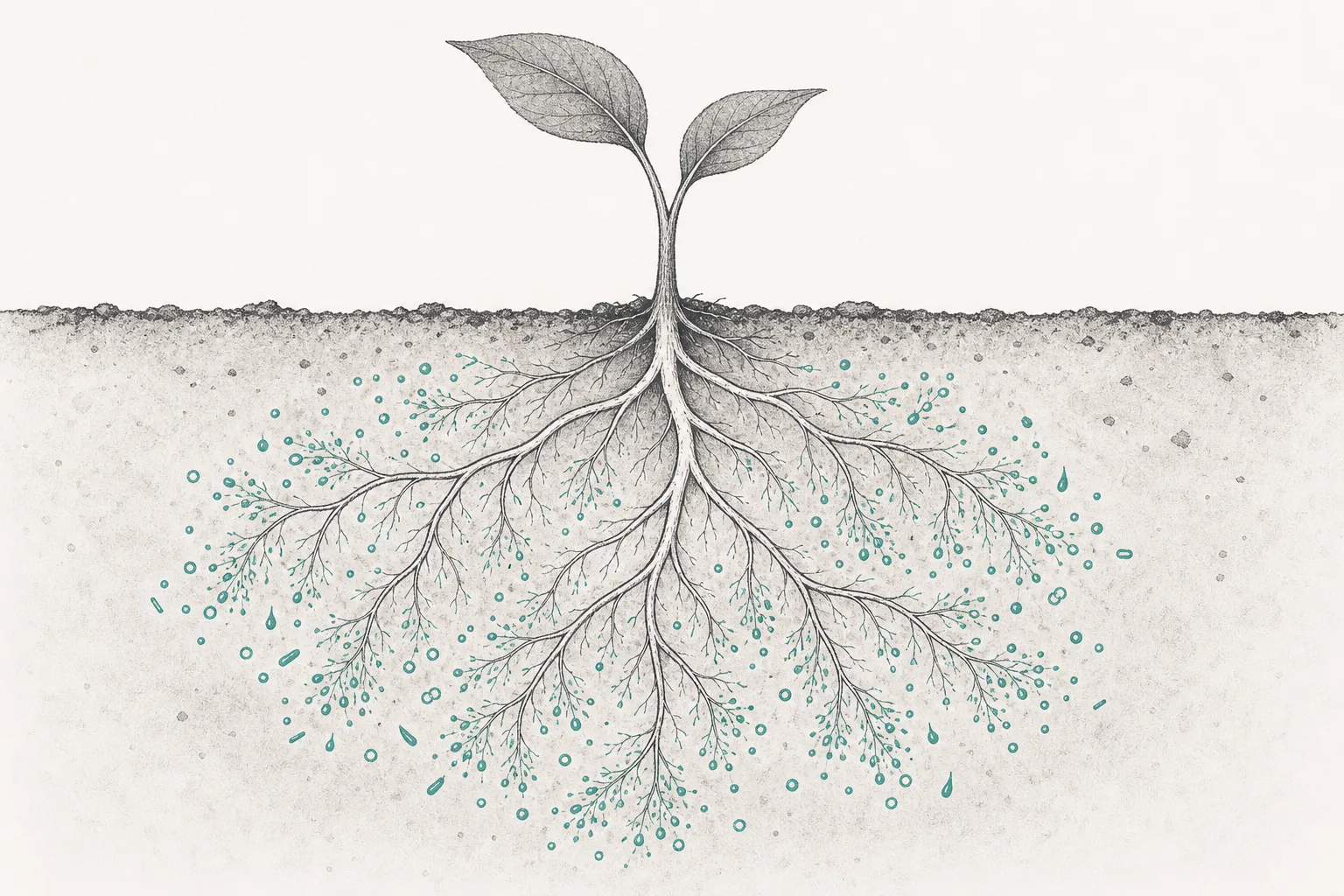
The third direction is fertilizer getting "smarter and cleaner". Enhanced-efficiency fertilizers release nutrients slowly, right when the plant needs them, cutting losses and nitrogen pollution. At the same time, nitrogen producers like CF Industries are investing in clean ammonia (carbon-captured + made with clean electricity), because making nitrogen fertilizer is a big source of carbon — so the future of the fertilizer layer is inseparably tied to the energy transition.
07Challenges & risks
The first risk is a sharply swinging price cycle. Revenue for players in the fertilizer and seed layers is tied to farmers' "mood," which depends on crop prices. When corn/soybean prices fall, farm income shrinks and farmers immediately cut back on buying premium fertilizer and seeds. Fertilizer prices themselves also swing with natural-gas costs (for nitrogen) and potash/phosphate mining prices — in 2022, fertilizer prices spiked to record highs after the Ukraine war, then crashed the next year. So this business is "good profits, but you have to ride the waves."
The second risk is regulation and consumer acceptance. Even as many countries' rules open the door to gene-edited crops, the word "GMO" is still resisted by consumers in some markets, and regulations keep shifting (the U.S. SECURE rule was struck down by a court; the EU just agreed on the NGT rule but it won't take effect until ~2028). This uncertainty gives investing in new varieties a high policy risk. At the same time, some herbicides and insecticides face pressure to be pulled from the market on environmental and health grounds.
The third risk is concentration and dependence on raw materials. The global seed and crop-protection market is held by a handful of giants (Corteva, Bayer, Syngenta, BASF, FMC), giving them bargaining power but also exposing them to competitive and antitrust pressure. The fertilizer layer depends on materials concentrated in just a few countries — most potash comes from Canada, Russia, and Belarus — so geopolitics can hit prices and the stability of the world's food chain right away.
In short: before the drip irrigation or the AI tractor ever gets to work, half a harvest's fate is already decided at the seed, the fertilizer, and the spray. In a world where the weather can't be counted on, making the plant itself stronger is the first and most basic gate of feeding the world — and the harsher the climate gets, the more the roles of "the seed maker, the fertilizer maker, the spray maker" matter.