Megatrend · Fusion Energy
Who buys the power from a sun that isn't built yet
Fusion is the dream of limitless clean energy. But before a single fusion plant gets built, you first need someone to buy the power. And the first people willing to sign a contract for electricity that doesn't exist yet weren't utilities — they were tech giants like Microsoft and Google, starving for clean, 24-hour power to feed their AI data centers. This lesson is about the "demand side" of fusion — and why it's still a bet on the future, not a thing that's real today.
01What it is (the "buyer" side)
When most people hear "fusion," they picture a blazing donut-shaped reactor, giant magnets, or lasers fired in to spark the reaction. That's the side that builds the thing. But this node is about the other side everyone overlooks — the "side that buys it".
The simple rule of energy is this: a power plant only gets built once there's a confirmed buyer for the electricity. No one sinks billions into a plant without knowing who they'll sell the power to. The person who signs up in advance to buy that power is called an "off-taker", and the contract is called a PPA — this lesson is about those people in the world of fusion.
Off-taker = the party that buys a project's output (here, electricity) in advance · PPA (Power Purchase Agreement) = a long-term electricity contract in which the buyer agrees to take the power at a set volume and price, often for decades. This contract is the "guarantee" that lets investors commit money to build the plant — because they know a buyer is locked in.
Here's the twist: fusion's first "buyers" weren't traditional utilities, they were technology companies — Microsoft, Google, Amazon — companies we'd never normally connect to a power plant. Yet today they're the most eager customers for every kind of clean energy, including a fusion that doesn't exist yet. That's why this node defines itself as "demand-pull" — a pull from the demand side, not the fusion technology itself.
02Why it matters — AI is hungrier for power than ever
To understand why the tech giants would sign contracts to buy power from a plant that doesn't exist, you first have to understand their problem: AI devours an enormous amount of electricity.
Training and running large AI models takes data centers packed with chips, and they eat power at a level we've never seen. The IEA estimates that global data-center electricity demand will nearly double, from ~485 TWh in 2025 to ~945 TWh in 2030 — more than all of Japan uses today. And the fastest-growing slice is AI servers, growing about 30% a year.
But the problem isn't just "a lot." It's "a lot + clean + all the time" at once. Every tech giant has announced net-zero carbon targets, so they don't want coal or gas. But AI data centers need power that runs 24 hours without interruption (baseload), which solar and wind can't do around the clock. That gap — "clean energy that runs all the time" — is exactly what fusion promises to deliver, and the reason tech giants are willing to bet in advance.
This is the heart of the lesson: fusion's first customers are the companies most starved for AI power. So fusion isn't born from a government's energy policy — it's born from the raw demand of the AI economy.
03How it works — a contract stretched into the future
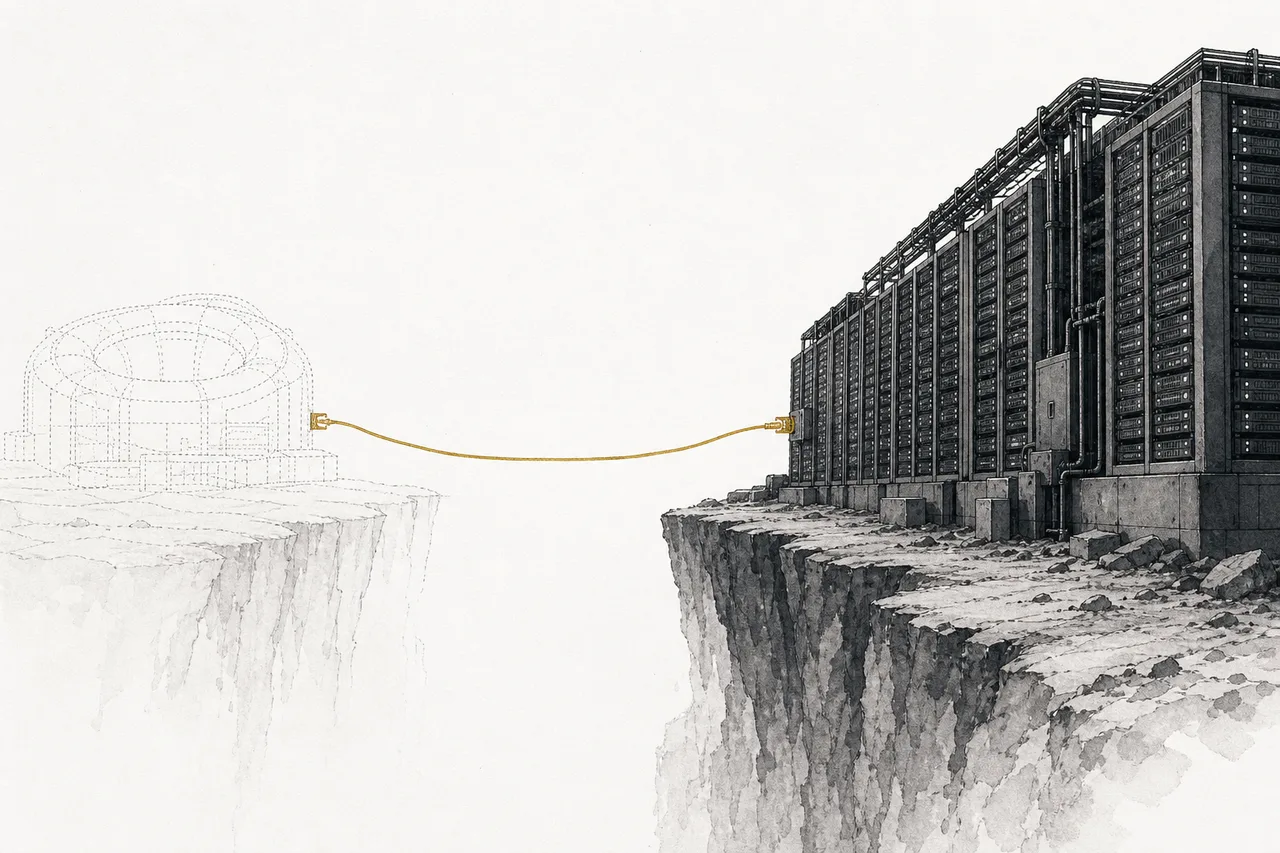
This node's mechanism is a "chain" that runs from the (future) fusion plant to the buyer, through two things: a PPA contract and grid integration. But unlike a normal power plant, the start of this chain doesn't exist yet.
Notice that in this chain, the only box still drawn as a dotted line is the source — the fusion plant. Everything else (the contract, the grid, the data center) is real. That's why fusion PPAs are often described as "options" more than ordinary purchase contracts — they're the right to buy the power if the plant actually works, not a binding order that guarantees delivery.
Baseload = the base electricity that runs steadily 24 hours a day (unlike solar/wind, which depend on the weather) · Grid integration = connecting a new plant to the transmission network, which needs transformers, substations, and a mountain of approvals — an engineering-and-regulatory job that takes as long as building the plant itself.
04Where it sits on the Fusion map
On the megatrend map, this node is a sub-theme under Fusion Energy. But it sits on a different "layer" from its siblings. Every other theme in Fusion is the technology-building side (supply side):
- Fusion Pure-plays (Developers): the companies that build the fusion plants themselves (Helion, CFS, Type One) — most still private. These are the "makers," and our node is the side that "buys" from them
- Magnets & HTS Superconductors: the superconducting magnets that confine the plasma
- Lasers & Pulsed Power: high-power lasers for inertial-confinement ignition
- Vacuum, Cryogenics & Plasma-Facing: the vacuum and ultra-cold systems
All four themes above are about "making fusion happen." Our node, on the other hand, is the "demand side" — the people who'll use fusion once it exists. That's what connects it out beyond Fusion in interesting ways:
- Driven by Artificial Intelligence: AI's power demand is the entire reason this group of off-takers exists — no AI, no one hungry enough for power to bet on fusion
- An alternative to Energy Transition & Power Demand: fusion competes with nuclear fission, SMRs, gas, and renewables-plus-batteries to be the "always-clean power" for data centers
- Depends on Critical Materials & Supply Chain: grid integration takes transformers, copper, and a huge amount of grid equipment
Put another way: if all of Fusion is "building a small sun," this node is the simplest and most important question of all — "so who's going to buy the light from it?"
05Where it stands now — the truth that has to be said plainly
Here comes the part that has to be the most honest. The first and most important fact is this: to this day, no one has sold a single unit of electricity from fusion. Everything we're about to describe is an "advance booking" with plants that aren't finished.
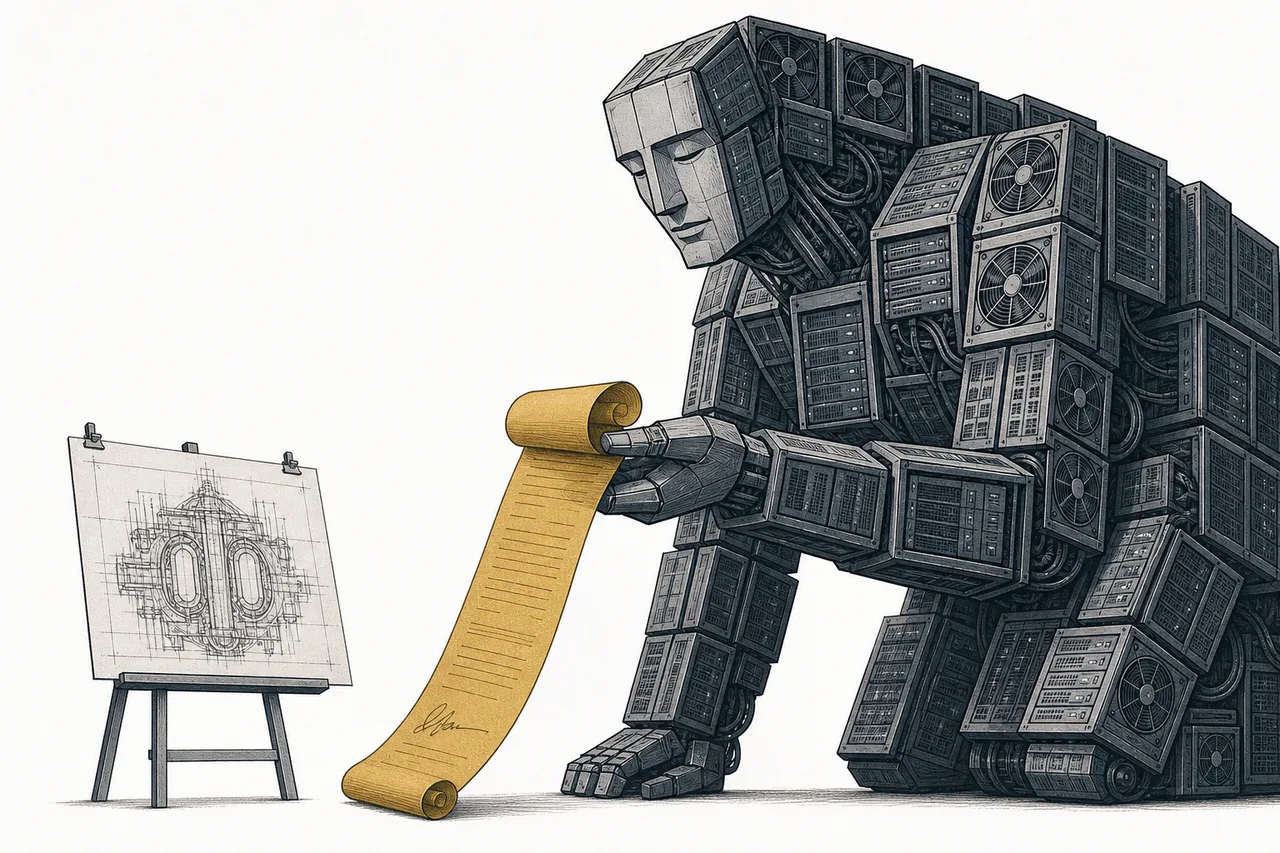
Even so, the contracts already signed are genuinely historic events. There are two landmark deals:
1. Microsoft × Helion (2023) — the world's first fusion PPA. In May 2023, Microsoft signed to buy at least 50 megawatts from Helion's first fusion plant, targeting going online by 2028 (enough to power roughly 40,000 homes in Washington State). It was the first time in history a fusion company signed an actual contract to "sell power" — but that 2028 date is far earlier than most scientists believe is possible.
2. Google × Commonwealth Fusion Systems (2025) — the biggest deal. On June 30, 2025, Google signed to buy 200 megawatts from CFS's first ARC plant in Virginia (half of that plant's 400 MW output). Google called it "the largest direct corporate fusion power purchase" — but ARC is expected to feed the grid only around the early 2030s, and only after the SPARC prototype proves it can produce net energy.
Beyond the tech giants, traditional utilities are starting to move too — for example, Type One Energy signed with TVA (a U.S. public utility) to develop a 350 MW fusion plant called Infinity Two in Tennessee, targeting "the mid-2030s at the earliest." But to be clear, as of 2025 this is still just a letter of intent (LOI) and a preliminary arrangement, with several more layers of board approval and regulatory review to clear.
And here's the point investors have to read clearly: the companies actually building fusion (Helion, CFS, Type One) are almost all still private and not on the stock market. So if you want to ride this theme through stocks you can actually trade, the more direct, lower-risk route is to look at the "buyers" and the "grid connectors" — whose story today is about AI power demand + grid infrastructure + nuclear more than fusion directly.
06The road ahead
The first direction is a "race to book in advance." Fusion has now raised over $9 billion worldwide, and the line that "fusion is always 30 years away" is starting to be challenged, with 3 of the 4 developers targeting power delivery within the 2030s. If the first few plants really run, we could see tech giants and utilities rush to sign more PPAs fast — because whoever books clean baseload power first has the edge in the AI era.
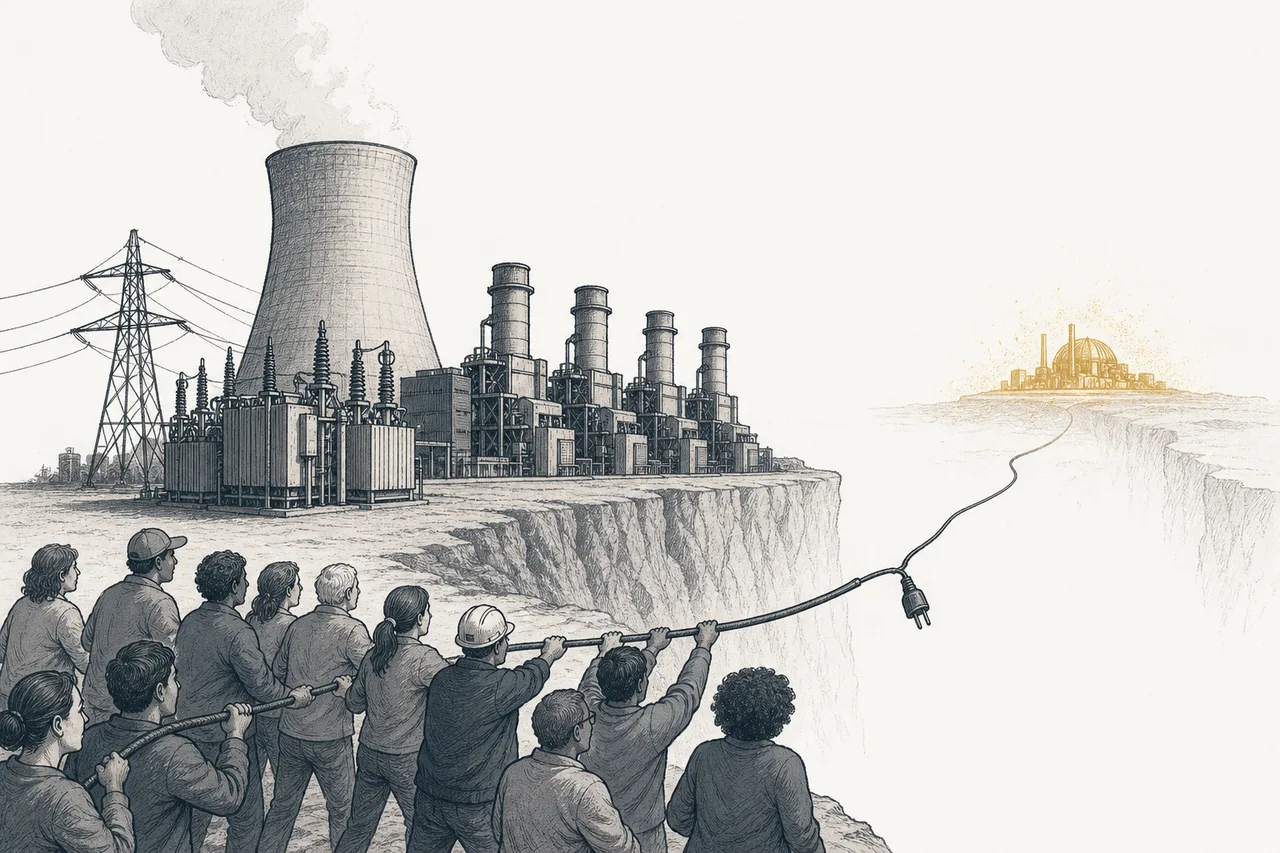
The second direction is a "bridge called nuclear." While fusion isn't here yet, the tech giants aren't just waiting around. They're signing nuclear fission contracts (restarting old reactors + new SMRs) at the multi-thousand-megawatt scale — Microsoft is restarting Three Mile Island, Meta signed with Vistra for ~2,600 MW. This move matters because it builds the "off-take muscle" and the grid structure that fusion can plug straight into when it's ready.
The third direction is that the "bottleneck is the grid, not just the plant." Even with power, connecting to the grid is slow and expensive. Interconnection queues stretch for years, so demand for grid equipment is surging (GE Vernova's backlog blew past $160B). That makes the "grid connectors" a lower-risk way to ride the energy-AI theme than betting on which fusion plant will succeed.
07Challenges & risks
If there's one lesson to remember from this node, it's this: this is the most future-speculative layer of all of Fusion. So the risks have to be stated plainly and honestly.
The first and biggest risk is that "the plant doesn't exist yet." Every PPA signed is a contract with something that isn't finished. If fusion technology can't produce commercial power as hoped, these contracts are just paper. It's an "option," not guaranteed revenue.
The second risk is that "slipping timelines are normal." Fusion's history is packed with schedules that keep sliding, until it became a joke that "fusion is always 30 years away." Helion's 2028 target or CFS's "early 2030s" are both extremely ambitious versus what the science can actually do now — a slip of several years should be expected, not treated as the exception.
The third risk is that "in truth, today this is an AI-energy theme, not a fusion theme." The stocks that ride this theme (MSFT, GOOGL, CEG, VST, GEV) are driven by AI power demand, electricity prices, and grid structure — fusion factors barely move their share prices today. So buying these stocks "because of fusion" is a misunderstanding. It's a power-AI theme play, with fusion thrown in as a long-term option on the side.
In short: this node's most beautiful story — "AI giants signing to buy power from a sun that isn't built yet" — is also its most fragile. It tells us that demand for clean power in the AI era is so vast that people will bet on unproven technology. But it also reminds us that between the dream and power actually flowing through the grid, there's still a long distance, full of schedules that may slip.