Megatrend · Artificial Intelligence
A handful of labs burning tens of billions a year to build the smartest brain in the world
Behind ChatGPT, Claude, and Gemini sits just a handful of labs willing to pour in tens of billions of dollars to train the most advanced "closed" (proprietary) AI models — the smartest model at any given moment, which you can "rent" through an API but can't buy outright. This is the most expensive arena in the history of technology. And the most important thing for investors is that almost all the real players are still private companies — so the stock-market entrance is through "the giants backing them."
01What it is
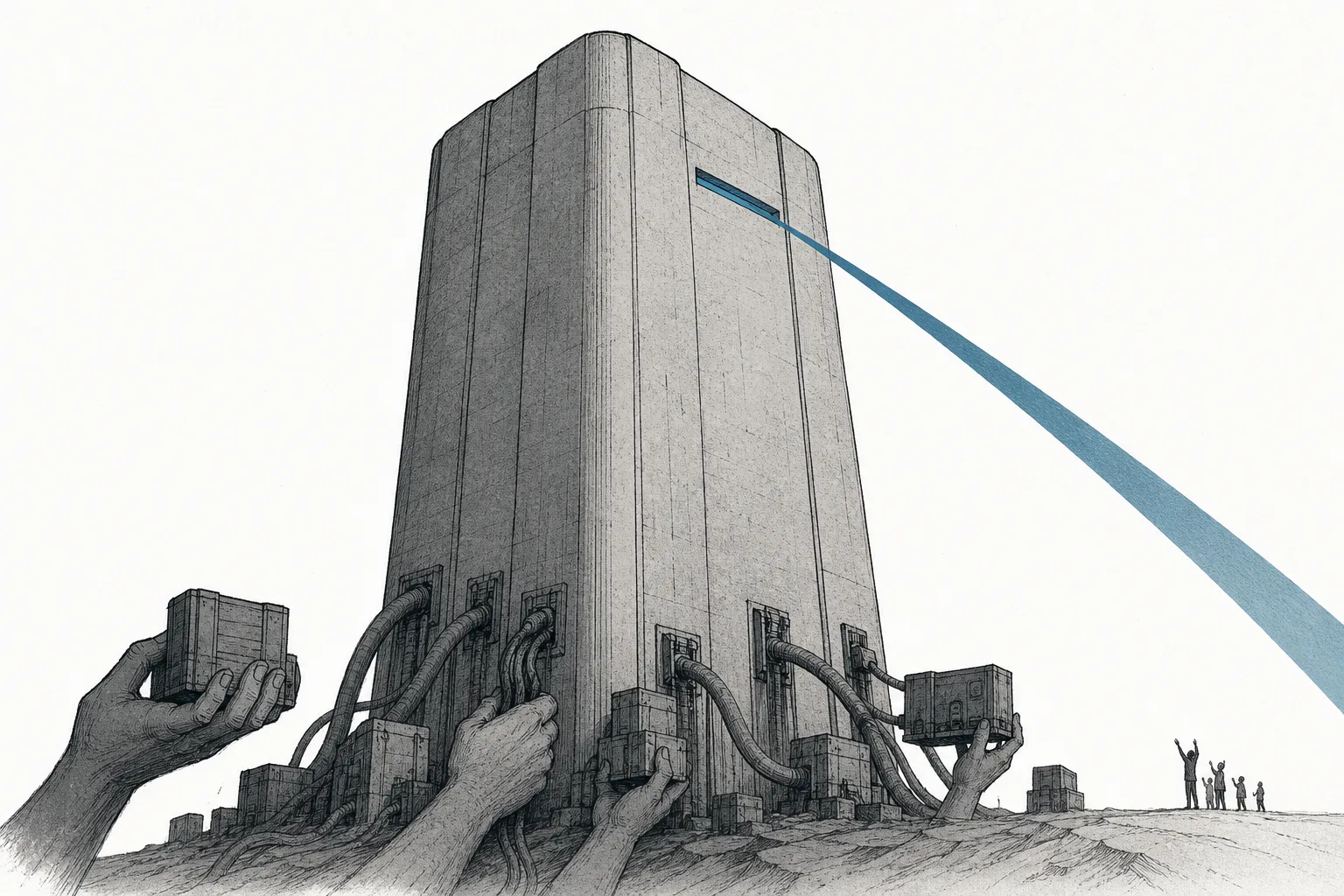
Picture a world where "intelligence" is sold as a service, like electricity. Only a few power plants can produce it; the rest of the world just plugs in. This node is about the power plants that produce frontier-grade intelligence — kept "closed" so no one can take the machine away. There's only a handful in the world: OpenAI, Anthropic, Google DeepMind, and xAI.
A frontier model is the biggest, smartest AI model humans can build at that moment. And "closed" (closed / proprietary) means the lab keeps the model itself — the training recipe, the data, and the trained "weights" — secret. You can reach its intelligence only through an API or an app, like renting power from a plug without taking the generator home. This is the key dividing line from the cousins next door — Open-Weight Model Developers (open-weight labs like Meta Llama, Mistral, DeepSeek) that "hand out the blueprint" for you to download and run yourself.
On the megatrend map, this node is the deepest branch under Foundation Models & Research Labs within the big trend Artificial Intelligence. It's the "platform layer" — the very center that every other layer of AI depends on. Why is "closed" important enough to be its own category? Because almost all of the world's smartest models are on the closed side, and the big premium money flows here too — closed labs are the ones "pushing the ceiling" of what AI can do, while the open side usually follows a few months later.
Closed = the lab doesn't release the model itself; you use it only through the lab's service · Weights = the billions of numbers that are the model's "brain" after training; the closed side keeps them secret, the open side hands them out to download · API = the channel that lets other apps send a question in and get an answer back, charged by usage (per token) — the way closed labs "sell intelligence" without handing over the model.
02Why it matters — the most expensive arena in the world
The first reason is a speed of money never seen in software history. Just look at annual run-rate revenue: OpenAI ran from about $13B in early 2025 up to ~$25B in early 2026, while Anthropic surged from ~$1B in late 2024 — a 80× jump — to $30B in April 2026, climbing on to a run-rate of about $47B, passing OpenAI to become the highest-revenue lab. This is building tens-of-billions-of-dollars businesses in just over a year.
The second reason is valuations that jumped into the history books. OpenAI closed a world-record $122B funding round at a valuation of about $852B, while Anthropic overtook it to become the most valuable AI startup at around $965B — nearly touching a trillion dollars, even though it hasn't gone public. Meanwhile Elon Musk's xAI was valued at about $230B in a January 2026 round before being absorbed by SpaceX in a deal that valued xAI at around $250B.
But the deepest reason isn't the numbers. It's the strategic position. Frontier models are the "upstream faucet" that every AI app has to pipe in and drink from. Whoever controls the smartest and cheapest model controls the cost and capability of a whole new wave of software. That's why every tech giant — Microsoft, Amazon, Alphabet, Nvidia — pours enormous money into this layer, both building their own and investing in other labs, because "missing this train" costs far more than paying to get on board.
03How it works (a capital flywheel that spins ever bigger)
The heart of a closed lab isn't just "train a model well" — it's a capital flywheel that has to spin bigger every turn, or get overtaken. Let's walk step by step through how one chunk of money becomes the next generation of model.
Why does the wheel have to get "bigger" every turn? The answer is a rule called scaling laws — the bigger the model + the more data + the more compute, the more predictably the intelligence rises, but you have to multiply the resources to climb one more step. The result: the cost of training a frontier model ran from about $78–100M in the GPT-4 era (2023) up to $200–500M per model in 2025–2026, and analysts expect it to reach $1–3 billion per model by 2027.
And this is where closed labs differ from an ordinary software business: the cost doesn't end when training is done. Every answer the model gives (called inference) takes real compute chips. The more people use it, the more inference costs balloon. So the wheel has to keep spinning out revenue to pay for both the next round of training and this round of running, at the same time — which is why, even as revenue grows into the tens of billions, most labs are still losing money (OpenAI expects a loss of around $14B in 2026).
04How it connects in the ecosystem
Closed labs sit at the very center of AI. They both pull resources from the layers below and feed power to the layers above — understanding this web is understanding why they drag the whole digital economy along with them.
- Inseparably dependent on cloud and compute: every stage — training and inference — runs on expensive GPU/accelerator chips in giant data centers. This bond is so tight it's become a "merger deal": OpenAI's compute contracts total over $1 trillion — with Oracle, Nvidia, Amazon (AWS at $38B), and Broadcom — so labs and compute owners are each other's customers and investors at once
- Feeding raw material to AI Applications & Copilots: chat apps, coding assistants, document-summarizing tools, and agent systems that work on their own — all of them pipe in from frontier models. If a lab ships a smarter or cheaper generation, the whole wave of apps benefits right away
- In contrast to the open-side cousins, Open-Weight Developers: the closed side sells "answers" through a wall, controlling quality and price fully · the open side hands out a "blueprint" to run yourself, selling sovereignty and control. The two compete on "intelligence per dollar," and the dividing line keeps moving closer together
- A spark for other trends: frontier models design drugs in Biotech, watch for threats in Cybersecurity, and serve as the brain for Robotics & Physical AI — which is why many call it a "general-purpose technology," like electricity. Not a single product, but a foundational layer that everything else builds on
05Where it stands now
Before talking about the players, you need to grasp one fact that shapes the whole way you invest in this layer: almost all the labs actually training frontier models are still private companies — OpenAI, Anthropic, and xAI are all still off the stock market (OpenAI just converted into a Public Benefit Corporation in late 2025, paving the way to an IPO). This isn't anyone's weakness — it's an important "market fact": the way ordinary investors get a stake in this layer is through the listed giants that are both investors in and compute owners of those labs.
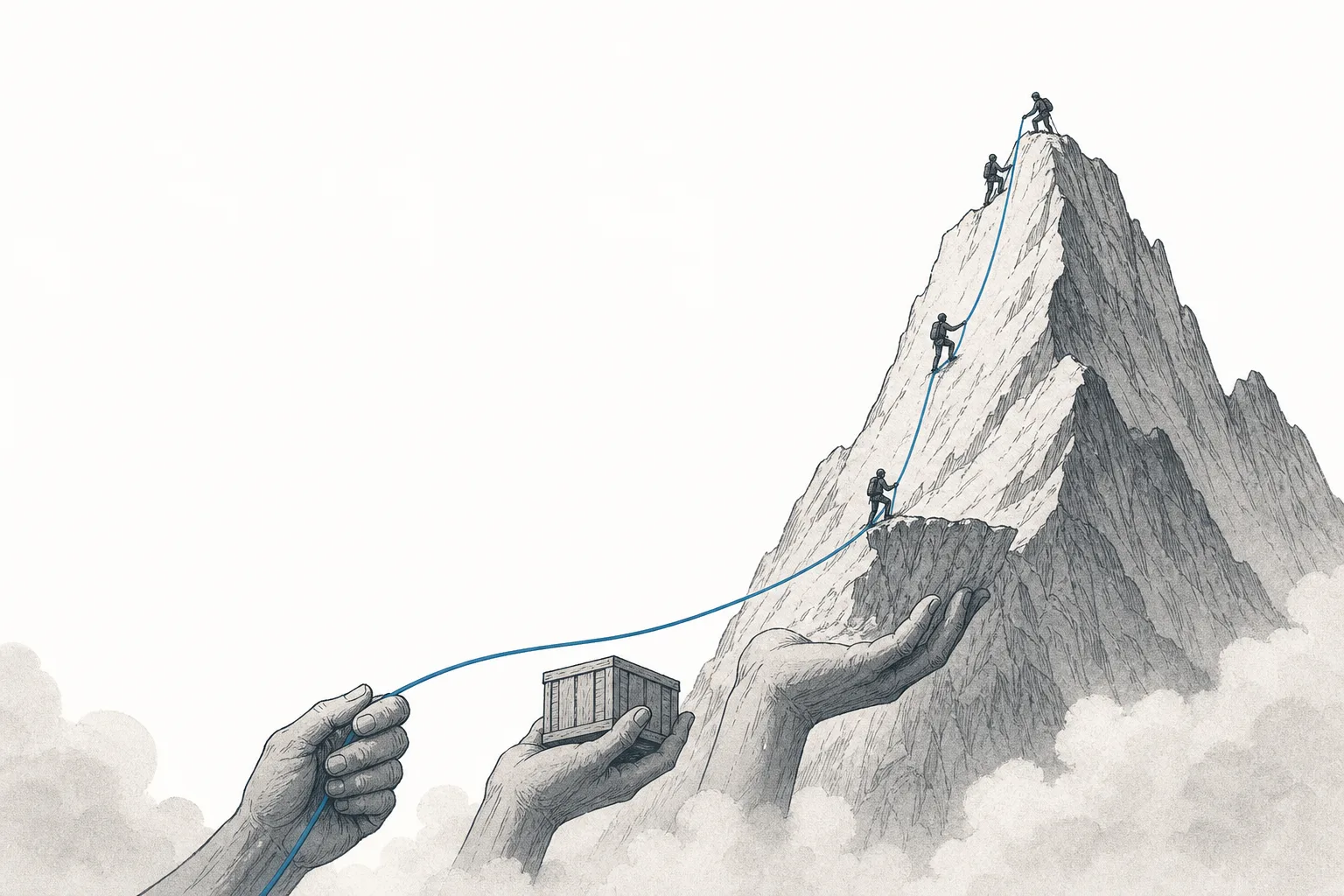
The money trail is very clear. After OpenAI's restructuring, Microsoft holds about 27% and is the largest compute partner · Amazon invested about $8B in Anthropic, and the unrealized gain on that stake pushed its Q1 2026 results up by $16.8B — while Anthropic runs on Amazon's Trainium chips · Alphabet invested in Anthropic too, and also has its own in-house lab, Google DeepMind, maker of the Gemini family · and Nvidia has invested in both OpenAI (negotiating around $30B in a big round) and xAI — both the chip seller and a shareholder.
In the arena itself, the fiercest fight of the year has been the generation-by-generation race — OpenAI, Anthropic, and Google DeepMind taking turns shipping a smarter model every few months (the new Gemini focuses on "agentic coding" and long-running tasks). The game-changer was the shift to training models to "think step by step" (reasoning), which got 2026 nicknamed the "year of the agent" — models that don't just answer, but take action on multi-step work in a person's place.
06The road ahead
The first direction is training to "think" instead of training to be "big". For years, intelligence came from scaling up model and data size. But the new wave comes from pouring compute into the "think step by step" stage at answer time (reasoning / test-time) — models take longer to think so they can answer hard problems better. This changes the cost equation: the old way burned money in training, the new way burns more and more in inference. And it opens the door to the agent era, where models really do work in a person's place.
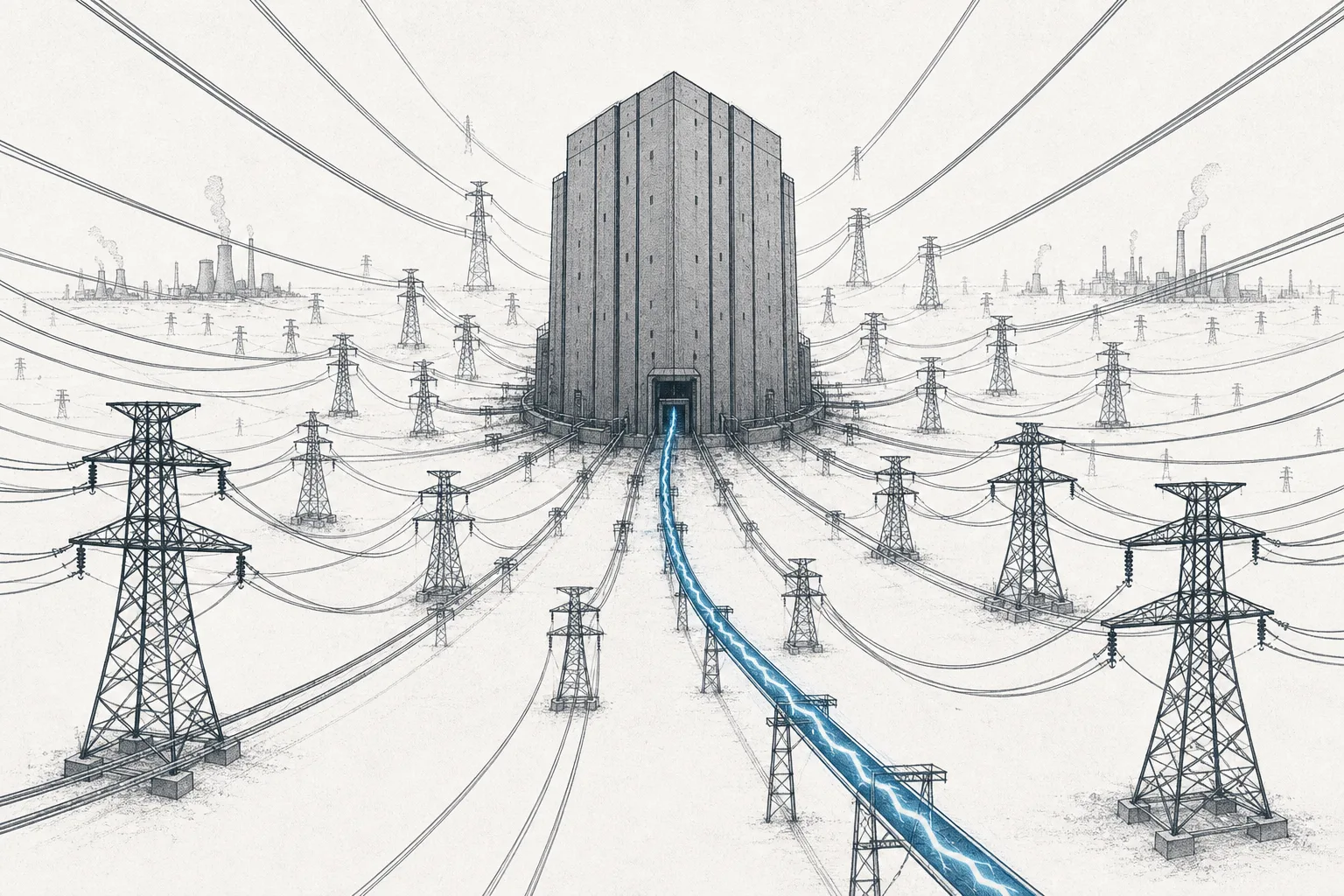
The second direction is the constraint moving from chips to power. Last year the bottleneck was finding enough GPUs; this year the bottleneck is starting to be "finding enough power and data-center sites." Training the next generation of models (which could hit $1–3 billion each by 2027) will be limited more by energy than by money or chips — this is where closed labs become inseparable from Energy Transition & Power Demand.
The third direction is "closed" getting squeezed from both sides. On one side, the open camp is catching up on quality and the gap is shrinking; on the other, customers are starting to ask about value for money. So closed labs have to prove that a model that's "just a little" smarter is worth a much higher price. The answer will decide who the enormous value flowing into this layer ends up with over the long run — and how many closed labs there's room for to survive.
07Challenges & risks
The layer at the very center of AI is also the one with the most particular risks of its own.
The first risk is money-burning that never ends. Training costs jump every generation (toward $1–3 billion per model) on top of inference costs that balloon with the number of users, which means labs have to raise enormous amounts of capital continuously — even though most are still losing money. OpenAI expects a loss of around $14B in 2026, and xAI posted a $6.4B operating loss on revenue of just $3.2B in 2025. In a business where "stop training is get overtaken," a stumble on money is the biggest risk.
The second risk is the bubble question and circular deals. Investment in AI across the whole system is heading toward the trillions, but the returns still aren't clear — an MIT study found that about 95% of organizations haven't yet seen a return on their generative-AI investment. More worrying are "circular deals" — Nvidia invests in a lab, the lab takes that money and buys Nvidia chips back, so part of the pretty-looking revenue is the same chunk of money going around and around. If outside capital ever dries up, this wheel could stumble instantly.
The third risk is concentration and geopolitics. The most powerful models in the world are in the hands of just a few companies, and they depend on advanced chips that can only be made in a few places. Chip export controls, U.S.–China competition, and safety questions about ever-smarter AI are all variables that could flip the whole landscape faster than you'd think.
The fourth risk is cross-dependence. Labs rely on the giants for money and compute, and the giants rely on the labs for models and growth. This relationship is great on the way up, but it ties both sides' fates together — if one lab stumbles, the value the giants booked from their investment (like the tens of billions Amazon/Alphabet recorded from their stake in Anthropic) shakes right along with it.
In short: this node is the handful of labs willing to burn enormous money to build the world's smartest intelligence behind a wall and rent it to the world. It's one of the most powerful bottlenecks in the digital economy — and because most of the labs themselves are outside the stock market, the way investors come along for the ride is to understand "who holds the rope and pays the power bill" for them.