Megatrend · Biotech & Genomic Medicine
Before a doctor can treat anything, someone has to "name the disease" first — and that someone is the test
Every treatment starts with one question: "What is it, exactly?" Diagnostics is the answer to that question — from an ordinary blood test all the way to reading the genetic code of a tumor to pick the right drug. It's just a few percent of the total cost of care, yet it decides almost every medical decision. This chapter shows how testing is shifting from "telling you whether you're sick yet" to "catching the disease before any symptoms" and "choosing the drug that fits you" — and why it's one of the quietest yet most powerful arenas in healthcare.
01What it is
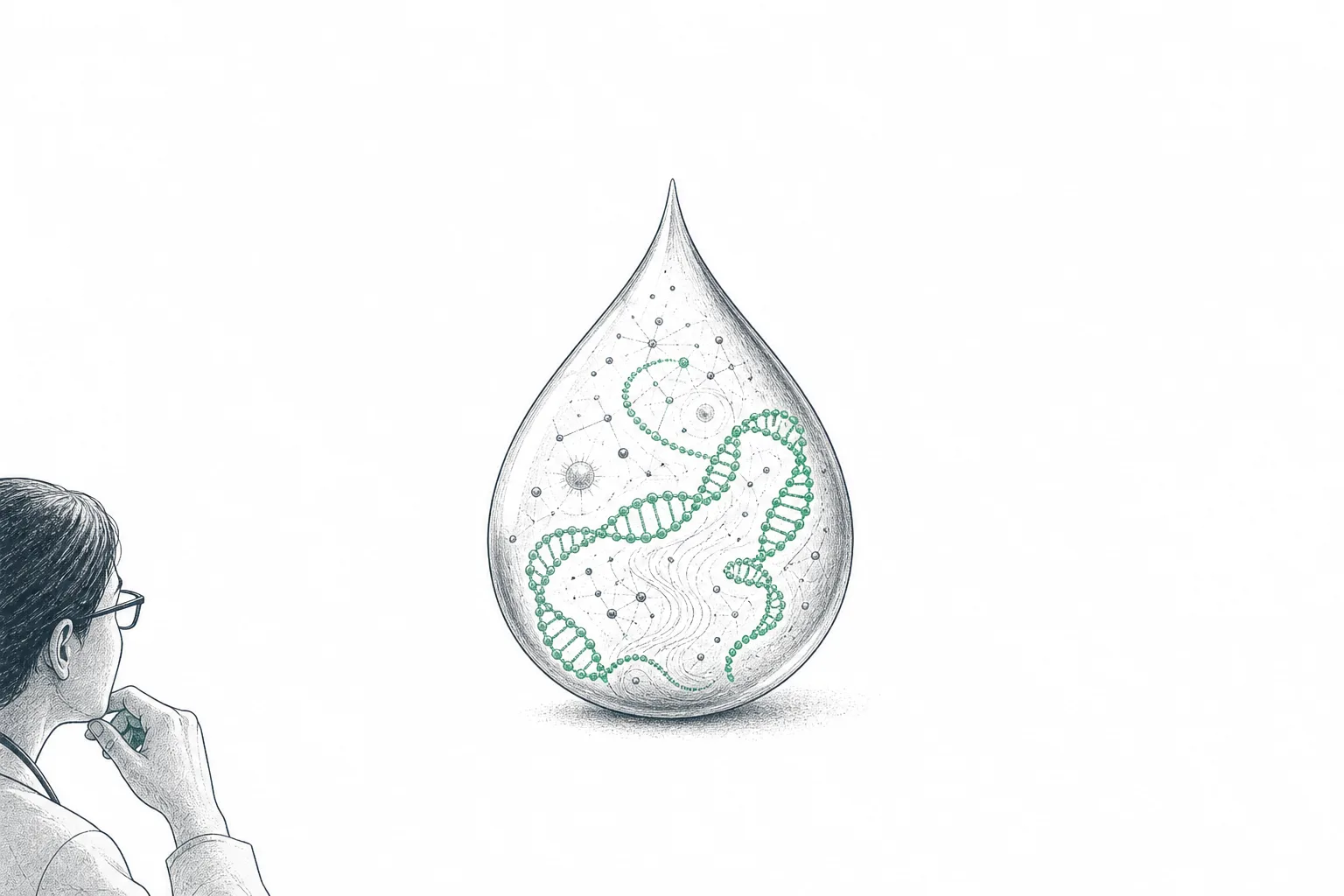
Picture a doctor as a detective. A patient walks in with vague symptoms — tired, losing weight, a lingering cough. The first question the doctor has to answer isn't "how do we treat it" but "what disease is this, exactly?" And the one that gathers the evidence to answer that question is diagnostics — from drawing blood to check sugar levels, to detecting COVID, to reading the genetic code in a tumor to see where its "weak spot" is for a drug to attack.
This node is about the kind of testing called "precision testing" — not just answering "sick or not sick," but answering in detail down to the molecular and gene level: which type it is, how severe, and which drug to use. It's a sub-field under Tools, Diagnostics & CDMO within the big trend Biotech & Genomic Medicine — the group called the "picks and shovels" of biotech, the ones who make the tools and services everyone in the field has to use. Its siblings right alongside are Life-Science Tools & Sequencing (the DNA readers and reagents that testing depends on) and CDMO (the contract drug-manufacturing factories) — if Tools is "the one who makes the instruments," this node is "the one who takes the instruments to answer the patient's real question."
At its heart are three technology families: (1) Immunoassay detects proteins or antibodies (pregnancy test kits, hormone tests, antibody tests) · (2) Molecular diagnostics detects DNA/RNA — reading down to the genetic code of a pathogen or a cancer cell · (3) Clinical chemistry measures chemicals in the blood, like sugar, lipids, liver and kidney values — the basic work done millions of times a day around the world.
IVD (In Vitro Diagnostics) = testing done "outside the body," taking a sample (blood/urine/tissue) and examining it in a tube or a machine — covering every test in this chapter · Molecular Dx = molecular-level testing, reading DNA/RNA, the most precise and fastest-growing group · Companion Dx (CDx) = a test that "pairs" with one specific drug — run first to see whether this patient will respond to it; if not, you don't give it, saving both money and time.
02Why it matters — the real decision-maker
There's one number the medical world loves to cite: diagnostics is just about 2–3% of total health spending, yet it influences about 70% of medical decisions. Put simply, it's cheap but powerful — one test result decides whether a patient gets surgery, which drug they take, or whether they go into chemo. Every treatment that follows (which costs far more) starts from the test's answer.
The size of the market reflects this clearly. The global IVD market was worth about $109 billion in 2025 and is expected to reach $157 billion by 2030 — growing about 7.6% a year. But what's more interesting is that this number isn't even across the board: molecular diagnostics grows the fastest at about 14.5% a year, because it's the doorway to the "precision medicine" the whole field is racing toward.
The deeper economic reason is that it changes how healthcare gets paid for. In the old days we paid when someone was "already seriously ill" — surgery, hospital stays, chemo, all enormously expensive. But if you catch it early, or pick the right drug from the start, total costs drop a lot. So testing is the "best-value investment" of the health system — and that's exactly why governments and insurers are willing to pay more and more, which is the real growth engine of this node.
03How it works (from sample to answer)
Molecular testing sounds complicated, but almost every version follows the same four-step path: collect the sample → extract the genetic material → amplify/read the signal → interpret it into an answer. The biggest problem is that what we're looking for (like a pathogen's DNA, or a fragment of cancer DNA) is often present in very tiny amounts in the sample — like finding a needle in an ocean. So the game-changing technique was "amplifying the signal" to make that needle visible.
The difference between PCR and NGS is the angle they look from: PCR (polymerase chain reaction) is great at "asking a specific question" — like "is there COVID?" "is this mutated gene present?" It copies the target fragment into millions of copies within a few hours, fast and cheap. NGS (next-generation sequencing), on the other hand, is great at "reading the whole book" — instead of asking one question at a time, it reads the DNA sequence across hundreds of genes at once. It suits cancer, which needs scanning for many weak spots, and it costs more but yields a vast amount of data — this is the tool that makes "reading the blueprint of a cancer" and choosing a drug to fit each person actually possible.
04Where it sits in biotech
Diagnostics doesn't stand alone. It's the "first checkpoint" that passes information on to every part of the biotech ecosystem. Let's see how it connects to its neighbors.
- Uses the tools from Life-Science Tools & Sequencing: every molecular test relies on the DNA readers and reagents that the Tools group makes — interestingly, reagents and test kits make up about 69% of the IVD market, because they're the "razor blade" you have to buy again every time you test, not a machine bought once. This is the most stable revenue model in the field
- Pairs drugs with the cancer side (Oncology): the heart of "companion diagnostics" is a test tied to one specific drug — over 60% of new cancer drugs approved by the FDA in 2024 came with a paired test, because many modern drugs only work in patients whose genetic profile fits the criteria; without testing first, you don't know who to give them to
- Driven directly by AI: modern test results — especially tissue images (pathology) and massive NGS data — need AI to help read them. In 2025 the FDA began approving AI systems to read pathology slides for primary diagnosis — AI is becoming the lab's "second pair of eyes"
- A foundation for Longevity and Aging Population: an aging society tests its health more often, and the dream of "living long with quality" has to start with "knowing first" what the body is about to become — testing is the tool that makes that dream tangible
05Where it stands now
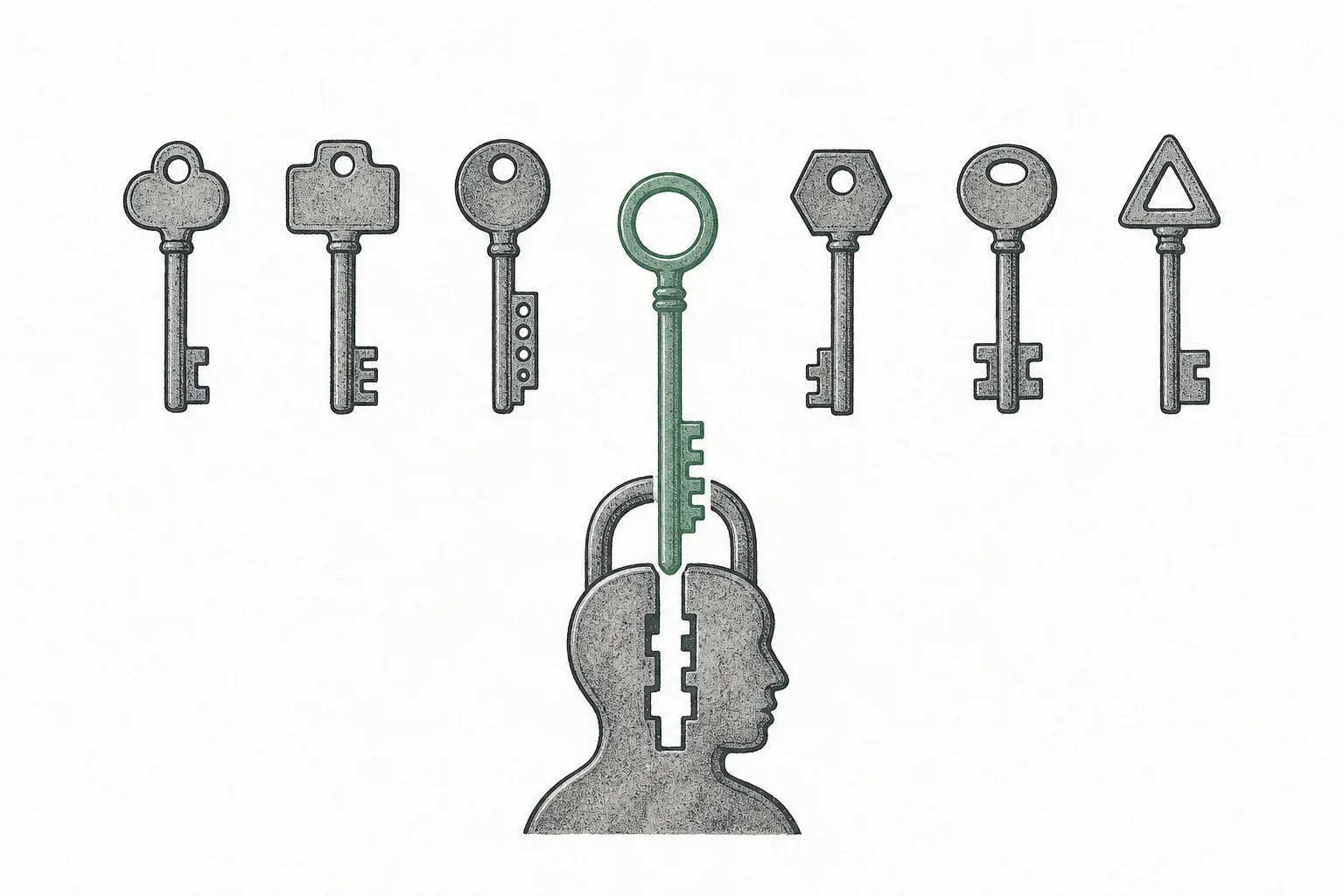
This field splits clearly into two layers. The first is the "instrument and lab giants" — the big companies that control the world's basic testing, led by Roche, number one in IVD with about a 20% share, followed by Abbott and Danaher (owner of Cepheid, which stands out in fast point-of-care testing). The huge volume of lab work in the U.S. sits in the hands of Quest Diagnostics and LabCorp, which process hundreds of thousands of blood samples a day — this group is the stable backbone that earns steady profits.
The second layer is the "genetic challengers" — a new generation of companies born specifically for molecular and liquid biopsy. The most famous is Exact Sciences, owner of Cologuard, the at-home stool-based colorectal cancer test kit — in 2025 it launched the new Cologuard Plus, for which Medicare pays $592 per test (up 16% from the old version) and which cut false positives by nearly 40%. Meanwhile Guardant Health and Natera are the liquid-biopsy leaders — Guardant reported its cancer-side revenue growing about 22% and test volume up 30% in its latest quarter of 2025, while Natera reached about $2.3 billion in revenue.
And don't forget the rise of Asia — China has Mindray, which has become a global lab-instrument giant, while Japan has players like Otsuka and Olympus (prominent in endoscopy) — reflecting how diagnostics has become a health infrastructure every country wants to have of its own, no different from chips or energy.
06The road ahead — catching cancer from a single drop of blood
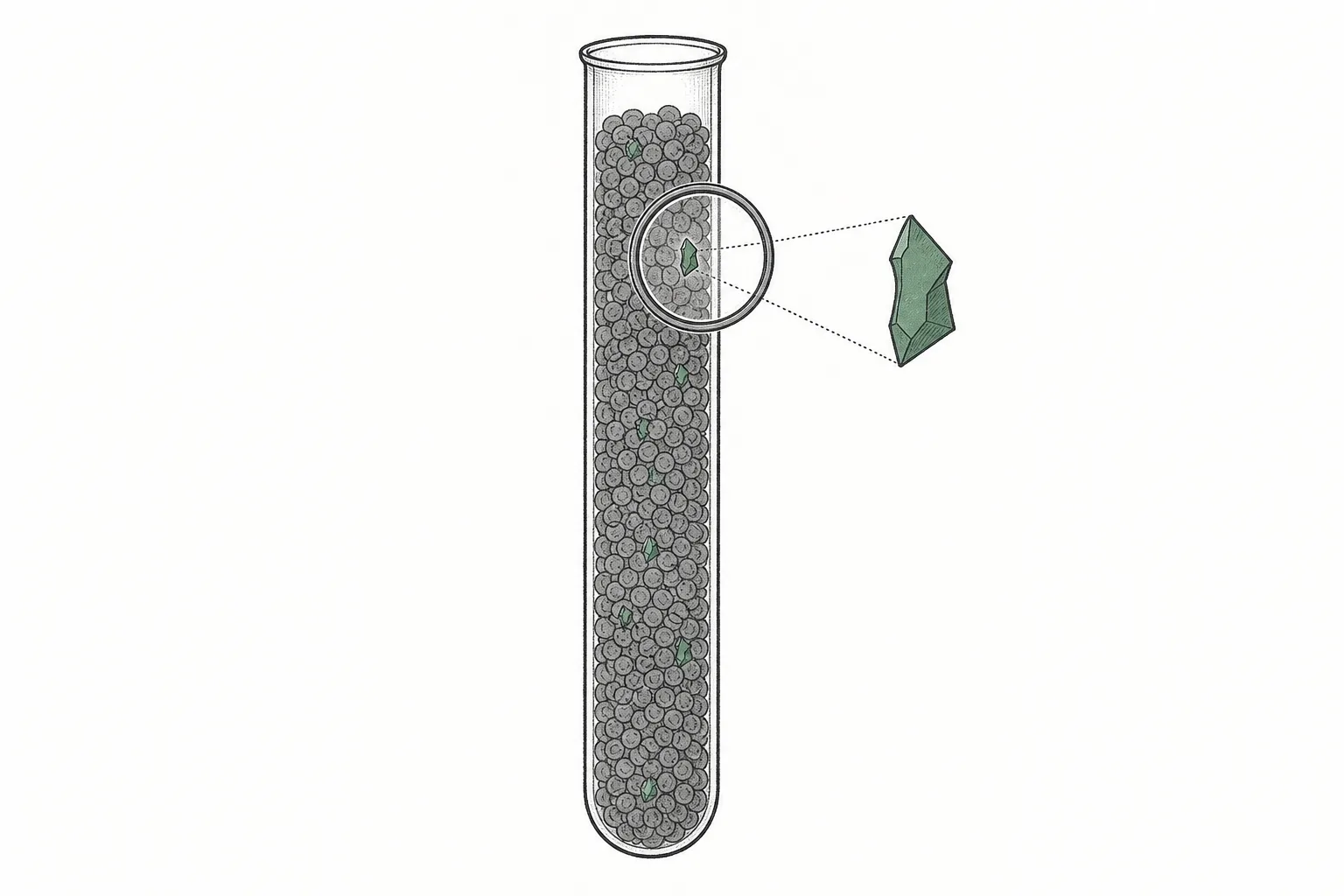
The biggest direction for the field is liquid biopsy — instead of cutting out a chunk of tissue to test (painful, risky, requires surgery), you can detect the "scraps of cancer DNA" floating in the blood directly. One tube of blood is enough. And the most ambitious level is MCED (multi-cancer early detection) — a test that scans for dozens of cancers from a single blood draw, even before any symptoms. The most famous is GRAIL's Galleri, which claims to detect signals of over 50 kinds of cancer.
The second direction is AI becoming the real reader of results. Both tissue images and massive NGS data are too much for human eyes to read all of. In 2025 the FDA began approving AI to read pathology slides for primary diagnosis (like PathAI's and Ibex's systems for prostate cancer) — in the near future, diagnosis will be a "doctor + AI" team, with AI sifting through the large volume of work and the doctor making the final call.
The third direction is testing moving out of the hospital. At-home test kits (like Cologuard) and point-of-care machines that give an answer in 15 minutes without sending to a lab are making testing easier to reach and cheaper — shifting it from "you have to see a doctor first" to "know the result, then decide."
07Challenges & risks
The first risk is reimbursement is the "gate of heaven" that's hard to open. No matter how accurate the test, if Medicare or insurers won't pay, patients can't reach it and the company earns nothing. The clearest example is Galleri, priced at $949 per test, but Medicare doesn't cover it yet — it has to wait for the results of the REACH study, which is enrolling up to 50,000 volunteers. Proving "worth the money" in the eyes of the payer is a harder gate than proving "the technology works."
The second risk is the false positive that's a double-edged sword. The more we screen for cancer in people who don't yet have symptoms, the higher the chance of a "false alarm" — someone who's actually fine can be sent for extra tests, surgery, or needless stress. That's why regulators are so strict, and why Cologuard Plus makes "cutting false positives by 40%" its main selling point — in screening tests, accuracy matters as much as sensitivity.
The third risk is clinical proof that takes a long time and a lot of money. To claim a test "really helps more people survive," you have to run large studies over several years costing hundreds of millions of dollars — so new-generation companies like Guardant, Natera, and GRAIL have to burn enormous cash before reaching profitability. And if the study results don't come out as hoped, the value can vanish in a single day.
In short: this node is the one that answers medicine's most important first question — "what is it?" It's shifting from telling you "you're sick" to "catching the disease before symptoms" and "choosing the drug that fits you." This change doesn't just cure more people — it's moving the whole center of gravity of healthcare from "treatment" to "knowing first."